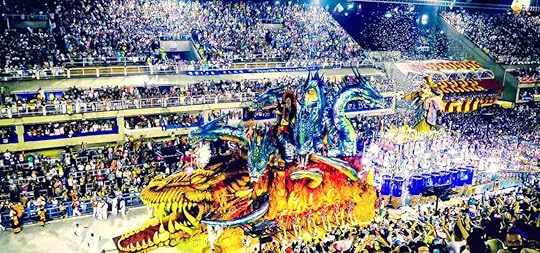
What better place to hide a collection of priceless jewels than among the glitter and ostrich feathers of Rio's Carnival parade? The film-director narrator suddenly finds himself the custodian of such a valuable horde after the nocturnal visit of a young dancer who is soon found murdered.
He is an important brazilian writer (novelist, short story writer and screenwriter), born in Juiz de Fora, state of Minas Gerais, but he lived for most of his life in Rio de Janeiro. In 1952, he started his career in the police and became a policy commissioner. Even though, he refuses to do interviews and is a very reclusive person, much like Thomas Pynchon, who is a personal friend of Fonseca. His writing is pretty dark and gritty, filled with violence and sexual content, and it usually happens in a very urban setting. He says that a writer should have the courage to show what most people are afraid to say. His work is considered groundbreaking in Brazilian literature, up until then mostly focused on rural settings and usually treating cities with a very biased point-of-view. Almost all Brazilian contemporary writers acknowledge Fonseca's importance, and quite a few authors from the newer generation, such as Patrícia Melo or Luis Ruffato, say that he's a huge influence. He started his career with short stories, and they are usually considered to be the best part of his work. His first popular novel was "A Grande Arte" (High Art), but "Agosto" is usually considered to be his best work. In 2003, he won the Camões Prize - considered to be the most important award in the Portuguese language - and the Juan Rulfo Prize - award for Latin American and the Caribbean literature.
A book with good writing that held my interest despite what I’m tempted to call its disorganization. It almost seems like pieces of books and plots stitched together. It’s easier to describe the pieces:
Plot 1: The main character, a film director, a womanizer, is getting over the loss of his most recent love. He always has one or two women in the wings and on the side, but this loss appears to have affected him deeply. We begin only by knowing that she died in a wheelchair.
Plot 2: An unknown woman shows up at his door in a panic. She gives him a mysterious box to take care of, disappears, and is shortly found dead. The box contains valuable jewels. The jewels lead him to get involved with costume stars preparing for Rio’s Carnival – “The Greatest Show on Earth.” Meanwhile mob guys who were chasing the dead woman suspect he has the jewels.
Plot 3: His day job as a film director is working on promotional films for his brother, a famous and wealthy TV evangelist who wants to use his popularity to run for president of Brazil. Through this theme we learn a bit about Brazilian politics and corruption.
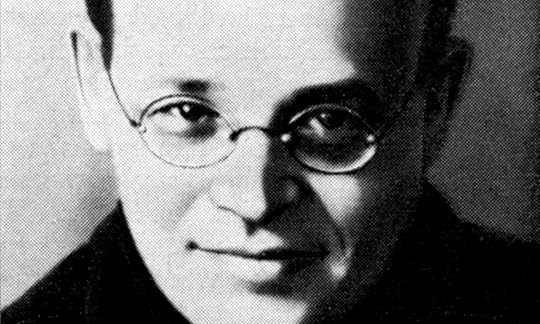
Plot 4: The film director wants to make a film based on Russian-Jewish writer Isaac Babel’s stories. We learn a lot about Babel; how great a writer many critics consider him to be; his stories, his life, and so on. We also learn a bit about film techniques and famous film directors, especially those from Brazil. He gets funding from a wealthy man to make the film in Europe and so he flies to Germany.
Plot 5: While in Germany he learns about the ‘lost manuscript’ of the title: a book by Babel that was rescued when Babel was executed by Stalin in 1940. It’s the 1980’s so the Wall is still up and the book is supposedly in East Berlin. The wealthy man who hired him as film director now proposes that he go to East Berlin to buy the book. This means smuggling money in and smuggling the book out. Now the story because a cloak-and-dagger Cold War spy thriller complete with guys in trench coats.
When he returns to Brazil we have a synthesis of sorts: he’s captured by the mob guys who try to get the jewels back; he works with a dying elderly man to determine the authenticity of the book and we learn about his lost love. But the synthesis seems cut and pasted together too.
There’s some good writing:
“Now, without a woman watching over me, I could look like a dead man without anyone nagging me.”
“Men don’t like women who like them. That’s a fact.”
“Art makes people see things better.”
“My greatest material wish, I now knew, was freedom. In actuality human being are characterized by great stupidity. They only discover that a good is fundamental when they no longer possess it.”
Despite all the problems, it’s still a story that held my interest and it’s pretty good writing – but nowhere near as good as the author’s novel High Art that is one of my favorites.
Photo of Rio's Carnival from aircharterservice.ca Photo of Isaac Babel from theguardian.com Photo of the author from epoca.globo.com
This is a funny old book, which starts off as a thriller, becomes a study of film-making techniques, and then a rumination on a lesser known Soviet author (Isaac Babel, whose book, Red Cavalry, much mentioned here, I happened to pick up at random a couple of years ago). It is an interesting book, and with the main protagonist being a Brazilian film director, much use is made of imagined cinematic techniques that could be used to elaborate plot points. A film noir wannabe.
The version of this that I read is a translation into english. That being said I think a little something might have been left behind in the change over. This book seems like it wasn't really sure what its plot was. First the narrator seems like he's going to be a pill popper then it goes away from that and goes to him getting these valuable stones from a fat woman and then there is some kind of gay mardi gras with costumes then he's going to make a film but doesn't and then he is going to Germany to get the last copy of an unreleased book written by a dead author. I think that Rubem Fonseca has good skill as a writer but I don't think he knew what the fuck he was doing when he wrote this. It kept my attention and had some interesting pictures it painted but ultimately was lacking.