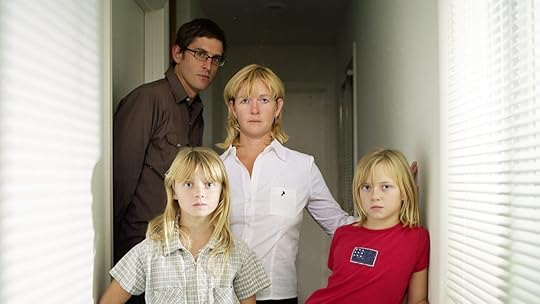
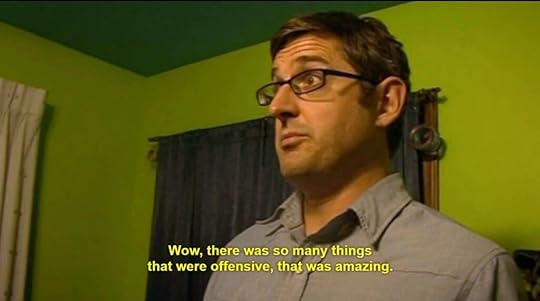
No, it doesn't get much weirder than this: Thor Templar, Lord Commander of the Earth Protectorate, who claims to have killed ten aliens. Or April, the Neo-Nazi bringing up her twin daughters Lamb and Lynx (who have just formed a white-power folk group for kids called Prussian Blue), and her youngest daughter, Dresden. For a decade now, Louis Theroux has been making programs about offbeat characters on the fringes of U.S. society. Now he revisits the people who have most intrigued him to try to discover what motivates them, and why they believe the things they believe. From his Las Vegas base (where else?), Theroux calls on these assorted dreamers, schemers, and outlaws--and in the process finds out a little about the workings of his own mind. What does it mean, after all, to be weird, or "to be yourself"? Do we choose our beliefs or do our beliefs choose us? And is there something particularly weird about Americans? America, prepare yourself for a hilarious look in the mirror that has already taken the rest of the English-speaking world by storm: "Paul Theroux's son writes with just as clear an eye for character and place as his father . . . And he's funny . . .Theroux's final analysis of American weirdness is true and new." -- Literary Review (England)
Louis (Sebastian) Theroux was born in Singapore in 1970. His father, the American novelist and travel writer, Paul Theroux, met his mother, who worked for the V.S.O., in Uganda. Louis’ older brother Marcel Theroux was born in Kampala, "so as children we sort of globe trotted." But his father decided to buy a family home in England, and they settled down in a big, rambling, dilapidated house in Wandsworth, South London. Louis went to Westminster School and then gained a First Class Degree in History at Oxford University.
On graduating, Louis decided to spend some time in the States. His summer break got longer and longer. "I didn’t have a job lined up in England and I felt that at least by being in America I was broadening my mind." Marcel had just completed a post-graduate degree at Yale, so Louis stayed with him. "I did menial work to make money and spent two months with a glass blower who made unbelievably tasteless gilded cherub goblets.
Although initially resisting the idea of going into journalism. "All my friends were writing, and I wanted to be different." Louis found a job on a local paper in the sprawling city of San Jose, "a town where nothing ever happens." A year later he went to work for the New York-based satirical magazine, Spy, where "When I asked some rappers to freestyle on gun safety, one of them threatened to beat me up."
As a correspondent for Michael Moore’s 1995 series, TV Nation, Louis anchored sixteen segments. Theroux describes his first assignment: "The Klu Klux Klan were trying desperately hard to repackage themselves and make themselves seem cuddly and nice, but inevitably they left out racist stickers or hate filled T-shirts. It was quite an eye opener." Reports on Avon Ladies in the Amazon and on President Clinton’s hometown of Hope, Arkansas followed.
In 1995, Louis developed his own Weird Weekends and produced a critically acclaimed documentary series premiere. As Theroux describes, "Weird Weekends sets out to discover the genuinely odd in the most ordinary setting. To me, it’s almost a privilege to be welcomed into these communities and to shine a light on them and, maybe, through my enthusiasm, to get people to reveal more of themselves than they may have intended. The show is laughing at me, adrift in their world, as much as at them. I don’t have to play up that stuff. I’m not a matinee idol disguised as a nerd."
Louis currently lives in West London with his wife Nancy and their three boys.
Louis Theroux's star shone pretty brightly and quickly after a series of documentaries he made with the BBC about some of the more off-kilter communities in the United States; after feeling he had reached a creative dead-end in TV in 2003-2004, he decided to take a year out and return to America without a camera crew and revisit the subjects of the documentaries, many of whom Louis sort exposed to a global audience but very much not in they way they wanted. And what subjects - Aryan Nation members; Gangsta rappers who moonlight as pimps; a novice male porn star and porn producers; a man that claims that at a cost he can hypnotise people to become millionaires; a brothel worker; a white separatist mother who manager her twin 8 -year old daughters as a white supremacist singing duo and more! A smashing read, as just like watching his TV shows, Louis contrasts the macabre views and/or beliefs of many of his subjects with their human and/or vulnerable sides. A multiple decades neo-Nazi getting really upset, and being really helpful when Louis' lap top goes missing being a great example. The big question is how Louis and us readers will feel when catching up with these people, especially those whore beliefs have remained the same? As well as being thought provoking, this is such an interesting read. 8 out of 12. 2021 read; 2011 read
want to be shocked/horrified/OMG'ed "those Americans are just so weird"; or
want to do a cult-y thing of tut-tutting as this confirms your views of just how society has deteriorated and just how close we are to the end times; or
you like being highly amused by the totally extreme nutters who take themselves so unbelievably seriously and even hope to affect society for the worst (bring back the jackboots, where is the overseer's whip?); or
you are one of the white supremacist rockin' kiddies' fans and want to see their names in print as there isn't much positive about white supremacists outside of KKK pamphlets. This isn't either but it is sympathetic to the kiddies if not the movement; or,
you were in a bookshop and took the book to the cafe, found it was so funny you snorked your latte all over it and felt guilty so you bought it.
That covers all possible audiences, I think. Don't come in to my bookshop and do the last one please!
This is a very readable book - I just polished it off in a couple of sittings during the day.
Those who know Louis Theroux will know exactly what to expect. Those who don't, research is easy - look for Louis Theroux Call of the Weird and pick out a few episodes of his BBC television series. You will know soon enough whether is your thing or not. His journalism is quite unique in its approach...
In this book, Theroux packs up his house in the UK and heads to the USA. There he plans on living for a year, contacting and re-visiting a number of his previous interviewees, to catch up with them after a number of years - to see where they have ended up, and writing this book.
For me, some of the people featured are pretty memorable. There is no doubt he has an ability to find entertaining, unusual but communicative, non-mainstream people. Yes, most of them are certainly society's fringe dwellers...
His revisits are: Thor Templar - self proclaimed Lord Commander of the Earth protectorate - an alien resistance movement he set up to protect people from aliens. JJ Michaels - male pornstar. Ike Turner (yes the Ike Turner of Ike & Tina). Mike Cain - one of a sect of self-styled freedom fighters - part of a Patriot Community in Idaho who don't pay taxes or recognise the government. Hayley - Nevada prostitute. Jerry Gruidl - a 'reverend' in the Aryan Nations. Mello T - Pimp and rapper (even though he sounds like a herbal tea). Oscody - Former 'Heavens Gate' cult member. Marshall Sylver - Get rich quick shyster ("attend my seminars...") April, Lamb & Lynx - Mother and daughters - April being active in the National Alliance, and her daughters being a band called Prussian Blue, a white power folk band.
Having said that, not all of these people are still in the same line of work (so to put it), infact, only a few are follow the same path as Theroux's last meeting.
I won't spoil the comedy by spilling the beans. Good quick read if you want a laugh at, or to be scared by Americas more marginal subcultures! 4 stars.
Alexander Theroux, a household name whose novel Darconville’s Cat is an inevitable sight in used bookshops from Alaska to Kyoto, also has less talented relatives, such as the male lead in Mulholland Drive, Justin Therditto, and the hack novelist and tiresome chronicler of expensive holidays, Paul Dittoroux. The hack novelist’s son is called Louis Dittoditto, and makes documentaries for the BBC about neo-nazis, prisoners, paedophiles, porn stars, rap singers, and other things under the bumbershoot of ‘weird’. This diverting road trip from 2004 features unfilmed revisits to stars from the Weird Weekends series and stand-alone films, such as the unhinged prostitute Hayley from the brothel doc, motivational conman Marshall Sylver, and a mother and her two nazi pop twins (who have become internet legend). Devotees of the fabulous docs will find this book more light and reflective than the shows, and will find new material to savour, such as a visit with the cantankerous crank Ike Turner for an unmade Louis Meets episode. Louis is an economical and skilful writer, and turns his trips into candid and thoughtful portraits of people he never seeks to mock or humiliate, only to fathom and befriend. One day, might he share in Alexander’s fame.
Louis Theroux is the host for television documentaries featuring people on the fringes of society: Pimps, hookers, white supremacists, porn stars. In The Call of the Weird he picks some of his favorites and tries to track them down to make sure they don’t hate him. As he covers their current life status he also questions his motives and wonders about his own weirdness. Mello T, a rapper/pimp from Memphis tells Louis that he ‘is a kind of a pimp, that [he] was pimping every time [he] went on TV’. He also loiters for a few days at the Wild Horse (a legal brothel in Las Vegas). He worries he was becoming a “professional trick”. The stories are thought provoking – but mostly in a disturbing sort of way. I mean those 12 year old olsen twinish white power pop singers! And the hypnotist who would take all your money insisting he was teaching you to be a millionaire. I need to see his documentaries. I guess I’ll be searching google video/you tube to see if I can find them.
Louis Theroux is every woman's English-nerd fantasy come to hot, hot life. This is the companion 'update' piece to the the Louis Theroux's Weird Weekends TV series he did for the BBC a few years back, so if you've seen that before you read the book, it's even hotter.
It was nice to go back to the Weird Weekend type of reporting Theroux used to do, and go back to some of the same characters too. I liked some chapters more than others. As he himself mentioned the gangster hip hop ones (both in the form of the documentary as in the book form) don't quite work because people aren't really opening up to him. Still, overall, an enjoyable and quick read. And quite lighthearted considering the type of folk you're spending time with.
Listen – just watch a LT documentary. I hate to slander my man Louis like this, but you’ll have a more interesting time I’d guarantee. If you’ve already seen his documentaries as well like I have this will feel a tad repetitive and not as engaging.
Though this did a good job of introducing the reader to bunch of different ‘weird’ subcultures and groups of people – it was very superficial. The short chapters kept it moving and I understand why it’s told the way it is, but it didn’t really give any chance for the viewpoints of these people to actually be explored properly. It just felt so haphazard and the narrative was a weird one. I don’t know whether it’s because this is an old book and more recent LT instalments are better handled, but something about it just didn’t feel right.
I found the writing to be somewhat lacklustre as well. Like Louis sweetie I am so sorry but for a journalist this was all over the place. Please forgive me. It kept seemingly jumping to random points and to random people. It didn’t flow overly well and chapters sometimes ended without a well-rounded conclusion. It just felt so random.
Completely irrelevant to this review but the font used for the copy I have is SO UGLY and distracting who on earth approved that decision???
I'm a pretty big fan of Theroux's weird weekends and his other BBC documentries so I was excited to read this. Reading this kind of changed my view of Louis for the worse. Watching him is interesting and he genuinely seems like he wants to understand those he is following. And it's funny sometimes because he gives subtle looks and awkward silences that are much deserved some times. Reading this, you get inside Theroux's head and you understand that he might be a much bigger snob then he seems. That seems like a lot more malice or something knowing that he actually is exploiting some times rather then being fully interested in what these people stand behind. He might not have meant to be like that, but it comes out that way sometimes. It almost feel like a "get a load of this guy" attitude.
But those are all still sort of undertones. The book itself is pretty good, and Louis knows how to keep a flow and hold your interest. The topics are also very interesting, and he has great and accurate information for each group. He also likes to ask some hard questions, which is very good.
In short, personally having watched Louis and his Weird Weekends I was put off a bit by how shocking mean-spirited Louis might just be. Though that feeling might just be me. Louis weaves a good story, but personally I would have rather stayed blissfully ignorant of this book's existence.
This book is about 'Merika -- the crazy fringes of the U.S.
Theroux visits white supremacists, con-artists, gangsta rappers/pimps, porn stars & producers, prostitutes, suicide cult survivors, and alien enthusiasts.
Although Theroux is technically "half-American," his lens is very British. This book is the story of his attempts to reconnect with people he'd previously featured in his BBC documentaries. Understandably, some of those people don't want to see Louis again and the meetings can be awkward.
While I enjoyed this glimpse into the more freakish corners of my own country, I think I might have enjoyed it more (and rated it higher) if I had seen some of the characters in the original filmed encounters.
Edit: I found the Gangsta Rap episode on YouTube and seeing "Mello T" in person really added to the reading experience. Also, Theroux is much more amusing on film than in print. His attempts at rapping about driving a Fiat and drinking red wine made me snicker.
This isn't just a poke at American extremism. Louis Theroux becomes quite introspective when he interviews his subjects. I haven't read a piece of non-fiction that I could relate to so well in a long time.
A thoughtful gift from Iona which took me way too long to get to. Lots of fun. Pretty dated now, but it’s still interesting to read how in 2005 neo-nazi white nationalists were considered ‘weirds’ and outsiders. In fact, all the groups covered in this book feel more normalised today.
I’m not really here. It’s research. I’m Louis Theroux. I’m Louis Theroux.
"'Why don't you leave the movement?' He rolled up a sleeve to show a swastika tattoo. 'See this? If I ever covered this up I'd be a traitor. Now I know the truth, I can't ever go back. I see everything racial now.'"
A friend of mine told me about the Louis Theroux show on Netflix and recommended me to watch the neo-nazi and the most hated family in America episodes. So I did it and went crazy about the whole thing. As a journalist, I naturally like this kind of shows, but it was Luis's courage that most took my attention. He's dealing with such hard subjects I wouldn't be able to do the same.
Here we can catch up with the characters from the show. The book is good and well written, I enjoyed the reading and had fun with the Thor Templar and J.J Michaels chapters - besides the whole disgusting thing about the porn subculture. It was really hard to follow the neo-nazis and skinheads part, it's so unbelievable that some people are still into that kind of thing. Disgusting, sad, and shameful.
I like Louis's personality more in the show where he's more fun and, I don't know, we can see how effective he is with the characters. That kind of journalist who always can get in trouble.
I think Louis has a stronger personality in interviews, compared to books. This book suited people who had seen the Tv show and might complement that for those people. Unfortunately for me, I don't get the backstory and without it I attempted to read the book due to my recent discovery of Louis. The book is tedious and at times very dull, this is quite painful for me to write considering my love for the guy. Not a great book by any means, this needed to have a life of its own, it seems to be treading water, afraid to take bigger leaps. The books has interesting topics but don't look for any investigation here, it lacks any real substance and is a disappointment in my eyes.
I found the stories in of themselves entertaining- but in the end I didn’t feel any resolution with any of the subjects.
I don’t know if this was intentional (perhaps a threequel is in the making?), or if that was the point of the whole book: a leopard never changes its spots.
At times humorous and shocking, at others incredibly bleak and terrifying. I felt compelled to watch the original Theroux documentaries on these people.
The tones were drastically different. I liked the more humane insights the book allowed into these people’s personal worlds.
This was a fun little horrifying read. I think that just about sums it up. Be prepared to feel simultaneously entertained and devastated with humanity. (Note: most negative reviews I’m seeing have to do with the fact that this seems repetitive to those who have seen documentaries by Theroux. I have never seen any of them, and I thought the book was great.)
The American journalist, inventor of Gonzo journalism, and voice of the counter culture, Hunter S. Thompson once commented, “When the going gets weird, the weird turn pro.
Louis Theroux’s, The Call of the Weird – Travels in American Subcultures, is an eye popping, heart stopping, and at times down right depressing telling of stories about some of America’s most unusual groups of people. In a Hunter-esque Thompson, gonzo journalism fashion, Theroux places himself within the story itself, often living with the interviewee for a short period as a means to really uncover the character behind the personality. As Theroux both interviews, shadows and stalks his prey he will engage with them in what at first appears to be banal conversation, but will then slip in questions loaded with both cynicism, and sarcasm, the nuances of which are far too subtle for his often dim witted interviewees to perceive. At times you are left feeling that all Theroux is doing is ridiculing fools and their foolish ideas, and the reason you may think this is because that’s what he does. Essentially his journalism is the equivalent of shooting fish in a barrel. His prey includes a pair of young twin girls who perform of white supremacist ‘folk’ music, the owners of and workers of a brothel, UFO abductees, self proclaimed aliens, alien hunters, and the fervent followers of incomprehensible religious cults.
Initially his book takes the same approach as his television series; an Oxford educated, BBC journalist pokes fun at some of societies more desperate people, people balanced precariously on the extreme most outer edges of sanity. But, after a couple of stories Theroux’s tone starts to change towards his subjects, and he begins to paint their caricatures with more respect, perhaps even sympathy. He realizes that even though a person might be an extreme racist, or a wife beater, or the adherent of an absurd cult, but as he digs deeper into their stories and he suggests that these were once normal people, people that have become unusual as a result of unusual circumstances, a by product of their bizarre and twisted societies. Theroux discovers that just because someone has extreme racist beliefs does not make them incapable of charitable, humane behaviour. If a person devoted a large amount of their time and effort to help you find the laptop that you carelessly lost, you would likely consider them a nice person, but what if they also happened to be the leader of a white supremacist movement?
Through the people’s stories, Theroux blurs the lines of our preconceived notions of right and wrong, he challenges the virtues of political correctness with the random beliefs, and the ideals of mindless extremism, to ultimately reveal the complexities of people and society in the 21st century. Seldom is life ever straight forward, a fact that Theroux clearly demonstrates by revealing that the normality the life is just an absurdity which was never meant to be answered, but to be observed in awe and wonder.
Louis Theroux's style translates very well to written form and his adventures are, as always, hilarious, moving, full of insight, and deeply humanistic. Some readers familiar with the 'Weird Weekends' show, to which the book is a follow-up, may become annoyed at the repetition here of the shows' 'plots', but personally I found these re-tellings to be fascinating commentaries on the episodes and to add a behind-the-scenes perspective. The most striking thing about Theroux for me, is how much good will he usually elicits from his subjects, even when it's clear that they disagree deeply and, theoretically, shouldn't get along. This is epitomised by the perversely touching moment when an old neo-Nazi implores Louis "Are you Jewish? Tell me please you're not. Lie to me if you have to. Please' - this veteran racist would rather be deceived by a potential crypto-Jew than to have his friendship with Theroux jeopardised by racial tension. In case you didn't pick it up, I loved this book.
Anyone who knows me well knows that I LOVE Louis Theroux. In this book, he catches up with some of his whackiest and most interesting interviewees. As a huge fan of his series, I really enjoyed getting an update on these people and seeing how their lives had changed in the years after Louis’ documentaries. However, I did find Louis’ writing style confusing sometimes. I often lost track of where we were in time as he jumped between his first and second meetings with the interviewees. I’m also not sure how much pull this book would have for someone who’s not watched the original documentaries, as you wouldn’t have a preexisting connection with the interviewees. That being said, I think that’s more of an excuse to watch the documentaries (which I would highly recommend) than an excuse to not read this book.
Not sure what I hoped to discover with Theroux revisiting these documentary subjects, not sure he did either. Not sure either of us know much more now.
I love to be an observer of Louis Theroux's observations of the human condition. He writes with a style that has me thinking of a British Hunter S. I find his combination of straight forward gonzo style living the dream journalism and at times introspective humility to the many reflections that life presents very appealing. He is a competent writer who has a free flowing approach to his work and an ability to make even the most ordinary moments interesting and reflective.
Louis Theroux, you are brilliant. I love Weird Weekends and was excited to read the companion book to the tv series. It was nice seeing some of the people from my favourite episodes return and see what they are doing now. I'm only giving it 3 stars because I probably wouldn't read it again and it covers a lot of old ground from the shows. I think it helped being familiar with the series to visualise the people in the stories. Overall it was a fun and quick read.
Reminds me of my own desire to explore lots of the places in the USA that are incredibly different to my own reality. I like the structure, making each chapter about a different person rather than the whole book being a linear timeline. I also remember a lot of the documentary episodes he refers to. My only wish is that he visited a few less racists and maybe some people from another kind of non mainstream subculture.
If you love all things Louis Theroux then this book really is for you. It literally reads exactly as he speaks; I felt like I was with him every step of the way.
Only criticism was that a couple of the subjects he returns to, I’d consider more dull than weird, and could have been left out.
I found that this read was just ok. I think because I have watched all of Louis's shows, I knew most of this information anyways. Nothing new came out of this book for me. It was nice to see Louis come out of his shell a bit in his writing, and to view him more on a personal level, as when in his shows he is a lot more reserved. Reading this book, I read it all the way through in Louis's voice, which I couldn't help, and I thoroughly enjoyed it. I still think the weirdest story out of this is the aliens. I will never get my head around the things that they believe. If it wasn't for Louis going to check them out, I would probably have never heard of them, so thanks!
If you're a fan of Louis Theroux's adventures, you'll enjoy this fun companion piece and update on his earlier investigations. Theroux is a keen observer of human behavior, a piercing (yet friendly) interrogator, and a light that shines upon the strange and less comfortable elements of society. In this case... U.S. society. A British native, Theroux returns to the states to check in on some of the subjects profiled in his BBC TV series. A decade later, some have moved on to other pursuits, some are nearly impossible to track down, and others haven't changed a bit. These include Neo-Nazis, alien contactees, porn producers, rappers, a shifty motivational speaker, and a sex worker.
Don't worry if you aren't familiar with the earlier stories; only a few of them sounded familiar to me. Theroux provides plenty of backstory and context to get us up to speed. He is great at humanizing his subjects, and asks the questions that most people would avoid asking out of discomfort or propriety. Because Theroux's curiosity overpowers any whiff of judgment, they usually don't take offense, and tend to open up. When a subject does go on the offense (as when an Aryan Nation member forcefully insists on knowing whether Louis is Jewish), he stands his ground and redirects the conversation. Theroux spends a lot of time pondering how his prior coverage of these individuals may have affected their lives, and worrying that they may now hate him.
I listened to the audio version, narrated by Theroux himself. Since he's traveling across America, he finds ample opportunities to employ his various American accents. It's a fun and very quick slice of America's extremes, and a fascinating look at human psychology.