"There are many desecrations of human rights taking place in our world. Many involve conflicts of great complexity, religious or it is immensely difficult to create just solutions to them. Guantánamo is the outstanding exception. The just solution is simple . . . the US must leave Guantánamo unconditionally."—From the foreword by Noam Chomsky, Nadine Gordimer, Rigoberta Menchu, and others "Imagine if after we defeated the British in our revolution, we then let them keep a few thousand troops and a bunch of battleships in New York Harbor. Weird!"—Michael Moore "To keep a military base against the will of our people is a violation of the most elemental principles of international law."—Fidel Castro How is it that Guantánamo Bay, seized after the Spanish-American War over one hundred years ago, is still held by the United States as a naval base? President Obama has proposed to close the prison for those captured in the "war against terrorism," but Fidel Castro argues in this extended essay, "The Empire and the Independent Island," written in 2007, that the illegal occupation must end and the territory be returned to Cuba. This book also features a comprehensive chronology of the base's history and extensive appendices, including some key historical documents through which Washington has justified its continued occupation and recently declassified documents from the 1962 Cuban Missile Crisis. It also includes a foreword by Noam Chomsky, Nadine Gordimer, Salim Lamrani, Rigoberta Menchu, and Adolfo Pérez Esquivel.
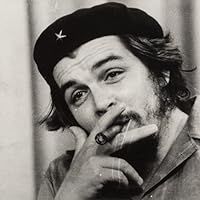
Cuban revolutionary leader Fidel Castro overthrew the regime of Fulgencio Batista y Zaldívar in 1959, established a Communist state, served as prime minister until 1976 and then as president of the government and first secretary of the party, in declining health passed control de facto in 2006 to Raúl Castro, his younger brother, and officially retired in 2008.
Fidel Castro led a revolutionary movement that overthrew corrupt authoritarian regime of Fulgencio Batista y Zaldívar on New Year's Day, 1 January 1959.
Raúl Castro assisted Fidel Castro, his brother, in overthrowing the regime of Fulgencio Batista y Zaldívar in 1959.
United States in an attempt to overthrow the government of Fidel Castro trained a force of 1,500 guerrilla troops, who landed at Bay of Pigs, the site, in an ill-fated invasion on 17 April 1961.
Castro, the illegitimate son of a wealthy farmer, adopted leftist anti-imperialist politics and meanwhile studied law at the University of Havana. He participated in rebellions against right wing in the Dominican Republic and Colombia, afterward failed in an attack on the barracks of Moncada, planned against the military junta, which the United States of America backed, and served imprisonment for a year in 1953. On release, he went to Mexico, formed the movement of 26 July as a group with Ernesto Guevara, his friend and doctor.
Fidel Alejandro Castro Ruz, a politician, also served as the commander in chief of the armed forces. This politically Marxist-Leninist administered the socialist republic. People nationalized industry and businesses and implemented socialist reforms in all parts of society. Castro returned, ousted rivals in 1959, and brought his own assumption of military and political power.
Credentials of Castro and cordial relations with the Union of Soviet Socialist Republics alarmed the Administrations of Dwight David Eisenhower and John Fitzgerald Kennedy, who unsuccessfully attempted economic blockade, assassination, and even the invasion at Bay of Pigs of 1961 to remove him. In 1961, Castro proclaimed the socialist nature of his administration under rule of its kind in the Western Hemisphere. The press and suppression of internal dissent accompanied socialist reforms that introduced central economic planning and expanded care and education.
Castro countered these threats, formed an economic and military alliance with the Soviets, allowed them to place nuclear weapons on the island, and thus sparked sparking the missile crisis in 1962.
Internationally, Castro also served as general of the nonaligned movement from 1979 to 1983.
Abroad, Castro supported foreign groups in the expectation of toppling world capitalism, sent troops to fight in the wars of Yom Kippur, Ogaden, and Angola.
Following the dissolution of the Union of Soviet Socialist Republics in 1991, Castro went into economic "special period" and afterward forged alliances in the Latin American pink tide, namely with Venezuela of Hugo Chávez, and joined the Bolivarian alliance in 2006.
Due to failing, Castro in 2006 transferred his responsibilities to his vice, who assumed in 2008.
Supporters lauded Castro, a controversial and divisive world figure, as a champion of socialism, humanitarianism, and environmentalism against imperialism; critics viewed him as a dictator, who oversaw multiple rights abuses, an exodus of more than a million persons, and the impoverishment of the economy of the country. Through actions and writings, he significantly influenced the politics of various individuals and groups across the world.
Many years after Robert McNamara had played a pivotal role in the Vietnam War, he reflected that the source of American defeat was an inability to look at things from the Vietnamese point of view. That’s also true when it comes to Cuba: Americans have consistently viewed the island from our viewpoint, disregarding what Cubans want. That continues to this day, with the US occupation of Guantánamo – America’s oldest foreign military base – contrary to the wishes of the Cuban government and people.
This short book provides a Cuban perspective on the history of Cuba’s relationship with its powerful neighbor to the north. Only 24 pages were written by Castro, however, and the rest by two other writers. Castro’s contribution is basically a recitation of facts, with a little rhetoric thrown in. The last 50 pages contain the text of relevant treaties and documents. Insofar as I can tell, the basic facts are accurate about how the US came to obtain Gitmo. They are consistent with the account given in a book by an American historian I recently reviewed (OVERTHROW: America’s Century of Regime Change from Hawaii to Iraq by Stephen Kinzer, 2006, Holt).
While Cubans have always wanted to preserve their national identity and independence, American plans to annex Cuba have a pedigree going back to President Jefferson. Several of Jefferson’s successors attempted to negotiate a purchase of the island from Spain. But Cubans wanted their independence, having fought against Spain on and off for 30 years prior to the Spanish-American War.
In order to secure a declaration of war against Spain in 1898, President McKinley agreed to the Teller Amendment. That Amendment declares that “the people of the island of Cuba are, and of right ought to be, free and independent. The United States hereby disclaims any disposition or intention to exercise sovereignty, jurisdiction, or control over said island.” Once the war ends, the US intends “to leave the government and control of the island to its people.”
When the war came to a quick end, the US negotiated with Spain about the future of Cuba. Cubans were not consulted in the matter. With the US occupying Cuba, Congress adopted the Platt Amendment allowing the US to “intervene militarily at any time,” to limit the right of Cuba to enter into treaties and contract debts, and to require Cuba to lease or sell “lands necessary for coaling or naval stations.” Cuba was required to adopt the Platt amendment into its constitution in order to end the military occupation.
Gen. Leonard Wood, the US military governor of Cuba, wrote privately at the time that “there is, of course, little or no independence left Cuba under the Platt Amendment…I believe that no European government for a moment considers that she is otherwise than a practical dependency of the United States.”
Shortly thereafter the US and Cuba signed a lease for Guantánamo, which states “the United States recognizes the continuance of the ultimate sovereignty of the Republic of Cuba over” Guantánamo. The lease had no termination date, and could only be ended by the US. For the first 58 years, the US paid an annual lease fee of $2,000, later raised to $4,085, for the 45-square mile area and deep-water port. Since 1959, Cuba has refused to accept the payment, which is surely a tiny fraction of the area’s value.
The US intervened militarily in 1906 and governed the island for more than two years. It intervened again in 1912 and in1917. In 1952, a military coup brought Gen. Fulgencio Batista to power, and he was soon supported by the US. JFK once said, “Those who make peaceful revolution impossible will make violent revolution inevitable.” With no free elections under Batista, violent revolution in Cuba overthrew the Batista dictatorship in 1959. Two months later, Cuba demanded the US give up its naval base at Guantánamo.
The US began a campaign to overthrow Castro, first by supporting the Bay of Pigs invasion, and then by a campaign to assassinate him, as well imposing the harshest and longest economic blockade in history. According to Castro, Gitmo is “a permanent source of threats, provocation and violation of Cuba’s sovereignty…The base has always been part of the plans…to overthrow the revolutionary government.”
The key issue here is whether the US should relinquish its base and return control of the land to the country it belongs to. There is a strong case for doing so:
* In 2000, the US returned the Canal Zone to Panama. It was land that Panama had been forced in 1901 to cede “in perpetuity” to the US. Americans had belatedly recognized the agreement had been obtained by coercion, and therefore should not be valid.
* The treaty with Cuba also resulted from coercion, namely the military occupation of the country that would not end unless and until Cuba officials accepted the Platt Amendment.
* The Platt Amendment states that a naval base is necessary for the US to “maintain the independence of Cuba, and to protect the people thereof, as well as for its own defense.” None of those reason are valid today. The Soviet Union no longer exists, and Cuba is no threat to the US or to its other neighbors.
Sooner or later, the US will do the right thing with Guantánamo, as it did with the Canal Zone. Once recognizing the right thing to do, it is wrong to indefinitely postpone it. ###
severely underappreciated book - after reading it i'm surprised how little it's talked about. fidel lays out a very clear and strong argument for the obvious: that the US naval base on guantanamo is illegal and immoral.
Wonderful book to understand the true story behind the abominable occupation of Guantanamo by the US. The US has no justification whatsoever to continue this insult towards basic human decency. ¡Hasta la victoria siempre!
There's a lot of clear historical information in this, with an explanation of the violations committed by holding this military base against the will of Cuba, but each section is written by someone else (only one small section is by Castro) and each of them repeat each other quite a bit, so it gets redundant. But it's clear that this military base is absurd, costly, antagonistic, illegal, and unethical in every way, shape, and form.