Predicts a rise in ocean levels throughout the next few decades and more catastrophic weather patterns that are threatening some of the nation's largest cities, identifying the consequences of the past century's consumption of fossil fuels.
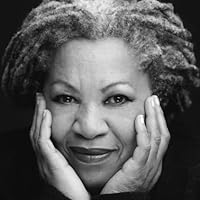
Mike Tidwell is founder and director of the Chesapeake Climate Action Network, a grassroots nonprofit dedicated to raising awareness about the impacts and solutions associated with global warming in Maryland, Virginia, and DC. He is also an author and filmmaker who predicted in vivid detail the Katrina hurricane disaster in his 2003 book Bayou Farewell: The Rich Life and Tragic Death of Louisiana’s Cajun Coast. His newest book, focusing on Katrina and global warming, is titled The Ravaging Tide: Strange Weather, Future Katrinas, and the Coming Death of America’s Coastal Cities. Tidwell’s most recent documentary film, We Are All Smith Islanders, vividly depicts the dangers of global warming Maryland, Virginia, and D.C.
Tidwell has been featured in numerous media outlets including NBC's Meet the Press, NPR, the New York Times and the Washington Post. He is also the co-host of the nationally syndicated radio show "Earthbeat," which features ground-breaking global warming news and interviews live from the nation's capital.
In 2003, Tidwell received the Audubon Naturalist Society's prestigious "Conservation Award." Two years later he received an honorary Doctorate of Letters from Nicholls State University in Thibodaux, Louisiana. On Earth Day 2010 -- the 40th anniversary of Earth Day -- the Montgomery County Council named Tidwell one of the County's top 40 environmental leaders over the past 40 years. A long-time resident of Maryland, Tidwell lives in Takoma Park with his eleven-year-old son Sasha.
This book is not what the title and subtitle suggests. It is much more. It's about America's environment irresponsibility in the face of global climate change. It is a stunning indictment of the administration of George W. Bush and a well-researched look at the progression of our global situation.
I had to read this book slowly, over the course of a year, because I found the information so disturbing. The chapters about George W. Bush are somewhat irrelevant now, so I skimmed them. The one thing that stands out in my mind is the comparison of putting a man on the moon with reducing our greenhouse gas emissions. In 1961, John Kennedy set a goal of putting a man on the moon at a time when the actual technology to do so did not exist. Fifty years later, we *have* the technology to reduce greenhouse gas emissions and we are choosing *not* to do it.
If you're like me, the reasons for this are infuriating and deeply frustrating. However, the book is well worth a read for increasing understanding of our global situation. This will be required reading for my homeschoolers and I would like to see it on the list for high school and college students. I pray they will do a better job of caring for the environment than my generation has.
Reading this in 2026, I had my inner voice saying, "Oh, my sweet child" at his earnest exhortations. It would be interesting to have another edition of this in the manner of Anatoly Kuznetsov. After he escaped the Soviet Union, he re-issued his memoir Babi Yar in 1970. In this edition, he restored the 1/3 of the book that had been censored and added further commentary on the events. I'd like to have Tidwell's line-by-line commentary on this text.
If you've ever wondered why Hurricane Katrina was so devastating, this is the book to read. He explains the settlement and topography of southern Lousiana incredibly well and why the sequence of events leading up to Hurricane Katrina made it so devastating. A must read for anyone interested in environmental protection and understanding the way bayous developed.
This book was written some time ago and much more has occurred. However, my rating of the book is due to the fact that I wanted more. More science, more politics, more social studies, etc. It's a good basic intro, but I think more is better in this case.
Takoma Park resident Mike Tidwell lays out the wide-reaching effects of climate change and presents a worst-case scenario for what will happen if we don't quickly and drastically reduce our greenhouse gas emissions. Tidwell literally predicted Hurricane Katrina and the devastation it caused in his 2003 book Bayou Farewell: The Rich Life and Tragic Death of Louisiana's Cajun Coast. This book takes the stance, "The debate as to whether humans are causing climate change is over, now here is what we have to do and how we can do it." Not nearly as depressing as you might think, this book offers hope in that we have the technology and the ability to make the changes we need to make as a civilization. The primary hurdle to progress being political will. Mike tells the inspiring story of his quest to have a corn granary built on Takoma Park city land. His home, along with several others in the Takoma Park neighborhood (an inner suburb of Washington, DC) is now heated by carbon-neutral corn stoves burning organically grown corn purchased from a Maryland farmer. The message being, if he can do it, so can you. However, he also makes the important point that volunteerism will only get us so far and to make the tremendous changes that need to be made, we need legislation and economic incentives. Asking people to change a few lightbulbs in their house to compact flourescent bulbs, would have been like asking people in the Civil Rights movement of the 1960s to "Consider giving up your use of the N-word, or at least cut down." There are times when voluntary action is simply not enough. Then, as now, sweeping changes need to be made in the laws of the land.
Tidwell is a committed environmentalist who was familiar with the New Orleans area before Hurricane Katrina and keenly felt the losses. He says that the hurricane's destruction was allowed to happen through man-made alterations to the land. His premise is global warming is allowing the same thing that happened in New Orleans to happen to other economically important coastal cities around the world. Whether you believe in global warming or not his arguments about destruction of barrier wetlands is right on. He details how to reduce your carbon footprint by giving examples of changes he has made in his life. Got tired of reading that over and over but he was trying to say that one person can make a difference. Some of his ideas for reducing global warming are a bit far fetched such as Sky Trust. Basically big energy companies are taxed, that goes into a fund and everyone gets a royalty check every year. Yea, free money, another government handout. It isn't free because of course energy costs would rise and this money would be used to offset the cost of $5.00 a gallon gas, etc. I still think poor people would be hurt the most and I don't know if it would really be an incentive to business to develop cleaner forms of energy like what is happening now with the hydrogen battery-powered cars. Anyway, an easy read and I will make a few changes.
Some of the material is a little dated now, but this book has a powerful and still timely message. The devastation of New Orleans by Hurricane Katrina was predicted ahead of time, it was preventable-- had the US been willing to spend 14 billion dollars-- and what happened there is likely to happen again, not only in New Orleans but in other coastal cities such as Miami and New York. Author Mike Tidwell says that due to the continuing warming of the oceans, "We are rapidly exporting to every coastal city in the world the basic conditions that wiped out New Orleans." The US has 5% of the world's population and yet makes 25% of the greenhouse gases that contribute to global warming. It's not all doom and gloom, however. Tidwell offers some solutions. Our world is likely running out of time to address the problem though, unless we act drastically. . .
A fiery, expansive examination of the factors that led to Katrina -- both political, societal and scientific in addition to bureaucratic. Though mildly outdated (a number of railings against the Bush administration about their ongoing pandering to the fossil fuel industry), the core of the issues ring true. If you removed the politically liberal leanings of some of the chapters (unavoidable when this book was published when it was -- the Bush administration was actively making decisions that informed the author's thesis, but now are a less relevant as they are, unfortunately, sunk cost and something we need to address), this book is a great starting place to understanding the economic, scientific and societal arguments for changing our energy usage trajectory.
Recommend, ESPECIALLY if you're looking into Katrina. The chapters involving the Louisiana coastline are outright astounding.
A potentially life-altering read. I was a little reluctant at first, as the first few chapters present some really tough facts about what we're doing to the planet and what it, in turn, is going to do to us. But the later chapters, in which he discusses the technologies that already exist and the small changes each of us can make to change the world, are positively inspiring. Read this book and buy a copy for someone else.
The book did a good job explaining in what ways we could've prevented the destruction of New Orleans. The author is credible because he wrote a book a few years prior to Katrina foretelling her destruction.
The rest of the book was very repetitive and watered down. It is a great read for someone who is unfamiliar with global warming.
Good book, but I wish the author had added footnotes or endnotes to the book to provide more detail on his sources. It was interesting to read that some of the things that we think might help New Orleans (trying to reign in the MS river) may hurt the area since it interrupts the natural flooding and land rebuilding process.
I found this book whiny and unhelpful. Tidwell does a great job of setting the scene and explaining that mistakes have been made. Where's the real solutions, though? Not everyone will go for a corn stove. Rachel Carson wrote "Silent Spring," and DDT is basically nonexistent today. Tidwell won't stop global warming with this book.
Great topic, but this author is a total ego-maniac. His efforts to have a smaller carbon footprint are notable, but he is very judgmental. It's not practical or economical for everyone. I had to teach this book in a class that I taught and found it very difficult. The students were not receptive to his writing.
Wow, really makes you think about what is happening to our earth. Good ideas on things you can do at home to save energy. Crazy that we have the technology to stop global warming, we really need a national energy policy to make people use it!
It started off a bit preachy - I kept thinking he just going on and on, but he ended with some real and practical ideas on how to deal with this looming crisis. Pretty good and a fairly easy read.
I struggled to finish is book because I believe every word is true and because it is so depressing to contemplate our own systematic self-annihilation.