

What do you think?

The Last Brother
In The Last Brother by Nathacha Appanah, 1944 is coming to a close and nine-year-old Raj is unaware of the war devastating the rest of the world. He lives in Mauritius, a remote island in the Indian Ocean, where survival is a daily struggle for his family. When a brutal beating lands Raj in the hospital of the prison camp where his father is a guard, he meets a mysterious boy his own age. David is a refugee, one of a group of Jewish exiles whose harrowing journey took them from Nazi occupied Europe to Palestine, where they were refused entry and sent on to indefinite detainment in Mauritius.
A massive storm on the island leads to a breach of security at the camp, and David escapes, with Raj's help. After a few days spent hiding from Raj's cruel father, the two young boys flee into the forest. Danger, hunger, and malaria turn what at first seems like an adventure to Raj into an increasingly desperate mission.
This unforgettable and deeply moving novel sheds light on a fascinating and unexplored corner of World War II history, and establishes Nathacha Appanah as a significant international voice.
A massive storm on the island leads to a breach of security at the camp, and David escapes, with Raj's help. After a few days spent hiding from Raj's cruel father, the two young boys flee into the forest. Danger, hunger, and malaria turn what at first seems like an adventure to Raj into an increasingly desperate mission.
This unforgettable and deeply moving novel sheds light on a fascinating and unexplored corner of World War II history, and establishes Nathacha Appanah as a significant international voice.
165 pages, Paperback
First published January 1, 2007
About the author
Nathacha Appanah
21 books212 followersSee also: Nathacha Appanah-Mouriquand
Nathacha Devi Pathareddy Appanah is a Mauritian-French author. She comes from a traditional Indian family.
She spent most of her teenage years in Mauritius and also worked as a journalist/columnist at Le Mauricien and Week-End Scope before emigrating to France.
Since 1998, Nathacha Appanah is well-known as an active writer. Her first book Les Rochers de Poudre d'Or (published by Éditions Gallimard) received the " Prix du Livre RFO". The book was based on the arrival of Indian immigrants in Mauritius.
She also wrote two other books Blue Bay Palace and La Noce d'Anna which also received some prizes for best book in some regional festivals in France.
In 2007, she released her fourth book " Le Dernier Frère " Ed de L'Olivier. This book won the Prix FNAC.
Nathacha Devi Pathareddy Appanah is a Mauritian-French author. She comes from a traditional Indian family.
She spent most of her teenage years in Mauritius and also worked as a journalist/columnist at Le Mauricien and Week-End Scope before emigrating to France.
Since 1998, Nathacha Appanah is well-known as an active writer. Her first book Les Rochers de Poudre d'Or (published by Éditions Gallimard) received the " Prix du Livre RFO". The book was based on the arrival of Indian immigrants in Mauritius.
She also wrote two other books Blue Bay Palace and La Noce d'Anna which also received some prizes for best book in some regional festivals in France.
In 2007, she released her fourth book " Le Dernier Frère " Ed de L'Olivier. This book won the Prix FNAC.
Ratings & Reviews
Friends & Following
Create a free account to discover what your friends think of this book!
Community Reviews
Displaying 1 - 30 of 405 reviews

January 27, 2016
[Revised 7/30/22. Spoilers hidden, pictures and shelves added]
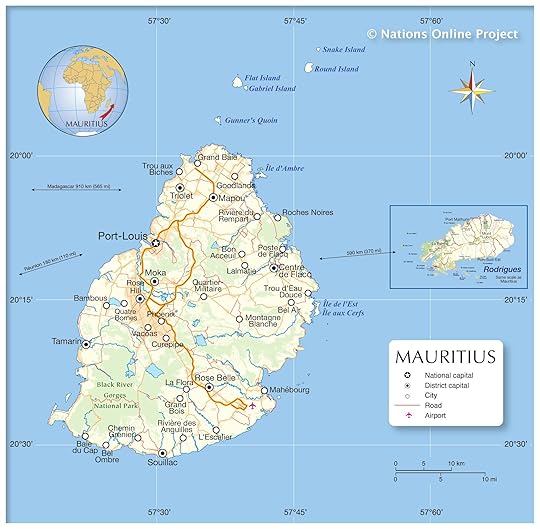
A story set during World War II on the island of Mauritius, off the coast of Madagascar in the Indian Ocean. The story centers on a young boy from an impoverished family whose father is a sugar cane cutter. In a flood due to a hurricane, he loses his older and younger brother. The despondent family moves away from their tiny coastal town and his father finds a new job as a prison guard in an inland town.
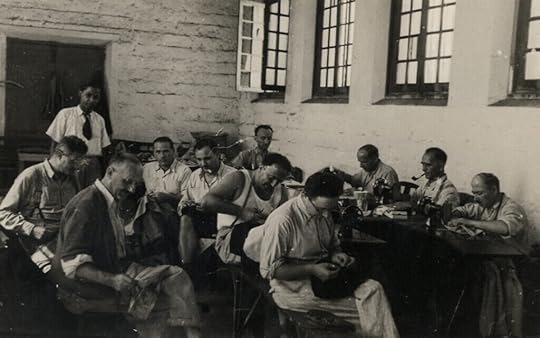
It turns out that the “prisoners” are Jewish detainees – this is a historical fact. The Jewish refugees were mainly from Austria, Poland and Czechoslovakia who were denied entry into Palestine by the British because they did not have proper emigration papers. The Jews were detained from 1940 to 1945 and then released after the war. (You can see an article on Wiki titled History of Jews in Mauritius.)
SPOILERS FOLLOW, MAJOR ONES HIDDEN
The young Mauritius boy befriends a Jewish boy, David, of his own age (about 10 years old) and he helps him escape by slipping under the prison fence. The Jewish boy is a substitute for his lost brothers.
The backstory is of the father of the island boy
The story is told retrospectively by the Mauritian man, now elderly and with his own son, and the man still grieves for David and his lost brothers.
It’s a good read with lots of local color. There aren’t many novels set on Mauritius – one other I have reviewed is The Prospector by M. G. Le Clezio. The Prospector
[image error]
The female French-Mauritian author (b. 1973) is of Indian ancestry and she grew up on the island speaking the Mauritian creole language. She has written a dozen novels, half of them available in English. The Last Brother is her best-known work in English.
Top photo of Jewish prisoners on the island in a sewing workshop from timesofisrael.com
Map from nationsonline.org
The author from francetvinfo.fr
A story set during World War II on the island of Mauritius, off the coast of Madagascar in the Indian Ocean. The story centers on a young boy from an impoverished family whose father is a sugar cane cutter. In a flood due to a hurricane, he loses his older and younger brother. The despondent family moves away from their tiny coastal town and his father finds a new job as a prison guard in an inland town.
It turns out that the “prisoners” are Jewish detainees – this is a historical fact. The Jewish refugees were mainly from Austria, Poland and Czechoslovakia who were denied entry into Palestine by the British because they did not have proper emigration papers. The Jews were detained from 1940 to 1945 and then released after the war. (You can see an article on Wiki titled History of Jews in Mauritius.)
SPOILERS FOLLOW, MAJOR ONES HIDDEN
The young Mauritius boy befriends a Jewish boy, David, of his own age (about 10 years old) and he helps him escape by slipping under the prison fence. The Jewish boy is a substitute for his lost brothers.
The backstory is of the father of the island boy
The story is told retrospectively by the Mauritian man, now elderly and with his own son, and the man still grieves for David and his lost brothers.
It’s a good read with lots of local color. There aren’t many novels set on Mauritius – one other I have reviewed is The Prospector by M. G. Le Clezio. The Prospector
[image error]
The female French-Mauritian author (b. 1973) is of Indian ancestry and she grew up on the island speaking the Mauritian creole language. She has written a dozen novels, half of them available in English. The Last Brother is her best-known work in English.
Top photo of Jewish prisoners on the island in a sewing workshop from timesofisrael.com
Map from nationsonline.org
The author from francetvinfo.fr

June 13, 2019
Raj is a man haunted by his memories. As the story opens he is trapped voiceless in a dream. Or is it a nightmare? His friend from 60 years ago visits him in this dream as a man. Raj reaches for him and tries to call out to him only to awaken with tears on his cheeks. At the tender age of 9 Raj has already experienced enough trauma for a lifetime. When he first sees David behind the barbed wire fence he instinctively knows this boy will become his friend. Some people start out believing they are doing something for someone else only to someday realize that, in truth,it was them that something was done for. This then is the story of two boys, Raj and David. The writing is so beautifully moving it went straight to my heart. The memories and reflections Raj shares look back to a time when as a boy all felt both simple and profound. He brings his father’s lunch to him where he is employed as a prison guard. This is no ordinary prison. It is Beau-Bisson a monstrous building where in 1945 Jews from Austria, Czechoslovakia and Poland are imprisoned. Having been turned away by British authorities in Palestine they are sent to the British colony of Mauritius. Rather than directly returning home Raj hides out and observes the prisoners - men, women and children. It is one boy who catches his eye. They meet at the fence and something is stirred inside them as they wordlessly sit, separated by the fence, and shed tears. Two boys so alone they form an unforgettable friendship. They seem to fulfill the role of lost family members bringing each other a gift of understanding that transcends their mutual hardships. For a time their relationship manages to overshadow all else. Raj holds memories of their time together so vivid that even 60 years later a smell or colour plunges him into despair again. Raj wanted to help David escape. He imagined a hiding place so magical it would keep them safe from discovery and violent punishment. The boys bring humanity, healing and comfort to each other. They are two wounded souls seeking sanctuary as they try to move past their traumas and broken hearts. Nathacha Appanah writes like a soul poet. Every page is spirit filled with wisdom. Her words are tuned in to a pattern and rhythm that truly feels lit by a divine spark. I highly recommend this but be sure to keep tissues close at hand.

April 11, 2021
This beautifully written novel is the melancholy reminiscence of a 70-year-old Mauritian named Raj, of his brief friendship with Jewish orphan David, when both were 10-year-old boys in 1944. David, a native of Czechoslovakia, ended up in the Beau-Bassin detention camp in 1940, after the refugee ship he was on fleeing the Nazis was turned away from Palestine by the British and sent to Mauritius. Recuperating from a savage beating by his alcoholic and abusive father at the hospital in the camp, where his father was a guard, Raj met David, who was being treated for malaria, and eventually helped him escape, driven to fill the loneliness left by the deaths of his brothers in a terrible cyclone. Appanah creates a vivid sense of a time and place far from my experience, but familiar territory in its exploration of childhood, family, friendship, loss, and regret.

June 20, 2023
THE LAST BROTHER (first published in 2007) is the story of the friendship between two young boys in Mauritius at the end of WWII. One of the boys is a Jewish refugee from Prague, an orphaned, gentle, sickly boy called David, the other one, Raj, of Indian descent, was born in Mauritius and lives with his mother, an abusive father and two brothers.
How did this young orphan refugee from Prague end up in Mauritius? This novel is based on a tragic, little-known true story . One day in October, 1940, three ships sailed from the Rumanian port of Tulcea carrying some 3.500 Jewish immigrants from Germany, Austria and Czechoslovakia. In November, two of them reached Haifa, but the refugees were denied entry into Palestine as illegal aliens. The British Government had decided to take some steps to reduce immigration into Palestine and announced the following day that the immigrants were to be deported to Mauritius, a British colony in the Indian Ocean about 1800 kilometers off the East African coast. The fate of these 1. 800 Jews would be decided later on, after the end of the war.
The unfortunate refugees were thrown into the Beau-Bassin prison camp where about 120 of them died. In fact, there is a Jewish cemetery in Mauritius and this is precisely the place where the story begins.
The narrator is Raj, who is now a 70-year-old man. He is obsessed with the memory of the episode that changed his life when he was nine years old: his friendship with David. Raj and David had endured terrible tragedy and loss in their short lives and their friendship blossomed during their overlapping stays in the prison hospital (Raj's father works as a guard at the prison camp and Raj ends up in hospital after a particularly ferocious beating).
Raj’s recollections are the focus of the novel. The narrative voice adopts the perspective of innocent, young Raj, rather than reflecting the old man’s experience. This is an exquisite, heartbreaking novel which vividly captures the plight of both protagonists and a sense of place at the time the story unfolds.
How did this young orphan refugee from Prague end up in Mauritius? This novel is based on a tragic, little-known true story . One day in October, 1940, three ships sailed from the Rumanian port of Tulcea carrying some 3.500 Jewish immigrants from Germany, Austria and Czechoslovakia. In November, two of them reached Haifa, but the refugees were denied entry into Palestine as illegal aliens. The British Government had decided to take some steps to reduce immigration into Palestine and announced the following day that the immigrants were to be deported to Mauritius, a British colony in the Indian Ocean about 1800 kilometers off the East African coast. The fate of these 1. 800 Jews would be decided later on, after the end of the war.
The unfortunate refugees were thrown into the Beau-Bassin prison camp where about 120 of them died. In fact, there is a Jewish cemetery in Mauritius and this is precisely the place where the story begins.
The narrator is Raj, who is now a 70-year-old man. He is obsessed with the memory of the episode that changed his life when he was nine years old: his friendship with David. Raj and David had endured terrible tragedy and loss in their short lives and their friendship blossomed during their overlapping stays in the prison hospital (Raj's father works as a guard at the prison camp and Raj ends up in hospital after a particularly ferocious beating).
Raj’s recollections are the focus of the novel. The narrative voice adopts the perspective of innocent, young Raj, rather than reflecting the old man’s experience. This is an exquisite, heartbreaking novel which vividly captures the plight of both protagonists and a sense of place at the time the story unfolds.

January 31, 2016
Description: In the remote forests of Madagascar, young Raj is almost oblivious of the Second World War raging beyond his tiny exotic island. With only his mother for company while his father works as a prison guard, solitary ever since his brothers died years ago, Raj thinks only of making friends. One day, the far-away world comes to Madagascar, and Raj meets David, a Jew exiled from his home in Europe and imprisoned in the camp where Raj's father works. David becomes the friend that he has always longed for, a brother to replace those he has lost. Raj knows that he must help David to escape. As they flee through sub-tropical landscapes and devastating storms, the boys battle hunger and malaria - and forge a friendship only death can destroy. The Last Brother is a powerful, poetic novel that sheds new light on a little-explored aspect of 20th-century history.
Opening: I SAW DAVID AGAIN YESTERDAY. I WAS LYING IN bed, my mind a blank, my body light, there was just a faint pressure between my eye.
 Uh-oh! First person alert. The beginning was contrived which took some stern resolve to wade through; from that moment on Raj was slotted into dodgy narrator pigeon-hole. A quick read that had its moments, yet not to be recommended.
Re the cover, as lovely as it is at first glance, the trees are blown from left to right, the flag right to left.
ABOUT THE AUTHOR: Nathacha Devi Pathareddy Appanah is a Mauritian-French author. She comes from a traditional Indian family. She spent most of her teenage years in Mauritius and also worked as a journalist/columnist at Le Mauricien and Week-End Scope before emigrating to France.
Le Mauricien
Opening: I SAW DAVID AGAIN YESTERDAY. I WAS LYING IN bed, my mind a blank, my body light, there was just a faint pressure between my eye.
Uh-oh! First person alert. The beginning was contrived which took some stern resolve to wade through; from that moment on Raj was slotted into dodgy narrator pigeon-hole. A quick read that had its moments, yet not to be recommended.Re the cover, as lovely as it is at first glance, the trees are blown from left to right, the flag right to left.
ABOUT THE AUTHOR: Nathacha Devi Pathareddy Appanah is a Mauritian-French author. She comes from a traditional Indian family. She spent most of her teenage years in Mauritius and also worked as a journalist/columnist at Le Mauricien and Week-End Scope before emigrating to France.
Le Mauricien

April 22, 2012
Several years ago, my husband and I took a trip to Israel. During our first week there, while we were in Jerusalem, we were ignorant of the fact that during the Sabbath everything closed down. This included public transportation, which we used, shops and restaurants. Had we known, we would have prepared a little picnic for ourselves to stave off our hunger. There we were, hungry and without a clue of where we could find a meal. So we set off walking through dark, unfamiliar streets. Finally, after what seemed to be an interminable amount of time, we saw a small restaurant. After entering and standing in the doorway, a group of about 4 men and a woman beckoned to us to join them at their table. We discovered several things. This was an Arab restaurant, no one spoke English, we were not conversant in Hebrew. Finally we determined that one handsome young man spoke French. I am not fluent, but understand the language well and can make myself understood. Why am I recounting this story? The young man was Mauritian in origin. I had a vague idea where this was, but learned much more during our interesting meal and evening! By the way, although they all were curious about whether we were Jewish, no one seemed concerned- they were more interested that we were Americans! We had a good time!
So now it is clear why I found it of interest to read of Mauritius. Natacha Appanah, the author, a French Mauritian, was born there. She has written about this strange, almost unwelcoming island in the Indian Ocean during WWII in 1944-45. This is a dark, sad, but gripping story of a nine year old boy, Raj, and those around him who are incognizant of the devastation occurring elsewhere in the world. Life is difficult there and many traumatic events befall this family. The father is a brutal man who works as a guard in Beau-Bassin, the prison there. Many of the prisoners are unusual and unexpected. They are some 1,500 Jews, turned away from Palestine, who were monstrously kept locked up there. It is not until late in the book that we find out how they ended there and what their fates were. Here Raj finds David, an orphaned, blond, curly headed boy. They establish a solid, loving bond, despite their mixed communications of Yiddish and French, which seemed like my own unusual conversations in Jerusalem.
It is true that when one reads a book translated from another language, the results may not deliver the flavor that the author desired, but Geoffrey Strachan, the translator, has presented a moving tale. It is portrayed in Raj's grief, lonliness and later his joy in finding David. Mauritius, the island of some beautiful, wondrous landscapes, or harsh unforgiving places also fascinates with the sometimes cruel forces of nature. It is remarkable to me that a book with only 165 pages can explore such themes so masterfully.
So now it is clear why I found it of interest to read of Mauritius. Natacha Appanah, the author, a French Mauritian, was born there. She has written about this strange, almost unwelcoming island in the Indian Ocean during WWII in 1944-45. This is a dark, sad, but gripping story of a nine year old boy, Raj, and those around him who are incognizant of the devastation occurring elsewhere in the world. Life is difficult there and many traumatic events befall this family. The father is a brutal man who works as a guard in Beau-Bassin, the prison there. Many of the prisoners are unusual and unexpected. They are some 1,500 Jews, turned away from Palestine, who were monstrously kept locked up there. It is not until late in the book that we find out how they ended there and what their fates were. Here Raj finds David, an orphaned, blond, curly headed boy. They establish a solid, loving bond, despite their mixed communications of Yiddish and French, which seemed like my own unusual conversations in Jerusalem.
It is true that when one reads a book translated from another language, the results may not deliver the flavor that the author desired, but Geoffrey Strachan, the translator, has presented a moving tale. It is portrayed in Raj's grief, lonliness and later his joy in finding David. Mauritius, the island of some beautiful, wondrous landscapes, or harsh unforgiving places also fascinates with the sometimes cruel forces of nature. It is remarkable to me that a book with only 165 pages can explore such themes so masterfully.

March 26, 2023
Around the World Reading Challenge: MAURITIUS
===
I really, really enjoyed this one. The translator did a stunning job, and the prose is simple, but effective. The author really manages to capture the main character's voice so wonderfully, and this was a bit of WWII history that I had no idea about. Definitely made me cry--really impactful book.
===
I really, really enjoyed this one. The translator did a stunning job, and the prose is simple, but effective. The author really manages to capture the main character's voice so wonderfully, and this was a bit of WWII history that I had no idea about. Definitely made me cry--really impactful book.

March 11, 2011
This is a story as old as the hills – the discovery and loss of a soul mate in a world gone awry – told with lyricism, poignancy, and sensuousness by a French-Mauritian author who is at the top of her craft.
Whose story is it? Certainly, it’s the story of two little kings, Raj and David, as reflected from the 70 year old memory of Raj, the survivor. The title – The Last Brother – has dual meaning. Raj is, indeed, the last brother of three; he lost his younger and older brothers in the midst of an apocalyptic storm that caught the three of them unaware in the woods.
But the title can also be construed as a tribute to David, who becomes, in many ways, Raj’s last brother: “I wanted a brother, two brothers, a family as before, games as before, I wanted to be protected as before, I wanted to catch sight of those shadows out of the corner of my eye that let you know you are not alone. I was struggling desperately to resist everything that took me further away from childhood…”
Raj lives a brute existence in Mauritius with a violent, drunken, mean-spirited father who viciously beats his surviving son and his wife. In Beau Brissau, Raj’s father takes a job as a guard in a prison that holds 1,500 Jewish exiles who have been refused entry to Israel based on formalities. After one vicious beating, Raj ends up in the prison hospital, where he meets the blond-haired David who suffers from malaria.
Nature in the tropic is another character in this tale; Raj feels in harmony with the surrounding landscape, filled with sweet-smelling stream and camphor trees and abundant mangos, lychees, and logans. But nature, is not always benevolent: it can rail without warning, it can deceive, and it can create havoc and death. It is, of course, a metaphor for life itself. And eventually – as we learn at the very beginning – it can separate bonds that are painstakingly created by two young and broken boys.
This wistfulness and ripeness of the prose recall French-Russian author Andrei Makine; no surprise, since they share a translator. The story of two outcasts – a young tropical abused child and his exiled and orphaned friend – and their quixotic quest for freedom in a world that denies it is, at times, heartbreaking. There is a misstep at the ending, I think, when Ms. Appanah summarizes the implications of this little-known episode of Mauritian history, which momentarily causes the spell to disperse. But the beauty lingers, long after the last word is read.
Whose story is it? Certainly, it’s the story of two little kings, Raj and David, as reflected from the 70 year old memory of Raj, the survivor. The title – The Last Brother – has dual meaning. Raj is, indeed, the last brother of three; he lost his younger and older brothers in the midst of an apocalyptic storm that caught the three of them unaware in the woods.
But the title can also be construed as a tribute to David, who becomes, in many ways, Raj’s last brother: “I wanted a brother, two brothers, a family as before, games as before, I wanted to be protected as before, I wanted to catch sight of those shadows out of the corner of my eye that let you know you are not alone. I was struggling desperately to resist everything that took me further away from childhood…”
Raj lives a brute existence in Mauritius with a violent, drunken, mean-spirited father who viciously beats his surviving son and his wife. In Beau Brissau, Raj’s father takes a job as a guard in a prison that holds 1,500 Jewish exiles who have been refused entry to Israel based on formalities. After one vicious beating, Raj ends up in the prison hospital, where he meets the blond-haired David who suffers from malaria.
Nature in the tropic is another character in this tale; Raj feels in harmony with the surrounding landscape, filled with sweet-smelling stream and camphor trees and abundant mangos, lychees, and logans. But nature, is not always benevolent: it can rail without warning, it can deceive, and it can create havoc and death. It is, of course, a metaphor for life itself. And eventually – as we learn at the very beginning – it can separate bonds that are painstakingly created by two young and broken boys.
This wistfulness and ripeness of the prose recall French-Russian author Andrei Makine; no surprise, since they share a translator. The story of two outcasts – a young tropical abused child and his exiled and orphaned friend – and their quixotic quest for freedom in a world that denies it is, at times, heartbreaking. There is a misstep at the ending, I think, when Ms. Appanah summarizes the implications of this little-known episode of Mauritian history, which momentarily causes the spell to disperse. But the beauty lingers, long after the last word is read.

April 8, 2011
Giving this book two stars is a bit misleading. Two stars is supposed to indicate that you thought the book was just "ok". I thought this book was awful, which should have earned it one star. However, I'm giving it two stars as a way of acknowledging that, perhaps, something was lost in the translating So, I give one star for the author of this awful book, and one star for the translator of this awful book.
The voice of this story is supposed to be that of a 70 year old man retelling the story of his unlikely friendship with an imprisoned Jewish boy some 60 years before. His voice never sounded authentic. I found myself caring very little for his childhood experiences, nor did I ever believe the deep impact it had on the rest of his life. It never rang true.
The author also repeated the same sentences, or descriptions, over and over. It felt very much like an attempt at stretching a 20 page short story into the 164 wasted pages the novel eventually became. She used words and descriptions that were supposed to give the reader a sense of how urgent, or sorrowful, or desperate this boy's life was, but it always fell flat.
My favorite narrative can be found on page 88: "He looked at me dolefully and when I helped him to his feet I said these words to him, precisely these, in this order...". Now, let Me pause for just a sec. Are you not on the edge of your seat waiting to hear these powerful words? This intense exchange between these two frightened boys? Yeah, so was I. "...precisely these, in this order: Stay with me. Do what I do and we won't get separated. I promise you". Really? That's it? That's what you stoked my anticipation to hear? And, had he said those words in a different order, would it have made one iota of difference!? Well, let's see: "Do what I do and we won't get separated. I promise you. Stay with me". Just as I suspected... I sustained not a single goosebump more.
Listen to my words, precisely these, in this order: Read something else. Don't do what I did. If you do, you'll regret it. I promise you.
The voice of this story is supposed to be that of a 70 year old man retelling the story of his unlikely friendship with an imprisoned Jewish boy some 60 years before. His voice never sounded authentic. I found myself caring very little for his childhood experiences, nor did I ever believe the deep impact it had on the rest of his life. It never rang true.
The author also repeated the same sentences, or descriptions, over and over. It felt very much like an attempt at stretching a 20 page short story into the 164 wasted pages the novel eventually became. She used words and descriptions that were supposed to give the reader a sense of how urgent, or sorrowful, or desperate this boy's life was, but it always fell flat.
My favorite narrative can be found on page 88: "He looked at me dolefully and when I helped him to his feet I said these words to him, precisely these, in this order...". Now, let Me pause for just a sec. Are you not on the edge of your seat waiting to hear these powerful words? This intense exchange between these two frightened boys? Yeah, so was I. "...precisely these, in this order: Stay with me. Do what I do and we won't get separated. I promise you". Really? That's it? That's what you stoked my anticipation to hear? And, had he said those words in a different order, would it have made one iota of difference!? Well, let's see: "Do what I do and we won't get separated. I promise you. Stay with me". Just as I suspected... I sustained not a single goosebump more.
Listen to my words, precisely these, in this order: Read something else. Don't do what I did. If you do, you'll regret it. I promise you.

December 19, 2010
First of all, I enjoyed the unusual setting of this novel--Mauritius. I knew it was an island off the coast of Africa, but not much else. Found out it was the home of the now extinct dodo! Much of this story takes place in the northern section of the island. Though the book is adult, the story is told from the point of view of Raj, a young boy, or, I should say, Raj as an old man looking back on that time. The story is set in 1944, and is based on a true event concerning Jews who were interned on the island. After Raj's brothers die in a terrible flash flood, his father gets a job as a guard at the camp where the Jews are being held. There Raj befriends a Jewish boy, David, and even helps him escape. The story takes on a rather surreal quality here. Raj knows nothing about World War II or the Holocaust, so he has no idea of the danger he and David are in as they play in the jungle, while the reader is holding his breath, knowing it can't end well but hoping somehow that it will. Appanah, a journalist who was born on Mauritius, toward the end provides information on what happened to the real shipload of Jews brought to the island. I would like to explore the facts more, and wish she had provided a list of her sources. I enjoyed the way she writes, and would like to read more of her books. Recommended!

November 15, 2020
The only reason why I picked up this book is because its author is from Mauritius and the book is set there (and well, because I found it used for three bucks, let's be real). As some of you know, I want to read my way around Africa and whilst I found many compelling recommendations for most African countries, there are some (usually the smaller ones) where finding books that A) interest me and B) are available in a language that I speak and C) are in print in Germany is incredibly hard. Mauritius was one of those nations.
Mauritius is an island nation in the Indian Ocean about 2,000 kilometres (1,200 mi) off the southeast coast of the African continent, east of Madagascar. With only 1,3 million inhabitants, it isn't surprising that the literary scene in Mauritius isn't as big or as flourishing as in other African countries. Therefore, I was more than happy when I stumbled upon Nathacha Appanah who was born in Mahébourg in 1973 and spent most of her teenage years in Mauritius and also worked as a journalist/columnist at Le Mauricien and Week-End Scope before emigrating to France.
In 2007, she released her fourth book Le Dernier Frère (english title: The Last Brother), based on the friendship between a Mauritian boy and an orphaned Jew who escaped Nazi invasion of Czhechoslovkia, which went on to win the Prix FNAC.
The book describes the fate of a group of some 1,500 European Jewish refugees, who tried to escape to Palestine after the outbreak of the war but were turned away by the British immigration authorities there. By 1944, they were being held in the Beau-Bassin prison on the island of Mauritius, a British colony in the middle of the Indian Ocean. How they escaped countries like Poland, Czechoslovakia, and Austria; how their hopes of reaching “Eretz,” or paradise, were dashed in Haifa; how they’ve managed to survive in Mauritius—these are all mysteries to Raj, a nine-year-old local boy, who stumbles upon them as he peers across the prison walls.
His own childhood world—from the forested village he grew up in with his two brothers, Anil and Vinod, outside the sugar plantation to the small shack near the prison, where his father works as a guard—has always been small and sheltered, an island, like Mauritius, cut off from the larger forces of history. Or so he imagines.
All Raj knows is the sort of brute existence of what Appanah, echoing Fanon, calls “the wretched of the earth”: His father, like most of the men in the sugar camps, drinks heavily and terrorizes their small family, especially him (the weakest of the three brothers and the only one to go to school). His mother, by contrast, represents “the tender side of our life of poverty.”
When a brutal beating at the hands of his father lands Raj in the hospital of the prison camp, he meets a mysterious boy his own age. David is a refugee, one of a group of Jewish exiles whose harrowing journey took them from Nazi occupied Europe to Palestine, where they were refused entry and sent on to indefinite detainment on Mauritius. Slowly but surely the two of them become friends and are able to share their grievances in unconventional ways, as they realize how similar they are to each other.
When a massive storm on the island leads to a breach of security at the camp, David escapes with Raj's help. After a few days spent hiding from Raj's cruel father, the two young boys flee into the forest. Danger, hunger, and malaria turn what at first seems like an adventure into an increasingly desperate mission.
The nostalgic distance of time adds a certain resonance and layer of depth to the narrative, and allows the older Raj to struggle with his blurred vision of David, who we learn in the book’s opening pages will die within months of their encounter. Who was David and how much did Raj ever really know about his life?
It's a story that is rich with metaphor and a language that is ripe and evocative. And even if the tale itself is doomed to tragedy, Appanah’s telling of it is shot through with bursts of light and transcendence. The Last Brother is a book of questions, a sweet and sad riddle of two boys—with two very different histories—brushing up against each other ever so briefly in some faraway, forgotten land.
Mauritius is an island nation in the Indian Ocean about 2,000 kilometres (1,200 mi) off the southeast coast of the African continent, east of Madagascar. With only 1,3 million inhabitants, it isn't surprising that the literary scene in Mauritius isn't as big or as flourishing as in other African countries. Therefore, I was more than happy when I stumbled upon Nathacha Appanah who was born in Mahébourg in 1973 and spent most of her teenage years in Mauritius and also worked as a journalist/columnist at Le Mauricien and Week-End Scope before emigrating to France.
In 2007, she released her fourth book Le Dernier Frère (english title: The Last Brother), based on the friendship between a Mauritian boy and an orphaned Jew who escaped Nazi invasion of Czhechoslovkia, which went on to win the Prix FNAC.
“You say you are an orphan, or a widow or a widower, but when you have lost two sons on the same day, two brothers on the same day, what are you? What word is there to say what you have become?”Even though the blurb sounded interesting enough (I mean, I totally didn't know that in 1940 a cargo of Jews was denied entry into Palestine and then sent to Mauritius where they were forced to stay in jail for months, like ... what?), this isn't a book that I would normally pick up because I'm not the biggest fan of historical fiction and I also haven't read a proper coming-of-age tale in a while. But ... I'm happy to report that this book exceeded my expectations, heck, it even managed to make me cry.
The book describes the fate of a group of some 1,500 European Jewish refugees, who tried to escape to Palestine after the outbreak of the war but were turned away by the British immigration authorities there. By 1944, they were being held in the Beau-Bassin prison on the island of Mauritius, a British colony in the middle of the Indian Ocean. How they escaped countries like Poland, Czechoslovakia, and Austria; how their hopes of reaching “Eretz,” or paradise, were dashed in Haifa; how they’ve managed to survive in Mauritius—these are all mysteries to Raj, a nine-year-old local boy, who stumbles upon them as he peers across the prison walls.
His own childhood world—from the forested village he grew up in with his two brothers, Anil and Vinod, outside the sugar plantation to the small shack near the prison, where his father works as a guard—has always been small and sheltered, an island, like Mauritius, cut off from the larger forces of history. Or so he imagines.
All Raj knows is the sort of brute existence of what Appanah, echoing Fanon, calls “the wretched of the earth”: His father, like most of the men in the sugar camps, drinks heavily and terrorizes their small family, especially him (the weakest of the three brothers and the only one to go to school). His mother, by contrast, represents “the tender side of our life of poverty.”
When a brutal beating at the hands of his father lands Raj in the hospital of the prison camp, he meets a mysterious boy his own age. David is a refugee, one of a group of Jewish exiles whose harrowing journey took them from Nazi occupied Europe to Palestine, where they were refused entry and sent on to indefinite detainment on Mauritius. Slowly but surely the two of them become friends and are able to share their grievances in unconventional ways, as they realize how similar they are to each other.
“The French words we used were foreign to both of us, from now on it was a language we had to bend to what was in our own minds, to what we wanted to say, no longer, as it was at school, simply decoding and repeating.”Raj’s own personal sense of heartache and grief, his own deep well of loneliness, all of these emotions that overwhelm him after the loss of his two brothers in an apocalyptic storm, are qualities that he recognizes immediately in the eyes of David. Who is this ghost-like white child, with blond curly hair and the skinny body of a stick figure? And why is he so sad and alone as well? For the most part, it is an unspoken bond that develops between the two—a companionship of gestures, looks, and broken phrases in a smattering of French and Yiddish.
When a massive storm on the island leads to a breach of security at the camp, David escapes with Raj's help. After a few days spent hiding from Raj's cruel father, the two young boys flee into the forest. Danger, hunger, and malaria turn what at first seems like an adventure into an increasingly desperate mission.
“Knowing that regrets serve no purpose, that you need a lot of luck to fulfill your dreams, that the best way to live is to do your utmost at every moment and that so many things will happen without us, even though we spend all out time scurrying like madmen, in the belief that we can make some difference.”The Last Brother is a unique tale (that truly has never been told before) that explores a lesser-known corner of World War II history through the lens of fiction. Moving back and forth between two timelines (9-year-old and 70-year-old Raj), Nathacha Appanah manages to capture the essence of this tormented life, all his regrets, guilt and shame, suppression, losses, displacements. It's a truly depressing read, for sure, but also a necessary one. Nathacha through the help of dream sequences and memory, forces Raj as an old man to reconsider the events that marked him, that shaped him into being the man he eventually became.
The nostalgic distance of time adds a certain resonance and layer of depth to the narrative, and allows the older Raj to struggle with his blurred vision of David, who we learn in the book’s opening pages will die within months of their encounter. Who was David and how much did Raj ever really know about his life?
“But who am I to be telling all this today, to be saying all this, to be talking about him like this, as if I had some kind of right to speak of these appalling things. What do I know of how he might have felt, what do I know of deportation and pogroms, what do I know of prison?”Appanah asks the hard question of whose story this really is, of who is allowed to speak, and for whom? and in what capacity? Of what should be done when the person whose story this is is dead and can no longer speak for themselves?
It's a story that is rich with metaphor and a language that is ripe and evocative. And even if the tale itself is doomed to tragedy, Appanah’s telling of it is shot through with bursts of light and transcendence. The Last Brother is a book of questions, a sweet and sad riddle of two boys—with two very different histories—brushing up against each other ever so briefly in some faraway, forgotten land.

April 6, 2026
A sus deteriorados 70 años, Raj le solicita a su hijo David que lo lleve al cementerio. Allí evoca a su gran amigo de la infancia, David, con su estrella propia en torno al cuello.
Y su mente retorna a sus primeros de infancia, los años de Mapou, en el campamento inhóspito, con sus hermanos Anil y Vinod. Y luego a la mudanza a Beau-Basin, con su cárcel en la que trabaja su padre maltratador, y donde conoce a David.
David, un niño judío de Checoslovaquia recluido en Mauricio; Raj es un niño de Mauricio. Creo que la historia de su amistad, con un aire del melodramático El niño con el pijama de rayas, no está bien aprovechada, ahogada en un exceso de palabras, muchos lugares comunes y personajes poco creíbles.
La narración, morosa, va mejorando en dramatismo y calidad a medida que avanza la novela, y alcanza a cerrar con un buen final.
Me pareció que la autora comenzó creando un final, y luego lo rodeó de una prosa muy larga y sin tanta intensidad como soporte.
Esta reseña está armada sobre las notas que fui tomando, y tal vez sea provisoria.
Natacha Appanah (1973) es, junto a Ananda Devi, una de las escritoras más eminentes de Mauricio, un país insular separado por Madagascar de las costas africanas, con una gran población descendiente de migrantes de India. Ya había leído su novela El cielo sobre el tejado.
Y su mente retorna a sus primeros de infancia, los años de Mapou, en el campamento inhóspito, con sus hermanos Anil y Vinod. Y luego a la mudanza a Beau-Basin, con su cárcel en la que trabaja su padre maltratador, y donde conoce a David.
David, un niño judío de Checoslovaquia recluido en Mauricio; Raj es un niño de Mauricio. Creo que la historia de su amistad, con un aire del melodramático El niño con el pijama de rayas, no está bien aprovechada, ahogada en un exceso de palabras, muchos lugares comunes y personajes poco creíbles.
La narración, morosa, va mejorando en dramatismo y calidad a medida que avanza la novela, y alcanza a cerrar con un buen final.
Me pareció que la autora comenzó creando un final, y luego lo rodeó de una prosa muy larga y sin tanta intensidad como soporte.
Esta reseña está armada sobre las notas que fui tomando, y tal vez sea provisoria.
Natacha Appanah (1973) es, junto a Ananda Devi, una de las escritoras más eminentes de Mauricio, un país insular separado por Madagascar de las costas africanas, con una gran población descendiente de migrantes de India. Ya había leído su novela El cielo sobre el tejado.

January 18, 2012
‘I would have liked him to tell his story himself in his own words and with the things that he alone could see.’
This novel was inspired by the story of 1,584 Jews who fled Europe, were refused entry to Palestine (then under British rule) and were subsequently imprisoned on Mauritius from December 1940 until the end of World War II, in 1945. It recounts a heartfelt friendship between two boys: David, a one of the imprisoned Jews who is an orphan, and Raj, a Mauritian of Indian heritage who is grieving for his two brothers, lost in a flash flood.
After his brothers are drowned, Raj and his parents move to Beau Bissau where Raj’s father becomes a guard at the prison where the detained Jews are held. Raj spends much of his time peering through a fence in the prison, and this is how he meets David. The boys each recognise the other’s grief, and a period of hospitalisation in the prison infirmary draws them together. Raj, hospitalised as a consequence of his father’s beatings, is unaware of the war and the plight of the Jews and David is suffering from malaria. The boys communicate in French: ‘I’m all alone’. ‘Me too.’
Raj does not want to be alone, and he hopes to save David from prison for his sake as well as for David’s. Raj hopes as well that David can fill part of the gap in his mother’s heart:
‘I thought I could banish a little of my mother’s grief by bringing her another son, I believed this kind of thing was possible if one truly loved.’
Raj is recounting the story sixty years later as a 70 year old man, and it becomes a eulogy to David, to the 128 Jews who did not survive their imprisonment, and to Raj’s brothers Anil and Vinod.
‘Like me, my mother carried the deaths of Anil and Vinod within her,” Raj says. “You can say you are an orphan, or a widow or a widower, but when you have lost two sons on the same day, two beloved brothers on the same day, what are you? What word is there to say what you have become? Such a word would have helped us.’
As an adult, Raj is looking back on events with a greater understanding, but with no less pain. There was no escape in the past, from tragedy; there is no escape in the present from the consequences of it. The greatest loss of all, perhaps, is the loss of childhood.
Jennifer Cameron-Smith
This novel was inspired by the story of 1,584 Jews who fled Europe, were refused entry to Palestine (then under British rule) and were subsequently imprisoned on Mauritius from December 1940 until the end of World War II, in 1945. It recounts a heartfelt friendship between two boys: David, a one of the imprisoned Jews who is an orphan, and Raj, a Mauritian of Indian heritage who is grieving for his two brothers, lost in a flash flood.
After his brothers are drowned, Raj and his parents move to Beau Bissau where Raj’s father becomes a guard at the prison where the detained Jews are held. Raj spends much of his time peering through a fence in the prison, and this is how he meets David. The boys each recognise the other’s grief, and a period of hospitalisation in the prison infirmary draws them together. Raj, hospitalised as a consequence of his father’s beatings, is unaware of the war and the plight of the Jews and David is suffering from malaria. The boys communicate in French: ‘I’m all alone’. ‘Me too.’
Raj does not want to be alone, and he hopes to save David from prison for his sake as well as for David’s. Raj hopes as well that David can fill part of the gap in his mother’s heart:
‘I thought I could banish a little of my mother’s grief by bringing her another son, I believed this kind of thing was possible if one truly loved.’
Raj is recounting the story sixty years later as a 70 year old man, and it becomes a eulogy to David, to the 128 Jews who did not survive their imprisonment, and to Raj’s brothers Anil and Vinod.
‘Like me, my mother carried the deaths of Anil and Vinod within her,” Raj says. “You can say you are an orphan, or a widow or a widower, but when you have lost two sons on the same day, two beloved brothers on the same day, what are you? What word is there to say what you have become? Such a word would have helped us.’
As an adult, Raj is looking back on events with a greater understanding, but with no less pain. There was no escape in the past, from tragedy; there is no escape in the present from the consequences of it. The greatest loss of all, perhaps, is the loss of childhood.
Jennifer Cameron-Smith

October 5, 2017
David: My name means "King"
Raj (thinking angrily): So does mine!
Two boys befriend each other standing on opposite sides of a barbwire fence. David, the Jewish boy is put in prison camp in Mauritius while Raj, a local boy, is son of a prison worker. Their friendship stems from alienation, loneliness and the ability that only children seem to have to form friendship without having to communicate through words. Raj loses his brothers early on in his life and finds his brothers and the possible companionship in David while David finds someone to just be with.
Appanah writes a rich text heavy with geographic symbolism, influence of nature on story line and the war that has a complicated way of finding those who live far, far away but still get impacted by it. The story ends in a tragedy that the author assured in the very first few pages. The clunky narration flits between past and present, which in first person context becomes an extremely vulnerable position to be in. The narrator, Raj himself remembers his time spent with David with both fondness and despair. Appanah makes his experience intentionally blurry since Raj is now an old man reminiscing history and his past in a way that very few people in this world can understand or even relate to. This almost fantastical and tragic nostalgia hits him at every major turn in his life and the impact it has on him is bone deep.
For a short book, The last brother indeed offers a lot. However the narration itself stumbles since a good chunk of the book is reminisced. There is very less exchange of dialogues thus as a reader, there isn't much one can do but simply take in the narration and go along the story. Interestingly enough, personally, this in fact changers the reading experience allowing this book to exist as an isolated entity just like the location where the story is set. Thus the denseness of the flora and fauna of the land becomes less exotic and more violent in its impact. The last brother may not be the best story out there with world war two in the backdrop but its definitely one of the good ones that shines light on forgotten pieces of history and the victims the war consumed.
Raj (thinking angrily): So does mine!
Two boys befriend each other standing on opposite sides of a barbwire fence. David, the Jewish boy is put in prison camp in Mauritius while Raj, a local boy, is son of a prison worker. Their friendship stems from alienation, loneliness and the ability that only children seem to have to form friendship without having to communicate through words. Raj loses his brothers early on in his life and finds his brothers and the possible companionship in David while David finds someone to just be with.
Appanah writes a rich text heavy with geographic symbolism, influence of nature on story line and the war that has a complicated way of finding those who live far, far away but still get impacted by it. The story ends in a tragedy that the author assured in the very first few pages. The clunky narration flits between past and present, which in first person context becomes an extremely vulnerable position to be in. The narrator, Raj himself remembers his time spent with David with both fondness and despair. Appanah makes his experience intentionally blurry since Raj is now an old man reminiscing history and his past in a way that very few people in this world can understand or even relate to. This almost fantastical and tragic nostalgia hits him at every major turn in his life and the impact it has on him is bone deep.
For a short book, The last brother indeed offers a lot. However the narration itself stumbles since a good chunk of the book is reminisced. There is very less exchange of dialogues thus as a reader, there isn't much one can do but simply take in the narration and go along the story. Interestingly enough, personally, this in fact changers the reading experience allowing this book to exist as an isolated entity just like the location where the story is set. Thus the denseness of the flora and fauna of the land becomes less exotic and more violent in its impact. The last brother may not be the best story out there with world war two in the backdrop but its definitely one of the good ones that shines light on forgotten pieces of history and the victims the war consumed.

February 26, 2020
In September 1940, a ship carrying European Jews was pledged to Palestine where they were told that they could obtain asylum. Once the ship docked in Haifa the passengers were considered illegal immigrants and denied entry. They were instead sent further south, all the way to the African island of Mauritius, which was also under British rule at the time. Here, the Jewish refugees fleeing the Nazi concentration camps in Europe ended up spending the rest of the war in the island's state prison. This is the historical backdrop of Appanah’s novel, a history that many Mauritians were not aware of, including Appanah herself. Speaking to Tablet Magazine she said, “I was used to thinking that I was from a country that was far removed from all that (WW2), and then I learned about this history and was shocked. I wanted to write about how someone who doesn’t know anything about the larger world, who knows nothing about Jewish life, who hasn’t even heard the word ‘Jew’ before—I wanted to write about what happens when these two vastly different histories meet.”
The story is told in a series of flashbacks between a local boy, Raj, who from a position as a seventy-year-old relives and recounts his unlikely friendship with David, a Jewish boy from that fateful ship. This approach allows Appanah to at once tell the story from a child's perspective and using adult's language and reflection. The writing is absolutely gorgeous. There are many beautiful phrases, and parts of the novel is told in a stream-of-consciousness style. My only criticism is the repetition of some phrases and descriptions over and over again. Reading them once I felt the intensity of the shared grief and loneliness that engulfed these two boys. Reading the same phrases twice and sometimes even thrice in the same page took away the poignancy from it and turned a gorgeously melancholic story to an overly sentimental one. Despite this flaw I can’t deny the beauty of Appanah’s lyricism in capturing fleeting joy and everlasting loss, while shining a light on a forgotten piece of history that the war consumed.

December 26, 2011
Factually speaking, this is one of the shortest books I’ve read – a mere 165 pages; but that’s extraordinarily deceptive. The book more than makes up for its lack of length – it’s packed with intensity, it’s unforgettable, it’s heartbreaking. The setting is Mauritius, the timing World War II and nine-year-old Raj is one of three brothers living on the island struggling to eke out a living with his parents. His father works at the local prison – a prison that Raj discovers, houses hundreds of Jewish prisoners, one of them being 10-year-old David. But where did the white prisoners come from, people who looked different from him – like David, whose hair was so blond, that it was almost white? Sixty years later is when Raj learns the answers to the where and why. But the story is about Raj and David – like the slender densely-packed novel, Raj and David’s story is packed into an achingly short period of time – a time of innocent joy, rudely shattered by senseless reality, excruciating loss and irreparable damage. But there's a ray of sunshine as we experience Raj 60 years later with the tender references to his mother and the caring reciprocal relationship with his son. A beautifully written novel of memories consisting of fleeting joy and epic loss. A highly recommended read.
Want to Read
July 1, 2024I have owned this book for at least a dozen, and probably more, years and every January I swear I will read it, I want to read it, but something always intervenes. Don't take as long as me to read this novel which, from sampling, I know will be superb.
May 10, 2011
Ok, maybe it’s a 2 1/2, I’ll still be in need of a flame-retardant suit, as I was apparently less impressed than most readers. Maybe I just wasn’t in the right frame of mind when I read it, although I was looking forward to it after reading about it, and I’ve certainly enjoyed other similarly sad books about the cruelty that people can inflict upon others.
So, while this brings to light a largely unknown (to me, for sure) small chapter in the huge book of wrongs brought about by the Nazis (and exacerbated by the Allies!), it otherwise seemed too maudlin, too trite (anyone else think of The Boy in the Striped Pajamas?). Could be a screenplay for a Spielberg film (think Schindler, Private Ryan, etc.), with the opening in the present tense (on the way to the cemetery), already full of tears and with blatant foreshadowing of the story to come, then closing at the cemetery (and the reason for the visit is unbeknownst to the narrator’s son, after all these years?), with even more tears.
And just in case you weren’t sure what was coming, there’s plenty more foreshadowing throughout the brief narrative. I also found too much explaining; e.g., does he need to tell us his father was being humiliated in front of the policeman? The dialog did it already (unless the reader is of the same age as the narrator at that point, and needs things pointed out to him). Too much tell, not enough show. Bathos rather than pathos.
Somewhere in here there was a good story to be told, but to me, it wasn’t told well.
So, while this brings to light a largely unknown (to me, for sure) small chapter in the huge book of wrongs brought about by the Nazis (and exacerbated by the Allies!), it otherwise seemed too maudlin, too trite (anyone else think of The Boy in the Striped Pajamas?). Could be a screenplay for a Spielberg film (think Schindler, Private Ryan, etc.), with the opening in the present tense (on the way to the cemetery), already full of tears and with blatant foreshadowing of the story to come, then closing at the cemetery (and the reason for the visit is unbeknownst to the narrator’s son, after all these years?), with even more tears.
And just in case you weren’t sure what was coming, there’s plenty more foreshadowing throughout the brief narrative. I also found too much explaining; e.g., does he need to tell us his father was being humiliated in front of the policeman? The dialog did it already (unless the reader is of the same age as the narrator at that point, and needs things pointed out to him). Too much tell, not enough show. Bathos rather than pathos.
Somewhere in here there was a good story to be told, but to me, it wasn’t told well.

June 1, 2012
I loved this book. It was a contender in the third round of the Tournament of Books. The writing is stellar; because it was translated from French to English, I am also praising the translation.
The elderly Raj is looking back on his childhood on the island of Mauritius, set in the Indian Ocean. Due to poverty and an alcoholic, abusive father, childhood was hard enough but when the boy's two brothers died on the same day, life for this nine-year-old child became almost insupportable.
Because of another brutal incident Raj meets David, a child his own age, who becomes both burden and savior for one of the saddest boys I have ever met in a novel.
In less than 200 pages, the author wove a story of loss and longing, survival and guilt, love and friendship, family and social life, disaster and the effects of war. All of that would be enough to weigh down a 600 page tome. Instead she wrote a fairytale set in the intersections between humans and the natural world.
Raj and David are mostly ignorant of the tragedies that brought them together, as was I before I read the book. If you read other reviews, you get too much information in my opinion, which lessens the impact. Raj as an old man finally learns about the historical events of his childhood and thus is delivered from all that he has carried for over 60 years.

February 1, 2021
In September of 1940 a European ship filled with Jewish refugees was denied entry into Palestine. They were without entry permits and the British sent them to a detainee camp on the Island of Mauritius. This short, poignant, book tells this story through the memories of a native man who befriended another boy, who was in this camp.
When Raj, our narrator, first sees David he is confused as to why the young boy is in jail. Lacking language skills to communicate, their eyes and hand signals draw them into a beautiful relationship built on the innocence of childhood.
Nathacha Appanah was born and lived in Mauritius most of her life. Her vivid descriptions of the landscape on the island drew me in to the point where I could feel the wind, and hear the rustle on forest floor.
This book won't be for everyone. The sadness and despair was strong enough to prevent me from reading too much at one time. At only 169 pages, it should have been a quick read-took me all month. Well worth the time, effort and sadness. Beautiful.
When Raj, our narrator, first sees David he is confused as to why the young boy is in jail. Lacking language skills to communicate, their eyes and hand signals draw them into a beautiful relationship built on the innocence of childhood.
Nathacha Appanah was born and lived in Mauritius most of her life. Her vivid descriptions of the landscape on the island drew me in to the point where I could feel the wind, and hear the rustle on forest floor.
This book won't be for everyone. The sadness and despair was strong enough to prevent me from reading too much at one time. At only 169 pages, it should have been a quick read-took me all month. Well worth the time, effort and sadness. Beautiful.

October 10, 2012
When I first read the description of this book, first I had to look up the exact location of Mauritius..and second I stopped and thought "what were Jewish exiles doing all the way in Mauritius?."
I would have probably never known if I hadn't come across this book. That's the beauty of books.
And this one is certainly beautiful and sad. There's no secret in this book, from the beginning you know what is going to happen. And I thought I wouldn't be able to get past my initial sadness and enjoy the book, but I really did.
I enjoyed the descriptions the most, I really was running along Raj through those forests, through the cyclone. And Raj is such a little boy, with such serious decisions to make in life, it was hard for me to read this book and not be able to tell him, it's ok, you were only 10 years old.
But most of all I appreciate that this book has shown me, once again, another shameful episode in the history of this world.
I would have probably never known if I hadn't come across this book. That's the beauty of books.
And this one is certainly beautiful and sad. There's no secret in this book, from the beginning you know what is going to happen. And I thought I wouldn't be able to get past my initial sadness and enjoy the book, but I really did.
I enjoyed the descriptions the most, I really was running along Raj through those forests, through the cyclone. And Raj is such a little boy, with such serious decisions to make in life, it was hard for me to read this book and not be able to tell him, it's ok, you were only 10 years old.
But most of all I appreciate that this book has shown me, once again, another shameful episode in the history of this world.

May 26, 2020
This is the first novel I've read from Mauritius author Nathacha Appanah and would want to read her other books. This book is very well written, concise and clear with a very powerful underlying message.
Raj, an old man, visits the tomb of David, his childhood 'adopted' brother for a few days. Readers follow the life of Raj in Mauritius island, focused on his childhood when he was about 10 years old. He was born in a small rural village in a poor family of 5 composed of 2 protective brothers, a loving mother, and an abusive father. However, within a single day, he lost his 2 brothers, moved out of the village and traveled to a town with his parents.
Against all odds and circumstances of life, Raj became friend and 'brother' with David, whom too suffered from loss of family members and WWII atrocities. In this beautifully written story, the author reminds readers that during WWII even in the remote island of Mauritius, there was misery, suffering, loss, different from what was happening in Europe and rest of the world. However, despite of it all, within this ocean of sadeness and suffering, there is love, maternal love, and brotherly love of all kinds.
Raj, an old man, visits the tomb of David, his childhood 'adopted' brother for a few days. Readers follow the life of Raj in Mauritius island, focused on his childhood when he was about 10 years old. He was born in a small rural village in a poor family of 5 composed of 2 protective brothers, a loving mother, and an abusive father. However, within a single day, he lost his 2 brothers, moved out of the village and traveled to a town with his parents.
Against all odds and circumstances of life, Raj became friend and 'brother' with David, whom too suffered from loss of family members and WWII atrocities. In this beautifully written story, the author reminds readers that during WWII even in the remote island of Mauritius, there was misery, suffering, loss, different from what was happening in Europe and rest of the world. However, despite of it all, within this ocean of sadeness and suffering, there is love, maternal love, and brotherly love of all kinds.

February 8, 2011
Ten-year old David, his blond curls surrounding his pale face could not be more different from nine-year old black-haired dark-skinned Raj. In very dissimilar ways, each had suffered dramatic loss, and been exposed to violence and suffering. Yet, when their paths cross in the interior of the island of Mauritius, their friendship is instant and deeply felt. It is expressed by gestures, singing and dancing, much more than through a language that belongs to neither. Sixty years on, the elderly Raj's moving memories and reflective reminiscences of what happened in 1944/1945 are affectionately and convincingly imagined in this evocative and stirring novel by Nathacha Appanah. The author strikes a delicate balance between, on the one hand, the beautifully evoked lush landscapes of the island and the joie de vivre of Raj and his two brothers, and, set against these in sharp contrast, their family's hardship and fragility in the face of natural disasters that are compounding their poverty stricken life. At an even deeper level, THE LAST BROTHER is gracefully rendered story of a child's intensive need and capacity for love, an innocent love that struggles to survive despite everything, and the loss of which leaves painful memories and scars that need to be reopened before healing is possible...
Following a particularly vicious cyclone that robs Raj of his two beloved brothers, life turns desperate and lonely for Raj. His much reduced family has moved into a remote forest region of the island where his father can work as a prison guard. The (historical) prison of Beau Bassin is the centre, directly and indirectly of the events in the spring and summer of 1945. Again, finely weighing the joyful with the distressing realities, Appanah has the older Raj relive the exuberant feelings of the child that commence when he glimpses, from his hiding place on the other side of the barbed wire, the golden locks of a boy in the prison yard. Raj does not know anything about the ravages of war in Europe nor the plight of fleeing Jewish refugees whose ship had stranded on the Mauritius shore... For him, all that matters is his new friend David. A particularly vicious attack by the father,lands Raj inside the prison compound; the nightly explorations with David provide wonderful relief for the boys - and for the by now fully involved reader. The author's style and tone changes whenever Raj slips into the mind of his younger self, when he can laugh and dance and imagine a much happier life for him, his beloved mother and David, his "new brother". A wonderful image captures a bright red parakeet that, nursed by the mother back to health, before flying off, settles briefly on David's head, seemingly "like a blessing...". We, however as readers, increasingly sense and worry about the fragility of this renewed joie de vivre and Raj, with hindsight admits that he was too naïve, too selfish in pursuing his own dreams, not really knowing or understanding what David needed or wished for. The limited language (French) between them nor the gestures can help Raj understand. Or could they have, should they have? The questions and his feelings of guilt, shame and more have remained in Raj's mind all these sixty years and he ponders them again and again. In questioning the veracity of his memories, his lack of curiosity as a child, he also reveals his learning since that time. David had appeared in a dream the night before the story begins and his calm and smiling expression, reaching out to him, gives Raj the strength to visit with his old friend at his gravesite...
Nathacha Appanah writes from her own experience, having been born into an Asian Mauritius family and raised on the island. Her intimate knowledge of the natural beauty of the landscape as well as the social structures, cultures and languages in the multiracial society shines through in her sensitive depiction of her characters and their behaviour. In some ways remiscencent of the writing of J.M.G. Le Clezio, her compatriot and Nobel Laureate, her language and story telling talents are different and very much her own. It is still a mystery, also to her, why 1500 Jewish refugees on a ship, after being refused landing in Palestine in 1940, ended up in a prison camp in Beau Bassin. The graveyard of near-by Saint Martin honours those who died during these harsh and desperate four years. Her novel is an important and deeply moving tribute to those who lost their lives and those who survived. [the full review can be found on amazon.com
Following a particularly vicious cyclone that robs Raj of his two beloved brothers, life turns desperate and lonely for Raj. His much reduced family has moved into a remote forest region of the island where his father can work as a prison guard. The (historical) prison of Beau Bassin is the centre, directly and indirectly of the events in the spring and summer of 1945. Again, finely weighing the joyful with the distressing realities, Appanah has the older Raj relive the exuberant feelings of the child that commence when he glimpses, from his hiding place on the other side of the barbed wire, the golden locks of a boy in the prison yard. Raj does not know anything about the ravages of war in Europe nor the plight of fleeing Jewish refugees whose ship had stranded on the Mauritius shore... For him, all that matters is his new friend David. A particularly vicious attack by the father,lands Raj inside the prison compound; the nightly explorations with David provide wonderful relief for the boys - and for the by now fully involved reader. The author's style and tone changes whenever Raj slips into the mind of his younger self, when he can laugh and dance and imagine a much happier life for him, his beloved mother and David, his "new brother". A wonderful image captures a bright red parakeet that, nursed by the mother back to health, before flying off, settles briefly on David's head, seemingly "like a blessing...". We, however as readers, increasingly sense and worry about the fragility of this renewed joie de vivre and Raj, with hindsight admits that he was too naïve, too selfish in pursuing his own dreams, not really knowing or understanding what David needed or wished for. The limited language (French) between them nor the gestures can help Raj understand. Or could they have, should they have? The questions and his feelings of guilt, shame and more have remained in Raj's mind all these sixty years and he ponders them again and again. In questioning the veracity of his memories, his lack of curiosity as a child, he also reveals his learning since that time. David had appeared in a dream the night before the story begins and his calm and smiling expression, reaching out to him, gives Raj the strength to visit with his old friend at his gravesite...
Nathacha Appanah writes from her own experience, having been born into an Asian Mauritius family and raised on the island. Her intimate knowledge of the natural beauty of the landscape as well as the social structures, cultures and languages in the multiracial society shines through in her sensitive depiction of her characters and their behaviour. In some ways remiscencent of the writing of J.M.G. Le Clezio, her compatriot and Nobel Laureate, her language and story telling talents are different and very much her own. It is still a mystery, also to her, why 1500 Jewish refugees on a ship, after being refused landing in Palestine in 1940, ended up in a prison camp in Beau Bassin. The graveyard of near-by Saint Martin honours those who died during these harsh and desperate four years. Her novel is an important and deeply moving tribute to those who lost their lives and those who survived. [the full review can be found on amazon.com

October 8, 2011
This is a special book written by a thoughtful woman of French-Mauritian origin translated by a talented English man told in the voice of an seventy year old man living in Mauritius who is retelling the sad story of his childhood. I found Raj to be a fascinating character as he tries to sort out his attachment to a strange Jewish orphan boy interned in a prison camp on the island as the answer to both the tragic loss of his brothers and the brutal life he suffered at the hands of his father.
The writing and the story are fresh and fluid and simple. The language is realistically written like the mind of a nine year speaking about fear, need, love, illusions and understanding. The use of breathless run-on and non-punctuated sentences works wonderfully and even the continual repetition added to events that are plausible at the same time engaging and heart wrenching.
It was a nice touch to have the newspaper account of the historical basis for these events to put the story into its place in the history of WWII. I had to look at a map to find this island off of Madagascar and very far from the port of Haifa.
The writing and the story are fresh and fluid and simple. The language is realistically written like the mind of a nine year speaking about fear, need, love, illusions and understanding. The use of breathless run-on and non-punctuated sentences works wonderfully and even the continual repetition added to events that are plausible at the same time engaging and heart wrenching.
It was a nice touch to have the newspaper account of the historical basis for these events to put the story into its place in the history of WWII. I had to look at a map to find this island off of Madagascar and very far from the port of Haifa.

October 27, 2017
Appanah writes beautifully. Set in Mauritius, this book delves into a little known prison camp for immigrant Jews from Nazi occupied Austria and the Czech Republic whose ship had been turned away from Haifa which was then in Palestine. They were imprisoned for four years. The book, told from the point of few of a young boy is riveting.

March 7, 2022
so sad but also the first book i’ve finished on this mod 😭😭

Read
November 23, 2023Read for my Topics in postcolonial and diaspora lit class on the Holocaust

March 13, 2020
4.5 etoiles. Un beau roman tout en douceur et empli de tristesse. Il m'a ouvert les yeux sur une dimension de l'histoire de la seconde guerre mondiale dont je ne savais rien: le cantonnement/emprisonnement de refugies juifs europeens sur l'ile Maurice durant toute la guerre. L'histoire est construite autour de l'amitie ephemere entre un jeune mauritien qui cherche a fuir une histoire familiale douleureuse et un enfant juif emprisone sur l'ile. L'ecriture d'Appanah est legere mais le roman est lourd de douleur, de regret et de solitude. Un vrai bijou.

April 26, 2012
The Last Brother is a heavy duty read. The language is dense and at times wordy, but I absolutely adore stories written in this narrative. The writing might have had more fluidity in it's native tongue, but I didn't mind the translated version as much as other reviewers.
The story follows Raj, an elderly man who is revisiting the memory that gives him the most pain in his old age. He goes to visit the grave of "David" and begins a narrative about the events that transpired between them.
The story begins with Raj losing his two brothers in a flash flood, which causes his family to move to a new part of their remote island. His father gets a new job as a prison guard. Raj goes to deliver lunch to his father one day and finally sees the prisoners he's guarding. Unlike Raj, the reader realizes these are holocaust victims. Raj sees them as ghostly, hollow people. Through a series of events, Raj begins a friendship with one of the prisoners, a boy named David.
The tragedy that follows is told to the reader fromt the very beginning, but that doesn't make it any less heart-breaking as you see the events unfold. Raj's character is written with all the naivety and simplicity as to be expected from a child, and I found it very easy to relate to, and believe, his character. I found myself reading the text out loud fairly frequently just to help myself digest them, but the language and techniques used are quite beautiful. Overall, the emotional connection I made to the story and the beauty of the words used were enough to win me over, despite the wordy translation.
The story follows Raj, an elderly man who is revisiting the memory that gives him the most pain in his old age. He goes to visit the grave of "David" and begins a narrative about the events that transpired between them.
The story begins with Raj losing his two brothers in a flash flood, which causes his family to move to a new part of their remote island. His father gets a new job as a prison guard. Raj goes to deliver lunch to his father one day and finally sees the prisoners he's guarding. Unlike Raj, the reader realizes these are holocaust victims. Raj sees them as ghostly, hollow people. Through a series of events, Raj begins a friendship with one of the prisoners, a boy named David.
The tragedy that follows is told to the reader fromt the very beginning, but that doesn't make it any less heart-breaking as you see the events unfold. Raj's character is written with all the naivety and simplicity as to be expected from a child, and I found it very easy to relate to, and believe, his character. I found myself reading the text out loud fairly frequently just to help myself digest them, but the language and techniques used are quite beautiful. Overall, the emotional connection I made to the story and the beauty of the words used were enough to win me over, despite the wordy translation.

April 4, 2012
The Last Brother by Nathacha Appanah, translated by Geoffrey Stachan is a quiet novel that hits the heart, twisting it until tears pour from the reader’s eyes. Beginning slowly with the main character awaking from a dream, the novel builds to a crescendo, followed by still powerful diminuendo of reflection. Appanah and Stachan’s translation provide a sense of distance from the characters at first, but pull readers in through the magic of the dreams and the jungle, generating the sense of hollowness and fullness of love in tension.
Set in Mauritius, Raj is in his 70s and is looking back on his time as an abused child in a poor family and the one friend he made following a major disaster that struck his small village of Mapou, which forced his family to leave and live near the island’s Beau-Bassin prison. Raj’s family is poor, but happy as his two other brothers — Anil and Vinod — look out for him, even though he is the middle brother. He is the one chosen to attend school, which he gladly shares with his brothers when he returns home to share the chore of obtaining water from the well.
Read the full review: http://savvyverseandwit.com/2012/05/t...
Set in Mauritius, Raj is in his 70s and is looking back on his time as an abused child in a poor family and the one friend he made following a major disaster that struck his small village of Mapou, which forced his family to leave and live near the island’s Beau-Bassin prison. Raj’s family is poor, but happy as his two other brothers — Anil and Vinod — look out for him, even though he is the middle brother. He is the one chosen to attend school, which he gladly shares with his brothers when he returns home to share the chore of obtaining water from the well.
Read the full review: http://savvyverseandwit.com/2012/05/t...
Displaying 1 - 30 of 405 reviews