Lawyer, philosopher, statesman and defender of Rome's Republic, Cicero was a master of eloquence, and his pure literary and oratorical style and strict sense of morality have been a powerful influence on European literature and thought for over two thousand years in matters of politics, philosophy, and faith. This selection demonstrates the diversity of his writings, and includes letters to friends and statesmen on Roman life and politics; the vitriolic Second Philippic Against Antony; and his two most famous philosophical treatises, On Duties and On Old Age - a celebration of his own declining years. Written at a time of brutal political and social change, Cicero's lucid ethical writings formed the foundation of the Western liberal tradition in political and moral thought that continues to this day.
Born 3 January 106 BC, Arpinum, Italy Died 7 December 43 BC (aged 63), Formia, Italy
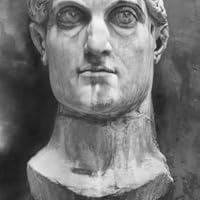
Marcus Tullius Cicero was a Roman philosopher, statesman, lawyer, political theorist, and Roman constitutionalist. Cicero is widely considered one of Rome's greatest orators and prose stylists.
Note: All editions should have Marcus Tullius Cicero as primary author. Editions with another name on the cover should have that name added as secondary author.
This book changed my life.... it was SO FREAKING GOOD, I wasn’t expecting to love this book so much. Against Verres: 5/5. Twenty-Three Letters: 5/5. The Second Philippic Against Anthony: 5/5. On Duties III: 5/5. On Old Age: 5/5. My favorite was On Old Age it’s so beautiful, it’s not just for old people it can be applied to young people too. 5/5. READ IT NOW!!!
Cicero: Selected WorksMost of this great work was a fascinating read and could have been written yesterday, not in the closing days of the Roman Republic.
Part I, the attack on Verres was particularly good, as was Part II on 'How to Live'. Interestingly, Ciceros musings on not taking others' lands and freedoms from them, are somewhat at odds with Imperial Rome's robust land and people acquisition strategy at that time. But that's the point, it is of its time, and peoples throughout the world and during his lifetime and later, would see no contradiction in Cicero's approach or interpretation on the key moral questions of what is right and advantageous.
Cicero does get somewhat whiney in his attack on Mark Anthony, painting him as a scheming and avaricious fraud, lier, and thief, which he was, and somewhat similar to some of today's more colourful characters of the same lIke who grace our TV screens. That said, he obviously hit the spot as Anthony's assassins did in the end decapitate Cicero and cut off his hands on Anthony's orders, a whole new level of hubris methinks.
A great read, from one of the greatest lawyers in history.
The life of Cicero should be a cautionary tale for politicians of any era. He was a patrician, an aristocratic man of the Roman senate, a fan of the dying Republic, an opponent of tyrants like Julius Caesar, and a critic of the democracy that empowered them. He was at one time the head of state. Later, he was exiled, and his property was confiscated. As a politician, he was always caught in the middle and often charged with abandoning his own principles. He did not take part in the assassination of Julius Caesar, but he was not sorry to see him go. He wanted rule by the landed gentry, by men of his own class and education. In the end, young Octavian, operating from pure political expediency, had him assassinated. Roman politics was never for the faint-hearted. Cicero's power as an orator was unparalleled in an era that revered long-winded speeches. In his Second Philippic, he skillfully dismantled Mark Anthony, painting him as a drunk, a greedy sycophant, a liar, and a lewd bisexual womanizer. He was the type of person, Cicero said, who would invite himself to dinner, consume all your wine, vomit on the table, and swipe your silver on his way out. His Latin style was universally admired when Latin was a language every educated person knew. His stoic philosophy and Republican theory of government reverberate through our legal and governmental history. He was a stern moralist praised by men who abandoned principle at every turn.
Cicero takes the cake for one of the most dramatic people on the planet. I cackled so much reading his "letter" on Anthony's life. He really had it out for him. The ad hominums that were piled into that were staggering, and you could tell he really hated Anthony. But aside from just that one letter, this book really shows a lot about the culture of Rome at the time of Julius Ceaser's death. Cicero isn't my favorite philosopher, but he is a funny one who writes in a much simpler way. His work was definitely a lot easier to read and comprehend.
I did enjoy this thoroughly and will most likely read some more of his works.
Quotes:
“Here is a man whose life and actions the world has already condemned - yet whose enormous fortune...has already brought him acquittal!”
"We must not only obtain Wisdom: we must enjoy her.”
“In anger, nothing right nor judicious can be done.”
A great read for anyone who enjoys Roman history, Cicero: Selected Works offers a glimpse into the mind of one of Rome’s greatest orators and statesmen. Cicero was a philosopher, politician, and master of rhetoric whose speeches and writings influenced everything from republican governance to modern political thought. Whether you’re into history, law, or just appreciate a well-crafted argument, his speeches and letters remain some of the best examples of persuasive writing ever recorded.
Cicero believes he is the most important person in the world (just like every other leading man in Rome) but at least he's funny about it. Honestly super fun to analyse and I can't wait to read it in the original language <3
I see why the Florentine nobility hired agents and used subterfuge to collect manuscripts of his work. I had no idea early abstractions of natural law appear in his writings. I would highly recommend this collection for anyone who is interested in delving into Cicero for the first time.
Cicero's chief virtues are a bit clouded in this volume: he's a great stylist but this translation imbues him with little verve. The selections do show why his legal career took off: he's pugnacious and a dedicated self-promoter. He spends plenty of time reminding the reader of his own importance. It's easy to envision how that obsession with status and legacy could land him in the middle of the politics of his day, and his undogmatic philosophy leaves plenty of room for tacking with the prevailing winds.
I will admit I found this selection a bit dull: it's got some great pieces but they fit together oddly, with some fragmentary bits in the political weeds and stolid if fusty declamations from on high about ethical duties and the vagaries of aging. Further, I found the critical apparatus woefully lacking: the footnotes are sparse to the point of uselessness, and sometimes impossibly vague in their grammar (to the point where you can't always tell who is being described). That said, I do appreciate Cicero as an exemplar of Roman pragmatism, and his approach to the philosophical schools charts a refreshingly agnostic path through their sometimes bitter feuds. I could have done with more philosophy, actually. Not a bad volume but there are probably better introductions to his works out there.
First Cicero hates on Verres, Sicilian governor, apparently for good reason cause he’s horrible, corrupt and takes peoples inheritance money.
“Certainly you are doing well, when the finest and most honourable class of the population, the backbone of our republic in general, especially of that province evince such unanimous hatred of you!”
Just saying if anyone wrote that abt me I’d lock myself in a room and cry, preferably never come back…
Then we got Cataline, the rich guy who tried to march to on Rome . At this point EVERYONE and their mother is marching at Rome 🙏🏛️
“I would rather relive them of my presence than subject myself to their hostile glances.” “Why wait for words when their silence is proof of their attitude?
“So long as I have you I shall never think myself lost…” - Historians will say they’re just FRIENDS 💔🥀 “Now that I’m away from you I shall speak boldly, for a letter doesn’t blush.” -HARDEST LINE OF THIS BOOK!!!!!! 🙌🎉
Did anyone say poetry????? Cicero wanted what Homer gave Odysseus and Achilles, the fame, the story, the poetry. When defending Archias (Roman name Aulus Licinius) Cicero thought he’d write poems abt him (spoiler alert 🚨 um… he didn’t.) In Ciceros words Archias was “inspired by the divine”, I want a guy that can compliment me like Cicero does his clients 🙏💓
Imagine going from defending Archias the poet to boppy horney Marcus Caelius (sigh…). Let’s be fair, he’s a noble states man, holds high office in politics BUT he did try to poison his lover and denied that she was his lover after stealing money from her so… take with that what you will. You really start to hate Cicero here and when hearing he wasn’t a fan of Cleopatra 👁️🗨️📜
“If it’s kindness with no thought of recompense, it is a free gift; if it’s kindness expecting a return it’s is merely paid service.” “Wisdoms is the mother of all these many great powers in mankind, which can be developed by those who wish to know themselves” - Cicero, ON THE LAWS I
A bunchhh of letter one of which is from Brutus and Julius Caesar 🔪🩸
Imagine being an ex-counsel of the Roman Senate and congratulating the killers of the Roman Dictator… Do better Cicero.
“But this man Anthony is insane and courrpt and much worse than Caesar, whom you call the worst of the villains when you killer him. Anthony wants to start a blood bath!”
Cicero goes on to make the most powerful man in Rome his enemy by writing the first PHILIPPIC against Mark Anthony… 🤦🏻♀️
What is Duty; “We can duty any act dictated by reason.”
Marcus Tullius Cicero (106-43 BC) was a Roman statesman, orator, lawyer and philosopher, who served as consul in the year 63 BC.
Recounting the assassination of Caesar, he says, “What a fool you are, Anthony. Do you not understand this? If wanting Caesar to be killed (as you complain that I did) is a crime, then it is also criminal to have rejoiced when he was dead. For between the man who advises an action and the man who approves when it is done there is not the slightest difference. Whether I wished the deed to be performed or am glad after its performance, is wholly immaterial. Yet, with the exception of the men who wanted to make an autocratic monarch of him, all were willing for this to happen---or were glad when it happened. So everyone is guilty! For every decent person, in so far as he had any say in the matter, killed Caesar! Plans, courage, opportunities were in some cases lacking; but the desire nobody lacked.” (Pg. 115)
He states, “Would you like us to consider your behavior from boyhood forwards, Anthony? … you graduated to man’s clothing---or rather it was woman’s as far as you were concerned. At first you were just a public prostitute, with a fixed price: quite a high one, too. But very soon Curio intervened and took you off the streets, promoting you, one might say, to wifely status, and making a sound, steady married woman of you. No boy bought for sensual purposes was ever so completely in his master’s power as you were in Curio’s. On countless occasions his father threw you out of the house. He even stationed guards to keep you out! Nevertheless, helped by nocturnal darkness, urged on by sensuality, compelled by the promised fee—in through the roof, you climbed. The household found these repulsive goings on completely unendurable.” (Pg. 122)
He explains, “However, as the philosophers instruct, one must not only choose the least among evils, one must also extract from them any good that they may contain. That being so, I am making use of my rest---through it is scarcely the kind of rest deserved by the man whose services gave Rome itself rest from its troubles! Nevertheless, dictated though my solitude is by necessity rather than choice, I am refusing to let it make me idle.” (Pg. 160)
He argues, “1. Suppose a man of great wisdom were starving to death: would he not be justified in taking food belonging to someone who was completely useless? 2. Suppose an honest man had the chance to steal the clothes of a cruel and inhuman tyrant … and needed them to avoid freezing to death, should he not do so? These questions are very easy to answer. For to rob even a completely useless man for your own advantage is an unnatural, inhuman action. If, however, your qualities were such that, provided you stayed alive, you could render great services to your country and to mankind, then there would be nothing blameworthy in taking something from another person FOR THAT REASON. But, apart from such cases, every man must bear his own misfortunes rather than remedy them by damaging someone else.” (Pg. 169)
He notes, “Surely the reputation and the glory of being a good man are too precious to be sacrificed to favor of anything at all, however valuable and desirable in appearance.” (Pg. 190)
He suggests, “promises do not always have to be honored---and trusts do not always need to be made good. Suppose someone, while in his right mind, leaves his sword in your care; then he becomes insane, and demands his sword back. But compliance now would be criminal and you would refuse. Or suppose that a man who has entrusted you with a sum of money intends to take treasonable action against your country: should you return him his money? In my opinion you should not, for this would be against the interests of your country, which ought to be dearer to you than anything else in the world.” (Pg. 197)
Of old age, he says, “There had to be a time of withering, of readiness to fall, like the ripeness which comes to the fruit of the trees and of the earth. But a wise man will face this prospect with resignation, for resistance against nature is as pointless as the battles of the giants against the gods.” (Pg. 215) He adds, “Each stage of life has its own characteristics: boys are feeble, youths in their prime are aggressive, middle-aged men are dignified, old people are mature. Each of these qualities is ordained by nature for harvesting in due season.” (Pg. 226) He concludes, “To be respected is the crowning glory of old age.” (Pg. 238)
This book will be of great interest to students studying the “classics” and history of ancient Rome.