

What do you think?
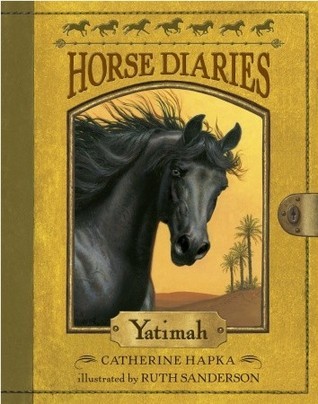
Horse Diaries #6
Yatimah
For all lovers of horses and history, it's the next book in the popular Horse Diaries series. Born in the Arabian Desert in the ninth century, Yatimah is a black Arabian filly whose name means "orphan." She enjoys her life at the oasis, with sheep to tease, other foals to race, and the daughter of her Bedouin owner to take care of her. But when the colt who is her foster brother is stolen in a raid, Yatimah realizes her true birthright. Like Black Beauty, this moving novel is told in first person from the horse's own point of view and includes an appendix full of photos and facts about Arabian horses and Bedouin culture.
176 pages, Paperback
First published January 1, 2011
About the author
Catherine Hapka
453 books206 followersCatherine (Cathy) Hapka has written more than one hundred books for children and adults, as a ghostwriter for series as well as original titles, including the Romantic Comedies Something Borrowed, The Twelve Date of Christmas, and Love on Cue. She lives in Pennsylvania.
Ratings & Reviews
Friends & Following
Create a free account to discover what your friends think of this book!
Community Reviews
Displaying 1 - 28 of 28 reviews
February 12, 2015
This book was one of THE BEST BOOKS EVER!! I am a true horse lover, and this book was a fantastic match for what I have imagined a horse thinks like.
Yatimah was born in the desert on a cold night. It was the same night her mother died. Yatimah means "orphan.". As Yatimah grows up, she learns the ways of life and her purpose in her herd. But, she doesn't know her true purpose of life until her brother-Twial- gets taken during a raid. Will Yatimah's mother's bloodlines guide Yatimah to be the great War Mare her mother once was; like the men propose- or will she be another nothing like Nasar believes?
I would recommend this book to anyone who loves horses. It is for younger readers, but I enjoyed it very much.
Yatimah was born in the desert on a cold night. It was the same night her mother died. Yatimah means "orphan.". As Yatimah grows up, she learns the ways of life and her purpose in her herd. But, she doesn't know her true purpose of life until her brother-Twial- gets taken during a raid. Will Yatimah's mother's bloodlines guide Yatimah to be the great War Mare her mother once was; like the men propose- or will she be another nothing like Nasar believes?
I would recommend this book to anyone who loves horses. It is for younger readers, but I enjoyed it very much.
May 11, 2011
I loved it. It was a good life long story of her. It did leave me hanging at the end for if they got her brother back yet. this story is told directrly from her seince the begining of her life.
March 2, 2016
This was my Favorite of the entire Horse Diaries series

March 7, 2013
amzing

January 21, 2022
I love that a reader talked to her mom about this book, and then they brought it to my attention. Published in 2011 it is book six in a popular middle grade series told from the horse's perspective where each book features a different culture from around the world and is set in different time periods. This book is told from an Arabian horse's perspective in the 9th century and details her growing up an orphan, trying to understand the Bedouin humans around her, and establishing herself as a war mare. Allah swt is mentioned quite often, as is Arab hospitality, and some guests at one point are briefly mentioned as they are on their way to Hajj. My problem with the story is the portrayal of the raids. I don't know enough about Bedouin culture in the 9th century to opine on the accuracy of the raiding that would occur between tribes, but when juxtaposed with the humble God fearing, grateful religious people, blatantly stealing from the neighbors, it is hard to cheer for Yatimah and her humans at being thieves.
SYNOPSIS:
The birth of Yatimah takes the life of her mother, the beloved war mare of Nasr. Her loss puts distance between the Bedouin leader and the foal. Nasr's daughter Safiya, however, has a soft heart for Yatimah and the two form a close bond. As Yatimah is accepted to nurse from another mare and grows with the companionship of her colt, Tawil, the two young horses show the reader how when the grazing starts to disappear in the desert, they are fed dates, and when those start to deplete they move to more fertile lands. Always on the move, they raid other camps to steal sheep, and camels, and horses as needed, and work to prevent other's from stealing from them. Since the death of Yatimah's mom, Nasr has not found a proper war mare, and thus the training of Yatimah begins. The climax is a raid that will give Yatimah a chance to prove herself and win over the still distant Nasr.
WHY I LIKE IT:
I love the illustrations and the detail that often accompanies them. I also really appreciate the appendix at the end that gives information about Arabian horses, Bedouins, and war mares. I learned a lot about the specific strengths of Arabian horses, and why the Bedouins favored riding mares over stallions.
I liked that many of the exhausting stereotypes were not present in this book in regards to women. Safiya is a young girl at the beginning and then starts to wear hijab as she grows, but she is still free to come and go as she pleases it seems. Her father respects her and shows affection and kindness to her throughout. I just find the premise a little off that we readers, are hoping that Yatimah becomes the lead thieving horse. It mentions that it doesn't make sense to the horses, but to have that be the whole point of the story, leaves a bad taste in my mouth, especially when the story could have been developed in so many other ways to focus on something a little bit more positive.
FLAGS:
Stealing, thieving, death, loss.
TOOLS FOR LEADING THE DISCUSSION:
I think the book would be fine on a classroom bookshelf, but I wouldn't highlight it unless I was prepared to discuss with young readers the culture and why perhaps this was such a part of the lifestyle. I would not want to perpetuate any stereotypes of Muslims, or provide a negative impression on readers that are drawn to these books because of their love of horses. I learned a lot by reading the books, but I worry what a 8 to 10 year old would take away about a culture and religion after reading such a story, I fear the word barbaric may arise.
SYNOPSIS:
The birth of Yatimah takes the life of her mother, the beloved war mare of Nasr. Her loss puts distance between the Bedouin leader and the foal. Nasr's daughter Safiya, however, has a soft heart for Yatimah and the two form a close bond. As Yatimah is accepted to nurse from another mare and grows with the companionship of her colt, Tawil, the two young horses show the reader how when the grazing starts to disappear in the desert, they are fed dates, and when those start to deplete they move to more fertile lands. Always on the move, they raid other camps to steal sheep, and camels, and horses as needed, and work to prevent other's from stealing from them. Since the death of Yatimah's mom, Nasr has not found a proper war mare, and thus the training of Yatimah begins. The climax is a raid that will give Yatimah a chance to prove herself and win over the still distant Nasr.
WHY I LIKE IT:
I love the illustrations and the detail that often accompanies them. I also really appreciate the appendix at the end that gives information about Arabian horses, Bedouins, and war mares. I learned a lot about the specific strengths of Arabian horses, and why the Bedouins favored riding mares over stallions.
I liked that many of the exhausting stereotypes were not present in this book in regards to women. Safiya is a young girl at the beginning and then starts to wear hijab as she grows, but she is still free to come and go as she pleases it seems. Her father respects her and shows affection and kindness to her throughout. I just find the premise a little off that we readers, are hoping that Yatimah becomes the lead thieving horse. It mentions that it doesn't make sense to the horses, but to have that be the whole point of the story, leaves a bad taste in my mouth, especially when the story could have been developed in so many other ways to focus on something a little bit more positive.
FLAGS:
Stealing, thieving, death, loss.
TOOLS FOR LEADING THE DISCUSSION:
I think the book would be fine on a classroom bookshelf, but I wouldn't highlight it unless I was prepared to discuss with young readers the culture and why perhaps this was such a part of the lifestyle. I would not want to perpetuate any stereotypes of Muslims, or provide a negative impression on readers that are drawn to these books because of their love of horses. I learned a lot by reading the books, but I worry what a 8 to 10 year old would take away about a culture and religion after reading such a story, I fear the word barbaric may arise.

October 26, 2023
Continuing on my journey of reading horse-themed children's books, this one is part of a larger series where a horse narrates its own story. This particular horse is Yatimah, a black Arabian filly who is born in a Bedouin camp in the 9th Century. Her mother dies due to birthing complications (seriously, can we get a book where no horses die? Childhood is hard enough without dying horses everywhere) and so she's named Yatimah, which means orphan. She's cared for by a little girl and another mare shares milk with her (the mare has a chestnut colt on her side who, the wise men in the group decide can be sacrificed if the mare cannot feed both because they'd rather have war mares.... again, this book is for children!).
Yatimah ends up living up to her mother's awesomeness and becomes a war mare -- they go around raiding other camps. There's just a lot of theft going on, essentially. At one point her brother, the chestnut colt, is even stolen. Don't worry, she finds him years later. But just like... so much theft! And don't get me wrong, this is completely historically accurate. I'm just wondering what lessons we're teaching the little ones at some points in this story.
Overall, it was a super quick read (I mean, it is for kids so, you know) and had wonderful illustrations of Arabian horses. There's a lot of authentic content. It does end happily. Overall, a very nice book.
Yatimah ends up living up to her mother's awesomeness and becomes a war mare -- they go around raiding other camps. There's just a lot of theft going on, essentially. At one point her brother, the chestnut colt, is even stolen. Don't worry, she finds him years later. But just like... so much theft! And don't get me wrong, this is completely historically accurate. I'm just wondering what lessons we're teaching the little ones at some points in this story.
Overall, it was a super quick read (I mean, it is for kids so, you know) and had wonderful illustrations of Arabian horses. There's a lot of authentic content. It does end happily. Overall, a very nice book.
January 22, 2025
The book is written from the first-person point of view of Yatimah, an Arabian horse. This narrative choice allows readers to experience the world through the eyes of a horse, creating an immersive and empathetic reading experience. The approach is reminiscent of classic horse tales like "Black Beauty," which also employed a first-person equine narrator.
Set in the 9th century, the novel provides insights into Bedouin culture and their relationship with horses. Hapka's extensive research and knowledge of horses, evident from her background of owning three horses and her experience writing over 100 books, many of which are horse-related, likely contribute to the authenticity of the historical setting.
The story follows Yatimah's journey from being an orphan to understanding the world around her, including the Bedouin humans she encounters. This theme of growth and self-discovery resonates with young readers who may be navigating their own challenges. The novel explores the special relationship between horses and humans, particularly in the context of Bedouin culture. This theme is a hallmark of Hapka's work, reflecting her personal experiences with horses.
The book is a compelling blend of historical fiction, animal perspective and educational content. Its unique narrative approach and cultural insights make it a valuable addition to children's literature, particularly for young readers interested in horses and history.
Set in the 9th century, the novel provides insights into Bedouin culture and their relationship with horses. Hapka's extensive research and knowledge of horses, evident from her background of owning three horses and her experience writing over 100 books, many of which are horse-related, likely contribute to the authenticity of the historical setting.
The story follows Yatimah's journey from being an orphan to understanding the world around her, including the Bedouin humans she encounters. This theme of growth and self-discovery resonates with young readers who may be navigating their own challenges. The novel explores the special relationship between horses and humans, particularly in the context of Bedouin culture. This theme is a hallmark of Hapka's work, reflecting her personal experiences with horses.
The book is a compelling blend of historical fiction, animal perspective and educational content. Its unique narrative approach and cultural insights make it a valuable addition to children's literature, particularly for young readers interested in horses and history.

September 20, 2021
This is a wonderful series that I well-enjoyed during my younger years, and when I was about seven years old it was my ultimate favorite. We all loved the story of Black Beauty, and this series has the same idea - a horse telling its own story during the historical time it lives. There are so many books to read in this series, and though they don't need to be read in order, as each novel presents new characters with new conflicts, but they take place in the order of the historical time. It's really cool for a young kid to be able to read the thoughts of a horse through a fictional book and learn more about the breed it highlights and the history centered around the breed's origin.
These books are absolutely wonderful and very informative. After the entertaining story, there is a little section in the back that teaches about the breed and its uses during a specific time period. They are clean, entertaining, and such a great read for any 7 to 10-year-old child. If you love horses and history, be sure to check out Horse Diaries!
These books are absolutely wonderful and very informative. After the entertaining story, there is a little section in the back that teaches about the breed and its uses during a specific time period. They are clean, entertaining, and such a great read for any 7 to 10-year-old child. If you love horses and history, be sure to check out Horse Diaries!

January 14, 2017
As a first read of 2017, this book was pretty unremarkable. Although Yatimah features a horse of the same noble breed as Black Beauty, the storyline is considerably more lightweight. I continue to enjoy the afterwords appendices of these books more than the stories themselves, always bringing away at least a nugget of knowledge I didn't have before. I was unaware that mares were prized far higher than stallions in battle among the Arabic nomads. In summary, I think this book will appeal to established Horse Diaries fans, but not much beyond that.
January 11, 2025
My daughter (9) brought this home from school and said I had to read it. As horses lovers, we read lots of horse books. My personal horse is part Arabian, and my daughter also wanted me to read it since it is about an Arabian. Anyways, the very beginning is sad, but the rest of the story is very good. I loved the story of Yatimah. The description of how the horse felt on her own and how she felt with the humans is much like I picture as well. If your child loves horses, I recommend them ready any of these horse diaries.
This entire review has been hidden because of spoilers.

August 20, 2022
I would get a copy of this book for my classroom. The characters are Muslim, but I didn’t like how it portrays the Bedouin Arabs are thieves. There wasn’t too much culture portrayed, but my animal loving students would enjoy and connect with this adventure.

July 3, 2025
I feel like if I were younger I would have loved this at but as I am now, I just didn't like any of the people in this except Sofia. Of course I loved the horse and I loved it narrated from her POV. It did have a Black Beauty vibe but it just wasn't what I thought it would be.

November 21, 2018
This may be one of my favorites, just because it was so interesting. And I love Arabians. Well done showing the life of the Bedouin from the horse's point of view.
July 10, 2019
See the first book in the series for a full review.

August 24, 2022
I love the angle that this was written
August 4, 2026
This is my favorite one yet. I loved the setting and history.

July 6, 2022
This book is slightly sad to read, but I nevertheless loved it. I love Arabians!

October 24, 2018
- I knew the Arabian would get a book in this series!
- I really liked this one. These later books aren't just fluff. They deal with more emotions, not deep or heavy ones, but still. I like that the books are becoming a tad more serious while retaining the cuteness and heart.
- I love that these books take the readers around the world and through time. Each one is set in a different country with different people and cultures. It is really cool.
- I'm glad Gnome is enjoying these.
- I liked how Yatimah and her owner how to learn to trust one another, and they forged a slow and deep bond. Earning trust is not always easy.
- I really liked this one. These later books aren't just fluff. They deal with more emotions, not deep or heavy ones, but still. I like that the books are becoming a tad more serious while retaining the cuteness and heart.
- I love that these books take the readers around the world and through time. Each one is set in a different country with different people and cultures. It is really cool.
- I'm glad Gnome is enjoying these.
- I liked how Yatimah and her owner how to learn to trust one another, and they forged a slow and deep bond. Earning trust is not always easy.
January 21, 2013
This is a part of a series that my horse-loving daughter owns. She read this one to me. The series is good for young readers who love horses, and each book describes a bit about history in the US or abroad. I give it three stars in that it doesn't capture the heart of an adult who isn't interested in all things equestrian.
June 23, 2016
I usually don't read such short books but as soon as I saw this book I knew I had to try it. I read this book and I absolutely loved it! It is probably the best short chapter book I have ever read before. It will totally capture the hearts of horse loving kids! This book is so good I could read it over and over! Would totally recommend for kids!

Read
February 7, 2013Very good book. This was another one sitting read. I just couldn't put it down, and look forward to the next book.

September 23, 2013
amazing book worthy of being read by any horse lover
November 11, 2013
This is the first one I read it is a great book!

September 6, 2014
Fun easy read for middle grade, horse lovers.
Read
September 20, 2014840L

January 3, 2015
It was ok, but kinda for kids

December 8, 2015
I like how it takes place in the desert
October 16, 2018
Stealing in the desert
I really did not like this book as much as much as the others. I rated this book a three, I didn't like the way Nasr treated the horse at all, all the strapping I did I didn't care for. It was hard for me to continue to keep reading this book, and I love horses books. I don't know if I would recommend this book to anyone. it's slow. So far I love all the other books i have read.
I really did not like this book as much as much as the others. I rated this book a three, I didn't like the way Nasr treated the horse at all, all the strapping I did I didn't care for. It was hard for me to continue to keep reading this book, and I love horses books. I don't know if I would recommend this book to anyone. it's slow. So far I love all the other books i have read.
Displaying 1 - 28 of 28 reviews