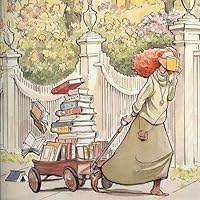
I loved this book. And I didn't expect to. Granted, Chocolat is one of my favorite "Go to a happy place" films. So when I found the book at a bargain price a few years ago, I thought I'd read it.
Per my usual, since I'd seen the movie, I didn't take the time to read the first book (since I have so much to read for work, and this doesn't fall into the group of books in my field). Now I think I will, even though I can tell that it won't take me to a happy place, as does the film.
I thought for certain that this book would fall into the category of "wannabe feminist magical realism ripoffs". You know, the fluffy ones that dress up sappy romance novels with cooking miracles, and relegate the magical to the feminine sex.
Well, it's slightly sappy--there is a romance involved (the same, for all you fans). But it's not magical realism. Nope, we're talking real magic. Witchcraft. And no, the people surrounding Vianne do NOT find it to be the norm (that would be magical realism). This is what makes me think that I need to go back and read the first novel--the movie script had completely altered this storyline. This book has Vianne and her (now two) daughters inhabiting Montmartre, and trying to live as "normal" people. But alas, a "normal", secure, comfy life is not in the cards for Vianne (pun intended). For the first time in a while now, I found myself wishing that I had time to pick up a book and finish it, or considering a change in my exercise routine so that I could take it to the gym and read it on the bike (I didn't, and my hips thank me for that). For those of you who "know' me, you'll know I'm INTJ, which means I'll fixate on little details more than most people. And I teach Spanish/Latin American cultures, civ's, lit's, so I'm always annoyed when authors "dabble" in those areas--I still haven't really forgiven the author of the Celestine Prophecy. But I liked this book so much that I could forgive talking about pulque as a powdered hallucinogen that could be added to water and reconstituted (it's the fermented sap of the cactus, so no, it can't), or referring the Incas as a MesoAmerican civilization, or Hurakan as an Aztec god (he was Taino, Hurricanes come from the Caribbean). At least, I think, Carpentier and Garcia Marquez would still approve of the fact that what is magical stems from the Americas--though the ability to see and appreciate the magical in everyday life is portrayed as possible among Europeans, which Carpentier would completely disagree with.
The story's told through three voices: Anouk's, Vianne's, and Zozie De L'Alba (not her real name, just her current persona). Since it starts with Zozie's voice (it's not a spoiler if I tell you she's an evil force), my first reaction was "wow, Vianne is a completely different character than her film counterpart". I felt better in the second chapter, when I realized that it wasn't Vianne's voice at all; I like a character I can get behind; anything else, it's hard for me to invest. The image at the beginning of each chapter is supposed to indicate who's narrating that chapter, in case you can't figure it out. I didn't pay attention to the images, just read. In the beginning, the alternating voices create a rhythm: Zozie, Vianne, Anouk, Zozie, Vianne, Anouk. It's like riding a train; that rhythm lulls you, dulls your senses a bit. But just as you're falling into the rhythm and almost asleep, Harris alters the pattern/order, so that you're shocked back into paying careful and close attention to the voice again. Is Zozie's voice radically and identifiably different from Vianne's, as is Anouk's? No, she doesnt' achieve that distinct nature the way Kingsolver did with Poisonwood Bible, but it's still wonderful reading. I think that this and the suspension of disbelief required at the neat, tidy ending are the only things that make me give it a four instead of a five (a five for me is "I WILL reread this!", and a four is "I'd love to reread this, if I had time.") If you're a fan of the film, I don't think that this book will disappoint.




 2008 read