Jump to ratings and reviews
Rate this book

A Face Without a Heart: A Modern-Day Version of Oscar Wilde's The Picture of Dorian Gray

Rate this book
A Modern-day Version of Oscar Wilde's The Picture of Dorian Gray. Amidst a gritty background of millennial urban nihilism, a young man bargains his soul away, while his painfully beautiful holographic portrait mirrors his each and every sin, each nightmarish step deeper into depravity...even cold blooded murder. A Face Without A Heart takes you on a thought provoking tour of the darkest sides of greed, lust, addiction and violence.

211 pages, Paperback

First published January 25, 2000

4 people are currently reading
161 people want to read

About the author

Rick R. Reed

118 books1,047 followers
Real Men. True Love.

Rick R. Reed is an award-winning and bestselling author of more than sixty works of published fiction, spanning genres such as horror, psychological suspense and love stories. He is a Lambda Literary Award finalist and a multiple Rainbow Award winner.

Entertainment Weekly has described his work as “heartrending and sensitive.” Lambda Literary has called him: “A writer that doesn’t disappoint…”

Find him at www.rickrreedreality.blogspot.com. Rick lives in Palm Springs, CA, with his two rescue dogs, Kodi and Joaquin.

Ratings & Reviews

What do you think?
Rate this book

Friends & Following

Create a free account to discover what your friends think of this book!

Community Reviews

5 stars
21 (23%)
4 stars
25 (28%)
3 stars
23 (25%)
2 stars
12 (13%)
1 star
8 (8%)
Displaying 1 - 30 of 43 reviews
Profile Image for CrabbyPatty.
1,712 reviews198 followers
March 16, 2017
A Face without a Heart is a retelling of Oscar Wilde's 1890 classic philosophical novel The Picture of Dorian Gray, which basically tossed a grenade into the world of Victorian society, who criticized it as being scandalous and immoral and full of homoeroticism.


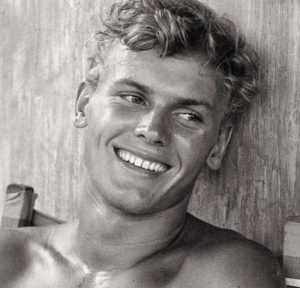
I picture young Gary Adrion (an anagram of Dorian Gray) as a young Tab Hunter. Reed writes of Gary's "fine cheekbones and perfect teeth, aquamarine eyes, a cleft in his chin… all these elements that came together to form something more ethereal. His beauty was difficult to describe in a language containing only twenty-six letters."

But even as we are introduced to the beauty, there is also the dark side. Gary is reading a biography of William Blake, author of Songs of Innocence and of Experience Showing the Two Contrary States of the Human Soul when Liam first spots him on the L. Liam thinks: "I suddenly had a presentiment, and the feeling persisted … that of fear, a feeling that this young man held a sort of menace."

A Face without a Heart beautifully balances that dichotomy throughout. Is Gary truly innocent, or was evil already there only to be awakened by Henrietta's comments? Is it nature or nurture? Gary's "selling of his soul" seems more a careless wish rather than an outright deal or conscious plan. But once it is set into motion, it is Gary's free will that crafts his life going forward.

As in Oscar Wilde's time, our society too often measures worth by appearance. We adore the surface rather than the depth. It doesn't matter if a man is good at heart, but if his face is good. Reed tantalizes us with the thought that Gary can change - that perhaps we as a society can change our preconceptions - but at the end of the day?
And people whine about how change never really lasts when it comes to others, how they always unfortunately revert to their old ways, the ways you don’t want them to be. Anyone who has ever tried to change another knows this to be true. Oh certainly, the change may last a week, a month, even a year. But soon the real person comes back, the one who has been waiting in the wings for just the right cue, the one that will allow him to say “Ah fuck it, I’ve had enough.”
I am a fan of Rick Reed's romance novels, but please note A Face without a Heart is not a M/M romance novel. It's an unsparing glimpse into a soul which perhaps isn't that much different from our own. And isn't that what a good horror story is all about? 5 stars.

I received an ARC from DSP Publishing in exchange for an honest review.
Review also posted at Gay Book Reviews - check it out!
Profile Image for ash |.
607 reviews119 followers
June 16, 2020
A modern-day retelling of The Picture of Dorian Gray.

Beauty is a quality that can go deeper than what you can see. It can be dark, dense, and make you powerless to resist. It can stir within you a longing that leads straight to your own demise. Now imagine that this beauty, this feeling, can be captured. In A Face without a Heart, the beauty of a single man is captured within a hologram portrait that is stunning and breathtaking.

"It's depressing, though, to think that even if this is really what others see when they look at me, this beauty is nothing I can hold on to, nothing that won't wither on the vine, darken, age..."

It's simply a moment in Gary's existence, captured by Liam, his new friend. Gary begins to struggle with the idea that this moment, this captured image, could very well be the best version of himself. Every moment, every breath he takes, leads to his beauty slipping away towards a darkness that begins swallowing him whole. He ends up bargaining his soul away -- his hologram portrait will age and decay so that Gary will be untouched. He quickly learns that he can engage in earthly pleasures and have it not affect his beauty -- however over the span of 20 years, his soul has not been left untouched. Gary finds himself moving through friends quickly, becoming excluded from locations due to his behaviors. Gary is initially admired for his beauty and appearance however as people begin to see his true self, superficial qualities are not enough to be able to maintain these relationships. Upon first sight, people appear to him as beautiful however an ugliness quickly envelopes his senses when he sees them for who they are, engaging in these same activities as he. It's like turning the mirror towards himself.

The story is told through several different POVs and I enjoyed how this allowed me to connect to some of the secondary characters. I do wish the friendships and backstories were fleshed out a bit more. Liam and Gary became best friends within days of meeting each other and there was a predominance of instant love which is my least favorite trope. Their mutual friend, Henrietta, provided a good balance in the story and moments of humor when it was needed. At the end of the day, I was hoping the narration would've delved a little deeper because it ended up feeling like we didn't scratch the surface with these characters and I was missing the lyrical writing -- the matter of factness left me yearning for me.

CW: Contains sexually explicit content, graphic scenes of death, and use of narcotics.

Thank you to Netgalley, NineStar press, and Rick R. Reed for the advance reading copy to review!
Profile Image for Gerardine  Betancourt .
355 reviews60 followers
June 26, 2020
In a face without a heart, Liam is an artist who is fascinated by bizarre things and one day he creates a three-dimensional hologram of Gary a young man whose beauty mesmerizes those who see him. For those who do not know the original story, the painting, or in this case the hologram will continue to age while Dorian or in this case Gary remains eternally young. The painting represents the soul of Gary and in the novel, we see the dilemma that the protagonist faces when taking a side between good and evil.
I honestly always liked the portrait of Dorian Gray and I loved the way the author represented this classic book.
TW for almost everything: violence, murder, rape, drug abuse, suicide, graphic sex
4 stars to me
thanks to NetGalley and Ninestar Press for this arc in exchange for an honest review.
Profile Image for FantasyLiving.
604 reviews36 followers
July 7, 2017
Reviewed for Boy Meets Boy Reviews

I have to admit that I’ve never read The Picture of Dorian Grey but I know the basics of the story, and of course he features in Penny Dreadful so I’m aware of the character.

That being said, I really fell into this adaptation and found it intriguing, poetic, and fantastical. I am actually pleased I read this contemporary adaptation before taking the plunge into the literary classic.

This story is told from multiple points of view but clearly shows the story of Gary and his journey from barely legal drifter from a wealthy family to tortured immortal. The contemporary setting made this relatable, and interesting. The hologram had my wheels turning and was completely different to any artist point of view I’ve read before. I was actually enamoured by the description of the artwork and the showing. Mr Reed really sold me on the realism of it.

I have a hard time with recreational drug use so this dimmed my enjoyment somewhat, even though I understood the reason behind it. Addiction is a sore point for me in real life, so it’s not surprising the casualness of it in the beginning turned my stomach. That being said, I appreciated that the grittiness of long term use was clearly shown, and not glamorised in any way. This made it darker for me (and maybe other readers without my issues will feel the same), and gave a depth to the type of destructive lifestyle Gary was leading.

This story is rich in layers, and walked a clear line from beginning to end. I felt connected to all the characters as well as the lead. I appreciated the witty touches of Henrietta and the reverence of Liam the artist.

I had some issues with the beginning, with Gary’s first love, and I’m trying to ignore them as I write this. It was odd to me, and seemed out of place with the rest of the story. I get why it is there, but it didn’t fit for me. As the story progressed I tried to ignore it was even in there.

Overall I think this was a great story. It’s on the grey side of dark *wink* and enjoyable in an atypical way. Mr Reed always gets me with the interpersonal relationships and the creepy descriptives. Wonderful showing as always.

I’d recommend this to anyone who enjoys the original, the movie adaptation and Rick R. Reed’s other horror/thriller work.

A review copy was provided in exchange for an honest opinion
Profile Image for Kris.
354 reviews34 followers
April 8, 2010
The Review:

Honesty from the outset~

When you get message like this: "Tell Kris A Face Without a Heart, while it does have its moments, isn't all that scary", you would worry... wouldn't you??

First things first~

I'm sure there are some of those among you who have been rolling your eyes at certain people becoming Rick R Reed fangirls. I admit I had even dared to raise an eyebrow at the enthusiasm of our fearless leader, but damned if she wasn't right. Good God, this author can write a gripping tale.

For those not familiar with it, this is a story about a spoiled - and I'm using this word deliberately - beautiful young man, Gary Adrion (note the anagram, which is an example of the way the author plays on the names and personalities of the original characters), who comes to the attention of holographic artist Liam Howard. In his love for Gary, Liam creates an Idol-like artwork of the man, which is both painful and enthralling and leads Gary to bare all by admitting he would give his soul to the devil to remain like the image forever. Thus begins his wanton descent into a life of depravity, greed, drugs, sex, amorality, selfishness, blackmail and murder. Amidst this Gary feels safe, even smug at times, in the knowledge that his portrait, which as a mirror to his soul that fascinates and repels him, will take on his every sin. So, you can imagine that describing this work as an uncomfortable read is an understatement to say the least.

Knowing A Face Without A Heart is a modern retelling of Oscar Wilde's The Picture of Dorian Gray you do tend to automatically think certain things: (a) this is obviously not going to end well, and (b) what new aspect can the author possibly bring to this story.

In many ways the first is a given; however, this did not stop me from being caught up and gobbling page after page of the book. This can be partly attributed to the writing style of this author, which is sheer joy to read. ::insert further superlatives here:: :)

The other reason why it resonated so strongly with me - and this relates to point (b) above - is because the themes are paricularly relevant to today's society in which youth and beauty tend to be immortalised by media and adored and envied by many, with some people going to extraordinary lengths to mantain this facade. When I was reading A Face Without A
Heart I couldn't help thinking about the trainwrecks of the lives of the rich and famous, which are laid out in public forums for our consumption. This retake, I think, has even more of an impact precisely because of it's modern setting.

A couple of issues/warnings~

I didn't, and I don't think many will, find any of the characters likeable. This doesn't mean I wasn't able to form a connection with them. In fact, I ended up pitying Gary knowing his path to self-destruction couldn't end anyway but badly.

The author has used an unusual format where each of the main characters as well as a few of the secondary characters have chapters of their own in which they tell their part in the story by means of the first person POV. This approach works extraordinarily well; giving the reader an insight into each of the protags and as a tool for progressing the story. I admit I found this gave me some 'reflief' as it were to what would have been an even more disturbing read if it had been written entirely from the perspective of one person.

My recommendation~

A Face Without A Heart will not be for everyone, but I would recommend this novel to those readers who are interested in great character studies and like to challenge themselves with confronting themes and issues.

I also think for anyone who was fascinated by The Picture of Dorian Gray reading A Face Without A Heart is an absolute must.
Profile Image for The Novel Approach.
3,094 reviews137 followers
February 3, 2017
One of the classics of Victorian literature, Oscar Wilde’s The Picture of Dorian Grey, is a novel (Wilde’s only novel) whose themes have stood the test of time, and is one of my favorite stories to see reinterpreted for a contemporary audience. The preface of the book, added after the story’s original publication was widely criticized as immoral by the puritanical society of the time, contains one of the author’s now most famous quotes: “There is no such thing as a moral or an immoral book. Books are well written, or badly written. That is all.” This, of course, was also the novel that was used against Wilde in court, due to its homosexual overtones, in the “gross indecency” trial that sent him to prison for two years.

But, before I get too carried away with my love of all things Oscar Wilde, the reason I was excited to read A Face without a Heart, apart from my being a fan of its author, was to see how Rick R. Reed would put his own signature on the story. In its fourth publication, first released in 2000, Reed’s interpretation of hedonism, and the aesthetic, and the relationship between an idealized youth and beauty gives Gary Adrion’s story a chilling and modern twist on the old adage, “Be careful what you wish for.” Art and morality commingle with the Faustian-esque bargain Gary makes in trading his soul for eternal youth, and we readers watch as that trade sends him spiraling into a decade-plus long hell. Gary is frozen in time, twenty-one in perpetuity, and goes on to immerse himself in a life of debauchery and self-indulgence, maintaining his surface beauty while the art that captured that beauty, initially, begins to rot as he immerses himself in a wasteland of empty sex, alcohol, and hardcore drugs.

Where Wilde’s “Dorian Grey” was written in a florid prose that fit the narrative and Wilde’s own style, Reed’s novel is written for his contemporary audience and showcases his own style equally well. Told from multiple points of view, which the author accomplishes with great success, the narrative voice from one chapter to the next reads seamlessly, each character’s voice distinct. Gary has his own “devil and angel” sitting on his shoulders and whispering in his ears—Henrietta, a sassy and cynical drag queen, is our Lord Henry Watton; while Liam is the novel’s Basil Hallward—it’s his art through which we see the reflection of the artist and his love for his subject.

The catalyst for Gary’s downfall, or, maybe I should say the victim of Gary’s scorn which spurs his downfall, is modernized for this novel as well. Zoe D’Angelo is the story’s Sibyl Vane. An exotic dancer rather than an actress, Zoe pays a steep price for Gary’s admiration just as Sibyl did Dorian’s. I also like the unexpected undercurrent Reed gives to Davio D’Angelo’s relationship with his sister. There’s an overall chilling sort of savagery to this novel, both violent and psychological, which allows readers to appreciate it on its own merits rather than as a simple rehashing of Wilde’s story. Trust me, you may recognize the bare bones of this novel’s inspiration, but Reed fleshes his version out and gives readers a few surprises before it all comes full circle.

As is its inspiration, A Face without a Heart is, at the end, a redemption story which is laced with Reed’s particular brand of horror. There are some truly gruesome scenes in this book that added a biting edge to what is otherwise a cautionary tale, and it is, as one would expect from this author, well written.

Reviewed by Lisa for The Novel Approach Reviews
Profile Image for Sammi.
226 reviews30 followers
June 4, 2020
Firstly I'd like to thank the publishers and NetGalley for providing me with this book in exchange of an honest review.

A Warning; the book contains graphic sex, drug use and lots of other immoral topics. Take that into consideration before reading.

It's been a long time since I've read Oscar Wilde's The Picture of Dorian Grey, and I have always been fascinated by the story. It's been something that stuck with me, whilst I didn't adore the original I did enjoy the story and the commentary it has on corruption.

I found getting into this story, for me at least, took a bit of work. It was unexpected to come across multiple POV's as I thought we would hear the slow decline of our Dorian (named Gary - which I hated but that's beside the point) purely from his point of view. I really didn't like it, and found that I couldn't connect to the story because of this in the early chapters. I felt that all the different characters felt written the same and were indecipherable, at least at the beginning. Later on in the book it changes and each character develops a distinct voice and it improves the flow of the story.

The focus of the story is Gary, his innocence and decline into corruption when given the opportunity to get away with things he otherwise wouldn't have because of his immortal beauty. I really enjoyed how the 'portrait' of Gary was now digital/holographic. I appreciated how none of his actions were glamorised. He was an unlikable and disturbing character and the author had no qualms about showing this. My favourite character was Henrietta, I loved her charm, poise and presence and felt that the story would not be the same without her.

I did feel however that the story both felt too long and too short all at once. I felt there was at times a lot going on without much flesh to it. The relationship he has at the beginning of this book being a prime example, instalove to instahate almost immediately. It felt flippant and annoying, but I suppose it does lend itself to the man he becomes and the start of his downfall.

Overall it was an enjoyable story, I am still fascinated by the plot and idea of it and think this version would make a much more enjoyable movie than the original. I loved the creepiness and it was definitely a book that had me feeling actually disgusted with the main character and making remarks about him out loud.

3.5 stars
Profile Image for Sammi.
226 reviews30 followers
June 4, 2020
Firstly I'd like to thank the publishers and NetGalley for providing me with this book in exchange of an honest review.

A Warning; the book contains graphic sex, drug use and lots of other immoral topics. Take that into consideration before reading.

It's been a long time since I've read Oscar Wilde's The Picture of Dorian Grey, and I have always been fascinated by the story. It's been something that stuck with me, whilst I didn't adore the original I did enjoy the story and the commentary it has on corruption.

I found getting into this story, for me at least, took a bit of work. It was unexpected to come across multiple POV's as I thought we would hear the slow decline of our Dorian (named Gary - which I hated but that's beside the point) purely from his point of view. I really didn't like it, and found that I couldn't connect to the story because of this in the early chapters. I felt that all the different characters felt written the same and were indecipherable, at least at the beginning. Later on in the book it changes and each character develops a distinct voice and it improves the flow of the story.

The focus of the story is Gary, his innocence and decline into corruption when given the opportunity to get away with things he otherwise wouldn't have because of his immortal beauty. I really enjoyed how the 'portrait' of Gary was now digital/holographic. I appreciated how none of his actions were glamorised. He was an unlikable and disturbing character and the author had no qualms about showing this. My favourite character was Henrietta, I loved her charm, poise and presence and felt that the story would not be the same without her.

I did feel however that the story both felt too long and too short all at once. I felt there was at times a lot going on without much flesh to it. The relationship he has at the beginning of this book being a prime example, instalove to instahate almost immediately. It felt flippant and annoying, but I suppose it does lend itself to the man he becomes and the start of his downfall.

Overall it was an enjoyable story, I am still fascinated by the plot and idea of it and think this version would make a much more enjoyable movie than the original. I loved the creepiness and it was definitely a book that had me feeling actually disgusted with the main character and making remarks about him out loud.

3.5 stars
Profile Image for Dr. des. Siobhán.
1,588 reviews36 followers
June 28, 2020
*I received an ARC via Netgalley in exchange for an honest review. Thanks for the free book.*

This is a modern day retelling of Oscar Wilde's "The Picture of Dorian Gray" with Liam as an artist taking pictures of his muse and modelling them into holograms. The hologram of Gary Adrion (see the pun?) is his masterpiece and he falls in love with the ethereal beauty of young Gary. But Gary soon makes wrong decisions and as his actions become more cruel, violent, and terrible, he remains young and beautiful.

As retellings go, this was super predictable, but this one didn't take me in, emotionally. I thought many things were quite ridiculous (SUCH A LONG PENIS!), especially that graphic sex scenes are supposedly super shocking and how the wickedness of Gary, but it felt more like a caricature. Nevertheless, it was interesting to see what the modern setting would do to the story: surprisingly, not a lot. The alcohol, the drugs, the sex and the artist's helpless infatuation are the same. Yes, it was dirtier and more graphic, but it didn't make it much more shocking. Also trigger warnings galore: violence, abuse, rape, sexual assault,...

2,5-3 Stars
Profile Image for Bookaholic__Reviews.
1,214 reviews155 followers
July 21, 2020
Potential Triggers: suicide, sex, cheating and rape, drug use, suicidal thoughts and murder.

Oscar Wilde's the Picture of Dorian Gray has always been one of my favorite books. When I stumbled across this novel I knew I had to read it.

A Face without a Heart is a retelling of Oscar Wilde's 1890 classic philosophical novel The Picture of Dorian Gray. In A face without a heart we meet Gary Adrion (an anagram of Dorian Gray) and Liam ( The artist), as well as an entire slew of characters. The story is told from multiple points of view and bounces between narrators to give a broader view of the events.

While I dont think its comparable to the original at all, I found myself enjoying this modern take. The characters were developed well and while I cared for some more than others , I enjoyed having the perspectives of the multiple narrators. Overall, I think this book was beautifully written and worth reading.

I recieved a digital copy of this book from the publisher via Netgalley in exchange for an honest review.
Profile Image for Bookaholic__Reviews.
1,214 reviews155 followers
July 21, 2020
Potential Triggers: suicide, sex, cheating and rape, drug use, suicidal thoughts and murder.

Oscar Wilde's the Picture of Dorian Gray has always been one of my favorite books. When I stumbled across this novel I knew I had to read it.

A Face without a Heart is a retelling of Oscar Wilde's 1890 classic philosophical novel The Picture of Dorian Gray. In A face without a heart we meet Gary Adrion (an anagram of Dorian Gray) and Liam ( The artist), as well as an entire slew of characters. The story is told from multiple points of view and bounces between narrators to give a broader view of the events.

While I dont think its comparable to the original at all, I found myself enjoying this modern take. The characters were developed well and while I cared for some more than others , I enjoyed having the perspectives of the multiple narrators. Overall, I think this book was beautifully written and worth reading.

I recieved a digital copy of this book from the publisher via Netgalley in exchange for an honest review.
Profile Image for Nemo.
162 reviews
June 30, 2020
Received a free copy through NetGalley UK in exchange for an honest review.

As much as I would love to claim otherwise, this book was a struggle for me to get through from start to finish. I kept thinking I'd give it one more chapter and see if it improved, but the more I read, the more I wanted to hate it, and I generally try not to abandon books if I can help it, so I kept pushing myself onwards with it. The one good thing about this book is that it's fairly fast-paced, which helped, but at the same time that's one of the things I wasn't overly fond of about it.

There's too many narrative switches for my liking, especially to characters that play big parts but aren't necessarily important, and although by the end of it it's understandable to a point why they were somewhat necessary, there's always ways around it that could have improved the whip-lash of the reader, pulling us in and out every time we adjust to one - there's no pattern to the changes, either, which makes it worse. But my biggest issue with the narrative changes is that, despite being written in first-person, they all sound the same, and it's a flat, monotone drone from all of them that sounds pretentious regardless of who the characters are. I can understand the main three sounding similar in that way, to a point, but the others didn't come from money, didn't have money, and would never have sounded so full of it and jaded by it when it comes to material possessions in the same way. Honestly, I think if the book had been written in third-person, a lot of the problems I had with it would have been far less noticeable, but alas. Also, the main character, Gary, was written in present tense and all of the others in past tense, and I understand this is to make him stand out as the main character, which is unnecessary since the whole book revolves around him, and I guess as an attempt to make him sound as if he's different to the others, but it again was just a whip-lash issue that was there to throw the audience out of the story rather than keep them gripped into it. The whole writing style didn't work for me in general, and maybe it's just me, maybe no one else reading this had problems with any of this, but having looked at other reviews, I don't think I was the only one who found the endless list of reasons the author throws us out of the story rather than keeping us in. If you notice the writing style while you're reading it over the plot itself, then there's obviously a problem.

My biggest overall issue with this story is that it was originally published twenty years ago as an indie book and is now being re-published on a bigger label all these years later, and it shows its age without any signs of it having been edited to update it. There's the things described in the book that younger readers might not get the way someone who lived through the nineties or earlier might, and the attitudes haven't been updated. There was one particular comment that stuck with me from Gary's point of view within the first few chapters about Henrietta, the drag queen of the cast, concerning how he mistook her for a woman at first, but on closer inspection realised there was 'a coward of a man hidden beneath', and considering that she's represented as more trans than she is a drag queen, I find that highly offensive with the way it came across, not to mention the fact that beyond that character recognising his mistake, there was no real need to make such personal a comment to the subject as the narrative went into - it was almost like the author was preaching his views through the character, and every writer knows never to do that, or to at least make it seem like they're not doing that. There were other such comments throughout as well, and had she not been represented the way she was, it might have been easier to shrug off, but that comment alone, to me, shows the age of the book and the attitudes that have changed since then regarding trans and queer people, which is a subject close to me personally, and it doesn't matter if the author is someone from the community or not, it doesn't excuse it. There were a lot of stereotypical character traits in general, each character being a stereotype and not a lot more, which was perhaps the issue of it.

For a book that has characters who throw around the saying 'I know you, and this is not you' a whole lot, I don't feel like I really knew any of the characters. Liam is around in the beginning a lot more than he is later on, and as it seems we're getting to know him (and getting to know Gary through his eyes), he's suddenly removed from the narrative, then we get to know more of Henrietta (and Gary through her eyes), who's then also suddenly removed. One of the easier ways to portray a character for the world to know who they are is to have a handful of characters around them showing that they know them because of this or due to that, and every time we get close to that, it's taken away again. Maybe that was intentional? The character does seem to lose himself over the years, but it comes across as much more mistimed narrative switches. We know Henrietta has a husband, we even get to meet him briefly, but then suddenly later on she's going on dates with people without any real explanation as to what happened with the husband - we're supposed to care about these characters, supposed to know them, but we're not shown anything about them and the few things we do see aren't explained. Things happen, no explanation, then things move on. Liam is doing well working in Chicago, the next it's been years, his word changes drastically, and then he's moving to New York, but the progression of this isn't even hinted at nevermind shown. Gary, the main character who is supposed to be the most important, has never met Zoe one minute and the next we're supposed to believe he's madly in love with her. There's not a lot of room in the narrative for us to know the characters, or to care about them, and I think that was the biggest of problems for me in getting into the story and staying tuned into it. I like to know the characters, to see them develop, especially if years are going by from start to finish, and there's no time for any of that, not even with the main character. Gary was a person before Liam did the artwork of him and he practically froze in time, and yet we know little to nothing of that person he was to compare it to how he became towards the end of the story. How can we judge him, even through his eyes, on how different he was at the start to how he was at the end, when it was never shown, and it was never really told to us, either? He could have been a selfish, self-absorbs borderline sociopath at the beginning as well as the end for all we've got to show for it, and those are the kinds of people who know how to keep up an act, so what is there to show the audience that he wasn't like that at the beginning, that he was truly innocent before he stopped physically ageing? Nothing. By the time I read to the end, I was really disappointed that there wasn't anything to really compare the two states of his being to each other and that I'd read a whole book without anything to show for it.

There were narrative issues, the age of the book itself issues and the attitudes to the LGBTQ+, and there are character issues and the lack of solid substance to them or time to get to know them, and those are all pretty big problems to avoid when writing a book, but it doesn't mean the book was out-and-out awful. It wasn't. It was readable. I came close to abandoning it, but the fact is that I didn't, there was always enough to keep me reading it, even if those things weren't things that I look for in a book or the characters within the book, they were enough. My review so far makes it sound as though I hate the book and I don't, but I did really want to love it and couldn't. I think the fact it's a re-telling of such a classic, getting it right is important, or putting enough of a unique spin on it is vital, and for me personally those things weren't lived up to. It doesn't mean there weren't aspects of the book that I liked or didn't mind, or that it was completely unreadable. But for me personally the big things that I look for in a book, in a character, and, most importantly, in a plot, were all missing, and therefore it's difficult for me to point out the good points over the bad ones. However, that doesn't mean to say that someone else will have the same problem, and I hope there are a lot of other people out there who've read the book and can list off all the good points that they found where I fail to do so, because it wasn't awful, and it wasn't unreadable, it just didn't tick all the boxes for me.

This book was okay, I enjoyed it for what it was, but for me it was disappointing that it didn't seem to finish what it started in terms of all the points it made, all the branches it grew, but the plot itself was complete if not predictable - there was only ever going to be one way to put an end to the predicament the main character was in and it ended like that. It was disappointing that I felt worlds apart from being close to relating to the characters in any kind of real way, it was disappointing that I didn't walk away feeling like I knew any of the characters or half of the things that happened to them whilst the story played out, and it was disappointing that there wasn't a bit more to the plot woven around the main part of it to keep things intriguing. I didn't feel able to connect with the characters, their backgrounds, or their stories, even the ones that I should have been able to connect to, and I don't know if that's down to me and how I perceive the world compared to how they did or if it was down to the author's ability to portray that in a real way that translates to the real world and real people, or a bit of both, but unfortunately something went wrong somewhere between this book and me. I wanted to love it, but all I can do it like it. I wanted it to be amazing, but the best it was is readable. I guess despite the themes of the story and the community of people, which are things I rarely struggle to connect with in any given story, for whatever reason, I just couldn't connect with them in this book, and I'm disappointed in that most of all, but it is what it is and that's all there is to it. I'm sorry I couldn't like it more, I wish I could have walked away from it with at least one memorable character and a plot that will stick with me for years to come, but this book wasn't the one for me. Hopefully it can be all those things for someone else.


NG

The synopsis for this book sounded amazing, it ticked a lot of the boxes for me from the community of people it revolves around to the fact that it's a re-telling of a beloved classic, but for whatever reason I couldn't connect with it the way that I had hoped I would. I wanted to love it, but the best I found it to be was 'readable' and 'okay'. I wish I could have walked away loving each and every one of the characters, but the best I can say about them is that they're likeable enough, tolerable at best, and I find that to be a real shame. I don't know if it was the book itself or me, but I was never able to fully connect with it, and every time I got into the book, I was thrown out again by the various narrative and tense changes, the skipping of huge chunks of time with no real explanation as to what happened between, etc. On paper, this should have been one of the books that I usually connect with and fall in love with, but in practice I struggled to finish reading it from start to finish and felt disappointed with the gaps never filled in from previous branches of the plotline.

However, the plot in general is complete, it has a beginning, a middle, and an end, all the highly significant plot points are woven throughout and wrapped up by the end, and for what it is it's all there. It's possible I expected too much of it as a re-telling of such a huge book, or because I expect more of the books that I usually do read, but whatever the reason, unfortunately, the completeness of the story alone wasn't enough for me personally to connect with it in such a way that made me love it rather than merely liking it. Hopefully others will be able to get into and take away from it far more than I managed to, because it is a good book beyond the problems that I struggled with throughout it.
This entire review has been hidden because of spoilers.
1 review
January 28, 2020
A Book Without A Point:

First of all, I would like to be totally honest and state that this novel was one that I chose to read out of a list of several modern adaptations given to me for an English class's summer reading. I probably wouldn't have read it otherwise. But I absolutely love the original novel, and found this intriguing enough to pick up. To tell the truth, if not for the fact that I was too far in (and had too little time to choose something else), I would have set it down the second I picked it up.

I understand the way in which the author tried to emulate Dorian Gray through edgy topics, but the way in which Reed went about it was not effective, in my opinion. Some changes felt as if they were made just for shock value, and others would have been interesting if not for the way that the author went about writing them. For example, the character of Henrietta stood out to me as a particularly clunky adaptation, mostly because the writing used for her was painfully stereotypical (despite the fact that Henry as a drag queen could be done incredibly well, and be legitimately interesting), only breaking from that to shove a barely connected moral pondering into the book. Speaking of said 'moral ponderings', it seems as if the sole purpose of those were to make the book seem as intellectual as humanly possible, with almost no effort behind it. The way in which characters talked switched between two writing styles: modern coolkid and author begging for literary recognition. Neither of those worked.

Of course, all of this review so far has not mentioned my favorite part of the book. The creme de la creme of strange modern adaptations. The sheer prevalence of drugs and explicit sex in the novel. I've never really had issues with content like that in media, and if I get uncomfortable, I just skip past whatever sexual encounter I'm slogging through as long as it isn't relevant to the plot. But this book. This specific book. For some reason, this produced an immediate reaction of disgust in me. Now, I understand that this is likely the point- Reed wished to emulate the effect that the original novel had on those who read it when released. But there were so many better, more interesting ways to go about that.

I believe that what made the sexual content (and the stuff with drugs, but that's less important) stand out so much to me is the way in which it was written. Nuance was thrown out the window, and everything was stated clearly in the most matter-of-fact way possible. Even the most horrific moments were talked about, it was as if the author had no idea just how impactful a moment like that could be, choosing instead to plainly state it with no emotion behind the thoughts.

I would like to completely apologise if this review was not very good- I've never actually done one before- but I hope that at least a few of my points made sense. If you are given the option to read this book, out of a long list of potentials, I would recommend choosing something else. And if you're like me, and prefer well-written ponderings on the nature of evil compared to explicit sex just to invoke a strong reaction? Just re-read The Picture of Dorian Gray.

(And one last incredibly irrelevant thing. The main character's name is Gary. I understand that this is supposed to be a rearranging of the letters in Dorian's last name, in order to call back to the source material, but in my mind, it is absolutely impossible to connect the descriptions of a man so attractive and manipulative he can get away with murder with a name like Gary.)
Profile Image for Kit (Metaphors and Moonlight).
975 reviews162 followers
January 26, 2017
3 Stars

Full Review:
*I received an ecopy of this book from the publisher. This has in no way influenced my review.*

To be honest, I probably should’ve stopped reading this after the first few pages because I could tell it wasn’t for me. But a Dorian Gray retelling! I had to keep reading because that’s one of the only classics I’ve ever loved, plus it’s just got a great premise with lots of potential, and I really wanted to see how this author would put his own spin on it.

Unfortunately, it seemed like this book was trying too hard to BE the original story rather than a unique retelling. Sure the book was set in present day America rather than 1800s England, the character of Henry was a drag queen rather than whatever Henry was, the artwork was a hologram rather than a painting, the character of Sybil was a stripper instead of an actress, etc., but those things are all just minor details. The plot was almost exactly the same (not just the general idea, but conversations the characters had and everything), and the characters had the same personality traits, right down to Henrietta’s love for giving paradoxical advice. Even some of her quotes were almost exactly the same as Henry’s just with more modern words/ideas. I can concede however that this disappointment might just be on me for having certain expectations—I personally prefer retellings to have more of a twist, or to have something unique to them, or to explore something from the original more in depth—so other people may like the fact that it was pretty much the exact same story, just modernized, especially if you haven’t read the original and don’t already know what’s going to happen.

Another problem I had though was that the characters felt flat. Gary (Dorian) was a jerk, which was to be expected. Liam (Basil) was reserved and kind of pathetic. Henrietta (Henry) was loud-mouthed and opinionated. But that’s kind of all they were. And the way their new identities were forced to mesh with the traits and situations of the originals felt unnatural. Some of the thoughts, feelings, actions, motivations, speech, etc. of the characters didn’t fit with the modern world or the new identities.

That being said, somehow the book got a little better around halfway through. It was still basically the same plot, but it stuck to the modern aspect more and showed more of the actual depravity (you know, all those parts the original skipped over).

But because of all that depravity, this book is not for the faint of heart. There was *TRIGGER WARNING* *END TRIGGER WARNING* I’m not sure I’d classify this as LGBT though, despite the M/M sex. Yeah, the protagonist had sex with men sometimes, but he didn’t identify as gay or bisexual; he simply had sex with men when he was so high that he didn’t care and was physically incapable of doing it with women. The two main side characters were gay though, and there were brief M/M sex scenes on screen, so I guess that’s why it’s considered LGBT.

So overall, I was disappointed that the story wasn’t more original, and I guess the book just wasn’t quite for me.

Recommended For:
Anyone who wants to read a story that's almost exactly the same as the original Dorian Gray, but modernized and more graphic.

Original Review @ Metaphors and Moonlight
Profile Image for natrosette.
190 reviews23 followers
June 8, 2020
Gary, raised by an aloof grandfather in a rich family, has never wanted for money or beauty, only for love. Liam, a photographer who creates holograms, sees Gary on the train one day and, astonished by his beauty, requests to make a hologram of him. Gary agrees and Liam creates a masterpiece which highlights both his artistic skill and his awe for the other man. Liam's best friend, the cynical drag queen Lady Henrietta, believes this awe to be only a passing fancy but quickly becomes Gary's best friend as well, encouraging him in some of the more hedonistic parts of life. After tragedy strikes, it becomes apparent to Gary that his hologram ages while he does not. At first this is a blessing, allowing Gary to partake in any number of pleasures without worry for the consequences. But as his friends age without him and his life continues with little purpose, he realizes that maybe beauty and decadence aren't all they're made out to be.

Content warnings: graphic sex, drug use, suicide, rape, murder, victim blaming

This novel is a modern retelling of The Picture of Dorian Gray, a classic which I unfortunately have yet to read. So this review will not be analyzing A Face without a Heart in comparison to the original story, but instead relaying my experience of reading it as a independent novel. Still, I began this book with expectations for it to be an examination of youth, hedonism, and depravity which makes more explicit the homoeroticism of Dorian Gray that I have heard so much about. Unfortunately, I was disappointed.

Prose usually isn't a huge deal to me. I've read prose that others find over dramatic (Nevernight) or overly descriptive (Wheel of Time) and though I can acknowledge the flaws, I usually get past them fairly easily. However, the prose in this novel did bother me. It wasn't necessarily awful, but it was lacking in nuance. I'm not one for flowery writing, but the writing here was so straight-forward that I found it unpleasant to read sometimes. There seemed to be a good deal of telling, rather than showing. Something I am a bit more picky about is dialogue, which felt unnatural to me throughout most of this novel. If nothing else, the plainness of the righting made it quick and easy, though not necessarily enjoyable, to read.

Yet, the biggest issue for me was the characters. Ignoring the fact that "Dorian" was named Gary of all things, I simply didn't connect with him, Liam, or Lady Henrietta. I realize that these characters weren't supposed to be likeable (except perhaps Liam who I think I would have liked if we had seen more of him). I can appreciate unlikable characters who are bad people so long as they're still good, well-developed characters. In this case, however, they felt one-dimensional and unrealistic. Henrietta, in particular, seemed like a conglomeration of stereotypes whose defining features were being excessively outspoken and pessimistic.

At around 250 pages long, this novel is much shorter than most others I read. On the one hand, this was good for me because if it wasn't so short, I probably would have stopped reading about halfway through, and the book does get much better in the second half. On the other hand, I think the quick pace of the novel is part of what contributed to its unbelievability for me. I know that an in depth narration of Gary's entire adult life isn't possible, but I think I would have been much more convinced by his character development, such as it was, if it occurred more gradually and we got more insight into his inner dialogue. There were even a couple of critical scenes that we only heard about in retrospect as he talked about them with Henrietta, which is a decision I didn't understand at all.

In the end, I'm most disappointed because I didn't find much of a point or takeaway from book unless it was "don't do too many drugs" or "don't promise to marry someone you've only just met." Of course, not every book has to have a meaningful takeaway, but I was expecting that this one would since it is a retelling of a well known, philosophical classic. I think the message was perhaps supposed to be that hedonism doesn't make for a satisfying or happy life, but the depravity in this book was almost too extreme for that to be a convincing conclusion. (I could easily argue that one could live hedonistically, pursuing the pleasures of life, without complete disregard for their own well-being or that of others and thus might have a better life than Gary did.) Having never read The Picture of Dorian Gray, I can't say whether it shares this downfall with A Face without a Heart or not.

Finally, I feel I have to mention that if you're looking for a retelling of Dorian Gray with a greater focus on homo/bisexuality, this isn't it. Not that it really claims to be, but I think some people will come in with that misunderstanding. There is no M/M romantic relationship, and though Gary has sex with other men, I (as someone who is bi) don't think you could label him as bisexual; he only does so when he's too drugged up to care and even then doesn't seem to receive any pleasure from it.

Despite my lack of enjoyment of A Face without a Heart, I am giving it two stars rather than one because it's not truly a bad book. I can see how many people who didn't have the same issues I did with the prose and pace might like it, and I did find myself slightly more invested in the second half of the book even if it was too little, too late for me.

Many thanks to NineStar Press and Netgalley for a free ARC of this book in exchange for an honest review.

Check out my blog for more reviews!
Profile Image for Elaine White.
Author 45 books261 followers
January 31, 2017
Book – A Face Without A Heart
Author – Rick R. Reed
Star rating - ★★★★☆
No. of Pages – 200
Cover – Gorgeous!
POV – 1st person, multi-POV
Would I read it again – Yes.
Genre – LGBT, Horror, Paranormal


** I WAS GIVEN THIS BOOK FOR MY READING PLEASURE **
Reviewed for Divine Magazine


Warning: contains references to suicide, MM sex, cheating and rape. Contains 1st person accounts of MF sex, drug use, suicidal thoughts and murder.

Disclosure: I haven't read the original The Picture of Dorian Gray,
and I didn't read it before reading this to allow the story to speak for itself.

~

This was an interesting read. Dark, but not in the worst ways. I've definitely read darker and more psychologically twisted books, but this one did its job and became a very intriguing read from very early on.

Now, this isn't a book you “love” or even “like”. It's an experience. What happens between page 1 and The End is not something you're going to forget, but it's also not something fluffy and happy. You won't close this book thinking “well, I really enjoyed it”, because they're nothing enjoyable about it. But there is plenty to appreciate and respect; lots to think about and take your interest.

~

POV

The POV is a tricky thing, when working with 1st person, but I can see what Reed did here and I can understand why. Not only does the 1st person allow for a much closer connection between the reader and our protagonists, but it allows us to see the thoughts, feelings and experiences first hand.

The best thing that Reed did when writing this was to label each chapter with the POV that would follow, so instead of a title chapter you have Gary, Henrietta, Liam and so forth, to label which 1st person POV you're going to be reading. This was soo helpful.

At the same time, however, we need multi-POV to show us the things that our MC can't see. Such is the case for how we first meet Gary, our MC, as that needs to be told through Liam's POV. Gary and Henrietta's friendship can be explored with both, as can Liam and Henrietta's friendship, but it's really those in between moments that require Henrietta's POV, because she's a lot more cynical that the others. Her POV gives us a sort of mediator between Liam's hopeful everything-will-work-out, hard-work attitude and the slow progression from Gary's innocent-and-idealistic personality to nothing-matters-but-myself attitude later on. Also, without Henrietta, we wouldn't get that last so-important chapter which is utterly crucial to the story.

There are two more additions of POV that I do have to acknowledge. Now, when I first read them, I wasn't so sure. But, after reading the entire book, it makes so much sense to include them. Zoe and her brother Davio actually have a small but crucial role in the story. I won't explain why, for those who haven't read this yet, but their actions and decisions, made within their POV are really important to Gary's future and the concept of “A Face Without A Heart.”

Now, the only downfall of the 1st person POV is that it usually works best in past tense, but as if someone is telling the story of what happened to them. That's fine. I can't stand 1st person, present tense for some reason. But there are some minor slips where this falls into present tense (example: “He's joined the Army.”)

~

CHARACTERS

When it comes to the characters of this story, I was in a bit of a tailspin for most of the book.

Gary is our protagonist and main character; the one that we follow throughout the entire story. He begins all light and fluffy – the innocent idealist who believes in love and the soul and goodness. He's a kind, gentle person who has never been loved so is a little more naïve than others his age. Which is what gets him into trouble, because he's flattered by Liam's wish to make a hologram of him and sits for the artist. However, it's really Henrietta's dark view on life that changes him the most. One conversation with her and his innocent naïvety are not only challenged but somehow twisted. Combined with the physical display of his perfect, he allows her words to go to his head, makes a deal he doesn't believe in and heads on a downward spiral that never ends.

Liam is the one that starts it all. He's the one who sees the shining beauty in Gary and wants to mark that perfection for all time in a hologram. However, despite being as much of an idealist as Gary, he's also a realist in many ways. Liam believes in love and the soul, spirit and God, but he's also aware of the darker side of the world, making art from misery and holograms of serial killers. For me, Liam is the balance and the only saviour Gary ever had.

Henrietta is the bane of my – and Gary's – existence. To be quite honest, I never liked her. Not a little. Right from the start, her brash, abrasive attitude and remarks made my teeth itch. I actually noted the following on Henrietta and feel that there's little that needs to be added after that:
I can't help but feel that if Gary had never met Henrietta, none of this would have happened. She's the one getting him into all of this sex, clubbing and drugs. I get that free will has a lot to do with it, but he wasn't concerned about everlasting beauty until Henrietta planted the thought in his head and helped it take root. She's a soul sucking leech who enjoys corrupting others and destroying whatever hint of happiness they have. A real bitch and the worst friend a person could have. Ironically, she's what Gary later becomes, except that he's cursed to live it to a much larger degree than she can manage.

When Gary first entered the story, he was this adorable fluff-ball of innocence and morality that was exactly what Liam needed to pick him up and pull him out of his overworked life. Liam was a little bit stuffy, but was also the only one who ever had his head screwed on straight and made sense. He's the only one who ever came across as a fully-formed human being with compassion, realistic expectations and desires and a hard working attitude. Compared to the narcissistic and vapid Henrietta, Liam was the normal one of the three. That never changed for me, except to like him more. As Gary grew in the wake of the curse and became more like Henrietta, more angry and violent and uncaring, the part of me which had loved him began to pity him. Not because he was hard-done-by, but because his life could have been so different if he hadn't allowed Henrietta's bad influence and vanity make him question everything his life had ever been built on. If Liam had been allowed to mount an intervention before the Zoe incident, his life would have been so different. Instead, Henrietta got her claws into him and nothing was ever the same for him again.

~

PLOT

Now, though this is an MM book, it's not technically an MM book. In which I mean that our MC, Gary, is not gay. Or LGBT. He's straight as they come until the drugs take effect and then he'll toy with anyone who is willing, as long as they're pretty. Henrietta is a drag queen who does have MM sex, and Liam is very gay, but they are really the only prominent LGBT characters in the story.

However, this is not an MM romance by any stretch of the imagination. This is a literary story, general fiction, that just happens to have two strong LGBT characters. And I love that. I love that this didn't try to make Liam gay even though he never started out that way. I love that we didn't just end up with a gay re-telling of The Picture of Dorian Gray.

When it comes to the execution, this was a brilliantly plotted and executed piece of writing. Not only were the characters explored to a realistic expectation without dragging with too many details or covering unimportant events, but it showed us the most soul-forming and -destroying aspects of Gary's life without offering a biased towards his new unrealistic world view. Again, Liam's POV and his overall characterisation was so well written as to offer a counter-view and a balance that we could all see Gary desperately needed but which went ignored, because he just wasn't exciting enough to be the bosom buddy that Henrietta was.

There are a few odd, old fashioned phrasing, such as: “I laughed, but his words chilled me. It seemed he was speaking them seriously.” However, they were few and far between and didn't really hamper the reading of the story.

When I first saw the book being offered for review, I read the blurb which included this review:
“a book that is brutally honest with its reader and doesn't flinch in the areas where Wilde had to look away.... A rarity: a really well-done update that's as good as its source material.”
Now, having not read the original yet, I won't comment on that aspect. But I do have to admit that I've actually read more brutal books than this. It's quite tame compared to some dark reads. But I won't deny that it's brilliantly done, that it's brutally honest and doesn't shy away from showing the worst of the worst – such as Gary doing drugs and committing rape (in a no-explicit way that spares its readers somewhat) during 1st person accounts.

But, at the same time, I feel like it did shy away from making us hate Gary too deeply. There was a strong emphasis on inspiring pity in the second half of the book, with an added essence of Gary inspiring to change his fate and fix his life. He mentioned so many times that he regretted his choices that it really made me believe that he hated the way his life had spiraled. Yet, it felt like an inability to accept responsibility, because he thought the 'curse' was doing this to him and not a realisation that he'd allowed the curse to get to his head and make him ignorant of the cost of his fortune.

In the end, I docked a mark for the fact that it didn't go further. I expected a lot of darkness and really there was only a lot of young-corruption that ended badly, with heartlessness and one real act of violent brutality, when I'd expected more. I think the story could have managed to go further with it, without suffering. But I ended the book feeling relieved for Gary and glad that he's gotten his wish.

Liam, for me, was the ray of sunshine. I absolutely loved that he was one the who gave Gary his big epiphany. Not through lecturing or any of the rest of it, but through the love he offered Gary so freely, without ever expecting anything in return. Though he wasn't in the book nearly enough for my liking – and, again, I believe more could have been made of his part – he was the single most important character of the story and finally got that recognition from Gary in the end.

Last of all, I really want to mention this one quote → “I have stolen a life so that my own might continue. There is something vampiric in that, isn't there?” Now, although it isn't mentioned in the book, I have to applaud this little tidbit offered in the Prologue, because it is so true. Not for the 'vampire' of Dracula, but because back in the day of The Picture of Dorian Gray, vampire was a word used to describe a serial killer, referencing their need for blood. It was utter genius of Reed to include this play on the theme right here and not spell out just how appropriate it could have been.

~

OVERALL

A really good read that took the reader to some dark places, but could have gone further. The characters were relatable and likable in different ways, as well as often being as repellent as they were intriguing. The plot was brilliantly written and expertly crafted, rolling together characterisation, world building and the original tale into something modern and believable.

~

Favourite Quote

“It seemed as if Gary and I, the both of us, were on a collision course with disaster. I didn't know where it would end.”
Profile Image for Charlotte.
897 reviews56 followers
May 30, 2020
Rick R. Reed has undertaken a big task in re-telling “The Picture of Dorian Gray” and I have a mixed response to it.

It’s pretty clear in “A Face Without a Name” who the characters are. Gary Adrion is an anagram for Dorian Gray, Henrietta is Henry but as a drag queen… etc. Reed’s version of this story is in a contemporary setting. In some ways that makes the story more gritty and visceral. It’s much less subtle than the original story was and I think that both ways work when it comes down to it.

Liam is an artist who creates holograms of people. When he sees Gary he knows that he wants to relate a hologram of him in spite of the fact that he immediately feels as though Gary is a threat. The hologram is created… and Gary says that he would “sell his soul to the devil” to stay as beautiful as the way Liam has depicted him. Thus begins the supernatural connection between Gary and the portrait.

Reed’s story focuses on the downward spiral of Gary Adrion’s life. Once he learns that the hologram takes on the aging that his physical being would normally do, Gary hides it away. At the same time as he is bothered by the connection, he is aware enough that he doesn’t want anyone to know about it.

The main theme of the story is that a focus on pleasure and hedonistic behavior as the dark side of human nature. The more that Gary does that is cruel, dark, evil, the older, and more disgusting the hologram becomes. As a fan of the original story, I found Reed’s to be much more literal. There’s a finesse in Oscar Wilde’s version that makes Dorian still likable in a way… even as he spirals out of control. I found Gary to be unliveable. He was at best, naïve and at worst he was a complete monster. It was a bit too black and white for me.

I would say that none of Reed’s characters in this story are likable.. that makes this a hard read if you like to connect with characters.

If you haven’t read the original and like very dark literature, this may be the book for you. If you’re interested in comparing them, Reed is certainly a great writer. I’ve been a fan of quite a few of his books. I wouldn’t say this book was a “favorite” but I can see the great writing and appreciate the attempt to retell and modernize a great story.
3,759 reviews44 followers
May 30, 2020
To live life without a moral compass or conscience: chilling!😈

What a horror story for our times when the search for physical perfection dominates the culture! The author really gave me chills as he described one man's descent into ever more depravity and a friend who seems intent on egging him on.

Young Gary Adrion somehow bargains his way to maintain his peak 20 year old physical perfection but the deal leaves him free to live a life without consequence. His 17 year descent into a murky world of excess where he indulges himself constantly and hurts others indiscriminately was compelling, but I did find the end result depressing.

Still, I love the wide variety of Rick R. Reed's work, particularly his romances and his novels with an element of magic or fantasy. This is not my favorite of the dozen or so of his books I've read but I did find it a pageturner. A gritty drug and party culture features prominently and Reed includes some pretty violent scenes that showcase the lengths to which this remorseless anti-hero will go.

I've never read the horror classic upon which Reed's story is based, maybe to the good so I could evaluate it on its own merits and not as a comparison to the original. I've read several of the author's works that describe the seedier side of 🌃Chicago's nightlife and, like those, this is a cautionary tale. Beware the consequences of getting what you impulsively wish for!😲

Thanks to publisher NineStar Press and NetGalley for providing an advance copy of the book; this is my voluntary and honest review and the opinions expressed are my own.
Profile Image for Samantha.
317 reviews4 followers
June 5, 2020
First of all, thank you to NetGalley and the publisher for this ARC.

TW: graphic sex, drug use, murder

This was a brilliant and graphic modern retelling of the Dorian Gray story we all know. Where Oscar Wilde held back and edited himself, Rick went for it and for the most part it totally hit the mark for me.

I love how this version told the story from multiple viewpoints and gave us a glimpse into the thoughts and perspectives of the secondary characters. This is a format that I love in books when done right. It's very easy to get wrong if you have too many people telling the story but I think Rick really nailed it here. I didn't feel like it switched too much and I didn't feel like there were too many people, considering for the most part it was only 3 people the majority of the time.

One thing that's more of a personal preference in the stories I read is that I usually avoid erotica books, it's not typically my thing. However I feel like in this book it was done well. Especially when it showed Gary revel and descend into debauchery.

The only complaint I really have with this book is that towards the end it got a bit verbose. Perhaps this is because I knew where the story was going but it felt drawn out for me when the rest of the book had a steady pace.

That's really the only negative thing I can say about this book. Rick has done a very good job with this retelling and this is a book I would be proud to add to my collection and recommend to anyone who can stomach the graphic content.
Profile Image for Rae's  Reading Corner.
584 reviews19 followers
June 2, 2020
This book provided me with the opportunity to try to read the original work by Oscar Wilde so I could fully appreciate both works and their creators.

'A Face Without A Heart' is a modern retelling of 'The Picture of Dorian Gray' that follows a more modern setting with Drag Queens and a more heavily set LGBT+ themes.

It commences with a holographic maker rather than painter, Liam, who spots the gorgeous Gary Adrion (Love the anagram by the way) and asks the beautiful young man to be a model for him. Liam goes as far as to follow the man off the train the two were riding together in the hopes of getting the man's attention and permission for his project.

From there the story is continued on like Wilde's original classic with a more modern tone and setting and the language much easier to comprehend. I would definitely recommend this book to those who love The Picture of Dorian Gray or even those who struggled to get into the classic. As it possesses writing that is beautiful but more manageable to read, it may help one fully understand the story in Reed's new light of how a man's soul acts as a bargaining chip between him, the hologram and the life he is.

Dark and sinister, this book play's on the darker side of the human mind and revels in the dark details of Gary's new world.

Just a slight notice that there are graphic scenes of drug use, suicide, and sexual content within this book so please be aware of these when you are reading.
Profile Image for Michael Herbert.
19 reviews1 follower
June 12, 2020
In Rick R. Reed's Face without a Heart, he does his take on Wilde's The Picture of Dorian Gray. For Reed it seems more of a challenge to take on and is relevant to the live the fast lane culture that youth sometimes decide to take on.

Reed's story moves at a fast pace to keep my interest. The major problem I had was most particularly in the beginning in how it is written. Gary Adrion, an anagram for Dorian Gray, talks about how he falls in love, and the next time he narrates he talks about how he fell out of love.

To me it was too sudden. Gary doesn't talk about how he falls in love or a narrative leading up to it. He is just suddenly in love at first sight and of course she's in love with him. The break up also happens so quickly, which at this point in the book, both characters are annoying.

Gary overall is definitely a character to find annoying and it was intentional. It was the other characters that i felt empathy and aggravation with. In real life, i don't feel they would hang on to their friendship with him considering how selfish Gary is.

Overall, I enjoyed Face without a Heart. Brutally honest and at times gruesome. A modern day retelling that is fun to read and goes places the original couldn't go to, due to the times. Rick R. Reed is someone I look forward to reading some of his original works.
Profile Image for Zandt McCue.
225 reviews30 followers
May 31, 2020
For those of you who saw the movie "Beastly" and liked it, this is the book for you.

It's a modernized version of the Picture of Dorian Gray with a drag queen named Henrietta whose humor makes up for the lack of Wilde himself writing this book. Yes, I'm aware. The main character, the handsome Dorian of this story, is oddly named Gary. Maybe because of how close it is to Gray? Gary doesn't scream hunky guy. He's perfection personified. Despite the brief backstory we get in one of the earlier chapters, I still don't understand how someone described such as he doesn't have any friends he hangs out with or people he socializes with. He meets Liam and suddenly Liam is his best friend. Then Henrietta. You don't see the relationships develop because the time jumps around to get to that point.

I thought there'd be something more about Liam going on with the holographic painting deal. When we get to the wish which sets the downfall in motion, Gary comments on how it seemed Liam was engulfed in shadows. I was expecting him to somehow know about the curse and how everything was going to go horrible for Gary. It didn't work out that way.

Gary, once he became the prime jerk of the universe, was very intolerable.

As I pointed out, this is on the Beastly level of adaptations. It's not bad but did we really need it?

I'm curious to see, because I did like the different characters, other stuff the author has done.
Profile Image for Amanda.
585 reviews21 followers
June 10, 2020
Thank you to Netgalley and Ninestar Press for providing a copy for review.

This was so different from what I was expecting. I really liked the characters. Gary had a crazy character arc, Liam was interesting, and Henrietta was a riot. This book starts with a punch to the gut, and a slight mystery. There is quite a bit of insta-lust going on. Gary is basically walking perfection. He just seems to naturally draw attraction. Liam is a photographer, with a penchant for younger men. Henrietta is a brash, fairly cynical drag queen who keeps the other two in check as best she can. There was a lot more LGBTQ rep than I was expecting and I loved it! It was also a pretty heavy and dark story. For a retelling of The Picture of Dorian Gray, this was not expected. It deals really well with what happens if you sell your soul for youth and beauty. It also deals with AIDS and the heavy party scene. There is A LOT of partying happening. The second half of the book was definitely darker than the first. The second watches Gary's descent into turmoil while he realizes that he's not aging and life had essentially lost meaning. I just really enjoyed this one.
Profile Image for Alan D.D..
Author 39 books79 followers
July 9, 2020
Aunque entretenida, este novela no reimagina mucho la historia de Dorian Gray. Es básicamente la misma historia, con una drag queen que no evoluciona en toda la novela, en un escenario ligeramente futurista. Estaba esperando cambios, una versión más explícita, más contenido LGBT, pues la novela original fue muy escandalosa para su tiempo, pero hoy es muy ligera, y aquí pasó lo mismo, además de que Gary (Dorian) es más heterosexual que LGBT+. Se enfoca más en las drogas que en cualquier otra cosa, pero sin desarrollar mucho el tema más allá de "Las drogas son malas" y "solo está explorando".

Although entertaining, this novel doesn't reimagine much the Dorian Gray story. It's basically the same story, with a drag queen that doesn't evolve throughout the novel, in a slightly futuristic setting. I was waiting for changes, a more explicit version, more LGBT+ content, because the original novel was very scandalous for its time, but today it's very light, and the same thing happened here, in addition to Gary (Dorian) being more heterosexual than LGBT+. It focuses more on drugs than anything else, but without elaborating on the topic beyond "Drugs are bad" and "he's just exploring."
Profile Image for Aline Reads.
24 reviews8 followers
June 2, 2020
A Face Without a Heart is a fantastic take on all of the amazing themes from Oscar Wilde's Picture of Dorian Gray. The great thinks discussed in Wilde's novel like the human soul, but more importantly, the sins that corrupt a human being are brought to light in this modern version. We discuss in the modern day society what is a sin in a society that is supposed to be more advanced and less judgemental than it was in the Victorian era. The book also covers the topic of corruption of innocence and to the human soul. With characters in the LGBT community that would have been a scandal in Oscar Wilde's days. A great way to bring back a classic and really immersed the vital parts of it into a phenomenal discussion into today's world.
Trigger Warnings: Use of drugs, suicide and alcoholism (which if you have read The Picture of Dorian Gray are a given)
184 reviews5 followers
June 27, 2020
I rated this a 3 because it was well-written, etc. but it was more of a 2 or 2.5 for me. There were a lot of POVs. I kind of get why they were necessary in the end, but it was overwhelming at the beginning. Zoe's POV especially was a bit... much. Like I get why it was that way but I didn't really get her. Even if she didn't care about the dancing anymore, why would she purposely dance badly? Especially if she knew people were coming to see. Like I get that she didn't care anymore but it seemed more like she was going out of her way to fuck things up for some reason I couldn't understand. Then Gary's reaction seemed ridiculous. The entire thing felt more like reading a screenplay than a book, to be honest. Like it was leaving room for the actor's to find their own version of the characters and bring them to life, but without actors they were flat.
Profile Image for Moony (Captain Mischief) MeowPoff.
1,687 reviews149 followers
February 26, 2021
I got this eARC from Netgalley in exhange for a honest review
DN 35%
I will admit that i have never read the picture of Dorian Grey but i know the general story. But this was sadly just boring, it seemed intruiging by the blurb and the cover was beautiful and mysterious but that was just it. It was so many different characters that came and went and i ended up just being bored and generally not feeling any interest or care for the characters.
Profile Image for Veronique.
151 reviews44 followers
Read
December 27, 2021
DNF 35%

I enjoy Rick R. Reed's writing style but the subject matter of this book was not for me.
I have never read the picture of Dorian Grey but I know the general story. Unfortunately, this story did not grasp my attention. I also could not handle the self centered character and when incest was added I was done with the book.

Thank you Netgalley, Rick R. Reed and Ninestar Press for the review copy
Profile Image for Tanya.
111 reviews3 followers
June 6, 2020
I should have read TPODG but this book is so good. I mean seriously portraying lust, greed and all emotions with the best aptness. Go for it.
Profile Image for Kassa.
1,117 reviews112 followers
February 6, 2010
Although this was originally released in 2000 to rave reviews, the test of the author’s work and skill shows as the story is equally moving and relevant today as it was then and also when Wilde originally published The Picture of Dorian Gray. In this thought provoking and masterfully written take on the timeless story of obsession, avarice, decadence, and the quest for endless beauty, Reed has delivered a poignant adaptation able to delve more deeply into themes the original shied away from.

Liam Howard, a photographer and artist, spies an innocent Gary Adrion on the el train and can’t help following the younger man to ask Gary to pose for him. After seeing the disturbing brilliance of Liam’s unique work, he agrees and sets into motion unexpected but far reaching implications. Liam creates a hologram of Gary’s youthful beauty, shinning brightly with the evidence of Liam’s love for his subject. In a flash of fearful mockery, Gary offers to give up his soul to remain as beautiful as the hologram forever. Of course Gary’s wish is fulfilled, allowing him to live a bacchanalian lifestyle full of anonymous sex, endless parties and drug cocktails with no fear of repercussions. Eventually the emptiness of his life and lack of morality begins to eat at Gary, forcing him to face the reality of his so-called gifted existence.

Gary is the embodiment of privileged youth from his emotionless upbringing to his entitled gallivants through endless parties, shopping sprees, and drug and sex escapades. Confident in the knowledge his hologram bears all ill effects of his actions; Gary employs an out of sight, out of mind philosophy to avoid the any consequences of his behavior. Blithely altering and ruining numerous lives in his destructive wake, there is no limit to the depths Gary sinks within the seemingly charmed life he leads. Not even cold-blooded murder shakes the foundation of his empty life and it takes true despair for him to realize that even his acts of generosity are selfish in origin. This mirror on the attributes and priorities of past and present society is a stark and vivid characterization.

Told in alternating first person point of view, each character gives their thoughts on Gary, his actions, and their philosophy on life. Each figure is fully developed and thoughtfully written from Henrietta’s carefree theories with an obsession about youth and beauty to Liam’s cautious unrequited love. Reed’s powerful writing style evokes vivid meaning without long, flowery prose allowing the story to move swiftly without the slow dragging buildup of the original. Rotating viewpoints allows a refreshing change and reprieve to the escalating intensity and dramatic tension of the story.

Although Reed’s take is more explicit, it does allow more depth and attention to be paid to various homoerotic elements such as Gary’s appetite for sex and his willingness to take either sex partner for the thrill of release. Additionally the character of Henrietta as his best friend who happens to be a drag queen adds another layer of sensibility to the story in sharp contrast to Liam’s gentle forbidden love for Gary. While this book is not necessarily gay fiction, Reed doesn’t shy away from sexuality in any form as exemplified in the scene of Gary’s corruption by Lucinda.

Gary’s perpetual life amidst the underground partying circuit of urban Chicago is often viscerally charged, urged on at every turn by Henrietta and her belief in the shallow delights of life as the only interesting topic of conversation and action. Even though Henrietta ends up alone and unable to escape the ravages of time, she clings to the bitter end to her carefree philosophy and best described by Gary as “endlessly entertaining but rarely compassionate”. Although not necessarily a likable set of characters, each fulfills the purpose of echoing society’s endless fascination and obsession with youth, beauty and chemical delights.

It’s arguable whether the subject matter is more applicable today versus in the past, but the themes are undoubtedly timeless as is the excellent writing. Not always an easy book to read, the greatest compliment that I can pay the author is that this book will remain in my thoughts for a very long time to come. It may not surpass the original, but it certainly is a brilliant adaptation that is comparable. Is eternal youth and beauty worth your soul? If you need further help to find the answer, I definitely recommend this wonderful take on a classic dilemma.
Displaying 1 - 30 of 43 reviews

Can't find what you're looking for?

Get help and learn more about the design.