

What do you think?

Honjok: the South Korean method of happily living alone
Honjok
is the revolutionary philosophy that teaches us to appreciate our moments of solitude and helps us transform our self-isolation into a new lifestyle.
Up until a few years ago, the word honjok didn't exist. The expression, coined in South Korea as a combination of hon (alone) and jok (tribe), has become a symbol of a South Korean movement that challenges traditional notions of family and social roles. Choosing to live and spend time alone, young South Koreans have found a way to free themselves from social pressures and give new meaning to the concept of happiness. This book describes honjok in all of its facets, among which are honbap—eating alone; honsul—drinking alone; and honnol—playing and spending time alone. Each chapter, identifiable by a specific color, is self-contained and requires no cross-referencing. You are free to approach the book in whichever order you prefer.
Up until a few years ago, the word honjok didn't exist. The expression, coined in South Korea as a combination of hon (alone) and jok (tribe), has become a symbol of a South Korean movement that challenges traditional notions of family and social roles. Choosing to live and spend time alone, young South Koreans have found a way to free themselves from social pressures and give new meaning to the concept of happiness. This book describes honjok in all of its facets, among which are honbap—eating alone; honsul—drinking alone; and honnol—playing and spending time alone. Each chapter, identifiable by a specific color, is self-contained and requires no cross-referencing. You are free to approach the book in whichever order you prefer.
- GenresNonfiction
144 pages, Hardcover
First published June 28, 2021
Ratings & Reviews
Friends & Following
Create a free account to discover what your friends think of this book!
Community Reviews
Displaying 1 - 27 of 27 reviews

February 18, 2023
3.5⭐
I'm a honjok and proud! Never had any problems with travelling, eating or being alone. If anything, I love it. Little wonder I was immediately drawn to this book.
This was a quick and fun read about Korean culture and honjok philosophy. An easy read too, though the content is surface-level and never really goes in depth into this fascinating phenomenon. Neither is it the self-help book I envisioned but rather, a general look at various emerging trends and lifestyles. I loved the bright colours and illustrations.
There was significant focus on food in comparison to other topics it touched on, such as drinks (#BlackoutKorea) and travel. I thought the 9 levels of Honbap was really interesting: The first 4 are no problem for me, but it gets increasingly tricky and I can't see myself having fine dining alone. Ha.
I enjoyed idling an afternoon away with coffee and this book at a cafe. Honjok indeed.
I'm a honjok and proud! Never had any problems with travelling, eating or being alone. If anything, I love it. Little wonder I was immediately drawn to this book.
This was a quick and fun read about Korean culture and honjok philosophy. An easy read too, though the content is surface-level and never really goes in depth into this fascinating phenomenon. Neither is it the self-help book I envisioned but rather, a general look at various emerging trends and lifestyles. I loved the bright colours and illustrations.
There was significant focus on food in comparison to other topics it touched on, such as drinks (#BlackoutKorea) and travel. I thought the 9 levels of Honbap was really interesting: The first 4 are no problem for me, but it gets increasingly tricky and I can't see myself having fine dining alone. Ha.
I enjoyed idling an afternoon away with coffee and this book at a cafe. Honjok indeed.

November 8, 2021
Solo life(style) is everywhere, but it is unique to a country and culture. Here is the South Korean version.
My main reason for reading it is for validation. Most information in the book is not in depth and can be found easily if you scoured the internet but the illustrations and setting of the book are gorgeous.
My main reason for reading it is for validation. Most information in the book is not in depth and can be found easily if you scoured the internet but the illustrations and setting of the book are gorgeous.
December 17, 2023
Intéressant sur la culture coréenne et la culture de l’individuel, savoir apprécier être seul, tout ça tout ça. De là à le placer comme un livre de développement personnel, pas vraiment. Le titre est un peu trompeur, pour un livre purement contemplatif.
June 23, 2023
Picked up because of the cute illustrations—but there wasn’t really enough content to fill a whole book, and not enough original art to stand as a graphic novel. More like a series of well designed listicles.
February 20, 2022
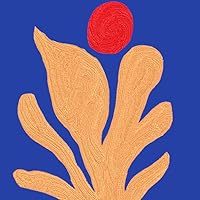
A very colourful book with plenty of charming, brightly coloured illustrations. However, it is a little insubstantial and lacks the discourse I thought it would have.
This would be a lovely coffee table book or a short read for an someone with a short attention span since every other page is a full page illustration. I was a bit disappointed that it didn't dive as deep into the topic as I thought it would since urban loneliness and the solo lifestyle in Korea is very fascinating. I finished this in 2 hours. However, I feel that it is more of a guide to being a Honjok in Korea and most of the book talks about Korea anyway, touching briefly on topics like kpop, asmr mukbang and solo travel. Still, I liked the pictures and the overall message.
This book introduces the reader to the Honjok culture in South Korea, a social phenomenon of more and more young people living alone by choice, creating the portmanteau hon (alone) and jok (tribe).
Contrary to the mistaken belief that these Honjok are depressed and upset loners, the authors dived deep into their research to paint a nuanced, empathetic view of these Honjok. It taught me about the rigid social norms and hierarchy in South Korea which the younger generation rebels against. Being Honjok and asserting one's independence while living alone in a communal society that spurns such behaviour is an act of bravery in Korea. I thought it seemed a bit strange for Koreans to be so stressed about eating or drinking alone but I think their culture is just more tightly bound than I thought. Over there, doing social activities alone can be a point of embarrassment and discomfort so being Honjok is quite revolutionary.
I did enjoy reading about how one can spend time in Korea as Honjok and the various unique changes made in Korea to accommodate for them such as single housing, prepackaged food, karaoke booths and even restaurants. The book also teaches the reader about the joys of spending time with oneself and that solitude doesn't mean you are lonely or wretched. Instead, you can use it to discover who you truly are.
Most importantly, the book did make me feel a little better about being an introvert who likes spending time on my own. It's a relief and eye opening to see an entire tribe emerge in Korea and that they are deeply interconnected with each other. The book takes care to stress that most Honjok live healthy balanced lives with a few close friendships and even can get married. They just really like their alone time too!
This would be a lovely coffee table book or a short read for an someone with a short attention span since every other page is a full page illustration. I was a bit disappointed that it didn't dive as deep into the topic as I thought it would since urban loneliness and the solo lifestyle in Korea is very fascinating. I finished this in 2 hours. However, I feel that it is more of a guide to being a Honjok in Korea and most of the book talks about Korea anyway, touching briefly on topics like kpop, asmr mukbang and solo travel. Still, I liked the pictures and the overall message.
This book introduces the reader to the Honjok culture in South Korea, a social phenomenon of more and more young people living alone by choice, creating the portmanteau hon (alone) and jok (tribe).
Contrary to the mistaken belief that these Honjok are depressed and upset loners, the authors dived deep into their research to paint a nuanced, empathetic view of these Honjok. It taught me about the rigid social norms and hierarchy in South Korea which the younger generation rebels against. Being Honjok and asserting one's independence while living alone in a communal society that spurns such behaviour is an act of bravery in Korea. I thought it seemed a bit strange for Koreans to be so stressed about eating or drinking alone but I think their culture is just more tightly bound than I thought. Over there, doing social activities alone can be a point of embarrassment and discomfort so being Honjok is quite revolutionary.
I did enjoy reading about how one can spend time in Korea as Honjok and the various unique changes made in Korea to accommodate for them such as single housing, prepackaged food, karaoke booths and even restaurants. The book also teaches the reader about the joys of spending time with oneself and that solitude doesn't mean you are lonely or wretched. Instead, you can use it to discover who you truly are.
Most importantly, the book did make me feel a little better about being an introvert who likes spending time on my own. It's a relief and eye opening to see an entire tribe emerge in Korea and that they are deeply interconnected with each other. The book takes care to stress that most Honjok live healthy balanced lives with a few close friendships and even can get married. They just really like their alone time too!

September 21, 2023
The late comedian Patrice O'Neal once said, "Men want to be alone, but we don't want to be by ourselves." There is a big difference between being lonely and being alone. We all know that alone time can be much needed, but how do we confront the epidemic of loneliness in modern society? After all, if you are never alone, you cannot know yourself.
In 2022, Pew Research Centre found 30% of US adults are neither married, living with a partner nor engaged in a committed relationship. In 2017, the term "honjuk" (tribe of one) emerged as a counter-culture buzzword in South Korea due to the growing trend of individualism in a country that has historically placed community at the top of its hierarchical values.
In Francie Healy's (@franciehealey) new book, she explains that loneliness, in general, comes from a lack of social support. Whereas alone time can be quite the opposite, creating much-needed space in a world that's 'all-go.' But you need not be alone to feel lonely. Loneliness is about the absence of connection, rather than the absence of people.
So how does one "get connected?"
By seeking and developing social connections, while also learning to better connect with yourself. When you devote sufficient time to being alone, you are better able to tune into your own thoughts, and feelings and hone your listening abilities. What's more, the more awareness you have about who are and what you want from life, the better you become at knowing who feels most aligned to you.
Honjoks are linked by a commonality in their desire to take time for themselves and live a life where solitude is sought-after and celebrated rather than fought against and rejected. As Thoreau, the O.G. of alone-time once wrote, "I never found a companion that was so companionable as solitude."
#Honjok #Honjookbook
Rating: 3.8 / 5 ⭐️⭐️⭐️
In 2022, Pew Research Centre found 30% of US adults are neither married, living with a partner nor engaged in a committed relationship. In 2017, the term "honjuk" (tribe of one) emerged as a counter-culture buzzword in South Korea due to the growing trend of individualism in a country that has historically placed community at the top of its hierarchical values.
In Francie Healy's (@franciehealey) new book, she explains that loneliness, in general, comes from a lack of social support. Whereas alone time can be quite the opposite, creating much-needed space in a world that's 'all-go.' But you need not be alone to feel lonely. Loneliness is about the absence of connection, rather than the absence of people.
So how does one "get connected?"
By seeking and developing social connections, while also learning to better connect with yourself. When you devote sufficient time to being alone, you are better able to tune into your own thoughts, and feelings and hone your listening abilities. What's more, the more awareness you have about who are and what you want from life, the better you become at knowing who feels most aligned to you.
Honjoks are linked by a commonality in their desire to take time for themselves and live a life where solitude is sought-after and celebrated rather than fought against and rejected. As Thoreau, the O.G. of alone-time once wrote, "I never found a companion that was so companionable as solitude."
#Honjok #Honjookbook
Rating: 3.8 / 5 ⭐️⭐️⭐️

July 19, 2026
Fun to read and flip through, though the information stays surface-level. Cute design and illustrations made it more interesting.
Srpsko izdanje ima svojih mana, prvenstveno nekonzistentnost u pisanju korejskih naziva i ličnih imena. Nekad su napisani kako se pišu, a nekad kako se izgovaraju, što stvara konfuziju.
Što se transliteracije tiče, ć se pojavljuje umjesto đ na više mjesta (treba da je sođu, a ne soću; đađonšim, a ne ćaćonšim). Serija Piti sam je na korejskom Hansul nam njo, a ne Hansul nam ceo - u korejskom svakako ne postoji glas c. Solo putovanje je hanheng, jer se putovanje kaže joheng, ali svaki put kada se u knjizi spomene ova riječ, fali ovo g na kraju.
U jednoj rečenici se spominje korejski pevač IU, iako je IU žena. A ako se imena već prilagođavaju izgovoru, onda bi trebalo da je Aju. Veliki online BTS koncert održan u vrijeme pandemije ovdje je nazvan Koncert Veliki prasak: uživo. Koncert se zvao Bang Bang, a ne Big Bang, ali moguće je da je greška prisutna i u originalu.
Pišem ovo dobronamjerno, jer ovakvi propusti po meni narušavaju i kvalitet izdanja i čitalačko iskustvo. Tema knjige je zanimljiva, ali bi tekst dobio na vjerodostojnosti kada bi se više pažnje posvetilo dosljednom i tačnom prenošenju korejskih naziva i imena.
Srpsko izdanje ima svojih mana, prvenstveno nekonzistentnost u pisanju korejskih naziva i ličnih imena. Nekad su napisani kako se pišu, a nekad kako se izgovaraju, što stvara konfuziju.
Što se transliteracije tiče, ć se pojavljuje umjesto đ na više mjesta (treba da je sođu, a ne soću; đađonšim, a ne ćaćonšim). Serija Piti sam je na korejskom Hansul nam njo, a ne Hansul nam ceo - u korejskom svakako ne postoji glas c. Solo putovanje je hanheng, jer se putovanje kaže joheng, ali svaki put kada se u knjizi spomene ova riječ, fali ovo g na kraju.
U jednoj rečenici se spominje korejski pevač IU, iako je IU žena. A ako se imena već prilagođavaju izgovoru, onda bi trebalo da je Aju. Veliki online BTS koncert održan u vrijeme pandemije ovdje je nazvan Koncert Veliki prasak: uživo. Koncert se zvao Bang Bang, a ne Big Bang, ali moguće je da je greška prisutna i u originalu.
Pišem ovo dobronamjerno, jer ovakvi propusti po meni narušavaju i kvalitet izdanja i čitalačko iskustvo. Tema knjige je zanimljiva, ali bi tekst dobio na vjerodostojnosti kada bi se više pažnje posvetilo dosljednom i tačnom prenošenju korejskih naziva i imena.
July 13, 2022
Empathetic, light and gorgeously illustrated, this is a beautiful introduction to the fascinating concept of Honjok. Not particularly source-heavy or academically vigorous, it is not a self-help book either, but nonetheless provides an insight into another culture's understanding of solitude, and the freedom and responsibility that are integral to its existence.
I was particularly interested in the depictions of the economic and commercial changes driven by the Honjok movement, and overall the quality of the design, illustrations, and hardback format ensure it is a worthwhile purchase even if it is not particularly dense. It's a book to dip your toes into a subject, not submerge entirely.
I was particularly interested in the depictions of the economic and commercial changes driven by the Honjok movement, and overall the quality of the design, illustrations, and hardback format ensure it is a worthwhile purchase even if it is not particularly dense. It's a book to dip your toes into a subject, not submerge entirely.
June 7, 2022
I think this excerpt from this book just covers my overall thoughts while reading it, "Perhaps it can even be an invitation to reflect on the fact that there's nothing wrong with wanting to spend time alone, ...". It was a good read, learning more about South Korean 'before and after' among the society coming from the honjok movement to the country. The author was much appreciated when this book ended each chapter with few descriptions to let the readers know and understand their types or styles of living as honjoks as well.
September 1, 2025
… living in solitude in order to find oneself is a revolutionary act.
From those who practise honjok we can learn to view and appreciate solitude from another perspective. In the words of Honoré de Balzac, "Solitude is a beautiful thing; but it requires that someone else tell you that solitude is a beautiful thing." This is what honjok tells us. And not only that: this phenomenon can help us to recognise social pressures that we feel and can aid us in our personal emancipation.
From those who practise honjok we can learn to view and appreciate solitude from another perspective. In the words of Honoré de Balzac, "Solitude is a beautiful thing; but it requires that someone else tell you that solitude is a beautiful thing." This is what honjok tells us. And not only that: this phenomenon can help us to recognise social pressures that we feel and can aid us in our personal emancipation.

March 9, 2026
This is totally a coffee table book. The illustrations are very cute and the cover looks cool to use when staging your kpop bedroom or to sell in a gift shop but the content is all fluff. This is the kind of stuff you read on Buzzfeed or an online magazine article, it is not enough to justify publishing a whole book. You do not really gain any useful knowledge and even if the writing is fine the articles are overall forgettable.

September 2, 2021
the cover and art of this is gorgeous so rip to this not having a picture lol. i want to give it 4 stars but it felt very surface level by the end unfortunately. even in this more carefree small coffee table book style i think concepts could’ve been explored more. nice book and interesting ideas nonetheless.
September 3, 2023
Intéressant livre où on ne pas prendre à la lettre ce qu'il dise . Il dise qu'on ne doit pas de vivre isolé des gens bien au contraire de trouver des manière pour trouver du plaisir de manière solitaire afin de bien se connaître en tant qu’individu

January 8, 2022
Interesting review of the Korean art of living alone, and being content. Wish it had of dived a bit deeper into the theory rather than just explaining, but it did its job in being a reference book on “Honjok”.

February 28, 2023
Great read for an intro into Korean culture. This book attempts to break down the stigma that doing things alone is a lonely experience when in fact it should be practiced by everyone once in a while to experience a bit of freedom from societies expectations

November 6, 2024
A simple yet enjoyable read. The illustrations are gorgeous & I found the Korean hierarchies & traditions fascinating. You can see how people practising honjok relish in breaking free from strict norms & expectations. A quick read for anyone interested in learning the basics of this movement.

December 25, 2021
A very interesting read, also an excellent book for first year sociology students of HSC students of society and culture.

March 20, 2022
What a gorgeous book! Aside from the design, the topic was fascinating. It seemed like a tiny dip into the world of honjok, but it was still a good intro and piqued my interest even more.

March 24, 2022
Beautiful Illustrations and a great insight into a lifestyle I never heard of!
July 24, 2022
Love that i read this book while i was on a solo trip as it resonates with me. Honjok is the book everyone who loves spending time alone yet loves to be friends sometimes ! Five stars!
January 14, 2023
Behalve de naam: niets nieuws onder de zon

November 4, 2023
Libro molto carino e scorrevole. Ho amato la grafica dai colori pop e moderna.
Il libro tocca la cultura coreana su vari aspetti e contraddizioni.
Molto interessante ma nulla di imperdibile
Il libro tocca la cultura coreana su vari aspetti e contraddizioni.
Molto interessante ma nulla di imperdibile

Read
January 20, 2024A book about solo-living lifestyle by FOUR people. Garbage read.
March 24, 2024
i feel seen thank you

December 24, 2025
More effort is put on design than more detailed information but it can be called a beautiful coffee book.
July 17, 2026
A book about solo living (honjok) and their lifestyle. Learnt a few fun facts here and there. The most interesting fact would be the origin of “Mukbangs”.

October 4, 2022
This was a cute wee non-fiction read. Nothing groundbreaking or new for me as I do a lot of the ideas in this book already but it is cool seeing a book that encourages this idea, especially from the view of another culture
Displaying 1 - 27 of 27 reviews