Jump to ratings and reviews
Rate this book
Rate this book
A work of dazzling imagination that takes as its theme the price the true scientist or artist must pay for his calling in terms of his own humanity, his ability to live fully.

233 pages, Paperback

First published January 1, 1986

19 people are currently reading
926 people want to read

About the author

John Banville

133 books2,386 followers
William John Banville is an Irish novelist, short story writer, adapter of dramas and screenwriter. Though he has been described as "the heir to Proust, via Nabokov", Banville himself maintains that W.B. Yeats and Henry James are the two real influences on his work.
Banville has won the 1976 James Tait Black Memorial Prize, the 2003 International Nonino Prize, the 2005 Booker Prize, the 2011 Franz Kafka Prize, the 2013 Austrian State Prize for European Literature and the 2014 Prince of Asturias Award for Literature. He was elected a Fellow of the Royal Society of Literature in 2007. Italy made him a Cavaliere of the Ordine della Stella d'Italia (essentially a knighthood) in 2017. He is a former member of Aosdána, having voluntarily relinquished the financial stipend in 2001 to another, more impoverished, writer.
Banville was born and grew up in Wexford town in south-east Ireland. He published his first novel, Nightspawn, in 1971. A second, Birchwood, followed two years later. "The Revolutions Trilogy", published between 1976 and 1982, comprises three works, each named in reference to a renowned scientist: Doctor Copernicus, Kepler and The Newton Letter. His next work, Mefisto, had a mathematical theme. His 1989 novel The Book of Evidence, shortlisted for the Booker Prize and winner of that year's Guinness Peat Aviation award, heralded a second trilogy, three works which deal in common with the work of art. "The Frames Trilogy" is completed by Ghosts and Athena, both published during the 1990s. Banville's thirteenth novel, The Sea, won the Booker Prize in 2005. In addition, he publishes crime novels as Benjamin Black — most of these feature the character of Quirke, an Irish pathologist based in Dublin.
Banville is considered a contender for the Nobel Prize in Literature. He lives in Dublin.

Ratings & Reviews

What do you think?
Rate this book

Friends & Following

Create a free account to discover what your friends think of this book!

Community Reviews

5 stars
122 (22%)
4 stars
207 (37%)
3 stars
152 (27%)
2 stars
57 (10%)
1 star
14 (2%)
Displaying 1 - 30 of 56 reviews
Profile Image for Kalliope.
738 reviews22 followers
February 16, 2016

This is a surreptitious Faust story.

For a start, how could one recognize another Doktor Johann Faustus in our Gabriel. No, not Gabriel the Archangel, nor the Gabriel of the Joyceans, but Gabriel Swan. No, not Charles Swann of the Proustians, but a birdy Swan, with just one “n”. A Cygnet, like Lada’s, with its enchanted and transmuted nature.

Additionally, there are some angels around and my favourite was D’Arcy, for who could be more heavenly, in particular to women, than someone who has a name as if out of a novel by Jane O’Stin?

Similarly, our Mephistopheles of Germanic extradition, or Mefisto as the title says, is our Felix, the happy one, happy because of his luck. He has no surname in the novel. There is nothing additional to indicate his origins. Except for his red hair, of course. With his devilish bristles, his high cheekbones and white face, this Felix is the most felicitous character Banville has created for this novel. So sharp and canny!

Unquestionably, the title of the novel is the main spoiler, as it is in Thomas Mann’s version.

But differently to Mann’s Faustian exercise, an intellectual meditation of the dangers that an artist, that a musician, that a nationalist can run into, this is a wider meditation of humanity and on the impossibility of attaining certainty, whether in knowledge or, most importantly, in our respective, individual lives. And Numbers don’t help.

One of the main attractions in reading this work was to detect the Faustian themes. For this one has to be an attentive reader. Nothing is freely given. One has to keep sniffing, catching, uncovering, but effort is rewarded. It is all there:

The being split into two; magic and incongruous objects like the hoof of an unicorn; sulphuric smoke coming up from god-knows-where; a black notebook with a wizard’s codex; shoulder-blades that twitch like wings; the opening setting in a place called Ashburn; the deep in the earth mining and other dark hollows; nuns with headdresses that allow them to wing away; the parody of Matrimony; feet with horny yellow nails; the view of the whole city from high above; and the continuous sprinkling, as if with unholy water, with continuous allusions to (Christian) dogma but converted literarily into godless expressions.

These are the Alleluias of his novel.

And then, as expected in any book by Banville, there is the writing. The gloriously divine language. How can Banville write so well, so very well? It just seems to me humanly impossible to be able to deploy such magic with words.

Did he engage in a pact with anyone?


------

PD: Reading Joyce's Dubliners, I encounter in the story "The Dead", the character Bartell D'Arcy. So, Banville's character is certainly an echo of Joyce's and, indirectly, then, of Austen's.
Profile Image for Ian "Marvin" Graye.
948 reviews2,783 followers
August 13, 2021
CRITIQUE:

"I Too Have My Equations, My Symmetries, and Will Insist on Them." - John Banville, "Mefisto"

There's little apparent authorial concern with plot, in contrast to the quality of the prose and the themes, in this outstanding novel.

Even the themes are hard to isolate, and the aesthetic purpose of the work overall is difficult to describe and appreciate.

For that reason, this review will focus on my understanding of (and speculation about) the themes. It's not intended to be comprehensive. That would be impossible. The novel is just too allusive.

I hope this attracts you to this sophisticated and thought-provoking novel, and that eventually you obtain some benefit in your own reading from this analysis. If it's not correct, may it be a springboard from which you plunge into your own perception of the truth.

Unequal Halves

The novel consists of two asymmetrical, unequal but related, halves:

* Marionettes (who are trying to be real); and

* Angels (who are taking care of the real while they are "dangling above the abyss, burning").

The Dioscuri

Unsurprisingly, John Banville also uses two dualistic framing devices in the novel.

The first and, arguably the most important, is that of the twin half-brothers, Castor and Pollux (the "Dioscuri" of Greek and Roman mythology).

Their mother was Leda (whom they shared), but their fathers were different: Castor was the mortal son of Tyndareus, the king of Sparta and Leda's husband; while Pollux was the divine son of Zeus, who seduced Leda in the guise of a swan.

Biologically, they're examples of heteropaternal superfecundation.

The narrator of the novel is Gabriel Swan (the analogue of Pollux), whose unnamed twin brother died at birth (who knows whether his brother would have taken his natural father's surname?):

"From the start I knew I was the survivor of some small catastrophe, the shock-waves were still reverberating faintly inside me...

"Chance was in the beginning. I am thinking of that tiny swimmer, alone of all its kind, surging in frantic ardour towards the burning town, the white room and Castor dead...The end also was chance." *


This last paragraph almost summarises the skeletal plot of the novel.

The Absence of Harmony, Symmetry and Completeness

For most of the novel, then, Gabriel is in pursuit of his dead twin brother, at least metaphorically. He is trying to link up with his missing other half.

Gabriel describes his sense of "absence, I suppose, the forlorn weight of all that was not there."

Coincidentally, two identical twins attend the same school as Gabriel (from whom we learn more about the significance of twins, and its relationship with aspects of mathematics):

"That was what fascinated me, the thought of being able to escape effortlessly, as if by magic, into another name, another self - that, and the ease too with which they could assert their separate identities, simply by walking away from each other. Apart, each twin was himself. Only together were they a freak.

"But I, I had something always beside me. It was not a presence, but a momentous absence. From it there was no escape...I sensed what was not there. No living double could have been so tenacious as this dead one. Emptiness weighed on me. It seemed to me I was not all my own, that I was being shared...

"It seems out of all this somehow that my gift for numbers grew. From the beginning, I suppose, I was obsessed with the mystery of the unit, and everything else followed. Even yet I cannot see a one and a zero juxtaposed without feeling deep within me the vibration of a dark, answering note...

"It was not the manipulation of things that pleased me, the mere facility, but the sense of order I felt, of harmony, of symmetry and completeness."

It seems that, even when together, twins collectively constitute a freak of nature, if not exactly an act of God or another divinity. Gabriel's mother certainly feels threatened by his mathematical gift, as if it is a pathway to evil.

There's Evil in Them There Numbers

Gabriel's gift for numbers and mathematics manifests itself in a fascination with binary numbers (a combination of a one and a zero; a presence and an absence).

This prompted me to do some research which led me to discover the following terms, which are used in number theory (though they don't overtly appear in the novel):

* an evil number is a non-negative integer that has an even number of 1's in its binary expansion; and

* an odious number is a positive integer that has an odd number of 1's in its binary expansion.

It's interesting that the binary system is perceived in such otherwise negative terms (evil and odious).

Felix and the Faust Myth

The second framing device relates to the Faust myth.

In the first section of the novel, Gabriel's quest for symmetry leads him to Felix (Latin = happy, lucky), a mysterious, grinning, smiling character with a "wicked wit", who in the first section lives with the fat man, Mr Kasperl, and the deaf and dumb girl, Sophie (Greek = wise), in a large country manor called Ashburn (whose name might imply fire or the aftermath of fire, hence a type of Hell). Nowhere is it said, but it's highly likely that Felix is the Mefisto of the book's title.

Felix is "always busy, in a vague, haphazard way." Perhaps, Felix is the ultimate source of chaos in the novel, notwithstanding his apparent support of Gabriel's gift. Perhaps, chaos is the Devil's riposte to God's order?

description
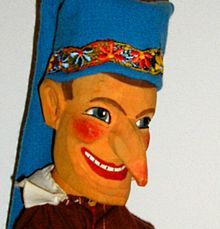
Kasperl

"A Wizard with Figures"

Felix is attracted to Gabriel, because he's heard that he's a "wizard with figures", and he wants to introduce him to Mr Kasperl (a mining engineer and possibly the satanic figure within the framework of the Faustian myth - Kasperl is also the name of a form of German puppet theatre).

Gabriel seeks in life -

"rules, order, some sort of pattern...Always I had thought of number falling on the chaos of things like frost falling on water, the seething particles tamed and sorted, the crystals locking, the frozen lattice spreading outwards in all directions."

Gabriel doesn't seem to suffer from Faustian hubris, so much as feel like his gift is appreciated and might be useful to other people (in contrast to his mother's fear of its unnatural consequences).

Nevertheless, around Ashburn, Gabriel feels like he is "being seduced, gently, with sly blandishments, into hazard." (Hazard implying chance, chaos, danger or risk.)

On the other hand, he broods over Sophie like he would a mathematical puzzle:

"She would not solve. There was a flaw in her, a tiny imbalance, that would not let the equation come out, it showed in the slope of her shoulders, in her delicate, long, lopsided face...She might have been not mute but merely waiting, holding her breath. Her deafness was like vigilance."

Hidden Order, Pattern, Harmony

In the second section of the novel, we discover Gabriel initially recuperating in hospital from extensive burns to his body (the cause of the fire and the burns isn't explicitly identified - maybe his name should be Gabriel Byrne?). As he learned after his birth in the first section, he realises he is "a riven thing, incomplete - half here, half somewhere else." Yet again, he encounters Felix, who had left Ashburn before the fire. For the second time, Felix shares a large flat (in Chandos Street) with two others, an old male and a young female: Professor Kosok (potentially, another satanic figure) and Adele (a junky).

Felix introduces Gabriel to the Professor as a "prodigy", who might be able to assist with his scientific experiments.

The Professor is no believer in order and certainty. He seems to "want only disconnected bits, oases of order in a desert of randomness...not a general pattern."):

"What is exact in numbers, except their own exactitude...?

"You want certainty, order, all that? Then invent it!"


Gabriel still believes that "order, pattern, harmony. Press hard enough upon anything, upon everything, and the random would be resolved...Under the chaos of things a hidden order endures."

Felix, on the other hand, purports to agree with Gabriel that "there is order in everything."

Let's Stick Together

He invites Gabriel to "stick with me": "We should stick together. We're two of a kind" (perhaps, Felix is a substitute for Gabriel's twin brother?); but there's one condition, that "you don't lead a normal life."

Gabriel reacts: "To know, to do, to delve into the secret depths of things, wasn't that what he had always urged on me?"

Soon, however, Gabriel sees "again clearly the secret [he] had lost sight of for so long, that chaos is nothing but an infinite number of ordered things."

In typical binary fashion, Gabriel realises that "zero is absence. Infinity is where impossibilities occur."

Leave It to Chance

In the end, Gabriel concludes that "even an invented world has its rules, tedious, absurd perhaps, but not to be gainsaid." Nevertheless, he vows that he will "try to leave things, to chance."*

In other words, there is a place for chance even in a world supposedly constructed of order, pattern and harmony. Gabriel has, finally, discovered the limits of knowledge and mathematics: "About numbers I had known everything and understood nothing." Nature cannot necessarily be "tamed and sorted" by Man. So, too, his pride has come to an end.


PROSE SELECTIONS:

He had the faintly sinister self-possession of a priceless piece among fakes... I walked under drowsing trees, through the dreamy silence of sunstruck afternoons, and was so acutely conscious of being there and at the same time almost elsewhere, in a present so fleeting it felt like pure potential, that I seemed to be not so much myself as a vivid memory of someone I had once been... I would devote days to a single exercise, drunk with reckoning... The air was laden with fragrances of hay and dust and dung... I thought of the marionettes, twitching on their strings, striving to be human, their glazed grins, the way they held out their arms, stiffly, imploringly. Such eagerness, such longing. I understood them, I, poor Pinocchio, counting and capering, trying to be real... Foul breath of the river, dark slop of waters, slide, and slop again... Adele showed me places in the city I had never noticed, walled gardens in the midst of office blocks, odd-shaped little courtyards, an overgrown cemetery between a bakery and a bank...


FOOTNOTES:

* The word "chance" is both the first and the last word of the novel.


SOUNDTRACK:
Profile Image for Nancy Oakes.
2,019 reviews918 followers
February 27, 2018
The wisest people I know are people who admit they don't know and that's the case with me in this book. This is one of the most challenging books I've ever read, to be sure. I spent tons of time online and in my own home library tracking down the numerous references to mythology, art, literature, philosophy etc that appear in this novel; even after a second reading I'm still not sure I will ever be fully comfortable with it in any sort of comprehensive way. I've read a number of reviews that cite its "intertextuality," and I've come to this conclusion: since I'm merely a casual reader sort of person and not a walking encyclopedia who is gifted with perfect knowledge of all things literary, philosophical, artistic and mythological, I'm sure I missed a lot of what lies underneath this novel.

However, unlike some people who take a negative attitude toward a novel because they didn't fully comprehend it, I thought that this was a stunning read. There are a number of reasons why that's so -- for example, while reading the last forty pages of part one, I was absolutely spellbound and could not have put this book down for anything. Then, after the second reading, I was taken in directions I hadn't even contemplated during the first time through -- focusing much more on the idea of twins and the dualities that are present throughout this story, and appreciating on an entirely different level the main character's brief flashes of insight that seemed to me to show him the truth of things, even during his search for some sort of knowledge that might order his world. And there's more that I can't say without making references that would end up becoming spoilers.

You can follow the link below to read what I have to say about this book, but it left me in awe of John Banville as a writer. I'll be reading his work throughout 2018, and if the rest are anything like this one, it's going to be a damn good year.

http://www.readingavidly.com/2018/02/...

Profile Image for Aba.
20 reviews1 follower
November 12, 2016
Το καλύτερο βιβλίο του Μπάνβιλ, που έχω διαβάσει.
Profile Image for Hamish.
545 reviews235 followers
January 20, 2020
Not quite Banville's best novel (that would be the Untouchable), but this is absolutely the peak of his prose. In fact, there were times when I felt that this was the peak of all prose. These sentences are magical. They are also completely devoid of sentimentality; simultaneously beautiful and brutal. Felix, our archetypal Banville impish evil, is perhaps his most memorable character. I even think I may have started to grasp the inner structure (which I completely missed on my first reading). The only thing that made me question whether this is a five star novel is, as in all other Banville novels, the complete lack of momentum. Things happen and then they stop happening. The end. But as with his other novels, I have come to understand that this is a feature and not a bug; something to acclimate to rather than to question.

It also makes mathematics seem so...sordid.

For posterity, my original review:

I've read a lot of John Banville novels lately. I'll probably end up reading all of them. Mostly because I love his prose, but also because they're all short so there's not much of a time commitment and they move at this pleasingly laconic pace. They're kind of like candy to me. That beautiful prose goes down so smoothly that I could read it all day.

Like most Banville novels, Mefisto isn't very plot-oriented. His novels have plots, but they're so short and move so slowly that there's not really room for all that many events. And he tends to put equal emphasis on everything, whether it's a scene with a major twist or a scene that involves describing a bus ride, so even when something important happens it doesn't actually feel that way. Granted, I'm past the point in my life where plot is a major draw when choosing what to read next. Remember when you were younger and you would read the teaser summary on the back of every book you were interested in and then picked the one that seemed the most interesting? Now my only real question is "how's the writing quality?" and I rarely even read those teasers. I also can't imagine describing a Banville novel in a way that would make it sound appealing without talking about the prose. Seriously, try it.

I guess this is kind of a shortcoming too. The whole novel feels somehow distant, like Banville kept you at arm's length the entire time. He describes the settings so vividly and yet never really lets you into the novel's heart. But the plus side is that it creates this kind of chilling, unearthly effect. I'm still trying to parse it all out and decide what Banville was getting at. There are so many pieces to the novel, but I'm still not sure how or why they go together. For example, Swan's math thing. It seems like it's going to be the emphasis of the entire novel, but ends up serving only a minor purpose (to set up his job in the second half, though that could have been easily accomplished in another way). Is the point to contrast the order of his thinking with the chaos of his life? Is that theme clear enough? I'm still not sure.

Mefisto almost feels like a beta version of Ghosts and Athena. You have a protagonist that's a broken man, a jaunty, funny, creepy evil that sort of functions as an antagonist, criminal activity, some kind of unknowable machinations, a love/sex interest who's also unknowable, and an ambiguous resolution.

So basically it's the archetypal Banville novel. You've got the amazing prose, the sordid dealings, and a minimalist plot. If you've liked his other novels, you'll like this one. If you think prose style is the #1 most important feature of a writer, you'll like this one too (and all his novels, for that matter). If you want action...well, you should probably steer clear. And for whatever flaws it has, I still enjoyed the hell out of it.
Profile Image for Beta  d'Elena.
12 reviews2 followers
Read
September 28, 2021
I drew the van dyke brown curtains to turn into Miss Havisham and lost myself in a book almost like for the first time. Literary fiction is new to me. Especially one with such lyricism in which both the plot and the beauty of the language had me in its silky flow. I usually pick books closer to what I can associate with. I chose Mefisto (a demon in German literary tradition ) by chance despite the fact the plot is of a mathematician seeking order in a world of numbers. I myself quail at the thought of numbers but Swan, our protagonist immerses his nights in numbers and finds joy in the simplicity that he finds in understanding them. It is a fascinating story of the human quest for knowledge. Swan is obsessed with finding order and by the end, he realizes that chance plays a role too. John Banville's writing has a dreamlike quality that made me linger over the text, full of Roman references that send me to the kindle dictionary. "Go out, they told me. Take a walk, yes. Go into the city, see the sights, mingle. Simple, ordinary things. It’s all there, waiting for you, your birthright. Be one of the living, a human being"Banville, John. Mefisto.
Banville is perhaps what Miss Havisham needed to come out into the tangerine sunlight. It could turn even Miss Havisham into a sybarite.
Profile Image for Quiver.
1,134 reviews1,354 followers
July 24, 2017
Deep down, in the dark, an ember of awareness glowed and faded, glowed again. A word would enter, or a flash of light, and ramify for hours.


An extraordinary book: the writing is so lyrical you want to read on just to hear more of Banville's music. The plot (what little of it there is) is rendered almost meaningless, redundant. All writers should read a book like it at least once, to see how beautifully the English language can be moulded in skilful hands. All readers should read a book like it at least once, for the same reason.

It may be hard to get into, but well worth it.

It is an acquired taste.

(This is four stars compared to other Banville books.)
Profile Image for Eamonn Barrett.
128 reviews2 followers
March 15, 2010
Art or Science? In this playful, dark, beautiful work of art, Banville finally settles on the former. Super, pivotal work; in many ways, the key to unlocking Banville's world.
Profile Image for Troy Alexander.
276 reviews61 followers
March 2, 2020
I love Banville but I struggled to really get engrossed with this one. Surreal and Kafkaesque.
Profile Image for Dustin Beach.
3 reviews
June 19, 2018
I've seen a couple lower end reviews that seem to mirror my sentiment about the novel. I didn't like it, not at all actually, but this may due to my particular taste and not a reflection of the quality of this work itself.

It's undoubtably crafted with immense thought and often contains paragraphs of beautiful, striking prose.

I just found myself bored throughout almost the entire read, hoping that we could actually delve deeper into Gabriel's fascination with numbers and how this correlates to the theme of the book. Many times I had to remind himself that he was a gifted mathematician, as this only ever comes into play when he's doing obscure and tedious work for various angry overweight individuals. Swan finding the ultimate insight into the order in chaos doesn't seem like a rewarding conclusion after a bizarre journey that was riddled with much sadness and regret.

The structure of the book was very intriguing though, with both halves seeming to be a mirror of each other. Similar characters show up, with sometimes similar motives. It's clear that after a huge turning point halfway through that Swan has turned from a naive, shy individual to a greedy opportunist.

I can see why many people praise this book and want to delve deeper into it's complex storytelling. The question is; after such work to decode and unravel what this novel is truly talking about, are you going to be satisfied with the time you spent to do so?
46 reviews
February 16, 2009
As much as I like Banville's dense style and unreliable narration, I still found this work unconvincing. The grotesque stylized language succeeded in the early sections about the narrator's childhood where the contrast between the intricate overwrought descriptions balance with the great dark absences surrounding them. It perfectly conveys a child's wonderment and ignorance. In the moments from the hospital to the end Banville seems to be flailing. There are still some remarkable passages but little holding it together unlike in the Book of Evidence where the narrator's eloquence and wit counter-balanced his amorality. Banville needed a character like this to give his bag of tricks purpose.
Profile Image for sisterimapoet.
1,299 reviews21 followers
July 4, 2008
The thing that always strikes me about Banville is his writing. It's like a crazy python that grabs you in its coils and threatens to squeeze you to death. You are left breathless but thrilled.

In the past I've found that the strength of his writing has been let down but the plots he has chosen. In 'Mefisto' the two seemed better suited. This was a peculiar and at times visionary novel. It felt a little Beckett to me - strange people doing strange actions without always understanding why.

I can't say I really know what this book was about but I found the reading experience a pleasing one.
Profile Image for J..
225 reviews12 followers
February 19, 2013
This reworking of the Faustian tale didn't really gel with me. As always John Banville has introduced us to a story inhabited by people who are outsiders and hungry but I felt it needed more direction. But I suppose as Andrew O'Hagen says- 'Language itself is a charachter in Banville's work. You see the words coming towards you, you know their faces, their literary provenance, and yet their action surprises you.' Perhaps like Japanese novels style is more important than plot as for the use of obscure vocbulary I'll let Banville answer that 'There are two reasons why I use rare or difficult words. The first is accuracy. The second is for the irony of high rhetoric'.
78 reviews
February 25, 2015
Like most reviewers, I loved the language. It may be poetic but it is certainly most readable. It flows from the page seemingly without any effort in the physical act of reading it. But more than that, it seems to have been the language alone that encouraged me to read on, for the story is slight.

Indeed, the author himself is often unsure of the story, making Gabriel correct himself frequently. The scenery is unclear and vague. What people are doing is imprecise and vague. They just are; they just do. And I'm not sure what happened in the end. But I loved getting there. I loved the journey and I loved arriving. The reading was a pleasure.
Profile Image for Frank.
239 reviews15 followers
July 12, 2012
What is it about John Banville's work that is so consistently amazing? I think perhaps it's the painterly quality with which he treats his subjects. The scenery and local aren't just backdrop, a wash laid down hastily upon which his players act out their stories; they are characters in their own right, with enlivening emotions and volubility. Dust in a stream of sunlight is a character, the smell of apples and polished oak; all these strut their stuff upon the page as well the more human actors.
Profile Image for Mel Bossa.
Author 31 books219 followers
September 22, 2015
I'm discovering this author. His command of language reminds me a little of James O'Neil. This is a very modern Gothic take on Doctor Faustus. Inspiring and quite brilliant. Why haven't they made a movie of this yet? I could almost see all of the characters so clearly in my mind.
Felix is especially chillingly rendered on the page.
The passage where Gabriel suffers--won't give away too much here--was so vividly described, it had me holding my breath and wishing for ice.

This is the type of little book you must read more than once to catch all of the details.

Very very well done.
Profile Image for Shambhavi.
149 reviews6 followers
December 10, 2014
Banville's language is an experience in itself. I am thoroughly impressed with his ability to put in words so many wordless and nameless occurrences that we live through. that being said, the story just didn't do it for me. I would definitely pick up more of Banville's works but they aren't exactly page turners. And I'd be better off reading them alone with no other distractions, not even a mosquito, if I want to stick to getting to the very last page.
Profile Image for Johnhancock.
15 reviews1 follower
March 22, 2011
No one can touch Banville. Granted perhaps Shakespeare. Consciousness, existence captured within the written page. Mephisto, gorgeous insane genius. If people fail to get it, that is but their loss and they should naturally guide themselves to lower level literature like One Day.
Profile Image for European Douglas.
Author 48 books56 followers
January 31, 2015
Another really good one from John Banville. Odd and menacing from the start, really enjoyed it.
Profile Image for Eve Kay.
959 reviews38 followers
February 23, 2020
A very difficult book for me at this time. I feel like a real dummy not getting all of it even though many a review would tell you that this is an artistic book so a lot of it is based on how the reader takes it. And that would seem is the most difficult part for me right now, I'm not in a place in my head to analyze stuff right now. I need plain, basic, plot driven stuff right now.
So, in conclusion, will re-read this in abt 10 years and see if I'll get it then. Some books need time and or the right moment in the reader's life.
Profile Image for The Final Chapter.
430 reviews24 followers
August 15, 2015
Low 2. This Faustian tale set in modern Ireland provides some wonderful prose but fails to engage the reader fully - perhaps because of the author's over-fondness to pepper the text with so much simile. Gabriel Swan is the saint-like figure tempted by the guile of Felix his fellow scientist and rather bland stand-in for the diabolic figure of world literature.
Profile Image for David.
135 reviews
November 28, 2017
It may have been Faust re-imagined, but made no sense as a standalone work. Characters as tropes, plot unexplained, math prodigy that connects to nothing (other than a realization of the order in chaos??).... it was a theme wrapped with bits of supporting story rather than a story that reveals a theme.
Profile Image for Jeff.
169 reviews11 followers
March 3, 2008
This book is not for everyone. I love Banville as an author. I think he's one of the strongest post-modern authors. But Mefisto is rather dark, and you don't really get the point of the novel until the end. You just need to read, uncoiling various strands as you go.
30 reviews
September 8, 2024
A difficult book to characterize, exemplified by the largely opaque blurbs/reviews available. But essentially a book divided cleanly into two parts. Part 1: a coming of age story about a young, scholastically gifted boy who for some unknown reason spends time with an eclectic band of peculiar, slightly menacing, layabouts. Part 2: Flash forward to said young boy, now a young man recovering from severe wounds, origin unknown, who re-connects with one of the peculiar layabouts, Felix. Nothing much happens throughout the book, either in part one or two. Much literary allusion is referenced, Felix will often refer to the protagonist as Cain, or Pinocchio, or a handful of other names. The protagonists gift for numbers and the many strange uses he applies that gift to don't amount to much. Drug abuse. Offbeat relationships with women in both parts of the book. Yet, although it is easy to see why this slight, heady, nebulous work has gone largely unnoticed within Banville's quite copious output, it is also home to some of the most finely crafted prose of the late 20th century. Certainly the finest novel from 1986 that I have come across. My first exposure to Banville, but certainly not the last.
Profile Image for Darcy Cudmore.
242 reviews1 follower
August 16, 2024
Cillian Murphy once recommended 10 authors and 10 books in an article. I look for those authors and books when I’m visiting a used book store - John Banville was one of those authors.

I enjoyed this book and read it quickly, although I can’t really tell you what happened or describe it. It’s allusive - unknowing - evasive - dreamlike.

I can’t find the words to describe this type of writing and this book, but I liked it. The writing flowed so nicely and was intellectual. It was much smarter than I am, and I’m sure I missed things (especially the references to Roman times), but I digested this story as it was on the surface: A story about a dark underworld and a boy who gets caught up in it (for good or bad).

A mysterious read, but one I enjoyed. I’ll be keeping my eye out for more by John Banville!
Profile Image for Vasiliki Kap..
86 reviews4 followers
July 25, 2021
Κάπως με κούρασε, κάπως μου φαινόταν απότομη η ροή από το ένα κεφάλαιο στο άλλο,κάπως το διάβαζα απλώς για να τελειώσει.
Profile Image for Michael.
57 reviews
January 4, 2024
Beautifully written but not as clever as it thinks, or maybe too clever for me!
Displaying 1 - 30 of 56 reviews

Can't find what you're looking for?

Get help and learn more about the design.