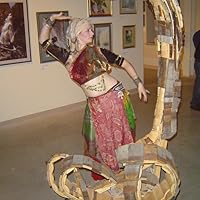
A expert on Spanish language and literature explores the roots, evolution, and current practice of this uniquely Spanish art form, beginning with it's special significance among Gypsy practitioners and tracing its path to the present, where it serves mainly as entertainment.
This has been very fun to read and learn about gypsy dance and it's development in southern Spain. Although it seems people yearn for "true" flamenco, or "true" Bharata Natyam, "true" Raks Sharqi, etc. dance and music undoubtedly has always been changing and evolving. Artists are inspired by beauty around them. This book touches on how singers and dancers "sell out" on stage and what becomes popular is not always "true" to the artform. It explores the cultural changes that paralleled what and how flamenco was seen. Interesting also is it's exploration of "cante grande" and songs of despair. Certainly the gypsies and Jewish people who were exiled and despised had reason to wail. Maybe after their settlement and establishment of neighborhoods, the singers also wanted to express joy (which brought more audience members). This book seems to have evolved from a thesis. It sometimes reviews several singers within a page, which can get dull without the sound/music behind it. It's obviously a rich subject that the offer chooses to cram a lot of little information in one book. I do suggest reading it to anyone interested in the topic...I have yet to research better alternatives.