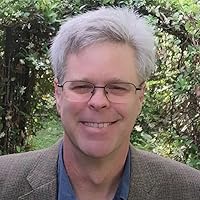
Don Graham brings together the history, color, and character of Texas' capital city since 1839 when it was selected, on the advice of Mirabeau B. Lamar, as the site for a new capital of the then - Republic of Texas. Essays, fiction, and poetry reveal the variety of literary responses to Austin through the decades and are organized in a roughly chronological fashion to reveal the themes, places, and personalities that have defined the life of the city. Austin was always about three things: natural beauty, government, and education; thus, many of the pieces in this volume dwell upon one and sometimes all of these themes. Besides O. Henry, the other most important literary figures in the city's history were J. Frank Dobie, Roy Bedichek, and Walter P. Webb: folklorist, naturalist, historian. During their heyday, from the 1930s through the early 1960s, they were the face of literary culture in the city.
Don Graham was the J. Frank Dobie Regents Professor of American and English Literature at The University of Texas at Austin. He was the author or editor of numerous books and articles, including Kings of Texas: The 150-Year Saga of an American Ranching Empire (2003), which won the Carr P. Collins Prize from the Texas Institute of Letters as best nonfiction book of the year, No Name on the Bullet: A Biography of Audie Murphy and Lone Star Literature: A Texas Anthology (2006). He was a past president of the Texas Institute of Letters and a writer-at-large for Texas Monthly.
"Literary UT" - would be a more accurate title. (University of Texas)
"Memories of a Longhorn" - a more descriptive title, and would have made it a best seller. Every offspring of a UT alumni, would not have read it, but would have purchased it for their Grandpa, Grandma, Mom, Dad, siblings, etc, who has listened to their often told "When I was at UT stories..."
This Literary collection contains short excerpts of about 1-5 pages each, from works of over 80 authors, poets, pundits, and a few politicians. Of which Oh, about 95% of them either attended or taught at UT, sometimes both (including the editor).
The descriptions of early campus days are interesting, but rarely does the commentary leave the confines of those corridors till after page 200 and then only occasionally.
There is a good reason for this, as there wasn't much in Austin before the 1980s except the University and the State Government. Still, one wonders that there must be something else other than a foray to Barton Springs?
The works are arranged chronologically, which gives you a sense of the changes that are taking place in Austin, all the way up to 2006.
All in all though this collection is good introduction to Austin authors and also some who wrote about Texas. With this number of works, there's something for everyone. I found the paragraph provided on the background of each author as interesting as their excerpt as it provides a good reference to their otherworks, if you like what you've read. I've added a few to my must read list.
Here's my review of "Literary Austin" that appeared in "Texas Books and Review" -- the mildly critical review really pissed Don Graham off! He even sent as sharp rebuttal for the next issue of TBR. (and he later wrote the most negative review of Dallas 1963 that Minutaglio and I received. And Don got the last laugh-- HIS review was published in the Dallas Morning News.)
I have a lot of respect for Don Graham. He's been a leading, strong-minded Texas literary critic for generations but the truth is he's always been weak when it comes to recognizing the contributions of non-white writers to Texas culture. His omissions in "Literary Austin" are hardly the first example of his blindness in that regard, and that deserved to be called out in a review. As for the UT-centric nature of this book, well, I guess it's no secret that both Austin and UT-Austin share an immense self-regard.
Literary Austin:
Austin has been a hipster’s paradise ever since a bank teller named William Sydney Porter financed his underground paper, The Rolling Stone, by making unauthorized withdrawals against his employer’s account. Porter, or, O. Henry, as he later became known, left Austin rather suddenly. But not before he published an irreverent history of the town in the June 9, 1894 edition his paper: “They got a gun and killed off all the Indians between the lunatic asylum and the river, and laid out Austin,” he wrote. “It has been laid out ever since.”
Since Porter’s time, generations of writers have weighed in on the city’s charms, and Don Graham collects many of the best, including O. Henry, into his new anthology, Literary Austin. The result is a book that provides an engaging portrait of the city, especially if one enjoys the part of Austin that’s centered around the University of Texas. Those looking for a broader treatment, however, may come away somewhat disappointed.
A great number of the selections are contributed by Graham’s colleagues within the University of Texas’s English and Creative Writing departments. Several more selections chronicle campus life, as a veritable parade of writers describe their favorite professors and the exact moments at which they became introduced to the world of ideas. Three of the most beloved men associated with the university—the Texas Triumvirate of J. Frank Dobie, Walter Prescott Webb, and Roy Bedichek, appear in several excerpts, and the occasion of José Luis Borges’s visit to the university qualifies for two more. Even mass murderer Charles Whitman, who rained gunfire down from the UT Tower, is the subject of three selections. Longhorn football is represented by Julius Whittier’s memoir describing his experience as one of the first African Americans to play for the team, along with Betsy Berry’s charming short story about a tutor, “Toot,” as she’s known, who’s called upon to help the players stay academically eligible as they pursue a national championship.
In contrast to this exhaustive treatment of the university, Austin’s role as the state’s political capital barely registers, nor is much space given towards explaining how it got to be “The Live Music Capital of the World.” Nor will Literary Austin dispel tensions between Graham and critics who claim that he doesn’t pay enough attention to Mexican American writers—the omission of famed East Austin poet raúlrsalinas is startling. The book is so ethnically homogenous that it could almost be called Literary White Austin.
The anthology, however, does contain many excellent pieces that immerse readers in such Austin institutions as the Scholz Garten, Whole Foods, and Barton Springs. The book is remarkably effective at tracking Austin’s transformation from a laid-back oasis into a sprawling, traffic-choked megalopolis. The signature piece in this regard is Robert Draper’s “Adios to Austin.” Draper recalls Austin as “one big unswept patio of groovy daydreamers,” where “it was OK to crash parties and make off with as many links of barbecued sausage as you could jam into your denim jacket…Everyone was broke and everything was beautiful.” Gradually, however, Austin became “a place where one could earn a fortune…Yesterday’s philosophy grad student became today’s Webmaster. All writers great and small began to craft screenplays.” Before long, Draper writes, the city became a “generic colossus of Greater Silicon Valley, a wasteland so smug and culturally vapid that Dallas circa 1963 seems flamboyant by comparison.”
Despite its vaunted quirkiness, Austin’s hip white culture, as it turns out, may be mostly derivative and based on the cliquish behavior that Larry McMurtry first observed back in 1968: “Groupiness was endemic,” McMurtry wrote. “No one might be missing from the group, lest he turn out to be somewhere better, with a wilder, more swinging group. In such a town the person who is sure of himself is apt to be literally crushed by the surging mobs of the insecure, all rushing to confirm themselves by association.” In Don Graham’s own short story, “Ghosts and Empty Sockets,” included in this anthology, he notes that such cliquishness “drove the fuse that flared, however flickeringly, through the now paling life of this party.”
To be perfectly honest, I will read almost anything about Austin, no matter how narcissistic or self-serving (and, even more honestly, the more it flatters the city and its residents the better). All true love of home is provincialism and vice versa, and though I wasn't born here and have spent quite a few years living elsewhere, it's going to be my home for many years to come simply because I couldn't imagine myself living anywhere else.
However, any city, no matter how proud and disdainful of outsiders, like to think of itself as civilized, and part of that means having a stable of respectable authors you can show off to your neighbors. To that end, Don Graham has put together an extremely useful collection of "Austin literature", both pieces about the city and pieces written by people who simply happened to live here. I once read a line to the effect that New York City was the only city you could write about and not sound limited or small-town. Whether that's true of all cities or not, this collection won't do anything to disprove that sentiment, because many of the pieces here are focused on things that only an Austinite would truly care about. This is either myopic navel-gazing or a sincere effort to cater to the local spirit (or both), but I think an outsider could actually appreciate the literary merits of some of these pieces without being too sickened by the constant torrents of self-love on display here. But, as the saying goes, if you don't like Austin, then Dallas is right up the road, and happy trails to you.
The book is organized chronologically into sections that detail increasingly narrow slices of time. The first section sums up Austin's dismal irrelevance in the 19th century in a swift four pieces, including one by literary hero / convicted felon O'Henry, the man who gave us the infamous "city of the violet crown" title. The next section leaps up to the 1940s and includes a quick piece about Barton Springs by Senator Ralph Yarbrough and an excerpt from Lyndon Johnson's excellent "tarnish on the violet crown" speech, one of my personal favorites of his. As Robert Caro's excellent LBJ biography details, Austin was the first city in the country to have public housing, and though the Dixiecrat-mandated segregation of those units entrenched an unfortunate situation of racial separation in the city, this small step towards alleviating poverty was an important step on the road to the Great Society.
The section of the 50s is subtitled "This True Paradise On Earth", and it marks what I think is the final period before Austin became a "real" city. Names like Faulk, Dobie, Bedichek, and Webb are prominent, as around their nucleus the first true Austin literary culture coalesces. Ann Richards contributes a funny story about the beginnings of her interest in politics, and David Richards (no relation?) has an insightful bit about Scholz Beer Garden, which has just the odd historical amnesia he describes. The 60s section is understandably dominated by UT-related content like the Whitman shooting, but there are plenty of good ones about other subjects, like Miguel Gonzales-Garth's pieces about Argentine literary badass Jorge Luis Borges, an excerpt from Billy Lee Brammer's superb political novel The Gay Place, and good snippets from novelist Larry McMurtry and historian Harry Ransom. Speaking of McMurtry, I wish his classic essay/complaint "Ever a Bridegroom" about the sorry state of Texas literature had been mentioned here, as it bears directly on the book's reason for being, but the Texas Observer recently reprinted it so you should check it out there.
The 70s section gets into material more familiar to modern Austinites. Pat Taylor's memories of hippie water ceremonies are both amusing and touching, Jan Reid's chapter from "The Improbable Rise of Redneck Rock" is still relevant for as long as Willie Nelson is, and Michael Adams' "Crossroads at the Broken Spoke" is both a wonderfully evocative work of character description and an excellent homage to the famous honky-tonk joint that's still bravely enduring the lightning-speed transformation of South Lamar near where I grew up. The 80s is when my own history with Austin begins, and I particularly enjoyed Joseph Jones' piece on enjoying Waller Creek (currently a rivulet of filth sullenly oblivious to the city's periodic and desultory plans to rehabilitate it), Molly Ivins' hilarious account of Ann Richards' election as governor, and Marion Wink's poem about the summer heat, which has only gotten more brutal:
"Insects ruled the earth. They commandeered the food supply and would not let us sleep. Willing slaves, we did nothing without orders. Only showers came from the heart."
The final and longest section covers from the 90s to 2006, the period where Austin added a quarter million people and abandoned any pretense of being a small, undiscovered oasis. Two of these pieces sum up this era the best to me. First, Robert Draper's affectionate yet firm farewell "Adios to Austin" is a thoughtful meditation on why he felt that he and the city had to part ways (though, weirdly, he now seems to live in Asheville, NC of all places). I don't agree with his sentiments, but it's a useful perspective. Second, William J. Scheick's "Gridlock" is perhaps the ultimate example of a piece that only an Austinite could love; outsiders hate our traffic, but his hilarious experiences trying to find a "secret path" across our nightmarishly overcrowded downtown will bring instant pangs of pained recognition from anyone who's ever had to put up with the consequences of our city government's stubborn refusal to acknowledge our inexorable growth.
Different people will have different opinions on the strength of the works collected here, but overall this is a great compendium of talent, and while it's been a while since Billy Lee Brammer made the last serious attempt at crafting a "Great Austin Novel", there's plenty of local talent here, and even more affection for this city that manages to retain its charm and magnetism after all these years.