

What do you think?

Shangai Baby
Cocó, una joven aspirante a escritora se traslada a vivir con Tiantian con un grave problema de impotencia. En una fiesta, Cocó conoce a Mark, un alemán casado, con quien iniciará una aventura centrada en la mutua atracción sexual pero que, inevitablemente, se irá desplazando hacia el centro mismo de su ser. En medio del caos emocional, la voz de Cocó nos muestra cómo el amor y el deseo tienen a menudo caminos separados y transmite una inesperada y conmovedora sensación de verdad. Shanghai Baby es también el retrato de la fascinante ciudad de Shanghai en la actualidad. Después de varios libros de éxito que nos han transportado al Oriente de las geishas y sus tradiciones, esta novela nos habla de la vida en la China de hoy. Lírica, inocente, narcisista, apasionada, leal, hedonista, sensible, auténtica, vital, compleja, sincera, sensual, irreverente, frívola y profunda a la vez, Shanghai Baby se ha convertido en un auténtico fenómeno sociocultural y en la referencia de toda una generación de jóvenes chinos, en una novela de culto que afronta con excepcional naturalidad los temas que todavía son tremendos tabús en ese difícil país. Su espectacular acogida de crítica y lectores en Francia, Inglaterra, Italia, Alemana y Japón demuestra una vez más que no hay fronteras para una novela valiente, sincera y rabiosamente contemporánea.
320 pages, Paperback
First published January 1, 1999
Ratings & Reviews
Friends & Following
Create a free account to discover what your friends think of this book!
Community Reviews
Displaying 1 - 30 of 529 reviews

December 18, 2008
A lot of my Chinese friends encourage me to read this book, not because they think it's cool or that it's fantastic, but because the main character is a Shanghainese girl.
Well, duh, you can read the title, right?
It turned out, my Chinese friends - who are not from Shanghai - begged me to read this book to prove their points that Shanghai girls are *cough* a bit unruly on the sex and wild side. They have this prejudice that Shanghai girls are only after white guys and that they would do anything to sleep with a lot of guys. Now, now - where have I heard that statement before, eh?
Anyway, putting bad prejudice, stereotyping and generalisation aside, the book does describe the life of a Shanghai girl named Coco (her nickname, obviously) who chose to abandon her previous profession as a journalist to be a cafe waitress. She did it mainly because she wants to have more time to write since she dreams to be a renowned writer in the future.
In the meantime, she has also a relationship with an unemployed, mommy-boy, lazy guy named Tiantian, who apparently couldn't "get it up" due to amount of the drugs that he has consumed in all his life. This guy - who receives a healthy sum of money monthly from his mom who lives in Spain - is hopelessly in love with Coco and chose to abandon the fact that Coco is having a purely sexual affair with a German expat named Mark.
This creates a hopeless love triangle between these three people and it gets more complicated when Tiantian is trapped under the evil net of drug abuse and Mark's wife and kid come to visit to Shanghai.
After reading the whole book, I certainly don't know why my friends urged me to read this book in the first place. I found it rather dull and the theme is rather unimpressive. I believe that the kind of life that Coco led is so common these days that you will be able to find girls like her everywhere on the surface of the planet. The fact that an Asian both wants sex and love (from two different men, perhaps?) is no longer taboo and unspeakable and that this case certainly does not limited to Shanghainese girls only.
It's a modern world, baby - when love and sex are two different things.
We just have to deal with it.
Well, duh, you can read the title, right?
It turned out, my Chinese friends - who are not from Shanghai - begged me to read this book to prove their points that Shanghai girls are *cough* a bit unruly on the sex and wild side. They have this prejudice that Shanghai girls are only after white guys and that they would do anything to sleep with a lot of guys. Now, now - where have I heard that statement before, eh?
Anyway, putting bad prejudice, stereotyping and generalisation aside, the book does describe the life of a Shanghai girl named Coco (her nickname, obviously) who chose to abandon her previous profession as a journalist to be a cafe waitress. She did it mainly because she wants to have more time to write since she dreams to be a renowned writer in the future.
In the meantime, she has also a relationship with an unemployed, mommy-boy, lazy guy named Tiantian, who apparently couldn't "get it up" due to amount of the drugs that he has consumed in all his life. This guy - who receives a healthy sum of money monthly from his mom who lives in Spain - is hopelessly in love with Coco and chose to abandon the fact that Coco is having a purely sexual affair with a German expat named Mark.
This creates a hopeless love triangle between these three people and it gets more complicated when Tiantian is trapped under the evil net of drug abuse and Mark's wife and kid come to visit to Shanghai.
After reading the whole book, I certainly don't know why my friends urged me to read this book in the first place. I found it rather dull and the theme is rather unimpressive. I believe that the kind of life that Coco led is so common these days that you will be able to find girls like her everywhere on the surface of the planet. The fact that an Asian both wants sex and love (from two different men, perhaps?) is no longer taboo and unspeakable and that this case certainly does not limited to Shanghainese girls only.
It's a modern world, baby - when love and sex are two different things.
We just have to deal with it.

March 10, 2010
I found this book on a sale and it kindled my interest because i had heard about the scandal and the banning it had been involved in in china - well, it's very explicit about sex, but doesn't break any real taboos in the western world. Ok, there's sex with an impotent man, there's sex with a German with an OOOOOOO SOOOOOOO HUUUUUUUUUGE penis, there's no sex with a vibrator and there's a little bit of flirting with other women. the only thing which really made me swallow (in an unpleasant way) was the female narrator imagining her german lover wearing a nazi uniform and being highly aroused by her sado-masochist fantasies. not my cup of tea, really, but well - there's no accounting for taste. i don't know enough about china to make a thorough evaluation, but if this novel about a sexually liberated woman sparked such huge media interest and controversy, then that's definitely a sign that the role of women in society is still more traditional in general than in "our" western world.
In general, I just didn't like the narrator (who's all too easily recognizable as the author herself) - at all. She comes across as totally narcissistic and self-indulgent: She's so incredibly beautiful that everyone she meets instantly wants to f* her, but besides her style and charm she's also an intellectual and a great writer. The whole novel is impregnated with the author celebrating herself in every aspect, so much that i needed to check out her picture on the net - and yes, Wei Hui IS gorgeous and has style and i'm sure she's attracting many men and women. One thing she's unfortunately not right about is her writing skills - maybe the translation is partly responsible for not getting across the lyricism of her language, but she just didn't make me care for any of her characters, even though some of them would have had lots of potential. She just doesn't seem to scratch the surface of any of them and their destiny left me cold. The style of the book reads poetic at the beginning, but when the "exotic" touch of some of the similes and metaphors wore off, it was often tiring to read. Each chapter is introduced with one or more quotes, very often coming from western pop culture (lots of songs from the Beatles to John Denver and wisdom from personalities like Marilyn Monroe) and I found this intriguing until I tried to find a connection between the quotes and the chapter - there it got rather thin, and at one point I thought that these quotes should rather have been printed on one of the shirts painted by the narrator's drug-addicted lover Tiantian.
One thing she does better (and that's the second star for...) is the portray of Shanghai and modern young China. The parts of the book I've read with interest were those describing her city and the relations of her and her chinese friends with expats and westerners in general. especially one scene impressed me: The narrator and her friends are enjoying the sun on a meadow, they play frisbee and have fun and then an elderly american asks them (politely, but arrogantly) to leave as she and her husband live in the building next to the meadow (not belonging to it, though...) and have bought the house exactly for the quiet so hard to find in Shanghai and generally in China. The conversation (held in English which is not understood by all the Chinese friends of Wei Hui) and the reaction of the narrator to it (she's frustrated, but feels compelled to leave as the foreigners might have powerful positions in the city) were very revealing. There's this deep fascination for the west which is mixed with some inferiority complex defiantly suppressed that also seems to influence her relationship to Mark from Berlin.
Not uninteresting from a cultural point of view, but not great literature for me. Maybe I'm also already part of the wrong generation, but Wei Hui didn't even entertain me really well. Not worthwhile in the end......I'm sure there's deeper Chinese literature out there.
In general, I just didn't like the narrator (who's all too easily recognizable as the author herself) - at all. She comes across as totally narcissistic and self-indulgent: She's so incredibly beautiful that everyone she meets instantly wants to f* her, but besides her style and charm she's also an intellectual and a great writer. The whole novel is impregnated with the author celebrating herself in every aspect, so much that i needed to check out her picture on the net - and yes, Wei Hui IS gorgeous and has style and i'm sure she's attracting many men and women. One thing she's unfortunately not right about is her writing skills - maybe the translation is partly responsible for not getting across the lyricism of her language, but she just didn't make me care for any of her characters, even though some of them would have had lots of potential. She just doesn't seem to scratch the surface of any of them and their destiny left me cold. The style of the book reads poetic at the beginning, but when the "exotic" touch of some of the similes and metaphors wore off, it was often tiring to read. Each chapter is introduced with one or more quotes, very often coming from western pop culture (lots of songs from the Beatles to John Denver and wisdom from personalities like Marilyn Monroe) and I found this intriguing until I tried to find a connection between the quotes and the chapter - there it got rather thin, and at one point I thought that these quotes should rather have been printed on one of the shirts painted by the narrator's drug-addicted lover Tiantian.
One thing she does better (and that's the second star for...) is the portray of Shanghai and modern young China. The parts of the book I've read with interest were those describing her city and the relations of her and her chinese friends with expats and westerners in general. especially one scene impressed me: The narrator and her friends are enjoying the sun on a meadow, they play frisbee and have fun and then an elderly american asks them (politely, but arrogantly) to leave as she and her husband live in the building next to the meadow (not belonging to it, though...) and have bought the house exactly for the quiet so hard to find in Shanghai and generally in China. The conversation (held in English which is not understood by all the Chinese friends of Wei Hui) and the reaction of the narrator to it (she's frustrated, but feels compelled to leave as the foreigners might have powerful positions in the city) were very revealing. There's this deep fascination for the west which is mixed with some inferiority complex defiantly suppressed that also seems to influence her relationship to Mark from Berlin.
Not uninteresting from a cultural point of view, but not great literature for me. Maybe I'm also already part of the wrong generation, but Wei Hui didn't even entertain me really well. Not worthwhile in the end......I'm sure there's deeper Chinese literature out there.

April 8, 2019
Este es de esos libros que te dejan un sentimiento agridulce al acabarlo. Y es que mis sentimientos han sido una auténtica montaña rusa durante toda la novela. Había momentos en los que me sentía asqueado y otras en los que me sentía comprendido; momentos en los que odiaba a los protagonistas y otros en los que empatizaba con ellos increíblemente; en ocasiones me parecía todos super artificial y otras super natural. Como digo un libro extraño que, curiosamente, he disfrutado bastante. Y es que esos libros que te hacen sentir cosas, sea lo que sea, son los que merecen la pena.
La historia de Wei Hui tiene tintes semiautobiográficos y nos será narrada por su protagonista Cocó, que vive en el Shanghai de finales de los noventa, luchando por su sueño de convertirse en una escritora de éxito. También nos encontramos con su novio, Tian Tian, un joven pintor acomplejado, deprimido e incapaz de manterner relaciones sexuales, y con Mark, el amante alemán de Cocó. Aunque a priori, todos creeríamos empatizar con Tian Tian, me ha gustado mucho ver como poco a poco vas sintiéndote más y más en sintonía con la protagonista y no terminas de entender a Tian Tian. Me pregunto si esta parte será real de su vida y nos muestra su propria incomprensión.
Uno de los puntos fuertes de la novela es sin duda la ambientación. Ese Shanghai nocturno, peligroso, pero deseable, donde todo puede pasar. Me hizo recordar mucho a las películas de Wong Kar-Wai, que siempre tienen ese halo de oscuridad, mezclado con la tristeza, la soledad y la melancolía.
Y, sin duda, lo más interesante es la valentía de la autora para expresar una libertad sexual tan poco vista en la literatura china. Tanto es así que le valió la censura y la destrucción pública de 40 mil ejemplares. Pero, oye, no hay mal que por bien no venga y al final fue la autora más leída del país, convirtiéndose el libro en una obra de culto. Maravilla absoluta. Me ha dado pena acabarlo, pero hay segunda parte <3
La historia de Wei Hui tiene tintes semiautobiográficos y nos será narrada por su protagonista Cocó, que vive en el Shanghai de finales de los noventa, luchando por su sueño de convertirse en una escritora de éxito. También nos encontramos con su novio, Tian Tian, un joven pintor acomplejado, deprimido e incapaz de manterner relaciones sexuales, y con Mark, el amante alemán de Cocó. Aunque a priori, todos creeríamos empatizar con Tian Tian, me ha gustado mucho ver como poco a poco vas sintiéndote más y más en sintonía con la protagonista y no terminas de entender a Tian Tian. Me pregunto si esta parte será real de su vida y nos muestra su propria incomprensión.
Uno de los puntos fuertes de la novela es sin duda la ambientación. Ese Shanghai nocturno, peligroso, pero deseable, donde todo puede pasar. Me hizo recordar mucho a las películas de Wong Kar-Wai, que siempre tienen ese halo de oscuridad, mezclado con la tristeza, la soledad y la melancolía.
Y, sin duda, lo más interesante es la valentía de la autora para expresar una libertad sexual tan poco vista en la literatura china. Tanto es así que le valió la censura y la destrucción pública de 40 mil ejemplares. Pero, oye, no hay mal que por bien no venga y al final fue la autora más leída del país, convirtiéndose el libro en una obra de culto. Maravilla absoluta. Me ha dado pena acabarlo, pero hay segunda parte <3

October 18, 2016
How this book ever became a bestseller is beyond me. However, in a world where Fifity Shades of Grey is a bestseller, that really ought not be so surprising. At least this novel has a few good passages ( I didn't actually read Fifty Shades of Grey but I read quotes from it and they were, by far, the worst and most idiotic thing I have ever read in my life). However, those lyrical passages to be found in Shangai Baby don't exactly make for a good novel. Don't be fooled by lovely quotes like these ones, they are few and far between:
“Death’s shadow only fades little by little as time passes. There will never be more than a thin glass barrier between your present and the wreckage of your past”
― Zhou Weihui, Shanghai Baby
“What I saw was a face which couldn’t be called pretty, but one also not easily forgotten: pointed features, oblique eyebrows, pale skin with slightly enlarged pores, and expensive lipstick that threatened to drip off her lips. Once beautiful, but now a dream in which willow branches have withered, clouds have scattered and drifting petals have fallen to the ground. A face that has been corroded by pleasure, impetuosity and dreams, each of which has left scars on it, leaving it sharp yet worn, capable of hurting, yet vulnerable as well.”
― Hui Wei, Shanghai Baby
“Kissing with the tip of the tongue is like ice-cream melting. It was he who taught me that a kiss has a soul and colour of its own.”
― Zhou Weihui, Shanghai Baby
I read this novel a long time ago, but as my memory is pretty good (alas only when it comes to books), it shouldn't keep me from writing an objective review. What is my personal story with Shangai Baby? I remember that back then I kept seeing this novel everywhere and its cover being insanely beautiful, naturally made me want it even more. I felt a great sense of satisfaction when I got it in my hands. The opening to this novel looked promising and the prose seemed lyrical. I was all set and ready to go. I divided into story, but very soon I found myself weary of certain things and concepts. As the novel progressed, my feelings became increasingly mixed. Some elements of it seemed like it was written by a sexists to me ( I know that author is a she and that only makes it worse). There were moments when I hated the narrator/protagonist (Coco is not very likable at all, feels like the author created her only to celebrate herself) and couldn't have cared less for what happens to her, but then there would come a passage that I would like. What was my final opinion? I gave this novel two stars on goodreads (grated via my old account, I haven't uploaded a new "this" review there yet). Two stars out of five means that it wasn't a complete disaster, but not a good book either.
To be honest, I think that much of the praise this novel got is undeserved. Its raise to popularity has to do ( I strongly believe) mainly with the fact that it was banned by the Chinese government. It's human nature, when we hear that something was banned, we assume there must be something to it. Not in this case, trust me on that. I actually agree with what the Chinese government had to say about it, and I think that the degree of shallowness of this novel can possibly be morally corruptible. I can see why the some in USA would jump at change to publish it, because you know, they're not too happy about China being the new world superpower. I think you can count on getting yourself publish if you write bad things about the country you originated/immigrated from in a country that wants to paint your original country in a bad light. Politics. However, our author doesn't really paints China in a bad way (not in a good one either but she does make some interesting and honest reflections), she mostly uses her protagonist as her ego trip and that's this novel's ruin.
The protagonist is this Shanghai girl nicknamed Coco whose idol is Coco Chanel. You could say that the two have something in common--- While Coco Chanel was famous for her relationship with a Nazi officer (and her work for the Nazis, yes, Coco Chanel was actually a Nazi spy and collaborator), Coco in the novel fantasizes about her German lover dressed in Nazi uniform. Yes, there are so many things to make you sick in this one. That one was the deal braker for me. Maybe she was trying to reference Sylvia Plath (her daddy song) or something- it did not work out. Now, that I think about it, I doubt she would had read Sylvia Plath. I know that was mean, I'm sorry- but is what I thought.
Anyway, back to the story. Coco is beautiful but she is also cultured and intelligent writer, or so we're lead to assume, not really witnessing her genius in the text, but oh well. Coco is cheating her loving but impotent drug addict boyfriend with this German guy and it creates the love triangle much of the story is focused on. One really annoying detail: the epigraphs at the beginning of every chapter had nothing to do with the chapter and just sounded silly. It is like the author believed she will be a good writer if she quotes famous writers. It doesn't work that way baby, someone should tell her so. In addition, if you're looking for hot scenes, you won't find any. The sex descriptions felt dull and rather demeaning to women (again I know this book is written by a women, but that only makes it worse).
I was thinking about giving it one star again but then there were little bits I did like. Things that were written about the writing process for example, they did make some sense. That's what makes me mad, I suppose. I have this gut feeling that this writer is capable of so much more and I'm almost angry at her for not trying it, for choosing the easy way and writing a book that is basically a white man fantasy about Asian woman. She has potential, I can feel it and that is why I can't honestly say I hate this novels. I can see its flaws (there are many of them and I pointed some in this review), I can say that the novel wasn't, on the whole, a success but I can't say that at times it didn't feel like good writing. There are moments when there is beauty in the prose of Wei Hui. I did like some descriptions and metaphors. It's tricky to write semi-autobiographical novel, especially if you can't control your ego- I had a feeling that this could be the case. I think that the main problem of this novel is that the protagonist Coco lacks depth. Coco is supposed to be an artistic soul with a liberated sexuality but she comes off as being selfish and uncaring about anyone but herself.
“On the surface we're two utterly different types. I'm full of energy and ambition, and see the world as a scented fruit just waiting to be eaten. He is introspective, romantic and for him life is a cake laced with arsenic, every bite poisons him a little more. But our differences only increased our mutual attraction, like the inseparable north and south magnetic poles. We rapidly fell in love.” ― Zhou Weihui, Shanghai Baby
I did feel that it had potential. The main problem is that there is no real dept to it, it's more or less a shallow book. Not as shallow, trivial and boring as The Sex and the City but not far off. It is not unreadable but I was disappointed. Wei Hui might have some talent, but she didn't manage to show it in this novel. Perhaps she had set to write something controversial, but all she managed to do was to shock. Writing for shock sake, now that is not literature, is it? I can't say that I would recommend this novel to somebody, I really can't. I don't regret reading it, but I can't recommend it. I think our Wei Hui might be more interested in writing a book that will sell, than in writing a book that could be classified as literature. Seems like she got what she wanted, a book that has no literary significance but has sold quite a few copies. Good for her! Doesn't mean you need to waste your time with it.
“Death’s shadow only fades little by little as time passes. There will never be more than a thin glass barrier between your present and the wreckage of your past”
― Zhou Weihui, Shanghai Baby
“What I saw was a face which couldn’t be called pretty, but one also not easily forgotten: pointed features, oblique eyebrows, pale skin with slightly enlarged pores, and expensive lipstick that threatened to drip off her lips. Once beautiful, but now a dream in which willow branches have withered, clouds have scattered and drifting petals have fallen to the ground. A face that has been corroded by pleasure, impetuosity and dreams, each of which has left scars on it, leaving it sharp yet worn, capable of hurting, yet vulnerable as well.”
― Hui Wei, Shanghai Baby
“Kissing with the tip of the tongue is like ice-cream melting. It was he who taught me that a kiss has a soul and colour of its own.”
― Zhou Weihui, Shanghai Baby
I read this novel a long time ago, but as my memory is pretty good (alas only when it comes to books), it shouldn't keep me from writing an objective review. What is my personal story with Shangai Baby? I remember that back then I kept seeing this novel everywhere and its cover being insanely beautiful, naturally made me want it even more. I felt a great sense of satisfaction when I got it in my hands. The opening to this novel looked promising and the prose seemed lyrical. I was all set and ready to go. I divided into story, but very soon I found myself weary of certain things and concepts. As the novel progressed, my feelings became increasingly mixed. Some elements of it seemed like it was written by a sexists to me ( I know that author is a she and that only makes it worse). There were moments when I hated the narrator/protagonist (Coco is not very likable at all, feels like the author created her only to celebrate herself) and couldn't have cared less for what happens to her, but then there would come a passage that I would like. What was my final opinion? I gave this novel two stars on goodreads (grated via my old account, I haven't uploaded a new "this" review there yet). Two stars out of five means that it wasn't a complete disaster, but not a good book either.
To be honest, I think that much of the praise this novel got is undeserved. Its raise to popularity has to do ( I strongly believe) mainly with the fact that it was banned by the Chinese government. It's human nature, when we hear that something was banned, we assume there must be something to it. Not in this case, trust me on that. I actually agree with what the Chinese government had to say about it, and I think that the degree of shallowness of this novel can possibly be morally corruptible. I can see why the some in USA would jump at change to publish it, because you know, they're not too happy about China being the new world superpower. I think you can count on getting yourself publish if you write bad things about the country you originated/immigrated from in a country that wants to paint your original country in a bad light. Politics. However, our author doesn't really paints China in a bad way (not in a good one either but she does make some interesting and honest reflections), she mostly uses her protagonist as her ego trip and that's this novel's ruin.
The protagonist is this Shanghai girl nicknamed Coco whose idol is Coco Chanel. You could say that the two have something in common--- While Coco Chanel was famous for her relationship with a Nazi officer (and her work for the Nazis, yes, Coco Chanel was actually a Nazi spy and collaborator), Coco in the novel fantasizes about her German lover dressed in Nazi uniform. Yes, there are so many things to make you sick in this one. That one was the deal braker for me. Maybe she was trying to reference Sylvia Plath (her daddy song) or something- it did not work out. Now, that I think about it, I doubt she would had read Sylvia Plath. I know that was mean, I'm sorry- but is what I thought.
Anyway, back to the story. Coco is beautiful but she is also cultured and intelligent writer, or so we're lead to assume, not really witnessing her genius in the text, but oh well. Coco is cheating her loving but impotent drug addict boyfriend with this German guy and it creates the love triangle much of the story is focused on. One really annoying detail: the epigraphs at the beginning of every chapter had nothing to do with the chapter and just sounded silly. It is like the author believed she will be a good writer if she quotes famous writers. It doesn't work that way baby, someone should tell her so. In addition, if you're looking for hot scenes, you won't find any. The sex descriptions felt dull and rather demeaning to women (again I know this book is written by a women, but that only makes it worse).
I was thinking about giving it one star again but then there were little bits I did like. Things that were written about the writing process for example, they did make some sense. That's what makes me mad, I suppose. I have this gut feeling that this writer is capable of so much more and I'm almost angry at her for not trying it, for choosing the easy way and writing a book that is basically a white man fantasy about Asian woman. She has potential, I can feel it and that is why I can't honestly say I hate this novels. I can see its flaws (there are many of them and I pointed some in this review), I can say that the novel wasn't, on the whole, a success but I can't say that at times it didn't feel like good writing. There are moments when there is beauty in the prose of Wei Hui. I did like some descriptions and metaphors. It's tricky to write semi-autobiographical novel, especially if you can't control your ego- I had a feeling that this could be the case. I think that the main problem of this novel is that the protagonist Coco lacks depth. Coco is supposed to be an artistic soul with a liberated sexuality but she comes off as being selfish and uncaring about anyone but herself.
“On the surface we're two utterly different types. I'm full of energy and ambition, and see the world as a scented fruit just waiting to be eaten. He is introspective, romantic and for him life is a cake laced with arsenic, every bite poisons him a little more. But our differences only increased our mutual attraction, like the inseparable north and south magnetic poles. We rapidly fell in love.” ― Zhou Weihui, Shanghai Baby
I did feel that it had potential. The main problem is that there is no real dept to it, it's more or less a shallow book. Not as shallow, trivial and boring as The Sex and the City but not far off. It is not unreadable but I was disappointed. Wei Hui might have some talent, but she didn't manage to show it in this novel. Perhaps she had set to write something controversial, but all she managed to do was to shock. Writing for shock sake, now that is not literature, is it? I can't say that I would recommend this novel to somebody, I really can't. I don't regret reading it, but I can't recommend it. I think our Wei Hui might be more interested in writing a book that will sell, than in writing a book that could be classified as literature. Seems like she got what she wanted, a book that has no literary significance but has sold quite a few copies. Good for her! Doesn't mean you need to waste your time with it.

December 24, 2012
why is this book so hated? 3.21 according to GR statistics makes it one of the most despised books on the website...
Shanghai Baby was famously banned in China, and although failing to reach any huge level of greatness, clearly illustrates the character's self-centred after-every-expat nature. but this seems to be Shanghai in general. a complete destruction of this city would not turn it into Jerusalem. to some degree, criticism of the book is deserved in that it reflects the sort of "worst stereotype" of the economically disadvantaged, low class Shanghai girl, who is, as the repeated criticism goes "oh my god, oh my god, oh my god, a german guy, a german guy, a german guy, his d--k is soooo big! and my chinese boyfriend is soooo unable to satisfy me." and separately, Zhou reveals her lack of social awareness by her idea that "the Shanghai American School" is where true classiness resides (her new york equivalent would of course not hang out at, say, brearley or chapin). her usage of english idiom is in many ways a reflection of mandarin-speakers' english.
however, narratologically speaking, Shanghai Baby does not deserve the 3.21. it is taut; its flaws are telling and amusing; and the writing is never vague or unnecessary; it gets the 3.21 to some degree from the Western female audience members who despise that perpetual entrant to social circles, the green-card chasing, white-male chasing chinese girl, and that's not really fair to blame the book for the girl. in other words, most readers are female (for every book, not just this one), and there is a recognized social phenomenon, that in a group of thirty people in the west, there may be one chinese girl whose father does not make that much cash, but whose social status is pretty high because she's slim and pretty, and that disrupts the "dating market" so to speak. whereas without this chinese girl, western girl #1 would date western boy #1, and so on down the line, instead, western girl #1 still dates western boy #1, but western girl #2 has to date western boy #3 because the chinese girl is "taking" the 2nd western boy, with the power differential cascading down the rank and leaving the final western female fat, lonely, and eating ice cream out of the carton on friday night.
to the degree that one's "social category" defines one (and sort of a reclusive writer myself), this supposed pattern is clear to me without eliciting any sort of rage or desire to punish the chinese girl who conforms to the stereotype. I don't "punish" this book because the author buys plainly into the stereotype of chinese female behaviour in western social circles. apparently the chinese government itself is outraged, but that is just a reflection of the chinese government, not an actual analysis of the book on literary merits, and much, of course, in life is happening below the surface. finally, of course, seeking to be the enfant terrible of shanghai society can only be encouraged by numerous hate-reviews, you are buying into Zhou's desire for attention by pouring out the hate all over this GR entry.
instead, what is useful is to analyze the book on its ability to weave plot and detail, as well as provide insight into the thinking of the "Chinese bar-girl" mentality. it's a good book! turn off the hate!
Shanghai Baby was famously banned in China, and although failing to reach any huge level of greatness, clearly illustrates the character's self-centred after-every-expat nature. but this seems to be Shanghai in general. a complete destruction of this city would not turn it into Jerusalem. to some degree, criticism of the book is deserved in that it reflects the sort of "worst stereotype" of the economically disadvantaged, low class Shanghai girl, who is, as the repeated criticism goes "oh my god, oh my god, oh my god, a german guy, a german guy, a german guy, his d--k is soooo big! and my chinese boyfriend is soooo unable to satisfy me." and separately, Zhou reveals her lack of social awareness by her idea that "the Shanghai American School" is where true classiness resides (her new york equivalent would of course not hang out at, say, brearley or chapin). her usage of english idiom is in many ways a reflection of mandarin-speakers' english.
however, narratologically speaking, Shanghai Baby does not deserve the 3.21. it is taut; its flaws are telling and amusing; and the writing is never vague or unnecessary; it gets the 3.21 to some degree from the Western female audience members who despise that perpetual entrant to social circles, the green-card chasing, white-male chasing chinese girl, and that's not really fair to blame the book for the girl. in other words, most readers are female (for every book, not just this one), and there is a recognized social phenomenon, that in a group of thirty people in the west, there may be one chinese girl whose father does not make that much cash, but whose social status is pretty high because she's slim and pretty, and that disrupts the "dating market" so to speak. whereas without this chinese girl, western girl #1 would date western boy #1, and so on down the line, instead, western girl #1 still dates western boy #1, but western girl #2 has to date western boy #3 because the chinese girl is "taking" the 2nd western boy, with the power differential cascading down the rank and leaving the final western female fat, lonely, and eating ice cream out of the carton on friday night.
to the degree that one's "social category" defines one (and sort of a reclusive writer myself), this supposed pattern is clear to me without eliciting any sort of rage or desire to punish the chinese girl who conforms to the stereotype. I don't "punish" this book because the author buys plainly into the stereotype of chinese female behaviour in western social circles. apparently the chinese government itself is outraged, but that is just a reflection of the chinese government, not an actual analysis of the book on literary merits, and much, of course, in life is happening below the surface. finally, of course, seeking to be the enfant terrible of shanghai society can only be encouraged by numerous hate-reviews, you are buying into Zhou's desire for attention by pouring out the hate all over this GR entry.
instead, what is useful is to analyze the book on its ability to weave plot and detail, as well as provide insight into the thinking of the "Chinese bar-girl" mentality. it's a good book! turn off the hate!

April 19, 2007
Privileged Shanghai twenty-something nicknamed Coco (after Coco Chanel) loves her artist but impotent boyfriend but engages in torrid affair with married German expat businessman.
Wei Hui's attempts to contrast hedonism and the search for authenticity within the lens of the post Deng Xiaopeng China and such weightier themes (East vs West, capitalism vs imperialism) doesn't work.
This is more Cosmo that Keroac, more gossip column than Henry Miller. Notable largely for its overblown sex scenes leading to a predictable ban on the novel by the Chinese government which was primarily responsible for its surge in popularity.
Wei Hui's attempts to contrast hedonism and the search for authenticity within the lens of the post Deng Xiaopeng China and such weightier themes (East vs West, capitalism vs imperialism) doesn't work.
This is more Cosmo that Keroac, more gossip column than Henry Miller. Notable largely for its overblown sex scenes leading to a predictable ban on the novel by the Chinese government which was primarily responsible for its surge in popularity.

April 16, 2019
nije ni "eksplicitno" ni "šokantno" kao što piše u opisu romana. čini mi se da je početna ideja dobra, ali autorica jednostavno nije kvalitetno iznijela priču s dobrom podlogom. zhou weihui piše čas klišeizirano i banalno, a potom zasja ponekom spretnom i jakom rečenicom. kao da bi cijeli roman trebalo isjeckati pa ponovno presložiti - ali samo s kvalitetnim dijelovima teksta, izbacujući šund.
u centru je kineskinja coco i njena veza s impotentnim tian tianom... s obzirom na njegovu spolnu nemoć, ona traži užitke "sa strane" i tako se upušta u strastveni ljubavnički odnos s nijemcem markom koji se u potpunosti brine da bi njezin seksualni apetit bio namiren. kroz dvjestotinjak stranica prolazimo kroz svojevrsni bućkuriš njenih seksualnih doživljaja, kojih, opet, nema u onoj mjeri koliko ih korice knjige reklamiraju: tu i tamo neki flert, poneka masturbacija, jedan lezbijski poljubac. blabla. ni u što ne ulazi duboko, a coco ostavlja dojam nesređene, smušene i nestabilne osobe koja, zapravo, ne zna što hoće.
mislim da ideja o odnosu između žene sa zdravom seksualnom željom i impotentnog muškarca koji se duboko vole ("srodne duše") ima potencijala i da se mogla razviti žestoka priča... ovako je ostalo nekako blijedo i suho.
u centru je kineskinja coco i njena veza s impotentnim tian tianom... s obzirom na njegovu spolnu nemoć, ona traži užitke "sa strane" i tako se upušta u strastveni ljubavnički odnos s nijemcem markom koji se u potpunosti brine da bi njezin seksualni apetit bio namiren. kroz dvjestotinjak stranica prolazimo kroz svojevrsni bućkuriš njenih seksualnih doživljaja, kojih, opet, nema u onoj mjeri koliko ih korice knjige reklamiraju: tu i tamo neki flert, poneka masturbacija, jedan lezbijski poljubac. blabla. ni u što ne ulazi duboko, a coco ostavlja dojam nesređene, smušene i nestabilne osobe koja, zapravo, ne zna što hoće.
mislim da ideja o odnosu između žene sa zdravom seksualnom željom i impotentnog muškarca koji se duboko vole ("srodne duše") ima potencijala i da se mogla razviti žestoka priča... ovako je ostalo nekako blijedo i suho.

July 13, 2011
Wow! What an utterly uninspired piece of writing. The main character (apparently based on the author) is totally unrelatable and lacks depth. While I believe the character was intended to be this revolutionary and shocking women she came off as a shallow and uncaring character with no redeemable human quality. The writing itself was boring and uninvolved.... A depressing attempt at shock value.

October 27, 2009
Crap. Self-indulgent, narcissistic, unabashedly ignorant, poorly written crap. It's a shame that Chinese literature is being represented by such an atrocious wanna-be.

March 10, 2012
Loved it. Slutty and unapologetic the way I like it.

July 18, 2017
I should start by saying I am not the target audience for this, and also by recording my surprise that this was a banned book in China. Why was is banned? For its self-indulgence?
Although already announced in the blurb on the back as semi-autobiographical, it is a pretty thin veil being cast over the author, who clearly is for a large part the main character.
Pretty author, nicknamed Coco (after Coco Chanel) who everybody fawns over, quits her job as a waitress to live with artist boyfriend and concentrate on writing her novel. Artist boyfriend is reclusive, impotent and spiralling downwards with drug abuse. Pretty author hooks up with German man who cheats on his wife to have sex with Coco, which she keeps from her boyfriend to 'protect' him.
It comes across an immature story, narcissistic and self-indulgent and pretty weak. This could have a lot to do with the translation - who would know. Undoubtedly made more popular for being banned.
Two stars.
Although already announced in the blurb on the back as semi-autobiographical, it is a pretty thin veil being cast over the author, who clearly is for a large part the main character.
Pretty author, nicknamed Coco (after Coco Chanel) who everybody fawns over, quits her job as a waitress to live with artist boyfriend and concentrate on writing her novel. Artist boyfriend is reclusive, impotent and spiralling downwards with drug abuse. Pretty author hooks up with German man who cheats on his wife to have sex with Coco, which she keeps from her boyfriend to 'protect' him.
It comes across an immature story, narcissistic and self-indulgent and pretty weak. This could have a lot to do with the translation - who would know. Undoubtedly made more popular for being banned.
Two stars.

December 28, 2014
About the Book
Wei Hui calls the novel a semi-autobiographical account of her spiritual and sexual awakening.
semi-autobiographical (influenced by American writer Henry Miller), close resemblance to the author’s life, but partially fiction to make it more entertaining or use it for one’s conclusions, could not find out more
banned in China for its sexual content, its bold depiction of China’s ’New Generation’, especially that of women’s
was a local bestseller, after the banishment—which is probably also a reason for its success—published overseas and became international bestseller, translated into 34 languages, sold over 6 million copies in 46 countries (which is more than any other contemporary Chinese literature—sex sells, right?!?)
About the Author
born 1973, lives in Shanghai and NYC
studied Chinese Language and Literature at Fudan University, Shanghai
1994, published first short story at age of 21
1999, Shanghai Baby is her first novel
2005, there is a sequel, *Marrying Buddha*, which was censored, but published in China
Book Discussion
Summary
this is the part I usually omit, since I think everyone is able to read the blurb… but here we go. I’ll make it quick, though.
The setting:
Coco and Tian Tian meet, fall in love, and move in together. Coco is an author and is writing a novel. Tian Tian is a painter, is depressed and impotent, which, despite loving him very much, prompts Coco to start an affair with a German expat called Mark.
Names of the protagonists—very subtle ;-):
- Coco, named after Coco Chanel, who is, among other things, seen as a women’s liberator
- Tian Tian, probably 天天, meaning everyday
- Mark, the German expat, after the roman God of war
Prominent Topics:
Shanghai Baby contains a lot of different topics, so many that I can’t discuss them all and have to make a choice. I will look more closely into the themes of love and Sex, gender, and identity. I won’t go into the relations between China and Westeners, although they are very interesting. On the subject of generation, I will put everything in the light of ’The way we think is just too different. We’re separated by a hundred generation gaps. We’d best respect one another rather than arguing our cases,’ I said.
Discussion
Before I can get into detail, please know that this review contains spoilers. It is also nearly impossible to distinguish between the author Weihui and the protagonist Coco, since they are somehow the same. If I talk of the one, the other is never far away.
Love and Sex
Making love with a woman and sleeping with a woman are two separate passions, not merely different but opposite. Love does not make itself felt in the desire for copulation (a desire that extends to an infinite number of women) but in the desire for shared sleep (a desire limited to one woman). — Milan Kundera in ‘The Unbearable Lightness of Being’
This quote can be found twice in the book, so it seems to be of great importance to the author.
While Kundera speaks of men in the text, Weihui spins this definition of love and sex around her protagonist Coco. Judging by this definition, Coco loves Tian Tian and wants to share sleep with him every day (see the meaning of his name, too), but only has desire for Mark with whom she copulates.
I think this was the theory with which Coco started into the story, since texts like, Tian Tian was my only love, a gift from God, throughout the most part of the book imply this. She also devalues the sex she has with Mark in musings like, The boy I love can’t give me sexual satisfaction, and worse, he can’t give me a sense of security. He smokes drugs and is disengaged from the world. … Meanwhile, a married man is giving me physical satisfaction, but has no impact on my emotions., while she describes the love between Tian Tian and herself with, Tian Tian uses his unique closeness and his affection to get to a part of my body Mark couldn’t reach.
In the end, though, when Mark has to leave for Germany, Coco comes to see that she had fooled herself, that somewhere down the road she had fallen for Mark.
I finally realised I’d fallen into the trap of love and passion set by this German man who wasn’t supposed to be anything more than a sex partner. … I discovered through my own body a woman’s inherent flaw. I’d fooled myself.
I want to add another important thought here.
The first sex scenes with Mark are a disaster on several levels for me and left me feeling extremely upset, which of course comes in part from the fact that Coco is cheating on her boyfriend. The description is slightly explicit, but felt not erotic to me, because it was emotionally rather detached. Since Coco is trying to make a point of there being a difference between love and sex, this was mirrored in the writing, too. Now, what personally makes me sick, though, is that Mark’s huge German expat dick is hurting Coco when penetrating and she tells him to stop, more than once, which he ignores. That is reason for insult enough, but what really tops this all off is Coco’s (meaning the author’s) try to excuse such behaviour, for example with this quote from Sylvia Plath: ’Every woman adores a Fascist/The boot in the face, the brute/Brute heart of a brute like you…’ No. No. No. Not every woman adores a brute. No. Scenes like this enable rape culture. After the second time they have sex, Coco even has the audacity to say that Mark shouldn’t be sorry, because he hadn’t raped her, because she would never allow someone to do that to her. What in the actual FUCK!!! I mean… Are you fucking serious? Nooooo!!!! It is not the woman’s fault when she get’s raped, she doesn’t allow that. That is the anti-definition of rape, you silly cow.
Gender, Misogyny and Misandry
Men will pursue the object of their desire even in front of another woman. They will say, ‘Loving you and being faithful to you are two different things’ Most men can’t adapt to monogamy.
This is only one example of how the author uses stereotypes about more or less everything, but especially women and men. She is openly misandrous, like in this quote, always judging and devaluing men as a whole species. ’Don’t accept rides from strange men - and remember that all men are strange as hell.’
Maybe she sees the irony in the first text here herself, but isn’t this exactly what she is doing herself? She isn’t faithful to Tian Tian, although she loves him. If it weren’t for all the other text passages, I could believe that this is her pointing out very subtly the similarities between men and women, but in general I feel, that she still doesn’t get it, that, despite wanting men and women to be equals, she views and values them differently. In this the misogyny is a lot more subtle. It’s not openly phrased, but you can see it in how she still defines the roles of women, or in how she can’t really accept her body and sexuality, or in her subconscious view on rape, like I wrote above.
Some examples:
- The Shanghai winter is wet and disgusting, like a woman’s period
- Yes, my satisfaction is always accompanied by a hint of disgust
- Be careful not to over-exercise. Your whole body’ll become rock-hard. That’s worse than a divorce,’ I joked.
Apart from that, there are several statements about how men and women relate to each other. It seems to me that there is a huge gap that divides them. And this is something I can’t really validate.
- 99.9 per cent of men don’t want to get involved with a woman who thinks too much.
- In public when one notices and unknown woman, one needs only to check out her three key measurements; one needn’t consider what she’s got upstairs
- ’Why is is that when a woman wants to leave a man, he assumes it must be because she’s having an affair? Can’t a woman make a choice based just on her own feelings? Do they actually believe that a woman can’t exist without them?’
Tian Tian
I also want to spend some time on Tian Tian, the next important character after Coco.
’I despise you!’ … ‘Because you make me despise myself’ He began to cry. ‘I can’t make love. My whole existence is just a farce. Don’t pity me. I should disappear.
Tian Tian is a very tragic figure. I believe he can love and I believe he loves Coco more than anything.
The thing with Tian Tian’s impotence was way too vague for me. It is obviously a taboo topic, but if you only hint at everything and leave me to guess, that is nothing I really appreciate. Things I concluded by the end of the book are that he does not have a physical, but a mental problem, that he can’t have penetrative sex, but that he can burst when getting a hand job. (Seriously, that must be painful.) I was very much surprised about that revelation near the end of the book, because before that bursting scene it was never mentioned that he can get an erection or have an orgasm or even wants to. Apart from that… The definition that sex is only sex if you have penetration is something I do not agree with. And if you favour penetration, why don’t you use a toy like your friend wanted to give you, Coco?
The book’s and author’s answer for Tian Tian’s impotence is laying blame on Tian Tian’s mother, because she abandoned him when he was a teenager. Now this just seems not plausible to me.
That is probably why I was searching for reasons myself. I was wondering several times when reading if Tian Tian was actually gay, if that was the reason he couldn’t have sex with Coco. Again, I am sure he loved her, and that she was essential to him. I did not see any physical attraction, though. Coco says somewhere in the book that Tian Tian is wary of gays and bisexuals, and I believe this can be quite common if you oppress that part of your identity. I dunno, this might be also very far fetched and I am not saying it is so. But the reason giving in the book is just as unproved.
I believe, the author wants us to think that the reason for Tian Tian’s death finds it’s origin in his impotence, that he couldn’t cope with it, was depressed, took drugs and finally overdosed.
In the male world being able to perform sex normally is as important as life itself, any shortcoming is an unbearable pain.
I believe that this might be true, but that the author somehow does not lay any blame on herself. She showed him exactly that. That he could not satisfy her, that he was less of a man. And maybe she blames herself, but all I can see is that she justifies her cheating because she is sexually frustrated for which she blames Tian Tian. I believe that a ‘modern’ woman owns her sexuality, her pleasure, and that it is her task to find satisfaction, in her relationship. She expects Tian Tian to satisfy her and since he can’t, she let’s herself be satisfied by Mark. She is still relying on a man to give her pleasure and satisfaction.
Writing, Being an Author
Once my writing had become part of our shared life, it was no longer purely an act of writing. It became associated with our passion and fidelity, and with our unbearable lightness of being too.
For some reason, not only with Tian Tian, the author draws an inherent connection between her writing and her relationships. Of course, your job has an impact on your life, but when it gets essential to your own and your relationship’s existence, I think that something is off. This might have its origin in our different cultures, but I have a hard time to understand this and this logic is rather foreign to me.
I am adding this here, because I believe it is part of Coco’s identity, which I will come to in my next point.
Identity
So… I could just add these quotes here and move on. Let’s see:
- I’ve always believed that writing is like sorcery. Like me, my heroine did not want to lead an ordinary life. She is ambitious, has two men, and lives on an emotional roller coaster.
- Narcissism is probably my dominant vice
- The woman in the make-up mirror was a stranger…
- Even know I don’t understand…
Who am I, indeed? Who am I?These are the words that conclude Shanghai Baby. It feels somehow weird to judge someone’s life, but I don’t see how I can review this book without reviewing the life that lies behind it.
In these quotes we find a lot of truths and even self-awareness, but it the book ends on an open note. The question of identity does not get solved, and this is something I actually like, because identity is fluent and blurred.
However, I chose to end with Her life would always be a revolver of desire, capable of going off and killing at any moment., because I think that is what she did. She went off and someone is dead. Am I taking responsibility out of Tian’s Tian’s hand? I don’t think so, since I am not talking about him. I just want to point out that Coco is responsible, too.
Final Evaluation
All we need do is pick up a pen and tell our own stories. The desire to pour one’s heart out to others is a spiritual need common to every human being.
I would have liked an autobiography, to read a witness report of that time, of the author’s life.
But this is what I got instead:
I reached beyond the limitations of my own life and tried to write about grander, even universal themes.
And this is exactly what killed the book for me. Shanghai Baby is a book full of assumptions, judgements, and pretended truths. That makes it absolutely useless in my eyes. The author draws conclusions, based on her own life and limited experience, that I would have liked to make myself or more often made not.
Writing Style
I’m adding this part just for fun. This has really nothing to do with the rest…
His penis moved like a corkscrew. Um… Really? I have a hard time picturing that without LMAO.
my clitoris like a sticky, swollen jellyfish gross
Silence. There was an odd spaciousness to the room, like a wide meadow. We kissed, and our bodies grew increasingly lighter and smaller until the fantasy of a tiny flower bud occupied every inch of our brains. lol, sure thing
Hehe, okay… It looks like I always choose weird sex quotes, but seriously… It’s just the easiest way to find funny things.
The writing was a bit flowery and repetitive for my taste. Coco herself describes her writing as Asian, narrow and delicate, melancholy as well as comic and naive, and I think she is right.
My rating
See… This is complicated. I had to read this book for my sinology studies, and I was actually thrilled about this. I do, however, not finish books if I don’t like them. I do so wish I could have done this with Shanghai Baby. While I can see all the things I have written in this review from a somehow distanced point of view and see the good and interesting stuff, I did not enjoy the book, I hated it. So, I am giving this book a selfish rating of 1 star, based on the simple statement that I did not like it.
And this could have ended here, were it not for the possibility to give a 0.5 star rating on leafmarks. This quote here… I don’t care about how it might be fitting and authentic for the time. I just LOATH homophobia!
At the airport Flying Apple (yes, that's a name) and I kissed a hasty goodbye that left my lips wet. Many gay or bisexual men have a special, fuzzy sort of tenderness that one finds in small animals, but I'm always aware of the Aids risk. As Alanis Morisette put it: I'm sick but I'm pretty, baby.
And maybe if the author wouldn’t make this a habit and preaches everything as a true fact, I could forgive her. If she had said that she personally was feeling that way, maybe… But to make a stereotypical truth out of this… No. That is were I draw the line. O.5 stars it is. LOATH!
Wei Hui calls the novel a semi-autobiographical account of her spiritual and sexual awakening.
semi-autobiographical (influenced by American writer Henry Miller), close resemblance to the author’s life, but partially fiction to make it more entertaining or use it for one’s conclusions, could not find out more
banned in China for its sexual content, its bold depiction of China’s ’New Generation’, especially that of women’s
was a local bestseller, after the banishment—which is probably also a reason for its success—published overseas and became international bestseller, translated into 34 languages, sold over 6 million copies in 46 countries (which is more than any other contemporary Chinese literature—sex sells, right?!?)
About the Author
born 1973, lives in Shanghai and NYC
studied Chinese Language and Literature at Fudan University, Shanghai
1994, published first short story at age of 21
1999, Shanghai Baby is her first novel
2005, there is a sequel, *Marrying Buddha*, which was censored, but published in China
Book Discussion
Summary
this is the part I usually omit, since I think everyone is able to read the blurb… but here we go. I’ll make it quick, though.
The setting:
Coco and Tian Tian meet, fall in love, and move in together. Coco is an author and is writing a novel. Tian Tian is a painter, is depressed and impotent, which, despite loving him very much, prompts Coco to start an affair with a German expat called Mark.
Names of the protagonists—very subtle ;-):
- Coco, named after Coco Chanel, who is, among other things, seen as a women’s liberator
- Tian Tian, probably 天天, meaning everyday
- Mark, the German expat, after the roman God of war
Prominent Topics:
Shanghai Baby contains a lot of different topics, so many that I can’t discuss them all and have to make a choice. I will look more closely into the themes of love and Sex, gender, and identity. I won’t go into the relations between China and Westeners, although they are very interesting. On the subject of generation, I will put everything in the light of ’The way we think is just too different. We’re separated by a hundred generation gaps. We’d best respect one another rather than arguing our cases,’ I said.
Discussion
Before I can get into detail, please know that this review contains spoilers. It is also nearly impossible to distinguish between the author Weihui and the protagonist Coco, since they are somehow the same. If I talk of the one, the other is never far away.
Love and Sex
Making love with a woman and sleeping with a woman are two separate passions, not merely different but opposite. Love does not make itself felt in the desire for copulation (a desire that extends to an infinite number of women) but in the desire for shared sleep (a desire limited to one woman). — Milan Kundera in ‘The Unbearable Lightness of Being’
This quote can be found twice in the book, so it seems to be of great importance to the author.
While Kundera speaks of men in the text, Weihui spins this definition of love and sex around her protagonist Coco. Judging by this definition, Coco loves Tian Tian and wants to share sleep with him every day (see the meaning of his name, too), but only has desire for Mark with whom she copulates.
I think this was the theory with which Coco started into the story, since texts like, Tian Tian was my only love, a gift from God, throughout the most part of the book imply this. She also devalues the sex she has with Mark in musings like, The boy I love can’t give me sexual satisfaction, and worse, he can’t give me a sense of security. He smokes drugs and is disengaged from the world. … Meanwhile, a married man is giving me physical satisfaction, but has no impact on my emotions., while she describes the love between Tian Tian and herself with, Tian Tian uses his unique closeness and his affection to get to a part of my body Mark couldn’t reach.
In the end, though, when Mark has to leave for Germany, Coco comes to see that she had fooled herself, that somewhere down the road she had fallen for Mark.
I finally realised I’d fallen into the trap of love and passion set by this German man who wasn’t supposed to be anything more than a sex partner. … I discovered through my own body a woman’s inherent flaw. I’d fooled myself.
I want to add another important thought here.
The first sex scenes with Mark are a disaster on several levels for me and left me feeling extremely upset, which of course comes in part from the fact that Coco is cheating on her boyfriend. The description is slightly explicit, but felt not erotic to me, because it was emotionally rather detached. Since Coco is trying to make a point of there being a difference between love and sex, this was mirrored in the writing, too. Now, what personally makes me sick, though, is that Mark’s huge German expat dick is hurting Coco when penetrating and she tells him to stop, more than once, which he ignores. That is reason for insult enough, but what really tops this all off is Coco’s (meaning the author’s) try to excuse such behaviour, for example with this quote from Sylvia Plath: ’Every woman adores a Fascist/The boot in the face, the brute/Brute heart of a brute like you…’ No. No. No. Not every woman adores a brute. No. Scenes like this enable rape culture. After the second time they have sex, Coco even has the audacity to say that Mark shouldn’t be sorry, because he hadn’t raped her, because she would never allow someone to do that to her. What in the actual FUCK!!! I mean… Are you fucking serious? Nooooo!!!! It is not the woman’s fault when she get’s raped, she doesn’t allow that. That is the anti-definition of rape, you silly cow.
Gender, Misogyny and Misandry
Men will pursue the object of their desire even in front of another woman. They will say, ‘Loving you and being faithful to you are two different things’ Most men can’t adapt to monogamy.
This is only one example of how the author uses stereotypes about more or less everything, but especially women and men. She is openly misandrous, like in this quote, always judging and devaluing men as a whole species. ’Don’t accept rides from strange men - and remember that all men are strange as hell.’
Maybe she sees the irony in the first text here herself, but isn’t this exactly what she is doing herself? She isn’t faithful to Tian Tian, although she loves him. If it weren’t for all the other text passages, I could believe that this is her pointing out very subtly the similarities between men and women, but in general I feel, that she still doesn’t get it, that, despite wanting men and women to be equals, she views and values them differently. In this the misogyny is a lot more subtle. It’s not openly phrased, but you can see it in how she still defines the roles of women, or in how she can’t really accept her body and sexuality, or in her subconscious view on rape, like I wrote above.
Some examples:
- The Shanghai winter is wet and disgusting, like a woman’s period
- Yes, my satisfaction is always accompanied by a hint of disgust
- Be careful not to over-exercise. Your whole body’ll become rock-hard. That’s worse than a divorce,’ I joked.
Apart from that, there are several statements about how men and women relate to each other. It seems to me that there is a huge gap that divides them. And this is something I can’t really validate.
- 99.9 per cent of men don’t want to get involved with a woman who thinks too much.
- In public when one notices and unknown woman, one needs only to check out her three key measurements; one needn’t consider what she’s got upstairs
- ’Why is is that when a woman wants to leave a man, he assumes it must be because she’s having an affair? Can’t a woman make a choice based just on her own feelings? Do they actually believe that a woman can’t exist without them?’
Tian Tian
I also want to spend some time on Tian Tian, the next important character after Coco.
’I despise you!’ … ‘Because you make me despise myself’ He began to cry. ‘I can’t make love. My whole existence is just a farce. Don’t pity me. I should disappear.
Tian Tian is a very tragic figure. I believe he can love and I believe he loves Coco more than anything.
The thing with Tian Tian’s impotence was way too vague for me. It is obviously a taboo topic, but if you only hint at everything and leave me to guess, that is nothing I really appreciate. Things I concluded by the end of the book are that he does not have a physical, but a mental problem, that he can’t have penetrative sex, but that he can burst when getting a hand job. (Seriously, that must be painful.) I was very much surprised about that revelation near the end of the book, because before that bursting scene it was never mentioned that he can get an erection or have an orgasm or even wants to. Apart from that… The definition that sex is only sex if you have penetration is something I do not agree with. And if you favour penetration, why don’t you use a toy like your friend wanted to give you, Coco?
The book’s and author’s answer for Tian Tian’s impotence is laying blame on Tian Tian’s mother, because she abandoned him when he was a teenager. Now this just seems not plausible to me.
That is probably why I was searching for reasons myself. I was wondering several times when reading if Tian Tian was actually gay, if that was the reason he couldn’t have sex with Coco. Again, I am sure he loved her, and that she was essential to him. I did not see any physical attraction, though. Coco says somewhere in the book that Tian Tian is wary of gays and bisexuals, and I believe this can be quite common if you oppress that part of your identity. I dunno, this might be also very far fetched and I am not saying it is so. But the reason giving in the book is just as unproved.
I believe, the author wants us to think that the reason for Tian Tian’s death finds it’s origin in his impotence, that he couldn’t cope with it, was depressed, took drugs and finally overdosed.
In the male world being able to perform sex normally is as important as life itself, any shortcoming is an unbearable pain.
I believe that this might be true, but that the author somehow does not lay any blame on herself. She showed him exactly that. That he could not satisfy her, that he was less of a man. And maybe she blames herself, but all I can see is that she justifies her cheating because she is sexually frustrated for which she blames Tian Tian. I believe that a ‘modern’ woman owns her sexuality, her pleasure, and that it is her task to find satisfaction, in her relationship. She expects Tian Tian to satisfy her and since he can’t, she let’s herself be satisfied by Mark. She is still relying on a man to give her pleasure and satisfaction.
Writing, Being an Author
Once my writing had become part of our shared life, it was no longer purely an act of writing. It became associated with our passion and fidelity, and with our unbearable lightness of being too.
For some reason, not only with Tian Tian, the author draws an inherent connection between her writing and her relationships. Of course, your job has an impact on your life, but when it gets essential to your own and your relationship’s existence, I think that something is off. This might have its origin in our different cultures, but I have a hard time to understand this and this logic is rather foreign to me.
I am adding this here, because I believe it is part of Coco’s identity, which I will come to in my next point.
Identity
So… I could just add these quotes here and move on. Let’s see:
- I’ve always believed that writing is like sorcery. Like me, my heroine did not want to lead an ordinary life. She is ambitious, has two men, and lives on an emotional roller coaster.
- Narcissism is probably my dominant vice
- The woman in the make-up mirror was a stranger…
- Even know I don’t understand…
Who am I, indeed? Who am I?These are the words that conclude Shanghai Baby. It feels somehow weird to judge someone’s life, but I don’t see how I can review this book without reviewing the life that lies behind it.
In these quotes we find a lot of truths and even self-awareness, but it the book ends on an open note. The question of identity does not get solved, and this is something I actually like, because identity is fluent and blurred.
However, I chose to end with Her life would always be a revolver of desire, capable of going off and killing at any moment., because I think that is what she did. She went off and someone is dead. Am I taking responsibility out of Tian’s Tian’s hand? I don’t think so, since I am not talking about him. I just want to point out that Coco is responsible, too.
Final Evaluation
All we need do is pick up a pen and tell our own stories. The desire to pour one’s heart out to others is a spiritual need common to every human being.
I would have liked an autobiography, to read a witness report of that time, of the author’s life.
But this is what I got instead:
I reached beyond the limitations of my own life and tried to write about grander, even universal themes.
And this is exactly what killed the book for me. Shanghai Baby is a book full of assumptions, judgements, and pretended truths. That makes it absolutely useless in my eyes. The author draws conclusions, based on her own life and limited experience, that I would have liked to make myself or more often made not.
Writing Style
I’m adding this part just for fun. This has really nothing to do with the rest…
His penis moved like a corkscrew. Um… Really? I have a hard time picturing that without LMAO.
my clitoris like a sticky, swollen jellyfish gross
Silence. There was an odd spaciousness to the room, like a wide meadow. We kissed, and our bodies grew increasingly lighter and smaller until the fantasy of a tiny flower bud occupied every inch of our brains. lol, sure thing
Hehe, okay… It looks like I always choose weird sex quotes, but seriously… It’s just the easiest way to find funny things.
The writing was a bit flowery and repetitive for my taste. Coco herself describes her writing as Asian, narrow and delicate, melancholy as well as comic and naive, and I think she is right.
My rating
See… This is complicated. I had to read this book for my sinology studies, and I was actually thrilled about this. I do, however, not finish books if I don’t like them. I do so wish I could have done this with Shanghai Baby. While I can see all the things I have written in this review from a somehow distanced point of view and see the good and interesting stuff, I did not enjoy the book, I hated it. So, I am giving this book a selfish rating of 1 star, based on the simple statement that I did not like it.
And this could have ended here, were it not for the possibility to give a 0.5 star rating on leafmarks. This quote here… I don’t care about how it might be fitting and authentic for the time. I just LOATH homophobia!
At the airport Flying Apple (yes, that's a name) and I kissed a hasty goodbye that left my lips wet. Many gay or bisexual men have a special, fuzzy sort of tenderness that one finds in small animals, but I'm always aware of the Aids risk. As Alanis Morisette put it: I'm sick but I'm pretty, baby.
And maybe if the author wouldn’t make this a habit and preaches everything as a true fact, I could forgive her. If she had said that she personally was feeling that way, maybe… But to make a stereotypical truth out of this… No. That is were I draw the line. O.5 stars it is. LOATH!

June 28, 2011
A really honest book...from a sincere and talented author i think..

January 6, 2011
أعتقد أن اشكالية المكان تتلاشي تدريجيا بفعل عامل التكنولوجيا وثورة الاتصالات ومع إبداع الكاتبة أحسست أنني في قلب أحداثها أتخاطب مع أبطالها وأتفاعل معهم...سرد بسيط مؤثر فعال وقيم... كما أن الترجمة كانت موفقة بشكل كبير أضفت على الرواية متعة وابداع ......رواية جميلة تستحق القراءة

February 8, 2012
Much of the praise this novel got is undeserved. Its raise to popularity has to do ( I strongly believe) mainly with the fact that it was banned by the Chinese government. I actually agree with what the Chinese government had to say about it, how it was an imitation of the west or something like that.
The protagonist is this Shanghai girl nicknamed Coco whose idol is Coco Chanel. You could say that the two have something in common--- While Coco Chanel was famous for her relationship with a Nazi officer, Coco in the novel fantasizes about her German lover dressed in Nazi uniform. (Yes, there are so many things to make you sick in this one.)Maybe she was trying to reference Sylvia Plath or something- it did not work out. Anyway, Coco is cheating her loving but impotent boyfriend with this German guy and it creates the love triangle much of the story is focused on.
One really annoying detail: the epigraphs at the beginning of every chapter had nothing to do with the chapter and just sounded silly. It is like the author believed she will be a good writer if she quotes famous writers. It doesn't work that way, someone should tell her so.
I was thinking of giving it one star...yet again there were little bits I did like. Things that were written about the writing process for example, they did make some sense. There are moments when there is beauty in the prose of Wei Hui. I did like some descriptions and metaphors. It's tricky to write semi-autobiographical novel, especially if you can't control your ego- I had a feeling that this could be the case. I did feel that it had potential. The main problem is that there is no real dept to it, it's more or less a shallow book. Not as shallow, trivial and boring as The Sex and the City but not far off. It is not unreadable but I was disappointed.
The protagonist is this Shanghai girl nicknamed Coco whose idol is Coco Chanel. You could say that the two have something in common--- While Coco Chanel was famous for her relationship with a Nazi officer, Coco in the novel fantasizes about her German lover dressed in Nazi uniform. (Yes, there are so many things to make you sick in this one.)Maybe she was trying to reference Sylvia Plath or something- it did not work out. Anyway, Coco is cheating her loving but impotent boyfriend with this German guy and it creates the love triangle much of the story is focused on.
One really annoying detail: the epigraphs at the beginning of every chapter had nothing to do with the chapter and just sounded silly. It is like the author believed she will be a good writer if she quotes famous writers. It doesn't work that way, someone should tell her so.
I was thinking of giving it one star...yet again there were little bits I did like. Things that were written about the writing process for example, they did make some sense. There are moments when there is beauty in the prose of Wei Hui. I did like some descriptions and metaphors. It's tricky to write semi-autobiographical novel, especially if you can't control your ego- I had a feeling that this could be the case. I did feel that it had potential. The main problem is that there is no real dept to it, it's more or less a shallow book. Not as shallow, trivial and boring as The Sex and the City but not far off. It is not unreadable but I was disappointed.

July 8, 2015
Knjiga nema neku radnju. Pisana je kao dnevnik svakodnevnice 25-ogodišnjakinje i ne događa se ništa posebno: malo druženja, malo ljubovanja, malo rada na romanu... Doima se nekako nabacano i plitko, a s tendencijom da bude duboko.
Stilski nije nešto. Npr. usporedbe poput "vruč kao vatra, hladan kao sladoled".
Na početku svakog poglavlja autorica citira zapadne mislioce i nepotrebno citira druge autore u samom tekstu kao da nema svojih misli pa ubacuje tuđe.
Stilski nije nešto. Npr. usporedbe poput "vruč kao vatra, hladan kao sladoled".
Na početku svakog poglavlja autorica citira zapadne mislioce i nepotrebno citira druge autore u samom tekstu kao da nema svojih misli pa ubacuje tuđe.

May 24, 2021
Seven years later the characters still mesmerize me. Shanghai Baby puts you on a roller coaster of nervous, giddy, and confused with beloved Coco. Just...YES.

Read
January 15, 2012If this had been published here in 2011, not 2001, it would have been called a hipster novel. It's more conventionally written than Taipei or How Should A Person Be? (plus the descriptions often teeter on a subjective line between 'intense melancholy beauty' and 'a bit emo'), but most of the characters are, as in Alt-Lit, well-off urban middle class arty twentysomethings who barely have a thought for anyone and anything outside their own social set. There are even vists to a therapist.
Shanghai Baby's direct equivalent set in any English-speaking country would have had little interest for me now. (I've had this book hanging around for well over ten years; the characters might have been more immediately interesting when I was their age - however age brings more insight.) More than Tash Aw's Five Star Billionaire, also set in Shanghai - and I would argue a far blander specimen of "the dull new global novel"* - Shanghai Baby gives a flavour of a culture and a scene; but the overwhelming commercialism and the buzzing possibilities of being in the biggest city in the world (3xLondon) are pervade both books. Much of what did make Shanghai Baby intriguing was cultural difference - tourism - the touchstones of Chinese and other SE Asian writers and pop stars and films, many barely known to me, and various social attitudes, opinions, metaphors, vintage obsessions, prejudices and old wives' tales that diverge from those in European and American literature. Someone better-versed in contemporary Chinese writing may not find those quite so interesting - but chances are they've already read this book.
A few Chinese writers (e.g. Eileen Chang) are mentioned, but the narrator-novelist Coco most admires Western authors and culture. Her no.1 hero is Henry Miller. Whilst she is enamoured of consumerist femininity and of her own image as a sex-object, she often thinks and writes about her relationships with men in a similar way to egotistical Anglo-American twentieth century male authors' writing about women - "the midcentury misogynists" as one controversial article called them**. She's driven by lust as much as love, she never really loses her cool, she never begs or gets unrequitedly desperate, and ultimately the men seem to revolve around her rather than the other way round. (The novelty of this says more about how women are portrayed in novels by authors of all sexes than about real people, plenty of whom behave that way.) Her deep spiritual love for Tian Tian, her depressed, entirely impotent and increasingly druggy artist boyfriend (and fellow fan of decadent Western literature), and her lusty, low-attachment secret affair with a German executive resembles a virgin-whore dichotomy. The affair seems to happen because her life with Tian Tian doesn't satisfy the image in her head of how a relationship between people like them should be - or her high sex drive. But she really cares for Tian Tian and when the chips are down he's her priority (primary?). Her ease in having two relationships simultaneously would fit better with Bohemian crowds in Western novels where monogamy isn't de rigueur in the first place. Rather like those English language male writers, Coco is aware of her egotism; I've rarely seen a narrator use the term narcissist/ic/ally so often of themselves. (Does the original Chinese word have the same negative and pathological connotations?) Writing in the late 90s, Coco doesn't like computers, but her overblown fantasies and image-hyper-consciousness are tailor made for the social networking age: a road show throughout China to promote the book. I'd wear a backless black dress and a grotesque mask. The floor would be littered with confetti made from my book and everyone would be dancing madly on it.
This is billed as "a story of sex, love and self-discovery", and sure enough Coco does change somewhat. A bit more sensible and responsible, more writing and less Walter Mitty-ing, but her emotional expression doesn't lose its drama, and she's still as sexual as ever. One feature was disappointing, although it fitted with her awareness of the conventions of femininity: I'd have liked to see Coco start to laugh at herself a bit - but humour essentially isn't a part of the novel's tone and approach. (Although a handful of scenes perhaps invite mockery.)
The narrator-author's egotism and economically comfortable, apparently apolitical artistic life do appear samey in the context of similar English-language novels - although the reversal of sex roles in the narration is still fresh and very welcome. (She hasn't quite got to the point of considering that the men are her muses - something I'd really like to see done in novels and films - but the implication is arguably there.) However, the selling-point of Shanghai Baby was that it was banned - 40 000 copies publicly burned - in China, for being "decadent and debauched". This aspect of the book seems to have made little impression on the GR reviews I've read, but it's worth looking at it from a different perspective than just another novel about narcissistic twentysomethings. What is clichéd in one country can be a cause in another. It's 'Fight For Your Right To Party' in a serious context, that there should be a freedom and choice to concentrate on pleasure and art, including art the government disapproves of - not just to be a good little worker bee. And others who aren't part of it should be able to know about possibilities other than the daily grind. Some readers might find the book more interesting if the author related to a tradition of similar thought from her native country and region, if there is one, but it's hardly surprising that a person would reject local associations when living under a repressive regime, in favour of those from freer places. Shanghai Baby says almost nothing directly about politics - but that's how and why it is political.
* http://www.nybooks.com/blogs/nyrblog/...
** http://www.slate.com/blogs/xx_factor/... - Wei Hui's response is more interesting than all that "eww".
Linglei, Chinese hipsters of the early 2000s: http://thinkingchinese.com/linglei
Shanghai Baby's direct equivalent set in any English-speaking country would have had little interest for me now. (I've had this book hanging around for well over ten years; the characters might have been more immediately interesting when I was their age - however age brings more insight.) More than Tash Aw's Five Star Billionaire, also set in Shanghai - and I would argue a far blander specimen of "the dull new global novel"* - Shanghai Baby gives a flavour of a culture and a scene; but the overwhelming commercialism and the buzzing possibilities of being in the biggest city in the world (3xLondon) are pervade both books. Much of what did make Shanghai Baby intriguing was cultural difference - tourism - the touchstones of Chinese and other SE Asian writers and pop stars and films, many barely known to me, and various social attitudes, opinions, metaphors, vintage obsessions, prejudices and old wives' tales that diverge from those in European and American literature. Someone better-versed in contemporary Chinese writing may not find those quite so interesting - but chances are they've already read this book.
A few Chinese writers (e.g. Eileen Chang) are mentioned, but the narrator-novelist Coco most admires Western authors and culture. Her no.1 hero is Henry Miller. Whilst she is enamoured of consumerist femininity and of her own image as a sex-object, she often thinks and writes about her relationships with men in a similar way to egotistical Anglo-American twentieth century male authors' writing about women - "the midcentury misogynists" as one controversial article called them**. She's driven by lust as much as love, she never really loses her cool, she never begs or gets unrequitedly desperate, and ultimately the men seem to revolve around her rather than the other way round. (The novelty of this says more about how women are portrayed in novels by authors of all sexes than about real people, plenty of whom behave that way.) Her deep spiritual love for Tian Tian, her depressed, entirely impotent and increasingly druggy artist boyfriend (and fellow fan of decadent Western literature), and her lusty, low-attachment secret affair with a German executive resembles a virgin-whore dichotomy. The affair seems to happen because her life with Tian Tian doesn't satisfy the image in her head of how a relationship between people like them should be - or her high sex drive. But she really cares for Tian Tian and when the chips are down he's her priority (primary?). Her ease in having two relationships simultaneously would fit better with Bohemian crowds in Western novels where monogamy isn't de rigueur in the first place. Rather like those English language male writers, Coco is aware of her egotism; I've rarely seen a narrator use the term narcissist/ic/ally so often of themselves. (Does the original Chinese word have the same negative and pathological connotations?) Writing in the late 90s, Coco doesn't like computers, but her overblown fantasies and image-hyper-consciousness are tailor made for the social networking age: a road show throughout China to promote the book. I'd wear a backless black dress and a grotesque mask. The floor would be littered with confetti made from my book and everyone would be dancing madly on it.
This is billed as "a story of sex, love and self-discovery", and sure enough Coco does change somewhat. A bit more sensible and responsible, more writing and less Walter Mitty-ing, but her emotional expression doesn't lose its drama, and she's still as sexual as ever. One feature was disappointing, although it fitted with her awareness of the conventions of femininity: I'd have liked to see Coco start to laugh at herself a bit - but humour essentially isn't a part of the novel's tone and approach. (Although a handful of scenes perhaps invite mockery.)
The narrator-author's egotism and economically comfortable, apparently apolitical artistic life do appear samey in the context of similar English-language novels - although the reversal of sex roles in the narration is still fresh and very welcome. (She hasn't quite got to the point of considering that the men are her muses - something I'd really like to see done in novels and films - but the implication is arguably there.) However, the selling-point of Shanghai Baby was that it was banned - 40 000 copies publicly burned - in China, for being "decadent and debauched". This aspect of the book seems to have made little impression on the GR reviews I've read, but it's worth looking at it from a different perspective than just another novel about narcissistic twentysomethings. What is clichéd in one country can be a cause in another. It's 'Fight For Your Right To Party' in a serious context, that there should be a freedom and choice to concentrate on pleasure and art, including art the government disapproves of - not just to be a good little worker bee. And others who aren't part of it should be able to know about possibilities other than the daily grind. Some readers might find the book more interesting if the author related to a tradition of similar thought from her native country and region, if there is one, but it's hardly surprising that a person would reject local associations when living under a repressive regime, in favour of those from freer places. Shanghai Baby says almost nothing directly about politics - but that's how and why it is political.
* http://www.nybooks.com/blogs/nyrblog/...
** http://www.slate.com/blogs/xx_factor/... - Wei Hui's response is more interesting than all that "eww".
Linglei, Chinese hipsters of the early 2000s: http://thinkingchinese.com/linglei
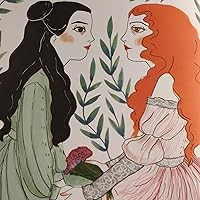
January 29, 2025
Muy aburrida.
La protagonista es odiosamente narcisista.
El novio drogadicto es un quiero y no puedo constante que en ningún momento llega a fluir correctamente como personaje.
El amante es un ente impostado que solo le facilita a la escritora podernos contar escenas eróticas.
Sin más.
No sé qué es lo que esta señora me quería contar en esta novela, porque no la he entendido. Empecé como he acabado y con la sensación de haber perdido tiempo de vida en este sin sentido, que encima es autobiográfico.
La protagonista es odiosamente narcisista.
El novio drogadicto es un quiero y no puedo constante que en ningún momento llega a fluir correctamente como personaje.
El amante es un ente impostado que solo le facilita a la escritora podernos contar escenas eróticas.
Sin más.
No sé qué es lo que esta señora me quería contar en esta novela, porque no la he entendido. Empecé como he acabado y con la sensación de haber perdido tiempo de vida en este sin sentido, que encima es autobiográfico.
This entire review has been hidden because of spoilers.
February 6, 2015

THE GOOD: The protagonist falls in love with an impotent man but finds a "sexy, Western man" to fill her "void". Said impotent man develops a drug habit while the German moves back to Berlin. What is she really left with?
Of course, the author leaves us with a "who I'm I?" cliff-hanger moment near the end of the book which seems to be the major theme running throughout. From the reviews on here, one would describe the protagonist ("Coco") to be a heartless, selfish, and deeply narcissistic character. But hey, who I'm I to judge? She can do whatever she wants to. The greatest joy I received from this book was reading about her adventures and escapades in a non-judgmental sort of way, i.e: this stage of her life which seems permanent (the committed, trustworthy guy) but temporary (the incumbent Western guy) at the same time. A story you should enjoy because you know it will not last very long hence why you need to soak up every moment.
THE BAD: The character I could really relate to, however, was not the woman willing to give up her body and soul to find her one true love (or is it simply to satisfy her?) whether that be with 1 man or 2 but the male characters. One being totally impotent, but loving and gentle and dependent while the other being totally carnal and independent (he is married after all). Both representing what a complete man (ideally) should be able to provide such a woman, but cut in half. Knowing my own imperfections and the many times I've let women down, I could clearly see myself as either as these two. Once again I was not able to judge them.
THE UGLY: Unfortunately, we never truly get to read how the rest of Coco's life unfolds after this 'phase'. Insofar as we get to read and the story behind it, I would say this is only an *average* read. Meh, even ordinary is a word I'd use. There is nothing truly exciting but it was interesting for me none the less since it was set in Shanghai, China (a city and country I am fascinated with).

April 7, 2007
Wei Hui is Shanghai-ese spoiled spoiled spoiled who can think of nothing better to do, so she decides to become a writer, and because she's a writer, she must be tortured! Oh! It's so hard being her! It's so hard living the life of luxury and not having to care! Don't you feel sorry for her? Because she wants you to.
Also, Wei Hui most pretentious. And her writing, ugh. "A team of Japanese boys on roller skates looked like mounted butterflies as they showed off their techniques... their dyed hair like feather dusters." (p89). Tortured similes litter every page. Also, the translator did some weird things, such as " 'You're looking piaoliang [cute],' I said." (p90). I mean, piaoliang isn't some weird word that doesn't fully translate into English. She could have just said "You're looking cute". Also, from the context (more than I've provided here), we don't really need piaoliang defined--it was fairly obvious what it meant. So, why? She incessantly name drops to make herself sound smart and educated, but it doesn't work because she's really neither (at least, by Western standards, maybe by Chinese standards, I don't know.) Also! Check out the horribleness of this next paragraph, not only in style and but also sheer ignorance (which was not meant ironically!), "At the airport Flying Apple and I kissed a hasty goodbye that left my lips wet. Many gay or bisexual men have a special, fuzzy sort of tenderness that one finds in small animals, but I'm always aware of the AIDS risk. As Alanis Morissette put it, 'I'm sick but I'm pretty, baby'."
Also, Wei Hui most pretentious. And her writing, ugh. "A team of Japanese boys on roller skates looked like mounted butterflies as they showed off their techniques... their dyed hair like feather dusters." (p89). Tortured similes litter every page. Also, the translator did some weird things, such as " 'You're looking piaoliang [cute],' I said." (p90). I mean, piaoliang isn't some weird word that doesn't fully translate into English. She could have just said "You're looking cute". Also, from the context (more than I've provided here), we don't really need piaoliang defined--it was fairly obvious what it meant. So, why? She incessantly name drops to make herself sound smart and educated, but it doesn't work because she's really neither (at least, by Western standards, maybe by Chinese standards, I don't know.) Also! Check out the horribleness of this next paragraph, not only in style and but also sheer ignorance (which was not meant ironically!), "At the airport Flying Apple and I kissed a hasty goodbye that left my lips wet. Many gay or bisexual men have a special, fuzzy sort of tenderness that one finds in small animals, but I'm always aware of the AIDS risk. As Alanis Morissette put it, 'I'm sick but I'm pretty, baby'."

September 23, 2019
I thought it was fun, fresh, and insightful. The best parts were the descriptions of various, famous and hidden, locations in Shanghai. I knew that this book had a bit of a scandalous reputation – not because it was especially racy, but because it was called empty, vapid, and pretentious, and its fame unmerited. Come on! So what if the narrator/author describes herself as super hot and talented? So what if she has both a Chinese and a foreign boyfriend, and loves to have sex with the latter, but feels tender and protective towards the former? I thought she was sweet with both, and quite reasonable and level-headed about herself. It’s not that she was so completely engrossed in her love triangle that she didn’t notice others either – her friendship with Madonna, her warm relationship with her parents, and her interest in whoever approached her prove that she actually does have what it takes to be a writer.
Madonna was my favorite character:
“Boys today really know how to sweet-talk a girl. He just swore he’d die in my bed.’ She started laughing again. ‘True or not, it’s enough to keep me happy.’”
And this was my favorite line:
“From Daddy’s room came the sound of earnest debate, the men discussing some lofty topic of no practical importance.”

February 4, 2016
This book was so odd. It is touted as being banned because it was "too sensual". I found it more about a strange, narcissistic woman and her very needy childlike boyfriend. Not great, but I finished it
October 5, 2016
I bought this book because it seemed to have the potencial of being an interesting story; but at the end it only showed to be a very pretentious novel written by a pseudo-feminist and pseudo-intellectual narcissist woman.

December 8, 2025
I read Shanghai Baby a long time ago in my teenage years, and I don’t remember that I appreciated it back then as I did on this (re)read. And, I am so glad I had this book again in my hands because it is a really interesting and worthy piece of literature. Maybe Shanghai Baby isn't a great novel in a formal sense and might resemble a Chinese version of Sex and the City to some, but Wei Hui does something else with it that is equally important.
It is a fictionalized autobiography of Wei Hui in which she explores the rise of Shanghai in a globalizing world around three decades ago from today and portrays her life in this, unfamiliar to me, city with all its quirks and nuances.
I'm not really versed in Asian culture and history unlike Wei Hui who is fascinated with European and North American cultures--and the European phenotype--and references various artists virtually exclusively from my ethno-geographic lumping. She makes a parallel between her domestic culture with the rest and introduces a China that probably is not really talked about here in the West, especially not back then when she published her book and the Internet didn't exist.
Nikki aka Coco is Wei Hui's alter ego. She is an assertive, liberal and independent woman who has the courage to ask the world for more and to take what it offers her. Wei Hui writes about female agency without apologizing for it in a narrow-minded society. Coco enjoys the typical hedonic pleasures along with her bacchanal friends consisting of artists, programmers, socialites, foreigners, LGBT members. Thus, Wei Hui also gives voice to marginalized people like homosexuals and transgenders portraying them as productive members of society capable of loving and to suffer. Naturally, sex and all of its nitty-gritty details as a core element of the human experience is also present in Coco's life. Wei Hui writes unapologetically about the sexual experiences of Coco.
However, in conservative China, it having a radically different axiology than the West, the novel stirs huge controversy being labeled as too sensual, decadent and promoting individualism, resulting in it getting banned and thousands of copies burned by the government. I, for one, wasn't the least offended or shocked by the events and musings; she writes tastefully, lyrically and humanely.
Coco being reflective and a sexually confident young woman, spoilers ahead, leads her in the middle between diametrically opposed worlds, one with the old soul Tian Tian who is creative, emotional, reclusive, but also impotent, and the other world with the hairy and hung German expat Mark who is assertive, dominant, knows what he wants and enjoys life with all his senses with flexible morals. Coco is fighting two opposing forces of the spiritual and the physical experiences. She is trying to have it all, and loses herself completely in this tug of war.
Eventually, Coco loses both men at about the same time. She is trying to negotiate and piece together her fragmented identity both with Tian Tian and Mark but eventually none of them is her soulmate tied to her with red thread. They are but structural necessities for her individuation. And, not only them, but everyone else is functional with respect to her growing.
A common criticism of her novel is that the characters are flat, and instead of having depth, their purpose is what they can do for Coco. But, if you think about close encounters in our own lives there'll be plenty of people that were only instrumental in shaping our identity.
Ultimately, Coco had to choose between two catastrophes: either to suppress her own authentic and unique version and fulfill the societal expectations, or open herself up to the world and become her own individual. Neither choice preserves entropy and is void of significant pain and suffering. Coco made a choice, and in the end, she is neither liberated nor redeemed, but she is left just as confused as she was before but richer in experience. But, aren't these the same choices we all have to make?
It is a fictionalized autobiography of Wei Hui in which she explores the rise of Shanghai in a globalizing world around three decades ago from today and portrays her life in this, unfamiliar to me, city with all its quirks and nuances.
I'm not really versed in Asian culture and history unlike Wei Hui who is fascinated with European and North American cultures--and the European phenotype--and references various artists virtually exclusively from my ethno-geographic lumping. She makes a parallel between her domestic culture with the rest and introduces a China that probably is not really talked about here in the West, especially not back then when she published her book and the Internet didn't exist.
Nikki aka Coco is Wei Hui's alter ego. She is an assertive, liberal and independent woman who has the courage to ask the world for more and to take what it offers her. Wei Hui writes about female agency without apologizing for it in a narrow-minded society. Coco enjoys the typical hedonic pleasures along with her bacchanal friends consisting of artists, programmers, socialites, foreigners, LGBT members. Thus, Wei Hui also gives voice to marginalized people like homosexuals and transgenders portraying them as productive members of society capable of loving and to suffer. Naturally, sex and all of its nitty-gritty details as a core element of the human experience is also present in Coco's life. Wei Hui writes unapologetically about the sexual experiences of Coco.
However, in conservative China, it having a radically different axiology than the West, the novel stirs huge controversy being labeled as too sensual, decadent and promoting individualism, resulting in it getting banned and thousands of copies burned by the government. I, for one, wasn't the least offended or shocked by the events and musings; she writes tastefully, lyrically and humanely.
Coco being reflective and a sexually confident young woman, spoilers ahead, leads her in the middle between diametrically opposed worlds, one with the old soul Tian Tian who is creative, emotional, reclusive, but also impotent, and the other world with the hairy and hung German expat Mark who is assertive, dominant, knows what he wants and enjoys life with all his senses with flexible morals. Coco is fighting two opposing forces of the spiritual and the physical experiences. She is trying to have it all, and loses herself completely in this tug of war.
Eventually, Coco loses both men at about the same time. She is trying to negotiate and piece together her fragmented identity both with Tian Tian and Mark but eventually none of them is her soulmate tied to her with red thread. They are but structural necessities for her individuation. And, not only them, but everyone else is functional with respect to her growing.
A common criticism of her novel is that the characters are flat, and instead of having depth, their purpose is what they can do for Coco. But, if you think about close encounters in our own lives there'll be plenty of people that were only instrumental in shaping our identity.
Ultimately, Coco had to choose between two catastrophes: either to suppress her own authentic and unique version and fulfill the societal expectations, or open herself up to the world and become her own individual. Neither choice preserves entropy and is void of significant pain and suffering. Coco made a choice, and in the end, she is neither liberated nor redeemed, but she is left just as confused as she was before but richer in experience. But, aren't these the same choices we all have to make?

October 23, 2011
I grabbed this book off of a free book exchange shelf thinking it was Shanghai Girls but decided to read it anyway. Big mistake! Granted this book was written in 1999 and was almost banned by the Chinese government because of it's sensuality, it was not worth being printed. This was a very shallow twenty-something version of Sex in the City without the best friends. The only parts that were interesting were brief commentaries on western expats. I found the narrator obsessed with all things western but then hypocritical of the west at the same time. This quote from the book, page 235, sums it up pretty well: "My friends and I, a tribe of the sons and daughters of the well-to-do, often used exaggerated and outre language to manufacture life-threatening pleasure. A swarm of affectionate, mutually dependent little fireflies, we devoured the wings of imagination and had little contact with reality."
October 4, 2007
Situated by the changing Shanghai, Coco started to write her second novel. Coco was formerly a journalist, but resigned after she launched her first novel.
By encouraging her boy friend, Tian Tian, a painter, Coco felt self confidence to write her novel. Tian Tian saw that Coco was very talented at writing.
This novel also described that Shanghai was a changing city. Where modern met old. And East met West. That's why Shanghai is always interesting city in the world.In the wilderness of Shanghai, Coco---in the process of her second novel writing--showed the "real life" of Shanghai: free sex, drugs, alchohol, love affairs, etc.
As a "brave" novel, Shanghai Baby was banned in China.
By encouraging her boy friend, Tian Tian, a painter, Coco felt self confidence to write her novel. Tian Tian saw that Coco was very talented at writing.
This novel also described that Shanghai was a changing city. Where modern met old. And East met West. That's why Shanghai is always interesting city in the world.In the wilderness of Shanghai, Coco---in the process of her second novel writing--showed the "real life" of Shanghai: free sex, drugs, alchohol, love affairs, etc.
As a "brave" novel, Shanghai Baby was banned in China.

February 12, 2025
Leerme este libro sobre una chica de 25 años en vísperas del cambio de milenio, 25 años después del cambio de milenio justo después de cumplir mis 25 años, ha sido obra del destino y una experiencia extremadamente importante

March 30, 2018
What a strange book..
February 1, 2025
"Soy muy especial", "pick me, choose me"
Displaying 1 - 30 of 529 reviews