"Having read Isabel Patterson [sic], I was not only influenced but convinced that a philosophy that embraced personal liberty, private property, and sound money was the only political philosophy worth championing." -- Ron Paul in "End The Fed"
The God of the Machine "does for capitalism what Das Kapital does for the Reds and what the Bible did for Christianity." -- Ayn Rand
In "The God of the Machine," Isabel Paterson makes a comprehensive case arguing in favor of individual rights, free trade, and free markets. Considered a foundational work on the subject of individualism and libertarianism, it is said to have influenced Ayn Rand, Russel Kirk, William F. Buckley, and Ron Paul.
Original Print 292 pages.
Acknowledgement I The Energy Circuit in the Classical World II The Power of Ideas III Rome Discovers Political Structure IV Rome as an Exhibit of the Nature of Government V The Society of Status and the Society of Contract VI Liberty, Christianity, and the New World VII The Noble Savage VIII The Fallacy of Anarchism IX The Function of Government X The Economics of the Free Society XI The Meaning of Magna Carta XII The Structure of the United States XIII Slavery, the Fault in the Structure XIV The Virgin and the Dynamo XV The Fatal Amendments XVI The Corporations and Status Law XVII The Fiction of Public Ownership XVIII Why Real Money Is Indispensable XIX Credit and Depressions XX The Humanitarian with the Guillotine XXI Our Japanized Educational System XXII The Energy Circuit in Wartime XXIII The Dynamic Economy of the Future
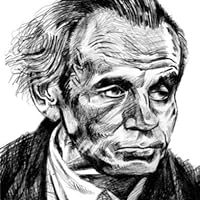
Isabel Paterson (January 22, 1886, – January 10, 1961) was a Canadian-American journalist, novelist, political philosopher, and a leading literary critic of her day. Along with Rose Wilder Lane and Ayn Rand, who both acknowledged an intellectual debt to Paterson, she is one of the three founding mothers of American libertarianism. Paterson's best-known work, her 1943 book The God of the Machine, a treatise on political philosophy, economics, and history, reached conclusions and espoused beliefs that many libertarians credit as a foundation of their philosophy. Her biographer Stephen D. Cox (2004) believes Paterson is the "earliest progenitor of libertarianism as we know it today." Ayn Rand wrote in a letter in the 1940s that The God of the Machine "does for capitalism what Das Kapital does for the Reds and what the Bible did for Christianity."
2022-02-16 I just noticed this book on a friend's "to read" list and it reminded me that I had not written a review of the book yet. I don't have time to write much, but I have very fond memories of reading this in the early-mid 1980s.
It is a very different book than most I have read and admired. It is pretty quirky and kind of strange really. But I love the big analogy and hope those who might read it will also be impressed that it explains a pretty neat theory about how government constraints on human energy cripple our society, but when laissez faire is introduced, amazingly powerful and positive energy is unleashed.
The author is one of the three main "mothers of the modern libertarian movement" in the 1940s. They all knew each other, and were friends in fact: Isabel Patterson, Rose Wilder Lane and Ayn Rand. Their strong personalities and convictions made it impossible for them to stay close forever, but the time they were close, they each benefited, and that is a cool thing.
Oh, the biography of Paterson by Stephen Cox is also a really neat book that I also recommend.
Isabel Patterson argues most persuasively for political freedom as the absolutely required groundwork for laissez faire capitalism, the economic basis for the the high civilization we now enjoy in America. A great virtue of her work is how well she supports her thesis with rigorous explanations of how the absence of economic planning and coercion makes possible the incredibly efficient and productive action of Adam Smith's "invisible hand," in comparison to which all welfare schemes pale.
She compares the political and economic structure of a society to a machine with a complicated, long-range energy circuit, the motive power for which is human creativity and ambition. Though generally illuminating, this analogy is at times confusing. Patterson herself thought the book too condensed, and I certainly found it packed tight with ideas and information that I will need to unpack and corroborate with further thought and reading. It is a valuable stepping stone to realizing an adequate defense of our magnificent republic.
First published 70 years ago, The God of the Machine verges on greatness; it will in my view play a part in any future renaissance of individualism.
No one could have written a better review of Isabel Paterson's best-known work than her one-time friend Ayn Rand, who did so for The Objectivist Newsletter in 1964.
Miss Rand pointed out that the difficulty in reading this book is due to its lack of organization and the failure of Mrs. Paterson to outline her theory. This resulted in what seems at times to be a collection of essays which share a common metaphorical style by referring to such elements as dynamos and energy circuits in a political context.
Although I endorse the entire book, Chapter XXI, "Our Japanized Educational System" is my favourite because it stands alone--largely avoiding the machine metaphors too--in addressing the conflation of political power with the authority to educate individual children. In the long term this would destroy the Western culture, particularly if and when private schooling is forbidden.
It takes effort to read this book but as Ayn Rand wrote: "Its virtues are so great it is well worth the effort".
Fascinating book; think of social philosophy approached as an engineering process or a scientific analysis.
The title could even have been, "The Rise and Fall of Liberty and Prosperity", since we are now more than seventy years past the writing of this book and the dangerous trends limiting and parasitizing the productive energies released under conditions of liberty pointed out in the book by the 1940's have continued and have steadily eroded the USA into a cronyist, status type civilization living off the borrowed capital of yesterday.
Necessary reading for anyone interested in maximizing human potential, and especially those who have bought into the foolishness of collectivism and Marxism.
I started off enthusiastically underlining quotes, but well before the end felt like I was in one of those conversations where someone goes on, and on, and on, and on, about their initially interesting idea, until you only remember afterward how obsessive they were.
One of the quotes I underlined: What the past shows, by overwhelming evidence, is that the imponderables outweigh every material article in the scales of human endeavour. Nations are not powerful because they possess wide lands, safe ports, large navies, huge armies, fortifications, stores, money, and credit. They acquire those advantages because they are powerful, having devised on correct principles the political structure which allows the flow of energy to take the proper course.
The problem: What Mrs Paterson meant by 'imponderables' is not what I mean by imponderables. Her theory is as rigidly materialistic in its way as Marxism, and cherrypicks its examples just as ruthlessly. In fact, there is pretty much only one positive example in the book, the 'United States of America'. The non-economic dimension of human life is absent from this book, leaving a cold and aching void. Yes, I miss the laissez-faire Edwardian period too. Yes, government meddling goes much, much, too far. But the monomanic insistence that there is no way we can act cooperatively except through the market, that *all* attempts to use government to solve problems are doomed to failure, got very tired very soon. All in all, what 'The God of the Machine' most lacks is a sense of proportion, something that modern civilisation is woefully deficient in.
Recommendation: Read this, by all means, but in conjunction with an equal amount of Jack London's non-fiction.
In a final quibble, it was galling to see Australia and New Zealand described as semi-socialistic freeloaders that have never produced any original ideas, coasting along on American energy. This seemed a prime example of the 'First, insult all your friends' style of winning arguments.
There are a few books that are strangely uneven, not in that they are a mix of good and bad, but how all the good it mixed in the book and is presented to the reader. This is one of those books, and it is partly because it deals with abstactions, allegory and history to tell the story about this "machine" and its flow of energy, how it works the best and why it fails. Sometimes it feels like the main point is not coming through, but other times Paterson really nails it and is clear as a skyless heaven. It's the fog that makes this book loose some of its appeal, one has to look cloesely to see behind it and keep several layers in mind at the same time, because it is not easy to always see the coherence of it all. There is a lot to like, there is a reason why Isabel Paterson was revered by the early libertarian movement - and that shows, but I think her lack in writing nonfiction books is what makes this book uneven. It still contains so much that it is a reread candidate if I am to refocus into the themes presented in the book in the future sometime.
It was a nice introduction to one of the mothers of libertarianism. Paterson had some really ingenious arguments against collectivism. It was rather tedious to read the first section on the history of the Ancient Greece but as soon as she began to move to the Dark Ages it became interesting. One problem I've had with this book is the use of thermodynamics and physics as comparison to the circuit of currency, labour, production and goods. Otherwise this is a must read for libertarians.
This book is vitally important. It's a bit awkward and not terribly easy to read, but it is worth a slow, deep reading, even a second or third reading. There are some razor-sharp passages that cut into all the collectivist nonsense we are ensconced in today.
Paterson's style isn't the most accessible, so it took me a few chapters to understand both the point she was making and the way she was making it. But having understood it, I agree on all counts: the free-market ("high-production") economy creates the most prosperous and dignified society for all of its members, and this economy works on a "long circuit of energy," starting with the producers and branching out to the rest of society as an electrical impulse. Governmental interference, wars, and a general lack of understanding of the mechanism, etc., cause breaks in the transmission lines or even short-circuiting. Small wonder this book has become yet another addition to the canon of libertarian manifestos, and (as soon as I find a decent paper copy) will find a place of honor on my bookshelf alongside the likes of Milton Friedman, Thomas Sowell, Murray Rothbard, and Rose Wilder Lane.
I purchased this book over 50 years ago for $4.95, hardcover. Only just this week did I actually read it. In all those years, I had heard both good and bad about Isabel Paterson and her supposedly revolutionary book, The God of the Machine.
Back in the early 1970s I read several volumes by Alfred Jay Nock, who happened to say that Patterson’s nonfiction books were among “the only intelligible books on the philosophy of individualism that have been written in America this century.” Apparently that wasn’t a strong enough endorsement to propel me forward at the time.
My inertia must have been owing to how poorly developed was my own grasp of individualism back then.
Because it took me such a long time (50 years) to tackle this book, I first looked at a couple reviews. Among the words of praise I found are these: “The God of the Machine does for capitalism what Das Kapital does for Reds and what the Bible did for Christianity.” But if this book were actually as powerful as Das Kapital or the Bible, then surely I would have heard about it — but I had not been familiar with Paterson’s book.
GROUNDWORK The early chapters lay down some groundwork in how Ancient Rome grappled with the nature of government as such, how they handled slavery, how they evolved “the law” and the very idea of a “free man.” I got the impression that Paterson lamented that Rome never got proper credit for having laid the foundations for what centuries later would become the engine of human prosperity, namely: private property and the recognition of individualism.
I remember reading of John Adams life-long study of past governments, particularly of Rome, as he struggled to discover the elements of a proper government for the fledgling America.
Paterson tried to describe what John Adams must have been studying: a perspective on what happened as humanity slogged through the Middle Ages, as the individual’s relationship to the group changed; as Roman society tried to balance its “Society of Status,” dominated by clergy and noblemen where the masses had no rights — as against its “Society of Contract,” where men were free to work and trade as individuals. Middle Ages feudalism gradually devolved: feudal provinces gave way to monarchies; and the rising tide of merchants producing and trading became the counter force to spark the changes that didn’t fully emerge until Enlightenment ideas burst upon the scene.
SPIRITUAL VS. MATERIAL Isabel Paterson makes an unusual observation, pointing out the connection between man’s spiritual endowment and his life’s material requirements.
As she discusses the surge of human material progress in the last two centuries, she seeks to uncover “the dynamo of energy” most responsible for the unprecedented explosion of material wealth. The dynamo she points to is man’s unique spiritual endowment, the one aspect of man which is non-material: his thinking mind. We can’t touch it, see it, or smell it, taste it, or even weigh it — being non-physical is precisely what makes it spiritual.
Paterson identifies man’s thinking mind as the element which unleashed that dynamo of productivity for the first time in all of history. She points to the U.S. Constitution as ground-breaking by connecting the mind’s productivity to its need for protected private property. If man were to thrive by using his mind, he would need protection for the products of his mind’s efforts. By securing private property to the individual, the U.S. Constitution set the stage for the individual’s mind to reshape his material world in ways never before dreamed. Paterson goes to great lengths making this point, a point almost totally lost on today’s crop of American citizens. It is the basis for her book’s thematic focus on “individualism.”
Commenting on how the Constitution freed up the mind’s role as the dynamo of productivity, she gives us this: “Nothing of (this) sort has ever occurred in the world before,” (p. 136) that individual men have never before been free to “own” all the things their own minds created.
THE INDIVIDUAL VS. THE COLLECTIVE Isabel Paterson’s promotion of individualism evolved in parallel with the critical Theorists’ campaign to destroy it.
The critical Theorists of the mid-twentieth century were active at precisely the same time when Paterson was writing her book, but their influence outlasted hers. Latter day incarnations of these critical Theorists became the “postmodernists,” who redefined racism as “Prejudice plus Power” rather than a phenomenon which could be tamed by fostering individualism. Their “social construct” version of race won the day, and Paterson’s crucial perspective on individualism became sidelined, instead of taking its rightful place on center-stage.
By the twenty-first century, it became clear that individualism was what critical Theory was trying to destroy all along. The critical Theory academics have succeeded in their quest to smear individualism as an important value in the public’s awareness. The critical Theory juggernaut seems to be winning the battle for “hearts and minds.”
When Isabel Paterson wrote her impassioned case for individualism in 1943, little did she know that her life’s work of showing us the value of individualism would suffer from relentless attacks both in academia and in the popular press. Little did she know that the fight for individualism would become a full-fledged war; little did she know that the battle for civilization itself could be lost. All of that would happen decades after her book and after her light walked among us.
DIALOGUES & NARRATIVES Henry Hazlitt and Milton Friedman were legendary in their knack of bringing clarity to obscure economic concepts. They did it by giving us vivid, concrete examples so that a complex idea would take on a patina of an obvious perceptual-level concrete. This is what Isabel Paterson does, as she winds us through the thinking process behind her understanding of, for instance: how “real money” works, or about the myth that “public ownership” could ever be a viable substitute for recognizing private property.
As she develops her theme about the value of recognizing individualism rather than the collective, we are beckoned to follow the mental process needed to create an actual understanding. She turns the necessity for us to embrace individualism into practically a self-evident axiom.
Paterson makes it abundantly clear how a prosperous society requires a certain political structure. She contrasts that political structure with other political structures which have been tried in the past but have always led to bloodshed, chaos, starvation, productive impotence.
Behind all the bloodshed and starvation, Paterson sees a systematic attack on individualism — an attack on one of The Enlightenment’s pivotal values. She tells us of the coercive sacrifice of some individuals to others; she tells us of the forfeiture of personal sovereignty over one’s own life; she shows us the crushing of personal agency. It becomes unmistakable how the undermining of individualism is what destroys the chances for a society to become productive.
Paterson’s central theme here is to make vivid the distinction between the individual and the collective. Most of us never consider individualism as more than one of those nice sounding words — just a bromide; but Paterson draws individualism out as an important value which has to be specifically sought and embraced before we can have prosperity and personal happiness.
BARBARIC THINKING The God of the Machine presents collectivism as barbaric thinking, as savage-level thinking — savage in that it devalues liberty, reason, rights. She quotes Herbert Spencer: “We are being rebarbarized.” (p. 244)
This book explains how in the 1930s FDR put Spencer’s barbarism into action; how FDR rebarbarized the entire system so that by 1937 we were all worse off than in 1929 when the stock marked crashed. The individual had been sacrificed to the collective right in front of everybody’s faces, but few people recognized what was happening at the time.
Paterson points out how America’s descent into barbarism during the Great Depression took the form of government systematically undertaking to protect and favor some groups at the expense of all other groups: when solvent farmers were penalized with quotas to subsidize speculative farming; when shipping subsidies were doled out to rich shippers and the workingman forced to accept it; when laws were passed against “hoarding” so that “the only action punished was prudence” (p. 243); ad infinitum. The New Deal was an endless litany of attacks on the individual. The individual was systematically sacrificed to the collective and everybody suffered.
Her book was published in 1943, before the 1946 repeal of Depression-era restrictions finally allowed the economy to rebound. She was clear about how the turn toward the barbarism of deploying coercion against the individual extracted a terrible price, while only the politically favored groups benefited.
CHICLÉD BROMIDE OR CRUCIAL VALUE? Both “individualism” and “freedom” are widely seen in today’s culture as clichéd bromides, rather than values which must be attained and cherished.
In the final pages of The God of the Machine, published right in the middle of World War II (in 1943), Patterson brings important insight to the value of protecting the individual’s right to make independent personal decisions, even as they are involved in producing armaments to win a war. She makes it clear that it was the remaining degree of freedom allowed in America’s industrial economy that was the pivotal difference between winning or losing that war.
She pointed out that “Freedom for Americans is not a luxury of peace, to be ‘sacrificed’ in wartime” (p. 292) but that protecting the individual’s right to work as he saw fit, even during wartime, was the basis of America’s unprecedented success in producing the armaments needed to win the war. She was talking not just about the workers in the factories, but about the network of factory owners who had to be free to make critical decisions about supplies and distribution. This was in contrast to Japan and Germany, which essentially enslaved its working population, crushing individual personal choices, and in the process crushing their own country’s productive capacities.
* * * * * * * * * *
All my life I have heard authors pontificating about “individualism” and “freedom” and “liberty.” More often than not, these central values are treated as buzz-words, with little effort expended to draw out what their attainment means for any of us. It was a delight to revel in how clearly Isabel Paterson showed us the connection between the individual’s “pursuit of happiness” for Americans and the country’s explosion of wealth over its 250 year history. I shouldn’t have waited so long to read this one.
"The crucial test of private property is the attitude of government toward money. Devaluation of currency is outright expropriation. The British empire was founded when the debased coinage was restored to standard during the opening years of the reign of Elizabeth, on the advice of Gresham. At the time, English trade was in distress, the national treasury was empty, the national credit was gone and mercantile credit shaky, war was threatening and rebellion a possibility. In such circumstances, governments usually resort to repudiation, confiscation, and fiat currency. Instead, England took the opposite course. The world came under her sway. The British empire ended three hundred and fifty years later, when England again debased her coinage, defaulted on her debts, confiscated private property, and abrogated personal liberty."
-Isabel Paterson, the God of the Machine
"The lust for power is most easily disguised under humanitarian or philanthropic motives...An amiable child wishing for a million dollars will usually 'intend' to give away half of this illusory wealth. The twist in the motive is shown by the fact that it would be just as easy to wish such a windfall directly to those others without imagining oneself as the intermediary of their good fortune...The child does not even conceive that persons in need of help can also imagine a million dollars for themselves. The double gratification, of personal wants and of power through 'doing good,' is innocently stipulated. Carried into adult years, this naive self-glorification turns to positive hatred of any suggestion of persons helping themselves by their own individual efforts, by the non-political means which imply no power over others, no compulsory apparatus. The hatred has a deep motive back of it; for it is true that nothing but the political means will yield unearned public adulation."
The quirky style in which this book was written is both what I love and what I hate about it. Paterson is a fascinating woman, who is said to have read "every book in the library," grew up in one of America's last real frontier areas, on ranches and Indian Reservations, a self educated, self made newspaper columnist.
This book has often been criticized for the failure of the engineering analogy. Indeed, this analogy is presented as the theme and the entire purpose of the work. Yet it seems, at some point in writing it, she gave up on the idea, and only awkwardly inserts the analogy into the text at various points to give it some continuity.
That being said, there are many gems scattered throughout this work-- many political, historical, economic, and for lack of a better word, spiritual concepts which she really elucidates, that I've never heard explained better or even attempted elsewhere. She peppers the work with some fascinatingly obscure literary references, and even some poetry.
Anyone interested in laissez-faire economics, classical liberalism, and 20th century thought should definitely give this a read at some point.
Isabel Paterson offers an original theory of history based on the metaphor of the machine, with humanity as the dynamo. (One might venture to call this "steampunk political theory.") As one of the "big three" publications of feminist-individualist thought in 1943 (the others being The Discovery of Freedom by Rose Wilder Lane and The Fountainhead by Ayn Rand), Paterson remains a lasting influence on the classical liberal/libertarian tradition. The God of the Machine is fascinating as a historical text (especially where its descriptions of self-regulating and spontaneous orders anticipates Friedrich Hayek), despite being dated in certain respects (most notably when she shows her ignorance about Native America). But parts of it remain eerily relevant and meaningful today, especially the sections on credit, humanitarianism, and the educational system. Her pithy, irreverent journalistic style makes this an easy as well as thought-provoking read.
Paterson's classic book from the WWII era is still worth a read today by anyone interested in the development of classical liberal/libertarian ideas or in reading a forceful exposition of the same. My main complaint with the book was the constantly repeated analogy of "society as machine" (which presumably gave the book its title) which seemed oddly out of place except in a few chapters dealing with economic issues. Otherwise, Paterson presents many classical liberal ideas in a strong and convincing form and her denunciation of the inevitable disasters that follow from attempts to run a society on humanitarian principles is worth the price of the book on its own. I would have been happier with the finished product if she had spent more time elaborating her theoretical ideas about the nature of society and economy, many of which are original and highly nuanced, rather than devoting the first half of the book to a compressed summary of history that contains little original material.
Paterson's "The God of the Machine" was an analysis of recorded history. She defended individualism as the cradle of our moral, and political progression. Simplifying the definition of economic freedom through looking back the Western civilization where Phoenicians merchant traversed thousand years a go along the midland waterway to exchange goods with the Greeks.
She mentioned that when political power being withheld from the economic activity, and production was left to private management the stream of energy will continue to build up slowly in progression that which, (quote from Paterson), "The country which is less governed is best governed".
An excellent read. This self-made frontier woman-turned-philosopher lived in a time of economic hardship and witnessed a variety of radical government "solutions." She works through the manner in which the free market sustains and expands itself, as well as the effect of anything siphoning wealth or energy away from productive pursuits. She explains that socialism can only exist on the margins of successful market economies by drawing off the market's success to sustain itself. Some of her specific positions may seem dated (being in favor of the gold standard, for instance), but her larger points (the importance of avoiding inflationary policies, in the preceding case) remain current.
This is the civics book America didn't know it needed. If more people read and understood it, I suspect that many of our problems in the last 30 years could have been easily avoided. Paterson shows the integration of governance, culture, and the economy that few recognize, and does it well. I'd been meaning to read this book for years, and a couple of times had to stop myself as the opening paragraphs sucked me in. The entire books is well-written; my only significant complain is the dearth of citations, but as I understand it, those were less common in that era. I would strongly recommend it for those trying to get a handle on political theory.
This is a brilliant, broadly theoretical interpretation of history and politics. Paterson believed that social and economic relation are literally power relations which can be described and explained as energy transmission circuits. I would strongly recommend this book to any student of general history. So why didn't I give it five stars? Because the argument is difficult to follow, a strange flaw in a book written by a newspaper person. I greatly profited in reading this by using the text-to-speech function in the Kindle.
Unfortunately, I had to return this book to the library before I got to finish it, due to some thieving little hands stealing it and reading it before I could. The first half, however, was great. This had been added to my book sale list.
I came into contact with Isabel Paterson through a biography on Ayn Rand, where, it turns out, some of the thinking and later images that Rand used were likely offered through the mentorship of Paterson. The God of the Machine is Paterson's work of political-economic history, making use of metaphor to demonstrate the idea that the productive ends of any society must be founded in the individual, in laissez-faire capitalism. To support this, she examines history through the lens of a metaphor of a circuit. The longer the circuit, the more complex and able the society. The destruction of the circuit therefore, contrastingly, brings ruin.
She begins by looking at history, explaining this conceptually and applying it to history, working through a progressive view of human societies. The circuit began simple and short exclusively through trade. With the advent of currency, societies could become more complex and produce more, allowing the completion of what she called the "long circuit". Essential to the long circuit is production, and essential to production is the individual worker, which she later argues is protected by regional bases. Without them, the system will destroy the productive. She follows these examples to explain the downfall of nations including the Greeks, the Romans, and the French. The system must be protected, else it will fail, and the system can only survive in its higher energy forms, as the analogy explains, by protecting the productive.
She argues that the base of productivity must be property rights, and in that foundation critiques both what she calls "status" societies and collectivist theories. Both ideas destroy the productive capability of free and volitional laborers. Workers with bodies cannot be free to exist without a place to be, she argues, thus property rights are essential. Status societies fix workers into place based on cultural tradition or birth. This prevents industry as it removes interaction through voluntary contract, the cornerstone of complex and productive economies. She adds numerous notes as she traces this, arguing that the progress of society is fixed on moving towards this complete circuit founded on contract. The greater the freedom, the greater potential of the economy.
In formulating this perspective, she argues against the idea of the so-called "noble savage". She credits the Magna Carta and the founding of the United States for the realization of the long circuit. She calls the slavery system a fault, both morally and economically, removing choice and forcing man into a savage-system of low energy, with no freedom, no movement, and no production. She argues that machine economies cannot function on their own and always borrow capital from contract societies that possess what she calls the dynamo, the human mind. She takes aim against government, citing that businesses are penalized and criminalized for the act of production, pointing out antitrust laws as one such example, deducing that government intervention can only drain from the system; governments do not produce, but simply move energy in an economy. She critiques money that is not based in the material, such as the gold standard. She argues that credit is necessary for the long circuit economy. She argues against collectivism as a worldview and the humanitarian who does not produce nor considers where the ability to provide for humanitarian acts comes from. In perhaps her most insightful comments, she argues against state-run education, connecting education of this sort as a precondition to tyranny. She spends time examining warfare under this lens, highlighting the great dictators' tendency to fail as energy is used from free societies.
In all this, Paterson effectively puts forth a framework by which we can understand not only the world or even economies, but the complex relationships of human beings. From the smallest interaction, an individual to another individual, to the largest, a country to another country, it all centers around force and exchange. The relationships remain the same; they are also founded in the same basic units: force and trade. In terms of learning and providing a framework to understanding both history and how we should act moving forward, I can make few better recommendations than Paterson's work. She boils down a perspective on history with great explanatory power into a framework that enables us to examine our future choices even at the individual level.
Highly recommend this as historical-social-economic textbook by which to consider the movement of events both big and small at an explanatory level. 5/5.
Overview: A historic work of political-economy which argues libretarian principles by ingenious analogy, breaking down the course of nations’ economic prosperity and downfall into physical terms of free-energy running through mechanistic circuits of political governance and private enterprise.
Review: I certainly did not begin the book with the faintest impression that I would light upon a work which would help me to recognize and ground in principle “political” convictions which previously existed in my mind as unsubstantiated inclinations; nor for that matter, did I intend to have my perspectives on philanthropy, currency, education, the U.S. Constitution, historical antiquity and the middle ages, government, military spending, etc. (cf. every chapter), decidedly reshapen under uniform principles. Nevertheless, I must admit with awe and humility that this book has awakened me from politically- and economically-minded slumber, so that, with future rereadings and external references, I may one day have the certainty of mind to opine on that topic which has heretofore only introduced detestable, mindless, dogmatic, tribal sentiments: politics.
Repudiated by the modern study of economics as semiotically-disguised social pseudoscience (coopting real analysis to justify subjective fiscal and monetary theories of unsubstantiated and insufficiently defined hypotheses), I’ve always preferred and admired the classical works of “political economy” which were written as humble philosophical treatises; these works assumed no a priori principles (such as permits the dogmatic sect of modern economics), and admitted only those truths which could be vigorously supported by evidence from real “political-economies” throughout history. In these works, economics still had practical and falsifiable meaning as a study intimately linked to real and not merely theoretical social systems.
In this sense, Paterson’s work falls squarely within this sphere of classical political economy. As such, her principles (which are decidedly libertarian, in a time before there the school of thought of modern Libertarianism, and, as such, do not appeal to any established political dogma) are argued from scratch and via universal analogies which make them truly timeless; indeed, given how easily her comments on U.S. and international politics apply to modern times, one will frequently forget that the book was written in a period of great historical vicissitude. Published in the fray of the Second World War, occasional, grave references to war and civil atrocity will come as an impactful surprise and certain forewarning to the lucid reader.
In brief summary, Paterson delivers a bold definition of government and the corresponding “rule-of-law” as restraining and expropriative institutions. She defines the static intervention of these concepts into her prime analogy and motif of the politico-economic “dynamo” that is the “long circuit of energy” which has historically maken or broken political societies since the dawn of time. In contrast, she juxtaposes the forces of collective institutions with a romanticized and empowering notion of the free individual as the buoyant energy and fuel of social and economic progress.
Among numerous erudite points which are worth referencing directly, Paterson goes on to show how government can only restrain justly within a voluntary “society of contract” which recognizes and fairly compensates the inherent rights to life, liberty and pursuit of happiness as products belonging solely to the individual; likewise she dismantles the efforts of collectivist “societies of status,” which coopt individual liberties and the corresponding fruit of productive societies in order to fuel troublesome and parasitic conceptualizations of collective good; these nefarious examples run the gamit from government-sponsored philanthropy, labor organization, international lending, corporate buy-outs, increased taxation, fiat currencies and democratic representation to dialectic materialism, slavery, and establishment of feudal society.
That I am of a youthful age and mindset which permits me to have my principles and perspectives of life fundamentally transformed with a single novel work is a fortuitous coincidence to my reading of this book. I look forward to rereading and recommending this book for further rumination and discussion.
Fantastic read. Best described as a history lesson sprinkled with opinions regarding the function of government and the intent by the framer’s while forming the United States. This is NOT a read in modern conservative thought but rather the foundation and principles of modern libertarian thought.
I’d consider this book advanced as it requires you to understand many fundamentals to fully appreciate her thought process. At a minimum, I recommend briefly reviewing the history of Rome (particularly the birth and fall), the history of Europe in the 15 & 16th centuries, the federalist papers. Perhaps the most important thing to read before diving into this is John Locke’s Two Treatises of Government as she spends a significant portion on social contract theory & natural rights. It is evident that she wrote this book under the assumption that her readers have a deep understanding of these theories and ideas.
Overall a brilliant read. I’ve been a libertarian for 15 years but still found this book to be exceptionally engaging and thought provoking. If you’re curious about libertarian thought I wouldn’t start with this book as it’s very advanced. Understand the fundamentals first, brush up on John Locke, and *then* read this.
Spot on. Very clear on all the major points concerning the relationship of government and the individual and of capitalism. Seems extremely relevant today as government becomes even more the master rather than the servant (or brake).
Somewhat difficult to read because of Paterson's style and organization. Reminds me somehow of someone hand-making lace. As far as the machine, it is fairly simple. Very basic concepts. But actually I would like to diagram each process or flow of energy discussed- source, brake, clutch, governor, etc. Would make a nice little lecture.
I give it five stars because of its originality, nice fit to what is actually happening, and its continued importance in promoting and sustaining the natural rights of human beings.
A very valuable book which may change your apperception of the role of government.
It is exactly as exciting and fast based as a dissertation on individualism written in the early 1940s sounds like it would be. I was really hoping that my review would say something like, "if you can just keep your eyes open there are some really good points on individualism", but I just can't. I couldn't keep my eyes open, and I also found the entire premise of comparing government structures and individual activity to mechanical mechanisms and energy an odd and not very intuitive or convincing concept.
I didn't find this collection of articles to be the easiest of reads. Paterson had an interesting approach of likening the economy to a machine and the energy which drives and flows through it. Reading this one has to remember that it was originally published during World War II and that some things which would be considered anathema weren't long gone at the time of writing (notably restricting the franchise to landowners and the idea that the term "United States" was once seen as plural). This one was probably worth the read, but Paterson's contemporary Ayn Rand is probably more readable.
Garbage so far... People are circuits or something. Something about energy and weak attempts linking this to engineering (hence the god machine in the title). I'm not sure to tell you the truth. A bunch of jibberish as now. I'll press on, but not because I want to but because I must complete things I start. Too much of this pseudo-intellectual shit.
A good book, well written with numerous insights in supporting the value of individual liberty. It would have been better without the machine metaphor which sometimes feels forced and confuses more than it clarifies.