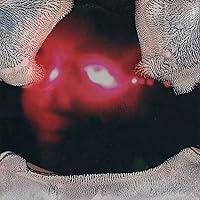
When in 1916, Mario de Sa-Carneiro committed suicide in Paris at the age of twenty-six, he left behind him and extraordinary body of work, which dealt obsessively with the problems of identity, madness and solitude. The Great Shadow (and other stories) looks more deeply into the obsessive, tortured soul of the author and confirms his unique dark talent.
Mário de Sá-Carneiro (Lisboa, 19 de Maio de 1890 — Paris, 26 de Abril de 1916) foi um poeta, contista e ficcionista português, um dos grandes expoentes do modernismo em Portugal e um dos mais reputados membros da Geração d’Orpheu.
Na fase inicial da sua obra, Mário de Sá-Carneiro revela influências de várias correntes literárias, como o decadentismo, o simbolismo, ou o saudosismo, então em franco declínio; posteriormente, por influência de Pessoa, viria a aderir a correntes de vanguarda, como o interseccionismo, o paulismo ou o futurismo.
Nessas pôde exprimir com vontade a sua personalidade, sendo notórios a confusão dos sentidos, o delírio, quase a raiar a alucinação; ao mesmo tempo, revela um certo narcisismo e egolatria, ao procurar exprimir o seu inconsciente e a dispersão que sentia do seu «eu» no mundo – revelando a mais profunda incapacidade de se assumir como adulto consistente.
O narcisismo, motivado certamente pelas carências emocionais (era órfão de mãe desde a mais terna puerícia), levou-o ao sentimento da solidão, do abandono e da frustração, traduzível numa poesia onde surge o retrato de um inútil e inapto. A crise de personalidade levá-lo-ia, mais tarde, a abraçar uma poesia onde se nota o frenesi de experiências sensórias, pervertendo e subvertendo a ordem lógica das coisas, demonstrando a sua incapacidade de viver aquilo que sonhava – sonhando por isso cada vez mais com a aniquilação do eu, o que acabaria por o conduzir, em última análise, ao seu suicídio.
Embora não se afaste da metrificação tradicional (redondilhas, decassílabos, alexandrinos), torna-se singular a sua escrita pelos seus ataques à gramática, e pelos jogos de palavras. Se numa primeira fase se nota ainda esse estilo clássico, numa segunda, claramente niilista, a sua poesia fica impregnada de uma humanidade autêntica, triste e trágica.
Por fim, as cartas que trocou com Pessoa, entre 1912 e o seu suicídio, são como que um autêntico diário onde se nota paralelamente o crescimento das suas frustrações interiores.
This is a strange collection of stories; decadent and surreal, at times horrific, and written by a man who killed himself at the young age of 25.
The title story "The Great Shadow" is by far the most inspired story here. It reminded me a bit of "The Songs of Maldoror," both are something that could only could be written in the idealism, rage and testosterone of a troubled youth.
"Resurrection," like the title story, is novella length, although this one feels a bit overlong at times. "The Strange Death of Professor Antena" is a change of pace for the collection, being a strange mystery/sci-fi story. The last two stories "Wings" and "Fixer of Moments" are a couple of the best ones, particularly the latter. The rest are more middling stories, but have their moments.
At its best this is an excellent mixture of surrealism and resigned, languishing decadence. It's all very imaginative and mind-bending, but this would probably best be enjoyed in small doses. I suppose it depends on how many feverish, artistic rants you can take. The protagonists are all fairly similar; sick with the common herd, living in imaginative worlds of their own creation, all of which leads to bad results in every case. One must be in the proper mood for this, and read it at a speed where one can digest the opulent descriptions.
The Great Shadow - In the title story we meet a man who lives in dreams, for whom the banal real world isn't enough. He thinks back fondly on his childhood awe and fears. He people-watches and writes lives for them and feels he has experienced something greater than having known them at all. Things provoke experiences in him that have no reason to do so. He fantasizes that if he were rich he would build a gloomy castle which he would only explore in the half-light with his fingers, and he would erect monuments to non-existent heroes, and graves where none are buried.
Much of this reminds me of Huysman's "Against the Grain" in its decadent descriptions, and in phrases like, "At times, I suffer from minor physical aches and pains, but I experience them only on my palate, as if they were unpleasant tastes." Senses are mingled, "My ears were assaulted by engulfing planes, aromas whistled past, transforming themselves into dissonant music [...] The crepitations of the dazzling lights were actually invading my soul, pouring burning sun on my desires, drenching with rain my tedium that lay spreading uselessly out over a plain, shedding moonlight on the graveyards of my nostalgias..."
His detachment from the world and urge to throw himself into a Shadow side of reality ultimately lead him to murder, and an increasingly feverish madness.
Resurrection - This story is similar to the previous one in many ways, but in less elaborate language and is overall less impactful. Here we meet an artist who has come to terms with his lonely life as it is. He occasionally will see a family together and feel regret, or have a carnal desire for a woman. But he sees and despises all of this as the desires of the masses. He does love Paris, but seemingly from a distance, like everything else.
He also lives in memories, sometimes unsure if he himself experienced what he remembers, or if his artistic self created it. He recalls sitting at a park bench one day with a feeling of longing, and yet, "He was sure, absolutely sure, that he had never experienced it. How then could he remember those unreal feelings of longing? Probably because it had not been him who, one April evening, years before, had sat sorrowfully in that garden, but another who would possess some of the same qualities, another self whom the artist had fleetingly inhabited..."
Ultimately though he falls for a dancer in what proves to be a brief affair which he never consummates, and is left questioning everything he's believed about himself to that point. He tries to deny his desire for her, and the pain it gives him. The story has a pretty wild ending. This is a sad, quieter story that, in that sense, reminded me of Georges Rodenbach's "Bruges-la-Morte," although they are very different.
Myself the Other - A very brief story a bit like "The Great Shadow," written in feverish journal entries. The narrator feels detached from his own self, things only get worse when he meets a man who he unconsciously begins to imitate.
The Strange Death of Professor Antena - A very strange sci-fi mystery tale, full of long, drawn-out speculations about reincarnated lives and past-life memories. It's an interesting story in its way, but really dragged at times. After a professor dies suddenly and mysteriously with a friend in tow, the friend investigates the dead man's strange researches and thinks he has found the way he actually died.
Mystery - We find ourselves in familiar territory here with a protagonist who, "...what sickened him was the everydayness of other people's lives." It's a lot like "Resurrection" in overall theme and plot as well. A writer who spends his days contemplating whether to go mad or commit suicide because he feels adrift in life finds some solace when he is able to combine his soul with that of another.
The Man of Dreams - Another brief story, this one also about a man and his companion who are sick with the everyday banality of life. But his friend explains to him how he has managed to escape into his own dreams which present him with an infinite variety of worlds to explore.
Wings - One of the wilder stories, and one of the better ones in the book I thought. This one too is about an artist who wants to express something beyond the everyday, in fact he is full of strange ideas about his poetry having sounds, smells and tastes. All of this sends him into madness.
The Fixer of Moments - This is another of the better stories here, more sinister than the average. This one has a Poe-esque flavor to it with its obsessions, madness and what it ultimately leads to. A man is convinced he can keep memories alive in his mind forever, but this leads to a horrific outcome when he mixes it with love.
Published in 1915, Mário de Sá-Carneiro’s The Great Shadow is a strange little book indeed. This Portuguese writer who committed suicide at the age of 26 seems to represent a link of sorts between the Decadents and the Surrealists. There’s even perhaps an anticipation of magic realism in some of the stories in this collection. The unhealthy sexual obsessions of the Decadents are much in evidence, but combined with bizarre fantastic visionary speculations and esoteric artistic theories. There’s a poet whose poems requite no knowledge of the language they’re written in, a book whose title is a colour and a piece of music, there’s a man who kills himself because he can’t bear to go on living in a world that contains no other colours beyond those that exist. A writer is working on a book of poems. When the work has reached perfection his poems will be free of gravity. And indeed, one day the poems simply float off the pages of the book and disappear into the air. There are obsessions with sex, death and murder, identity is a quality that is constantly mutable, and time can be made to do our bidding. There’s also a fascination with speed and technology that suggests a kinship to the Futurists, but also a fascination with dreams and the world of the imagination. Reality is a very uncertain proposition. Most of the characters are artists, dancers or whores. The artists are a strange breed having little if anything in common with the general run of humanity. These stories are strange, beautiful and disturbing. Yet another fabulous book from Dedalus.
Hysterical and glittering, Sa-Carneiro writes some hyper-imaginative short stories always on the brink of falling into the abyss of madness. It is the abyss he fell into shortly thereafter.
#1 A princess could not exist in my room, not even at night, and I had not left my room. And yet I have spoken to her, I had seen her quite clearly. But where, where? I could almost remember her features, her mouth filled with pearls, her flowerlike gestures. There were walls of mist around my eyes.
#2 He had never been afraid of going mad precisely because madness already existed inside him. Just as an organism can sometimes adapt to certain pernicious microbes – living unharmed by them, invulnerable to the illness which those same microbes would provoke in other organisms – so his spirit had grown invulnerable to madness, adapted to it, immunized against it by madness itself.
#3 His company is a torment to me. Yet I seek him out everywhere. When he fails to appear, I feel terribly tired, exhausted, as I had just made a huge physical effort.
#4 He went out and reappeared swathed in an ample, fur-lined cloak. It was May by then and, although the morning was rather cool, I was surprised to see his eternal black overcoat replaced by that extravagant cloak which I had never seen before. On his hands he wore thick grey fur gloves. He wrapped a long shawl about his neck, up to his chin.
#5 Pride! Pride! But the price he paid was this dull death agony. Meanwhile, he had reached the great square. He made an effort to collect his thoughts and, however painful the experience, he began to see himself with utter lucidity.
#6 And as for feelings, name one which, when it comes down to it, cannot be reduced to either love or hate. And sensations? Again there are just two, joy and pain. In life, everything goes in pairs, like the sexes. And can there be any more desolating fact that there are only two sexes?
#7 I remember that Zagoriansky merely smiled one of his unforgettable triangular smiles, adding something I didn't understand, some harshly onomatopoetic word, doubtless a Russian word intended as a reply.
#8 It is just like life. You cannot touch life, it is all glitter, a fleeting image. What was cannot be reproduced, there can never be the same kisses, the same sun, the same struggles. And no secret can be repeated.
Decadent writing at its best. Sá-Carneiro is obsessed with artistry and lavishing lush detail on everything he sees, including an outsider's life in Paris at the turn of the last century. One of the stories, on his inspired conversations with a Russian futurist poet who eventually goes mad attempting to distill his poems to perfection, is particularly haunting, and seems to inform much of his work (if it is true). Need to read Pessoa after this...
Quem lê Mário Sá de Carneiro, já sabe o que esperar, loucura,morte,decadência, surrealismo, mundos escuros, obsessões perigosas, ambientes sufocantes, de um homem que anda as sombras pela vida, pronto para dar o"pulo" para o além ou "beyond " que aparece tantas vezes aqui nos contos.
Uma paixão pela vida e aos mesmo tempo ojeriza por tudo o que nele contém, uma nostalgia da infância e a realidade fabricada de seu i mundos impossíveis e das asas da imaginação.
É o próprio produto do fin de siecle e seus ares cinzas e de não saber lidar consigo mesmo.