

What do you think?

An Image of Africa / The Trouble with Nigeria
Beautifully written yet highly controversial, An Image of Africa asserts Achebe's belief in Joseph Conrad as a 'bloody racist' and his conviction that Conrad's novel Heart of Darkness only serves to perpetuate damaging stereotypes of black people. Also included is The Trouble with Nigeria, Achebe's searing outpouring of his frustrations with his country.
112 pages, Paperback
First published January 1, 1975
About the author
Chinua Achebe
166 books4,466 followersWorks, including the novel
Things Fall Apart
(1958), of Nigerian writer Chinua Achebe describe traditional African life in conflict with colonial rule and westernization.
This poet and critic served as professor at Brown University. People best know and most widely read his first book in modern African literature.
Christian parents in the Igbo town of Ogidi in southeastern Nigeria reared Achebe, who excelled at school and won a scholarship for undergraduate studies. World religions and traditional African cultures fascinated him, who began stories as a university student. After graduation, he worked for the Nigerian broadcasting service and quickly moved to the metropolis of Lagos. He gained worldwide attention in the late 1950s; his later novels include No Longer at Ease (1960), Arrow of God (1964), A Man of the People (1966), and Anthills of the Savannah (1987). Achebe defended the use of English, a "language of colonizers," in African literature. In 1975, controversy focused on his lecture An Image of Africa: Racism in Conrad's "Heart of Darkness" for its criticism of Joseph Conrad as "a bloody racist."
When the region of Biafra broke away from Nigeria in 1967, Achebe, a devoted supporter of independence, served as ambassador for the people of the new nation. The war ravaged the populace, and as starvation and violence took its toll, he appealed to the people of Europe and the Americas for aid. When the Nigerian government retook the region in 1970, he involved in political parties but witnessed the corruption and elitism that duly frustration him, who quickly resigned. He lived in the United States for several years in the 1970s, and after a car accident left him partially disabled, he returned to the United States in 1990.
Novels of Achebe focus on the traditions of Igbo society, the effect of Christian influences, and the clash of values during and after the colonial era. His style relied heavily on the Igbo oral tradition, and combines straightforward narration with representations of folk stories, proverbs, and oratory. He also published a number of short stories, children's books, and essay collections. He served as the David and Marianna Fisher university professor of Africana studies at Brown University in Providence, Rhode Island, United States.
ollowing a brief illness, Achebe died.
This poet and critic served as professor at Brown University. People best know and most widely read his first book in modern African literature.
Christian parents in the Igbo town of Ogidi in southeastern Nigeria reared Achebe, who excelled at school and won a scholarship for undergraduate studies. World religions and traditional African cultures fascinated him, who began stories as a university student. After graduation, he worked for the Nigerian broadcasting service and quickly moved to the metropolis of Lagos. He gained worldwide attention in the late 1950s; his later novels include No Longer at Ease (1960), Arrow of God (1964), A Man of the People (1966), and Anthills of the Savannah (1987). Achebe defended the use of English, a "language of colonizers," in African literature. In 1975, controversy focused on his lecture An Image of Africa: Racism in Conrad's "Heart of Darkness" for its criticism of Joseph Conrad as "a bloody racist."
When the region of Biafra broke away from Nigeria in 1967, Achebe, a devoted supporter of independence, served as ambassador for the people of the new nation. The war ravaged the populace, and as starvation and violence took its toll, he appealed to the people of Europe and the Americas for aid. When the Nigerian government retook the region in 1970, he involved in political parties but witnessed the corruption and elitism that duly frustration him, who quickly resigned. He lived in the United States for several years in the 1970s, and after a car accident left him partially disabled, he returned to the United States in 1990.
Novels of Achebe focus on the traditions of Igbo society, the effect of Christian influences, and the clash of values during and after the colonial era. His style relied heavily on the Igbo oral tradition, and combines straightforward narration with representations of folk stories, proverbs, and oratory. He also published a number of short stories, children's books, and essay collections. He served as the David and Marianna Fisher university professor of Africana studies at Brown University in Providence, Rhode Island, United States.
ollowing a brief illness, Achebe died.
Ratings & Reviews
Friends & Following
Create a free account to discover what your friends think of this book!
Community Reviews
Displaying 1 - 30 of 108 reviews

January 19, 2020
If there's one thing you need in your life it's Chinua roasting Joseph Conrad for being the ignorant, racist fool that he was. An Image of Africa is one of the best essays that I have ever read in my life. Chinua is spitting so many facts in this essays, my head started twirling. He’s simply speaking the truth. Chinua is angry, he is sassy, confrontational, unapologetic … and he came armed with quotes, facts, and an analysis of a “great work of art” (cough cough the Western canon is a joke at this point) that was simply long overdue.
The other essay in this collection, The Trouble with Nigeria, wasn’t nearly as good. In it, Achebe addresses Nigeria's problems, aiming to challenge the resignation of Nigerians and inspire them to reject old habits which inhibit Nigeria from becoming a modern and attractive country. In this new famous essay, Chinua professes that the only trouble with Nigeria is the failure of leadership, because with good leaders Nigeria could resolve its inherent problems such as tribalism; lack of patriotism; social injustice and the cult of mediocrity; indiscipline; and corruption.
The Trouble with Nigeria is an interesting essay and I am glad that I’ve read it but it definitely has its flaws. Firstly, it was borne out of place of such anger and frustration that some of China’s arguments simply aren’t correct. One has the feeling that he wanted to hurt his own people as much as possible, thus generalising and lumping everyone together as if every Nigerian had the same shortcomings. Moreover, he engages in the same pettiness that he faults Nigerians for – namely tribalism. Chinua has called this essay the essay “that will haunt him forever”. Many people shove it in his face to discredit him. I would take most of what he said in there with a grain of salt, since he has retaliated once he’d cooled down and looked at everything from a less emotional place.
I am talking about a book which parades in the most vulgar fashion prejudices and insults from which a section of mankind has suffered untold agonies and atrocities in the past and continues to do so in many ways and many places today. I am talking about a story in which the very humanity of black people is called in question.I have no desire to read Conrad’s Heart of Darkness myself; I never had that desire and quite honestly, I don’t need a dead white man’s take on a whole continent that he has no business writing about.
Heart of Darkness projects the image of Africa as "the other world," the antithesis of Europe and therefore of civilization, a place where man's vaunted intelligence and refinement are finally mocked by triumphant beastiality.An Image of Africa was really a game changer back in the day since it’s an essential text of the postcolonial critical movement, in which European writers were finally forced to consider the viewpoints of non-European nations. It was no longer okay to simply write about people who were forced into silence for centuries, the time had come for them to speak up and tell their own stories. Chinua’s line of argumentation is very clear and strong: Conrad refuses to bestow "human expression" on Africans, even depriving them of language. Africa itself is rendered as "a foil to Europe, as a place of negations at once remote and vaguely familiar, in comparison with which Europe's own state of spiritual grace will be manifest". Conrad, he says, portrays Africa as "'the other world', the antithesis of Europe and therefore of civilization”. Chinua is extremely sassy in this essay and I was living for all the moments in which he simply roasted Joseph Conrad, like he was about to end this whole man’s career.
Certainly Conrad had a problem with niggers. His inordinate love of that word itself should be of interest to psychoanalysts.It was so refreshing to see this angry side of Achebe. I know that Conrad’s work is being defended up to this day (even Achebe said: “Whatever Conrad's problems were, you might say he is now safely dead. Quite true. Unfortunately his heart of darkness plagues us still.”), and people find all sorts of excuses for his racists writing being a product of its time … without realising that that’s exactly the problem? Slavery, colonialism, racism … all of that happened and still happens because people who think like Joseph Conrad aren’t being questioned. Their line of thinking is accepted as the norm. It takes a raging roar, like Achebe’s An Image of Africa, to get people to wake up.
The point of my observations should be quite clear by now, namely that Joseph Conrad was a thoroughgoing racist. That this simple truth is glossed over in criticisms of his work is due to the fact that white racism against Africa is such a normal way of thinking that its manifestations go completely unremarked.You can read the essay online and come to your own conclusions, but I am incredibly grateful that it exists. Let’s end this with China’s words: “The real question is the dehumanization of Africa and Africans which this age-long attitude has fostered and continues to foster in the world. And the question is whether a novel which celebrates this dehumanization, which depersonalizes a portion of the human race, can be called a great work of art. My answer is: No, it cannot.” AGREED!
The other essay in this collection, The Trouble with Nigeria, wasn’t nearly as good. In it, Achebe addresses Nigeria's problems, aiming to challenge the resignation of Nigerians and inspire them to reject old habits which inhibit Nigeria from becoming a modern and attractive country. In this new famous essay, Chinua professes that the only trouble with Nigeria is the failure of leadership, because with good leaders Nigeria could resolve its inherent problems such as tribalism; lack of patriotism; social injustice and the cult of mediocrity; indiscipline; and corruption.
The Trouble with Nigeria is an interesting essay and I am glad that I’ve read it but it definitely has its flaws. Firstly, it was borne out of place of such anger and frustration that some of China’s arguments simply aren’t correct. One has the feeling that he wanted to hurt his own people as much as possible, thus generalising and lumping everyone together as if every Nigerian had the same shortcomings. Moreover, he engages in the same pettiness that he faults Nigerians for – namely tribalism. Chinua has called this essay the essay “that will haunt him forever”. Many people shove it in his face to discredit him. I would take most of what he said in there with a grain of salt, since he has retaliated once he’d cooled down and looked at everything from a less emotional place.

March 20, 2016
This consists of two essays by Chinua Achebe. The first is “An image of Africa: Racism in Conrad’s Heart of Darkness” and this is why I read this. The second is “The Trouble with Nigeria”.
The second essay is Achebe making an impassioned argument about the problems of his home country Nigeria and was published in 1983. It is a polemical piece of writing outlining what Achebe feels Nigeria’s problems are. He outlines problems like tribalism, corruption, the standard of those entering politics and use of resources. It is interesting but very much not for me to comment on and I want to focus on the arguments about Heart of Darkness.
Achebe’s essay on Heart of Darkness was delivered as a lecture in 1975 and has been in print ever since. I am going to try to make this a review of the essay rather than a review of Heart of Darkness because I’m reading that next! The central point is that Conrad’s novel is at its most simple racist because it dehumanises the people of Africa and Conrad uses Africa and its people as a foil and backdrop to make his points about European civilisation. Whilst Achebe does make the point that Conrad is not responsible for the European vision of Africa, but he argues he does clearly have a problem with blackness as these quotes used show; the first by Conrad, the second by Achebe;
“A certain enormous buck nigger encountered in Haiti fixed my conception of blind, furious, unreasoning rage, as manifested in the human animal to the end of my days. Of the nigger I used to dream for years afterwards”
“Conrad had a problem with niggers. His inordinate love of that word itself should be of interest to psychoanalysts. Sometimes his fixation on blackness is equally interesting”
Criticism has come from some academics like Watts who have suggested Achebe is implying that whites cannot judge the text because of their race.
Another quote from Achebe will help at this point;
"Africa as setting and backdrop, which eliminates the African as human factor. Africa as a metaphysical battlefield devoid of all recognisable humanity, into which the wandering European enters at his peril. Can nobody see the preposterous and perverse arrogance in thus reducing Africa to the role of props for the break-up of one petty European mind?"
Achebe talked about his views on Conrad to Caryl Phillips and again I can’t outdo his eloquence;
"You see, those who say that Conrad is on my side because he is against colonial rule do not understand that I know who is on my side. And where is the proof that he is on my side? A few statements about it not being a very nice thing to exploit people who have flat noses? This is his defence against imperial control? If so it is not enough. It is simply not enough. If you are going to be on my side what is required is a better argument. Ultimately you have to admit that Africans are people. You cannot diminish a people's humanity and defend them."
Achebe acknowledges that Conrad is a great writer and uses words brilliantly, but it is because he is a great writer that Achebe is critical;
“.. we have very few who have the talent and who are in the right place, and to lose even one is a tragedy. We cannot afford to lose such artists. It is sheer cussedness to wilfully turn and walk away from the truth, and for what? Really, for what? I expect a great artist, a man who has explored, a man who is interested in Africa, not to make life more difficult for us. Why do this? Why make our lives more difficult? In this sense Conrad is a disappointment."
Achebe makes a good case; on to Heart of Darkness
The second essay is Achebe making an impassioned argument about the problems of his home country Nigeria and was published in 1983. It is a polemical piece of writing outlining what Achebe feels Nigeria’s problems are. He outlines problems like tribalism, corruption, the standard of those entering politics and use of resources. It is interesting but very much not for me to comment on and I want to focus on the arguments about Heart of Darkness.
Achebe’s essay on Heart of Darkness was delivered as a lecture in 1975 and has been in print ever since. I am going to try to make this a review of the essay rather than a review of Heart of Darkness because I’m reading that next! The central point is that Conrad’s novel is at its most simple racist because it dehumanises the people of Africa and Conrad uses Africa and its people as a foil and backdrop to make his points about European civilisation. Whilst Achebe does make the point that Conrad is not responsible for the European vision of Africa, but he argues he does clearly have a problem with blackness as these quotes used show; the first by Conrad, the second by Achebe;
“A certain enormous buck nigger encountered in Haiti fixed my conception of blind, furious, unreasoning rage, as manifested in the human animal to the end of my days. Of the nigger I used to dream for years afterwards”
“Conrad had a problem with niggers. His inordinate love of that word itself should be of interest to psychoanalysts. Sometimes his fixation on blackness is equally interesting”
Criticism has come from some academics like Watts who have suggested Achebe is implying that whites cannot judge the text because of their race.
Another quote from Achebe will help at this point;
"Africa as setting and backdrop, which eliminates the African as human factor. Africa as a metaphysical battlefield devoid of all recognisable humanity, into which the wandering European enters at his peril. Can nobody see the preposterous and perverse arrogance in thus reducing Africa to the role of props for the break-up of one petty European mind?"
Achebe talked about his views on Conrad to Caryl Phillips and again I can’t outdo his eloquence;
"You see, those who say that Conrad is on my side because he is against colonial rule do not understand that I know who is on my side. And where is the proof that he is on my side? A few statements about it not being a very nice thing to exploit people who have flat noses? This is his defence against imperial control? If so it is not enough. It is simply not enough. If you are going to be on my side what is required is a better argument. Ultimately you have to admit that Africans are people. You cannot diminish a people's humanity and defend them."
Achebe acknowledges that Conrad is a great writer and uses words brilliantly, but it is because he is a great writer that Achebe is critical;
“.. we have very few who have the talent and who are in the right place, and to lose even one is a tragedy. We cannot afford to lose such artists. It is sheer cussedness to wilfully turn and walk away from the truth, and for what? Really, for what? I expect a great artist, a man who has explored, a man who is interested in Africa, not to make life more difficult for us. Why do this? Why make our lives more difficult? In this sense Conrad is a disappointment."
Achebe makes a good case; on to Heart of Darkness

August 28, 2016
I am closing my day of reflecting on Chinua Achebe with two essays that were new to me, but that contain his major ideas, as displayed more in detail in The Education of a British-Protected Child: Essays or There Was a Country: A Personal History of Biafra.
The first essay is a harsh criticism of Joseph Conrad and his "Heart of Darkness". I always find it rather interesting when famous writers comment on other equally well-known colleagues. A positive example would be Elias Canetti's adorable tracing of Kafka's personal life in Kafka's Other Trial: The Letters to Felice. Chinua Achebe, however, does not approve of Conrad at all, and shows in detail why he considers his most famous novel to be racist, and to promote a world view that encourages Eurocentrism and a dismissive attitude towards African peoples, who are at best used as backdrop or props for the "real" white Europeans. I have to say that I don't remember feeling that when I read "Heart of Darkness" (a long time ago), but that I can see Chinua Achebe's point clearly, and understand why he thinks it is unacceptable, especially considering Conrad's talent as a writer. I sympathise with his irritation at critics' negligence regarding this aspect of Conrad's writing, as the effect of this carelessness is so tangible for people who suffer because of racism.
I sometimes feel like Chinua Achebe when I read brilliant 19th century writers, elaborately explaining why women shouldn't have the same rights as men, so sure of their own superiority that they didn't have to bother looking at the issue from a different perspective. Is it really enough to say that they applied what was common knowledge at that time? The vast majority of Europeans certainly took a more or less racist position towards African countries for a very long time, ignoring the fact that major empires and cultures had flourished there, in order to maintain their feeling of sole ownership of civilisation.
The second essay turns against the state of Nigeria, and shows that Chinua Achebe is well aware of the weakness of his own country as well. His plaidoyer for social justice and discipline, and against corruption and tribalism, as the only basis for peace and well-being, is convincing, and not necessarily only applicable to his native country. The rhetorical questions he asks in the beginning could well be asked in many parts of the world, and not only in the so-called developing countries:
"Why is it that our corruption, gross inequities, our noisy vulgarity, our selfishness, our ineptitude seem so much stronger than the good influences at work in our society? Why do the good among us seem so helpless while the worst are full of vile energy?"
A little gem for those who want to explore the universe of Chinua Achebe!
The first essay is a harsh criticism of Joseph Conrad and his "Heart of Darkness". I always find it rather interesting when famous writers comment on other equally well-known colleagues. A positive example would be Elias Canetti's adorable tracing of Kafka's personal life in Kafka's Other Trial: The Letters to Felice. Chinua Achebe, however, does not approve of Conrad at all, and shows in detail why he considers his most famous novel to be racist, and to promote a world view that encourages Eurocentrism and a dismissive attitude towards African peoples, who are at best used as backdrop or props for the "real" white Europeans. I have to say that I don't remember feeling that when I read "Heart of Darkness" (a long time ago), but that I can see Chinua Achebe's point clearly, and understand why he thinks it is unacceptable, especially considering Conrad's talent as a writer. I sympathise with his irritation at critics' negligence regarding this aspect of Conrad's writing, as the effect of this carelessness is so tangible for people who suffer because of racism.
I sometimes feel like Chinua Achebe when I read brilliant 19th century writers, elaborately explaining why women shouldn't have the same rights as men, so sure of their own superiority that they didn't have to bother looking at the issue from a different perspective. Is it really enough to say that they applied what was common knowledge at that time? The vast majority of Europeans certainly took a more or less racist position towards African countries for a very long time, ignoring the fact that major empires and cultures had flourished there, in order to maintain their feeling of sole ownership of civilisation.
The second essay turns against the state of Nigeria, and shows that Chinua Achebe is well aware of the weakness of his own country as well. His plaidoyer for social justice and discipline, and against corruption and tribalism, as the only basis for peace and well-being, is convincing, and not necessarily only applicable to his native country. The rhetorical questions he asks in the beginning could well be asked in many parts of the world, and not only in the so-called developing countries:
"Why is it that our corruption, gross inequities, our noisy vulgarity, our selfishness, our ineptitude seem so much stronger than the good influences at work in our society? Why do the good among us seem so helpless while the worst are full of vile energy?"
A little gem for those who want to explore the universe of Chinua Achebe!

March 25, 2013
Presently, An Image of Africa has 37 ratings and 2 reviews (not including mine). While Hopes and Impediments: Selected Essays, a compilation of essays by Achebe which contains this famous piece along with a few others, has 109 ratings and 8 reviews.
Which means this particular essay is as unknown and ignored as Heart of Darkness is universally read and worshipped.
This does not however indicate that Achebe has been given the cold shoulder by Goodreaders. (Oh no not at all, he is very popular instead.)
Merely this that, either most people on this site are not too intent on reading essays or not specifically interested in an African writer's denouncement of a most revered piece of literature written by a European.
Even a Google search wasn't able to cough up links to coherent reviews of Achebe's essay than a meagre 2 or 3, one of which was posted on a UK based website, which understandably enough, shot down all of Achebe's claims in the same way as the rest of the world may dismiss a threat of nuclear war made by North Korea.
Sharp, precise, thorough and keen in its deconstruction of Conrad's Heart of Darkness as a piece of mainstream literature fraught with racist implications, An Image of Africa does not only seek to label Conrad as a 'bloody racist' as the description says. (for your information, reader, he uses the word 'thoroughgoing' instead of 'bloody')
Achebe also brings to our notice, the often overlooked aspects of this literary fiction that is read by millions and taught as coursework for literature students worldwide, especially in American universities. Among the numerous critiques of Heart of Darkness, not one exists which points out Conrad's blatant dehumanization of the inhabitants of Africa as a manifestation of an obstinate white sense of superiority.
Which is why Achebe took it upon himself to write one.
I think I ended up highlighting so much while reading that it would have sufficed to just highlight the entire printed text or leave it alone and consider the whole thing highlighted anyway.
Achebe's line of reasoning and thought is impossible to slight and makes one see Conrad's much vaunted literary masterpiece in a new light altogether.
But another reading of Heart of Darkness is needed before I can extol the infallibility of Achebe's arguments with more conviction.
Which means this particular essay is as unknown and ignored as Heart of Darkness is universally read and worshipped.
This does not however indicate that Achebe has been given the cold shoulder by Goodreaders. (Oh no not at all, he is very popular instead.)
Merely this that, either most people on this site are not too intent on reading essays or not specifically interested in an African writer's denouncement of a most revered piece of literature written by a European.
Even a Google search wasn't able to cough up links to coherent reviews of Achebe's essay than a meagre 2 or 3, one of which was posted on a UK based website, which understandably enough, shot down all of Achebe's claims in the same way as the rest of the world may dismiss a threat of nuclear war made by North Korea.
Sharp, precise, thorough and keen in its deconstruction of Conrad's Heart of Darkness as a piece of mainstream literature fraught with racist implications, An Image of Africa does not only seek to label Conrad as a 'bloody racist' as the description says. (for your information, reader, he uses the word 'thoroughgoing' instead of 'bloody')
Achebe also brings to our notice, the often overlooked aspects of this literary fiction that is read by millions and taught as coursework for literature students worldwide, especially in American universities. Among the numerous critiques of Heart of Darkness, not one exists which points out Conrad's blatant dehumanization of the inhabitants of Africa as a manifestation of an obstinate white sense of superiority.
Which is why Achebe took it upon himself to write one.
"A Conrad student informed me in Scotland that Africa is merely a setting for the disintegration of the mind of Mr. Kurtz.
Which is partly the point. Africa as setting and backdrop which eliminates the African as human factor. Africa as a metaphysical battlefield devoid of all recognizable humanity, into which the wandering European enters at his peril. Can nobody see the preposterous and perverse arrogance in thus reducing Africa to the role of props for the break-up of one petty European mind? But that is not even the point. The real question is the dehumanization of Africa and Africans which this age-long attitude has fostered and continues to foster in the world. And the question is whether a novel which celebrates this dehumanization, which depersonalizes a portion of the human race, can be called a great work of art."
I think I ended up highlighting so much while reading that it would have sufficed to just highlight the entire printed text or leave it alone and consider the whole thing highlighted anyway.
Achebe's line of reasoning and thought is impossible to slight and makes one see Conrad's much vaunted literary masterpiece in a new light altogether.
But another reading of Heart of Darkness is needed before I can extol the infallibility of Achebe's arguments with more conviction.

April 26, 2023
Of course this is a very controversial and polemical article which is bound to raise temperatures where people are being hypersensitive. Of all the books he could have felt roused by, I can't help wondering why Achebe singled out this one. I realize old attitudes are hurtful, and epithets oft-used by ignorant and bigoted people have become hateful slurs. In this regard, Achebe raises one very good example of a passage that is so incredibly arrogantly insulting that I cringed upon reading (and I do remember I cringed at it when reading Conrad's Heart of Darkness- I will have no choice but to amend my review of the novella), and it refers to ... I blush even writing this.... a dog in britches. I concede that, even if only for that passage alone, the novella should be condemned.
This does not mean that I'd give this essay my unreserved approval. Achebe himself seems to have a bee in his bonnet and he throws a few sullen insults himself which I felt was rather undeserved (see, two of us can be highly sensitive). One of the gripes I have is with Achebe's characterization of Western art having "completely run out of strength" around the previous turn of the century. Wow, I can only conclude that Achebe never viewed Western art.
The second little gripe I'd like to point out is regarding Marco Polo and Achebe's problem with the fact that Polo didn't seem over-awed by the Great Wall of China. Mr Achebe obviously didn't know much about this great Chinese landmark, namely that it was not even fully complete by the time that Marco Polo visited China, and not all of it is spectacular and awe-inspiring. It is awe-inspiring in its totality, of course, but not every single section of it is so or would have been so at the time that Polo might have passed through it.
I almost forgot the third gripe that also has to do with Marco Polo. Achebe infers that the Chinese used a printing press 100 years before Gutenberg designed his press, and that Marco Polo thus failed to bring this technology to Europe, but in actual fact, woodblock printing was quite common in Europe for many years before that even, and besides that, hand stencils, made by blowing pigment over a hand held against a wall, have been found in Asia and Europe dating from over 35,000 years ago, and later prehistoric dates in other continents. In fact, since those historic times, stencilling has been used as a historic painting technique on all kinds of materials. What the Chinese were using in about the time that Marco Polo was there, was indeed a kind of movable type which was an improvement on woodblock printing, and was to some extent similar to the printing press and may have influenced its development. I'm just wondering why Mr Achebe picks so much on poor old Marco Polo. Perhaps what Achebe is trying to point out is that Chinese technology and culture pre-dated that of Europe, and he might be trying to bring Western pride down a notch or two; but I don't see why it should be an issue - it's an obvious fact that Asia does have an older "settled" civilization, and they did have quite a few technologies that the West could learn from, there's no denying that, and I don't think anybody ever tried to deny it.
In any case, why should one person be representative of an entire race or body of people? I am sure Achebe himself dislikes stereotypes, so why is he stereotyping the whole of Western society as if it were a single, solid monolith?
....and why is he treating African society as a single solid monolith? Africa and African peoples have been intertwined with that of the Middle-Eastern and Mediterranean worlds since antiquity, and they were most definitely not always reviled. Mr Achebe is not from the Congo, (Heart of Darkness plays out in the Congo) and from what I could ascertain, he had never been to the Congo during his lifetime, although I do stand to be corrected on that.
So yes, I can definitely see merit in this essay simply by some of the atrocious passages out of Conrad's novella that he points out, they're certainly not very complimentary and some of it really is downright disgusting (even though I think he is over-reacting re some of them), but really, when you then detract from your argument by starting to sling mud in a general direction, the unfortunate result can be that that very mud-slinging can sully your own argument and degrade it into seeming petty.
This does not mean that I'd give this essay my unreserved approval. Achebe himself seems to have a bee in his bonnet and he throws a few sullen insults himself which I felt was rather undeserved (see, two of us can be highly sensitive). One of the gripes I have is with Achebe's characterization of Western art having "completely run out of strength" around the previous turn of the century. Wow, I can only conclude that Achebe never viewed Western art.
The second little gripe I'd like to point out is regarding Marco Polo and Achebe's problem with the fact that Polo didn't seem over-awed by the Great Wall of China. Mr Achebe obviously didn't know much about this great Chinese landmark, namely that it was not even fully complete by the time that Marco Polo visited China, and not all of it is spectacular and awe-inspiring. It is awe-inspiring in its totality, of course, but not every single section of it is so or would have been so at the time that Polo might have passed through it.
I almost forgot the third gripe that also has to do with Marco Polo. Achebe infers that the Chinese used a printing press 100 years before Gutenberg designed his press, and that Marco Polo thus failed to bring this technology to Europe, but in actual fact, woodblock printing was quite common in Europe for many years before that even, and besides that, hand stencils, made by blowing pigment over a hand held against a wall, have been found in Asia and Europe dating from over 35,000 years ago, and later prehistoric dates in other continents. In fact, since those historic times, stencilling has been used as a historic painting technique on all kinds of materials. What the Chinese were using in about the time that Marco Polo was there, was indeed a kind of movable type which was an improvement on woodblock printing, and was to some extent similar to the printing press and may have influenced its development. I'm just wondering why Mr Achebe picks so much on poor old Marco Polo. Perhaps what Achebe is trying to point out is that Chinese technology and culture pre-dated that of Europe, and he might be trying to bring Western pride down a notch or two; but I don't see why it should be an issue - it's an obvious fact that Asia does have an older "settled" civilization, and they did have quite a few technologies that the West could learn from, there's no denying that, and I don't think anybody ever tried to deny it.
In any case, why should one person be representative of an entire race or body of people? I am sure Achebe himself dislikes stereotypes, so why is he stereotyping the whole of Western society as if it were a single, solid monolith?
....and why is he treating African society as a single solid monolith? Africa and African peoples have been intertwined with that of the Middle-Eastern and Mediterranean worlds since antiquity, and they were most definitely not always reviled. Mr Achebe is not from the Congo, (Heart of Darkness plays out in the Congo) and from what I could ascertain, he had never been to the Congo during his lifetime, although I do stand to be corrected on that.
So yes, I can definitely see merit in this essay simply by some of the atrocious passages out of Conrad's novella that he points out, they're certainly not very complimentary and some of it really is downright disgusting (even though I think he is over-reacting re some of them), but really, when you then detract from your argument by starting to sling mud in a general direction, the unfortunate result can be that that very mud-slinging can sully your own argument and degrade it into seeming petty.

July 19, 2018
"'Sister Regina,' Marcus said. You know Barack, don't you? I'm trying to tell Brother Barack about this racist tract he's reading.' He held up a copy of Heart of Darkness, evidence for the court. I reached over to snatch it out of his hands....
Regina smiled and shook her head as we watched Marcus stride out the door. 'Marcus is in one of his preaching moods, I see.' I tossed the book into my backpack. 'Actually, he's right,' I said. 'It is a racist book. The way Conrad sees it, Africa's the cesspool of the world, black folks are savages, and any contact with them breeds infection.' Regina blew on her coffee. 'So why are you reading it?'
-'Because it's assigned....and because the book teaches me things,' I said. 'About white people, I mean...It's about the man who wrote it. The European. The American. A particular way of looking at the world. If you can keep your distance, it's all there in what's said and what's left unsaid. So I read the book to help me understand just what it is that makes white people so afraid. Their demons. The way ideas get twisted around. It helps me understand how people learn to hate.'" - from Chapter five of Dreams from My Father by Barack Obama.
So, disclaimer. I have not read Conrad, I saw Apocalypse Now years ago, but that's it. I had been aware of this essay though for quite sometime and a friend recommended that I read it, recently. This marks my official introduction to Chinua Achebe, and it was a good one. This (I'm speaking in particular about the essay entitled An Image of Africa: Racism in Conrad's 'Heart of Darkness') is a straight-forward essay, about the Afrophobia of Conrad and his novel, that gets to-the-point. I liked the clear honesty of Achebe here and while some have described the essay as "controversial," I find it hard to argue with the facts that Achebe presents.
" The point of my observations should be quite clear by now, namely that Joseph Conrad was a thoroughgoing racist. That this simple truth is glossed over in criticisms of his work is due to the fact that white racism against Africa is such a normal way of thinking that its manifestations go completely unremarked. Students of Heart of Darkness will often tell you that Conrad is concerned not so much with Africa as with the deterioration of one European mind caused by solitude and sickness. They will point out to you that Conrad is, if anything, less charitable to the Europeans in the story than he is to the natives, that the point of the story is to ridicule Europe's civilizing mission in Africa. A Conrad student informed me in Scotland that Africa is merely a setting for the disintegration of the mind of Mr. Kurtz.
Which is partly the point. Africa as setting and backdrop which eliminates the African as human factor. Africa as a metaphysical battlefield devoid of all recognizable humanity, into which the wandering European enters at his peril. Can nobody see the preposterous and perverse arrogance in thus reducing Africa to the role of props for the break-up of one petty European mind? But that is not even the point. The real question is the dehumanization of Africa and Africans which this age-long attitude has fostered and continues to foster in the world. And the question is whether a novel which celebrates this dehumanization, which depersonalizes a portion of the human race, can be called a great work of art. My answer is: No, it cannot."
Regina smiled and shook her head as we watched Marcus stride out the door. 'Marcus is in one of his preaching moods, I see.' I tossed the book into my backpack. 'Actually, he's right,' I said. 'It is a racist book. The way Conrad sees it, Africa's the cesspool of the world, black folks are savages, and any contact with them breeds infection.' Regina blew on her coffee. 'So why are you reading it?'
-'Because it's assigned....and because the book teaches me things,' I said. 'About white people, I mean...It's about the man who wrote it. The European. The American. A particular way of looking at the world. If you can keep your distance, it's all there in what's said and what's left unsaid. So I read the book to help me understand just what it is that makes white people so afraid. Their demons. The way ideas get twisted around. It helps me understand how people learn to hate.'" - from Chapter five of Dreams from My Father by Barack Obama.
So, disclaimer. I have not read Conrad, I saw Apocalypse Now years ago, but that's it. I had been aware of this essay though for quite sometime and a friend recommended that I read it, recently. This marks my official introduction to Chinua Achebe, and it was a good one. This (I'm speaking in particular about the essay entitled An Image of Africa: Racism in Conrad's 'Heart of Darkness') is a straight-forward essay, about the Afrophobia of Conrad and his novel, that gets to-the-point. I liked the clear honesty of Achebe here and while some have described the essay as "controversial," I find it hard to argue with the facts that Achebe presents.
Irrational love and irrational hate jostling together in the heart of that talented, tormented man. But whereas irrational love may at worst engender foolish acts of indiscretion, irrational hate can endanger the life of the community. Naturally Conrad is a dream for psychoanalytic critics. Perhaps the most detailed study of him in this direction is by Bernard C. Meyer, M.D. In his lengthy book Dr. Meyer follows every conceivable lead (and sometimes inconceivable ones) to explain Conrad. As an example he gives us long disquisitions on the significance of hair and hair-cutting in Conrad. And yet not even one word is spared for his attitude to black people. Not even the discussion of Conrad's antisemitism was enough to spark off in Dr. Meyer's mind those other dark and explosive thoughts. Which only leads one to surmise that Western psychoanalysts must regard the kind of racism displayed by Conrad absolutely normal despite the profoundly important work done by Frantz Fanon in the psychiatric hospitals of French Algeria.The essay starts by examining the racist perceptions that of Africa that many folks in Massachusetts keep throwing at him while he is teaching there at the University. He "follows the trail" and it leads him to this book. He does a thorough breakdown of it and then of the author. I was amazed at the fact that this essay surprised people. Reading about Conrad's own almost psychotic obsession with black people being evil and white people being good did not surprise me, but I did think back to my thoughts on The Iliad, I felt a similar thing here. For people to condemn this book it would mean a type of admission to something within them that they aren't brave enough to do. Every apology, every inability to not call this what it is only makes things worse. I've seen the same done with many white authors of Conrad's era as others have shown and Achebe's argument would hold-up almost without alteration.
Whatever Conrad's problems were, you might say he is now safely dead. Quite true. Unfortunately his heart of darkness plagues us still. Which is why an offensive and deplorable book can be described by a serious scholar as "among the half dozen greatest short novels in the English language." And why it is today the most commonly prescribed novel in twentieth-century literature courses in English Departments of American universities.
" The point of my observations should be quite clear by now, namely that Joseph Conrad was a thoroughgoing racist. That this simple truth is glossed over in criticisms of his work is due to the fact that white racism against Africa is such a normal way of thinking that its manifestations go completely unremarked. Students of Heart of Darkness will often tell you that Conrad is concerned not so much with Africa as with the deterioration of one European mind caused by solitude and sickness. They will point out to you that Conrad is, if anything, less charitable to the Europeans in the story than he is to the natives, that the point of the story is to ridicule Europe's civilizing mission in Africa. A Conrad student informed me in Scotland that Africa is merely a setting for the disintegration of the mind of Mr. Kurtz.
Which is partly the point. Africa as setting and backdrop which eliminates the African as human factor. Africa as a metaphysical battlefield devoid of all recognizable humanity, into which the wandering European enters at his peril. Can nobody see the preposterous and perverse arrogance in thus reducing Africa to the role of props for the break-up of one petty European mind? But that is not even the point. The real question is the dehumanization of Africa and Africans which this age-long attitude has fostered and continues to foster in the world. And the question is whether a novel which celebrates this dehumanization, which depersonalizes a portion of the human race, can be called a great work of art. My answer is: No, it cannot."

August 25, 2018
Recently I came across this article “The Maltese”: In Victorian Eyes and then a few days later I came across this Image of Africa and I was struck with the similarity of the language, the same need to 'justify' the colonisers 'theft'/'abuse' by lessening the 'natives', the ones being stolen from.
I should not have expected any better should I? After all even God, religion has been used to justify, so why not words, language as well.

Read
March 5, 2020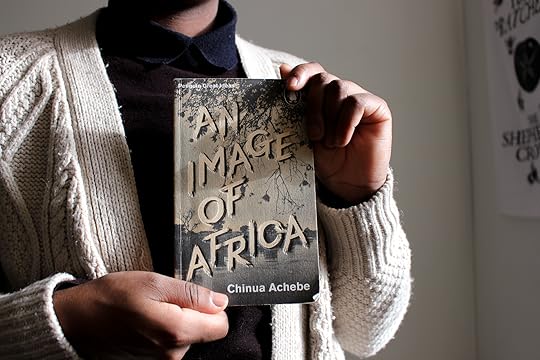


March 25, 2017
Žena mi je kupila ovu knjigu za rođendan i pročitao sam je po kratkom postupku. "An image of Africa" je zapravo maestralno seciranje Kondradovog "Srca tame". Ljudi su izučavali ovu knjigu 75 godina prije nego što je Achebe pisao o njoj i niko nije primijetio rasizam koji, bar nakon čitanja Achebea, jednostavno izbija oči. Što bi se reklo, klasik postkolonijalne kritike. Drugi dio knjige donosi par njegovih eseja o stanju u Nigeriji i o tome kako bi ovo čudo od države moglo da napreduje i zašto se to ne dešava. Zadnji esej je napisan 1982, ali ja sam stalno imao osjećaj kao da čovjek piše o Bosni i Hercegovini 2017. I nije da sam se nešto trudio da nađem paralele, one jednostavno vrište sa stranice ove knjige. Super knjiga, toplo je preporučuje svakome koga zanima Afrika, imagologija ili postkolonijalna kritika.

September 8, 2021
Brutal. Achebe unapologetically wipes the floor with Conrad and his most ardent defenders.
I still don't think it's unworthy of its fame, and poorly aged or not, who doesn't like a good mystery? But The Heart of Darkness is a flawed one and post-colonial literature such as the one of Achebe helps us see through the projection. Highly recommended.
I still don't think it's unworthy of its fame, and poorly aged or not, who doesn't like a good mystery? But The Heart of Darkness is a flawed one and post-colonial literature such as the one of Achebe helps us see through the projection. Highly recommended.

July 13, 2026
Essä nr 2 var praktiskt taget irrelevant om man inte var insatt i en nigeriansk kontext. Första essän om på vilket sätt Heart of Darkness är rasistisk var mycket bran

April 12, 2020
Wish I could have plonked a copy of this in front of my college lit professor.

October 25, 2017
Two small, precisely-written essays, one on the image of África presented in The Heart of Darkness and the other an overview of the problems facing Nigeria in its struggle for democracy and economic development. I know little about the latter, so it was good to just follow and educate myself. For the Conrado piece, though, I wasn't wholly convinced that Conrado was so much worse than the average man of his time, and certainly wasn't prepared to go from there to "... So it's a bad book". I've always felt like the book is as much about the insanity of colonial ambitions as it is about África as a metaphor - a dark void on the map representing a dark void in the soul or whatever were supposed to take from it. If you don't try and look at it as a moral guidebook but instead marvel at the spectacle of the colonial project confronting its own mortality, it's a pretty fine piece of writing, I think.
Anyway, Achebe's not having any of that, and I value his opinion even if I don't buy it 100%
Anyway, Achebe's not having any of that, and I value his opinion even if I don't buy it 100%

February 19, 2021
"An Image of Africa: Racism in Conrad's Heart of Darkness" es un rotundo 5/5. Me ha tenido dos semanas obsesionado investigando e informándome más sobre el tema.
"The Trouble With Nigeria" es un 2'5/5. Es interesante haber descubierto un poco sobre la historia de Nigeria pero tampoco me la ha enmarcado de una forma muy atractiva.
"The Trouble With Nigeria" es un 2'5/5. Es interesante haber descubierto un poco sobre la historia de Nigeria pero tampoco me la ha enmarcado de una forma muy atractiva.

September 9, 2022
Old but gold. :)
I like Achebe's writing style. The book is old (the "Trouble with Nigeria" part is written in 80s) but the enthusiasm and energy and sarcasm in his writing can still be felt very well, even by me, as a person who has never been to Nigeria.
The part about the Joseph Conrad for me was not really relevant because I haven't read that book but from Achebe's quotes of the book I was not regretting not reading it that much.
In general, I found the book short and interesting. Looking forward to reading more of Achebe's books.
I like Achebe's writing style. The book is old (the "Trouble with Nigeria" part is written in 80s) but the enthusiasm and energy and sarcasm in his writing can still be felt very well, even by me, as a person who has never been to Nigeria.
The part about the Joseph Conrad for me was not really relevant because I haven't read that book but from Achebe's quotes of the book I was not regretting not reading it that much.
In general, I found the book short and interesting. Looking forward to reading more of Achebe's books.

July 16, 2019
Chinua Achebe was unknown to me before this book, but I am glad I solved that issue in my life. Here, he presents two very distinct essays when it comes to scope - one regarding Joseph Conrad's inherent racism portrayed in "Heart of Darkness" and "The Trouble With Nigeria", where Chinua exposes what he believes are the most relevant issues with Nigeria.
I found both texts to be quite relevant and thought-provoking. However, what led me to think the most about this book was a comment done by Achebe in the first essay. Here, Achebe suggests that Joseph Conrad had an obligation to intervene directly in his double-proxy narrative to make it clear that he does not condone or agree with the portrayal of the African people in the "Heart of Darkness". This raises several considerations - what is the role of an author in portraying communities which are not his own through the voice of someone else? Does the literary value of a story decrease if the author intervenes directly? Should we infer the authors views from those of the narrator? Does a negative portrayal of a community by an author external to that community reflect his view of this community or is the author attempting instead a portrayal by the society?
Unfortunately, I have no objective answers for any of these questions, but they have given me a lot to think about, nonetheless, about the role that the so-called canonical literature can have in shaping not only the image of a time and place, but also the image of the people who inhabit this particular time and space.
I found both texts to be quite relevant and thought-provoking. However, what led me to think the most about this book was a comment done by Achebe in the first essay. Here, Achebe suggests that Joseph Conrad had an obligation to intervene directly in his double-proxy narrative to make it clear that he does not condone or agree with the portrayal of the African people in the "Heart of Darkness". This raises several considerations - what is the role of an author in portraying communities which are not his own through the voice of someone else? Does the literary value of a story decrease if the author intervenes directly? Should we infer the authors views from those of the narrator? Does a negative portrayal of a community by an author external to that community reflect his view of this community or is the author attempting instead a portrayal by the society?
Unfortunately, I have no objective answers for any of these questions, but they have given me a lot to think about, nonetheless, about the role that the so-called canonical literature can have in shaping not only the image of a time and place, but also the image of the people who inhabit this particular time and space.

March 2, 2015
Chinua Achebe addresses racism in Conrad's "Heart of Darkness" and comments on the then present-day (1980s) situation in Nigeria.
I will make no pretences towards having any kind of knowledge on Nigerian politics, but Achebe's essay is still interesting, mainly because the arguments he makes, although they are directed specifically at Nigeria, are very applicable to many other, or, dare I say, most other, nations.
The essay on "Heart of Darkness" was perhaps more accessible to me, as I have, in fact, both read and studied Conrad's famous short novel. Achebe offers some interesting and well-placed insights on why "Heart of Darkness" should be read with a slightly more discerning eye, and he makes several valid arguments for debating the question of Conrad's racism. I would definitely recommend this essay to anyone who wishes to do a serious study of Conrad, because it offers a different (and important) perspective on the book.
I will make no pretences towards having any kind of knowledge on Nigerian politics, but Achebe's essay is still interesting, mainly because the arguments he makes, although they are directed specifically at Nigeria, are very applicable to many other, or, dare I say, most other, nations.
The essay on "Heart of Darkness" was perhaps more accessible to me, as I have, in fact, both read and studied Conrad's famous short novel. Achebe offers some interesting and well-placed insights on why "Heart of Darkness" should be read with a slightly more discerning eye, and he makes several valid arguments for debating the question of Conrad's racism. I would definitely recommend this essay to anyone who wishes to do a serious study of Conrad, because it offers a different (and important) perspective on the book.


March 18, 2018
pls stop asking Conrad to illumine the way when it was never dark xoxo you were just blind

July 26, 2020
Siempre es un placer leer críticas demoledoras de El corazón de las tinieblas y más cuando es todo un ejemplo en ese campo.
El ensayo sobre Conrad es corto pero potente. Achebe menciona varias cosas que considero que son muy relevantes cuando tratamos el canon literario. Entre ellas recalca el hecho de que los textos considerados clásicos no existen en un lugar separado en el que no tienen ningún tipo de efecto en la realidad sino que pueden molder la percepción de la persona que los lee. El autor afirma que Conrad es un buen escritor pero eso no hace que su texto más conocido sea un ejemplo de lo ignorante y racista que era. Por lo tanto, es un problema bastante grande que siga siendo una de las novelas de lengua inglesa más presentes en diferentes etapas educativas. Es especialmente negativo cuando no se discute el racismo de sus descripciones del Congo y de su población.
La segunda parte de este libro es un pequeño resumen de la historia política de Nigeria y las consecuencias que tiene en el momento en el que se escribió ese ensayo. Personalmente, quitando lo poco que tratamos en alguna asignatura en la carrera de filología, sé poco de la historia del país. Por lo tanto, este ensayo es bastante iluminador en ese aspecto.
El ensayo sobre Conrad es corto pero potente. Achebe menciona varias cosas que considero que son muy relevantes cuando tratamos el canon literario. Entre ellas recalca el hecho de que los textos considerados clásicos no existen en un lugar separado en el que no tienen ningún tipo de efecto en la realidad sino que pueden molder la percepción de la persona que los lee. El autor afirma que Conrad es un buen escritor pero eso no hace que su texto más conocido sea un ejemplo de lo ignorante y racista que era. Por lo tanto, es un problema bastante grande que siga siendo una de las novelas de lengua inglesa más presentes en diferentes etapas educativas. Es especialmente negativo cuando no se discute el racismo de sus descripciones del Congo y de su población.
La segunda parte de este libro es un pequeño resumen de la historia política de Nigeria y las consecuencias que tiene en el momento en el que se escribió ese ensayo. Personalmente, quitando lo poco que tratamos en alguna asignatura en la carrera de filología, sé poco de la historia del país. Por lo tanto, este ensayo es bastante iluminador en ese aspecto.

October 3, 2020
Before the rant videos on YouTube there is the rant essay by an eloquent writer Chinua Achebe. Penguin Ideas placed two little known pieces together in An Image of Africa. The better written piece is a post colonial critique of Heart of Darkness by Joseph Conrad and then an emotionally charged look at Nigeria in crisis in 1983.
Having read Heart of Darkness prior to this essay, my thoughts on that classic aren’t biased. I too found the book racist and lacking in its attempt to fully subvert imperial thinking as it tried to sound an alarm. And it’s all the more egregious when you learn that Joseph Conrad was well aware of the genocide occurring in the Congo by the Belgian monarch, King Leopold. The incisive critique has been deemed harsh by other book reviewers, especially professional but they never address his comments on Africa being background or speech denied to the African characters.
The second essay is less polished. It seems more born of frustration. But it wasn’t clearly not heeded because nothing much has changed in Nigeria. But the beauty is that portions of this essay can be applicable to any nation today where leadership is failing its electorate.
Having read Heart of Darkness prior to this essay, my thoughts on that classic aren’t biased. I too found the book racist and lacking in its attempt to fully subvert imperial thinking as it tried to sound an alarm. And it’s all the more egregious when you learn that Joseph Conrad was well aware of the genocide occurring in the Congo by the Belgian monarch, King Leopold. The incisive critique has been deemed harsh by other book reviewers, especially professional but they never address his comments on Africa being background or speech denied to the African characters.
The second essay is less polished. It seems more born of frustration. But it wasn’t clearly not heeded because nothing much has changed in Nigeria. But the beauty is that portions of this essay can be applicable to any nation today where leadership is failing its electorate.

September 12, 2025
Only read the essay "An Image of Africa: Racism in Conrad's Heart of Darkness" for my class Seminar on Post-Colonial Literature. I haven't read the book he refers to, but the movie Apocalypse Now derives its plot from it.
Achebe's thoughts on the book is beautifully laid out, his frustrations are rightfully justified. It's quite true that even in 2025, the image of Africa is one of despair and primitive.
Achebe's thoughts on the book is beautifully laid out, his frustrations are rightfully justified. It's quite true that even in 2025, the image of Africa is one of despair and primitive.

July 17, 2026
“An Image of Africa” has to be one of my favorite essays ever written. Achebe precisely puts into words the unease I felt reading “Heart of Darkness.” I couldn’t find any evidence suggesting the racist attitude of the main character, Marlow, was separate from the author, Joseph Conrad. Achebe says, “Marlow seems to me to enjoy Conrad's complete confidence--a feeling reinforced by the close similarities between their two careers.” This is essay is a literary slam dunk, highly recommend.

April 14, 2019
A fantastically written and righteously angry takedown of the anti-African racism in Conrad's Heart of Darkness. Short but absolutely to the point. Personal favourite quote:
"Whatever Conrad's problems were, you might say he is now safely dead."
"Whatever Conrad's problems were, you might say he is now safely dead."

June 11, 2024
As usual, Achebe's essays slap. Incisive, attentive, and witty. As true in the 1980s as it is today. He's certainly hard on Nigeria in the The Trouble with Nigeria but perhaps we need more of that today.

March 5, 2020
This is Achebe's response to Conrad's Heart of Darkness. I consider it really insightful. A great read.

January 23, 2026
One could feel the anger... literally!
Review to be written later!
Review to be written later!

Read
October 26, 2017To begin, I want to express my admiration and respect for Achebe, the father of African literature, and his wonderful lifelong work in pointing out the beauty and the riches of the Nigerian culture, thought and art. Indeed, it had been about time to draw the world's attention to it since the eyes of the "Western" culture sometimes tend to see but dimly through the fog of cultural differences.
However, I believe there are 2 things Achebe was not or did not make much effort to be aware of. First of all, in his essay he praises the missionary Albert Schweizer, who dedicated his life to improving hospitals in Africa, for having said: "The African is indeed my brother but my junior brother." Now, Heart of Darkness was published in 1899. Achebe wrote his essay in 1989. Wouldn't it be appropriate to look at Conrad as at "a junior brother" who was apparently and inevitably influenced by the contemporary thought? If we manage to look at Conrad's writing being well aware of the 19th century zeitgeist and popular beliefs, we might even be surprised how liberal his books were at the time of the publication.
Secondly, Conrad was not a British colonizer. Joseph Conrad was Polish, born in Polish Ukraine occupied (or shall I say colonized?) by the Russian Empire. Conrad grew up in Poland and did not even speak English until his early 20s, which is sufficient for his national identity to be deeply rooted in his soul and mind. The Poles are a nation which was repeatedly colonized (although this word is sadly not in popular use for the East European nations, maybe it's finally time to call things their proper names?) by the neighbouring nations. Conrad spent many years trying to get rid of his Russian citizenship in exchange for the British one, which he surely perceived as an escape to safety. Therefore he was not part of the imperialistic machinerie, quite the contrary, he was himself victim of imperialism and even denounced colonialism in his Heart of Darkness - using the means and thoughts available to him.
In my opinion, Chinua Achebe and Joseph Conrad have more in common than either of them would have expected.
However, I believe there are 2 things Achebe was not or did not make much effort to be aware of. First of all, in his essay he praises the missionary Albert Schweizer, who dedicated his life to improving hospitals in Africa, for having said: "The African is indeed my brother but my junior brother." Now, Heart of Darkness was published in 1899. Achebe wrote his essay in 1989. Wouldn't it be appropriate to look at Conrad as at "a junior brother" who was apparently and inevitably influenced by the contemporary thought? If we manage to look at Conrad's writing being well aware of the 19th century zeitgeist and popular beliefs, we might even be surprised how liberal his books were at the time of the publication.
Secondly, Conrad was not a British colonizer. Joseph Conrad was Polish, born in Polish Ukraine occupied (or shall I say colonized?) by the Russian Empire. Conrad grew up in Poland and did not even speak English until his early 20s, which is sufficient for his national identity to be deeply rooted in his soul and mind. The Poles are a nation which was repeatedly colonized (although this word is sadly not in popular use for the East European nations, maybe it's finally time to call things their proper names?) by the neighbouring nations. Conrad spent many years trying to get rid of his Russian citizenship in exchange for the British one, which he surely perceived as an escape to safety. Therefore he was not part of the imperialistic machinerie, quite the contrary, he was himself victim of imperialism and even denounced colonialism in his Heart of Darkness - using the means and thoughts available to him.
In my opinion, Chinua Achebe and Joseph Conrad have more in common than either of them would have expected.

July 21, 2017
I am starting to wonder whether or not the theory that we usually gravitate towards specific genres or subjects in books depending on our current state of mind is in fact true, as for the second time in a row it seems that the book I'm reading is reflecting how I feel and what is, at the moment, troubling my mind.
For any who know me well enough, know that my love for Africa is deep rooted in my soul and heart. It is a continent that never leaves my restless thought, and I constantly dream of the day that I return to the homeland. As an Egyptian, I have always identified myself more as an African, rather than an Arab; mostly due to my vast knowledge of our geographical history.
Mr. Chinua Achebe, reflects a similar vigorous passion towards his Nigeria and towards our African heritage. I have agreed with him on every single point he has made in this book that discusses brilliantly the image of Africa in the eyes of the west, and the troubles facing Nigeria as a nation. African history exists, African literature exists; there is an entire culture that is somehow forgotten in the background, and all of which is touched upon in this book.
It is significant, my dear friends to concern yourself with your heritage and roots; not for the sake of further dividing the populace of Earth, but to perhaps better understand yourself. In my endeavour to learn more about my heritage and my nation, it becomes clear to me that I must stand in defence of my homeland, that I believe is the origin point of all religion, art and music. The troubles that plague Africa is real and is very often ignored and overlooked, and it rests upon the shoulders of intellectual Africans, as Mr. Achebe identifies himself, to make a difference.
Brilliant book, by a brilliant man. Recommended to everyone, but highly recommended to all Africans.
For any who know me well enough, know that my love for Africa is deep rooted in my soul and heart. It is a continent that never leaves my restless thought, and I constantly dream of the day that I return to the homeland. As an Egyptian, I have always identified myself more as an African, rather than an Arab; mostly due to my vast knowledge of our geographical history.
Mr. Chinua Achebe, reflects a similar vigorous passion towards his Nigeria and towards our African heritage. I have agreed with him on every single point he has made in this book that discusses brilliantly the image of Africa in the eyes of the west, and the troubles facing Nigeria as a nation. African history exists, African literature exists; there is an entire culture that is somehow forgotten in the background, and all of which is touched upon in this book.
It is significant, my dear friends to concern yourself with your heritage and roots; not for the sake of further dividing the populace of Earth, but to perhaps better understand yourself. In my endeavour to learn more about my heritage and my nation, it becomes clear to me that I must stand in defence of my homeland, that I believe is the origin point of all religion, art and music. The troubles that plague Africa is real and is very often ignored and overlooked, and it rests upon the shoulders of intellectual Africans, as Mr. Achebe identifies himself, to make a difference.
Brilliant book, by a brilliant man. Recommended to everyone, but highly recommended to all Africans.
Displaying 1 - 30 of 108 reviews