
What do you think?
Rate this book


256 pages, Paperback
First published October 29, 2010


Your job as an engineer is to get the best out of what you are given, even when you are given the worst.
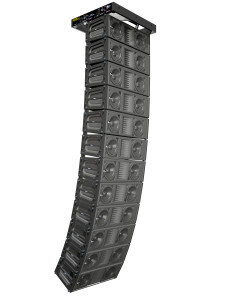 Some of Dave's comparisons of point source and line arrays are also misleading.
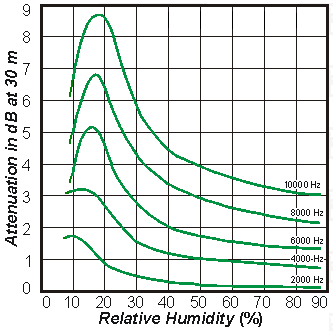 Another confusing subject is the environmental effects of humidity and temperature. Swallow's comments on directional transmission are helpful, but he makes a big deal about temperature increasing the speed of sound and having some effect on high frequencies. I read it several times and didn't understand what he was trying to say. Here are three important things to remember about temperature and humidity from
Sound Systems: Design And Optimization
:
Another confusing subject is the environmental effects of humidity and temperature. Swallow's comments on directional transmission are helpful, but he makes a big deal about temperature increasing the speed of sound and having some effect on high frequencies. I read it several times and didn't understand what he was trying to say. Here are three important things to remember about temperature and humidity from
Sound Systems: Design And Optimization
:This procedure...is extremely annoying for anyone else trying to work in the room and is considered by most industry professionals to be extremely amateurish. Instead, you should understand what the frequencies do in terms of how boosting and cutting each frequency on the graphic affects the overall sound...Do not sacrifice the sound of the system just for a little more volume.
Hey, remember in my interview with Philip Graham when he challenged my assumption that dynamic mics are more forgiving than condenser microphones on vocals? Well, read it and weep Philip:
A dynamic mic can be much more sympathetic, more forgiving to a bad mic technique...
 The value of Live Audio is Swallow's personal experience. For an example in this section on how he uses Pitch Shift:
With La Roux, I use +4 on the left side and a delay of 14ms; on the right side I use -14 and a delay of 4ms. When combined with the vocal, it gives a very unique sound and sinks the vocal into the music while still keeping it loud enough to be heard.


