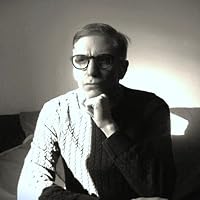
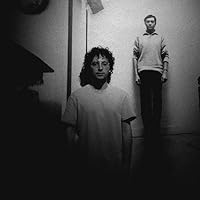
This bilingual volume, with the French and English on facing pages, is a translation of a book of poems by Ren Char, a 20th-century French poet known for his work of great beauty. Fierce, lyrical, searching, Char is a gifted writer in whose poems we encounter a range of voices: those of a leader in the French Resistance, a visionary of his native Provence, an elegist, a lover, a mystic of the night, an evocative and at times riddling aphorist.
René Char spent his childhood in Névons, the substantial family home completed at his birth, then studied as a boarder at the school of Avignon and subsequently, in 1925, a student at L'École de Commerce de Marseille, where he read Plutarch, François Villon, Racine, the German Romantics, Alfred de Vigny, Gérard de Nerval and Charles Baudelaire.
His first book, Cloches sur le cœur was published in 1928 as a compilation of poems written between 1922 and 1926. In late November 1929, Char moved to Paris, where he met Louis Aragon, André Breton, and René Crevel, and joined the surrealists. He remained active in the surrealist movement through the early 1930s but distanced himself gradually from the mid-1930s onward. Throughout his career, Char's work appeared in various editions, often with artwork by notable figures, including Kandinsky, Picasso, Braque, Miró, Matisse and Vieira da Silva.
Char was a friend and close associate of Albert Camus, Georges Bataille and Maurice Blanchot among writers, Pablo Picasso, Joan Miró, Nicolas de Staël, Georges Braque and Victor Brauner among painters. He was to have been in the car involved in the accident that killed both Camus and Gallimard, but there was not enough room, and returned instead that day by train to Paris.
The composer Pierre Boulez wrote three settings of Char's poetry, Le Soleil des eaux, Le visage nuptial, and Le marteau sans maître. A late friendship developed also between Char and Martin Heidegger, who described Char's poetry as "a tour de force into the ineffable" and was repeatedly his guest at La Thor in the Vaucluse.
Thin body that had imperious enthusiasm, Now perpendicular to the wounded Brute.
O killed without any pity! Killed by what was all and, reconciled, is dying; He, the abyss dancer, spirit, yet to be born, Bird and perverse fruit of magics, cruelly saved.
II. The Black Stag
The waters spoke on into the sky's ear. Stag, you and you and you have crossed millennia, the space From rock darkness to the air's caresses.
The hunter driving you, the genius seeking you - How, from my broad shore, I love their passions! And if their eyes were mine, at the instant when I hope?
III. The Beast Not To Be Named
The beast not to be named closes the march of the dainty herd, like a comic cyclops. Eight jibes make up her finery, share our her folly. The beast belches a prayer into the country air. Her stuffed and sagging flanks are hurting, will soon rid themselves of their bigness. From her hooves to her vain tusks she is muffled in stench.
This is how, in the Lascaux frieze, to me appears, mother in fantastical disguise, Wisdom with her eyes full of tears.
IV. Colt with Mane of Spray
You are a beauty, springtime, colt, As you splash the sky with your mane And cover the bulrushes with foam! The whole of love dwells in your chest: From the pale-face Lady of Africa To the Magdalen with the mirror, Idol that fights, and grace that meditates.
* * *
Chilling
This never stilled part, slumbering in u, from which will spring TOMORROW THE MANIFOLD.
The age of the reindeer, - that is, the age of breathing. O window-pane, O hoarfrost, nature conquered, in flower within, outside destroyed!
Thoughtlessly we exalt and oppose nature and men, nothing less. Meanwhile, terror overhead, the sun is entering the sign of his enemies.
The struggle against profane cruelty, alas, a winged ant's vow. Will it be our renewal?
In the winter sunshine a few bundles of fagots and my fire by the wall.
Earth on which I go to sleep, space into which I wake, who will come when you are no longer there? (what shall I become has for me an almost infinite warmth).
* * *
The Mortal Partner
for Maurice Blanchot
He challenged it, advanced toward its heart, like a hemmed, winged, and powerful boxer, exactly in the centre of the attacking and defending geometry of his legs. His look surmised the capabilities of his adversary who was satisfied to give up the battle, midway between an agreeable virginity and his experience. On the white surface where the combat was taking place, both forgot the inexorable spectators. In the June air the given name of the flowers on the summer's first day spun about. Finally a slight grimace ran over the cheek of the adversary and a rosy streak was sketched there the riposte spurted out brusque and consistent. His legs suddenly like linen stretched, the man tossed and swayed. But the facing fists did not follow through on their advantage, abandoned the wind-up. Now the bruised heads of the two combatants bobbed against each other. At that moment the first opponent must have purposely pronounced in the second's ear such offensive or appropriate or enigmatic words that from the latter there came instantly, total and precise, a bolt of lightning which laid low the incomprehensible attacker. Certain being have a meaning that escapes us. Who are they? Their secret resides in the depths of the very secret of life. They approach it. It kills them. But the future which they have thus awakened with murmur, finding them out, creates them. Oh labyrinth of extreme love!
* * *
Brow of the Rose
Despite the window open in the room of love leave, the rose fragrance remains joined to the breath which was there. Once again we are without prior experience, newcomers, in love. The rose! The field of its moving paths would fan away even death's boldness. No gate to make opposition. Desire surges up afresh, disorder of our flighty foreheads. He who walks on the earth of rains has nothing to fear from the thorn, in places finite or hostile. But should he stop to meditate, woe to him! Wounded to the quick, he flies to ashes, archer recaptured by beauty.
* * *
The Risk and the Clock
to Rene Menard
You who rouse and pass between the girl in bloom and the man on the trapeze, be the one for whom the butterfly touches the roadside flowers.
Stay with the wave at the second when its heart expires. You will see.
Sensible also of the bough's saliva.
No longer choosing between forgetting and really learning.
May you keep in the wind of your branch your essential friends.
She transports the word, does the borderer bee who, across hates or ambushes, goes to lay her honey on a cloud's fancy.
Night is no longer surprised at the shutter a man closes.
A speck of dust, that falls on the hand busy writing out the poem, blasts them, poem and hand.
* * *
Lightning Victory
The bird hoes the ground, The serpent sows, Death the gainer Applauds the harvest.
Pluto in the sky!
Explosion in us. There in mystery only. Mad and deaf, how could I be more so?
No more second self, or changing face, no more a season for flame and a season for shadow!
Suddenly love, terror's equal, With hand never seen checks the fire, restores the sun, reconstructs the Beloved.
Nothing gave notice to a life so strong.
* * *
The Room in Space
Like the wood-pigeon's song when the shower is near - the air is powdered with rain, with haunting sunshine - ,I awake washed, I melt in rising; I vintage the newcomer sky.
Lying beside you, I love your liberty. I am a clod of earth claiming its flower.
Is there a finely worked throat more radiant than yours? To ask is to die!
The wind of your sigh makes the leaves downy. The shaft of my love closes your fruit, drinks it.
I am here in the grace of your face, which my darknesses cover with joy.
How beautiful your cry that gives me your silence!
* * *
For a Saxifrage Prometheus
On touching the Aeolian hand of Hölderlin
To Denise Naville
What is reality without the dislocating energy of poetry?
God had lived among us too powerfully. We no longer knew how to rise and leave. The stars are dead in our eyes, after being sovereign in his gaze.
It was the questions of the angels that provoked the irruption of the demons. They shackled us to the rock, to beat us and to love us. Again.
The only struggle takes place in the dark. No victory except on its edge.
Noble sowing, my neighbour's war and favour, facing the muted dawn I keep you along with my hunk of bread, waiting for what I foresee as a day of tall rain, of green loam, which will come for those who burn, and for the stubborn.
* * *
Short-cuts
The hill he has served so well descends torrential at his back. Poor tongues salute him; the mules in the meadow welcome him. The gulley's rose-hued face turns toward him twice the waters of its mirror. Meanness sleeps. He is as he dreamt himself to be.
* * *
Scythe, Lifted Again
When the dead men's drover strikes with his rod, Dedicate to summer mu colour dispersed. Amaze a child with my fists too blue. Arrange on his cheeks my lamp and my sheaves.
Fountain, trembling within your narrow nook, My gain you'll spread bounteous to fields athirst. From humid fern to fevered mimosa, Between the aged absent and the new lately come, The motion of loving, bending down, will tell you: "Apart from there, nowhere, disgrace is on all sides."
* * *
Contravening
Obey your swine who exist. I submit to my gods who do not.
We remain men for inclemency.
* * *
Subsiding
Grapes have for their homeland The harvester's fingers. But whom does she have Past the cruel vine's narrow path?
The rosary o the cluster; At evening, the lofty fruit setting, bleeding The last spark.
Quelques poèmes étaient cool mais dans l'ensemble ça m'a pas transcendé plus que ça. Après lire de la poésie me demande beaucoup de concentration hors je n'en ai pas forcément beaucoup en ce moment. Je ne suis pas dans un état d'esprit qui me permet d'apprécier à 100% de la poésie c'est pourquoi j'ai eu du mal à me plonger réellement dans le recueil et apprécier.
Char's prose poems are immense. I like that much of this book read like collages of aphorisms, or minute diary entries jotted immediately and then strung together, hoping they made sense, hoping they conveyed some feeling.