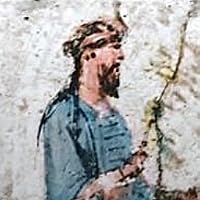
All over the world people look forward to a perfect future, when the forces of good will be finally victorious over the forces of evil. Once this was a radically new way of imagining the destiny of the world and of mankind. How did it originate, and what kind of world-view preceded it? In this engrossing book, the author of the classic work The Pursuit of the Millennium takes us on a journey of exploration, through the world-views of ancient Egypt, Mesopotamia, and India, through the innovations of Iranian and Jewish prophets and sages, to the earliest Christian imaginings of heaven on earth.
Until around 1500 B.C., it was generally believed that once the world had been set in order by the gods, it was in essence immutable. However, it was always a troubled world. By means of flood and drought, famine and plague, defeat in war, and death itself, demonic forces threatened and impaired it. Various combat myths told how a divine warrior kept the forces of chaos at bay and enabled the world to survive. Sometime between 1500 and 1200 B.C., the Iranian prophet Zoroaster broke from that static yet anxious world-view, reinterpreting the Iranian version of the combat myth. For Zoroaster, the world was moving, through incessant conflict, toward a conflictless state—“cosmos without chaos.” The time would come when, in a prodigious battle, the supreme god would utterly defeat the forces of chaos and their human allies and eliminate them forever, and so bring an absolutely good world into being. Cohn reveals how this vision of the future was taken over by certain Jewish groups, notably the Jesus sect, with incalculable consequences.
Deeply informed yet highly readable, this magisterial book illumines a major turning-point in the history of human consciousness. It will be mandatory reading for all who appreciated The Pursuit of the Millennium.
Jewish academic, historian and writer who spent fourteen years as a professorial fellow and as Astor-Wolfson Professor at the University of Sussex in the United Kingdom.
His main subject were the connection between medievel anti-semitism and contemporary anti-semitismn.
Norman Cohn, Oxford historian and author of the fascinating In Pursuit of the Millenium, in this more recent book attempts to sort out the origins of the ideas behind apocalypse. In his words:
This book is concerned with a major turning-point in the history of human consciousness: it tries to describe how the destiny of the world and of human beings came to be imagined in a new way, and how these new expectations began to spread abroad.
He starts by examining the religious beliefs of the ancient world’s earliest civilizations—Egyptian, Indo-European (Vedic) and Mesopotamian. These posited a troubled static universe, which went on forever without changing or passed through endless repetitive cycles, and in which the champions of order were always (and would forever be) at war with the forces of chaos. Cohn then addresses Zoroastrianism, which introduced a radically new view of the world, Judaism (especially the apocalyptic sects), and finally Christianity, which added a wrinkle of its own. Cohn sees Zoroaster as the most influential (and most grossly underappreciated) of religious innovators:
Some time between 1500 and 1200 BC Zoroaster broke out of that static yet anxious world-view. He did so by reinterpreting, radically, the Iranian version of the combat myth. In Zoroaster’s view the world was not static, nor would it always be troubled. Even now the world was moving, through incessant conflict, towards a conflictless state. The time would come when, in a prodigious final battle, the supreme god and his supernatural allies would defeat the forces of chaos and their human allies and eliminate them once and for all. From then on the divinely appointed order would obtain absolutely: physical distress and want would be unknown, no enemy would threaten, within the community of the saved there would be absolute unanimity; in a word, the world would be for ever untroubled, totally secure.
It appears that Zoroaster invented the ideas of: one dominant god (Ahura Mazda); an adversary of almost equal power (Angra Mainyu); a battle on earth between the forces of good and evil, with human beings having to choose sides; a fixed period of time during which this struggle would go on; a final, great battle in which the good guys would (just barely) defeat the bad guys; a Saosyant (Messiah) who would appear in time to swing the battle; a Final Judgment, in which the good thoughts, words, and deeds of every angel and human would be weighed against the bad, and after which the good guys would be rewarded with happy immortality in paradise and the bad guys plunged into the Abyss, to be eternally punished for their transgressions. Sound familiar? Judaism introduced the importance of divine Law, including of course the commandments, and gave us the Jewish Bible. And perhaps more important, Judaism greatly strengthened the notion of The One and Only God—the “Yahweh only” tradition that pitted a jealous monotheism against the then-prevalent (and more tolerant) polytheism. The apocalyptic sects of Judaism (of which Christianity was only one of many) modified and refined many of Zoroaster’s ideas. Early Christianity adopted and tailored almost all of these ideas—in the second century AD the Book of Revelation, which puts its own spin on much of Zoroaster, was more frequently cited than any other book of the New Testament. The early Christians did, however, add one big new idea: the unique notion of Christ dying for mankind—“That Jesus’ death on the cross was a redemptive act, by which God offered mankind the possibility of salvation from the consequences of sin—this was something wholly new…”
The basic ideas in this book are extremely interesting. I came away with a new awareness of Zoroaster’s genius, and a renewed awareness of the degree to which religions of the Near East pirated ideas from each other. Also Cohn describes the contexts, social and political, out of which these ideas grew: the common denominator seems to have been people compensating for their oppression and impotence by phantasizing dramatic rescues by patron gods who attack and utterly destroy their enemies. As for Cohn’s writing, he has to justify his interpretations to other scholars, so some of the chapters are very detailed and even, at times, tedious, especially explanations of the myriad gods and their interrelationships. But people with a deep interest in the origin of current religious ideas will find the book fascinating.
My prejudices may not always be justified, but I tend to be instinctively skeptical of any history of ideas that credits a single individual with sparking a revolution in human consciousness. Nonetheless, this is precisely the move to which Norman Cohn affixes his scholarly imprimatur. Surveying the mythological landscape of the ancient Egyptians, Mesopotamians, Indo-Aryans, Canaanites, and pre-exilic Israelites, Cohn ascribes to each a broadly similar understanding of time as a static reality mediating between cosmos and chaos (Cohn’s usage of these terms, of course, belying the influence of Mircea Eliade). In each of these archaic cosmologies, the proper order of creation, governing everything from the cycles of the heavens to the performance of social customs, is established by the gods but constantly threatened by the forces of chaos—famine, drought, pestilence, invasion, death—personified by malevolent monsters or demons who attack the divinely-appointed order and the human authorities tasked with helping to maintain it. The triumph of cosmos over chaos is often symbolized by some version of the combat myth, in which a warrior god—Ra, Marduk, Indra, Baal, Yahweh—defeats the chaos monster—Apophis, Tiamat, Vritra, Mot, Leviathan—and (re)establishes a modicum of cosmic harmony. Yet this victory was never traditionally taken to be final and complete; the specter of chaos always loomed on the borders of the ordered world, and the primordial victory always had to be ritually reenacted.
This changed decisively, according to Cohn, with Zoroaster, the prophet and founder of Zoroastrianism, who lived sometime between 1500 and 1200 BCE*. Putting his own spin on the traditional Iranian version of the combat myth, Zoroaster foretold the ultimate elimination of chaos and its engendering evil, represented by Angra Mainyu and his subservient daevas, by Ahura Mazda and his celestial and human companions. Though these millenarian expectations were tempered when Zoroastrianism became the imperial religion of the Achaemenids, they went on to influence the development of Second Temple Judaism during the two centuries in which the province of Yehud governed its own affairs under Persian auspices while a large Jewish diaspora lived throughout the empire, as well as during the bitter experiences of Seleucid and Roman rule, when the resurgent Parthian empire served as a foil to Godless tyranny in the Jewish apocalyptic imagination. Jewish apocalypticism, in turn, formed a large part of the religious milieu from which the Jesus movement and the Christian religion took shape, and from there the expectation of a final, eschatological victory of good over evil, of light over darkness, went on to influence the cultural ambiance of large swathes of the world’s population, be they Christians, Jews, Muslims, Zoroastrians, or adherents of the various secular ideologies—Marxism-Leninism, liberalism—that are to some degree outgrowths of millenarian culture.
Regardless of whether its origins can be traced back to one person, one still finds this worldview at work in the minds of millions of people, for good and for ill. A belief in the penultimacy of evil gives wing to the hopes of the afflicted in trying times. But when the line between good and evil is no longer perceived to run, as Solzhenitsyn aptly put it, through the middle of the human soul, but rather between nations, ethnicities, religions, and even political tribes, language about the final obliteration of the “Children of Darkness” and the vindication of the “Children of Light” can easily be employed for quite sinister purposes, as we are unfortunately seeing in both the domestic and international politics of our time. If the archaic cosmology served to maintain social continuity and the status hierarchies that depended on it, the prophetic and apocalyptic consciousness creates a dynamic condition with high stakes: depending on whether one locates the source of evil within oneself or projects it onto others, we can make ourselves into angels or beasts, either giving birth to genuine progress in the advancement of humanity, solidarity, curiosity, and freedom, or coming to discover that somewhere along the line we ourselves have unwittingly become chaos monsters.
* Cohn finds contextual evidence in the Gathas to date them, and by extension Zoroaster, well before the prophet’s traditional placement in the seventh and sixth centuries BCE.
More accessible for me than his "Pursuit of the Millennium" Cohn here explores the connection between Zoroastrianism and the western concept of the End of the World, Judgment Day, etc. Sounds a little dry from my description but trust me, an excellent read from an author with deep knowledge of the subject and a talent for sharing it.
I genuinely hope Cohn's other book, "Pursuit of the Millennium", is better than this offering.
I wanted to like this book, even though I knew going in that there were heaps of methodological problems and unwarranted assertions. In a way, the first few chapters are very good, informative, and compelling. The book is also very readable and well-paced, never tedious. There are fascinating tidbits and connections scattered throughout even the very problematic chapters.
But alas I need to elaborate on the flaws - not a point by point refutation, because it would take far too long, but rather a critique of Cohn's overall approach and a few glaring instances of inexcusable sloppiness and wishful thinking.
1. Cohn consistently bases his thesis on the hedged bets, "probabilities", "plausibilities" and theories of secular scholarship. His a priori belief is clearly that both Old Testament Israelites and New Testament Christians could not possibly have been telling the truth, nor could they possibly be consistent or continuous in their narrative. He is critical from the outset; he is already assuming what he sets out to prove. He passes off some of the most hotly contested, poorly articulated, or even outdated secular "scholarship" as established or accepted fact. Granted he doesn't want to get bogged down in questioning his own assumptions or the highly speculative nature of the academic ideas he relies on, because then his whole thesis falls apart in an instant. I'm reminded of the arrogant confidence of secular higher critics like him who once touted the non-existence of the Hittite civilization, which of course was later discovered and made them a laughingstock. No doubt evidence is forthcoming which will obliterate his speculation (the Hittites and the city of Troy are but two great examples, as are the Dead Sea Scrolls which he scrupulously avoids any consideration of).
2. His "evidence" for Zoroastrianism influencing Judaism and Christianity is based on texts from nearly a thousand years after the time of Christ; he assumes (waveringly) that these texts preserved ancient beliefs unchanged, a shocking assertion for a secular scholar. Not only does he leave out the consideration that it might have been the other way around (Judaism influencing Zoroastrianism, for which there is actually much more plausible evidence), he doesn't even extend the same benefit of the doubt to the Jewish and Christian texts (which are much, much older than the Zoroastrian texts, as even he admits) in consideration. It is a breath-taking master stroke of wishful thinking. I didn't even have to do any outside research to figure this out, his own work makes this clear.
3. His analysis of the Book of Daniel, Revelation, and the Gospels is extremely warped and self-serving. He arbitrarily asserts that the fourth empire mentioned in Daniel is the Greeks to make his thesis work, while even the most unlearned Bible thumper knows it refers to the Roman Empire. This is inexcusable and totally contradicts all evidence on the subject. Furthermore, he avoids any discussion of the glaring passages in the Gospels which assert that Christ is God; whether you believe them or not you can't just ignore them to construct your own theory. Over and over he conveniently marks any passage which would contradict or rule out his thesis, whether in the Old or New Testament, as "a later addition." This is supremely wishful thinking.
Normally I keep the works of authors I disagree with because they are interesting or because they are worth refuting or picking apart in detail, but this is almost a Dawkins-level piece of unsubstantiated and polemic trash. I still plan on reading his other book (which received praise even from Orthodox Christian scholars like Fr. Seraphim Rose) because it seems a lot more grounded, but this one I'll sell to some used bookstore.
Although the book was published in the last century, Norman Cohn wrote one of the best historical introductions to the apocalypse, examining most religious traditions. Each apocalyptic myth is described exhaustively, starting from its origins, following its evolution and possible connections with other religious movements that may have influenced/conditioned the myth's evolution. Some myths are missing, such as the Islamic interpretation of the apocalypse and references to Buddhist apocalyptic messianism linked to the figure of the future Buddha Maitreya. While I understand that the latter topic is a niche subject and perhaps for this reason was excluded, I was surprised by the omission of the former, as apocalypticism is an important element of the Islamic religion. I sadly noted that this book received negative reviews not for its treatment of the topic as such, but because it does not fully support Judeo-Christian orthodoxy, or at least it does address it critically. Although this topic is particularly ‘thorny’ for those who believe that Judeo-Christian texts represent a transcendental truth, the experience of scholars in the field has shown how influences, suggestions and comparisons have always been present in the history of religion. I cannot understand why this should not also have occurred in our religious tradition, given that hundreds of studies discuss Zoroastrian influence on Jewish-Christian religious thought, not ruling out the possibility of a reciprocal relationship of influence. In conclusion, a book that is still relevant today and a perfect historical introduction to the topic.
Despite a slow start in the first couple of chapters, this book is incredibly enlightening. It is a sweeping history of cosmogonic and apocalyptic thought in the Ancient Near East (and Vedic India) from roughly 3000 BC to 100 AD. It lays out the interconnected threads between the many civilisations in the crucible of the ancient Near East, showing how creation myths (gods creating the world by making order out of formless chaos) and combat myths (upstart hero / king gods protecting order by fighting the forces of chaos in an eternal ritualistic fashion) were reinterpreted and converted into a millenarian apocalyptic conception of a final battle that will permanently banish chaos, evil, and death and restore an eternal utopian order. Zoroastrianism invented this concept, Hellenistic Judaism was greatly influenced by it, and Christianity perfected it. In this lies the foundation of so much history afterwards: countless religious wars, the colonial drive to convert the world to Christianity so that the End Times could begin, the secular myth of progress, and ideologies and movements ranging from Nazism to Marxism-Leninism to Zionism to the Taiping Heavenly Kingdom. My only major qualm with the book is that I wish it had covered a few more centuries so that it included the long-term effects and evolution of Christian apocalypticism (including Gnostic ideas), Manichaeism, and perhaps apocalyptic ideas in Islam.
A dense, authoritative survey of the development of the myth of the millennium and a future paradise. Awaiters of the Rapture take note.
I have long been fascinated by millenarianism, and have felt inspired to build stories around this idea. The notion of a profound revolution resulting in a permanent utopia is hypnotically seductive to many of us. When I learned back in 1986 that the Jehovah's Witnesses are a millenarian cult of this kind, I was actually attracted to their organization. In Switzerland a young JW pressed a little book into my hand: Survival into a New Earth, published by the Watch Tower Bible and Tract Society of Pennsylvania, and I read it while making a train journey to visit CERN, the nuclear research facility outside Geneva. According to the book's copyright page, its first edition ran to 4 million copies, and I bet they were all put into somebody's hands. I really enjoyed the book. If you accept its premises of the reality of Jehovah as God and the infallibility of the Bible, then the book makes a strong case. We are at the threshold of a massive revolution in Earthly life that will culminate in a paradisiacal existence for a blessed and immortal elite--an elite that anyone can join by professing this faith.
The book was logical and well written, but what made it seductive was that it addresses itself forthrightly to the most important questions, and answers them confidently and authoritatively. We all want to be happy, and we all fear death. We also want to understand a confusing world, and to lead a good life within it. We want to feel that our life has meaning, and that living it has been worthwhile. This book addresses all of these things head on. If I accept the book's teaching, then I will have all the things I seek: happiness, freedom from death, a good and meaningful life. I will enjoy peace and love permanently, and I will do that very soon, for the upheavals that are to bring these things about are imminent. Indeed, according to the Jehovah's Witnesses, the change will happen before the generation that was alive in 1914 has passed away--and the number of people over 104 years old is dwindling fast.
The Jehovah's Witnesses are just one flavor of millenarian cult; there have been countless others. And a respected longtime student of that field was Norman Cohn (he died in 2007). His book Pursuit of the Millennium: Revolutionary Millenarians and Mystical Anarchists of the Middle Ages appeared for years in the bibliography of any book that made mention of millenarianism. I remember getting his book out of the Vancouver Public Library when I was in my 20s, and starting to read it, but I never got through. I think it was, in part, because I found his writing style dry.
I'm afraid I still think that. Cosmos, Chaos and the World to Come is an excellent and authoritative book, but the author's prose style, while perfectly serviceable and readable, is calmly factual rather than exciting or interesting. It was this fact that caused me to leave off reading the book when I first picked it up in 2007 (gosh, I realize that Mr. Cohn was still alive when I started reading his book). Now, 11 years later, I had reason to dive back in, my researches having returned me to this fascinating topic of millenarianism, and the book too being a key reference for Harold Bloom's intriguing Omens of the Millennium: The Gnosis of Angels, Dreams & Resurrection. The fact that a scholar of Bloom's standing regarded Cohn as such an authority boosted Cohn's stock in my eyes. In fact, I thought, "I must get that book," and came to my computer to buy it, but something niggled at the back of my mind. I made a scan of my shelves and found that I already had it. Whew!
Cohn's book is not long, but he covers a tremendous amount of ground. This, to me, is a sign of the depth of his knowledge. The book's title is a summary of how he develops the topic, for the author starts out by showing how ancient civilizations, beginning with Egypt, conceived of the world as an orderly place, a cosmos, made that way by powerful gods who then had the task of preserving that order against forces that would disrupt it--the forces of chaos. He goes on to show how similar ideas were developed in ancient Mesopotamia and Vedic India. In doing this he demonstrates great knowledge of these disparate ancient cultures, but presents and emphasizes only what is germane to his theme.
A turning point came with the rise of the sage Zoroaster and the revolution he brought to Iranian religion. For he was apparently the first to see the world in terms of an ongoing struggle between the forces of good and the forces of evil, a struggle not just between gods but one involving every living thing, and most especially every human being, regardless of nationality, gender, or station. He prophesied that good would eventually triumph, and that the world would be transformed into a wonderful, bounteous, and peaceful place, where the victors over evil would enjoy endless happiness. This beatific future paradise is the world to come; it's the future we can look forward to if we sign up with the prophet's program.
Cohn shows how this idea percolated out to suffuse Canaanite, Jewish, and finally Christian thinking. Indeed it goes beyond that, underlying any kind of future-oriented utopian program, such as that of Marxism. Whoever envisions a bright, utopian future, especially one that comes about through an abrupt cataclysm, and most especially one that is reserved for the good and the pious, is living out this ancient Zoroastrian myth. It's a vision that offers solace and inspiration to the persecuted and the martyred.
I found that this book kept getting better as it progressed and as the author's grand scheme came more clearly into view. He offers a clear and penetrating story of how this fascinating and seductive idea made its way into the spiritual tradition of the West, where it has formed such an important component of the way we look at the world.
It was alright - a bit wordy in places, but not to the point of being completely incomprehensible. I'm hesitant to rate it too highly because I do have qualms with some of the terminology in the earlier chapters, and there are a few details about the Egyptian section in particular that I feel are somewhat misleading in how they're presented. It does cover a very wide range of societies, so it could well be that Cohn simply isn't a specialist in the Egyptian period, but it did put a bit of a downer on the rest of the book for me because I was constantly concerned details were being described inaccurately in the periods I was familiar with. It's perfectly fine if you're approaching the topic from a non-specialist angle, though I have my doubts it's the most accurate paper on the subject. I did like the range it provided, though found myself quite unmotivated to read it on account of those little inaccuracies and its verbosity.
Cohn shows us how the Zoroastrian belief in Last Judgement and the end of time (millenarian thought), as opposed to antiquity’s cyclical belief system, suffused to through to Christianity (with Judaism as intermediary as Christianity was originally a Jewish sect).
Norman Cohn writes with concision and conviction, and although I might have lost the finer points, I got the gist of his theory, which I found plausible. I liked the first part best, where he digs into the Egyptian, Sumerian and Vedic Indian beliefs as opposed to that of Zoroaster.
And I also liked how he compared the Norse god Thor with the Hindu God Indra (because I never understood why Thor wielded a hammer and rode a chariot pulled by goats, both very un-Viking), connecting the Norse pantheon to the Indo-European beliefs.
A fascinating insight into the worldview as it pertains to theology that shaped the ancient world. Cohn has given an excellent summary, analysis and explanation of early civilisation and the religious worldview that shaped them--the similarities, the differences as well as how they changed.
For those looking for a historical narrative of ancient religions, this book offers a great deal. A good read.
Solid, if dated look at ancient west Asian eschatologies and cosmologies. I found myself wishing it was a bit more in-depth, rather than just sectioned and comparative.
The invention of the Apocalypse – Good read but requires perseverance at the start
“Cosmos, Chaos and the World to Come: The Ancient Roots of Apocalyptic Faith” by Norman Cohn is a fascinating story about the origins of apocalyptic ideas. The writer is in search of the very ancient sources of these ideas and how they developed and got adopted and interpreted by Judaism and Christianity. Just as Cohn’s other book about apocalyptic faith "The pursuit of the Millennium", the topic seems obscure at face value, but its reach goes far beyond the scope of this book.
Cohn explores the earliest known civilisations ranging from the Egyptians, Mesopotamians to the Vedic Indians. He explains how the myths about the forces of chaos trying to destroy the divinely appointed order, and the victory every time of the latter resulted in a never-ending cycle of struggle. Cohn makes a strong case when he claims that Zoroastrianism broke this cycle by proclaiming a final battle between good and evil at the end of times. This revolutionary apocalyptic idea was adopted by the Persian Empire and subsequently influenced the Jewish faith during the Babylonian Exile. As a result, for a number of Jewish sects including Christianity it became one of the central doctrines of faith with far-reaching consequences.
Cohn’s subject matter knowledge is beyond doubt, and his writing style neutral and straight. I found the beginning of the book dry and hard to get through, mainly due to the very detailed and academic chapters. However, once Zoroaster made an appearance, the story gained pace and became more readable. I can therefore recommend “Cosmos, Chaos and the World to Come” to anybody interested in world or religious history.
I like Norman Cohn a lot (unfortunately he is no longer with us) - always excellent scholarship presented in an easily comprehensible, well structured way. This book was of course particularly relevant when we were waiting to ring in the new millennium, but it has not lost its value now that we are in it!
Arresting, well-written; an exceptional book. It is a consideration of where the idea of the millennium or end of history came from (the Zoroastrians are the culprits).