The book begins with a question: "Why Henry Miller?"
Miller remains among the most misunderstood of writers - seen either as a pornographer or a guru, a sexual enslaver or a sexual liberator, a prophet or a pervert. All the questions his life and oeuvre raise about the role of the writer in society, the impact of books on sexual politics, the impact of sexual politics on books, the threat of censorship to free speech and written expression are, unfortunately, as fresh today as they ever were." Part biography, part memoir, part critical study, part exploration of sexual politics in our time, The Devil at Large is an event: a book that promises to rescue Miller from the facile charges of misogyny, anti-Semitism, and titillation that have been lobbed at him over the years, and brilliantly captures the exuberance, audacity, and energy that defined his life and art. More than that, it is a reunion between a young writer and her mentor. In 1974, while Fear of Flying was still a relatively obscure first novel, Erica Jong received an enthusiastic fan letter from Henry Miller, then an old man of eighty-three. Miller credited himself with "discovering" Jong, and his faithful correspondence guided her through a year of enormous change. The two writers - chastised and celebrated for their lusty prose, accused of conflating autobiography with fiction in their respective generations - found they were kindred spirits, and began a friendship that would last until Miller's death in 1980. "Make it all up!" was Miller's appeal to Jong to become his biographer. But in reexamining Miller, Jong has not had to fictionalize. She has imparted a deeper understanding of a life whose dramatic particulars have long since been mythologized, dramatized, and cannibalized by those in search of a lusty life story. Jong puts the works, the letters, the loves through a prism that clarifies the creative impulse, making this slim book a quintessential chronicle of a writer's life and a mirror of our
Erica Jong—novelist, poet, and essayist—has consistently used her craft to help provide women with a powerful and rational voice in forging a feminist consciousness. She has published 21 books, including eight novels, six volumes of poetry, six books of non-fiction and numerous articles in magazines and newspapers such as the New York Times, the Sunday Times of London, Elle, Vogue, and the New York Times Book Review.
In her groundbreaking first novel, Fear of Flying (which has sold twenty-six million copies in more than forty languages), she introduced Isadora Wing, who also plays a central part in three subsequent novels—How to Save Your Own Life, Parachutes and Kisses, and Any Woman's Blues. In her three historical novels—Fanny, Shylock's Daughter, and Sappho's Leap—she demonstrates her mastery of eighteenth-century British literature, the verses of Shakespeare, and ancient Greek lyric, respectively. A memoir of her life as a writer, Seducing the Demon: Writing for My Life, came out in March 2006. It was a national bestseller in the US and many other countries. Erica’s latest book, Sugar in My Bowl, is an anthology of women writing about sex, has been recently released in paperback.
Erica Jong was honored with the United Nations Award for Excellence in Literature. She has also received Poetry magazine's Bess Hokin Prize, also won by W.S. Merwin and Sylvia Plath. In France, she received the Deauville Award for Literary Excellence and in Italy, she received the Sigmund Freud Award for Literature. The City University of New York awarded Ms. Jong an honorary PhD at the College of Staten Island.
Her works have appeared all over the world and are as popular in Eastern Europe, Japan, China, and other Asian countries as they have been in the United States and Western Europe. She has lectured, taught and read her work all over the world.
A graduate of Barnard College and Columbia University's Graduate Faculties where she received her M.A. in 18th Century English Literature, Erica Jong also attended Columbia's graduate writing program where she studied poetry with Stanley Kunitz and Mark Strand. In 2007, continuing her long-standing relationship with the university, a large collection of Erica’s archival material was acquired by Columbia University’s Rare Book & Manuscript Library, where it will be available to graduate and undergraduate students. Ms. Jong plans to teach master classes at Columbia and also advise the Rare Book Library on the acquisition of other women writers’ archives.
Calling herself “a defrocked academic,” Ms. Jong has partly returned to her roots as a scholar. She has taught at Ben Gurion University in Israel, Bennington College in the US, Breadloaf Writers’ Conference in Vermont and many other distinguished writing programs and universities. She loves to teach and lecture, though her skill in these areas has sometimes crowded her writing projects. “As long as I am communicating the gift of literature, I’m happy,” Jong says. A poet at heart, Ms. Jong believes that words can save the world.
Henry Miller is a strange case. In the 1930s he decided to write books which put in what all other books left out, so that included a whole lot of rude crude sex and nasty behavior and four letter words flying about like rancid confetti. So he got banned right left and centre. You betcha. He wrote raving ranting autobiographical stuff which got called “novels” because he made a lot of it up. (Somewhat similar to Jack Kerouac 30 years later but Jack was a clean living Zen master compared to filthy Henry.) Anyway every other author rewrites his or her life for the first novel, that’s not exceptional, but most of them avoid listing all the boffing and freeloading and upchucking they did while they were doing stuff to have stuff to write about. Boy, what a monkey on your back, having to do a lot of stuff so you have something to write about. Hats off to Nicholson Baker – in his first novel he wrote a detailed account of his lunch hour. Brilliant. Better than Henry Miller.
Erica Jong is a feminist and Henry Miller was a male chauvinist pig woman hater, so the cartoon goes. But when Fear of Flying, Erica’s first famous novel, was languishing in a tiny print run in 1973 Henry championed it all over the place and sent copies to all his friends and eventually it became a No 1 bestseller. He liked it because it was filthy and full of life. Erica and Henry became major pen pals. Henry was a major letter writer. (This shows you how long ago this all was. Ain’t no major letter writers around any more.)
So the feminist ended up writing this book about the chauvinist to figure out this whole thing – essentially whether it was right to ban Henry from the 30s to the 60s (this ban imposed officially by the public authorities) and then ban him all over again in the 70s (this ban imposed unofficially by feminists). An interesting but uncomfortable fate for a writer.
Erica has to admit she sees what the feminists were getting at, because it kind of stuck out like a big erect pink thing :
Henry is best known for his worst writing…It was Kate Millett’s thesis that Miller’s entire apprehension of sex was misogynistic. In this she was not wrong…He does show the violence of intercourse no less than Andrea Dworkin shows it. He shows it from a man’s point of view as she shows it from a woman’s. The question is : is he advocating this violence? Or is he showing it because it exists? This is a primal question with Miller – and with all literature. The question comes up repeatedly lately because, I think, we have lost the sense of what literature is. Was Bret Easton Ellis advocating murder in American Psycho, or was he mirroring the violence of our culture?
Erica concludes that Henry is doing the mirroring, not the advocating. But Erica is very nervous to be publicly defending Henry, she seems to feel beleaguered and backed into a corner by the hordes of Millett-and-Dworkin fembots, and this makes he come out with some crazy talk:
Am I loving the fascist, the brute, the boot in the face? Kate Millett would probably say so. … (but) it is the role of the artist to express this violence. Art is pagan, wild, red in tooth and claw. It must be, in order to reflect the chthonic side of nature. It follows the furies, the Bacchae, the dybbukim – or it is not truly art.
In what sense Erica? Are we saying that Francis Bacon is art (wild and violent, chopped up meat and screaming popes) but Claude Monet is not (lily ponds and light rain) ?
("Not art" says Erica Jong)
Henry himself defended his own filthiness thus:
The modern writer, in using obscenity, is trying to rekindle the awe, the shock, the wonder that the ancients found at Delphi or Eleusis.
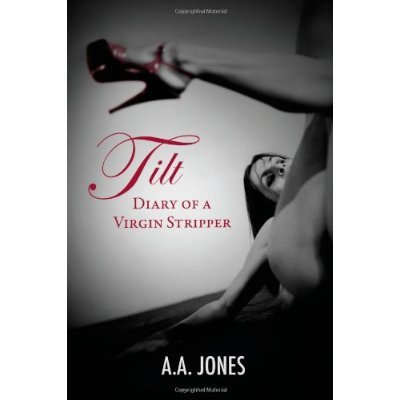
This also sounds like shite to me. But of course Henry wasn’t living in an age where you can pick up copies of Space Raptor Butt Invasion, The Hottest Gay Man Ever Killed in a Shark Attack, Diary of a Virgin Stripper, Showers of Trump (A Billionaire Romance), Penetrated by Aardvarks and so forth.
Erica explains the violence : Men and women need each other so badly that they also hate each other when sex is at its hottest.
Well, you might try telling that to the judge. Actually, I’m sure a lot of murders wind up with that kind of explanation. (I loved her so much I smashed her brains and drowned her – you heard it a million times.) Okay, you don’t like that explanation of Henry’s misogyny? Here Erica tries a different tack :
Henry’s voice is the voice of the outsider, the renegade, the underground prophet – and isn’t that, after all, what women still are?
She also tries a thin slice of psychobabble :
Henry’s longing for the sweetness of his mother’s womb followed him all the days of his life. So did his anger at being cast out.
(I mean, get over it Henry. None of us got any more time in the old womb than you did and look, we turned out okay.)
Actually, says Erica, Henry didn’t hate women or want to do violence to them at all, this is a mistake. All that slagging off they get in his books is a bluff.
The violence of his depiction of women is a secret tribute to the immense power women had over him.
Actually, when all’s said and done – Henry was a proto-feminist! (Bet you saw that one coming.)
Henry recognized at once that all male literature was frozen compared to the fecund delta of female prose.
(Erica, what could that sentence possibly mean in any part of the universe?)
A strange book all right.
******
Three books to re-read next (I read 'em years back and have, er, well, sort of forgotten them) :
Fear of Flying by Erica Jong Tropic of Cancer by Henry Miller Sexual Politics by Kate Millett
Most of what Erica Jong, author of the controversial '70s novel Fear of Flying, is saying in The Devil at Large can be summed up as follows: "If we have trouble categorizing Miller's 'novels' and consequently underrate them, it is because we judge them according to some unspoken notion of 'the well-wrought novel.' And Miller's novels seem not wrought at all. In fact, they are rants -- undisciplined and wild. But they are full of wisdom, and they have that 'eternal and irrepressible freshness' Ezra Pound called the mark of the true classic." Jong asserts that "it is not unusual to hate great writers before we love them," and Miller was such a mass of contradictions in both his personal life and his writing, that he's often misunderstood. "The Devil At Large" is a defence of Miller by someone who started out loathing him, and who grew to respect him when she was around his "magnetic life-force." When Miller unveiled his now-famous Tropic of Cancer, it was banned nearly everywhere, and only found its audience decades after being written. Jong says that "The four-letter words in Tropic of Cancer distracted everyone but the most diligent from the truth of Miller's discovery: peace only comes to a mortal creature when he starts to see himself as part of the flow of creation." I'm not a huge fan of biographies, but this one flows like prose. Jong is intelligent, and she can't suppress the vitality that was there in Fear of Flying, even when focused on a narrow and singular question: "Why Henry Miller?" I loved this and highly recommend it.
The creation of a book is a rite of passage for the author even more than for the reader. It is a way of stripping down to the essential being, a self-analysis far more profound than any professionally guided psychoanalysis and a way of remaking oneself spiritually. It is for this act of self-transformation that writers write. And they are fortunate when they recognize this, because such self-transformation is the only truly dependable reward of writing.
~ Erica Jong The Devil at Large
Nin’s independence both as a wife and as a lover seems beguiling. At first she appears as a beacon of liberation for women, but perhaps she was more enslaved to men than most of us. Anaïs had an independence in her marriage to Guiler that she would have never possessed with Henry. She remained tied to Guiler all her life, but she always needed at least two men to reenact her oedipal drama.
Her freedom came at a very high cost: she was unable to publish her journals freely during her own lifetime. In a way she traduced her art for the sake of her deceptions. She knew that women can have their sexuality as long as they don’t publish it.
I had an amusing encounter with Anaïs once at the Poetry Center of the Ninety-Second Street Y in Manhattan, where she was speaking after her edited diaries had begun to appear. At that point I had published only one or two volumes of poetry and was just writing Fear of Flying.
“Why did you edit the sexual parts out of your diary, Miss Nin?” I asked from the audience.
“Becasue I had observed,” she replied cooly, “that whenever a woman revealed her sexual life, she was never again taken seriously as a writer.” Nin was pragmatic. I was passionate and young.
“But that’s precisely why we must do it,” I said, unwittingly predicting my entire career. Nin did not comment further. I remember being disappointed by her lack of candor and thought she was being hypocritical. Now, I see that I was terribly green and brash and she was wise.
She was right, of course: if a woman exposes her sexuality in print, she is always exposed to attack. It was a situation she was destined to help change, but only after her death. I was to beard that particular dragon with my very first novel, and in many ways my reputation has never recovered.
Not so long ago I read about this book on the net and was thinking I should read it, only to discover that I referred to it in some detail in a monograph I wrote in the mid-nineties. Oh, so I'd read it; probably, I imagine, even owned a copy; wrote about it...and yet it would seem to be a most forgettable book.
I have this idea I keep giving Jong's books too many stars.
I don't usually like biography as a genre: the author is under too much pressure to include everything, simply because it happened. The span of a life is not always the most interesting story. Jong avoids that problem here. She offers an abbreviated biography of Henry Miller, based on published material and her own interactions with him. The brevity serves her well, and she is able to distill Miller's essence nicely. As is the wont in current scholarship--and correct, I think--she sees him primarily as a religious writer, using sex and obscenity to shock the reader and push him or or her to consider the presence of divinity. It's not such a remarkable claim, given that Miller himself said the same thing again and again. But, as Jong notes, his claims about himself were usually ignored, overwhelmed by the salaciousness of his writing.
The rest of the book is an attempt to rescue Miller from obscurity--obscurity caused by those who censored him because of his obscenities, and, later, by feminist critics who saw him as a misogynist, and anti-Semite. Jong does good job resuscitating Miller's reputation on these fronts, in part by admitting that, yes, he was patriarchal, yes he used and (emotionally) abused women. No, he was not a role model. But that his writing, nonetheless, has some wisdom, a way of engaging the world that is open--liberated. That while he embraced obscenity asa necessary technical device in his writing, he was wholly uninterested in vulgarity. Indeed, he tried his hand writing pornography and failed--because his writerly concerns were other than sex; they just used sex.
Jong offers a personal, though defensible, hierarchy of Miller's best works, valuing his earliest two Tropic books and Black Spring (Miller's own favorite) above the Rosy Crucifix, which, she says, reads as self-parody. She attributes the unevenness of his work to his outsider status: he never found a sympathetic editor who could get him to differentiate the shit from the good stuff. There's a certain truth to this, but even edited authors often produce bad or overwritten stuff (I'm looking at you, Thomas Wolfe). In a sense, the mixture is what you are destined to get from Miller, as Miller: he couldn't tell the good from the bad--and wouldn't have let anyone make the distinction for him--because to him it was all good. The mark of the true artist was not technical virtuosity but revelation.
The paratext that rounds out the book is not especially useful. Jong provides an annotated bibliography, which really only hits the most obvious of Miller's work, and repeats the some judgments she offered in the main section of the book, often word for word. I'm not sure of the point of the imaginary dialogue, as we have real dialogue between them--in the form of letters, which are also printed here--and I recognize some of Miller's responses simply as condensations of his writings elsewhere.
The book also has two other aims. Part of it is a memoir, recounting Jong's experience being thrust into the limelight with the publication of her "Fear of Flying," which was first almost lost to obscurity before being salvaged by John Updike (talk about male chauvinists!) and Miller. She then became a lightning rod for discussion about sex and the sexual revolution in the 1970s. Miller helped her navigate this terrain, having been a similar figure for years.
The other part of the book is an attempt to discuss the meaning of sex in public, in light of the rise of feminism in the 1970s and AIDS in the 1980s. These are interesting, I suppose, but also date the book horribly, which is why I have yet to make up my mind about it. The theme she is addressing--the meaning of sex in being a human--is a transcendent one, but it is set against parochial--if also important, life-and-death--concerns. The issues today are different--not distant, just different--but the problem remains. I guess I'd maybe even like to read an update on the book, twenty years later now, and see how Jong thinks the problems evolved.
This is going to be short. Thanks to Erica Jong, I went out and bought a second hand copy of Henry Miller's The Wisdom of the Heart, and I plan on spending the rest of my day reading it. After that, I may dust off The Tropics of Cancer and Capricorn and give them a second go-around, as well.
So, without going into detail, let me just say, The Devil at Large is the first piece of non-fiction I've read in years, but Jong's 1993 gonzo-biography of the larger than life, (pornographer? mystic?) Henry Miller reads like anything but non-fiction. Never have the facts and somewhat facts ("make it all up," Miller had told her) breathed with so much life. I'm sure, from his ramshackle paradise in some Big Sur in the sky, Miller must be smiling and dancing.
If I knew how to make a half-star, The Devil at Large would receive my highest rating -- 4 and-a-half sparkling astral bodies, just to honour Jong's vivacious style of writing itself.
This is an inspiring book for writers, and for those who wish to write. The letters alone at the end of the book, between Jong and Miller, are worth the price of admission. They're frank, tender and reveal so much about the author and her mentor and, dare I say, muse, during the year or so immediately following the publication of Erica Jong's brave first novel, Fear of Flying.
You won't find this bio on the shelf, so I recommend Amazon or Indigo. If you're lucky, like I was, you may just wind up with a used edition in near mint condition, signed by the author.
I've always loved the Henry Miller and when I discovered that a woman I consider to be pretty goddamn fierce took on the man often (mis-)labeled "misogynist" I had to read it.
From the jacket:
"Biography, memoir, critical study, The Devil At Large captures the exuberance, audacity and energy that defined Miller's life and art...Jong has taken advantage of her intimacy with her subject to impart a deeper understanding of a life that's been mythologized, dramatized, and cannibalized." --Fodder (The Hungry Mind Bookstore)
I read this in the 90s when everyone was screaming about sexual harassment and sexual politics in general. This was a welcome relief from all that and enlightening too. The unlikely correspondence between these writers is refreshing as you see that it's the inner qualities that connect people, not the biological ones.
Henry Miller was a major reason I became a writer. His exuberant, rambunctious style and huge love of just being alive, the raw edged description of his own (slightly fictional) character and that of his friends in Tropic of Cancer, life at the 'Villa Chaotica' as a cheerful poverty-artist, gave me permission to write in an imperfect way, which is the only way to create art. I'd been so intimidated by the polished novelists I'd read that it wasn't until I found in Miller a voice that made me say, "I can do that." He lets all the seams show.
So when I saw Jong, also a lover of the things of this earth, the body, truth telling and all, had written a book on Miller, had to grab it.
She had met Henry when he wrote to her following publication of her 'Fear of Flying', which publication had been up to then treated rather gingerly by the literary establishment. He loved the book, he bought multiple copies and handed them out to all his friends, talked it up--and a literary friendship was born.
And I found that Jong had exactly the same experience I had as a young writer, that Miller gives you the freedom to write. "Henry's story and my story have one thing above all in common: The search for the courage to be a writer. The courage to be a writer is, in a senses, the courage to be an individual, no matter what the consequences.
"Doris Lessing points out in her introduction to a reissue of The Golden Notebook," Jong notes "that the 'artist as exemplar' is a relatively new protagonist for the novel, and wasn't the rule one hundred hears ago when heroes--there being few heroines--were more often explorer, clergymen, soldiers, empire builders. This may well be because the artist is seen as the only true individual left in an increasingly chained society. Both Henry's persona "Henry Miller" and the real historical Henry Miller spoke to this longing for freedom. He freed himself--and then he passed the gift along to us."
She also talks about being furious at Henry, because of his freedom--and I can remember this too. When a friend asks why she's having such trouble with Miller, she replies, "Because of his sexism, his narcissism, his jibes at Jews. And because he's so free... I work hard at my writing and he's such a slob. I rewrite and rewrite and he lets it all hang out. He's such a blageur and I try so hard to be honest. Everything is cake to him. He treats women horribly and doesn't seem to care. He turns on the people who help him. Even his suffering seems like fun."
"So I had unwittingly discovered the source of the Miller animosity, discovered it in myself... Miller is having too much fun. He seems unashamed of his failings. He lets all his warts show, and for this I envy him and hate him. For this I want to attack him, even thought I am in his debt. Is my chelousy of his freedom poisoning my affection? Does my reaction show why the happy man--that rarity--is not beloved by the general unhappy lot of manunkind (and womanunkind?)"
She has an assignment to write the book and kept pushing back the deadline.... why? "I hate miller," I told my friend. "I don't want to be his flame-keeper. I don't want to sere the patriarch. I have books of my own to write. Fuck Henry Miller's memory! So what if he's misunderstood--we're all misunderstood."
"... But I was busy hating Miller--have I forgotten? Hating him for going to Paris, for living off women: June, Anais, Lepska, Eve, countless others. The life open to him was never open to me. The happy vagabond on his 'racing wheel', the clochard sleeping under the bridges of Paris; the psychopath of love fucking the wives of his hosts; the guiltless fucker, the schnorrer, the artist of the say touch, the free meal, the man who comes to dinner and eats the hostess.
"Who am I to identify with this bounder, this braggart, this blowhard? I, the A student, the PhD candidate, the scribbler of sonnets who then rebelled against academe and wrote impolite novels. I should have identified with Virginia Woolf or Emily Dickinson or Simone de Beauvoir. And of course I did. But there was something in the lives of literary women (except Colette, except George Sand) that smelled of the lamp. Our heroines had all been forced to choose between life and work and those who chose work were strange as women. And those who chose womanhood sometimes were forced to submerge the work. Or else they died in childbirth.... In short, I hate him because I love him. In short, I hate him because he's great enough to encompass the contradictions of life."
I wasn't as interested in their mutually complimentary letters, or in the various controversies around. Miller, but earthy and passionate insights about Miller and the writing life, about joy and creativity and obsession, are well nworth its place on the writing shelf. I cannot imagine anyone reading this and. not wanting to at least try Tropic of Cancer. Now I want to go back to the unexpurgated Nin diary of her Miller years, Henry and June.
There was much controversy about Miller in that time, there was a streak in the feminist movement that was in favor of censorship and kind of anti-sex--though there was always controversy about Miller because he was so uncensored to himself and the page--and Jong does him the return favor, debunking common misunderstandings
For all those out there that think Miller is just a mysoginst playboy, here is one of 2nd wave feminism's strongest voices presenting a new perspective. I really enjoyed this perspective on HM and his life.
This is not an ordinary biography. It goes places not normally seen and is meant for the true Henry Miller fan. Erica Jong and Henry Miller became friends in the last 6 years of his life. He had read Fear of Flying and wrote her a "fan letter". They had a lot in common, both being treated as pornographers due to the nature of their writing. Much of this book goes into these comparisons. It appears that for both of them this writing was very liberating and freed them to move on to their next writing. Most persons, if they even know who Henry Miller is, when asked to name any of his books would only be familiar with his banned Tropic of Cancer and Tropic Of Capricorn. This is so unfortunate as there was so much more to Henry and these were written so early on, in the 30's. He lived many interesting lives and his books reflected that diversity. Starting with the boy from Brooklyn, then the ex-pat writer in Paris. WWII chased him back to the USA and he became the re-pat vagabond rediscovering his country. The bohemian Henry settled into Big Sur, Ca for a long stay. And then finally, the octogenarian Henry held court in Pacific Palisades for the remainder of his years. It was the books of the re-pat Henry that got my attention, as the earlier ones did not hold an interest for me. I loved his descriptions of my country as seen through his eyes. And then when he moved on to Big Sur, one of my favorite places, I was hooked. His words are just poetry for me.
"Most people are not free. Freedom, in fact, frightens them. They follow patterns set for them by their parents, enforced by society, by their fears of 'they say' and 'what will they think?' and a constant inner dialogue that weighs duty against desire and pronounces duty the winner."
"First we must see the problem inside ourselves; then we must see it in society; then we must fight to change it."
"Honesty is the beginning of all transformation."
"In 5 minutes some men have lived out the span of an ordinary man's life. Some men use up numbers of lives in the course of their stay on earth."
"The struggle of the human being to emancipate himself, that is, to liberate himself from the prison of his own making, that is for me the supreme subject."
"Fling yourself in the flow. Don't be afraid. The whole logic of the universe is contained in daring. I had to throw myself into the current, knowing that I would probably sink. The great majority of artists are throwing themselves in with life preservers around their necks! And more often than not it is the life preserver that sinks them."
"Fear is a sign - usually a sign that I'm doing something RIGHT."
Love the treatment of Henry Miller's writing and persona, but Jong's dismal prophesies about the new world of writers and readers is rather embarrassing and certainly presumptuous. She writes that the current generation of writers is tepid and afraid to write the truth, holding up her (and Miller's, but mostly her) generation as a sterling example of a dying breed of honest writers and accepting readers, overlooking the fact that Miller's works were largely banned and therefore unavailable to readers for several years after they were written. I love when she writes about Miller, I don't mind when she writes about herself, and I hate when she tries to write about me.
This is a one-of-a-kind kind of book on the writer Henry Miller - it is part biography over Miller, part literature analysis of the role he has played, but also what has happened after him, and part a description of Jong's own relationship with him (as friends, admirers and writing colleagues). What comes out is a picture of a complicated man, that you can both love and hate (even at the same time), and it all adds up to quite an interesting read. You don't have to love Miller's books to read this one - but if you are uncomfortable reading about sex it would be best to stay away.
Erica Jong meets Henry Miller. No, it's not a horror film. On the contrary it's a wonderful book of sharing and discovery by two people from very different literary worlds. To be read before any Henry Miller biography!