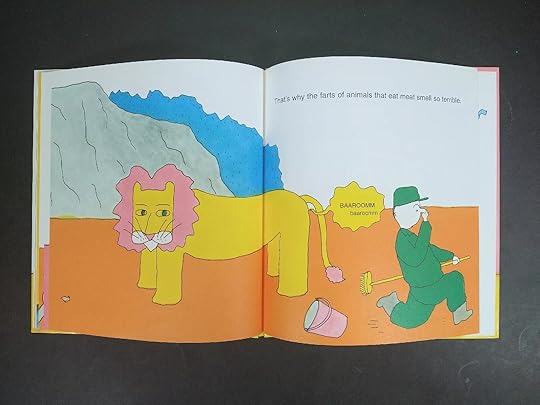
Shinta Cho’s The Gas We Pass remains, in my opinion, one of the most important and influential works of the last 20 years. A truly raw, powerful depiction of the human experience. Who are we? Why are we here? "If you try to hold your farts, your stomach may hurt, you could get dizzy or get a headache," postulates Cho, eloquently conveying to readers the paramount value of expressing oneself unreservedly and unabashedly. "Some farts smell bad, and some don’t," she argues, seamlessly incorporating into the novel what I suspect are some Buddhism-inspired philosophies, of pleasure and pain’s impermanence and ephemerality. Existing is hard, particularly so in a world where we don’t have all the answers. Cho recognizes this and provides an answer of her own: "These gases are made when your left over food is broken down by bacteria and becomes poop. That’s why farts stink!" I’ll admit I found myself tearing up here. What is our purpose, if not to console one another in times of doubt and uncertainty? I was thinking of taking a 21st Century Art course at the start of the semester, and though I ultimately decided against it, I have every confidence that Stinchecum's illustrations here constitute a substantial proportion of the syllabus. I say this, for rarely does one lay their eyes on flatulence-themed art so evocative and divine. Now I’m yet to read Herbert P. Bix’s Hirohito and the Making of Modern Japan, but I’ve lost many a night of sleep pondering the question of why Cho was so devastatingly robbed of the Pulitzer in 2001. I guess I should just let it go.
I guess I should just pass my gas.