

What do you think?

The Alice Behind Wonderland
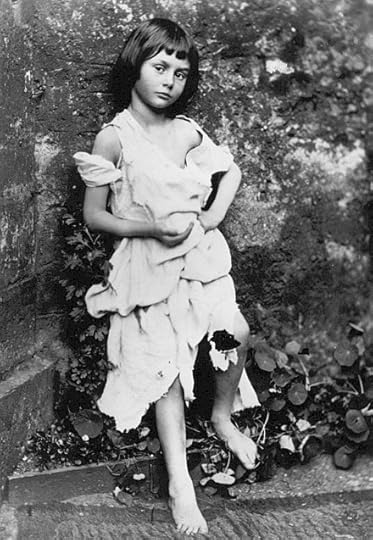
On a summer's day in 1858, in a garden behind Christ Church College in Oxford, Charles Dodgson, a lecturer in mathematics, photographed six-year-old Alice Liddell, the daughter of the college dean, with a Thomas Ottewill Registered Double Folding camera, recently purchased in London.
Simon Winchester deftly uses the resulting image--as unsettling as it is famous, and the subject of bottomless speculation--as the vehicle for a brief excursion behind the lens, a focal point on the origins of a classic work of English literature. Dodgson's love of photography framed his view of the world, and was partly responsible for transforming a shy and half-deaf mathematician into one of the world's best-loved observers of childhood. Little wonder that there is more to "Alice Liddell as the Beggar Maid" than meets the eye. Using Dodgson's published writings, private diaries, and of course his photographic portraits, Winchester gently exposes the development of Lewis Carroll and the making of his Alice.
Simon Winchester deftly uses the resulting image--as unsettling as it is famous, and the subject of bottomless speculation--as the vehicle for a brief excursion behind the lens, a focal point on the origins of a classic work of English literature. Dodgson's love of photography framed his view of the world, and was partly responsible for transforming a shy and half-deaf mathematician into one of the world's best-loved observers of childhood. Little wonder that there is more to "Alice Liddell as the Beggar Maid" than meets the eye. Using Dodgson's published writings, private diaries, and of course his photographic portraits, Winchester gently exposes the development of Lewis Carroll and the making of his Alice.
110 pages, Hardcover
First published February 11, 2011
About the author
Simon Winchester
96 books2,394 followersSimon Winchester, OBE, is a British writer, journalist and broadcaster who resides in the United States. Through his career at The Guardian, Winchester covered numerous significant events including Bloody Sunday and the Watergate Scandal. As an author, Simon Winchester has written or contributed to over a dozen nonfiction books and authored one novel, and his articles appear in several travel publications including Condé Nast Traveler, Smithsonian Magazine, and National Geographic.
In 1969, Winchester joined The Guardian, first as regional correspondent based in Newcastle upon Tyne, but was later assigned to be the Northern Ireland Correspondent. Winchester's time in Northern Ireland placed him around several events of The Troubles, including the events of Bloody Sunday and the Belfast Hour of Terror.
After leaving Northern Ireland in 1972, Winchester was briefly assigned to Calcutta before becoming The Guardian's American correspondent in Washington, D.C., where Winchester covered news ranging from the end of Richard Nixon's administration to the start of Jimmy Carter's presidency. In 1982, while working as the Chief Foreign Feature Writer for The Sunday Times, Winchester was on location for the invasion of the Falklands Islands by Argentine forces. Suspected of being a spy, Winchester was held as a prisoner in Tierra del Fuego for three months.
Winchester's first book, In Holy Terror, was published by Faber and Faber in 1975. The book drew heavily on his first-hand experiences during the turmoils in Ulster. In 1976, Winchester published his second book, American Heartbeat, which dealt with his personal travels through the American heartland. Winchester's third book, Prison Diary, was a recounting of his imprisonment at Tierra del Fuego during the Falklands War and, as noted by Dr Jules Smith, is responsible for his rise to prominence in the United Kingdom. Throughout the 1980s and most of the 1990s, Winchester produced several travel books, most of which dealt with Asian and Pacific locations including Korea, Hong Kong, and the Yangtze River.
Winchester's first truly successful book was The Professor and the Madman (1998), published by Penguin UK as The Surgeon of Crowthorne. Telling the story of the creation of the Oxford English Dictionary, the book was a New York Times Best Seller, and Mel Gibson optioned the rights to a film version, likely to be directed by John Boorman.
Though Winchester still writes travel books, he has repeated the narrative non-fiction form he used in The Professor and the Madman several times, many of which ended in books placed on best sellers lists. His 2001 book, The Map that Changed the World, focused on geologist William Smith and was Whichester's second New York Times best seller. The year 2003 saw Winchester release another book on the creation of the Oxford English Dictionary, The Meaning of Everything, as well as the best-selling Krakatoa: The Day the World Exploded. Winchester followed Krakatoa's volcano with San Francisco's 1906 earthquake in A Crack in the Edge of the World. The Man Who Loved China (2008) retells the life of eccentric Cambridge scholar Joseph Needham, who helped to expose China to the western world. Winchester's latest book, The Alice Behind Wonderland, was released March 11, 2011.
- source Wikipedia
In 1969, Winchester joined The Guardian, first as regional correspondent based in Newcastle upon Tyne, but was later assigned to be the Northern Ireland Correspondent. Winchester's time in Northern Ireland placed him around several events of The Troubles, including the events of Bloody Sunday and the Belfast Hour of Terror.
After leaving Northern Ireland in 1972, Winchester was briefly assigned to Calcutta before becoming The Guardian's American correspondent in Washington, D.C., where Winchester covered news ranging from the end of Richard Nixon's administration to the start of Jimmy Carter's presidency. In 1982, while working as the Chief Foreign Feature Writer for The Sunday Times, Winchester was on location for the invasion of the Falklands Islands by Argentine forces. Suspected of being a spy, Winchester was held as a prisoner in Tierra del Fuego for three months.
Winchester's first book, In Holy Terror, was published by Faber and Faber in 1975. The book drew heavily on his first-hand experiences during the turmoils in Ulster. In 1976, Winchester published his second book, American Heartbeat, which dealt with his personal travels through the American heartland. Winchester's third book, Prison Diary, was a recounting of his imprisonment at Tierra del Fuego during the Falklands War and, as noted by Dr Jules Smith, is responsible for his rise to prominence in the United Kingdom. Throughout the 1980s and most of the 1990s, Winchester produced several travel books, most of which dealt with Asian and Pacific locations including Korea, Hong Kong, and the Yangtze River.
Winchester's first truly successful book was The Professor and the Madman (1998), published by Penguin UK as The Surgeon of Crowthorne. Telling the story of the creation of the Oxford English Dictionary, the book was a New York Times Best Seller, and Mel Gibson optioned the rights to a film version, likely to be directed by John Boorman.
Though Winchester still writes travel books, he has repeated the narrative non-fiction form he used in The Professor and the Madman several times, many of which ended in books placed on best sellers lists. His 2001 book, The Map that Changed the World, focused on geologist William Smith and was Whichester's second New York Times best seller. The year 2003 saw Winchester release another book on the creation of the Oxford English Dictionary, The Meaning of Everything, as well as the best-selling Krakatoa: The Day the World Exploded. Winchester followed Krakatoa's volcano with San Francisco's 1906 earthquake in A Crack in the Edge of the World. The Man Who Loved China (2008) retells the life of eccentric Cambridge scholar Joseph Needham, who helped to expose China to the western world. Winchester's latest book, The Alice Behind Wonderland, was released March 11, 2011.
- source Wikipedia
Ratings & Reviews
Friends & Following
Create a free account to discover what your friends think of this book!
Community Reviews
Displaying 1 - 30 of 197 reviews

April 16, 2021
Every book by Simon Winchester involves a personal exploration of someone who caught the author's fancy, from Dr. Wm. Miner in The Professor & the Madman, surveyor/stratigrapher Wm. Smith in The Map That Changed the World, or Prof. Joseph Needham in The Man Who Loved China, to name just 3 of his non-fiction works.
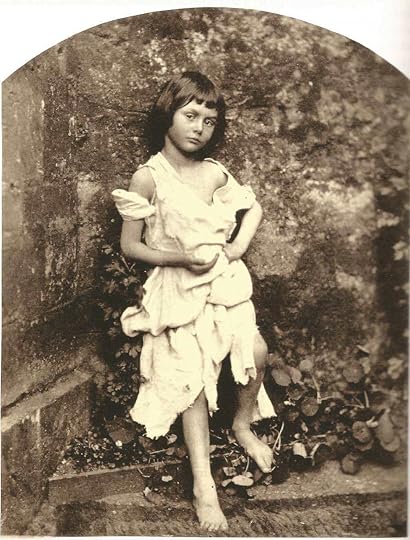
The Alice Behind Wonderland examines the connection between Charles Dodgson/Lewis Carroll with the young girl, Alice Liddell, who became a kind of Victorian centerfold of speculation, merged with a strong portrayal of developments within the emerging art of photography.
There is often the element of a mystery story when Simon Winchester finds a subject and unravels a host of clues about that person's identity. Some readers/reviewers seem displeased with this book because it doesn't shed much light on either the photographer or the subject of the famously posed image of Alice Liddell, daughter of an Oxford Univ. dean & his wife.
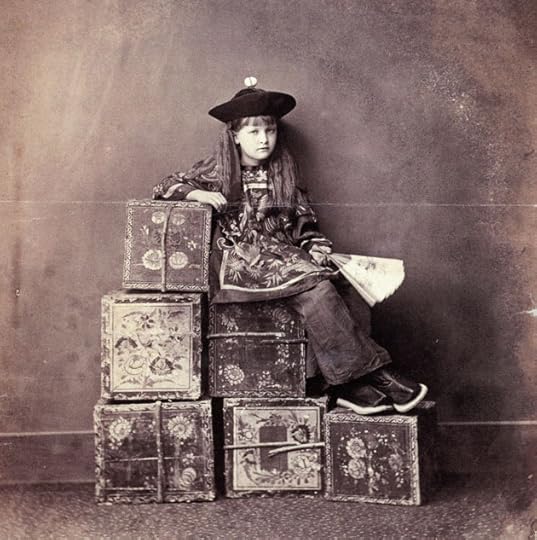
Beyond that, the book does not include any of the other images he took of Alice or of others. However, there is a great deal of insight offered into the life & times of Charles Dodgson & of his connection over the years with Alice & the Liddell family as well. *For the sake of diversity, I will attach another, much less celebrated image of Alice as rendered by Dodgson/Carroll.
After reading Mr. Winchester's book, I would choose to place my own view of Lewis Carroll's fascination with young children & specifically Alice Liddell, as more akin to a Mr. Rogers profile than that of Michael Jackson. I've read no suggestion that there was anything illicit in his keen interest in Alice, portraying her as a solo subject 11 times over a 13 year period from 1857 to 1870, the last when Alice was 18.
This is but a small fraction of the 2,700 documented photos that Lewis Carroll took before he abandoned photography in 1880, an avocation that he had pursued with artistic passion for so many years, while also serving as a Mathematics lecturer & tutor at the University of Oxford. At this time, a novice photographer had to master multiple chemicals to process the various plates used to capture an image, proper lighting technique was a very difficult proposition & for most "photography represented an almost unimaginable new magic."
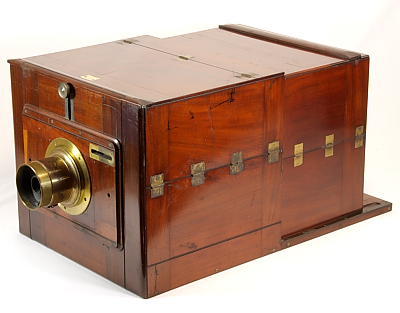
Winchester speaks of 3 epiphanies in the life of Charles Dodgson, the first being when as a budding writer he assumed the pen name of Lewis Carroll in part to mask this interest from his work at the university; 2nd when he met young Alice, then age 3; and 3rd, when he purchased an Ottewill Double-Folding English camera in London for £15, having been introduced to photography by his uncle, Robert Skeffington Ludwidge. The interest in photography seemed to proceed in tandem with his fixation/fascination with children, particularly with young girls.

To be clear, there is little detail on the later life of Charles Dodgson/Lewis Carroll but following the last photo taken of Alice Liddell, there seems to have been no further communication between the two, though especially later in life Alice delighted in being identified with the classic children's tale, Alice in Wonderland. There is a chapter detailing the later life of Alice Liddell.
There is also scant detail about the composition of the popular story itself, given to the book's namesake Alice by Lewis Carroll as a present. However, in his book, The Alice Behind Wonderland by piecing together some of the existing fragments of their lives, Simon Winchester has at least made the continuing mystery well worth considering.
*Among the images within my review are: #s 1 & 2 of Alice Liddell, posed as a gypsy girl and in a Mandarin setting; the classic Ottewill English Double-Folding Camera; Charles Dodgson/Lewis Carroll in the midst of some of the children he so fancied.
The Alice Behind Wonderland examines the connection between Charles Dodgson/Lewis Carroll with the young girl, Alice Liddell, who became a kind of Victorian centerfold of speculation, merged with a strong portrayal of developments within the emerging art of photography.
There is often the element of a mystery story when Simon Winchester finds a subject and unravels a host of clues about that person's identity. Some readers/reviewers seem displeased with this book because it doesn't shed much light on either the photographer or the subject of the famously posed image of Alice Liddell, daughter of an Oxford Univ. dean & his wife.
Beyond that, the book does not include any of the other images he took of Alice or of others. However, there is a great deal of insight offered into the life & times of Charles Dodgson & of his connection over the years with Alice & the Liddell family as well. *For the sake of diversity, I will attach another, much less celebrated image of Alice as rendered by Dodgson/Carroll.
After reading Mr. Winchester's book, I would choose to place my own view of Lewis Carroll's fascination with young children & specifically Alice Liddell, as more akin to a Mr. Rogers profile than that of Michael Jackson. I've read no suggestion that there was anything illicit in his keen interest in Alice, portraying her as a solo subject 11 times over a 13 year period from 1857 to 1870, the last when Alice was 18.
This is but a small fraction of the 2,700 documented photos that Lewis Carroll took before he abandoned photography in 1880, an avocation that he had pursued with artistic passion for so many years, while also serving as a Mathematics lecturer & tutor at the University of Oxford. At this time, a novice photographer had to master multiple chemicals to process the various plates used to capture an image, proper lighting technique was a very difficult proposition & for most "photography represented an almost unimaginable new magic."
Winchester speaks of 3 epiphanies in the life of Charles Dodgson, the first being when as a budding writer he assumed the pen name of Lewis Carroll in part to mask this interest from his work at the university; 2nd when he met young Alice, then age 3; and 3rd, when he purchased an Ottewill Double-Folding English camera in London for £15, having been introduced to photography by his uncle, Robert Skeffington Ludwidge. The interest in photography seemed to proceed in tandem with his fixation/fascination with children, particularly with young girls.
His utter fascination with Alice Liddell & other girls, his need to picture them with or without clothing, his need to make them happy, to amuse them, to have them think of him as a friend & for him to feel free to do the same, his need to buy them dresses, stockings, bonnets & shoes and on rare occasions to exhibit brief flashes of physical affection, reflect an aspect of Charles Dodgson's character that puzzles & intrigues us to this day. Scores of books & essays have subsequently tried to probe the motives that led to his fondness for small children, with varying degrees of success.For starters, while he never took a wife, only 3 of his 10 siblings ever married. And, Dodgson's time at the Rugby School, a "testosterone-fueled place" where extreme physical sports, bullying & corporal punishment prevailed, beginning when he was 14, a very sensitive lad with a stammer, may have caused him to long for a more idyllic childhood, even belatedly.
To be clear, there is little detail on the later life of Charles Dodgson/Lewis Carroll but following the last photo taken of Alice Liddell, there seems to have been no further communication between the two, though especially later in life Alice delighted in being identified with the classic children's tale, Alice in Wonderland. There is a chapter detailing the later life of Alice Liddell.
There is also scant detail about the composition of the popular story itself, given to the book's namesake Alice by Lewis Carroll as a present. However, in his book, The Alice Behind Wonderland by piecing together some of the existing fragments of their lives, Simon Winchester has at least made the continuing mystery well worth considering.
*Among the images within my review are: #s 1 & 2 of Alice Liddell, posed as a gypsy girl and in a Mandarin setting; the classic Ottewill English Double-Folding Camera; Charles Dodgson/Lewis Carroll in the midst of some of the children he so fancied.

August 8, 2012
This is the first of Winchester's books I've read that has really disappointed me.
Winchester is known for picking an event and exploring it exhaustively, showing the circumstances that led up the event, and its repercussions. His books about natural disasters (Krakatoa, the San Francisco Earthquake) are among his best; his analysis in these explores both human and scientific (specifically geological) sides, and balances them really well.
This book has none of that. His writing style is there; it flows easily... but that's all there is.
From the title, one expects a biography of Alice Liddell, focussing on her relationship with Charles Dodgson (Lewis Carroll). What one gets is a very brief summary of Dodgson's life, focussing on his hobby of portrait photography. This is something I'd have expected to have been excellent; it's just the sort of overlooked tale he handled so masterfully in "The Professor and the Madman".
But here, we only get a few lyrical descriptions of the photos -- the only one reproduced in the entire book is the one on the front cover. The others are impossible to evaluate, since we don't get to see them.
He mentions -- in the most circumspect possible terms -- the speculation that Dodgson may have been a pedophile, but dismisses it with a paraphrase of a conclusion of one of Dodgson's biographers (if I got anything out of this book at all, it's a desire to read Karoline Leach's biography of Dodgson). He mentions the cooling of the relationship between Dodgson and the Liddell family, without really discussing it at all.
Meh.
Winchester is known for picking an event and exploring it exhaustively, showing the circumstances that led up the event, and its repercussions. His books about natural disasters (Krakatoa, the San Francisco Earthquake) are among his best; his analysis in these explores both human and scientific (specifically geological) sides, and balances them really well.
This book has none of that. His writing style is there; it flows easily... but that's all there is.
From the title, one expects a biography of Alice Liddell, focussing on her relationship with Charles Dodgson (Lewis Carroll). What one gets is a very brief summary of Dodgson's life, focussing on his hobby of portrait photography. This is something I'd have expected to have been excellent; it's just the sort of overlooked tale he handled so masterfully in "The Professor and the Madman".
But here, we only get a few lyrical descriptions of the photos -- the only one reproduced in the entire book is the one on the front cover. The others are impossible to evaluate, since we don't get to see them.
He mentions -- in the most circumspect possible terms -- the speculation that Dodgson may have been a pedophile, but dismisses it with a paraphrase of a conclusion of one of Dodgson's biographers (if I got anything out of this book at all, it's a desire to read Karoline Leach's biography of Dodgson). He mentions the cooling of the relationship between Dodgson and the Liddell family, without really discussing it at all.
Meh.

June 19, 2011
A pleasant harmless book that fails to live up to either its subject or its author's reputation. There's little here about the "the original Alice" and what there is is fairly dismissive. Two pages from the end, Winchester writes that "Alice's later years were suffused with a terrible sadness" – which seems sweeping and idiotically glib when he continues "She missed something, and we all may like to imagine precisely what that something was: long-ago golden Oxford summer afternoons, that time of delicious foolishness, when Charles Dodgson would come a-calling..." Yes we all may; now let's have a toasted crumpet and weep.
There's even less about Lewis Carroll, the astonishing author of Alice in Wonderland. What there is instead is an extended footnote to Dodgson's fascination with photography (notoriously his photography of little girls; unsavory anachronistic associations of pedophilia are summarily swept aside, and rightly so). Yet, as other Goodreads reviewers have noted, Winchester's brisk history of the incipient enthusiasm for photography in 19th century England omits any illustrations, unless you count the photo on the dust jacket and I don't. This is inexcusable. No doubt we should blame the publisher. (Luckily, with a bit of Googling, the images can be discovered online.)
Still I have to wonder: if an entry on Dodgson were added to Ian Jeffrey's richly-illustrated How to Read a Photograph, would anyone miss this book?
There's even less about Lewis Carroll, the astonishing author of Alice in Wonderland. What there is instead is an extended footnote to Dodgson's fascination with photography (notoriously his photography of little girls; unsavory anachronistic associations of pedophilia are summarily swept aside, and rightly so). Yet, as other Goodreads reviewers have noted, Winchester's brisk history of the incipient enthusiasm for photography in 19th century England omits any illustrations, unless you count the photo on the dust jacket and I don't. This is inexcusable. No doubt we should blame the publisher. (Luckily, with a bit of Googling, the images can be discovered online.)
Still I have to wonder: if an entry on Dodgson were added to Ian Jeffrey's richly-illustrated How to Read a Photograph, would anyone miss this book?
January 3, 2021
For those looking for an in-depth read between the connection of Lewis Carroll, Alice Little And the Wonderland books get ready if you disappointed because this is not the book for that topic. This book mainly talks about Caroll's photography particularly the Alice beggar maid photo. There's some interesting stuff here but this would make a better YouTube video essay than an actual book.
December 14, 2025
It weighs-in at 100 pages and promises, by title, to be the biography of the
young Victorian child who inspired the world renowned classic, ALICE'S
ADVENTURES IN WONDERLAND. The title : THE ALICE BEHIND WONDERLAND.
Turns out that the Oxford University Press intended this book to be part of a
series on the history of photography ( see Acknowledgments page at book's
end.) So, a misleading title.
While using only one photograph of the 7 year old Alice Liddell staged as a
beggar girl dressed in rags, the early story line hints at the Conservative's
classic example of kiddie pornography. Bare legs,arms, a sultry pose and an
exposed nipple would apparently prove the case. Biographical information
proffered on Chales Dodgson / Lewis Carroll reveals a shy, good looking
young University student at Christ's Church who is technically sworn to
celibacy. He is attracted to young children and they him. His second love,
the foundling hobby of photography, is an ideal "in" with children as well as
adults who are excited about seeing the resulting picture albums. They even
volunteer their children as subjects. Winchester dismisses the accusation of
pedophilia by claiming "insufficient proof." So why this particular photo as the
representative piece for the book ? Why hint at it to begin with ?
The book does give a brief biography of Dodgson, his family and relationship
with the Liddells A large portion is dedicated to the history of photography up
to Dodgson and his personal obsession with the camera. Many of his pictures
and albums are described in detail including current storage whereabouts. Yet
no other photographs are included in this book.
Fast forward to an 80-something Alice, traveling to New York and declining to
sign autographs because of ill health. So over the course of 100 pages, we only
read about the subject of the book very briefly at ages 5, 7, 18 and 80.
A history of photography with one photo ?
A biography introduced with one lurid photo ?
A biography with big gaps ?
Simon Winchester as a disappointment ?
At least it was only 100 pages.
young Victorian child who inspired the world renowned classic, ALICE'S
ADVENTURES IN WONDERLAND. The title : THE ALICE BEHIND WONDERLAND.
Turns out that the Oxford University Press intended this book to be part of a
series on the history of photography ( see Acknowledgments page at book's
end.) So, a misleading title.
While using only one photograph of the 7 year old Alice Liddell staged as a
beggar girl dressed in rags, the early story line hints at the Conservative's
classic example of kiddie pornography. Bare legs,arms, a sultry pose and an
exposed nipple would apparently prove the case. Biographical information
proffered on Chales Dodgson / Lewis Carroll reveals a shy, good looking
young University student at Christ's Church who is technically sworn to
celibacy. He is attracted to young children and they him. His second love,
the foundling hobby of photography, is an ideal "in" with children as well as
adults who are excited about seeing the resulting picture albums. They even
volunteer their children as subjects. Winchester dismisses the accusation of
pedophilia by claiming "insufficient proof." So why this particular photo as the
representative piece for the book ? Why hint at it to begin with ?
The book does give a brief biography of Dodgson, his family and relationship
with the Liddells A large portion is dedicated to the history of photography up
to Dodgson and his personal obsession with the camera. Many of his pictures
and albums are described in detail including current storage whereabouts. Yet
no other photographs are included in this book.
Fast forward to an 80-something Alice, traveling to New York and declining to
sign autographs because of ill health. So over the course of 100 pages, we only
read about the subject of the book very briefly at ages 5, 7, 18 and 80.
A history of photography with one photo ?
A biography introduced with one lurid photo ?
A biography with big gaps ?
Simon Winchester as a disappointment ?
At least it was only 100 pages.

January 28, 2021
This is the disturbingly dark and charming real-life picture of Alice Liddell, taken by the one and only Charles Lutwidge Dodgson, who was so inspired by the little Alice that he wrote a complete book based on her that became a timeless, worldwide sensation.
What we might consider today as questionable perverted sexual inclination was only fascination and the symbol of Victorian innocence for Lewis Carroll, who took hundreds of pictures of little girls, Alice being the most famous of them. The author had close connections and kinship with the Liddell family and Alice’s father was the dean of the university, who respected and revered Charles Dodgson as a shy mathematician.
This book tells the story of how Alice fascinated the famous author and paved the way to Alice’s Adventures in Wonderland, which was actually a Christmas gift to the little girl. This compact nonfiction contains the short life story of Dodgson and his friendship with Liddell family, his adoption of the pen name Lewis Carroll and the story behind it. I listened to the audiobook and have to say I absolutely fell in love with the voice and narration of the author Simon Winchester, who is also the author behind The Madman and The Professor. The book was overall interesting but at some parts he just diverted from the actual story and betrayed the title by telling us all about the development of photography and cameras, the technology behind them and dark rooms, which were too much.
If you’re a fan of Alice’s Adventures and love a good nonfiction, this intriguing short history will captivate you as much as I.
What we might consider today as questionable perverted sexual inclination was only fascination and the symbol of Victorian innocence for Lewis Carroll, who took hundreds of pictures of little girls, Alice being the most famous of them. The author had close connections and kinship with the Liddell family and Alice’s father was the dean of the university, who respected and revered Charles Dodgson as a shy mathematician.
This book tells the story of how Alice fascinated the famous author and paved the way to Alice’s Adventures in Wonderland, which was actually a Christmas gift to the little girl. This compact nonfiction contains the short life story of Dodgson and his friendship with Liddell family, his adoption of the pen name Lewis Carroll and the story behind it. I listened to the audiobook and have to say I absolutely fell in love with the voice and narration of the author Simon Winchester, who is also the author behind The Madman and The Professor. The book was overall interesting but at some parts he just diverted from the actual story and betrayed the title by telling us all about the development of photography and cameras, the technology behind them and dark rooms, which were too much.
If you’re a fan of Alice’s Adventures and love a good nonfiction, this intriguing short history will captivate you as much as I.
July 3, 2011
This is a nicely done book by a master storyteller. Simon Winchester looks into the photograph of the real Alice -- Alice Liddell, the young daughter of a dean at Oxford -- to whom he told the original story of a young girl "Underground" named Alice. (It didn't become "Wonderland" until the book was published.) Winchester writes about how Charles Dodgson, a.k.a. Lewis Carroll, learned the new art of photography and how, through his friendship with young children, turned into a master portrait photographer. Dodgson's storytelling seems to be secondary. Winchester realizes that he does not have to reinvent the wheel in telling the full biography of Dodgson; Morton Cohen (Lewis Carroll: A Biography, 1995) has already done that. Instead, our author focuses on Dodgson's relationship with the Liddell family and with their daughter, which seems to have been a proper one. Winchester's is a small book, 100 pages plus index. But well worth the read if you want to know the story behind one of the best-selling books in the history of publishing. "Alice in Wonderland" has never been out of print.

December 5, 2013
There's some interesting information in this book including some fascinating background that quite probably combined a number of disparate factors to come together in Charles Dodgson's head to produce that magical book which Alberto Manguel called "a miracle of literature". Two factors of which were his interest in the new art of photography which he shared with his uncle Robert Skiffington, who was a Govt. appointed Commissioner in Lunacy.
The book also gives a clear look at the Victorian era educated middle class and the system at Oxford University that forbade teachers like in Dodgson's post from marrying unless he gave up his position. It looks to me that Charles Dodgson would have made a wonderful father if his options in those times had been different.
The book also explains how Charles Dodgson arrived at the name Lewis Carroll.
The book also gives a clear look at the Victorian era educated middle class and the system at Oxford University that forbade teachers like in Dodgson's post from marrying unless he gave up his position. It looks to me that Charles Dodgson would have made a wonderful father if his options in those times had been different.
The book also explains how Charles Dodgson arrived at the name Lewis Carroll.

April 23, 2015
A century and a half ago, in July 1865, Alice's Adventures in Wonderland was published in a limited edition by Oxford University Press -- and then immediately withdrawn because Tenniel was dissatisfied with the reproduction of his illustrations. Although it wasn't until November 1865 that the second edition appeared (approved by both author and illustrator, this time under the Macmillan imprint which had published Charles Kingsley's The Water-Babies two years before) be prepared for a slew of media trumpeting and Wonderland brouhaha this summer. Nevertheless, it's an opportune moment to review this short study of Alice Liddell, the inspiration behind Lewis Carroll's two most famous fantasies.
Simon Winchester structures his discussion around a photograph that Dodgson took in 1858 of the five-year-old Alice Liddell, taking as subject Tennyson's 1842 poem The Beggar Maid. In this the legendary North African king Cophetua has no interest in women until he spots the young Penelophon begging in the street outside his palace. "Her arms across her breast she laid," recounts the poet; she is "more fair than words can say ... She is more beautiful than day." Cophetua swears that this dark-haired beggar maid, bare-footed, in poor attire, with "so sweet a face, such angel grace" shall be his queen. Dodgson's portrait of Alice captures all this, but with what to us now seems a degree of impropriety, both as regards her age and her unexpected décolletage. Of his attitude to his favourite "child-friend" there has been no end of gossip but precious few facts, especially as key pages in his diary were removed after his death, and I don't want to add to the wealth of uninformed speculation. Not least of these is the implicit parallel between a king's infatuation for a beggar-maid and a college lecturer's obsession with a prepubescent girl.
The author explores a bit of this, but not before he outlines Dodgson's upbringing and education, his penchant for nonsense writing, his enthusiastic involvement with the new 'black art' and his first meeting with Alice, daughter of the Dean of Christ Church College, on the occasion of Dodgson's first foray with his newly acquired camera into the deanery garden. Winchester, a former geologist before he migrated to investigative journalism and then writing, expertly discusses the science of early photography and Dodgson's rapidly specialising in portraiture. By chapter six (of just seven chapters in this book) he finally gets to the heart of the matter in "A Portrait most Perfect and Chaste" when he discusses Dodgson's relationships with the Liddell family.
The Dean, of course, was supportive of Dodgson's use of the deanery garden for portraits. Mrs Lorina Liddell was nearer in age to the photographer and by most accounts got on well with him. Dodgson was later said to be "paying court" to the children's governess, Miss Prickett, but his diary entries apparently suggest that this is not a credible theory. Harry, the only boy in the family, hero-worshipped Dodgson. Edith, the youngest girl, was a redhead "with a Pre-Raphaelite look that Dodgson might have found less attractive" than the darker look of the others in the family, Winchester suggests. Lorina -- Ina, as the eldest of the three sisters was known -- is also linked with the young man as a potential spouse, though marriage would have meant him relinquishing his studentship (as Christ Church fellowships were known).
When it comes to the middle girl, Winchester notes that "Alice Pleasance Liddell was peculiarly and particularly special to Charles Dodgson;" his "interest in small girls -- he photographed scores of them, and a significant number of them nude -- fascinates many in today's more exposed world." But he notes that Victorian attitudes held that young children "were the literal embodiment of innocent beauty, an innocence to be preserved and revered. All surviving evidence suggests that Dodgson's attitude was no different and that his interest in the Liddell girls during their prepubescent years was unremarkable, in every sense of the word." I tend to agree -- after all, in The Water-Babies (1863) Tom the former climbing boy spends most of the book as a totally naked child, echoing William Blake's earlier Songs of Innocence -- and perhaps it was only with the advent of photography, where real individuals might be identifiable and gazed upon, that candid portraits and adult interest in them became suspect. Winchester doesn't however pursue this line of thinking.
If, as Winchester suggests, The Beggar Maid study was taken in June 1857, then it wasn't till Alice was ten, in July 1862, that the famous "golden afternoon" boating trip resulted in an extempore tale becoming one of the best-known children's classics. But by 1865 Alice was on the way to that difficult age that Dodgson found difficult to deal with, and -- for reasons unclear to us -- the Liddell family's relationship with the newly famous author became more distant. So it came as a surprise to Dodgson when Mrs Liddell turned up with Alice and older sister Lorina for new portraits in June 1870, just as Alice was about to enter society. Can we read too much into the enigmatic gaze that the eighteen-year-old turns upon the camera lens? What do we make of Alice as Pomona, goddess of fruitfulness, as taken by Julia Margaret Cameron, where she deliberately mirrors the stance she took fifteen years before of beggar-maid Penelophon? And what do we think of the look given by the widowed eighty-year-old Alice Hargreaves when she visited America for the centenary celebrations of Dodgson's birth? Can posed photographs really tell us anything about the state of mind of the person portrayed, or do we expect to see their backstory echoed in their body language and in their eyes?
In a text of around a hundred pages (to which is added Acknowledgements, Further Reading and an index) Winchester covers a lot of ground, though I fear we are little wiser as to who the real Alice was. Apart from the beggar-maid portrait, reproduced on the dust jacket and as a frontispiece, no other images are forthcoming. Instead we do get a lot about early photography and a little about Dodgson's early nonsense writing and not very much about the Alice books. Odd facts stick in the mind, such as one uncle being a Commissioner in Lunacy and another being a Master of the Common Pleas; and I was struck by the curiosity that Winchester admires the conceit of Alice being like the Cheshire Cat's smile so much that he uses it twice, at the end of the last chapter and immediately again at the end of the acknowledgements. Still, as a metaphor for the character of Alice it is probably most apt; and it certainly is no more than Dodgson's own letters tell us about this special child-friend if his.
Simon Winchester structures his discussion around a photograph that Dodgson took in 1858 of the five-year-old Alice Liddell, taking as subject Tennyson's 1842 poem The Beggar Maid. In this the legendary North African king Cophetua has no interest in women until he spots the young Penelophon begging in the street outside his palace. "Her arms across her breast she laid," recounts the poet; she is "more fair than words can say ... She is more beautiful than day." Cophetua swears that this dark-haired beggar maid, bare-footed, in poor attire, with "so sweet a face, such angel grace" shall be his queen. Dodgson's portrait of Alice captures all this, but with what to us now seems a degree of impropriety, both as regards her age and her unexpected décolletage. Of his attitude to his favourite "child-friend" there has been no end of gossip but precious few facts, especially as key pages in his diary were removed after his death, and I don't want to add to the wealth of uninformed speculation. Not least of these is the implicit parallel between a king's infatuation for a beggar-maid and a college lecturer's obsession with a prepubescent girl.
The author explores a bit of this, but not before he outlines Dodgson's upbringing and education, his penchant for nonsense writing, his enthusiastic involvement with the new 'black art' and his first meeting with Alice, daughter of the Dean of Christ Church College, on the occasion of Dodgson's first foray with his newly acquired camera into the deanery garden. Winchester, a former geologist before he migrated to investigative journalism and then writing, expertly discusses the science of early photography and Dodgson's rapidly specialising in portraiture. By chapter six (of just seven chapters in this book) he finally gets to the heart of the matter in "A Portrait most Perfect and Chaste" when he discusses Dodgson's relationships with the Liddell family.
The Dean, of course, was supportive of Dodgson's use of the deanery garden for portraits. Mrs Lorina Liddell was nearer in age to the photographer and by most accounts got on well with him. Dodgson was later said to be "paying court" to the children's governess, Miss Prickett, but his diary entries apparently suggest that this is not a credible theory. Harry, the only boy in the family, hero-worshipped Dodgson. Edith, the youngest girl, was a redhead "with a Pre-Raphaelite look that Dodgson might have found less attractive" than the darker look of the others in the family, Winchester suggests. Lorina -- Ina, as the eldest of the three sisters was known -- is also linked with the young man as a potential spouse, though marriage would have meant him relinquishing his studentship (as Christ Church fellowships were known).
When it comes to the middle girl, Winchester notes that "Alice Pleasance Liddell was peculiarly and particularly special to Charles Dodgson;" his "interest in small girls -- he photographed scores of them, and a significant number of them nude -- fascinates many in today's more exposed world." But he notes that Victorian attitudes held that young children "were the literal embodiment of innocent beauty, an innocence to be preserved and revered. All surviving evidence suggests that Dodgson's attitude was no different and that his interest in the Liddell girls during their prepubescent years was unremarkable, in every sense of the word." I tend to agree -- after all, in The Water-Babies (1863) Tom the former climbing boy spends most of the book as a totally naked child, echoing William Blake's earlier Songs of Innocence -- and perhaps it was only with the advent of photography, where real individuals might be identifiable and gazed upon, that candid portraits and adult interest in them became suspect. Winchester doesn't however pursue this line of thinking.
If, as Winchester suggests, The Beggar Maid study was taken in June 1857, then it wasn't till Alice was ten, in July 1862, that the famous "golden afternoon" boating trip resulted in an extempore tale becoming one of the best-known children's classics. But by 1865 Alice was on the way to that difficult age that Dodgson found difficult to deal with, and -- for reasons unclear to us -- the Liddell family's relationship with the newly famous author became more distant. So it came as a surprise to Dodgson when Mrs Liddell turned up with Alice and older sister Lorina for new portraits in June 1870, just as Alice was about to enter society. Can we read too much into the enigmatic gaze that the eighteen-year-old turns upon the camera lens? What do we make of Alice as Pomona, goddess of fruitfulness, as taken by Julia Margaret Cameron, where she deliberately mirrors the stance she took fifteen years before of beggar-maid Penelophon? And what do we think of the look given by the widowed eighty-year-old Alice Hargreaves when she visited America for the centenary celebrations of Dodgson's birth? Can posed photographs really tell us anything about the state of mind of the person portrayed, or do we expect to see their backstory echoed in their body language and in their eyes?
In a text of around a hundred pages (to which is added Acknowledgements, Further Reading and an index) Winchester covers a lot of ground, though I fear we are little wiser as to who the real Alice was. Apart from the beggar-maid portrait, reproduced on the dust jacket and as a frontispiece, no other images are forthcoming. Instead we do get a lot about early photography and a little about Dodgson's early nonsense writing and not very much about the Alice books. Odd facts stick in the mind, such as one uncle being a Commissioner in Lunacy and another being a Master of the Common Pleas; and I was struck by the curiosity that Winchester admires the conceit of Alice being like the Cheshire Cat's smile so much that he uses it twice, at the end of the last chapter and immediately again at the end of the acknowledgements. Still, as a metaphor for the character of Alice it is probably most apt; and it certainly is no more than Dodgson's own letters tell us about this special child-friend if his.
April 23, 2012
More than the title suggests, this book is not only about the girl who inspired Alice in Wonderland, but also about the history of photography and the making of "Lewis Carroll." Charles Dodgson is an interesting character, whom Winchester takes some pains to explain through his relationship with the Liddell family, particularly its younger members. The story that he tells gives the reader the picture of a playful man with an imagination and charm that draw children towards him (and vice versa). The impact of the book described in the last chapters is also fascinating! I am definitely ready now to go back and read Alice Underground.
In addition, the history of photography is well laid out in and consumable to someone with only peripheral interest.
In addition, the history of photography is well laid out in and consumable to someone with only peripheral interest.

June 30, 2011
Disappointing - from the title, I thought I was going to be reading a book about Alice Liddell, her relationship with Charles Dodgson, Lewis Carroll, the books, and what happened afterwards (which from little I have read before is an interesting story). Instead, this is sort of a history of the beginnings of Victorian photography as art and science and its relationship with Charles Dodgson. Maybe if that is what I had wanted to read I might have liked this a bit more. But it wasn't, and I didn't.
July 4, 2016
I usually like Simon Winchester's books, but this one just didn't click for me. Pretty sure this is my second try. Definitely not for me!


March 6, 2011
A very slim volume – just 100 pages – detailing Charles Dodgson’s fascination with the then, very new art/science of photography, and his subsequent relationship with Alice Liddell, who he was to immortalise as the central character in Alice in Wonderland.
The book is full of detail on Dodgson’s love of taking pictures; it scrupulously avoids passing judgement on just why Dodgson’s subject-of-choice was of very young girls, often in strangely provocative poses. The author prefers to dodge the usual suspicions and assumes an entirely innocent motive, that Dodgson simply and innocently loved little girls. Since this is a subject already covered in exhaustive detail in other books, the concentration on the known facts without the usual judgemental pondering is actually quite refreshing.
It’s a charmingly written tale with a narrow remit and the only problem I had is with the complete lack of illustration. The photographs Dodgson took are described in detail in the text, making the reader almost desperate to see the picture in question. Considering that this is, ostensibly, a book entirely about a famous author’s work as a photographer, it seems a very odd omission.
The book is full of detail on Dodgson’s love of taking pictures; it scrupulously avoids passing judgement on just why Dodgson’s subject-of-choice was of very young girls, often in strangely provocative poses. The author prefers to dodge the usual suspicions and assumes an entirely innocent motive, that Dodgson simply and innocently loved little girls. Since this is a subject already covered in exhaustive detail in other books, the concentration on the known facts without the usual judgemental pondering is actually quite refreshing.
It’s a charmingly written tale with a narrow remit and the only problem I had is with the complete lack of illustration. The photographs Dodgson took are described in detail in the text, making the reader almost desperate to see the picture in question. Considering that this is, ostensibly, a book entirely about a famous author’s work as a photographer, it seems a very odd omission.

September 13, 2015
Winchester's writing, as usual, contains a cool historical, technical approach. I am glad I satisfied my curiosity about who Alice was. Perhaps she was not the creature of Dodgson/Carroll, but a creature of nature, a sensual creature of nature. To tell more would be giving the story away. Fewer than a 100 pages, so an easy read for the curious.

October 6, 2015
An interesting small piece. More of an expanded magazine work than his usual more developed books. It's a perfect read for an afternoon when you want to be educated and entertained but perhaps don't want the commitment of starting a longer book. I wish I had saved this for an international flight.

January 18, 2022
I generally enjoy Simon Winchester's unique take on any topic about which he decides to write, very much. I opened up The Alice Behind Wonderland with anticipation, looking forward to reading about how Alice Liddell, the daughter of the college dean at Oxford, influenced Charles Dodgson (aka Lewis Carroll) in his writing of Alice in Wonderland.
Sadly, in that respect it was disappointing. The story is more about the photo, one amongst many, that Dodgson took of young Alice Liddell, that being the one featured on the cover. The story covers the development of photography, how Dodgson took to it and, yeah, his pictures of the Liddell children. We learn a bit about the Liddell family, we learn a bit about Dodgson's early years and we hear snippets about possible feelings Dodgson might have had about young children... er.. well, snippets but nothing more. The information provided about photography was interesting stuff, but the rest kept starting down alleyways but never seeming to find the end.
It's a relatively low key, relatively interesting, short story, and it flows nicely, but other than that, it was kind of disappointing, considering how much I've enjoyed previous works. Oh and Winchester never even got to see the 'actual' photograph because it's kept in an airtight room, sealed in some vault in Austin Texas. LOL (3 stars)
Sadly, in that respect it was disappointing. The story is more about the photo, one amongst many, that Dodgson took of young Alice Liddell, that being the one featured on the cover. The story covers the development of photography, how Dodgson took to it and, yeah, his pictures of the Liddell children. We learn a bit about the Liddell family, we learn a bit about Dodgson's early years and we hear snippets about possible feelings Dodgson might have had about young children... er.. well, snippets but nothing more. The information provided about photography was interesting stuff, but the rest kept starting down alleyways but never seeming to find the end.
It's a relatively low key, relatively interesting, short story, and it flows nicely, but other than that, it was kind of disappointing, considering how much I've enjoyed previous works. Oh and Winchester never even got to see the 'actual' photograph because it's kept in an airtight room, sealed in some vault in Austin Texas. LOL (3 stars)

June 29, 2022
I cued this up because it was a short audiobook that I thought I could knock out in an afternoon, which it was. I was somewhat taken aback, however, with what it ended up being. It's an overview of Charles Lutwidge Dodgson-better known as "Alice in Wonderland" author Lewis Carroll-and his relationship with Alice Pleasance Liddell, a little girl who had been a photographic model for him and supposedly an inspiration for his "Wonderland" books.
Winchester takes a non-judgmental view of Dodgson's relationship with Liddell and the many other other girls he'd photographed, yet is honest in presenting the arguments for and against what some believe may have been a disturbing obsession with girls. Over half of Dodgson's photos that survive are of girls, but then well over half of those photos he took are missing. I tend towards thinking that Dodgson/Carroll might have been guilty as charged regarding his feelings, but there is no clear evidence that he actually acted on these impulses, if they existed.
One criticism leveled at Winchester's book is that a massive chunk of it has to do with the history of photography. Yet Dodgson/Carroll was an early photographer, and ended up taking portrait photos of Dante Gabriel Rossetti, Michael Faraday, Lord Salisbury and Alfred Tennyson. I didn't find it irrelevant, given that most of the controversy surrounding Dodgson/Carroll has to do with his photos.
Winchester takes a non-judgmental view of Dodgson's relationship with Liddell and the many other other girls he'd photographed, yet is honest in presenting the arguments for and against what some believe may have been a disturbing obsession with girls. Over half of Dodgson's photos that survive are of girls, but then well over half of those photos he took are missing. I tend towards thinking that Dodgson/Carroll might have been guilty as charged regarding his feelings, but there is no clear evidence that he actually acted on these impulses, if they existed.
One criticism leveled at Winchester's book is that a massive chunk of it has to do with the history of photography. Yet Dodgson/Carroll was an early photographer, and ended up taking portrait photos of Dante Gabriel Rossetti, Michael Faraday, Lord Salisbury and Alfred Tennyson. I didn't find it irrelevant, given that most of the controversy surrounding Dodgson/Carroll has to do with his photos.
September 30, 2021
I really loved Simon Winchester's book about the OED, The professor and the madman and I also really love Alice in Wonderland but I was a bit disappointed with this. Charles Dodgson's photographic career and relationship with Alice and her family make a moderately interesting story and even Winchester's authorial talents aren't enough to make it more than that. I didn't find the photograph that is the basis for the book as captivating as Winchester does. Interesting but not great.

January 3, 2024
More about Lewis Carroll’s photography than Alice, but I do always like Simon Winchester.

May 11, 2019
I didn't think this would ever happen- a Simon Winchester book I didn't enjoy. It was short and we'll researched, but instead of enjoying his narrative that dives fully into the background that normally enhances his works, this one felt like all background. Too many pieces of this story ate missing to make it much more than an outline, unless an unscrupulous person were to fill in the gaps. To his credit, Winchester embellishes and guesses little.
Also, I would describe this book not as "the Alice behind Wonderland", but instead as a brief biography of the man whose pen name was Lewis Carroll, a history of photography, and a poor attempt to describe a girl in a photo known to be the inspiration for his most famous work. Winchester so err on the side of giving Carroll the benefit of the doubt that Carroll's intentions and relationship was not pedophilic in nature, but he also alludes to missing diary pages that might be a relative's attempt to whitewash the whole affair. If you are really into Wonderland or Carroll, then maybe this story would be enjoyable and even enlightening, but I do not think this one is for the casual reader. In fact, about the only thing I enjoyed was that it is short.
Also, I would describe this book not as "the Alice behind Wonderland", but instead as a brief biography of the man whose pen name was Lewis Carroll, a history of photography, and a poor attempt to describe a girl in a photo known to be the inspiration for his most famous work. Winchester so err on the side of giving Carroll the benefit of the doubt that Carroll's intentions and relationship was not pedophilic in nature, but he also alludes to missing diary pages that might be a relative's attempt to whitewash the whole affair. If you are really into Wonderland or Carroll, then maybe this story would be enjoyable and even enlightening, but I do not think this one is for the casual reader. In fact, about the only thing I enjoyed was that it is short.
January 18, 2019
Great book, surprise how well detail it was from how other events that happen that lead his inspiration to photography.

September 18, 2017
Quite an interesting account of a unique author-muse relationship
Nonfiction writer Simon Winchester, who has given us so many noteworthy historical books, focuses here on how Charles Dodgson's times with the Liddell family, and young Alice in particular, led to the creation of literary and photographic art. Indeed, Winchester writes much more about Dodgson's pursuit of photography than on his writing as Lewis Carroll. The book gives a fairly detailed summary of the early development of the camera, photo processing, and several of Dodgson's contemporaries in the world of mid-19th c. photography.
Nonfiction writer Simon Winchester, who has given us so many noteworthy historical books, focuses here on how Charles Dodgson's times with the Liddell family, and young Alice in particular, led to the creation of literary and photographic art. Indeed, Winchester writes much more about Dodgson's pursuit of photography than on his writing as Lewis Carroll. The book gives a fairly detailed summary of the early development of the camera, photo processing, and several of Dodgson's contemporaries in the world of mid-19th c. photography.

January 1, 2014
I'm a great fan of Winchesters' creative non-fiction works, but this one was sadly disappointing to me.
I was curious to hear more of the story behind Wonderland, but there is surprisingly little in this book about this. There is perhaps a few paragraphs covering the writing of Alice. There is instead an intense concentration on Dodgson's photography hobby, (how/what/when he acquired cameras) and detailed descriptions of unprovided photographs. These form the core content of the book and felt to me somewhat off topic.
I was curious to hear more of the story behind Wonderland, but there is surprisingly little in this book about this. There is perhaps a few paragraphs covering the writing of Alice. There is instead an intense concentration on Dodgson's photography hobby, (how/what/when he acquired cameras) and detailed descriptions of unprovided photographs. These form the core content of the book and felt to me somewhat off topic.

December 23, 2011
I listened to the audio (read by the author), so didn't mind that there were no photos by Lewis Carroll provided. The story of Alice (Lidell) herself didn't interest me much, but I did appreciate the details of early photographic challenges.

September 2, 2015
British audiobook reader, Yes!
Many big and handsome words, Yes!
But that's all. This isn't about Alice. It's about photographs of Alice.
The book is good and interesting for about 100 pages. Which is fine, because that's how long the book is.
Many big and handsome words, Yes!
But that's all. This isn't about Alice. It's about photographs of Alice.
The book is good and interesting for about 100 pages. Which is fine, because that's how long the book is.

September 22, 2017
The choice of titles could have been better; I thought this was a biography of Alice Pleasance Liddell. It's an exquisitely detailed description of early photography and Charles Lutwidge Dodgson's part in it, in addition to his connection to the Liddell family, including Alice.

August 12, 2016
About twice as long as it needed to be (ie more an article worthy topic) but did find the history of photography / cameras and their use interesting.

August 18, 2018
I've looked at this small volume several times but have always set it aside for more substantive reads - my mistake. This short study encapsulates Victorian British society, the early development of the science, art and culture of photography and the delightful story of the writer we know as Lewis Carroll all in just a few pages. More than anything, it appears to be a short biography. In telling the story of Charles Dodgson (a.k.a. Lewis Carroll), Winchester puts us on the ground in Oxford during the second half of the 19th century. This could be called a social history since it focuses on one a single person to show how photography became the hobby we virtually all enjoy today. That Dodgson would write down the stories he told a little girl he photographed named Alice as they enjoyed an afternoon rowing makes tale personal and connects the reader emotionally bringing the world Winchester describes into vivid focus.
After reading Winchester I always feel I've learned something, made a friend or two and visited a place I'll miss. It is a shame this is such a short book because I'd love to have spend a few more hours in this world. Other reviews have been critical of Winschester's analysis of the inner life of Dodgson's subjects as superficial and subjective. Winchester doesn't document every opinion as he writes, but it is clear he has read every diary and letter. He refers to his sources authoritatively though his tone, as always, is so casual, poetic and storytelling in style that it is easy to forget that this is clearly a study based on research. He has a gift for making his subjects animated and relatable in a way that few others can. 5 stars!
After reading Winchester I always feel I've learned something, made a friend or two and visited a place I'll miss. It is a shame this is such a short book because I'd love to have spend a few more hours in this world. Other reviews have been critical of Winschester's analysis of the inner life of Dodgson's subjects as superficial and subjective. Winchester doesn't document every opinion as he writes, but it is clear he has read every diary and letter. He refers to his sources authoritatively though his tone, as always, is so casual, poetic and storytelling in style that it is easy to forget that this is clearly a study based on research. He has a gift for making his subjects animated and relatable in a way that few others can. 5 stars!

June 12, 2023
This was not what I expected. Thinking this would be all about Alice Liddell and her relationship with Charles Dodgson, (aka Lewis Carroll) and yes, there was that, but much more. It's really about Charles Dodgson as an amateur photographer in the early days of that medium. He styled himself as a portraitist and took quite a number of photographs. And the word photograph comes from 'writing with light,' light/writing. I had never thought of it that way, very clever.
In typical Simon Winchester style, you learn all about the origins of photography and the early processes, cumbersome as they were. There are also lighthearted moments like when he is taking about Charles' uncle, Robert Skeffington Lutwidge. "Skeffington was a bachelor barrister who held a position that had great incidental importance to Dodgson's development: he was a Commissioner in Lunacy, a member of a panel of appointed government officials who had responsibility of oversight for the country's asylums, and for the formal determination of the degrees of madness which compelled some sufferers to enter them." (p. 35) And another uncle, Hasard Dodgson who "was a barrister and the holder of another title of Victorian folderol - the Master of the Common Pleas." (p. 58)
So a short book, a quick read, but worthwhile.
In typical Simon Winchester style, you learn all about the origins of photography and the early processes, cumbersome as they were. There are also lighthearted moments like when he is taking about Charles' uncle, Robert Skeffington Lutwidge. "Skeffington was a bachelor barrister who held a position that had great incidental importance to Dodgson's development: he was a Commissioner in Lunacy, a member of a panel of appointed government officials who had responsibility of oversight for the country's asylums, and for the formal determination of the degrees of madness which compelled some sufferers to enter them." (p. 35) And another uncle, Hasard Dodgson who "was a barrister and the holder of another title of Victorian folderol - the Master of the Common Pleas." (p. 58)
So a short book, a quick read, but worthwhile.
Displaying 1 - 30 of 197 reviews