Jump to ratings and reviews
Rate this book

Scheintod im Denken

Rate this book
Von Philosophie und Wissenschaft als Übung

146 pages, Paperback

First published January 1, 2010

50 people are currently reading
330 people want to read

About the author

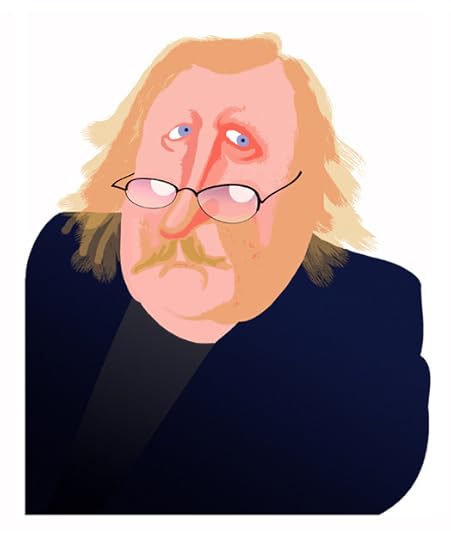
Peter Sloterdijk

134 books595 followers
Peter Sloterdijk is a German philosopher, cultural theorist, television host and columnist. He is a professor of philosophy and media theory at the University of Art and Design Karlsruhe.

Peter Sloterdijk studied philosophy, Germanistics and history at the University of Munich. In 1975 he received his Ph.D. from the University of Hamburg. Since 1980 he has published many philosophical works, including the Critique of Cynical Reason. In 2001 he was named president of the State Academy of Design, part of the Center for Art and Media in Karlsruhe. In 2002 he began to co-host Das Philosophische Quartett, a show on the German ZDF television channel devoted to discussing key issues affecting present-day society.

The Kritik der Zynischen Vernunft (Critique of Cynical Reason), published by Suhrkamp in 1983, became the best-selling philosophical book in the German language since the Second World War and launched Sloterdijk's career as an author.

The trilogy Spheres is the philosopher's magnum opus. The first volume was published in 1998, the second in 1999, and the last in 2004.

Ratings & Reviews

What do you think?
Rate this book

Friends & Following

Create a free account to discover what your friends think of this book!

Community Reviews

5 stars
29 (21%)
4 stars
59 (43%)
3 stars
39 (28%)
2 stars
7 (5%)
1 star
3 (2%)
Displaying 1 - 8 of 8 reviews
Profile Image for Owlseyes .
1,809 reviews308 followers
November 8, 2022


In the Foreword, Creston Davis says Sloterdijk is "so controversial" and "has the most provocative and daring temperament of theorists writing in the world today". Maybe for Europe, I guess. I'll try to figure it out. But, true, his "Critique of Cynical Reason" was a best seller.

The book is a good, funny at times, ironic and concise introduction to the Western Philosophy's main authors; some still consider it [Western Philosophy] a “history of Plato’s footnotes”. A book written in a very peculiar way.

As for the "most daring and provocative of theorists", I'll leave that to Slavoj Žižek, whose outreach is wider than Sloterdijk's, especially in the USA.
Profile Image for Michael Ledezma.
34 reviews9 followers
May 5, 2013
Interesting perspective into the single unifying thread in western thinking since the Greeks. The bios theoretikos is a theoretical life available only to those individuals willing to forego life, and to exist in a type of suspended animation for the sake of approaching objectivity in thought as closely as possible. This type of epoche, (the term is borrowwed from Husserl) has been the defining characteristic in academia since the loss of political power faced by the individual since Plato's time. The reversal, in the spirit of the romantic loser, was to set forth a space apart, a sort of pure space for thought, untainted by the empirical content of practical involvement in the outside world. The crux is that epoche itself has always been a kind of practice which was undertaken to prepare an individual for theoretical life. This so-called angel of theory has been attacked by 10 figures in the last 200 years, and seems to finally have been assassinated. The reason: Subjectivist philosophies of position. The conclusion, is that we need a critique of embedded reason to see whether current philosophical trends in avowing thrownness, and finitude with respect to position have the final say.
Profile Image for Paul Bard.
1,011 reviews
July 23, 2021
What was most useful to me from this book:

- author recontextualizes Cicero's contemplative attitude as a reaction to his forced retirement from Republican politics and an attempt to transplant Greek liberal philosophy onto Roman soil. This is primarily useful because I had been influenced by Cicero's contemplative idealism in the past, but now I see it as a way of coping with political and professional failure.

- the practical aspects of contemplative insight aren't really addressed. The author prefers to focus on modern epistemic challenges to the contemplative life. I think an inclusion of modern zen and pragmatic Buddhist praxes, and neurological studies based on that, would greatly strengthen claims for the value of contemplation, and also show a way to integrate them with the active life. So I don't agree with his conclusion that we need to respond to modern epistemic undermining of the contemplative life. We can simply add the eastern modes of contemplation instead.

- the notion of purity/epoche/scepticism in Husserl is simply equanimity in practice. He labels it coolness. He says it's like a customer who strolls around a market not buying into anything. But by the end of his life Husserl is advocating for a grounded, earthed, embedded kind of wisdom and reason. The practice of wisdom must be grounded in the real world but not attached to contingent circumstances, then.

Written in a heady and sometimes manic and rapid intellectual way, the author speaks as if highly caffeinated. It's entertaining and a little impractical.

I was expecting, due to translation, a book on wisdom practice rather than theory of contemplation. But it was worth a read for its introduction to Husserl and critique of Cicero.
Profile Image for Milan.
Author 73 books16 followers
July 17, 2016
The title is at the same time accurate and misleading, since the original tends more to the eschatological mystique, and while I was intrigued by the hint of critical approach to the so-called "myth of genius", which, maybe, is the crux of Sloterdijk's endeavor to shatter the ivory towers of philosophy and scientific reflexivity in general, I found the text, originally a lecture, just as esoteric (meaning self-centered) and removed from the praxis of thought as the isolationist reality it attacks.
Profile Image for Lucas.
66 reviews
October 6, 2020
Pensadores da tradição ocidental faziam filosofia com um distanciamento da vida cotidiana. Em sua meditação interior, tal como Sócrates, se voltavam a questões além deste mundo. Sloterdijk explora a morte aparente, essa ausência mundana no pensar dos filósofos da tradição, assim como seu declínio, a morte do pensar que renuncia a vida cotidiana, que acarretou na perda da neutralidade na produção de conhecimento.
Profile Image for Alberony Martínez.
609 reviews36 followers
May 31, 2022
Peter Sloterdijk, quien en la condición de filósofo alemán, y llevando sobre sus lomos como dice llevar los pronunciamientos de Nietzsche, ha dado un giro y una sacudida en el mundo de la filosofía. Bien es conocido por texto como Tienes que cambiar tu vida, donde pone de manifiesto la práctica como condición humana. Crítica de la razón cínica como bien lo plantea: “el cinismo en el proceso real y relativamente general de lo social y espiritual, de tal manera que la esencia cínica o química no viene de los individuos -esto sería una travesura psicologista-, sino que se ofrece a los individuos, crece en ellos y se desarrolla a través de ellos, es decir, con su fuerza, por encima de ellos.“ “El hombre actual tiene a su alcance la máxima «saber es poder» pero no sabe cómo darle utilidad”. Excelente textos.

Muerte aparente en el pensar de Sloterdijk, quien probablemente es uno de los filósofos alemanes más controvertido de la actualidad, al poner de manifiesto sus interpretaciones idiosincrásicas, a veces algo arriesgadas, de los fenómenos contemporáneas no solo en la tradición filosófica para repensarla, sino también en la continuidad de los ritos y parábolas, observa lo cambiante de la ciencia y las acciones del científico desde una nueva perspectiva sobre el pensamiento y la actuación de los humanos, propone al científico a volver a la vida consciente de la práctica, a ese campo accesible y a las acciones del científico como ejemplo. Esto se ha perdido en gran manera en la ciencia. En el libro apuesta a cuatro consideraciones: Primero, La ciencia como antropotécnica ejercitante en general, perfilando objetiva e históricamente el tema. Teniendo como figuras a Edmund Husserl y a Sócrates. Segundo, El múltiple condicionamiento del ser humano de epojé. Tercero, La configuración o autogeneración del ser humano desinteresado “sólo los muertos gozan del privilegio de contemplar «autópticamente», algo así como cara a cara, las verdades del más allá. ” Cuarto, La ambivalencia inherente a la cultura racionalista moderna desde que se desconecto de su larga fase de impulso metafísico.

En una ocasión, siendo entrevistado, se le hizo la pregunta ¿Hemos Pedido la capacidad de pensar? Y su respuesta fue: No es capacidad como tal. Pero no se dan las circunstancias vitales que nos permiten retirarnos y tomar distancia. Para Husserl y su fenomenología había que salir del tiempo impetuoso de la vida, el dispositivo más elemental era siempre dar un paso atrás. Ese acto te permite convertirte en observador. Sin una cierta distancia, sin una cierta desimplicación la actitud teórica es imposible. La vida actual no invita a pensar.
Profile Image for Toby Bond.
85 reviews2 followers
September 9, 2020
This was a bit of a slog, a lot of the language seems to be overly complex and could have been simplified. In essence: read more, think more, take what you need, discard what you don't and think carefully before you act.
Profile Image for Beau.
28 reviews1 follower
January 3, 2015
An excellent and thought-provoking book. I picked up Plato's Dialogues after reading this book. Worth a re-read.
Displaying 1 - 8 of 8 reviews

Can't find what you're looking for?

Get help and learn more about the design.