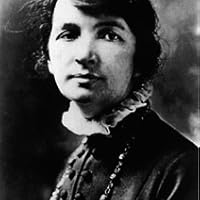
Ellen Chesler's 1992 biography of Margaret Sanger is acclaimed as definitive and is widely used and cited by scholars and activists alike in the fields of women's health and reproductive rights.
Chesler's substantive new Afterword considers how Sanger's life and work hold up in light of subsequent developments, such as U.S. Supreme Court cases challenging the constitutional doctrine of privacy and international definitions of reproductive health as an essential human right.
While I’m no author, I would think a really good biography—one that does justice to the life of its subject—would be one of the hardest of books to write. If such is the case, then a biography about someone who’s devoted his or her life to a controversial cause, such as Margaret Sanger did with birth control must be the toughest nut to crack. In Woman of Valor Margaret Sanger and the Birth Control Movement in America, Ellen Chesler did an amazing job. She managed to walk the camera of her author’s eye all the way around the complex character of the poor Irish-American girl baptized Catholic who grew up to hate that same church so much she threatened to leave the country if John F. Kennedy were elected President, nevertheless a hallow threat from a dying old woman. While Chesler’s portrayal is no doubt sympathic, it is not unduly so; she is willing to look at the world from Sanger’s perspective—who would trust a biographer unwilling to do at least that much—yet she also feels no compunction about pointing out Sanger’s character flaws, contradictions, and many detractors.
As a biographer, Chesler covers the main events of Sanger’s life from birth to death without going into tabloid details, a point which I appreciated very much. Perhaps this could be ascribed as an effort to improve the image of her subject; I prefer to believe it is an indication of the author’s tact, class and integrity. Regardless of what one thinks of another person’s politics or religious views, it still isn’t necessary to drag up endless details of dead affairs. Sanger was no saint, which goes without saying; more than that isn’t relevant.
In fact, it often seemed this biography was as much about the history of birth control in America as it was the story of a woman’s life. Before Sanger took on ‘the cause’ which came to be associated with her name almost as Freud’s is with Psychoanalysis, ‘The Comstock Law of 1873 made it a crime to sell or distribute materials that could be used for contraception’.
‘Birth control’ or ‘family planning’, as it later came to be called much to Sanger’s horror* is an incredibly complex topic. I read this book to gain a greater understanding of the history behind it. Taken in conjunction with abortion, it is probably the most multi-faceted issue facing our country today—and the least understood. Besides the obvious male—female aspect, there are also the following polar perspectives: married—single; law—justice; wealthy—poor; truth—lie; society—individual; freedom—responsibility; young—old; life—death; government—taxpayer; government—citizen; government—family; religious believer—non-believer; God—human. These are not in any particular order, nor is the list complete. In various ways throughout the book, Chesler shows how Sanger encountered and dealt with the factional partisan nature of her chosen vocation.
While not comprehensive by any means, I do recommend this biography as an introduction to the person and the topic. It does not include any of Sanger’s writings, yet I do believe anyone just reading what the crusader wrote without knowing the background context of her life would do themselves as much a disservice as they would Sanger; she was often battling specific individuals, groups, political parties and governments. Whether or not you agree with her position—and I obviously don’t—it becomes all the more critical in a situation such as this, not to come into the middle of a conversation you don’t understand. I have already forgotten more than I ever dreamed I didn’t know about the history of the birth control movement in our country early last century—and I finished the book just a week ago. Anyone reading this review in a few months or more should not bother to ask me any questions of detail. The book is chock full of facts and figures, whereas my head is sieve for that type of information.
But if you want to learn about Margaret Sanger and her role in the birth control cause, read Chesler’s book and . . . don’t stop there!
*If I understood her correctly, M.S. envisioned the movement in the hands of idealistic and strong-minded women (such as herself) dedicating their lives to teaching other women how to control their fertility. In the 1950’s when the leadership passed into the hands of men who reorganized and renamed the Birth Control Federation of America, Planned Parenthood Federation of America, Margaret saw this as a failure of nerve, a step backward. In fact it was a savvy political decision based on the times made by those who were actually trying to help her ‘cause’.
><><><><><><><><><><><><><><><>
This book is at least three times as thick as The Margaret Sanger Story and the Fight for Birth Control so I thought I'd just skim this, but after reading the Introduction, I came to believe this was the more accurate of the two available biographies. In her Introduction, Chesler lists, compares and contrasts all of the biographies written about Sanger, including two autobiographies from the 30s. Although writing for a series called "Woman of Valor" Chesler does not seem bound to paint some idealized picture of Sanger; she is willing to show her strengths and weaknesses. Interestingly, Margaret doesn't always compare favorably, even with her lesser known siblings. So far, I like and appreciate this author's integrity, but I'm only on page 41...
An excellent biography of the woman who made contraception an inextricable element of equal rights in the 20th Century. Margaret Sanger fought consistently and innovatively to legalize and promulgate women's right to control their reproductive destinies against all manner of obstacle, both political and religious. The history included in this volume should be taken to heart by anyone who considered this a settled matter. Given the debates raging in the news during this election cycle, it would be a good thing for people to reacquaint themselves with the history of the movement, the Planned Parenthood Federation, and the various arguments against granting women the right to decide for themselves whether or not to reproduce. Superbly written and well-sourced, this is one of the better biographies of the recent past.
Margaret Sanger and Planned Parenthood were on my radar long before they started popping up on my Facebook feed. Her niece Olive turned up in the story of Wonder Woman as one of Marston's lovers. And I must admit that Downton Abbey this season got me wondering about the history of contraception. Why was it illegal? Was it morally wrong, or was it a civil right? This book tells the story of a woman who wanted women to legally and legitimately control their fertility for health reasons and for family economics.Her mother,worn out from multiple pregnancies in quick succession plus TB, died early. Her father couldn't cope with the financial responsibilities of a large family. These were Sanger's inspirations. Yes, the birth control movement grew out of socialism. Yes,it was equally a feminist movement.Yes, the eugenicists and neo-Mathusians (whatever they were. I couldn't figure out what they were for or against) got involved. So did politicians, and churches, and racists, and anyone else who had an opinion. And yes, I have some problems with Planned Parenthood as an organization. Sanger and her collegues got people talking about a very personal topic. She overcame obscenity laws and social norms to reach an underserved population in a day when contraception was only available to women who could afford it and women had few people who could give them correct, safe information. She reached minority neighborhoods by working with their leadership to gain their buy-in. She held world conferences, which not only shared information between countries but helped develop strategies. Many of the quotes attributed to Sanger on today's social media is out of context.The comment about 'word getting around we want to eliminate Negros' was made as a flippant comment to a member of the Black leadership with whom Sanger was friendly during a strategy correspondence as something Sanger didn't want to have happen, which was why she needed his support. Would I have stood on a street corner handing out birth control leaflets? Um, no. But am I glad someone did? Yeah.
As I was reading this book, Planned Parenthood announced that it was removing Sanger's name from its Manhattan health center because of her support for eugenics. This biography delves into that historical controversy, while also painting a sympathetic picture of a groundbreaking woman whose advocacy for birth control seems not controversial, but fundamental.
This book is a little too fawning, maybe, and kind of oddly structured. It could also have been at least a 100 pages shorter. The first half of the book is quite interesting, but it slows down towards the end.
Meticulously researched and footnoted, this somewhat ponderous tome (about 670 pages including the notes and index) does not make for a quick beach read. It's fascinating to learn how very many of the rights modern women take for granted come from the work of this brave and dedicated woman, who began the movement and started the clinics that eventually morphed into Planned Parenthood, both in the USA and internationally.
People - even doctors - didn't even TALK about the phrase (ssssh) BIRTH CONTROL a hundred years ago. Sanger changed that, brought an awareness of the need to offer women reproductive choices other than abstinence, too many babies, or illegal and risky abortions.
Sanger's reputation has been much besmirched in the last few decades by those who hate that women are making their own choices as to when - or whether to become mothers. As Chesler presents her, Sanger was far from perfect; she made enemies as well as friends and supporters. She was loath to give up the glory/credit for work that others joined in as well. (Sanger may have been one of the earliest pioneers of name branding.)
Redheaded, witty and attractive, she did not believe in monogamy (at least for herself) and engaged in countless affairs, including one with writer H.G. Wells, somehow managing it that none of her men became jealous of her other lovers or husbands; they were all happy, or at least content, having a tiny bit of her time and attention. Whether you believe this disgustingly immoral or not, it's still an amazing feat for anyone to pull off. She was not a good mother, neglecting her children for the cause of B.C.
But she was not a supporter of Nazism, race eugenics, or racism - those are all LIES propagated by those with an axe to grind. She wasn't even really in favor of abortion, though she grudgingly agreed that in some cases there was a medical necessity.
This book will inform you of all you ever wanted to learn about Margaret Sanger (and more), and if you have a question or wonder how or why the author interpreted something, it's all deeply footnoted. The ending feels a bit rushed; perhaps because the author was conscious of it already being a very long book, or perhaps because Sanger made less news and had fewer letters and interviews in her declining years following several heart attacks. Worth the read, for anyone interested in women's history.
This was a great biography of an amazing woman whose life saw and shaped the evolution of the birth control movement. The book was well researched, and the addition of so many pictures brought the book to life.
The book is fairly long so it took me awhile to read but it was worth it. The whole life of Margaret Sanger was covered. Both her personal and public life was explained and shown. I highly recommend this book to anyone who is interested in the birth control movement or Margaret Sanger. The book offers a great deal of information about both.
While this is probably the most realistic portrayal of Margaret Sanger's life written to date, it was also a very detailed read. Other stories of her life were very influenced by Margaret herself to the point where they were closer to stories than biographies. This one told the good and the bad. It was however very detailed to the point of being difficult to read through at times.
This very long, in-depth look at Sanger’s professional and private endeavors is certainly thorough. It is clearly biased in the direction of Sanger’s birth control views and her tireless work toward them, but the author is not so enamored that she fails to cover failures or fair criticisms of Sanger. The book is interesting, but lacks a certain emotional engagement with the reader. I liked it as an exploration of twentieth-century social history and of a specific person moving in that history, but I felt disconnected from Sanger, even after over 400 pages of her. The author seems to be a good historian and only an adequate story-teller.
Got half-way through and switched to an easier read. It seemed like every other paragraph she switched her opinion of Margaret Sanger. She was clearly controversial!
Biographies can be great. This, however, is the sort that makes people think all biographies are boring. Chesler is fawning and verbose in her praise of Sanger. In the afterword, she admits that she is enamored of her subject. This is a problem: like academics, biographers should be able to be critical of their subjects.
The whole book could have been a third of its finished length. It was a drag to read. Also, it bears noting that Sanger herself is kind of a terrible person. I didn't realize this, to be honest. She was _mean_ and nasty if you pissed her off (and sometimes if you didn't). Sanger came off as one of the pettiest, most self-serving sort of person. I went into it knowing that Sanger had backed some eugenic ties, so I expected to not like her for that, but holy shit! She abandoned her kids with no apology, was emotionally abusive to her various husbands, and flip-flopped on issues when it suited her.
I think it's appropriate to say that Sanger damaged feminism and family planning in irreparable ways, though not more than she helped. But to be unapologetic about any of it? Uh uh, SO not interested in raising her up as a fantastic feminist icon.
tl;dr version: biographers should not be so enamored of their subjects, nor should biographies involve the life stories of everyone who ever touched the subject's life in any way. -_-
The woman of the 20th century and my personal hero. All women and those who have benefitted from the endocrinological advances that Margaret Sanger's activism (along with Pincus, Chang, and Rock's scientific advances) made possible owe her a great debt. She truly was a woman of valor, and her largely overlooked legacy is one of the most significant in the history of feminism. Sanger's story is one that the heroes of 21st-century civil rights advances must learn from if they wish to emulate her victories and avoid her (much rarer) mistakes. Sanger's crusade was described by The Reverand Martin Luther King Jr as possessing a "striking kinship" with the civil rights movement. One cannot learn how the rights they have gained (or recently lost), without hearing the tale of Margaret Sanger.
A pretty good read. She was an interesting woman. Her lifestyle reminded me of Peggy Guggenheim - they were about the same age - although they hung out with different sorts of people. Her separateness from her husband reminded me of Georgia O'Keeffe and Stieglitz - they were also about the same age as Sanger. Her relationship to IPPF reminded me of every story I've heard of a passionate advocate who founds an organization and can't let go as the organization grows and changes. Her ideas about eugenics did not surprise me on the context of the times on which she lived.
I didn't completely finish this book but I feel like I still got a sense of "Who is Margaret Sanger?" The author's attitude toward Sanger is sympathetic but not completely biased. I think Ms. Chesler wants to believe that Ms. Sanger had the greater good in mind even though some of Sanger's choices are highly questionable as being completely self-motivated. Also, Sanger's own words seem to paint her as a fascist (i.e. completely unable to see an alternate viewpoint) She definitely wanted validation and was steadfast to get it from everyone.
This entire review has been hidden because of spoilers.
It's heavy but I took some advice from my book club and literally tore it into 3 pieces. It's filled with details but is really engaging, I missed my subway stop because of it.