Jump to ratings and reviews
Rate this book

Joe Gould's Secret

Rate this book
Now a major motion picture starring Ian Holm, Hope Davis, and Stanley Tucci, who also directs.

Joseph Mitchell was a legendary New Yorker writer and the author of the national bestseller Up in the Old Hotel, in which these two pieces appeared. What Joseph Mitchell wrote about, principally, was New York. In Joe Gould, Mitchell found the perfect subject. And Joe Gould's Secret has become a legendary piece of New York history.Joe Gould may have been the quintessential Greenwich Village bohemian. In 1916, he left behind patrician roots for a scrappy, hand-to-mouth existence: he wore ragtag clothes, slept in Bowery flophouses, and mooched food, drinks, and money off of friends and strangers. Thus he was able to devote his energies to writing "An Oral History of Our Time," which Gould said would constitute "the informal history of the shirt-sleeved multitude." But when Joe Gould died in 1957, the manuscript could not be found. Where had he hidden it? This is Joe Gould's Secret. "[Mitchell is] one of our finest journalists."--Dawn Powell, The Washington Post "What people say is history--Joe Gould was right about that-- and history, when recorded by Mitchell, is literature."--The New Criterion

186 pages, Paperback

First published January 1, 1965

99 people are currently reading
1943 people want to read

About the author

Joseph Mitchell

146 books188 followers
There is more than one author with this name

Joseph Mitchell was an American writer who wrote for The New Yorker. He is known for his carefully written portraits of eccentrics and people on the fringes of society, especially in and around New York City.
-Wikipedia

Ratings & Reviews

What do you think?
Rate this book

Friends & Following

Create a free account to discover what your friends think of this book!

Community Reviews

5 stars
684 (34%)
4 stars
857 (42%)
3 stars
366 (18%)
2 stars
77 (3%)
1 star
21 (1%)
Displaying 1 - 30 of 210 reviews
Profile Image for João Carlos.
670 reviews316 followers
May 29, 2017

Joe Gould (1889 – 1957)

Quem é Joe Gould (Joseph Ferdinand Gould)? Joseph Mitchell (1908 – 1996) um jornalista da mítica revista norte-americana The New Yorker traça um retrato inserido numa rúbrica denominada “Perfis” a vida de um excêntrico, Joe Gould (1889 – 1957) - conhecido como Professor Gaivota -, um homem que diz ser ”(…) a maior autoridade dos Estados Unidos em matéria de viver sem nada, (…) que vive de ar, amor-próprio, beatas de cigarros, café de comboy, sanduíches de ovo e ketchup.”, afirma estar à parte do resto da espécie humana por não querer possuir coisa nenhuma e que está a escrever o mais longo livro jamais escrito uma “História Oral do Nosso Tempo” ou apenas “História Oral”.
Joe Gould nascido em Norwood, Massachusetts, um subúrbio de Boston, formado em Harvard, torna-se numa figura lendária Greenwich Village, um excêntrico, mordaz e boémio, um vagabundo intelectual, atormentado e obcecado por concluir a sua obra literária a “História Oral”, um louco ou um génio: “Diria que o homem mais são é aquele que mais claramente que qualquer outro compreende a trágica solidão da humanidade e prossegue tranquilamente os seus objetivos essenciais”, escreveu. “Suponho que penso assim porque tenho a mania das grandezas. Penso que sou Joe Gould.” (Pág. 113)


Joe Gould o Professor Gaivota

”O Segredo de Joe Gould” é constituído por dois retratos da mesma pessoa, uma alma penada de nome Joe Gould: “O Professor Gaivota” e “O Segredo de Joe Gould”. A edição portuguesa tem um prefácio de António Lobo Antunes que escreve: ”Este é, sem dúvida, um dos melhores livros que li nos últimos anos (…)”; concluindo, ”(…) parabéns a ti por o teres comprado. Seja qual for o preço que por ele deste, é uma pechincha comparado como que vais receber.”.
Por mim, não há mais nada a acrescentar…
Profile Image for Emilio Gonzalez.
185 reviews111 followers
May 29, 2022
Un libro de buen ritmo y muy recomendable que cuenta la historia de un bohemio de NY de los años 40 llamado Joe Gould y la relación que lo unió durante muchos años al periodista Joseph Mitchell.

Mitchell tenía una columna en el “The New Yorker”, donde escribía perfiles de los personajes mas excéntricos de New York, y en 1942 una de esas columnas tuvo especial repercusión porque su protagonista era un singularísimo personaje del Greenwich Village llamado Joe Gould.
Gould había nacido en Boston y se graduó en Harvard en 1916, pero pronto renunció su acomodada vida y se mudo a NY, donde vivió algún tiempo escribiendo reseñas para algunos diarios, hasta que en 1917 decidió dedicar el resto de su vida a la escritura de un solo libro que registrara todo lo que veía en el Village de NY, y así fue que se convirtió en un bohemio que dormía donde podía y vivía de limosnas.
Joe Gould murió en 1957, y en 1964 Joseph Mitchell escribió una segunda columna sobre Joe Gould contando sobre la relación que habían llegado a forjar durante casi 10 años desde aquella primer columna y explicando que fue de aquel famoso libro escrito por Gould llamado “Una historia oral” que tenia once veces el tamaño de la biblia.
El secreto de Joe Gould reúne justamente los dos escritos del Mitchell de 1942 y 1964 y es un libro que se lee rapidísimo porque el ritmo no decae nunca y describe muy bien el Manhattan de los años 40 y su sociedad.


“Desde aquella mañana fatídica -dijo una vez en un momento de exaltación- la Historia oral ha sido mi soga y mi patibulo, mi cama y mi pupitre, mi esposa y mi fulana, mi herida y la sal que en ella se derrama, mi whisky y mi aspirina, mi roca y mi salvación. Es lo único que me importa. Todo lo demás es basura.”
Profile Image for Susana.
542 reviews179 followers
December 19, 2018
Gostei de ter lido este livro, mas houve vários aspectos que me incomodaram.

O livro é composto por dois textos escritos pelo autor sobre Joe Gould, com cerca de 20 anos de diferença. O segundo texto (O Segredo de Joe Gould) é mais completo e abrange a época e os acontecimentos referidos no primeiro (O Professor Gaivota), pelo que se nota alguma repetição. Para mim teria feito mais sentido que o texto principal do livro fosse O Segredo de Joe Gould e que O Professor Gaivota fosse um apêndice.

Cansei-me um bocado das incontáveis e repetidas referências a locais (essencialmente bares e restaurantes), personalidades e ruas de Nova Iorque; além disso, estas últimas aparecem no original (Fifth Avenue, Tenth Street), o que é pouco prático e dificulta a fluidez e compreensão do texto. Um exemplo: "apanhei o metro na Fourteenth Street, com a ideia de sair na estação da Twenty-third Street e, momentos depois de me sentar, senti uma espécie de desmaio e, quando vim a mim, o comboio estava a entrar na estação da Seventy-second Street."

Também gostava que houvesse algumas notas de rodapé. O tradutor incluiu uma nota no final, reconhecendo que as profusas referências locais não serão "sempre evidentes nem de leitura imediata para um leitor estrangeiro". No entanto, na sua opinião, as notas do tradutor são quase sempre supérfluas... Acaba por incluir nesta nota explicações sobre algumas dessas referências, mas não chega e muito menos no final do livro, quando até aí não sabemos que elas lá estão!...

Apesar destas contrariedades, a história de Joe Gould é melhor do que ficção, e este é um personagem inesquecível. Recomendado, portanto.
Profile Image for Doug H.
286 reviews
December 9, 2017
Funny how you stumble onto books. Between the ages of fourteen and seventeen, I took art lessons after school from a very eccentric fun and inspiring painter named Evelyn Leavens. Evelyn’s favorite painter was Alice Neel and she owned a coffee table book of her portraits which we were free to peruse. In that book, there was a shocking nude of a leering old man with multiple penises titled “Joe Gould”. I’d forgotten all about it, but it must have made an impression because the name immediately came back to me when this little volume popped up in my $1.99 deals-of-the-day from Early Bird Books. I highly recommend it if you have any interest in 1940s Greenwich Village Bohemians. Alice Neel even makes an appearance. By the way, Gould’s secret didn’t have anything to do with multiple sex organs. That was just Neel exercising her license.
Profile Image for Carmo.
727 reviews567 followers
June 24, 2017
"Era a criança catarrosa; era o filho que sabia que tinha desiludido o pai; era o lingrinhas, o micróbio, o fedelho, o meia-leca, o pequenitates; era Joe Gould, o poeta; era Joe Gould, o historiador; era Joe Gould, o selvático dançarino chippewa; era Joe Gould, a maior autoridade mundial em linguagem das gaivotas; era o homem banido; era o exemplo acabado do vagabundo nocturno solitário; era o rato reles; era o único membro do Partido Joe Gould; era o boémio local do Minetta Tavern; era o Professor; era o Gaivota; era o Professor Mangusto; era o Rapaz de Bellevue."

Joe Gould faz parte desse leque de personagens excêntricas, que não tendo nada para nos seduzir, nos seduzem com tudo o que têm, nos comovem por tudo o que são, e nos desconcertam pelo que poderiam ser e não são.
Profile Image for Paula M..
119 reviews53 followers
September 26, 2017
Nova York nos anos 40 / 50. Os balcões dos bares, as cafetarias, os snacks, as ruas, as beatas e os abrigos da cidade. Os artistas, os boémios e os intelectuais. Greenwich Village. Joseph Mitchell e a New Yorker. Ezra Pound. e.e. cummings. Joe Gould e a sua obsessão literária.
Gould: um vagabundo tímido, excessivo, genuíno, irritante, sarcástico, pretensioso, vaidoso e maçador. Também sonhador, delirante, perspicaz, subversivo, oportunista, trocista, piolhoso e mentiroso. Um poço de humor. Um percurso palmilhado fora dos trilhos, uma carta fora do baralho...

Gould salta da tranquilidade do papel, ganha vida própria novamente e sem cerimónias arrasta-nos com ele...a nós, que também não temos vontade de o perder de vista.

Um retrato mais-que-perfeito!
Profile Image for Jigar Brahmbhatt.
311 reviews149 followers
March 3, 2015

Of Bohemianism and Creativity: Life as Narration

By the time I finished reading this haunting and poignant book, I was wondering whether there is a connection between self-exile (a term I use very loosely) and man’s unending desire to narrate. Creation is a solitary act. When I was still living in my hometown, I loved escaping to my bedroom after dinner, making myself detached from my people, who used to sit in the drawing room watching soap operas. I used to read stuff here and there, mostly mystery novels, paranormal science and the like, and loved to imagine stories - though I hardly wrote any. It was an early fascination with things mysterious. During those days, I longed to be alone on some mountain, in a cozy hut with a warm hearth in it. I never had the faintest idea what I was going to do in that hut. But thinking about that hut made my adrenaline rush. Even today, when I look back and think about my teenage years, the image of that hut suddenly pops up, as if I had actually lived there. I outgrew that phase as I started searching for a job. It was stupid really, but such fascination is unavoidable while one is growing up. Only few of us really end up being bohemians.

Joseph Mitchell’s beautifully rendered, symphony-like biography of an eccentric bohemian named Joe Gould is a work of classic storytelling. Gould was a tramp who lived on the streets of Greenwich Village, and survived on food and cloths donated by people who cared for him, or those who helped him out of pity. Though very unkempt, and irritating at times, he was a genuinely interesting character. Mitchell creates a very vibrant sketch of Gould’s complex personality that remains with you for days after the reading is over. What interested me most was Gould’s life ambition – Oral History of the world, the book he had spent his entire life writing, and which, according to him, would be an accurate history of the world. The piles of papers already written for “Oral history” exceeded Gould’s own height. At one of Mitchell’s meetings with him, Gould even condemned his untidy, vagabond life, but immediately consoled himself that this was the only way to live if he had to write the “Oral history”. How else could he capture people talking? Because “people talking is history”. Funny thing is that most of the people in Greenwich Village knew about the herculean task he had subjected himself to, and often inquired about its progress.

Because he didn’t have a home, kind and concerned people in the neighborhood sheltered his many piles of pages, so in a way his book in the making was scattered under various roofs. After he died they couldn’t find the “Oral History” in those pages. Maybe that is why Mitchell’s biographical portrait of Gould has the word “secret” in it, but the secret here is not something that a reader awaits like in the mystery novels. It is about human weakness, and the little, insignificant things one does to keep going. I assure you readers that it is hardly a spoiler, as the pleasure of the book totally lies in the way Mitchell takes you through this unusual life.

Gould used to write big time. While to those around him he appeared to be taking constant notes, a notion he always emphasized, he was, in fact, re-writing the same few chapters dealing with seemingly trivial events in his own early life. He suffered from a psychological condition called hypergraphia: an obsessive urge to write. It is not incorrect to state that he spent his life writing junk, and that the “Oral history” everyone eagerly waited for never existed. Gould left many threads unanswered. Mitchell narrates to us the life of this clochard, an apparent intellectual trying to capture the unconscious of the “shirt-sleeved multitude”, with such meticulous observation that the narration in turn becomes Mitchell’s own art – as if Gould, through living an immaterial life waited for someone who will finally capture him in words, and make him immortal, at least in the papyrus memory.

I was fascinated by two insignificant essays Gould tirelessly wrote all his life: one was based on his father’s death (which must have meant a great deal to him), and other was on ketchup or something related to tomatoes. Just imagine: a person assumes detachment from society, and lives like a tramp to write about certain events of his youth over and over again – interesting but sad.

But I think I have sensed something in Gould’s biography, to which Mitchell points in passing, which may contain a key to understand him: his block. Gould had envisioned a theme, which if written with great dedication could have been a unique, if not greatest, book on human history. But he must have felt that the theme was bigger than him - a feeling that he was trying to lift himself by lifting his own shoelace. I have gone through this feeling myself. Writing in itself is a curious, at times arduous, affair. I sometimes get amused how I started writing after leaving home. Though I loved creating plots, and used to imagine scenes of my stories during long bike rides with friends, I never wrote a word when I was at home. Away from home, solitude made me write. So in a way, what I loosely refer to as self-exile here, and what Gould imposed upon himself, seems like a necessary condition. After writing short-stories here and there, when I finally conceived a grand plot, I was suddenly made aware of my current limitations. The plot looked so terrifyingly big that I would just put it aside and write trivial things instead – things not even worth writing. At one point I even tried writing a book on the impossibility of writing a book. So I think I intuitively understand Gould when he writes about tomato ketchup, trapped in a strange loop.

Gould had created an illusion, a mask, about the “Oral history” being written, while in reality it was not. He used to hide behind this mask, and enjoyed the possible glory his work was to bring, or to some extent the rumor of which already brought. It was his incapability to write what he had envisioned that in itself became a story worth telling. He narrated his tale through living, and not writing. He should thank his stars that there was a Mitchell to capture it. His passion laid, not in recounting the “Oral history”, but in recounting his life, his incapability.
Profile Image for Célia | Estante de Livros.
1,188 reviews275 followers
January 22, 2025
Este é um livro dividido em duas partes: a primeira é um perfil publicado no The New York Times pelo jornalista Joseph Mitchell sobre uma figura peculiar da cena nova-iorquina dos anos 1940; na segunda parte, também um artigo publicado no jornal duas décadas mais tarde, o autor partilha como conheceu Joe Gould, todo o processo de escrita do perfil inicial e o que aconteceu depois na vida deste homem, até à sua morte.

Joe Gould apresenta-se-nos quase como um mendigo por vontade própria, um homem oriundo de uma família com algumas posses e com formação superior, que decide cortar todas as amarras e dedicar o seu tempo à escrita da obra da sua vida, uma História Oral que reproduziria conversas que ele tinha ouvido nos seus dias a vaguear por Nova Iorque e que seria o retrato de uma época, deixando o seu nome para sempre na História da Humanidade.

Às vezes é bom ler sobre vidas completamente distantes das nossas, para sairmos um pouco da nossa caixa e abrirmos horizontes. Este livro foi inicialmente um misto de admiração e incompreensão pela liberdade de uma pessoa que tem um objetivo na vida (por mais banal que nos possa parecer) e que vive em função disso, levando tudo a um extremo que não se encaixa em qualquer padrão de comportamento aceitável pela sociedade.

Mais adiante na leitura, esta espécie de aura em redor de Joe Gould quebrou-se um pouco. Acredito que o autor tivesse escrito o segundo artigo em prol da factualidade, mas a pouca empatia que criei com Joe eclicpsou-se quase na totalidade, porque ficou muito pouco da sua essência - ou, no limite, daquilo que o autor entendeu como tal.

Não tendo sido uma má leitura, também não foi transformadora ou um livro que deixe a vontade de ser relido no futuro.

«Diria que o homem mais são é aquele que mais claramente que qualquer outro compreende a trágica solidão da humanidade e prossegue tranquilamente os seus objetivos essenciais.»
Profile Image for António Dias.
175 reviews20 followers
August 24, 2018
Não sei se os dois artigos presentes neste livro são os que mais gosto na obra de Joseph Mitchell mas são aqueles pelos quais ele é mais conhecido.
A descrição do quotidiano de Joe Gould, um sem abrigo que deambula pelas ruas de NY nas décadas de 30, 40 e 50 constitui um exemplo magistral do que deve ser o retrato de uma época, de um lugar e de uma pessoa. Mitchell confere a Gould o propósito humano que muitas vezes despegamos dos sem abrigo com quem nos cruzamos na rua, como se eles não fossem gente como nós...
O primeiro artigo foi escrito em 1942 e fala-nos da excentricidade de um personagem magnífico, hilariante e enigmático. O segundo texto, publicado na "New Yorker" em 1964, centra-se no segredo e na magnífica empresa levada a cabo por um homem "apenas" para contar a história do seu tempo.
Se há livro em que a forma e o conteúdo ombreiam na grandeza, o segredo deste homem é esse livro, ainda que a conclusão de Mitchell a respeito do segredo possa não ser verdadeira...
Profile Image for Ana.
756 reviews174 followers
November 19, 2018
Ainda não consegui decidir-me em relação às estrelas/pontuação a dar a este livro... Foi um experiência estranha, que pôs em evidência a minha "pouca simpatia" e deliberada resistência para com a literatura norte-americana. Depois desenvolvo num texto para o blogue ou num vídeo para o canal.

Opinião completa aqui:
https://www.youtube.com/watch?v=Bo2Tl...
Profile Image for Teresa.
1,492 reviews
May 4, 2017
«Diria que o homem mais são é aquele que mais claramente que qualquer outro compreende a trágica solidão da humanidade e prossegue tranquilamente os seus objetivos essenciais», escreveu. «Suponho que penso assim porque tenho a mania das grandezas. Penso que sou Joe Gould.»


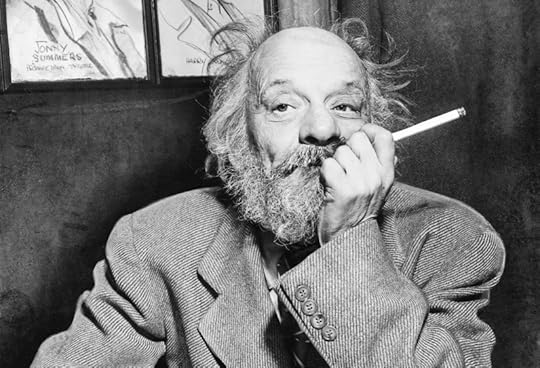
Estou a sentir-me um bocadinho com a mania das grandezas pelo privilégio de ter conhecido Joe Gould.
E grata pelos momentos emocionantes que passei a ler sobre a sua vida.
E com ar de tolinha a folhear e reler passagens deste livro maravilhoso.
E sem coragem de me separar do homem que imitava as gaivotas.
E com o coração a explodir de ternura pelo meu querido vagabundo solitário.
...
E frustada por não saber o que fazer para convencer toda a gente a lê-lo. A não ser sugerir que quando passarem numa livraria procurem Joe Gould. E que leiam os comentários de António Lobo Antunes, de Salman Rushdie, de Martin Amis, de Doris Lessing, de Julian Barnes e de Ian McEwan. E que acreditem...
Profile Image for Lormac.
606 reviews73 followers
April 5, 2021
Do not judge this book by the length of time it took me to read it. Really it is a fairly short book that one could finish in a weekend, but it is the kind of book you want to read when you can fully concentrate on it, and that just did not seem to be my life for a long time. But things have slowed down, and so I found it in a pile of books and resumed.

The author spent many years at the New Yorker magazine writing profiles of various New Yorkers. He had a real knack for capturing the essence of a person and sharing their life in just a handful of pages. One of my mother's favorite short stories is "Mr. Hunter's Grave" and she turned me on to Joseph Mitchell. This book is comprised of two parts - the first is the New Yorker profile that Mitchell wrote about Joe Gould, a NYC eccentric who lived in Greenwich Village from the 30s to the 50s, and the second is the story of how Mitchell came to know Gould, the time he spent with him while writing the profile, and the aftermath.

Be prepared for a book that is more formally written than you may be used to. Mitchell wrote this in the 40s and the language seems somewhat stilted - as if you were reading a Phillip Marlowe novel, for example. But the story is delightful and very touching. You will learn as much about Mitchell and his attitudes towards life as you learn about Joe Gould.

If you can get your hands on this book, definitely give it a read.
Profile Image for Margarida Sequeira.
69 reviews9 followers
January 4, 2025
4.5
Que linda história!
A história, trata de um mendigo especial, o Sr. Gould
e do seu segredo. Se o ritmo fosse um pouco mais veloz, seria perfeito.
Não conto mais, descubram.
Só o leitor sente a forte empatia que o narrador / autor sente por este Gould.
Leitura recomendada por António Lobo Antunes, foi muito interessante conhecer a vida deste vagabundo inteligente que passou por muito🤍
Profile Image for Emanuel.
14 reviews8 followers
December 20, 2022
O exercício mais difícil ( e tendo em conta que tudo pode ser visto como ficção) é manter a antena do real ligada.
Profile Image for Nick Sweeney.
Author 16 books30 followers
November 9, 2011
Joe Gould was certainly beat, though, like Jack Kerouac, proudly not beatnik, one of those mercurial American eccentrics, messianic when it suited him, pathetic when it didn’t, diplomatic or direct when he needed to be. When New Yorker writer Joseph Mitchell first encountered him in the late 1950s, Gould was living semi-rough in New York, though he was a Harvard graduate and had been a professional ethnographer and a journalist. He was known as Professor Seagull, and frequented poetry readings, where he wore out his welcome by declaiming nonsense poetry in imitation of the serious stuff, and was very assiduous in making sure he got the free cheese and wine on offer. Gould was fixated on writing the ‘longest book ever written’, called An Oral History of Our Time, and this book traces, in part, Mitchell’s excitement at his discovery, and his efforts to unearth Gould’s book. It is a very well told tale, with elements of biography, history and a quest, and reads very much like a novel at times. Joe Gould reminds me, a little, of that other classic American loner, Henry Darger (janitor, Outsider Art collagist, and author of one of the truly longest books ever written – do look him up) – and is, despite this story told about him, still an enigma. The story was made into a film in 2000, with Ian Holm and Stanley Tucci playing Gould and Mitchell, and very well, but nothing beats the way it’s told in this book.
Profile Image for Sandra Dias.
836 reviews
June 19, 2021
Acabei de ler este livro quase no mesmo instante em que escrevo estas primeiras palavras e já tenho uma certeza: este livro e a história que contém vão assombrar os meus pensamentos pelo menos nos próximos dias.

É incrível a capacidade que o ser humano possui de viver em e na ilusão, a sua resiliência.

Só que há um problema: somos feitos de matéria, e como toda a matéria, esta necessita de combustível palpável. Mais cedo ou mais tarde, a matéria sobrepõe-se ao espírito, ao sonho, e derruba-os.

Para todos há um fim.
Ninguém é eterno.
Nem para os que sonham mais alto e mais profundamente.


Joseph Mitchell à esquerda e Joe Gould à direita

description
Profile Image for Pat Rolston.
388 reviews22 followers
January 27, 2021
Joseph Mitchell is a master story teller whose subjects are brought to life as captivating icons of eccentricity. The Joe Gould story is set in New York from the 1920s to 1950s with Joe Gould’s life the heart of the scene. There is warmth, humour, and irreverent awkwardness afoot throughout the book. Mr Mitchell’s style elicits Marlow detective novels with a winsome memory of the lone train whistle at twilight. His writing regularly graced the New Yorker and it is a joy to find the articles expanded to book length. He has many books of similar genre and I look forward to much more enjoyment from his pen.
Profile Image for Helen.
735 reviews106 followers
April 19, 2021
This book, about a Village eccentric character named Joe Gould, who was active in New York City from around the 1920s to the early 1950s, consists of two New Yorker magazine profiles about Gould by Joseph Mitchell, the first written in 1942 and the second, in 1964, as well as an introductory essay by William Maxwell and an explanatory author´s note. The pieces are all beautifully written and give a glimpse into the world of Village in those decades from the perspective of a perpetually down and out character, a fixture at parties and bars, who seemingly knew everyone, such as E. E. Cummings and Ezra Pound, to name just two, and lived a grand, interesting life despite his poverty.

Gould came from an upper middle class socio-economic milieu in Boston, graduated from Harvard, but never fit in somehow with society and was unable to find some way to make a living that he could stick with. At his final job, a few years after he graduated from Harvard, he decided that he had to focus on writing a book that would capture the never-ending conversations he either participated in or overhead on the street, at bars, cafeterias or parties - and that this project would really reflect the history of his time, rather than histories that focused on great men, military conquests, and the like. And so, without a way to sustain himself, he had to essentially work on his book in libraries, or in parks, depending on the weather or time of year, or on the subway, stay in flophouses, and mostly subsist on very little food. He had figured out how to survive this way until the profile of Gould appeared in the New Yorker and an anonymous benefactor made it possible for him to stay at a rooming house for around three years. Rather than spoil the book, I shall refrain from saying what happened to Gould from then on, and what the secret of Joe Gould actually was.

This is actually a strangely affecting book - a look into a life that might otherwise have been written off as a passing curiosity - yet it also conveys a great deal of truth about the worlds or masks everyone constructs, how they present themselves to the world to build themselves up, and how they may eventually come to believe those constructs are real. You may have thought you were an artist or a poet as a youth - and time and possibilities seemed limitless. It was a myth you constructed for yourself that preserved your self-esteem or sense of self-worth. For whatever reason, nothing came of the talent you thought you had - but rather than admit to yourself that your subsequent rather banal, ordinary existence was in fact the sum total of your life, and the possibilities of your life, you may stick with the illusion that you are actually a great writer or painter. We may all have such fantasies that sustain us - that make the meaning of our existence less random and meaningless to ourselves. We may excel in cooking or be a successful gardener - yet secretly we think we are the un-discovered greatest cook, or the best gardener ever. And so forth. The pathos and truth of this book consists in it crystallizing this probably typical, human trait, and by showing how it played out in one individual, we can see how personal myths about ourselves probably are key in most peoples´ lives, even our own. Everyone must think they´re unique and special in some way - usually they´re too modest to admit such things casually. Gould on the other hand, would talk about his book and how it would change the world´s view of history once it was published. His myth, or ¨secret¨ was public knowledge among his many friends in New York.

The book is impressively, clearly written and will give the reader some insights into Village life in those past decades of the 20th Century, as refracted through the life of a resourceful eccentric character who lived by his wits for decades all the while writing in innumerable notebooks the history of his time. The book is actually acutely insightful into human nature in general, and the need we all have to continue believing in personal myths or dreams - something quite important in an urban environment that can be quite depersonalizing otherwise. Despite its humble, eccentric, obscure subject, it´s well worth reading.

The quotes:

From the Introduction by William Maxwell:

¨I loved looking at [Joseph Mitchell] ... because of the light in his eye and his smile, which became broad and joyful when he remembered some extreme oddity of human behavior.¨

From the book:

¨[Gould] ... says he is out of joint with the rest of the human race because he doesn't want to own anything."

¨In the winter of 1942, after hearing that the Metropolitan Museum had moved its most precious paintings to a bombproof storage place somewhere out of town for the duration of the war, [Gould] ... became panicky.¨

¨If all the perverted ingenuity which was put into making buzz-wagons [cars] had only gone into improving the breed of horses,¨ [Gould] ... wrote, ¨humanity would be better off.¨

¨As a rule,¨ [Gould] ... says, ¨I despise money.¨

¨[Gould:] To begin with, I was undersized; I was a runt, a shrimp, a peanut, a half-pint, a tadpole."

¨[Gould:] That´s one of the damnedest things I ever found out about human emotions and how treacherous they can be--the fact that you can hate a place with all your heart and soul and still be homesick for it. Not to speak of the fact that you can hate a person with all your heart and soul and still long for that person.¨

¨[Gould:] The trouble is, the more radical these [Village] people became, the more know-it-all they became. And the more self-important. And the more self-satisfied.¨

¨[Gould:] In other words, they completely lost their sense of humor.¨

¨As the young reporter listens [to the old man], it dawns on him that it is not the South that he longs for but the past, the South´s past and his own past, neither of which, in the way that he has been driven by homesickness to think of them, ever really existed, and that it is time for him to move out of time gone by and into the here and now--it is time for him to grow up.¨


Profile Image for Oziel Bispo.
537 reviews85 followers
February 15, 2023
Joe Gould veio de uma das famílias mais tradicionais de Massachusetts e, como graduado bem-sucedido em Harvard, uma vida organizada de classe média parecia destinado a ele. Mas em seus 20 e poucos anos, ele rompeu com tudo. Vagabundo ,charmoso e sonhador caprichoso, vivia de ar, bitucas de cigarro e ketchup, em pensões e na rua. Conseguia sobreviver através das doações de amigos e também pedindo nas ruas.Com o casaco manchado e a pasta cheia de cadernos, ele fazia parte da paisagem urbana de Greenwich Village. Por quase 30 anos, até pouco antes de sua morte no início dos anos 1950, ele anotou o que ouviu ao seu redor, encheu 75 cadernos gordurosos. Duro e implacável, ele trabalhou em sua grande obra " A história oral. Uma História Narrada de Nosso Tempo", um livro de época onze vezes maior que a Bíblia, com milhões de palavras.
No entanto, quando um editor começa a investigar sua vida, descobre um grande segredo...
Ótimo livro, de um escritor perfeccionista e genial.
Profile Image for Vicent Flor Moreno.
177 reviews56 followers
April 1, 2024
Recomanat per un antic amic, fa molts anys que vaig llegir el llibre en castellà. Em va deixar un molt bon record. Quan vaig veure que s'havia publicat en català per Edicions de 1984, vaig comprar-lo. Fou el 2022 a la Llibreria Fan Set de València (conservava el tiquet al llibre). El març de 2024 vaig decidir, tot i la meua recança tradicional per les relectures (una greu errada), que era el moment de llegir la versió en la meua llengua.

La segona lectura m'ha agradat encara més, tot i que ja sabia què passava (i que no desvetlLaré per a no fer "spoiler"). Perquè allò més interessant no és que ocorre realment amb "La història oral", sinó el personatge d'en Joe Gould, un captaire alcohòlic graduat en Harvard i, per tant, "bohemi", que sabia fer-se passar per un escriptor i, per tant, era un indigent intel·ligent, "amb interés". Ell no demanava almoines constantment sinó aportacions per a la "Fundació Joe Gould", per exemple.

El llibre té dues parts, "El professor Gavina", publicat el 1942, i pròpiament "El secret d'en Joe Gould", publicat vint-i-dos anys després del primer i set després de la mort de Joe Gould. Totes dues foren publicades en la mítica publicació "The New Yorker". Mitchell representa un periodisme que m'agrada, senzill (en aparença) i, sobretot, contextualitzador. Era Gould un artista? O era un penques? Mitchell no jutja. Posa tot a l'abast del lector per a què jutge ell. I a mi, tot i que no podria haver aguantat Gould de seguit, m'ha commogut. Aquesta és una lectura que corprén, perquè explica la història d'una "ànima perduda", com Mitchell l'anomenà, i la història té força i el narrador sap contar-la.

Periodisme del bo. I literatura de la bona. Gràcies, senyor Mitchell. Jo el llegiria...

#elsmeusllibres #llibresenvalencià #llibresencatalà
Profile Image for João.
49 reviews1 follower
June 8, 2024
Delirante.
Profile Image for Dustincecil.
470 reviews14 followers
December 16, 2017
just right!

I love any story with a good con man...!

on Dr Seagull... "He threw his head back and began to screech and chirp and croak and mew and squawk and gobble and cackle and caw, occasionally punctuating these noises with splutters. There was something singsong and sonorous in this racket that made it sound distantly familiar."

and Joseph Mitchell. *swoon*

Lots of room for self reflection here too, if you like that sort of thing.
Profile Image for my name is corey irl.
142 reviews74 followers
October 14, 2016
some good stuff in this book for example joe gould eats a bowl of ketchup with a spoon, joe gould translates longfellow into seagull, joe gould suffers a breakdown from caring too much about albania, goe jould recites a proletarian poem, joe gould declares the auto unnecessary joe gould measures the cranium of an indian or two, joe gould is covered in lice. like i said some good stuff in this book.
Profile Image for Romain.
938 reviews58 followers
July 3, 2024
Joe Gould était ce que l’on appelle communément un marginal qui vivait au début du XXème siècle dans le quartier de Greenwich Village, connu pour être à cette époque le repère de tout ce que New York comptait d’artistes bohèmes. Jusqu’ici rien de vraiment étonnant, la plupart des quartiers ont leurs habitués que l’on croise régulièrement et qui peuplent les bars et les bureaux de tabac. Ce qui est plus rare en revanche, c’est que Joe Gould est issu d’une lignée de médecins et qu’il a, comme son géniteur, fait ses études à Harvard. Il dit avoir renoncé à toute activité pour se consacrer pleinement à l’oeuvre de sa vie, la rédaction d’un livre unique par son ampleur qu’il a intitulé Histoire orale de notre temps. Son ambition est de retranscrire des conversations et des réflexions qui disent selon lui plus de l’époque qu’un livre d’histoire. Lorsqu’il n’est pas occupé à boire un coup ou à récolter quelques subsides pour s’adonner à cette occupation, il consacre tout son temps à la rédaction de son livre sur des cahiers d’écolier qu’il garde jalousement dans sa sacoche en cuir qui ne le quitte jamais ou qu’il cache chez divers habitants du Village.

Le journaliste Joseph Mitchell s’intéresse et entretient des relations avec Joe Gould dans le but d’écrire un long article sur l’auteur et son oeuvre – dont personne n’a encore pu lire plus que quelques fragment – pour le New Yorker. Ce genre de personnes qui se retrouvent poussées en marge par la force centrifuge de la société nous apprennent beaucoup sur nous-même et donnent à penser. Je suis passé par plusieurs phases lors de la lecture, du jugement à la compassion, du sourire à la tristesse. Il se pourrait bien que le vieux Joe ait réussi son coup, au nez et à la barbe des ses détracteurs, il est passé à la postérité.

Également publié sur mon blog.
614 reviews9 followers
January 18, 2016
Take an hour or two to read about one of the more fascinating street characters that haunted the Greenwich Village streets in the first half of the 20 th Century.

This was a time when painters and poets, novelists and other artists made the village their home and workplace, and Joe Gould was one of those.

Well, sort of – that’s Joe Gould’s secret after all.

For Joe Gould, the son and grandson of Boston doctors would describe to nearly all he met his grand project – to write an oral history of his times made up of conversations he’d overheard and reflections – already he claimed it many times the length of the Bible – and written in many dozens of those ruled small notebooks still around today.

New Yorker writer Joseph Mitchell undertook to write a New Yorker Profile of this strange street person – Joe Gould was quite a talker, apparently, and would talk non-stop for hours and hours.

Mitchell read some of Joe Gould’s notebooks part of his Oral History and discovered something very strange – Joe Gould’s secret.

Read Mitchell’s clear, clean prose as he begins to realize what this secret is – you won’t be disappointed!
Profile Image for Jonfaith.
2,150 reviews1,749 followers
March 7, 2013
Imagine Hamsun's emaciated artist taking his defiance to Greenwich Village and living hand to mouth for twenty years. No pawning of underwear and top coats here, the intellectual vagrant would require a different angle. He'd have to shuffle, he would need to embrace his humility. Such was what I initially divined to be at the core of Mitchell's book, an outgrowth of piece he wrote on Gould in the New Yorker in 1942. That isn't the case.

An expose lies at the heart of the tale, but the story of Joe Gould is a worthy diversion. Unfortunately a journalistic argot is employed. It feels like outtakes from Preston Sturges bent around the worst of Jimmy Breslin. This is not an illuminating glimpse into the bohemian life, but a sad character story.
421 reviews14 followers
July 22, 2022
A culpa de ter ficado desiludido com a leitura deste livro suspeito que é minha: elevei demasiadamente a fasquia depois de ter lido o prefácio de António Lobo Antunes. O ditirâmbico texto do escritor português não se justifica de maneira alguma. Reconheço que a história tem um certo “encanto”, mas o livro chega a ser entediante e até uma verdadeira seca na primeira metade do segundo (e mais longo) texto. Para mim, este “Segredo” não passou de um agradável entretenimento. Nem a nota final de José Lima resgata a tradução descuidada e negligente. Suponho que o tradutor seja enciclopédico quanto a nomes… mas eu não sou, além de que não sou leitor das Seleções do Readers Digest.
Profile Image for Diego Munoz.
470 reviews7 followers
August 18, 2019
I should have assumes by the title of the book, that Joe Gould indeed has a secret! Don’t worry, I wont spoil it for you.

Mitchell writes in very clear prose, with humor and in a very engaging manner. The subject, Joe Gould, is a bohemian, who rants about his quest to write his epic novel, capturing the discussions of people around him. In writing about this, Mitchell also includes the history of Joe Gould, as well as the process involved to actually sit down and interview him.

I give it five stars, as it really motivates me to pick up Mitchells other work.
Profile Image for Monica.
196 reviews67 followers
July 13, 2021
Esta crónica de Joseph Mitchell se convirtió, desde su publicación, en uno de los ejemplos obligados del género. La edición traducida de Anagrama incluye el primer perfil que Mitchell publicó sobre Joe Gould, titulado Profesor Gaviota, además de la crónica extensa El secreto de Joe Gould, publicado unos años después de su muerte, y es una construcción, aparte de lo bien escrita, estructurada de una manera que la lectura se hace bastante cercana. Recomendable en todo momento.
Displaying 1 - 30 of 210 reviews

Join the discussion

Can't find what you're looking for?

Get help and learn more about the design.