Jump to ratings and reviews
Rate this book

Stet: An Editor's Life

Rate this book
A founding editor of the prestigious publishing house Andre Deutsch, Ltd., Athill takes us on a guided tour through the corridors of literary London, offering a keenly observed, devilishly funny, and always compassionate portrait of the glories and pitfalls of making books.

Stet is a must-read for the literarily curious, who will revel in Athill's portraits of such great literary figures as Jean Rhys, V. S. Naipaul, Norman Mailer, Philip Roth, Mordecai Richler, and others. Spiced with candid observations about the type of people who make brilliant writers and ingenious publishers (and the idiosyncrasies of both), Stet is an invaluable contribution to the literature of literature, and in the words of the Sunday Telegraph, "all would-be authors and editors should have a copy."

256 pages, Paperback

First published January 1, 2000

129 people are currently reading
2110 people want to read

About the author

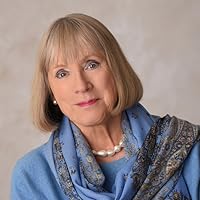
Diana Athill

34 books225 followers
Diana Athill was a British literary editor, novelist and memoirist who worked with some of the greatest writers of the 20th century at the London-based publishing company André Deutsch Ltd.

She was born in Norfolk in 1917 and educated at home until she was fourteen. She read English at Lady Margaret Hall, Oxford and graduated in 1939. She spent the war years working at the BBC Overseas Service in the News Information Department. After the war she met André Deutsch and fell into publishing. She worked as an editor, first at Allan Wingate and then at André Deutsch, until her retirement at the age of 75 in 1993.

Her books include An Unavoidable Delay, a collection of short stories published in 1962 and two 'documentary' books After A Funeral and Make Believe. Stet is a memoir of Diana Athill's fifty-year career in publishing. Granta has also reissued a memoir Instead of a Letter and her only novel Don't Look at Me Like That. She lived in Primrose Hill in London.

Ratings & Reviews

What do you think?
Rate this book

Friends & Following

Create a free account to discover what your friends think of this book!

Community Reviews

5 stars
479 (29%)
4 stars
685 (42%)
3 stars
354 (21%)
2 stars
91 (5%)
1 star
12 (<1%)
Displaying 1 - 30 of 221 reviews
Profile Image for Mike Robbins.
Author 9 books224 followers
September 5, 2017
I was somewhat nonplussed when I first read this, four or five years ago; I was irritated by Athill’s privileged background and was disappointed that she highlighted authors I had not read and, in several cases, had never heard of. But I sensed I was missing something. Rereading the book after several years, I see that I was.

Diana Athill was born in 1917 and brought up as part of the “county” set in Norfolk; she went to Oxford, and spent the war in the BBC – a job she got through a personal contact in its recruitment office; class was as powerful then as now. Disappointed in love, she fell into a series of relationships, one with a young refugee met at a party. (“He sat on the floor and sang ‘The Foggy Foggy Dew’, which was unexpected in a Hungarian.”) This was André Deutsch. The affair did not last long; the friendship, however, did, and at the end of the war he asked her to join him in the publishing company he was founding. She was to work as an editor for the next 50 years, all but the last few with Deutsch himself. She says little in this book of her personal life, but she has written of that elsewhere. Stet – the word is a proofreader’s instruction, used to cancel a correction – is about Athill’s life in publishing.

The book is in two pretty much equal parts. The first is a narrative account of her career, mostly with Deutsch. The second recalls her work with a series of writers, the best-known of which are Jean Rhys and V.S. Naipaul; the others – Alfred Chester, Molly Keane, and one or two more – are no longer household names, if they ever were.

The first part of the book is a fascinating picture of postwar publishing in all its amateurish glory. When André Deutsch was founded in the 1950s, it worked out of a converted house; books were dispatched from a packing bench that was a plank over the bath. This doesn’t surprise me; my first job, in 1974, was in publishing, and I sometimes ran the packing bench. It hadn’t changed much. But there is nothing amateur about Athill’s shrewd insight into book buyers: “There are those who buy because they love books and what they can get from them, and those to whom books are one form of entertainment among several. The first group, which is by far the smaller, will go on reading... The second group has to be courted.” In Athill’s view, by the 1980s the second group had been seduced away by more visual media, leaving little space for literary publishing. She may have been right – then. But electronic publishing has now made books good value again, at least when sold by independents or small publishers whose overheads are low. So that second audience is being reclaimed (albeit mainly with genre books). Athill retired in the 1990s but still does the odd article and review, and one wonders what she thinks of this. She says little about technological change in general, although photosetting and on-screen page design arrived in her time.

When it comes to editing, though, Athill clearly had rigorous judgement. If a book didn’t quite work she didn’t want it, whoever had written it, and she rejected one of Philip Roth’s – a decision that caused her some pain later, but was surely right at the time. She had felt that he was writing about a different type of character than usual simply to prove that he could; and it did not ring true.

This is, in fact, the key to the second half of Stet. Athill has chosen to depict, not the writers with the highest profiles today, but those about whom she feels she has something to say. The result is a series of character sketches that do ring true, and draw you in whether you are interested in the writer or not. V.S. Naipaul is the only modern “superstar”. Of the others, I had heard of Jean Rhys and Molly Keane, but knew very little about them; I knew nothing of Alfred Chester at all. But I was fascinated. Both these, and the other, sketches suggest that Athill was not just a good editor; she was a generous friend to her writers as well. (And to Deutsch himself, who could clearly be a pain in the arse.)

Of these sketches, it is that of Jean Rhys that stands out. “No-one who has read Jean Rhys’s first four novels can suppose that she was good at life,” writes Athill, “but no-one who never met her could know how very bad at it she was.” The later stages of Rhys’s life and the mess she had made of it, and her struggle with alcohol, are there – but so is her gift as a writer, and the strange early life that Athill felt explained much about her. The thumbnail sketch of V.S. Naipaul, too, is vivid, with a shrewd insight: that those whose cultural or national background is unclear must define themselves, and the personal resources needed for this can be great. They are not always there. As someone who has spent much of their life in an international milieu (in my case international development), I understand this all too well.

I am glad I read this again. Athill is, to be sure, a member of a privileged group – she uses the word caste – with an iron grip on the publishing world; but she knows that. This caste was “the mostly London-dwelling, university-educated, upper-middle-class English people [who] loved books and genuinely tried to understand the differences between good and bad writing; but I suspect... our ‘good’ was good only according to the notions of the caste.” She puts this in the past tense but one wonders if that caste and its prejudices have really quite gone yet. However, Athill’s judgement as an editor clearly transcends them. So does her empathetic and subtle understanding of those she met.

This is a charming book.
Profile Image for Vikas Singh.
Author 4 books335 followers
December 26, 2019
This is not exactly a book you expect from someone who has spent her lifetime in publishing industry as editor. Diana's own views and comments on the authors, writers and the general literary scene more than make up for this drawback. You get a ring side view of how this industry works. The book is divided into two parts. It is the second part where she discusses some of her favorite authors that holds your attention.
Profile Image for Nada Elshabrawy.
Author 4 books9,357 followers
July 26, 2020
I loved it in all different levels. Very informative and gives a great idea about the publishing industry and yet a very funny and sweet intimate read.
I wish it would be translated into Arabic sometime soon.
Profile Image for Yuliya Yurchuk.
Author 9 books68 followers
August 7, 2020
Спогади Даяни Етхілл – редакторки одного з найвідоміших британських видавництв. Ця прекрасна жінка видала багатьох авторів, яких ми з вами дуже любимо, прожила довге життя. Вона померла у 101, а свою останню книжку вона опублікувала у свої 99. Вона пише, що старість відчула лише перейшовши за 80, тоді вона і почала писати спогади. Книжку спогадів Stet вона видала у свої 83. Взагалі у неї вийшло 10 книжок зі спогадами, мемуарами, щоденниками.
Stet – це позначка, якою редактор вказує, що потрібно скасувати правку: залишити слово чи фразу, повернути викреслений текст. Ви знаєте, що латинське «stet» якраз і означає «нехай лишається». Так що Етхілл, після 80 вирішила, що час залишити все те, що вона б в іншому випадку забрала з собою, і ділиться з нами прекрасними історіями зі свого життя, яке багато в чому вплинуло на історію літератури і видавництва двадцятого століття. Пише вона чесно, не шкодуючи ні себе ні інших, але з такою відданністю і чутливістю, що це не може не вражати. Вона також ділиться улюбленими книжками, прямо списками. Там навіть є про Україну (сюрпрайз!)
Найбільше ж мене вразила глава про Джин Ріс, для якої Етхілл і вдова Джорджа Оурвелла – Соня Орвелл мусили стати просто няньками, інакше ця жінка б не вижила (я б ніколи не подумала, що моє улюблене "Широке Саргасове море" писалося в таких умовах, про які пише Етхілл, як такий сильний текст міг творитися в умовах повного розпаду життя авторки – загадка. Бідна Джин писала цей текст 9 років (а він досить короткий, як знаєте). В день смерті свого чоловіка Джин пише Даяні: все! все закінчилося! І я тепер можу надіслати готову книжку (а там ще була історія за кілька років до цього, коли книжка майже була дописана і Етхілл приїхала до Ріс, а у Ріс стається сердечний напад і видавчиня тижнями сидить біля письменниці, як віддана мати, доглядає її і, думаючи, що та вмирає, обіцяє, що книжку не видасть, бо Ріс просить саме так – чекати поки вона напише останні речення або не видавати взагалі. І тут Етхілл, для якої тексти – понад усе, так переживає, що якщо ця жінка помре, то світ не побачить цю історію, і це найгірше, що може статися. Ріс, звісно, вижила, а "Широке Саргасове море" принесло для неї славу і вирвало з бідності!

Взагалі вся книжка пронизана любов'ю до книг і слів. Етхілл розмірковує не лише про книжки, але і про видавничий бізнес, про те, чому все важче стає продати хорошу книгу, чому книги стають такі дорогі, але як пише вона, завжди будуть люди, які будуть читати (у неї є класифікація двох типів читачів (There are those who buy because they love books and what they can get from them, and those to whom books are one form of entertainment among several), так от вона пише, що якщо один вид і зникне, то інший не зникне ніколи, вгадайте, який залишиться)!

Закінчую реченням про дві книжки, які найбільше вплинули на Етхілл:

"They brought home to me the central reason why books have meant so much to me. It is not because of my pleasure in the art of writing, though that has been very great. It is because they have taken me so far beyond the narrow limits of my own experience and have so greatly enlarged my sense of the complexity of life: of its consuming darkness, and aslo – thank God – of the light which continues to struggle through."

Думаю, ви зрозуміли, якою насолодою було читати цю книгу.
Profile Image for Ailsa.
218 reviews271 followers
February 3, 2019
"There are those who buy because they love books and what they can get from them, and those to whom books are one form of entertainment among several. The first group, which is by far the smaller, will go on reading, if not forever, then for as long as one can foresee. The second group has to be courted. It is the second which makes the best-seller, impelled thereto by the buzz that a particular book is really something special; and it also makes publishers' headaches, because it has become more and more resistant to courting." 117

"Of course a lot of them still read; but progressively a smaller lot, and fewer and fewer can be bothered to dig into a book that offers any resistance. Although these people may seem stupid to us, they are no stupider than we are: they just enjoy different things." 118

"Although for all my life I have been much nearer poor than rich, I have inherited a symptom of richness: I have a strong propensity for idleness. Somewhere within me lurks an unregenerate creature which feels money ought to fall from the sky, like rain." 6
Profile Image for Rebecca.
4,191 reviews3,453 followers
April 15, 2016
Another wonderful memoir, beautifully told and with its crop of incidents perfectly chosen. This one will delight bibliophiles especially. “Stet” means “let it stand” in a manuscript, and that is what Athill aims to do with this book: save some of her memoirs of the publishing life against the ravages of death and memory loss that age threaten:

“I shall not be alive much longer, and when I am gone all the experiences stored in my head will be gone too – they will be deleted with one swipe of the great eraser, and something in me squeaks ‘Oh no – let at least some of it be rescued!’”

Yet she is, as always, self-deprecatingly honest about the negligible weight of her own life; she claims her memoir is just “the story of one old ex-editor who imagines that she will feel a little less dead if a few people read it.”

I envy Athill for having been lucky enough to find happiness and fulfillment in her life’s work. For nearly five decades she worked with André Deutsch – who remained a good friend despite their early failed love affair – in his two publishing companies, shepherding and cosseting their often irascible stock of writers. Much of the book is composed of her memories of some of the notable authors she worked with, some I’d never encountered (like Brian Moore and Alfred Chester), others like Jean Rhys and V.S. Naipaul that almost everyone has heard of, if not read.

Naipaul comes across as unpleasant and snobbish, racist even. Perhaps the most striking chapter of the book is the one about Jean Rhys, whom Athill characterizes as being incredibly bad at life. Rhys had constant financial and familial failures and, though defensive of her Caribbean upbringing, belonged neither there nor in England. Athill became much more than an editor to her; by the end she was as much a caretaker as a friend. Though Athill never had children, one senses that ‘her’ authors and the books she championed, from idea through to publication, were like her offspring.
Profile Image for verbava.
1,147 reviews163 followers
October 7, 2019
з усіх читаних цього року мемуарів (а їх виявилося чимало, зокрема книжка еймі крокер, жінки-блискавки, жінки-пригоди) мене несподівано зачепив текст про робоче й рутинне. аж до «от яка я хочу бути, коли виросту» – може, після якогось віку цього відчуття вже не виникає, але, по-перше, я дотуди ще не дожила, а по-друге, діана етгілл останню книжку видала в 99, а померла в 101, тож часу на виростання є достатньо.

про три притчепридатні епізоди зі «стету» я написала для «вербуму», там у моїх коментарях таке наболіле редакторське. етгілл теж, по ходу, пише про наболіле (бо як іще назвати байку про авторів, які після твоєї роботи дивляться на текст і кажуть: от бачте, з ним усе гаразд, не треба було в ньому так довго колупатися), але дуже легко, з рівними дозами іронії й любові. зрозуміло, що в неї були книжки й автори, які її бісили, у всіх були; проте якого ж задоволення повні розповіді про все це («і я подумала: нарешті можна не вдавати, що мені подобається найпол»).
Profile Image for Dan.
500 reviews4 followers
April 19, 2019
Diana Athill died in early 2019 at age 101. Stet: An Editor’s Life was first published when Athill was 83. Between her birth in 1917 and her death in 2019, Athill did a lot of living and a lot of editing, most notably at Allan Wingate and then at André Deutsch Limited. Stet leads the reader to guess that Athill was intensely interesting and intensely irritating in equal measures.

Stet contains two parts. Part One provides snippets of Athill’s observations on her life: she’s masterful at quick, deft portrayals. Here she describes her childhood: "It never occurred to anyone in that family [meaning Athill's] that reading could be a duty, so it never occurred to me. Reading was what one did indoors, as riding was what one did out of doors: an essential part of life, rather than a mere pleasure.” And here’s Athill on her romances: ”At that time I was all but unsexed by sadness, because the man I was engaged to, who was serving in the Middle East, had first gone silent on me, then married someone else, then been killed. A little later I would start to find that promiscuity cheered me up. . .”

Perhaps my favorites are Athill’s comments on the vicissitudes of publishing. Authors complaining of the cosmic unfairness of publishers, take note: ”The only publishing figures that remain with me are the shaming £25 we paid Jean Rhys for an option to see her novel Wide Sargasso Sea, and the impressive (at that time) £30,000 we paid for the serial rights of Franz von Papen’s memoirs”. Publishers bemoaning their bad luck in accepting manuscripts, should also take note of Athill’s observation about André Deutsch’s history with Philip Roth. After publishing Roth’s first two books, they decided that his third, When She Was Good, didn’t come alive. ”So we thought ‘No more silly money’ and decided to calculate the advance on precisely what we reckoned the book would sell — which I think was four thousand copies at the best — and that was not accepted. As far as I know When She Was Good was not a success — but the next novel Philip wrote was Portnoy’s Complaint.

This space represents a tactful silence.


Athill uses a simple measure in identifying her favorite authors to work with: ”The ideal was to receive a script that could go through unchanged (Brian Moore, V. S. Naipaul and Jean Rhys were outstanding providers of such scripts. . .).” Part Two provides more discursive recollections about some of Athill’s famous and not-so-famous authors: Mordecai Richler, Brian Moore, Alfred Chester, V. S. Naipaul, Molly Keane, and Jean Rhys. Jean Rhys obsessives should read Athill’s chapter on her. Athill despaired over Rhys: ”No one who has read Jean Rhys’s first four novels can suppose that she was good at life; but no one who never met her could know how very bad at it she was.” But Athill also deeply admired Rhys. Here Athill discusses Rhys assembling the short story collection Sleep It Off, Lady, in her decrepit mid-eighties: ”The proofs of Sleep It Off, Lady came in from the printer while Jean was in London, and she told me she was worried about checking them because she feared she was no longer capable of the necessary concentration. So I suggested that I should read them aloud to her, going very slowly, and doing no more than twenty minutes at a time. As soon as we began she became a different person, her face stern, her eyes hooded, her concentration intense. When I was halfway down the first galley-proof she said: ‘Wait — go back to the beginning — it must be about three lines down — where it says ‘and then’. Put a full stop instead of the ‘and’, and start a new sentence.’ She was carrying the whole thing in her mind’s eye. / The tiny incident seemed to me to give a clear glimpse of the central mystery of Jean Rhys: the existence within a person so incompetent and so given to muddle and disaster — even to destruction — of an artist as strong as steel.”

Stet contains several wonderful quick bits: the ornate men’s room with a piano in the André Deutsch offices, in which Athill’s colleague regularly played mood music; the unpromising early days of the Booker; and the ins-and-outs and ups and downs of estimable British publishing houses. All in all, Diana Athill’s Stet: An Editor’s Life is a fascinating memoir by an indomitable woman who participated in, shaped, and observed twentieth century literary history. 4.5 stars


Profile Image for Lobstergirl.
1,924 reviews1,440 followers
December 14, 2009
Diana Athill slept with Andre Deutsch, was given a job at his start-up publishing house (I'm not saying she wasn't qualified, only that that detail in a career path always interests me), and spent five decades editing both lowly cookbooks (harder than it sounds) and writers like Jean Rhys, Updike, Philip Roth, and V.S. Naipaul.

Here she talks about poetry and poets:

"But I also felt a kind of nervous reverence which I now find tiresome, because it was what I supposed one ought to feel in the presence of a superior being; and poets, although they do have a twist to their nature which non-poets lack, which enables them to produce verbal artefacts of superior intensity, are not superior beings. In the distant days when they were singing stories to their fellows in order to entertain and instruct them, they were useful ones: in the days when they devised and manipulated forms in which to contain the more common and important human emotions they were clever and delightful ones; and in the comparatively recent days when they have examined chiefly their own inner landscapes they have often become boring ones (I have stopped reading the Independent's 'Poem of the Day' because of how distressingly uninteresting most of them are). And even when the poems are not boring, the poet can be far from superior - think of poor Larkin!"

Of the poets Deutsch publishes, she finds Geoffrey Hill's "dense and knotty poems...the richest in sudden flashes and enduring illuminations."

She contrasts Roth and Updike. Roth "was a writer whose fame preceded his work; when his very gifted little first novel, Goodbye, Columbus, crossed the Atlantic it was all but invisible for the haze of desirability surrounding it..." They drop Roth after his third novel, which is a mild failure; the next one, Portnoy's Complaint, was of course a blockbuster.

Updike "was never set up as a star and never disappointed....he was a perfect author: an extremely good writer who knows his own worth but is also well-informed about the realities of the publishing and bookselling trades."

Part Two of Athill's memoir covers her editorial and personal relationships with the writers Mordecai Richler, Brian Moore, Rhys, Alfred Chester, Naipaul, and Molly Keane. It is here that the memoir shines, although it's interesting that clearer pictures emerge of the writers than of Athill herself. The chapter on Rhys begins, "No one who has read Jean Rhys's first four novels can suppose that she was good at life; but no one who never met her could know how very bad at it she was." The image of Rhys before the publication of Wide Sargasso Sea, living in a tiny, unheated shack in Devon, having spent the past two years recovering from a heart attack, her husband newly dead, Sargasso Sea ten years in the making, is searing.

The chapter on Naipaul is equally fascinating. If you had no interest in Naipaul before, you probably will after reading it.
Profile Image for Dave O'Neal.
17 reviews12 followers
March 17, 2009
Diana Athill's peculiar memoirs (including, After a Funeral and Make Believe) are some of my favorite reading in general--there's something about her voice that's just appealing, and that likely comes from years of making others write with clarity and economy. But there's also her seeming lack of embarrassment in examining her own behavior. I've not read anyone like her. Though this one has less of the frank examinations of her character or sexuality you find in the others, it may be my favorite. It's the memoir of her life in publishing, which began around the Second World War and continued through the glorious age of independent publishers.
The first part of the book covers what it was like to get into publishing in the forties, and how it went--the tiny advances, the bizarre people she was compelled to work with, and so forth. In the second part of the book, she reminisces about some of the most memorable authors she's worked with. Some are famous, like V.S. Naipaul or Mordechai Richter; others are now unknown, like Arthur Chester, whose tragic story I found very moving. My favorite chapter may be the one on Jean Rhys, with whom Athill worked when she (Rhys) was pretty much in decline. What was fascinating about her was that, though she was a brilliant writer, she was absolutely incompetent in every other ares of her life. You wonder how she dressed herself. Yet, astonishing prose came out of her. One of the mysteries of writing.
Athill (who's well into her nineties) has just published another memoir, by the way, on her observations of living in old age. Likely her last book. Sigh.
Profile Image for Kathrin Passig.
Author 51 books478 followers
February 14, 2019
Mit über 80 geschrieben und an zwei, drei Stellen ein kleines bisschen redundant. Seltsam, dass ein Buch, das vom Verlagsgeschäft handelt, selbst kein oder nur ein unaufmerksames Lektorat bekommt. Ich hab es gelesen, weil ich "Somewhere Towards the End" sehr mochte und es mir generell Hoffnung macht, wenn Leute im hohen Alter noch was Interessantes zustandebringen. Es geht unter anderem um die Geschichte eines Verlags, der um 1985 eingestellt wurde. Die Begründungen, warum es mit der Branche bergab geht, sind genau die gleichen wie heute. Das Alter der Autorin hat auch den Vorteil, dass es ihr nichts mehr ausmacht, Klartext über diverse Autorinnen und Autoren des Verlags (Jean Rhys, V.S. Naipaul ...) zu schreiben. War interessant, die Autor-Verlags-Beziehung mal aus Verlagssicht beschrieben zu sehen.
Profile Image for John.
2,155 reviews196 followers
March 31, 2020
I dropped an Audible credit on this one, figuring that as an avid reader I'd appreciate hearing about the publishing industry from the inside. What I hadn't expected was that I actually enjoyed the second part of the book, concerning her relationship with specific authors, to the first half which was more of a general memoir and work-life description. Athill's main achievement in this story is to take the lives of the profiled authors, most of which are fairly eccentric and unusual, and turn them into something funny or poignant, without being over-the-top. At first, I wasn't sure about the audio narration, but by the end I found it to be a very good fit for the material, indeed!
Profile Image for Claire.
812 reviews366 followers
August 29, 2016
I read most of Diana Athill’s book in two afternoons, sitting under a willow tree beside the lake L’étang de la Bonde as the children swam continuously, refusing to get out until it was time to leave. Despite the fact that we were outdoors, I felt as if I had just spent two days in Athill’s living room, listening to her share this particular segment of her life, that as Editor at André Deutsch, the publishing house where she worked for four decades.

Stet is not a common word and I am perhaps only familiar with it because, back in the old days, when I was a 23-year-old Market Research Assistant without typing skills, I used to write reports and had a secretary to type them. I even had my own office with a door that could be closed. Using the word stet meant I’d changed my mind after I’d crossed something out, wanting it left in. The Concise Oxford Dictionary tells us :
VERB (stets, stetting, stetted)
[NO OBJECT, IN IMPERATIVE]
1. Let it stand (used as an instruction on a printed proof to indicate that a marked alteration should be ignored).
1.1 [WITH OBJECT] Write the instruction ‘stet’ against (a marked alteration on a printed proof) to indicate that the alteration should be ignored.
NOUN
An instruction to ignore a marked alteration on a printed proof.
Origin
Latin, 'let it stand', from stare 'to stand'.

Not the first of Athill’s memoirs, but the one I was attracted to, since it offers a glimpse inside an Editors office. I had already read and reviewed Betsy Lerner’s The Forest for the Trees, which this book made me recall, you could say they complement each other in a certain respect, though they are very different books, as one might expect when comparing the perspective of an English Editor to that of an American Editor. Both equally interesting and insightful in their own way.

In Part One, Athill shares how she fell into publishing as a career, knowing she would have to find a job, while her great-grandparents generation had made or married into money, her father’s generation had lost it and she talks about many aspects of the job, the decisions that were made, the dramas that were lived and worked through.

“The story began with my father telling me: ‘You will have to earn your living.’ He said it to me several times during my childhood (which began in 1917), and the way he said it implied that earning one’s living was not quite natural. I do not remember resenting the idea, but it was slightly alarming…Daughters would not, of course, have to earn their livings if they got married, but (this was never said) now that they would have to depend on love unaided by dowries, marriage could no longer be counted on with absolute confidence.”


The start to her career was disrupted by the onset of the Second World War, however she was fortunate to have a friend working in the recruitment office of the BBC and found an information/research position in the Overseas News Department. She and a friend lived in a small apartment in London and had a good social life, at one of the parties she met the young Hungarian intellect André Deutsch, the start of a lifelong friendship and she would eventually leave her job to join him as a shareholder and working Director when he decided to start his own publishing firm.

Not the easiest of employers, Athill shares some interesting insights about working for an often disagreeable and intolerant man whom she respected despite his deficiencies. She is also quick to point out her own flaws and it is perhaps the counterbalance of their personalities that made them such a successful pair and helped keep the publisher in business for as long as it was able. She also shares her continued love of literature, reading and writing.
“They brought home to me the central reason why books have meant so much to me. It is not because of my pleasure in the art of writing, though that has been very great. It is because they have taken me so far beyond the narrow limits of my own experience and have so greatly enlarged my sense of the complexity of the life: of its consuming darkness, and also – thank God – of the light which continues to struggle through.”

In Part Two, she expounds on her relationship with a small selection of writers, providing a chapter each and very frank accounts of what transpires between Athill, the publishing house and the following authors: Mordecai Richler and Brian Moore, Jean Rhys, Alfred Chester, V.S.Naipul and Molly Keane. One is left with the impression that there was a lot more drama and pandering to personalities in the past than there can be in today’s less nurturing publisher – author relationships. Eye opening indeed!

Candid, insightful, a pleasure to spend two days in Diana Athill's company through her book and experience in the publishing industry.

Diana Athill won the Costa Prize for her memoir Somewhere Towards The End in 2009, which she wrote in her nineties, a book which is sure to be equally enlightening and one I look forward to indulging, knowing as I did with this book, it is bound to offer delightful company for future afternoon reading.
Profile Image for Jeana.
Author 2 books155 followers
March 24, 2019
This is the memoir of Diana Athill who worked in publishing in London her whole life. She tells how she got into the publishing house, what things she had to do and how she was paid. The second half of the book was about her dealings with several big-name authors. It was interesting, but I didn’t love it. I never felt completely absorbed in the book.
Profile Image for Anastasiia Mozghova.
463 reviews673 followers
Read
February 17, 2019
i appreciated this book for two reasons. firstly, because diana athill lived a daring life according to her own standards despite what society expected and demanded from her. secondly, because i am obviously a huge fan of the publishing world, so it was exciting to read about real experiences of another person who has spent her whole life working in it.

and yes, i discovered a lot of new writers i had never heard of before. hopefully i will get to read books by some of them.
Profile Image for Nicole Harkin.
Author 2 books22 followers
July 9, 2010
The book was like a rich chocolate cake: best when consumed in small pieces. Hence it took me sometime to get through the whole book, but it was delicious. The book chronicles her life as an editor in London, from WWII to the 80's. She knew so many interesting people and described so many wonderful sounding books by authors I had never heard of. I must have added 10 books to my Amazon Wishlist.

I often wonder what my mom's life was like before she had children. She did not get started until 29, and kept working until 34. She would have been my age when she "retired." I feel like Stet gave me a peek into Linda's life. People were real, they ate, they drank, they slept around, they lived. I have this vision of anyone born before me as being very prim and proper, and this is what I felt was expected of me. So I have been largely prim and proper. Boy was I fooled. Yes, naturally some people tread the thin and narrow line, but others are out there enjoying life. I think my mom, like Ms. Athill, loved and lived a pretty full life before me. (Oh how annoying to realize that the world did not begin with me.)

One particular quote from the book that I loved follows:

"The chief difference, it seems to me, between the person who is lucky enough to possess the ability to create - whether with words or sound or pigment or wood or whatever - and those who haven't got it, is that the former react to experience directly and each in his own way, while the latter are less ready to trust their own responses and often prefer to make use of those generally agreed to be acceptable by their friends and relations. And while the former certainly include by far the creative proportions of individuals who would be difficult to live with, they also include a similarly large proportion of individual who are exciting or disturbing or amusing or inspiring to know." (pg. 244)

One of my girl friends in college and I had planned to live together, and then the opportunity never really presented itself. Then one semester it did. I assumed I would move in my group of girl friends. I remember one of my (still) very close friends telling me that living with me would be too much.

Given my inability to remember what I did yesterday, or what transpired in my childhood, why do I remember this statement? I know she did not mean to hurt me. Yet, even writing this now, it stings a little.

The quote above helped me understand what my girl friend meant. Which I guess is the point of all great literature: to help us understand the human condition. Loving me was one thing and living with me was another.

After reading this and thinking about it, I thanked Brent for both living and loving me.
Profile Image for Liina.
355 reviews322 followers
June 25, 2016
If everyone would have a a grandmother like Athill many heartaches would be soothed faster, career choices would be wiser and life's obstacles would be treated with healthy humour and wit. Such is her no-fuss approach to life. No place for tear jerking and sentimentality but yet the way she writes about the people she cares about is very warm and honest.

For a memoir this book was surprisingly gripping. Full of those little observations that can only be made by someone who is very well read or "well lived" or in Athill's case - both. Another very admirable quality of this book is her honesty about herself. She has no problems facing her mistakes but does so without trying to justify herself. What is done is done and we all are faulty anyway.

The prose is very clear, there are no dragging and fact-overloaded passages that memoirs sometimes tend to have, the subject matter (publishing) is interesting, there is plenty of intelligent humour. Read this book *.

* 4 stars because I found some chapters of the second part of the book a bit weaker (compared to first) but that is just personal preference. Overall it was well above the average.
Profile Image for Charles.
Author 82 books203 followers
September 21, 2007
I thought this was an extraordinary book. It not only provides an insight into the by-now almost extinct world of small independent publishers trying to maintain an even financial keel and produce books worth reading, and into the role an untrained but gifted editor played in that world. It also has portraits of some of the writers with whom Athill worked: Jean Rhys, VS Naipaul; Brian Moore, Molly Keane and Alfred Chester, as well as of her boss, Andre Deutsch. These are detailed, astute, unsentimental, affectionate but unsparing, wise, both critical and self-critical. Athill's extraordinary humanity, sense of humour and of justice inform every word. I wholeheartedly recommend this book to everyone. I'm a fan!
Profile Image for Lois.
79 reviews11 followers
January 30, 2011
Diana Athill is a splendid writer herself and has written several best selling and award winning memoirs since publishing Stet in 2000. Here she tells us something of her early life and a great deal about what exactly publishers and editors do (or at least did in 20th century London). The last half of the book is about some of the writers she has worked with - Jean Rhys, VS Naipul, etc. Most engaging. Now she has become a celebrity herself and says "When you're in your 90s, people think everything you say is remarkable".
Profile Image for Ryan.
1,181 reviews63 followers
August 30, 2025
'Stet' is what an author writes next to a word that a copy-editor wants to delete: meaning 'let it stand'. Athill wanted to 'stet' her experiences in publishing before time erased them - for which we have good cause to be grateful.

Read the chapter on Jean Rhys and you learn more about the literary life than from half a dozen biographies.
Profile Image for LeeAnn.
Author 3 books14 followers
July 20, 2020
necessary and interesting, and not always in the way you think it will be. a great tale.
Profile Image for Jan.
1,329 reviews29 followers
February 22, 2019
Athill died recently at 101, and hearing a tribute to her on NPR introduced me to her and inspired me to pick up this short memoir. She was an astute observer and I enjoyed her accounts of life at a London publisher’s during and after World War II, particularly her insights into the work and personalities of Jean Rhys and V.S. Naipaul.
Profile Image for Claire Nightingale.
5 reviews1 follower
September 3, 2025
Well Diana Athill is a fabulous find ! Thank you Lulu Rehman for your recommendation ! Polly Devlin next
Profile Image for Gabi Coatsworth.
Author 9 books204 followers
October 16, 2022
I’m a writer, so I found this account of the publishing world in postwar London fascinating. It has great portraits of both publishers and writers and is vividly drawn by the woman who was more famous as an editor than a writer before becoming published herself toward the end of her life.
Profile Image for Jean.
1,817 reviews807 followers
January 2, 2016
Diana Athill worked for a London publishing company for approximately fifty years. Athill edited some of the best minds of the post war (WWII) generation, including John Updike, Gitta Sereny, Philip Roth, Jack Kerouac, Norman Mailer, Molly Keane, and George Orwell and many more. During World War II she worked for the BBC.

Athill discusses her life as an editor including her wartime fling with Hungarian expat Andre Deutsch of the Deutsch Ltd. Publishing Company for whom she later worked. This book provides a glimpse inside the world of authors, editors and publishing. Athill is quite candid, funny, witty and astute about her workplace.

I learned a new term while reading this book. I love to learn new words. “Stet” is an editing term. A copy editor wanting to rescue a deletion puts a row of dots under it and writes Stet (let it stand) in the margin.

The book is well written and charming. I would assume that the bibliophiles would be the major purchasers of this book. I read this as an audiobook downloaded from Audible. The book is about seven hours long and the narrator Jan Cramer does an excellent job.
Profile Image for Brian.
Author 50 books145 followers
June 3, 2018
Diana Athill's account of the London publishing scene in the second half of the twentieth century is wonderfully engaging. At the centre of the book is the commanding figure of Andre Deutsch – magnetic, dynamic, querulous, penny-pinching – a Hungarian refugee who created a leading publishing house with almost no capital except his own unquenchable determination and formidable powers of persuasion.

Diana Athill plays down her own role in all this but it is obvious why she was considered by many to be the best editor in the UK publishing scene: she is so honest in her analysis of her own, and other people's, behaviour. She understands writing from the inside but she is able to look at writers from the outside without being overwhelmed by their reputations, however imposing.

It is this honesty that allows her to make of this book much more than just a personal memoir. In effect, it's a snapshot of post-war fiction, the industry that sprang up around it, the individuals who lived their lives within that industry and the quiet but significant part that Ms Athill played as literary midwife.
Profile Image for Breda.
296 reviews
February 18, 2011
This was an excellent memoir by a fascinating woman. She tells of her experiences as an editor with great (and often self-deprecating) frankness, and that same frankness is often very, very funny. She has a refreshing and realistic blend of fondness for her own past and hope for the future which makes her much more fun to read than the doom-sayers who lament the end of editing and prophesy the end of publishing, and I wholeheartedly recommend this book to anyone interested in books, writers (famous and otherwise), publishing, and excellent writing (and to those who liked THE GUERNSEY LITERARY AND POTATO PEEL PIE SOCIETY, as Diana Athill's experiences and humorous honesty reminded me a great deal of Juliet, but with the added advantage of having been REAL). She makes you want to be her friend for her liveliness, and then with her gossipy (yet kind) accounts of various events, makes you feel as though you are.
Profile Image for David Highton.
3,753 reviews32 followers
December 23, 2015
She has a reputation as a great editor in the London publishing world - if so, then this memoir is irritatingly self-deprecating and understated. She continually alludes to personal matters which she then doesn't describe. Thw work of many of the authors she discusses have not stood the test of time and did not resonate with me”
Profile Image for Kristin Boldon.
1,175 reviews46 followers
January 30, 2017
This editor's memoir is more about others than herself. She's got a biting tongue and is fun to read, and her details of working with Jean Rhys are fascinating. But a memoir mostly about other people feels like a bit of a cheat.
Displaying 1 - 30 of 221 reviews

Join the discussion

Can't find what you're looking for?

Get help and learn more about the design.