

What do you think?
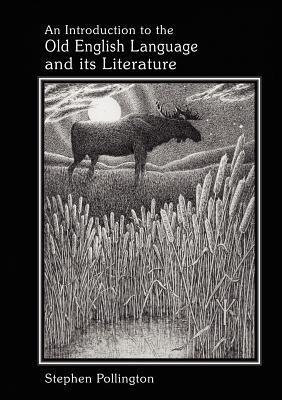
An Introduction to the Old English Language and its Literature
The purpose of this general introduction to Old English is not to deal with the teaching of Old English but to dispel some misconceptions about the language and to give an outline of its structure and its literature. Some basic knowledge about the origins of the English language and its early literature is essential to an understanding of the early period of English history and the present form of the language. This revised and expanded edition provides a useful guide for those contemplating embarking on a linguistic journey.
64 pages, Paperback
First published December 31, 1994
Ratings & Reviews
Friends & Following
Create a free account to discover what your friends think of this book!
Community Reviews
Displaying 1 - 4 of 4 reviews

September 6, 2021
I read this not because I ever have any intention of actually learning Old English—sadly there are too many languages and not enough time—but to enrich my understanding of Modern English and to aid in comprehension of Middle English. It has helped me to understand the workings of specifically English constructions, to understand why they are so satisfying. It has also been very interesting to see exactly how sentences in Old English are structured, how they can feel so familiar and yet so incomprehensible to a speaker of Modern English. It provides just enough historical and literary background information to get your bearings in the subject without having to wade through too much grammar.
Some interesting facts I have learned:
“Baxter” was the female version of masculine “Baker.”
In English there has never been a simple future tense, as in the French « il sera », which means that the future tense in english arguably always must bear more shades of meaning than otherwise.
The Latin word “trinity” was rendered in OE as “threeness.”
Some interesting facts I have learned:
“Baxter” was the female version of masculine “Baker.”
In English there has never been a simple future tense, as in the French « il sera », which means that the future tense in english arguably always must bear more shades of meaning than otherwise.
The Latin word “trinity” was rendered in OE as “threeness.”

November 21, 2022
Really interesting. Kept rereading bits, would like to read more

February 2, 2009
Quite good. Read again in August of 2009.

June 17, 2010
Slim book, interesting read.
Displaying 1 - 4 of 4 reviews