Dans le Japon du XVIe siècle, les seigneurs se disputent âprement leurs territoires : de bataille en bataille, c’est toujours un nouvel opposant plus dangereux qui se profile à l’horizon, dans un climat de violence où la force, la ruse et le courage ouvrent seuls les chemins du pouvoir. De cette période de chaos se détache une figure tout aussi prodigieuse, Yamamoto Kansuke, décrit comme nain, borgne, boiteux, de teint noir et marqué de petite vérole, devenu le stratège génial et secret du seigneur du clan des Takeda. Porteur d’un rêve immense, celui de l’unité du Japon, fidèle à son maître et à sa concubine Yubu, qu’il vénère pour sa beauté et son caractère indomptable, il mourra sans avoir vu se réaliser la vision qui soutenait son existence.De ce personnage historique célèbre entouré d’un halo de mystère, Inoue a tiré une chronique bruissante de batailles et d’épisodes héroïques, peinture effrénée d’une époque féconde en héros et qui parle puissamment à l’imaginaire, où l’absolue nécessité de vaincre pour survivre transforme un être disgracié en guerrier de légende.
Yasushi Inoue (井上靖) was a Japanese writer whose range of genres included poetry, essays, short fiction, and novels.
Inoue is famous for his serious historical fiction of ancient Japan and the Asian continent, including Wind and Waves, Tun-huang, and Confucius, but his work also included semi-autobiographical novels and short fiction of great humor, pathos, and wisdom like Shirobamba and Asunaro Monogatari, which depicted the setting of the author's own life — Japan of the early to mid twentieth century — in revealing perspective.
1936 Chiba Kameo Prize --- Ruten,流転 1950 Akutagawa Prize --- Tōgyu,闘牛 1957 Ministry of Education Prize for Literature --- The Roof Tile of Tempyo,天平の甍 1959 Mainichi Press Prize --- Tun-huang,敦煌 1963 Yomiuri Prize --- Fūtō,風濤
This compact novel by Yasushi Inoue seemed unreadable to me at first till I was reluctant and wondered if I could finish it. However, I found it interestingly revealing especially in relation to an eminent samurai protagonist named Yamamoto Kansuke who served his lord, Takeda Harunobu, that is, Takeda Shingen, chief commander of the Shingen's clan as narrated within the time frame of 1541-1573 (p. 208). In fact, it was a story leading to the fate of Takeda Shingen's son, Katsuyori who had to "fight against the two strongest unifiers of Japan, Oda Nobunaga and Tokugawa Ieyasu" (p. 200).
As for these two unifiers, one night while I was watching a Japanese film on television months ago, the name 'Tokugawa Ieyasu' interested me since he was the first founder and the first shogun in the Tokugawa shogunate in Japan (http://en.wikipedia.org/wiki/Tokugawa... he was so powerful and charismatic that his order to his warriors ready to take action was to be obeyed, that is, not to annihilate an uprising village due to an unthinkable, earnest request from a young, goddess-like warrior who bravely sacrificed her eyes for the safety of those villagers. It was really a touching scene revealing the great elderly shogun named Tokugawa Ieyasu shocked nearly beyond words to utter who stepped out from his norimono, walked to the lady and consoled her. He said something implying his ultimate approval on her request but I can't recall it now. It's a pity I can't read Japanese, thus the film's title has since remained mysterious to me and I think the film might have been produced based on a true story written by a Japanese historian. Definitely, I would appreciate any information on the film from my Goodreads friends knowing Japanese who have watched, known or had any clue about the book related to this film or the film itself.
Having a strange ambition to capture a castle, Kansuke eventually trusted by Takeda Shingen as a key war strategist unfolded his vision and integrity. I liked this excerpt depicting him as a true warrior who deserved admiration and respect from posterity: ... "Then why did you not kill me?" For the first time, her tone was fiery. Her beautiful eyes were staring at Kansuke's face. "Because I felt all of you, your two princesses, the child in your body, they will all be an important asset for the Takeda family. All of your children will be good brothers and sisters for the son of Princess Yuu, Katsuyori." ... ... "I am the one whose name is Yamamoto Kansuke." "I know. When you came into this room, I thought you must be." "From now on, I shall help you. I shall protect all of you, the princesses and the child in your body, with all my life. No matter how much you suffer and feel sad, you must suffer for the future of this house. You have to realize one thing, though; since Prince Katsuyori was born one year before your son, you have to recognize him as your son's elder brother." ... (p. 112)
In brief, Kansuke adapted his own decision not to kill this mysterious lady (Princess Ogoto) for the sake of the advantages of the Shingen's clan which was remarkable due to his wise action instead of killing her in cold blood as planned.
Good: * This novel is about a crippled and deformed bachelor-for-life old man who became an advisor to a lustful master with multiple wives. His master's nemesis was a celibate religious nut. Does it sound like a terrible sitcom?
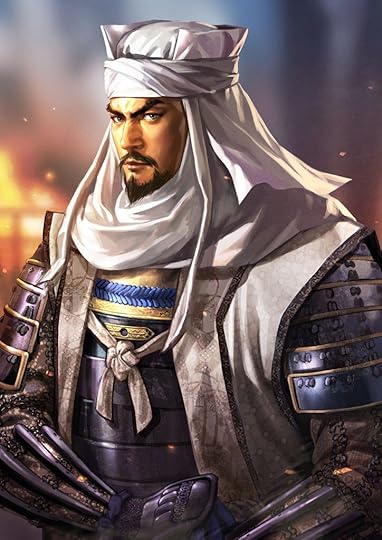
Yamamoto Kansuke Hobbies: capturing castles, scheming The main protagonist of the story. Kansuke was born deformed, missing one finger, had only one eye and a few other physical deficiencies. Due to his appearance, most people treated him poorly, which caused him to hate almost everyone.
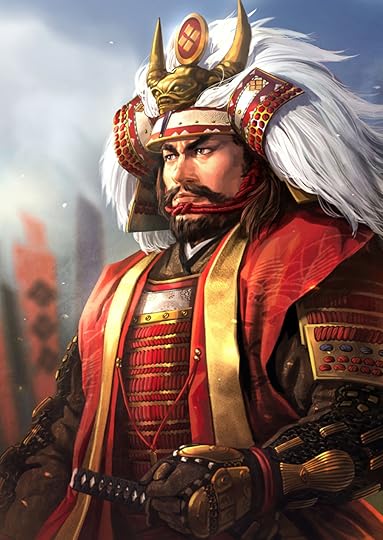
Takeda Shingen Hobbies: collecting beautiful women, taking other people's territories Kansuke's master. A clever warlord with multiple family problems, some of them were caused by his polygamous life style. Very ambitious and wished to unite Japan.
Uesugi Kenshin Hobbies: praying, getting drunk, going to war Shingen's nemesis. A brave warlord with warped sense of life and justice. Lived like a monk except for a few minor differences such as: he drank too much and killed a lot of people.
The novel was set in 16th century Japan and followed Kansuke as he helped Shingen in defeating his opponents and culminated in the battle of Kawanakajima, where Shingen fought for his life against Kenshin.
Bad: * Some anachronisms: for example the book referred general Obu Masakage as Yamagata Masakage more than 10 years before he changed his name. * Date and time were left untranslated.
My younger brother got this when we were at Disney World last Christmas, and I had read only the first 50 or so pages. Now reclaiming it to finish, I reread from the start. It had the symbolic stylistic tones of historical fiction blended with a peek into Feudal Japan and its warring states. There was a lot of battles commanded, issued, and fought over these centuries--all in the name of conquering the entirety of Japan.
This is one of those stories.
Following the samurai Yamamoto Kansuke as he navigates this particular time frame, we become involved in the Takeda clan and its struggles. While it's mostly a narrative story, it does ply the overall aspects of the political climate and the struggles that these warlords undertook. I grew to like Kansuke and other characters, while they did remain 1 or even 2D in personal complexities. But the truth remains it is a portrait of those harsh times where it meant life or death.
editted 30/12/2015 =============== ok, mungkin ini masalah ekspektasi dan saya yang gak baca tag bukunya dengan benar. di bagian atas judul memang telah ada penjelasan bahwa buku ini berkisah tentang "Strategi Penaklukan Benteng Yamamoto Kansuke" jadi (meskipun judul bukunya Furin Kazan yang jadi banner Takeda Shingen) tentu saja novel historis ini berkisah tentang Yamamoto Kansuke dan strategi-strategi perang yang dilakukannya selama membantu Sang Tuan, yaitu Shingen... sedangkan saya sendiri awalnya mengira ini lebih pada pelaksanaan strategi Furin Kazan itu sendiri yang bikin Shingen disuyudi sedemikian, bahkan bisa dikatakan ditakuti baik oleh Uesugi Kenshin maupun Oda Nobunaga, kelak di penghujung usianya.
Jadi, tentang bukunya sendiri, ini lebih ke semacam historic-war-biography dari seorang Ahli Strategi Yamamoto Kansuke sejak ia masuk mengabdi kepada Klan Takeda yang dipimpin Shingen, sampai saat kematiannya. Selain membahas masalah strategi perang, juga banyak menunjukkan intrik di kediaman Takeda, dari masalah istri dan putra-putra resminya hingga selir-selir dan putra-putri lainnnya. Kansuke entah mengapa lebih suka mengabdikan dirinya pada seorang selir dari wilayah Suwa, Putri Yuu, dan putranya Katsuyori. ***seingatku, nanti memang Takeda Katsuyori ini yang menjadi penerus Shingen dan berperang dengan Nobunaga (ok, sudah cek ke om wiki, benar begitu adanya! terbukti saia sudah terlalu banyak baca manga dan nonton pelm jepun inih... :p )*** Nah, tapi karena dukungannya ini, banyak pula masalah yang dihadapi Kansuke selama mengabdi.
Satu hal yang menjadi ciri Kansuke, adalah dia berpikir 3-4 langkah ke depan. Misalnya saat pemberian nama kecil Katsuyori, semua orang mengusulkan nama Saburo, yang berarti putra ketiga. Namun Kansuke mengusulkan nama lain yang sama sekali netral, Shiro. Setelah dimintai penjelasannya, ternyata dia memikirkan bahwa kelak di kemudian hari, dari hasil berbagai peperangan dan perjanjian, pasti akan ada anak adopsi dari klan lain yang diberikan kepada klan Takeda, yang mungkin lebih tua dari Shiro, jadi mestinya dia tidak pas lagi bernama putra ketiga. Oh, begitu.... Demikian pula dengan masalah pembangunan Benteng atau saat membuat perdamaian atau saat menyerang yang tak terduga. Kansuke (dan Shingen) bisa berpikir cerdik, mengantisipasi semua kemungkinan.
Sayangnya, nasib Kansuke naas saat satu pertempuran besar melawan Uesugi Kenshin, Daimyo dan Jendral besar Echigo, lawan sebanding Shingen sepanjang hidupnya. Dan buku ini juga berakhir mendadak, tanpa epilog tanpa penjelasan lanjutan sama sekali, saat Kansuke tewas di medan perang tersebut.
Untuk gaya penulisannya, aku ternyata lebih suka narasi-narasi indah Yoshikawa Eiji - sensei daripada gaya lugas Inoue Yasushi - sensei di sini. Memang mungkin gaya ini lebih cocok untuk novel biografi semacam ini, tapi aku jadi kurang menangkap gambaran pribadi Kansuke seutuhnya. Oh iya, dan edisi terjemahannya ini ada beberapa typo, belum sampai taraf mengganggu sih, tapi cukup untuk tertangkap saat membaca.
======================== FURIN KAZAN INRAI Gara-gara baca Detektif Conan, jadi tahu artinya: Fu/Kaze (Wind), Rin/Mori (Forest), Ka/Kasai (Fire) dan San/Yama (Mountain). Moto Takeda Shingen yg ditulis dalam panji-panjinya berbunyi, Moving as swift as the wind, stay as silent as forest, offend as fierce as fire, defend as unmoveable as a mountain
Dalam versi aslinya yang diambil dari Sun Tzu's Art of War, masih ada dua baris strategi lagi (dalam Conan, --pembunuhnya pengagum berat Takeda Shingen-- 2 baris ini yg menjadi kunci misteri-nya :p ) Rai/Kurai (Dark) Hiding as formless as the dark In/Kaminari (Thunder) Attack as quick as the speed of thunder
**jadi bener-bener pengin baca buku ini, ada yg mau minjemin g ya?!?**
I had high hopes for this book, but they were dashed. I had gone into this with a knowledge of Japanese history of maybe a dozen names, three or four dates, and some idea of the evolution of Japanese society, the era of the shoguns, etc. Unfortunately, I've come out of this novel with but little more understanding and only a few more names.
There's not really any character development to speak of, nor do a lot of the characters' actions seem to make much sense. Does Princess Yuu love or hate the father of her children? Where does Kansuke's loyalty come from? What happens to his first master, the one who refuses to send him off to capture castles? The name Imagawa only appears a few times after the opening pages, despite the appearance of a plot being hatched by them and Kansuke at the start.
Another issue, a big issue, is that you get absolutely no idea about the cultural situation at the time. There was essentially no religion in this book. No references to kami or Buddha, nothing. The run of the book is quite superficial, offering very little outside of the main thrust, which is Kansuke's loyalty to Takeda Shingen, the one warlord willing to give him a chance and let him capture castles.
It wasn't a boring read by any measure, but it lacks so many essential ingredients that it comes out bland anyways. 2.5 stars.
Un libro apasionante sobre el ascenso del clan de caballería más famoso de Japón, una narración de las vaivenes del destino del estratega del clan para lograr el ascenso del clan a la gloria. Es interesante leer el funcionamiento y la diplomacia de esta tierra llena de conflictos, que una vez más es puede ver sangre, honor y artimañas a partes iguales.
Lo leí en 2015 y es un libro que recuerdo con cariño.
Una bonita historia sobre el período Sengoku, que, pese a la idealización de los samuráis (error en el que siempre se cae) y la rivalidad respetuosa entre algunos clanes, muestra de manera cruel lo que fue un período bastante violento.
Gran novela, no deseas que se acabe nunca aunque sabes muy bien cómo va a terminar. Las reseñas de los lectores gringos aqui son de una lástima, es lo que se ganan por tener la cabeza metida en el culo de su cultura. No entienden nada.
Fūrinkazan es el vocablo formado por los ideogramas FU(Sé rápido como el viento), RIN(Sé silencioso como el bosque), KA(Sé fiero como el fuego) y ZAN(Sé sereno como la montaña), parte del arte de la guerra y el estandarte de guerra del clan Takeda. El libro trata sobre la campaña militar de Harunobu Takeda por tomar control de la región central del Japón feudal conformada por las provincias de Kai, Sagami, Shinano y Suruya, en la historia fue uno de los caudillos que pudo haber tomado él shogunato y haberle hecho frente a los Tokugawa, que gobernaron desde 1603 hasta 1867. Su historia forma parte del folklore japonés pero aquí se cuenta desde el punto de vista de uno de los samurai que formaba su consejo de guerra, Yamamoto Kansuke, de esta manera se cuenta la historia de Harunobu como hombre y no como mito, aún cuando la gran mayoría del libro trata sobre las batallas que se enfrentaron y las estrategias usadas, se desarrolla muy bien la personalidad de cada personaje y sus conflictos internos. Al final es una historia épica que retrata perfecto la idiosincrasia del Japón feudal.
Begitu terima bukunya dari Haikal kemarin sore, langsung saya mulai baca setibanya di rumah dan akhirnya selesai tepat jam 12 malam [sempat diselingi jeda makan dan on-line juga sih:].
Seperti bisa dibaca di sinopsis, inti cerita Furinkazan adalah tentang sepak-terjang Yamamoto Kansuke, yang awalnya cuma seorang ronin biasa tapi berhasil mengangkat namanya sebagai penasihat Takeda Harunobu yang kelak lebih dikenal dengan nama Takeda Shingen alias Harimau dari Kai. Dalam sejarah Jepang, Kansuke dikenal karena penampilan fisiknya yang sama sekali tidak terlihat seperti layaknya jenderal tangguh. Namun beruntunglah Kansuke karena sang majikan, Harunobu, bukan tipe orang yang menilai sesamanya semata dari tampak luar.
Saya tidak akan membahas cerita buku ini lebih dalam karena tidak ingin merusak kenikmatan mereka yang belum membaca. Tapi kalau sebelumnya saya sempat dibuat "kecewa" oleh kekurangan terjemahan Heike Story [detilnya bisa dilihat di review Heike Story oleh saya:], Furinkazan sukses mengobati kekecewaan itu karena dua poin utama berikut [maaf kalau terkesan agak subyektif:]:
1. Sampul depan. Keren banget karena memakai gambar pasukan Takeda Shingen yang memegang umbul-umbul Furinkazan, plus warna latar biru, warna kesukaan saya *digebukin massa*
2. Terjemahan. Angkat jempol untuk Furinkazan! Karena diterjemahkan langsung dari Bahasa Jepang, nuansa aslinya lebih terasa. Kalimat-kalimat deskripsi ala novel Jepang berhasil ditransfer ke dalam Bahasa Indonesia dengan, menurut saya, cukup OK. Lalu, sebenarnya sih ini cuma menurut ego pribadi saya, sistem penamaan tokoh yang mengikuti cara Jepang [ex: Yamamoto Kansuke, bukan Kansuke Yamamoto]semakin membuat saya nyaman membaca buku ini.
Kalau masih mau ngotot cari kekurangan, mungkin ada pada sedikit ketidakkonsistenan pemilihan kata "Aku" dan "Saya". Misalnya, ada satu kalimat agak panjang yang awalnya sudah memakai "Aku", tahu-tahu diakhiri dengan "Saya".
Akhir kata, terima kasih banyak untuk Redline Publishing karena telah menerbitkan Furinkazan ini. Ditunggu terbitan2 selanjutnya, dengan kualitas terjemahan yg makin mantap juga tentunya.
Orang pintar yang menyebalkan Buta sebelah mata, pincang pulak!
Itulah sosok Yamamoto Kansuke Ronin yang tidak pernah berada di satu peperangan sekalipun tapi entah mengapa aura nya membuat orang merasa entah segan, entah jengah, entah takut Bahkan tidak ada satupun daimyo yang mau mempekerjakannya karena perasaan aneh yang timbul saat berada di sekitar Kansuke Saya aja bawaannya pengen nabok si Kansuke terus sepanjang baca buku ini..
Ketika akhirnya bertemu dengan jenderal Itagaki, Kansuke dipekerjakan oleh daimyo Takeda Dih, si Kansuke ini bisa banget baca pikiran bos nya (bisa diterapkan di kantor neh.. hehehehe) Dia tau banget apa yang menjadi pertimbangan khusus dan tujuan yang ingin dicapai bosnya. Walaupun Kansuke tidak pernah terjun ke medan perang sebelumnya, tapi karena Kansuke banyak membaca buku (yeaaa!!! musti ditarik jadi goodreaders neh.. kedip-kedip ke momod). Dan menggabungkan ketrampilan membaca jalan pikiran Tuannya dengan pengetahuan yang dia dapat dari buku, dia selalu bisa mengajukan saran dan nasihat yang sudah pasti dijadikan pertimbangan utama Takeda
Pokoknya si Kansuke ini pinter banget deh bikin strategi Baik dalam strategi perang, ataupun dalam menangani urusan selir Takeda, putri Yuu Bahkan sampai mengatur Katsuyori, putra Takeda dengan Putri Yuu, untuk menjadi pewaris Takeda dibandingkan dengan Yoshinobu, putra dari istri pertama Takeda Kansuke benar-benar mengabdi pada putri Yuu yang dia anggap sangat pantas mendampingi Tuannya Sampai-sampai sempat terpikir jangan-jangan Kansuke sebetulnya jatuh cinta sama Putri Yuu
Nah, apa benar Kansuke jatuh cinta? Apakah strategi-strategi Kansuke sebegitu canggihnya sehingga cukup untuk mengantar Takeda memperluas wilayahnya, apalagi pada pertarungan puncak yaitu melawan pasukan Echigo yang dipimpin Uesegi Kenshin Kagetora? Hmmmmm.. silahkan baca buku bersampul BIRU yang penuh dengan peperangan ini untuk tahu lebih lanjut.. Yang jelas, buku ini (kayaknya) jauh lebih seru dibanding dengan Heike Story yang sampe sekarang ga maju-maju nih baca nya Hehehehhe
PS: Font nya enak dibaca, terjemahannya juga okeh.. asik lah
This is not really my 'type' of book except that it is a historical romance of the Japanese that intrigued me because it was about the warlord and daimyo Takeda Shingen who is mentioned in my grandfather's memoir. Apparently, his family was a vassal of this great war leader's clan. Anyway, the book is well known and famous enough in Japan where Takeda Shingen is a popular samurai hero figure, depicted in films and TV.
The translator of this book is Yoko Riley, a professor of Japanese history at the University of Calgary. I ran into as a published book in English under the Tuttle Classics imprint.
Generally, I found the book entertaining and engaging -- Inoue has created an interesting fictional character, Kansuke Yamamoto, a diminutive and slightly deformed ronin, who helps mastermind Shingen's military career and ambitions. I found the narrative was told well, for the most part, but occasionally there was some repetition that I found took me out of an otherwise seamless reading experience. This, I've come to understand, is one of the problems with translating Japanese to English. Sometimes, characters' feelings also were expressed awkwardly or in a conflicting manner -- this could be one of those lost-in-translation cultural moments, possibly -- couldn't tell. Basically we are given the story of the clan's success mediated through this political and military manipulator, so the story turns out to be as much about the 'kingmaker' as the 'king' himself, so to speak. And this narrative perspective is what makes the book engaging and clever.
I reeeally wanted to love this book. The traditional story of the rise of Takeda Shingen and his relationships with his vassals (Yamamoto Kansuke) and enemies (Uesugi Kenshin) is basically taken from the Koyo Gunkan, the self-glorifying epic of the Takeda family. It's retold here in novel form. I love the Koyo Gunkan so much that all I did last summer was daydream about Shingen's profound witticisms all day--so what could go wrong?
Throughout the novel, something was just slightly "off"--Yamamoto Kansuke was just not a completely believable protagonist, as his talent seemed to come from nowhere. I found myself scratching that itch instead of enjoying the book. Maybe a different mindset would have helped. Yet, when it comes to the end and the pained Kansuke throws himself into the enemy spears to atone for the strategic blunder that he believes will spell doom for his lord, I just wasn't as moved as I thought I should be.
Still, it's a short and enjoyable read. If you have a soft spot for Japan's Sengoku period like I do, it's a no-brainer. Double points if you're a Takeda Shingen fan. But if you had to pick one of the two, I'd say Taiko has more literary value and it's simply better written.
heike bagus, tp ini lebih seru :D apa mungkin krna heike lebih bantal? hehehe....
tokoh utamanya bukan pemimpin klan, tp seorang ahli strategi perang, Yamamoto Kansuke.. semenjak bergabung dengan takeda shingen, kansuke melakukan berbagai macam taktik utk memperluas wilayah kekuasan takeda.. Kansuke merancang taktik yg mendukung keinginannya utk mendudukkan katsuyori anak dr putri yuu, seorang selir, sebagai penerus klan takeda. Katsuyori dianggapnya lebih pantas dr pd Yoshinobu, pewaris yg sebenarnya.. kisah ini bener2 berputar disekitar kansuke, jd kisah ini pun selesai setelah kematian kansuke.. kadang2 tindakan kansuke kejam, tp entah kenapa, aku ga bisa benci ma kansuke, kadang ga suka, tp ga bisa benci :p
Kalau kemarenan baca heike sedikit cerita perangnya, di buku ini malah perang melulu :p
This entire review has been hidden because of spoilers.
Au début j’ai été désarçonnée par l’écriture (traduction ?) et puis je suis rentrée dans ce roman fort intéressant. Je ne sais pas qu’elle est la fiabilité historique mais si ce n’est pas fiable cela fait une bonne uchronie! Le rapport des 2 hommes, le narrateur et le seigneur est fascinant. Celui avec la princesse m’a semblé moins crédible ou moins approfondi ?
Takeda Shingen is the daimyo of Kai province in central Japan and one of the greatest warriors of the Sengoku period. Kansuke Yamamoto, although crippled and disfigured, is one of Shingen’s 24 generals since he is an excellent swordsman and a brilliant strategist, and his shrewd ideas win many a battle for his master.
Not only the men are scheming in this period though, the women are their equals if not their betters. Princess Yuu, who wanted to kill herself upon her father’s defeat, becomes Shingen’s concubine, and, through a number of open and hidden plots, she secures the succession of her son as Shingen’s heir.
In the end, Kansuke dies in the battle of Kawanajima in what would turn out to be his greatest victory. Shingen himself however, is ultimately killed by the armies supporting Oda Nobunaga, one of the major players of unification of Japan.
Takeda Harunobu, 1521 – 1573, later named Shingen, was one of the strongest warriors in the Sengoku period, a time of uproar and fighting throughout Japan. The shogunate was very weak at that time, and the hierarchical order broke down, so that anyone who had the power and ability could aspire to lead and rise through the ranks. The banner Shingen carried in his campaigns bore the four characters fu-rin-ka-zan from Sun Tsu’s “The Art of War”, which can be translated as: Be as swift as the wind, as silent as the wood, attack as fiercely as fire, be as composed as the mountain.
The book starts shortly before Yamamoto Kansuke entered Shingen’s services and ends with his death on the battlefield. The main focus lies on the battles that Shingen fought with Kansuke’s help, but we also get some insight into the daily lives of the people of this period. Interesting to see is how Shingen keeps acquiring women as concubines for his pleasure – very much to the dismay of Kansuke, who is devoted to Princess Yuu, maybe even more so than to Shingen.
I greatly enjoyed this book and all the scheming and fighting; an interesting glimpse into one of the most dangerous periods of Japanese history.
I didn't enjoy this book as much as I expected to. This is a fictional retelling of key battles during Japan's Sengoku era, or 'Warring States' period, which preceded the start of the Tokugawa Shogunate. The characters from this book come directly from history recounts of the period, and overall I felt that Inoue accurately represents what life would have been like in a feudal Japan where people constantly fought for power. In 'The Samurai Banner of Furin Kazan' we see the rise of Takeda Shingen and are given insight into his relationships with vassals (Yamamoto Kansuke) and enemies (Uesugi Kenshin). With such interesting characters and such an interesting period of Japanese history as the setting of this story, I was expecting it to be a more compelling read. Unfortunately, at times it felt very stale. Most of the narrative follows Takeda's vassal Yamamoto Kansuke, and whilst he was an interesting individual in life, I don't think this portrayal does him the justice he deserves. Kansuke is often depicted as a brilliant mastermind of war and political manoeuvring, and his end is a tragic example of samurai loyalty and honour. In this novel he is very difficult to empathise with and his political prowess doesn't seem to have origin, which makes him feel like a typical 'hero' figure but without any idiosyncrasies or unique backstory from which reader empathy can develop. I think perhaps some of the emotion was taken out of the story through the translation process, as I know from personal experience that the subtlety in meaning and emotivity of the Japanese language is often difficult to translate. Due to this, I struggled with the slow pace and could not feel much movement in the heavier 'war' sections as I was not emotionally attached to the characters. Whilst this novel is a little dry, overall I would still recommend this book to those interested in Japanese history.
Novela histórica centrada en el devenir del clan Takeda, y sobre todo del enigmático Kansuke, fiel estratega a su servicio cuya astucia y genio militar se elevan al nivel de mito. Como bien sugiere el subtítulo ('epopeya') de esta edición, este libro se asemeja a los antiguos griegos: es una remembranza de épicas campañas imperialistas, así como una robusta narración de un drama a gran escala. No hay aquí pretensiones artísticas modernistas ni descripciones elucubradas a modo del romanticismo, 'Furinkazan' es en esencia una obra clásica, o neo-clásica.
Algo que destaca casi de inmediato es el poco interés del autor por matizar las relaciones personales entre los personajes, quedando estas apenas exploradas según las expectativas naturales de un lector actual, pero me parece que esto es una decisión fundamentada en el objetivo de la propia novela, mucho más pendiente de su rigor histórico y su ilusión de una estructura formalísima que en artilugios para elevar el sentimentalismo imperante en aquello que leemos. Uno queda con la impresión de que está leyendo de verdad un libro de historia sobre la época, un mito contado de generación en generación y escrito más como voluntad de un pueblo por legar a la posteridad su pasado que como una obra de arte de un escritor renombrado. Si esto resulta un logro o un fallo ya dependerá de como lo afronte cada quién.
Por supuesto que detrás de esa prosa simple en apariencia hay todo un mundo de sensaciones que apenas afloran en la superficie. Es fácil darse cuenta de la ambición y la sed de sangre que eran norma en el Japón pre-Edo por los efectos de esta narración, igual que del absurdo rol servil de la mujer en cierto personaje, etc. Son pequeños detalles así que están escondidos en las páginas los que terminan haciendo que la experiencia valga la pena, si bien no destaque de inmediato por su emotividad o profundidad argumentativa.
Berlatar di era sengoku, buku ini mengisahkan seorang ahli strategi yang berumur 50an dengan tinggi tidak sampai lima kaki, kulitnya gelap, salah satu matanya buta, kakinya pincang sebelah dan juga tidak memiliki jari tengah di tangan kanannya. Dialah Yamamoto Kansuke, yang sebelumnya ia seorang ronin di sunpu yang tidak pekerjakan oleh klan imagawa yang pada akhirnya dia mengabdi kepada klan takeda sebagai ahli strategi dibawah kepemimpinan harunobu alias takeda shingen sang haimau dari kai
Sementara, furinkazan sendiri merupakan salah satu panji sonshi niryu milik klan takeda yang selalu dibawa disetiap pertempuran, bertuliskan emas berlatar biru gelap yang memiliki arti "menjadi secepat angin, sebijak hutan, menyerang sekuat api, dan menjadi setenang gunung" hlm 67
Salah satu contoh siasat Kansuke yang menarik adalah ketika ia menyarankan kepada shingen untuk membangun persekutuan dengan klan Imagawa, Hojo dan Takeda yakni dengan cara menikahkan Puteri shingen dari isteri resminya dengan klan Hojo, klan Hojo akan menikahkan putrinya dengan klan Imagawa dan Puteri imagawa dengan Takeda. Dengan begitu shingen dapat menghadapi Kenshin tanpa perlu khawatir terhadap kedua klan tersebut.
Mungkin bisa diibaratkan buku ini seperti anime yang berjumlah 12 episode, singkat dan padat. Kendati demikian buku ini menurut saya cukup ciamik dengan halaman yang kurang dari 300 ini kita masih bisa menikmati dan merasakan suasana pada era tersebut. Kita juga disuguhkan beberapa pertempuran sebelum terjadinya perang kawanakajima yang tentunya dengan didukung siasat dari sang ahli strategi Yamamoto Kansuke diantaranya penaklukan klan suwa dan pertempuran melawan Murakami Yoshikiyo. Dan buku ini menurut saya bisa dijadikan pasangan dari buku Uesugi Kenshin karya Eiji Yoshikawa yang dimana buku tersebut mengambil perspektif dari pihak Kenshin sementara untuk buku ini dari perspektif pihak shingen.
This exciting but flawed Japanese samurai novel by Inoue Yasushi, translated by Yoko Riley, gallops through nearly two decades of action-packed Sengoku history, culminating in the clash between Takeda Shingen and Uesugi Kenshin at Kawanakajima.
A story told from the vantage point of grizzly Takeda strategist Kansuke Yamamoto, it is more of a zoomed in look at the era rather than an expansive epic like James Clavell’s Shogun. Unfortunately it lacks the purple prose and colourful cast of characters of that novel, and offers a rather shallow reflection on the broader political situation in the country, so I would only recommend it to hardcore fans of this period of history who are already familiar with the context in which the story takes place. Still, I had fun reading it, and the gruesome battles in particular were a highlight.
The Samurai Banner of Furin Kazan would be a pretty ho-hum Samurai battle epic, if not for Inoue’s skills as a novelist. He creates characters in 16th century Japan that come alive on the page--ones that a reader can invest in. It’s not always easy to keep up with the clans and clan leaders, but the main character, Kansuke, is easy to follow. He is a deformed, unwanted fighter who eventually gets a chance to work for the up-and-coming Takeda clan. He is contrary, ruthless and without fear, and somehow loveable. He loves his lord and his lord’s concubine and schemes of having her child eventually take over the Takeda clan. All the while he is helping prepare for a decisive battle with a neighboring clan which will determine the future of central Japan.
Es una muy acuciosa recopilación de lo que significaban las guerras entre los clanes en Japón en el siglo XVI. Una descripción de los di tintos clanes , sus nombres y guerreros . La enorme cantidad de castillos y porque los samurais , bushis . Ronin y otros pasaban de batalla en batalla tratando de conquistarse y dominar ciertas regiones de Japón . El rol de las mujeres , las concubinas y la importancia de la descendencia . Interesante libro y gran erudición del autor
Una gran novela sobre el Japón medieval que cuenta la vida de un gran estratega militar Yamamoto Kansuke quien sufrio mucho por su aspecto deforme, cojo y chaparro pero quien tiene gran influencia sobre el dirigente del clan Takeda
La novela trata de su vida de lo que hizo para proteger al clan y a una concubina del jefe del clan , buena parte del libro narra las batallas y todo culmina en la gran batalla final
Una gran novela que conjuga las luchas por el poder y las sutilezas de las relaciones humanas , la lealtad , la protección y las guerras
Una muy interesante crónica de la evolución guerrera del Japón feudal de los siglos XV y XVI. Ubicándonos desde la perspectiva de un enigmático y aparentemente vil ronin, la narración comienza a desplegarse hasta abarcar las míticas batallas de miles de hombres. La construcción y la tensión narrativa que logra Inoue es en verdad cautivante.
Une très bon roman historique sur un des personnages importants de l’histoire du Japon
L’histoire d’un des hommes importants du Japon médiéval vu par les yeux d’un de ses conseillers racontée de manière passionnante et émouvante. Un très bon moment passé à s’immerger dans la culture de l’époque. Un must pour les passionnés du Japon médiéval !
Gran novela histórica, que toca personajes y momentos fundamentales para la historia de Japón. La narración es dinámica sin dejar de lado la estética, la formalidad y los valores de los personajes y su contexto. Vale la pena comentar la sutil pero constante evolución de los personajes al correr de los años, y su transformación en las leyendas que llegaron a ser. Es una novela muy bella y siempre recomendable para disfrutar de una panorámica de la época de Sengoku.