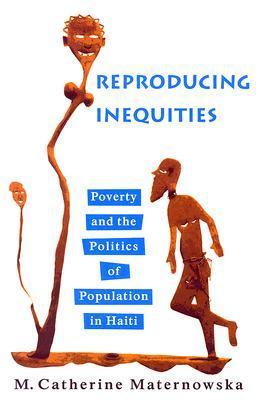
Political Economy of Fertility (PEF) is what the author used to explain the question of why reproductive health initiatives in Cite Soleil, an impoverished slum area in Haiti, have not been successful. The USAID has determined that Haiti has a problem. Its population kept increasing, and that's the what prohibits growth. So the USAID has directed their assistance towards addressing this problem, and this problem only. The problem with that approach is that it lacks an integrated approach to solving the population problem in Haiti. It's not that people don't have to have less children, but it's the social, economic & political systems that they are in that made them have many children. That's the explanation the author provided. So in order to solve population issues in Haiti, development interventions need to incorporate those social, political, and economic problems into their initiatives. In terms of ethnographic information, we can learn a few things about Haiti such as gender relations, men & women roles in a union, courtship, sexual relations, doctor-client interactions at a clinic, and a bit more on lives in that poor slum area. There's also information on the historical context that led to the establishment of Cite Soleil. However, it's important to remember that this is a case study of Haiti which does not reflect the whole country in general. What we learn about reproductive health issues in Cite Soleil might not be applicable to other places in the country.