

What do you think?

Signs and Symbols
"For the fourth time in as many years they were confronted with the problem of what birthday present to bring a young man who was incurably deranged in his mind..."
Signs and Symbols is a short story centering on the severe mental debility of a young man and on the struggle of his elderly parents to cope with it. It was first published in the May 15, 1948, issue of The New Yorker magazine. Before publishing the story, the editors of the magazine changed the title to "Symbols and Signs." After the story appeared, Nabokov changed the title back to its original wording.
Vladimir Nabokov, also known as Vladimir Sirin, was a Russian-American novelist. Nabokov wrote his first nine novels in Russian, then rose to international prominence as a master English prose stylist. He also made significant contributions to lepidoptery (The study and collection of moths & butterflies), and had a big interest in chess problems. Nabokov's Lolita (1955) is frequently cited as his most important novel, and is at any rate his most widely known one, exhibiting the love of intricate wordplay and descriptive detail that characterized all his works.
Signs and Symbols is a short story centering on the severe mental debility of a young man and on the struggle of his elderly parents to cope with it. It was first published in the May 15, 1948, issue of The New Yorker magazine. Before publishing the story, the editors of the magazine changed the title to "Symbols and Signs." After the story appeared, Nabokov changed the title back to its original wording.
Vladimir Nabokov, also known as Vladimir Sirin, was a Russian-American novelist. Nabokov wrote his first nine novels in Russian, then rose to international prominence as a master English prose stylist. He also made significant contributions to lepidoptery (The study and collection of moths & butterflies), and had a big interest in chess problems. Nabokov's Lolita (1955) is frequently cited as his most important novel, and is at any rate his most widely known one, exhibiting the love of intricate wordplay and descriptive detail that characterized all his works.
16 pages, Collection
First published May 15, 1948
About the author
Vladimir Nabokov
893 books15.6k followersVladimir Nabokov (Russian: Владимир Набоков) was a writer defined by a life of forced movement and extraordinary linguistic transformation. Born into a wealthy, liberal aristocratic family in St. Petersburg, Russia, he grew up trilingual, speaking Russian, English, and French in a household that nurtured his intellectual curiosities, including a lifelong passion for butterflies. This seemingly idyllic, privileged existence was abruptly shattered by the Bolshevik Revolution, which forced the family into permanent exile in 1919. This early, profound experience of displacement and the loss of a homeland became a central, enduring theme in his subsequent work, fueling his exploration of memory, nostalgia, and the irretrievable past.
The first phase of his literary life began in Europe, primarily in Berlin, where he established himself as a leading voice among the Russian émigré community under the pseudonym "Vladimir Sirin". During this prolific period, he penned nine novels in his native tongue, showcasing a precocious talent for intricate plotting and character study. Works like The Defense explored obsession through the extended metaphor of chess, while Invitation to a Beheading served as a potent, surreal critique of totalitarian absurdity. In 1925, he married Véra Slonim, an intellectual force in her own right, who would become his indispensable partner, editor, translator, and lifelong anchor.
The escalating shadow of Nazism necessitated another, urgent relocation in 1940, this time to the United States. It was here that Nabokov undertook an extraordinary linguistic metamorphosis, making the challenging yet resolute shift from Russian to English as his primary language of expression. He became a U.S. citizen in 1945, solidifying his new life in North America. To support his family, he took on academic positions, first founding the Russian department at Wellesley College, and later serving as a highly regarded professor of Russian and European literature at Cornell University from 1948 to 1959.
During this academic tenure, he also dedicated significant time to his other great passion: lepidoptery. He worked as an unpaid curator of butterflies at Harvard University's Museum of Comparative Zoology. His scientific work was far from amateurish; he developed novel taxonomic methods and a groundbreaking, highly debated theory on the migration patterns and phylogeny of the Polyommatus blue butterflies, a hypothesis that modern DNA analysis confirmed decades later.
Nabokov achieved widespread international fame and financial independence with the publication of Lolita in 1955, a novel that was initially met with controversy and censorship battles due to its provocative subject matter concerning a middle-aged literature professor and his obsession with a twelve-year-old girl. The novel's critical and commercial success finally allowed him to leave teaching and academia behind. In 1959, he and Véra moved permanently to the quiet luxury of the Montreux Palace Hotel in Switzerland, where he focused solely on writing, translating his earlier Russian works into meticulous English, and studying local butterflies.
His later English novels, such as Pale Fire (1962), a complex, postmodern narrative structured around a 999-line poem and its delusional commentator, cemented his reputation as a master stylist and a technical genius. His literary style is characterized by intricate wordplay, a profound use of allusion, structural complexity, and an insistence on the artist's total, almost tyrannical, control over their created world. Nabokov often expressed disdain for what he termed "topical trash" and the simplistic interpretations of Freudian psychoanalysis, preferring instead to focus on the power of individual consciousness, the mechanics of memory, and the intricate, often deceptive, interplay between art and perceived "reality". His unique body of work, straddling multiple cultures and languages, continues to
The first phase of his literary life began in Europe, primarily in Berlin, where he established himself as a leading voice among the Russian émigré community under the pseudonym "Vladimir Sirin". During this prolific period, he penned nine novels in his native tongue, showcasing a precocious talent for intricate plotting and character study. Works like The Defense explored obsession through the extended metaphor of chess, while Invitation to a Beheading served as a potent, surreal critique of totalitarian absurdity. In 1925, he married Véra Slonim, an intellectual force in her own right, who would become his indispensable partner, editor, translator, and lifelong anchor.
The escalating shadow of Nazism necessitated another, urgent relocation in 1940, this time to the United States. It was here that Nabokov undertook an extraordinary linguistic metamorphosis, making the challenging yet resolute shift from Russian to English as his primary language of expression. He became a U.S. citizen in 1945, solidifying his new life in North America. To support his family, he took on academic positions, first founding the Russian department at Wellesley College, and later serving as a highly regarded professor of Russian and European literature at Cornell University from 1948 to 1959.
During this academic tenure, he also dedicated significant time to his other great passion: lepidoptery. He worked as an unpaid curator of butterflies at Harvard University's Museum of Comparative Zoology. His scientific work was far from amateurish; he developed novel taxonomic methods and a groundbreaking, highly debated theory on the migration patterns and phylogeny of the Polyommatus blue butterflies, a hypothesis that modern DNA analysis confirmed decades later.
Nabokov achieved widespread international fame and financial independence with the publication of Lolita in 1955, a novel that was initially met with controversy and censorship battles due to its provocative subject matter concerning a middle-aged literature professor and his obsession with a twelve-year-old girl. The novel's critical and commercial success finally allowed him to leave teaching and academia behind. In 1959, he and Véra moved permanently to the quiet luxury of the Montreux Palace Hotel in Switzerland, where he focused solely on writing, translating his earlier Russian works into meticulous English, and studying local butterflies.
His later English novels, such as Pale Fire (1962), a complex, postmodern narrative structured around a 999-line poem and its delusional commentator, cemented his reputation as a master stylist and a technical genius. His literary style is characterized by intricate wordplay, a profound use of allusion, structural complexity, and an insistence on the artist's total, almost tyrannical, control over their created world. Nabokov often expressed disdain for what he termed "topical trash" and the simplistic interpretations of Freudian psychoanalysis, preferring instead to focus on the power of individual consciousness, the mechanics of memory, and the intricate, often deceptive, interplay between art and perceived "reality". His unique body of work, straddling multiple cultures and languages, continues to
Ratings & Reviews
Friends & Following
Create a free account to discover what your friends think of this book!
Community Reviews
Displaying 1 - 30 of 290 reviews

July 1, 2018
“What he had really wanted to do was to tear a hole in his world and escape.”

January 15, 2025
3.5*
Read in The Big Book of Fantasy Anthology. It is probably is my 3rd short story by Nabokov and my favourite.I guess it was less flowery and more emotional. The short story is about severe mental ilness of a young man and about the struggle of his elderly parents to cope with it
Read in The Big Book of Fantasy Anthology. It is probably is my 3rd short story by Nabokov and my favourite.I guess it was less flowery and more emotional. The short story is about severe mental ilness of a young man and about the struggle of his elderly parents to cope with it

October 18, 2021
What he had really wanted to do was to tear a hole in his world and escape.
I have to acknowledge that in the last few days, I got the chance to feel the literary genius of Vladimir Nabokov, courtesy of my Goodreads friends- Katia, Vesna, and Ilse, because of whom I got to read the best short stories by the Russian master. Continuing the spree of reading his short stories, I read Signs and Symbols today, I further realized the range and beauty of Nabokov; while the prose is so picturesque as if you are watching the action by playing an active role in the narrative (and it gets itched in your brain forever which you may relive by flipping the pages of your memory album, whenever you want to), the undertones and symbols hidden in his prose demand careful and patient reading- sometimes multiple readings. However, once you pay the prize of patience and dedication demanded from you, the gratification you get can match with readings of very few authors.
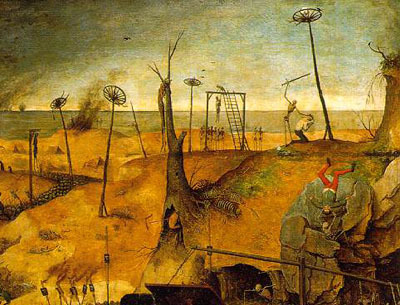
source
Human existence is weird, how crushing it could be? And our brain- our soul- could be our biggest enemy, and if that is the case then what comfort one could get? The references and dogmas we create to save ourselves from existential anguish, we are even denied of that. For, everything around us seems to challenge us, how pressing and squeezing the life must be then. And most of the people around you understand your situation except you. But what is the use of it when you yourself don’t understand yourself, for you have the only luxury of your consciousness to refer to, and if that is delusional then there could not be anything harder than ‘to live’. Our brain could behave in a funny but there is no fun when it behaves so; our life, our whole existence may be delusional. Well, some theoretical physicists suggest that the universe we live in, could be a simulation and we may be living in a delusion, however at least all of us are there in it simultaneously. So, we may get solace from watching others, the problem arises when you are the only one who lives in delusion, for then, you may be a special case and specialty does not imply here positive connotation.
‘Signs and Symbols’ is one such story about an elderly immigrant couple, whose son is suffering from ‘referential mania’ in which the patient imagines that everything happening around him is a veiled reference to his personality and existence. The couple struggles over deciding the gift for the birthday of their son since the comfort people get from most of the things are of no use in his abstract world. The son thinks everything around him speaks to him in form of some ciphers which he has to decode. The reader feels the dutiful propensity due to the title and the structure of the story that there might be some signs and symbols hidden in the text, which have to be uncovered by the diligent and observant eyes of the reader.
Nabokov has been able to create his magic here too by creating the dense prose he is known for; the prose demands careful meditation from the watchful reader so as not to miss any ‘signs and symbols’. The author has the uncanny ability to paint his characters with just the stroke of a few words, as clear as they could be, he also has the golden touch to infuse vivid details which the reader could watch as if those are playing clearly on his mental space. The words of Nabokov could take you through green fields with diamonds of dewdrops on the tip of sunken leaves, and the yellow dust of butterflies pleasing your eyes by changing the color of those diamonds through their reflections; or the sad, pensive and deranged son who is infinitely trying to understand what the white pane of windows and the musty, fuzzy blue of the sky, peeking through the ajar grand door, might be trying to converse with him.
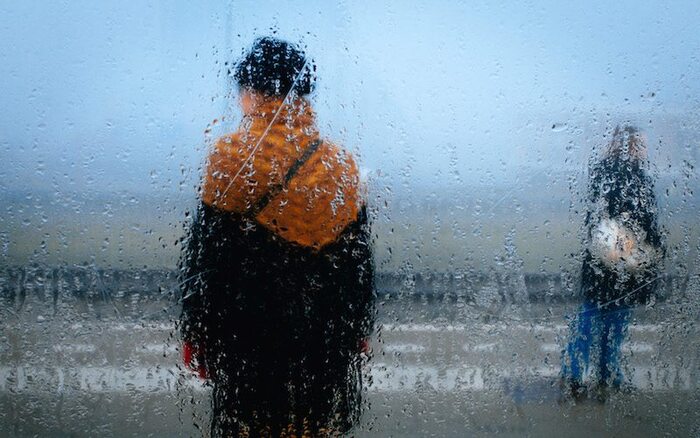
source
Of course, they are symbols and signs in the text as you expect from Nabokov, which have to be revealed by the reader, there is a half-dead unfledged bird twitching helplessly in a puddle as if the bird symbolizing the deranged son of the couple, who might be fluttering unstopping and unrewarding with all his strength to overcome the suppressing wind of existence. And is there any way to escape it, to end the squeezing trembling of breath, to unburden the heart of poor man carrying the burden of the entire world; well, he might tear away the thread of cosmos to jump into well of nothingness through anonymity? But the idiot doctors of the sanitorium denied him the opportunity every time as he is just about to leave the hell of his existence. And what could his parents do? Well, they are of the thought that they are helping him by assisting those doctors- life could really mean differently for different people, what could be heaven for someone, maybe hell for someone else.
The last time he had tried to do it, his method had been, in the doctor's words, a masterpiece of inventiveness, he would have succeeded, had not an envious fellow patient thought he was learning to fly- and stopped him.
The couple plans to shift their son to their home as if it might get him free from the hell his life has been. We see that they plan in the middle of the night when the reader’s heartbeats are pumped by a late-night call which is attended by the mother. The reader is immediately surrounded by the dread that the deranged son of the couple may be relieved of his misery but it turns out to be a wrong number. The tension starts to build again when the same person rings thrice, perhaps hinting at multiple interpretations as most of the stories of Nabokov do.
As a reader, you constantly feel the positive pressure to perceive that you are missing something, that there may be some clues which you might have missed so you pay great attention to every detail of the story, and here you are checkmated again (as in most of his stories) that even after paying your dedicated attention to it, you cannot get rid of that pressing feel of might be missing something. Nabokov has been able to craft a beautifully sad story here in which he paints the anguish and agony of existence with the masterful brush of elegance.
Like Nabokov lived as an exile for much of his life, the son of the immigrant couple remains as an exile to this society of ours, though his parents try everything they could to assuage the pain of his throbbing existence, not to realize that sometimes even love is not enough and you require something more, something detached from all the worldly affairs to understand life.
Phenomenal nature shadows him whatever he goes. Clouds in the staring sky transmit to one another, by means of slow signs, incredibly detailed information regarding him. His inmost thoughts are discussed at nightfall, in manual alphabet, by darkly gesticulating trees.

source
4.5/5
I have to acknowledge that in the last few days, I got the chance to feel the literary genius of Vladimir Nabokov, courtesy of my Goodreads friends- Katia, Vesna, and Ilse, because of whom I got to read the best short stories by the Russian master. Continuing the spree of reading his short stories, I read Signs and Symbols today, I further realized the range and beauty of Nabokov; while the prose is so picturesque as if you are watching the action by playing an active role in the narrative (and it gets itched in your brain forever which you may relive by flipping the pages of your memory album, whenever you want to), the undertones and symbols hidden in his prose demand careful and patient reading- sometimes multiple readings. However, once you pay the prize of patience and dedication demanded from you, the gratification you get can match with readings of very few authors.
source
Human existence is weird, how crushing it could be? And our brain- our soul- could be our biggest enemy, and if that is the case then what comfort one could get? The references and dogmas we create to save ourselves from existential anguish, we are even denied of that. For, everything around us seems to challenge us, how pressing and squeezing the life must be then. And most of the people around you understand your situation except you. But what is the use of it when you yourself don’t understand yourself, for you have the only luxury of your consciousness to refer to, and if that is delusional then there could not be anything harder than ‘to live’. Our brain could behave in a funny but there is no fun when it behaves so; our life, our whole existence may be delusional. Well, some theoretical physicists suggest that the universe we live in, could be a simulation and we may be living in a delusion, however at least all of us are there in it simultaneously. So, we may get solace from watching others, the problem arises when you are the only one who lives in delusion, for then, you may be a special case and specialty does not imply here positive connotation.
‘Signs and Symbols’ is one such story about an elderly immigrant couple, whose son is suffering from ‘referential mania’ in which the patient imagines that everything happening around him is a veiled reference to his personality and existence. The couple struggles over deciding the gift for the birthday of their son since the comfort people get from most of the things are of no use in his abstract world. The son thinks everything around him speaks to him in form of some ciphers which he has to decode. The reader feels the dutiful propensity due to the title and the structure of the story that there might be some signs and symbols hidden in the text, which have to be uncovered by the diligent and observant eyes of the reader.
Nabokov has been able to create his magic here too by creating the dense prose he is known for; the prose demands careful meditation from the watchful reader so as not to miss any ‘signs and symbols’. The author has the uncanny ability to paint his characters with just the stroke of a few words, as clear as they could be, he also has the golden touch to infuse vivid details which the reader could watch as if those are playing clearly on his mental space. The words of Nabokov could take you through green fields with diamonds of dewdrops on the tip of sunken leaves, and the yellow dust of butterflies pleasing your eyes by changing the color of those diamonds through their reflections; or the sad, pensive and deranged son who is infinitely trying to understand what the white pane of windows and the musty, fuzzy blue of the sky, peeking through the ajar grand door, might be trying to converse with him.
source
Of course, they are symbols and signs in the text as you expect from Nabokov, which have to be revealed by the reader, there is a half-dead unfledged bird twitching helplessly in a puddle as if the bird symbolizing the deranged son of the couple, who might be fluttering unstopping and unrewarding with all his strength to overcome the suppressing wind of existence. And is there any way to escape it, to end the squeezing trembling of breath, to unburden the heart of poor man carrying the burden of the entire world; well, he might tear away the thread of cosmos to jump into well of nothingness through anonymity? But the idiot doctors of the sanitorium denied him the opportunity every time as he is just about to leave the hell of his existence. And what could his parents do? Well, they are of the thought that they are helping him by assisting those doctors- life could really mean differently for different people, what could be heaven for someone, maybe hell for someone else.
The last time he had tried to do it, his method had been, in the doctor's words, a masterpiece of inventiveness, he would have succeeded, had not an envious fellow patient thought he was learning to fly- and stopped him.
The couple plans to shift their son to their home as if it might get him free from the hell his life has been. We see that they plan in the middle of the night when the reader’s heartbeats are pumped by a late-night call which is attended by the mother. The reader is immediately surrounded by the dread that the deranged son of the couple may be relieved of his misery but it turns out to be a wrong number. The tension starts to build again when the same person rings thrice, perhaps hinting at multiple interpretations as most of the stories of Nabokov do.
As a reader, you constantly feel the positive pressure to perceive that you are missing something, that there may be some clues which you might have missed so you pay great attention to every detail of the story, and here you are checkmated again (as in most of his stories) that even after paying your dedicated attention to it, you cannot get rid of that pressing feel of might be missing something. Nabokov has been able to craft a beautifully sad story here in which he paints the anguish and agony of existence with the masterful brush of elegance.
Like Nabokov lived as an exile for much of his life, the son of the immigrant couple remains as an exile to this society of ours, though his parents try everything they could to assuage the pain of his throbbing existence, not to realize that sometimes even love is not enough and you require something more, something detached from all the worldly affairs to understand life.
Phenomenal nature shadows him whatever he goes. Clouds in the staring sky transmit to one another, by means of slow signs, incredibly detailed information regarding him. His inmost thoughts are discussed at nightfall, in manual alphabet, by darkly gesticulating trees.
source
4.5/5

August 23, 2024
It’s Nabokov, so I expected beautiful writing, possibly describing something repugnant. I got the former, but was unprepared for the gut-punch of simple, raw tragedy, quietly endured.
Trigger warnings: .
The title story opens thus:
“For the fourth time in as many years, they were confronted with the problem of what birthday present to take to a young man who was incurably deranged in his mind. Desires he had none. Man-made objects were to him either hives of evil, vibrant with a malignant activity that he alone could perceive, or gross comforts for which no use could be found in his abstract world.”
Read that at least twice to fully appreciate how much is condensed in so few words. The indefinite article, “a”, in particular.
The unnamed couple leave their tiny, dilapidated NYC apartment:
“Her drab gray hair was pinned up carelessly… she presented a naked white countenance to the faultfinding light of spring.”
They endure a long trip across the city (it rains, and even the subway train loses its “life-current”) to visit the young man, before returning home later the same day. Everything is sad, poignant, frustrating, or worse; even the man’s dental plate is “hopelessly uncomfortable” and their playing cards are “soiled”.
The only glimpse of a different mood is a group of high-schoolers, but they’re “garrulous” on an over-crowded bus, so are a source of mild annoyance.
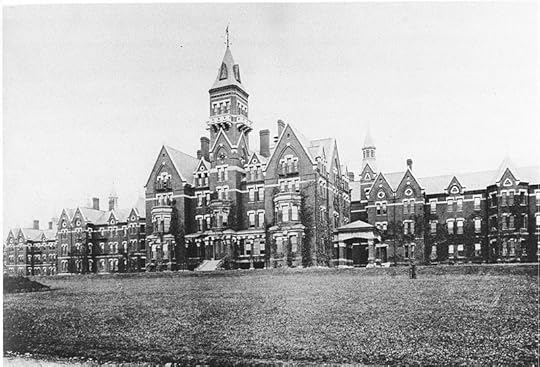
Image: Danvers State Hospital, Danvers, Massachusetts, Kirkbride Complex, circa 1893 (Source)
Meaning
“Everything is a cypher ”, we’re told. So, presumably, is this story. But for what? Interpretation is suitably ambiguous, as is life itself.
It ends with hope and fear, in perfect balance.
One message is that life is short, and we should try to appreciate innocent trifles.
Quotes
• “What he had really wanted to do was to tear a hole in his world and escape.”
• “The silhouettes of his blood corpuscles, magnified a million times, flit over vast plains; and still farther away, great mountains of unbearable solidity and height sum up, in terms of granite and groaning firs, the ultimate truth of his being.”
• “And then came a time in his life… when those little phobias of his, which his parents had stubbornly regarded as the eccentricities of a prodigiously gifted child, hardened, as it were, into a dense tangle of logically interacting illusions, making them totally inaccessible to normal minds.”
See also
• Nabokov is most (in)famous for Lolita, which I reviewed HERE.
• The New Yorker published this short story in 1948. You can read it HERE.
• There are some parallels with Colm Tóibín’s novella, The Testament of Mary, which I reviewed HERE.
Bonus facts
• Nabokov’s preferred title was the more euphonious “Signs and Symbols”, but The New Yorker switched it!
• Nabokov was a synaesthete.
Trigger warnings: .
The title story opens thus:
“For the fourth time in as many years, they were confronted with the problem of what birthday present to take to a young man who was incurably deranged in his mind. Desires he had none. Man-made objects were to him either hives of evil, vibrant with a malignant activity that he alone could perceive, or gross comforts for which no use could be found in his abstract world.”
Read that at least twice to fully appreciate how much is condensed in so few words. The indefinite article, “a”, in particular.
The unnamed couple leave their tiny, dilapidated NYC apartment:
“Her drab gray hair was pinned up carelessly… she presented a naked white countenance to the faultfinding light of spring.”
They endure a long trip across the city (it rains, and even the subway train loses its “life-current”) to visit the young man, before returning home later the same day. Everything is sad, poignant, frustrating, or worse; even the man’s dental plate is “hopelessly uncomfortable” and their playing cards are “soiled”.
The only glimpse of a different mood is a group of high-schoolers, but they’re “garrulous” on an over-crowded bus, so are a source of mild annoyance.
Image: Danvers State Hospital, Danvers, Massachusetts, Kirkbride Complex, circa 1893 (Source)
Meaning
“Everything is a cypher ”, we’re told. So, presumably, is this story. But for what? Interpretation is suitably ambiguous, as is life itself.
It ends with hope and fear, in perfect balance.
One message is that life is short, and we should try to appreciate innocent trifles.
Quotes
• “What he had really wanted to do was to tear a hole in his world and escape.”
• “The silhouettes of his blood corpuscles, magnified a million times, flit over vast plains; and still farther away, great mountains of unbearable solidity and height sum up, in terms of granite and groaning firs, the ultimate truth of his being.”
• “And then came a time in his life… when those little phobias of his, which his parents had stubbornly regarded as the eccentricities of a prodigiously gifted child, hardened, as it were, into a dense tangle of logically interacting illusions, making them totally inaccessible to normal minds.”
See also
• Nabokov is most (in)famous for Lolita, which I reviewed HERE.
• The New Yorker published this short story in 1948. You can read it HERE.
• There are some parallels with Colm Tóibín’s novella, The Testament of Mary, which I reviewed HERE.
Bonus facts
• Nabokov’s preferred title was the more euphonious “Signs and Symbols”, but The New Yorker switched it!
• Nabokov was a synaesthete.

September 7, 2023
You are reading a Nabokov. Everything is going well. He is talking about a man who tried unsuccessfully to end his life and then he hits you with:
“What he really wanted to do was to tear a hole in his world and escape.”
That's it! Nothing else. No unnecessary details, no boring elaborations. That's how my Nabokov writes.
A Russian couple go to visit their son who is in a sanatorium for having ‘Referential Mania’, only to be told that their visit is not advisable because their son tried to commit suicide and is under observation.
He imagines that everything happening around him is a veiled reference to his personality and existence…Everything is a cipher and of everything he is the theme.
But this story is not about the son and his disorder. Although I can guess that the untold cause may be the Russian Revolution and the persecutions many Russians fell victim to at the time.
Not only the son but also his parents and the reader search and see signs and symbols in everything, In the gifts the parent bought for their son, in the manner of his attempted suicide, in the 'Russian' surroundings in a foreign country, in the rain...
He read his Russian-language newspaper while she laid the table. Still reading, he ate the pale victuals that needed no teeth. She knew his moods and was also silent.
How can someone express so much in a few pages? Nobody is named or described, but I could picture the worried old parents like they were in front of me. I could understand and feel their pain when the telephone rang and I did breathe a sigh of relief when they realized it was a wrong number.
And the ending…leaves much to the imagination.
“What he really wanted to do was to tear a hole in his world and escape.”
That's it! Nothing else. No unnecessary details, no boring elaborations. That's how my Nabokov writes.
A Russian couple go to visit their son who is in a sanatorium for having ‘Referential Mania’, only to be told that their visit is not advisable because their son tried to commit suicide and is under observation.
He imagines that everything happening around him is a veiled reference to his personality and existence…Everything is a cipher and of everything he is the theme.
But this story is not about the son and his disorder. Although I can guess that the untold cause may be the Russian Revolution and the persecutions many Russians fell victim to at the time.
Not only the son but also his parents and the reader search and see signs and symbols in everything, In the gifts the parent bought for their son, in the manner of his attempted suicide, in the 'Russian' surroundings in a foreign country, in the rain...
He read his Russian-language newspaper while she laid the table. Still reading, he ate the pale victuals that needed no teeth. She knew his moods and was also silent.
How can someone express so much in a few pages? Nobody is named or described, but I could picture the worried old parents like they were in front of me. I could understand and feel their pain when the telephone rang and I did breathe a sigh of relief when they realized it was a wrong number.
And the ending…leaves much to the imagination.

Read
December 14, 2020
Vladimir Nabokov famously despised Greek Philosopher Plato with all his abstractions and realm of ideas. As a man of letters, Nabokov delved into specifics with "the precision of a poet and the imagination of a scientist."
My first acquaintance with Signs and Symbols happened thirty-five years ago when participating in my local Great Books group where the evening's discussion focused on the great author's very short story.
The tone of the discussion was somber, almost gloomy. This is a sad, sad story. I recall the group leader observing the mother and father are people that life has completely beaten down. As if to underscore this point, when the couple travel on a rainy day to the sanitarium where their only child, a son, is "incurably deranged in his mind," Nabokov has the New York subway lose its electric current between stations and the bus keeps them waiting and, when it does comes, it's crampacked with talkative high schoolers.
As we exchanged reflections on passage after passage, I was struck by the power of Nabokov's story, a story where I could detect only various shades of darkness and virtually no light.
Is this an accurate appraisal? Can anybody point to one instance where there is a ray of light in all the dark? And I keep thinking how Vladimir Nabokov portrays what life is like for a young man whose entire being is strangled by a world of abstraction, sinister, invasive abstraction.
Dare I ask: to what extent are our own lives strangled by abstraction?
Link to the story: https://www.newyorker.com/magazine/19...

May 17, 2016
"All this, and much more, she had accepted, for, after all, living does mean accepting the loss of one joy after another, not even joys in her case, mere possibilities of improvement. She thought of the recurrent waves of pain that for some reason or other she and her husband had had to endure; of the in visible giants hurting her boy in some unimaginable fashion; of the incalculable amount of tenderness contained in the world; of the fate of this tenderness, which is either crushed or wasted, or transformed into madness; of neglected children humming to themselves in unswept corners; of beautiful weeds that cannot hide from the farmer."
I'm incurably in love with Nabokov. Novels, novellas, short stories, poesies, essays, speeches- there's nothing this man can't do.
I'm incurably in love with Nabokov. Novels, novellas, short stories, poesies, essays, speeches- there's nothing this man can't do.

July 24, 2015
Warning: Pretentious English major review
Brilliantly written, Signs and Symbols is about an immigrant couple who visits their son in a mental asylum on his birthday. The unnamed son has “Referential Mania”, a disease that is described as the patient imagines that everything happening around him is a veiled reference to his personality and existence.They get turned away because of their son's recent suicide attempt. That is it, the rest are all, well, signs and symbols.
This is the type of short that really lets one read between the lines, and reading between the lines, this short is a reflection of how some people go about their daily lives in denial.
The story is told through the mother's observations. Observations which underscore her denial and the unfairness of her son's predicament. Although it's written that she's accepted her son's illness, she laments "of the incalculable amount of tenderness contained in the world; of the fate of this tenderness, which is either crushed or wasted, or transformed into madness; of neglected children humming to themselves in unswept corners; of beautiful weeds that cannot hide from the farmer."
She even skirts around her son's suicide, describing it as "What he had really wanted to do was to tear a hole in his world and escape" instead.
After they go home from the asylum, the couple carry on as if their child hasn't just attempted suicide. She goes to the market, they drink tea, all the while contemplating their son's fate and whether or not they should bring him home. After all, we cope in our own ways, in denial or not.
Read it here: http://www.newyorker.com/magazine/194...
Brilliantly written, Signs and Symbols is about an immigrant couple who visits their son in a mental asylum on his birthday. The unnamed son has “Referential Mania”, a disease that is described as the patient imagines that everything happening around him is a veiled reference to his personality and existence.They get turned away because of their son's recent suicide attempt. That is it, the rest are all, well, signs and symbols.
This is the type of short that really lets one read between the lines, and reading between the lines, this short is a reflection of how some people go about their daily lives in denial.
A few feet away, under a swaying and dripping tree, a tiny unfledged bird was helplessly twitching in a puddle.
The story is told through the mother's observations. Observations which underscore her denial and the unfairness of her son's predicament. Although it's written that she's accepted her son's illness, she laments "of the incalculable amount of tenderness contained in the world; of the fate of this tenderness, which is either crushed or wasted, or transformed into madness; of neglected children humming to themselves in unswept corners; of beautiful weeds that cannot hide from the farmer."
She even skirts around her son's suicide, describing it as "What he had really wanted to do was to tear a hole in his world and escape" instead.
After they go home from the asylum, the couple carry on as if their child hasn't just attempted suicide. She goes to the market, they drink tea, all the while contemplating their son's fate and whether or not they should bring him home. After all, we cope in our own ways, in denial or not.
All this, and much more, she had accepted, for, after all, living does mean accepting the loss of one joy after another, not even joys in her case, mere possibilities of improvement.
Read it here: http://www.newyorker.com/magazine/194...

July 16, 2016
All this, and much more, she had accepted, for, after all, living does mean accepting the loss of one joy after another, not even joys in her case, mere possibilities of improvement.
'Signs and symbols' is about an old couple on their way to meet their son who’s in a sanatorium due to a rare mental illness known as ‘Referential mania’, in which the patient imagines that everything happening around him is a veiled reference to his personality and existence.
It wasn’t that impressive to me when I read it for the first time. But, after reading it multiple times with its analysis, I think I can appreciate the story.
You have to pay closer attention to the signs and symbols mentioned in the story in order to interpret and learn about the characters. It’s brilliantly written and it captures the suffering and hopelessness of the boy and his parents.
The story points to the defencelessness of the characters in the face of affliction and misery and in spite of that, the hope of the parents that things will turn around someday. The ending is open to interpretation.
'Signs and symbols' is about an old couple on their way to meet their son who’s in a sanatorium due to a rare mental illness known as ‘Referential mania’, in which the patient imagines that everything happening around him is a veiled reference to his personality and existence.
It wasn’t that impressive to me when I read it for the first time. But, after reading it multiple times with its analysis, I think I can appreciate the story.
You have to pay closer attention to the signs and symbols mentioned in the story in order to interpret and learn about the characters. It’s brilliantly written and it captures the suffering and hopelessness of the boy and his parents.
The story points to the defencelessness of the characters in the face of affliction and misery and in spite of that, the hope of the parents that things will turn around someday. The ending is open to interpretation.

January 17, 2023
درباره ی اسم این داستان کوتاه میخوام از خود نویسنده نقل قول کنم :
" همه می دانند که من از سمبل و تمثیل بیزارم . ( که بخشی از این بیزاری ناشی از دشمنی ام با ودوگرایی فرویدی است و بخشی دیگر ناشی از نفرتم از کلی گویی های طراحی شده ی خیالباف ها و منتقدان ادبی) "
با این اوصاف این سوال در ذهن من خواننده ایجاد میشه ، پس چرا چنین اسمی رو انتخاب کردی که توجهم به نمادها جلب بشن ؟ آیا قصد این رو داشتی که باز هم به فروید نیش و کنایه بزنی ؟ یا از این لذت ببری که گوز رو به شقیقه ربط میدن و با خوندن تحلیل هایی که از داستانت میکنن ، لبخند شیطانی رو لبت نقش ببنده ؟
خب چون تو نابوکوفی ، نمیتونم ازت سر دربیارم . از طرفی به گفته ی خودت " برای من یک اثر داستانی زمانی یک اثر داستانی ست که مرا به خلسهی زیبایی شناسانه ببرد ، یعنی حس بودن که به گونه ای و در جایی با دیگر مرتبه های بودن که در آن هنر ( کنجکاوی ، مهربانی ، دلسوزی ، خلسه ) معیار است رابطه داشته باشد . "
حالا که ازت نقل قول کردم تا بیشتر درکت کنم ، به داستان اشاره میکنم . پدر و مادری که پسرشون بخاطر جنون ارجاعی ای که بهش دچار هست ، به کرات خودکشی میکنه . پسر تصور میکنه که هر چیزی که در اطرافش رخ میده ، نشانه و سمبلی هست که به خودش ربط پیدا میکنه و کاری که واقعا می خواست انجام بده این بود که تو دنیای خودش ، سوراخی ایجاد کنه و فرار کنه . ( ای کاش میتونستم روحم رو به شيطان بفروشم و بزنم به چاک ! )
طبق معمول میشه تو این اثر هم دید که خونواده مهاجرت کردن و از وطن دورن . چیزی که خود نابوکوف هم تجربه کرده بود . مورد دیگه توصیفات نابوکوف هست که اضافه گویی نمیکنه . با چند کلمه میتونه کل سالی که بر مادر داستان گذشت رو توصیف کنه و به گذشته ش شخم بزنه .
چیزی که خودم اطلاعی ازش نداشتم این بود که نابوکوف میخواست با نوشتن این کتاب فروید رو به سخره بگیره . که البته با رجوع به حرف های خودش بعید هم نیست که به در گفته تا دیوار بشنوه . ( امان از دست تو )
و یه چیزی هم که باید موقع خوندنش در نظر گرفت این هست که نویسنده به سوالاتی که برات پیش میاد جواب نمیده . گذاشته به عهده ی خودت . همون طور که پایانش رو طوری رقم زده که میتونی هر طور خواستی برداشت کنی .
مورد دیگه ای هم که موقع خوندن آثار نابوکوف برام جالبه این هست که میتونه یه جوری بنویسه که بار اول یه برداشتی بکنی و وقتی بعدا دوباره خوانیش میکنی برداشت دیگه . به طور مثال وقتی که لولیتا رو می خوندم و به ریویوها نگاه مینداختم ، دیدم که خیلی ها وقتی که نوجوان بودن و خوندنش فکر میکردن این یه داستان رمانتیکه و هامبرت یه شوگر ددی عاشق پیشه ست ! و بعد سال ها که بهش برگشتن پی بردن چه رکبی خوردن . و من این رو به پای بازی با کلماتی که میکنه میذارم . طوری که ذهنم رو به چالش میکشه و سعی میکنه گمراهم کنه .
خلاصه که موقع خوندن آثار این نویسنده این ذهنیت رو نداشته باشین که قرار هست یه کتاب روسی بخونم . حتی خیال برتون نداره که یه چیزی قرار هست یاد بگیرم ! چون نابوکوف نه خواننده ی داستان های آموزنده بود و نه نویسنده ی اون ها .
در آخر هم از سهیل ممنونم که باعث شد بخونمش 🤍
" همه می دانند که من از سمبل و تمثیل بیزارم . ( که بخشی از این بیزاری ناشی از دشمنی ام با ودوگرایی فرویدی است و بخشی دیگر ناشی از نفرتم از کلی گویی های طراحی شده ی خیالباف ها و منتقدان ادبی) "
با این اوصاف این سوال در ذهن من خواننده ایجاد میشه ، پس چرا چنین اسمی رو انتخاب کردی که توجهم به نمادها جلب بشن ؟ آیا قصد این رو داشتی که باز هم به فروید نیش و کنایه بزنی ؟ یا از این لذت ببری که گوز رو به شقیقه ربط میدن و با خوندن تحلیل هایی که از داستانت میکنن ، لبخند شیطانی رو لبت نقش ببنده ؟
خب چون تو نابوکوفی ، نمیتونم ازت سر دربیارم . از طرفی به گفته ی خودت " برای من یک اثر داستانی زمانی یک اثر داستانی ست که مرا به خلسهی زیبایی شناسانه ببرد ، یعنی حس بودن که به گونه ای و در جایی با دیگر مرتبه های بودن که در آن هنر ( کنجکاوی ، مهربانی ، دلسوزی ، خلسه ) معیار است رابطه داشته باشد . "
حالا که ازت نقل قول کردم تا بیشتر درکت کنم ، به داستان اشاره میکنم . پدر و مادری که پسرشون بخاطر جنون ارجاعی ای که بهش دچار هست ، به کرات خودکشی میکنه . پسر تصور میکنه که هر چیزی که در اطرافش رخ میده ، نشانه و سمبلی هست که به خودش ربط پیدا میکنه و کاری که واقعا می خواست انجام بده این بود که تو دنیای خودش ، سوراخی ایجاد کنه و فرار کنه . ( ای کاش میتونستم روحم رو به شيطان بفروشم و بزنم به چاک ! )
طبق معمول میشه تو این اثر هم دید که خونواده مهاجرت کردن و از وطن دورن . چیزی که خود نابوکوف هم تجربه کرده بود . مورد دیگه توصیفات نابوکوف هست که اضافه گویی نمیکنه . با چند کلمه میتونه کل سالی که بر مادر داستان گذشت رو توصیف کنه و به گذشته ش شخم بزنه .
چیزی که خودم اطلاعی ازش نداشتم این بود که نابوکوف میخواست با نوشتن این کتاب فروید رو به سخره بگیره . که البته با رجوع به حرف های خودش بعید هم نیست که به در گفته تا دیوار بشنوه . ( امان از دست تو )
و یه چیزی هم که باید موقع خوندنش در نظر گرفت این هست که نویسنده به سوالاتی که برات پیش میاد جواب نمیده . گذاشته به عهده ی خودت . همون طور که پایانش رو طوری رقم زده که میتونی هر طور خواستی برداشت کنی .
مورد دیگه ای هم که موقع خوندن آثار نابوکوف برام جالبه این هست که میتونه یه جوری بنویسه که بار اول یه برداشتی بکنی و وقتی بعدا دوباره خوانیش میکنی برداشت دیگه . به طور مثال وقتی که لولیتا رو می خوندم و به ریویوها نگاه مینداختم ، دیدم که خیلی ها وقتی که نوجوان بودن و خوندنش فکر میکردن این یه داستان رمانتیکه و هامبرت یه شوگر ددی عاشق پیشه ست ! و بعد سال ها که بهش برگشتن پی بردن چه رکبی خوردن . و من این رو به پای بازی با کلماتی که میکنه میذارم . طوری که ذهنم رو به چالش میکشه و سعی میکنه گمراهم کنه .
خلاصه که موقع خوندن آثار این نویسنده این ذهنیت رو نداشته باشین که قرار هست یه کتاب روسی بخونم . حتی خیال برتون نداره که یه چیزی قرار هست یاد بگیرم ! چون نابوکوف نه خواننده ی داستان های آموزنده بود و نه نویسنده ی اون ها .
در آخر هم از سهیل ممنونم که باعث شد بخونمش 🤍
June 14, 2014
From the beginning of Nabokov story, it is a story of signs and symbols. The conflict is not just between the parents and their boy, but also between them and the world. They all live in reality, but at the same time they are separated mentally or physically. Their boy is a symbol of a severe illness, that makes him believe that every object in this world is conspiring against him. Which makes us feel, in a way, the emotional conflict of any jewish man who suffered from the Nazi army. considering that his parents where jewish, who struggle through the World War II. So, as his parents faces reality, he faces delusions that keeps him out of this world. All and all, humans are separated. Not only by mental illness, but by cultural, economical, and also by religion beliefs. Therefore, the last sign stands as a calling girl who tries to reach a boy named Charlie, but hopelessly with no success. Our separation is the real disease that makes us start wars or misunderstand each other, our separation is the root of every wickedness we hold.

June 17, 2016
This beautiful, haunting short story isn't so much a story as it is a snapshot of sorts, where every detail is meaningful and contributes to the overall tone. Nabokov has crafted such an incredibly immersive setting in so few words, while focusing mainly on trivial-seeming details. The denial, fear, banality, helplessness, the sense of growing old and learning more but perhaps understanding less; it all seeps through each strategically chosen word to form a portrait of madness, ageing, and despair- the quiet kind that sits in a corner, never needing to be noticed or analysed but which is always felt, in one way or another.
Read it here.
Read it here.

March 1, 2024
Guys, I’m giving 4 stars to a “book” that’s only 6 pages long. That’s two-thirds of a star per page. Am I a traitor to my own cause? Should I be clapped in irons and carted away? Does the magnitude of my insubordination simply know no bounds? But then, look at this quote and tell me this “book” isn’t worth it:
Do the signs and symbols conceal the mysteries and meanings of our sad fate, or do we float through the chaos drawing maps of white noise and divining methods for discerning the shapes of mythical creatures flickering in the randomness of flames?
“This, and much more, she accepted — for after all living did mean accepting the loss of one joy after another, not even joys in her case — mere possibilities of improvement. She thought of the endless waves of pain that for some reason or other she and her husband had to endure; of the invisible giants hurting her boy in some unimaginable fashion; of the incalculable amount of tenderness contained in the world; of the fate of this tenderness, which is either crushed, or wasted, or transformed into madness; of neglected children humming to themselves in unswept corners; of beautiful weeds that cannot hide from the farmer and helplessly have to watch the shadow of his simian stoop leave mangled flowers in its wake, as the monstrous darkness approaches.”
Do the signs and symbols conceal the mysteries and meanings of our sad fate, or do we float through the chaos drawing maps of white noise and divining methods for discerning the shapes of mythical creatures flickering in the randomness of flames?

February 8, 2018
آخرش نفهمیدم چی شد!!!!!
August 10, 2015
This, and much more, she accepted—for after all living did mean accepting the loss of one joy after another, not even joys in her case—mere possibilities of improvement.
For a reader like myself who is prone to looking for hidden meaning and symbolism in every single story they encounter, it was a delight to read this one which actually delivered.
Signs and Symbols is a short story about a couple whose son has attempted suicide. This boy has a condition called "Referential mania":
In these very rare cases the patient imagines that everything happening around him is a veiled reference to his personality and existence. He excludes real people from the conspiracy—because he considers himself to be so much more intelligent than other men. Phenomenal nature shadows him wherever he goes. Clouds in the staring sky transmit to one another, by means of slow signs, incredibly detailed information regarding him. His inmost thoughts are discussed at nightfall, in manual alphabet, by darkly gesticulating trees.
After visiting their son in the sanatorium, they decide they are going to bring him home the next day. After that they receive a phone call. Wrong number. This happens twice. Then the phone rang once more. The story abruptly ends leaving the reader with the task of filling in the blanks.
The story is full of symbolism and the author leaves an open ending that makes the reader try to find the missing piece of the puzzle. It is also heartbreaking at places, like the mother's description of her son's mental condition:
She thought of the endless waves of pain that for some reason or other she and her husband had to endure; of the invisible giants hurting her boy in some unimaginable fashion; of the incalculable amount of tenderness contained in the world; of the fate of this tenderness, which is either crushed, or wasted, or transformed into madness; of neglected children humming to themselves in unswept corners; of beautiful weeds that cannot hide from the farmer and helplessly have to watch the shadow of his simian stoop leave mangled flowers in its wake, as the monstrous darkness approaches.
The prose is good which is an understatement if you are talking about Nabokov. It is my second story from this author and I want to read some of his major work soon like Pale Fire and Lolita; for the latter I’ve been trying to gather some courage as the premise fills me with dread but I'll get there. Or maybe I'll keep reading his short stories.
For a reader like myself who is prone to looking for hidden meaning and symbolism in every single story they encounter, it was a delight to read this one which actually delivered.
Signs and Symbols is a short story about a couple whose son has attempted suicide. This boy has a condition called "Referential mania":
In these very rare cases the patient imagines that everything happening around him is a veiled reference to his personality and existence. He excludes real people from the conspiracy—because he considers himself to be so much more intelligent than other men. Phenomenal nature shadows him wherever he goes. Clouds in the staring sky transmit to one another, by means of slow signs, incredibly detailed information regarding him. His inmost thoughts are discussed at nightfall, in manual alphabet, by darkly gesticulating trees.
After visiting their son in the sanatorium, they decide they are going to bring him home the next day. After that they receive a phone call. Wrong number. This happens twice. Then the phone rang once more. The story abruptly ends leaving the reader with the task of filling in the blanks.
The story is full of symbolism and the author leaves an open ending that makes the reader try to find the missing piece of the puzzle. It is also heartbreaking at places, like the mother's description of her son's mental condition:
She thought of the endless waves of pain that for some reason or other she and her husband had to endure; of the invisible giants hurting her boy in some unimaginable fashion; of the incalculable amount of tenderness contained in the world; of the fate of this tenderness, which is either crushed, or wasted, or transformed into madness; of neglected children humming to themselves in unswept corners; of beautiful weeds that cannot hide from the farmer and helplessly have to watch the shadow of his simian stoop leave mangled flowers in its wake, as the monstrous darkness approaches.
The prose is good which is an understatement if you are talking about Nabokov. It is my second story from this author and I want to read some of his major work soon like Pale Fire and Lolita; for the latter I’ve been trying to gather some courage as the premise fills me with dread but I'll get there. Or maybe I'll keep reading his short stories.

June 30, 2026
“What he had really wanted to do was to tear a hole in his world and escape.”
Eccentricities of a prodigiously gifted child, the fall into phobias and delusions. Gross comforts of abstract worlds. A sanatorium without desire, and a child raining hard dreams.
Nabokov did everything but fall short and, consequently, will have me diving even deeper into Russian literature outside of Dostoevsky and Chekhov.
Eccentricities of a prodigiously gifted child, the fall into phobias and delusions. Gross comforts of abstract worlds. A sanatorium without desire, and a child raining hard dreams.
Nabokov did everything but fall short and, consequently, will have me diving even deeper into Russian literature outside of Dostoevsky and Chekhov.
July 31, 2025
An excellent short story takes an obscure moment and enlightens it. Nabokov is one of the masters.
A boy with intractable mental illness, and his parents, shaky and mist-soaked tread to visit the son they so desperately want to understand.
As a baby he looked more surprised than most babies.
Everything was a cipher and of everything he is the theme. All around him, there are spies. Some of them are detached observers, like glass surfaces and still pools; others, such as coats in store windows, are prejudiced witnesses, lynchers at heart....have a distorted opinion of him, and grotesquely misinterpret his actions.
In a moment that a gift of jam jars is given, we feel the grief of the parents, and are enlightened with existential layers of meaning.
...great mountains of unbearable solidity and height sum up, in terms of granite and groaning firs, the ultimate truth of his being.
After all, living does mean accepting the loss of one joy after another, not even joys in her case, more possibilities of improvement. she thought of the recurrent waves of pain that for some reason or other she and her husband had had to endure; of the invisible giants hurtin her boy in some unimaginable fashion; of the incalculable amount of tenderness contained in the world; of the fate of this tenderness, which is either crushed or wasted, or transformed into madness; of neglected children humming to themselves in unswept corners; of beautiful weeds that cannot hide from the farmer.
I finally got out my The Big Book of Modern Fantasy that was a holiday gift and I'm so glad I did. Short stories are good for the soul :)
A boy with intractable mental illness, and his parents, shaky and mist-soaked tread to visit the son they so desperately want to understand.
As a baby he looked more surprised than most babies.
Everything was a cipher and of everything he is the theme. All around him, there are spies. Some of them are detached observers, like glass surfaces and still pools; others, such as coats in store windows, are prejudiced witnesses, lynchers at heart....have a distorted opinion of him, and grotesquely misinterpret his actions.
In a moment that a gift of jam jars is given, we feel the grief of the parents, and are enlightened with existential layers of meaning.
...great mountains of unbearable solidity and height sum up, in terms of granite and groaning firs, the ultimate truth of his being.
After all, living does mean accepting the loss of one joy after another, not even joys in her case, more possibilities of improvement. she thought of the recurrent waves of pain that for some reason or other she and her husband had had to endure; of the invisible giants hurtin her boy in some unimaginable fashion; of the incalculable amount of tenderness contained in the world; of the fate of this tenderness, which is either crushed or wasted, or transformed into madness; of neglected children humming to themselves in unswept corners; of beautiful weeds that cannot hide from the farmer.
I finally got out my The Big Book of Modern Fantasy that was a holiday gift and I'm so glad I did. Short stories are good for the soul :)

January 16, 2019
این داستان بیست دقیقه ایی رو با صدای زیبا و دلنشین بتول نجفی گوش بدید(رایگان از فیدبیو)
در طول داستان به این فک کردم که ما بیش از اینها،باید به روح خودمان برسیم و کتاب خواندن برای شناخت روحمان و خودمان هرگز کافی نبوده و نیست.
این لینک هم نقد بسیار خوب و ترجمه شده ی این داستان است:
http://www.fa.eqlearning.org/قرابت-جن...
در طول داستان به این فک کردم که ما بیش از اینها،باید به روح خودمان برسیم و کتاب خواندن برای شناخت روحمان و خودمان هرگز کافی نبوده و نیست.
این لینک هم نقد بسیار خوب و ترجمه شده ی این داستان است:
http://www.fa.eqlearning.org/قرابت-جن...

October 4, 2021
”What he had really wanted to do was to tear a hole in his world and escape.”
A sad tale!
A sad tale!

December 31, 2018
Another great short story, its beautifully written.

Read
February 29, 2024ajde sve, ali zašto mi je univerzum poslao ovu kratku priču u momentu kada mi se dešava potpuno identična stvar u porodici, koja je isto ponavljanje događaja od prije 10 godina samo sa drugim članom porodice, je l' ja ne mogu da odmorim od kriptičnih znakova i tragičnih sudbina (i'm next aren't i)

August 10, 2020
داستان انتقادی قشنگی بود :دی

March 31, 2024
“What he had really wanted to do was to tear a hole in his world and escape.”
“...for, after all, living does mean accepting the loss of one joy after another, not even joys in her case, mere possibilities of improvement. She thought of the recurrent waves of pain that for some reason or other she and her husband had had to endure; of the in visible giants hurting her boy in some unimaginable fashion; of the incalculable amount of tenderness contained in the world; of the fate of this tenderness, which is either crushed or wasted, or transformed into madness; of neglected children humming to themselves in unswept corners; of beautiful weeds that cannot hide from the farmer.”
Very subtle, sad, and almost fever dream-like. I read multiple interpretations of this short story to fully comprehend Nabokov's intent, I liked it.
“...for, after all, living does mean accepting the loss of one joy after another, not even joys in her case, mere possibilities of improvement. She thought of the recurrent waves of pain that for some reason or other she and her husband had had to endure; of the in visible giants hurting her boy in some unimaginable fashion; of the incalculable amount of tenderness contained in the world; of the fate of this tenderness, which is either crushed or wasted, or transformed into madness; of neglected children humming to themselves in unswept corners; of beautiful weeds that cannot hide from the farmer.”
Very subtle, sad, and almost fever dream-like. I read multiple interpretations of this short story to fully comprehend Nabokov's intent, I liked it.

January 10, 2023
یک داستان کوتاه خوب و عمیق.
ایزابلا و دیمیتری یک زوج میانسال هستند که با خودکشی مجدد تنها پسرشان که به دلیل ابتلا به «جنون ارجاعی» در یک بیمارستان روانی بستری است روبرو شدهاند و حال بار دیگر دلشان میخواهد که او به خانه برگردد، هرچند ته دلشان میدانند که شدنی نیست.
یک فیلم کوتاه هشت دقیقهای از این داستان به کارگردانی «آلیشیا ریمارویچ» نیز در سال ۲۰۱۳ ساخته شده است که هر چه جستجو کردم، منبعی برای تماشایش پیدا نکردم.
داستان کوتاه خوبی بود... عالی میشد اگر ناباکوف کمی روسی بازی در میاورد و به داستانش شاخ و برگ میداد، اما خب او ناباکوف است و نمیتوان او را یک نویسندهی اصیل روس دانست چون قلمش به شدت تحت تاثیر غرب است.
ایزابلا و دیمیتری یک زوج میانسال هستند که با خودکشی مجدد تنها پسرشان که به دلیل ابتلا به «جنون ارجاعی» در یک بیمارستان روانی بستری است روبرو شدهاند و حال بار دیگر دلشان میخواهد که او به خانه برگردد، هرچند ته دلشان میدانند که شدنی نیست.
یک فیلم کوتاه هشت دقیقهای از این داستان به کارگردانی «آلیشیا ریمارویچ» نیز در سال ۲۰۱۳ ساخته شده است که هر چه جستجو کردم، منبعی برای تماشایش پیدا نکردم.
داستان کوتاه خوبی بود... عالی میشد اگر ناباکوف کمی روسی بازی در میاورد و به داستانش شاخ و برگ میداد، اما خب او ناباکوف است و نمیتوان او را یک نویسندهی اصیل روس دانست چون قلمش به شدت تحت تاثیر غرب است.

February 18, 2022
This short story preceded Nabokov's well-know book, Lolita . Its content views a Russian couple and their ill-fated son, and bears no relationship to the later novel. My book club engaged in a deep, varied discussion about this dark tale. Simply stated, it involves the sad, seemingly helpless pair, who not only had their own poor coping skills, but had to try to comprehend and manage their psychologically ill son. Nabokov's writing clearly demonstrated their situation and the status of the child, but the telling contained much symbolism open to a variety of interpretations.
March 13, 2024
I love Validimir Nabokov and his way of weaving many threads together into a single story. The themes, the plot, the choice of words come together in such a harmonious and intention way.
In this story, the vulnerable line between life and death is a theme, constant. The kind of anxiety one feels when someone in their life is openly and erratically suicidal - always fearing that at any moment it will happen.
This is woven into the story, even when the parents take public transit:
" The subway train lost its life current between two stations and for a quarter of an hour they could hear nothing but the dutiful beating of their hearts and the rustling of newspapers."
Even here, in the mundane moment when the train loses power, it is "life current" that is lost. And even sitting in silence they are aware of their hearts beating, their life, the fact that they are still alive.
I feel an off sense of wistful familiarity reading this, almost like I've experienced this. As if I too have been an aging parent, who has needed to visit my fragile son at the mental hospital, hoping for the best for him but not knowing how to help. Feeling that vulnerability and knowing that someday I will pass and he will be alone without my protection. (I am 29 and have no children, so I'm not sure why this experience feels so familiar to me).
This captures it well:
"During the long ride to the subway station, she and her husband did not exchange a word, and every time she glanced at his old hands, clasped and twitching upon the handle of his umbrella, and saw their swollen veins and brown-spotted skin, she felt the mounting pressure of tears"
It is never clearly stated that they are aging and that someday their child will be alone in the world without them, but it is referenced - seeing the marks of aging on their own skin on the way to the mental hospital, feeling sudden sorrow. (That is a sign / symbol for you!)
Mental illness is also portrayed in a specific way - complex, beautiful, sad - the ability to read into things, to be poetic and find hidden meaning in the world, deciphering signs and symbols - this ability can go too far. The line between intellectual, creative ability and a paranoid mind without constraints can be very fine, very thin.
It ends ominously. The phone keeps ringing - and as a reader you realize, they will spend the rest of their lives on the edge of their seat, wondering if this time - this time their son really follows through and kills himself. No matter what plan they hatch to take care of him, they will always live in a state of suspension.
The parents in this story are in such a vulnerable position - I feel sympathy for them and the bleak position they have in their lives.
Available here:
https://www.cl.uni-heidelberg.de/~wil...
In this story, the vulnerable line between life and death is a theme, constant. The kind of anxiety one feels when someone in their life is openly and erratically suicidal - always fearing that at any moment it will happen.
This is woven into the story, even when the parents take public transit:
" The subway train lost its life current between two stations and for a quarter of an hour they could hear nothing but the dutiful beating of their hearts and the rustling of newspapers."
Even here, in the mundane moment when the train loses power, it is "life current" that is lost. And even sitting in silence they are aware of their hearts beating, their life, the fact that they are still alive.
I feel an off sense of wistful familiarity reading this, almost like I've experienced this. As if I too have been an aging parent, who has needed to visit my fragile son at the mental hospital, hoping for the best for him but not knowing how to help. Feeling that vulnerability and knowing that someday I will pass and he will be alone without my protection. (I am 29 and have no children, so I'm not sure why this experience feels so familiar to me).
This captures it well:
"During the long ride to the subway station, she and her husband did not exchange a word, and every time she glanced at his old hands, clasped and twitching upon the handle of his umbrella, and saw their swollen veins and brown-spotted skin, she felt the mounting pressure of tears"
It is never clearly stated that they are aging and that someday their child will be alone in the world without them, but it is referenced - seeing the marks of aging on their own skin on the way to the mental hospital, feeling sudden sorrow. (That is a sign / symbol for you!)
Mental illness is also portrayed in a specific way - complex, beautiful, sad - the ability to read into things, to be poetic and find hidden meaning in the world, deciphering signs and symbols - this ability can go too far. The line between intellectual, creative ability and a paranoid mind without constraints can be very fine, very thin.
It ends ominously. The phone keeps ringing - and as a reader you realize, they will spend the rest of their lives on the edge of their seat, wondering if this time - this time their son really follows through and kills himself. No matter what plan they hatch to take care of him, they will always live in a state of suspension.
The parents in this story are in such a vulnerable position - I feel sympathy for them and the bleak position they have in their lives.
Available here:
https://www.cl.uni-heidelberg.de/~wil...

November 22, 2014
(Я читала этот рассказ для себя, препарировала на слова для студентов, а обозревала для литклуба, в общем, пусть рецензия будет и тут)
Shе thought of the recurrent waves of pain that for some reason or other she and her husband had had to endure; of the in visible giants hurting her boy in some unimaginable fashion; of the incalculable amount of tenderness contained in the world; of the fate of this tenderness, which is either crushed or wasted, or transformed into madness; of neglected children humming to themselves in unswept corners; of beautiful weeds that cannot hide from the farmer.
Набоков - это идеальное сочетание слова, сюжета и смысла.
Пожилая пара едет в больницу навестить сына, страдающего манией упоминания: ему кажется, что все неживые предметы содержат какую-то информацию о нем, следят за ним. У сына день рожденья, и они все не знают, что ему подарить; выбирают в итоге десяток баночек с фруктовым желе. По пути в больницу их сопровождают мелкие неприятности: сломалось метро, автобус долго не ехал, пошел дождь, толпы людей. Сына увидеть тоже не удается: неприятная медсестра сообщает, что тот (в очередной раз) пытался покончить с собой, выпрыгнув из окна, но завистливый сосед, посчитав, что сокамерник учится летать, сдал его медперсоналу. Пара в печали едет домой. По дороге они видят мертвую птицу в луже, плачущую девчонку, а также забывают ключи.
Дома им легче не становится, и ближе к полуночи расстроенный отец решает, что сына надо из больницы забрать и опекать дома. Так будет лучше и ему, и им самим. Радостные, старики собираются пить чай с вареньем, отмечать это важное решение. Звонит телефон, и чей-то монотонный голос просит позвать Чарли. Вы ошиблись номером, говорит встревоженная дама (кто же звонит на ночь глядя, если не из больницы). Оба продолжают радоваться. Телефон звонит снова, опять глухой голос просит Чарли. Вы набираете букву О, а надо ноль, говорит дама, муж прихлебывает чай и радостно выстраивает баночки с вареньем в ряд. Телефон звонит снова.
Набоков заботливо начиняет свои "Знаки и символы" знаками и символами, и тут я хотела бы честно процитировать хорошую и дотошную статью Александра Долинина, но пожалею читателей)) Найти ее легко, если захотите.
Похоже, все в рассказе указывает на то, что сыну все-таки удалось осуществить задуманное.
Или, стойте, что там было про манию упоминания?
Ай да Набоков.
Shе thought of the recurrent waves of pain that for some reason or other she and her husband had had to endure; of the in visible giants hurting her boy in some unimaginable fashion; of the incalculable amount of tenderness contained in the world; of the fate of this tenderness, which is either crushed or wasted, or transformed into madness; of neglected children humming to themselves in unswept corners; of beautiful weeds that cannot hide from the farmer.
Набоков - это идеальное сочетание слова, сюжета и смысла.
Пожилая пара едет в больницу навестить сына, страдающего манией упоминания: ему кажется, что все неживые предметы содержат какую-то информацию о нем, следят за ним. У сына день рожденья, и они все не знают, что ему подарить; выбирают в итоге десяток баночек с фруктовым желе. По пути в больницу их сопровождают мелкие неприятности: сломалось метро, автобус долго не ехал, пошел дождь, толпы людей. Сына увидеть тоже не удается: неприятная медсестра сообщает, что тот (в очередной раз) пытался покончить с собой, выпрыгнув из окна, но завистливый сосед, посчитав, что сокамерник учится летать, сдал его медперсоналу. Пара в печали едет домой. По дороге они видят мертвую птицу в луже, плачущую девчонку, а также забывают ключи.
Дома им легче не становится, и ближе к полуночи расстроенный отец решает, что сына надо из больницы забрать и опекать дома. Так будет лучше и ему, и им самим. Радостные, старики собираются пить чай с вареньем, отмечать это важное решение. Звонит телефон, и чей-то монотонный голос просит позвать Чарли. Вы ошиблись номером, говорит встревоженная дама (кто же звонит на ночь глядя, если не из больницы). Оба продолжают радоваться. Телефон звонит снова, опять глухой голос просит Чарли. Вы набираете букву О, а надо ноль, говорит дама, муж прихлебывает чай и радостно выстраивает баночки с вареньем в ряд. Телефон звонит снова.
Набоков заботливо начиняет свои "Знаки и символы" знаками и символами, и тут я хотела бы честно процитировать хорошую и дотошную статью Александра Долинина, но пожалею читателей)) Найти ее легко, если захотите.
Похоже, все в рассказе указывает на то, что сыну все-таки удалось осуществить задуманное.
Или, стойте, что там было про манию упоминания?
Ай да Набоков.

August 17, 2023
British novel: let's go to a party and find a wife.
German novel: let's go to the wilderness and find ourselves.
Russian novel: let's go to the depths of despair and then find out there is an even deeper level of despair we didn't know about and go there.
German novel: let's go to the wilderness and find ourselves.
Russian novel: let's go to the depths of despair and then find out there is an even deeper level of despair we didn't know about and go there.



October 8, 2020
من که چیزی از این داستان کوتاه متوجه نشدم...شاید زاویه دید ما نسبت به افراد در سرزمین های دیگر تفاوت داشته باشد.
Displaying 1 - 30 of 290 reviews