Jump to ratings and reviews
Rate this book

Space Wolf #1

Space Wolf

Rate this book
The planet of Fenris is a death world, a world of fire and ice where only the strongest, bravest and fiercest survive. It is home to the barbarous warrior tribes who eke out an existence, battling vicious sea monsters and surviving the apocalyptic climate changes. It is also the homeworld of the Space Wolves, the most savage of the Emperor’s Space Marines. Each and every Space Wolf is born of this hostile world; for them, there are few places in the universe that hold any terror. Space Wolf begins the saga of Ragnar of Fenris, a young warrior whose destiny lies amongst the far-distant, war-ravaged stars of the galaxy.

288 pages, Mass Market Paperback

First published January 1, 1999

108 people are currently reading
1045 people want to read

About the author

William King

350 books712 followers
Librarian Note: There is more than one author in the GoodReads database with this name. See this thread for more information.

Ratings & Reviews

What do you think?
Rate this book

Friends & Following

Create a free account to discover what your friends think of this book!

Community Reviews

5 stars
957 (37%)
4 stars
1,003 (38%)
3 stars
509 (19%)
2 stars
94 (3%)
1 star
18 (<1%)
Displaying 1 - 30 of 152 reviews
Profile Image for Pinkerton.
513 reviews50 followers
December 25, 2018

Che bello! Oltre ad un buon romanzo rappresenta il perfetto compendio sulla formazione di un Lupo Siderale, dal reclutamento all’addestramento, con tanto di gene canis e consacrazione alla Zanna, finanche il battesimo del fuoco. L’avventura di Ragnar e compagni si lascia seguire con passione e trasporto. È un vero peccato che questi libri di WH40k non abbiano attecchito particolarmente qui dalle nostre parti…

3 reviews1 follower
January 9, 2023
El libro tiene varios fallos, sobre todo durante la primera mitad. Los saltos en el tiempo no se marcan de ninguna forma, por lo que puede confundir hasta que te acostumbras. La historia es muy simple y la evolución del protagonista es más bien escasa, con una motivación simple y unos personajes secundarios estereotipípicos; los enfrentamientos se resuelven rápidamente y con poco desarrollo. No obstante, el libro muestra de manera satisfactoria todos los pasos para convertirse en lobo espacial, además de presentar varios escenarios sorprendentes, sobre todo durante los capítulos finales, donde la historia pasa a ser casi lovecraftiana.
Es un libro aceptable, merece menos de 3 estrellas, pero suspenderlo sería injusto.
Profile Image for Kurt Lowrick.
23 reviews
February 13, 2019
An epic start to the space wolf series.
I loved the physical and mental transformations that Ragnar went through. I am a big fan of Warhammer novels and if this book is any indication I'm sure I will be enjoying many more space wolf 40k novels.
Profile Image for Jason Ray Carney.
Author 39 books76 followers
March 14, 2021
I enjoyed the first six novels of the *Horus Heresy,* so I thought I would try a general *Warhammer 40k* novel. Additionally, I loved William King's *Gotrek and Felix,* novels, so I came to this with high expectations. I enjoyed this immensely (even though my expectations weren't fully met). I expected a science fiction / space opera novel--i.e. a *Horus Heresy* novel: epic planetary sieges, alien menaces, warp space strangeness, and political intrigue. There was not a lot of that. Instead, the reader gets a sword and sorcery story set in a gritty, quasi-Viking setting (at least the first two-thirds). The first two-thirds featured minimal futuristic, sci-fi technology and instead a fair amount of medieval battle and wilderness survival. There was only the faint suggestion that there were spaceships, a galactic Imperium, genetic manipulation, and aliens. When sci-fi stuff did appear, it was processed through the imagination of someone ignorant/uninitiated, so it appeared as magic/supernatural. The Space Wolves, a Space Marines chapter, oversee the planet of Asaheim, which they maintain as a premodern "reserve," or training ground, for their recruits (or Aspirants). The ignorant primitive people think of the Space Wolves as divine, not unlike Norse gods. The central plot of this novel treats the training of an Aspirant, who goes from an uninitiated primitive to a full-fledged Space Marine. As usual, King's writing was excellent: engaging, unpretentious, and visceral. Can't wait to read more in this series.
Profile Image for Javier Muñoz.
849 reviews103 followers
May 29, 2024
Este es mi primer acercamiento al universo literario de warhammer 40k, anteriormente he jugado a algun juego de PC de estrategia, pero ese es todo mi conocimiento del tema... llevaba tiempo pensando entrar en este agujero negro de horas de lectura pero no lo tenía del todo claro hasta que un señor de youtube me dijo que quizás este libro estaba bien para empezar, ya que cuenta la historia de cómo es reclutado un humano para convertirse en marine espacial, las pruebas que ha de pasar y su entrenamiento. Digamos que el objetivo del libro es que nos identifiquemos con Ragnar (el prota) y nos vayamos enterando de lo principal de la ambientación de este mundo al mismo tiempo que él.

La experiencia ha estado bien, la novela es entretenida si te mola el rollo vikingo y algo más de conocimiento del universo he conseguido... la verdad es que tampoco me llama mucho la atención seguir con esta serie concreta (la de los lobos espaciales), pero si me ha dado ganas de seguir explorando este universo.
Profile Image for Tatiana (DraCat).
19 reviews1 follower
April 16, 2009
Меня не перестает удивлять всей психопатологичностью сама идея мира WH40k и человечества, выживающего в нем.
История Рагнара указала на ещё один интересный момент: множество колонизированных некогда человечеством планет, скатившихся ныне в варварство, существуют не просто так. Они ни на секунду не свободны от длани Империи (а если свободны, то попадут в лапы Хаоса, тиранидов, орков или бог знает кого ещё!). Так, казалось бы самобытная религиозная система и социальной устройство племен Фенриса, во многом напоминающее древних скандинавов, существует и поддерживается лишь настолько, насколько поставляет кадры космодесанту Клыка. Естественно Космические Волки Русса являются архетипическим продолжением Одина. Не случайно же в конце концов, один из самых мощных волковских артефактов - копье Русса. И тут случается запавный парадокс. Не ясно, насколько Терра = наша Земля. Логичнее было бы предположить, что прошлым сорокотысячника был мир фентезевой вахи. Но одно остается точным: создатели лепят миры, опираясь на свое коллективное бессознательное нашего времени и нашей планеты, что в итоге заставляет предполагать наличие тех же архетипов в бессознательном героев.
Впрочем, сама идея Хаоса - воплощение бессознательного страха перед собственной тенью. В этом смысле Император, как воплощенная Персона, никогда не победит. То есть в момент победы должен случиться минимум Армагеддон, коллапс. Впрочем, как и Хаосу победить не суждено. Иначе мир, как воплощение бессознательных страхов своих создателей и его почитателей, перестанет существовать.
Profile Image for Henry Fisher.
22 reviews
October 9, 2024
Typical Warhammer 40k fluff so passable, even despite having potentially one of the worst names for a novel ever
Profile Image for Mauricio.
18 reviews
January 23, 2024
(3.5)

Soy un completo principiante en el universo de Warhammer 40k, por lo que leí este libro para empezar porque te abre de una forma increíble todo lo que pasa en este universo, sin que se torne pesado por la cantidad de información que hay (entiéndase que Warhammer 40k es un universo de ficción increíblemente grande, con más de 400 novelas publicadas). Además, cuenta una historia que, aunque no es la mejor, te sientes a gusto con los personajes y si eres principiante en este universo como yo, entenderás la perspectiva de Ragnar (el protagonista), al no saber absolutamente nada de la realidad de la galaxia donde habita e ir adentrándose cada vez más hasta volverse uno de los protagonistas de todo lo sucedido en la galaxia.
Un consejo para cualquier que quiera adentrarse en Warhammer 40k y quiera leer este libro sería que, a la par que lea el libro, se vaya adentrando a este universo por otros medios, tales como videos, cómics, figuras, etc.
13 reviews
January 11, 2022
A classic tale showing how space marines are recruited and trained for the Space Wolves. The plot and characters are little simple and straight forward with today's eyes (even for YA), but the style and tone are spot on.
Re-read 20+ years later and enjoyed it just as much the second time around.
Profile Image for Luke Wood.
275 reviews
July 9, 2023
Super fun pulpy, hardcore sci-fi trash. And I say trash in a loving way. I really enjoyed this.
Profile Image for Owen.
156 reviews
November 4, 2024
A really solid read and great gateway into Space Wolves lore.
Ragnar works here as a really likeable MC and whilst I don’t love him as of yet, I can already tell I will by the end of the series. His relationship with Strybjorn was a particular high point, reminiscent of Naruto and Sasuke’s friendship/rivalry.
The story was a tale of two halves. First we got a badass Viking fantasy followed by the gritty 40k storytelling I was expecting. I loved both parts although felt the pacing suffered from trying to do too much too quickly.
The author also had a tendency to over-describe, a particular pet peeve of mine, especially as doing this made the reading experience much longer and left me feeling lost on several occasions.
This book definitely felt like a setup for bigger things to come but if this is the foundation, I’m excited to see what’s next.
Profile Image for Shiro Reaper.
55 reviews3 followers
May 28, 2024
Este libro es mi inicio en la masiva saga de Warhammer 40k.
En sí no es muy diferente a cualquier otro libro de fantasía que haya podido leer, ya que en principio, si no sabes que pertenece a esa saga lo tomarías como un libro cualquiera. Pero en el último tercio es cuando te comienzan a bombardear con lore por aquí y por allá y se pone más interesante.
En general lo considero bastante genérico al menos hasta la mitad. Aun así, no es mal libro, es entretenido y sin ser una obra maestra, sirve para pasar el rato.
Seguiré con sus secuelas, y adentrándome más y más en esta saga de los marines espaciales que tanto me llaman la atención.
Profile Image for Emiliano Farres Vera.
5 reviews1 follower
January 28, 2024
Tal vez el mejor libro para empezar en el universo de Warhammer 40k, una trama interesante, y cómo toda historia de warhammer está llena de sangre y violencia. Tal vez no sea un libro de una inmensa calidad literaria, pero te da todo lo que promete.
Profile Image for Blaise.
468 reviews142 followers
January 12, 2021
Great introduction to the space wolf chapter of space marines. Looking forward to more books from this chapter.
Profile Image for James Bennett.
2 reviews2 followers
February 13, 2018
SPACE WOLF

by William King


REVIEW SUMMARY

'Space Wolf' is a Black Library novel by author William King, set in the infamously grim-dark future of the 41st millennium (Warhammer 40 000 by Games Workshop). Newcomers to this world will find that King crafts a straightforward but entertaining story around a strong central character; those who are already familiar with Warhammer 40 000 (affectionately known as '40k' by fans) will also appreciate his deft treatment of the universe's intricate lore.


At first, King keeps us carefully in the dark about the particulars of the wider 40k universe. Instead, he focuses on one person. Ragnar Blackmane is an uncommonly fierce and competent young man, even by the standards of his sea-faring warrior tribe. Ragnar lives on Fenris, a planet infested by horrific animals, scoured by furious storms, and wracked by extreme seasonal climate variations; where everyone not related to you is probably an enemy; and everything bears an uncanny resemblance to Earth's Nordic countries. Think 'space Vikings' and you're not far wrong.
Fighting under the eyes of the fabled Choosers of the Slain, Ragnar slaughters his foes before finally succumbing to death. He awakens to find that he has been selected by the Choosers, but what follows is not precisely what he expected. Ragnar and his former enemies are forced to contend with a gruelling and humiliating training regimen, during which they gradually discover more about both themselves and the mysterious Space Wolves.


The plot is reasonably straightforward and simple to follow—especially if you are already a 40k aficionado—but King deserves praise for the care he has evidently taken to ensure that the story is coherent in and of itself. Newcomers are likely to be quickly caught up in the scale of Ragnar's world, and then the escalation of scale which happens in the book's later acts.


King uses each new development to weave an engrossing commentary on weighty themes including honour, duty, and self-control.


I usually re-read this book every few years, and each time I enjoy Mr King's careful and deliberate treatment of Ragnar Blackmane; he lends Ragnar a wonderful complexity for a character which could otherwise be dismissed as a stereotype from a geeky game! King's writing is well-paced, interesting, and tense, and stands solidly on its own merits.


*** HERE BE SPOILERS ***

PLOT

The teenaged Ragnar Blackmane is already a formidable warrior and leader. He is preparing to complete his rites of initiation into adulthood—and beginning to notice the local girls—when he and his tribe are suddenly visited by a mysterious man whom they believe to be a powerful sorcerer. During a risky sea voyage the wolf-like stranger, Ranek, reveals that he is one of the legendary Choosers of the Slain, near-mythical beings who select the most ferocious and capable of their planet's warriors for service to Russ, the god-figure of his people.


After returning to their island home laden with riches and less one sorcerer, Ragnar's people—the Thunderfists—find themselves assaulted by a rival tribe known as the Grimskulls. Ragnar takes his vengeance upon the interlopers, but eventually falls, fury spent, at the hands of a Grimskull youth named Strybjorn. Even so, Ragnar manages to take his enemy with him. This marks the end of the first act.


He re-awakens, courtesy of technology which he believes to be magic, and discovers that he has been Chosen. To Ragnar's utter dismay, Strybjorn has also been resurrected.


Expecting to be accepted into Russ' glorious legions, they are instead taken to a wilderness training camp and forced to work alongside new companions—most of whom despise one another—and complete a deadly program of physical and mental training. This infuriates all of them; they were the Chosen, so why were they being treated as disposable, pathetic? How could the legends be so wrong?


And why could Strybjorn not remain dead?


Eventually, Ragnar and his surviving companions (of which there are few) discover that there is a reason behind the relentless winnowing and testing; only the strongest of body and will can survive the process of becoming a Space Wolf.


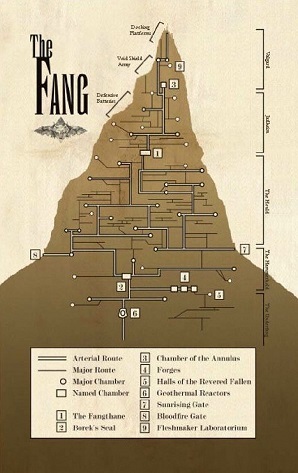
The group are eventually relocated to The Fang, the mountain home of the Space Wolves. These super-humans have been genetically, surgically, and mentally enhanced to become some of the most elite fighters in all of the galaxy-spanning Imperium of Mankind. We transition from acts two to three as Ragnar learns that he and his companions must receive the Canis Helix, a genetic implant which will either set them on the path to glory or turn them into a raving beast. All he has to do is survive and master his inner beast… and pass one final test.


In the fourth and final act Ragnar is inducted into the Space Wolves proper, becoming a low-ranking member known as a Blood Claw. Unknown to all, agents of a rival power are amassing a hidden force beneath the frosts of Asaheim, which culminates in the newly-fledged Claw's first encounter with a formidable Chaos sorcerer, Madox.


CHARACTERS

King does a good job of balancing quantity and quality when it comes to characterisation. Ragnar is undoubtedly the centre of attention, but the supporting cast is entertaining and really helps develop his struggles. At times you will find yourself chuckling along; at others you will feel the sting of perceived injustice.


Two key characters help King to explore opposing facets of Ragnar's personality. On the one hand is Strybjorn Grimskull, the proud and brash object of Ragnar's loathing; on the other is Kjel Falconer, a humble and quiet warrior for whom Ragnar develops a liking.


King never questions whether Ragnar was right to kill Strybjorn—after all, Ragnar's deeds would be considered both honourable and noble by Fenrisian standards—but he certainly does an excellent job of showing that Ragnar is wrong to hang onto his hatred. We are repeatedly shown that Blackmane is exceptionally quick to adapt to new circumstances, yet he clings to the core of hatred which is the only reminder of his past life. This simmering loathing doesn't have a chance to turn the reader against Ragnar though, because Strybjorn clearly despises him and reciprocates all of Ragnar's feelings. This persists until the conclusion of the novel, where both men put aside their hatred in order to pursue duty and the service of a greater good. Ragnar shelves his loathing and Strybjorn puts aside his pride, and together they are able to defeat Madox. This essentially concludes Ragnar's (and Strybjorn's) character arcs in this novel.


Kjel, on the other hand, almost immediately befriends Ragnar when they meet in Russvik. He is one of the few aspirants that shows any sympathy for the demise of the Thunderfists; the pair save each other's lives on multiple occasions during their training; and Kjel sometimes steps in to prevent Ragnar and Strybjorn from fighting. In effect, Kjel becomes Ragnar's advisor, friend, and right-hand man. This situation changes dramatically once they receive the Canis Helix. Ragnar masters his inner beast, but Kjel becomes possessed and eventually becomes a Wulfen—a devolved but powerful beast—that stalks Ragnar during his final wilderness survival test. In one of the most emotionally powerful scenes in the novel, Ragnar slays the Wulfen, hoping against hope that it was once Strybjorn, only to discover that he had killed 'his only true friend'.


The remaining characters are intriguing and do make further appearances in sequel novels, where they receive more attention than they do here. Still, each person has some quirk or defining feature which makes them immediately memorable. Nils is always thinking of food; Lars has a touch of the weird; Sven is gruff but enjoys making inventive curses and complaints ("I wonder if they put this dog excrement straight into the [food tubes] or whether they add some cat puke into the mix first."). Coupled with the odd spot of banter, their interactions help keep the novel's tone from becoming totally bleak.


THEMES

King draws on a number of elements of the 40k universe to touch on a variety of themes. In my opinion, the three which are most pivotal (and inter-related) are honour, duty, and self-control. These three threads are brought together through several plot devices.


The first indication that these themes will be cropping up repeatedly comes early on. Ragnar spears a sea dragon during a deadly storm, displaying self-control and commitment to duty. At the same time, he shows contempt for his fellow villagers who fail to manifest these traits. This shows that honour is also of utmost importance in Ragnar's mind.


The next major confluence of these themes occurs at the Gate of Morkai, a temple deep beneath The Fang at which aspirants are psychically tested for character flaws. Those who are found unworthy are allowed to die in a psychic stupor, a fate which Ragnar narrowly avoids. When he awakens, Ranek informs Ragnar that "No one has ever come closer to being failed. […] There is a flaw in you, boy, and it might yet be your undoing. […] You must decide what is more important. Killing your enemy or living your life with honour in the service of a great cause." This ultimatum haunts Ragnar throughout the remainder of the book.


The plot device of the Canis Helix follows shortly after. As far as the Space Wolves are concerned, if a person fails to integrate the Helix then they had an impure mind. This attitude is related to the aspirants through the tale of Wulfen, a jarl who imbibed the Helix and devolved into a dreadful beast to match his internal bestial nature. They are told that if they receive it with evil in their hearts they too will become beasts. In addition to highlighting the above themes, this explanation really adds some depth to Ragnar's relations with Kjel and Strybjorn. We, the readers, are aware that much of the Space Wolves' technology has been mysticised over time, and that their explanation of the Canix Helix's success or failure might be totally wrong. This raises the question of whether Kjel, Ragnar's friend, was truly impure of heart or merely unlucky. Similarly, was Strybjorn actually pure of heart, or just pig-headed and powerful enough to survive its brutal effects? Either way, Ragnar does not take this into consideration; he must come to believe that his friend was fundamentally flawed, inferior even to his most hated enemy.


The final collision of honour, duty, and self-control comes in the Chaos temple in the novel's closing act. Here we see Ragnar truly tested, his flaw—hatred—exposed to the full corrupting power of Chaos, and we see him succeed through exercising honour (saving his comrades), duty (in this case, defying the allure of Chaos and acting in the best interests of the Space Wolves), and self-control (denying his desires and acting in accordance with reason). Through these, Ragnar bests his hatred and defeats Madox, a Chaos sorcerer who is a manifestation of dishonour, hatred, and self-centredness.


WEAKNESSES

Some may be put off by the distinct lack of women in this novel, but it does fit the setting and mythos to a tee. I don't see how adding more diversity to the cast would have enhanced the novel in any way, as it's really about Ragnar anway.


If you are a fan of fast-paced novels, this may not be for you, as a significant chunk of the book is spent in introspection. If, on the other hand, this sort of slow burn appeals to you, you will be in good hands.


Apart from these very minor points I have very few problems with the novel, and have only docked one star because it is largely a derivative work (although, as I mentioned above, well-treated and worthy of respect in its own right).


MISCELLANEOUS

This novel is followed by a number of sequels. Of these, my personal favourite is 'Wolfblade' because it explores some very interesting parts of the 40k universe—old Terra itself, and the strange mixture of poverty and extravagance which doesn't, at first glance, seem like a sensible place for a Space Wolf. Who would have expected a political thriller novel based on a sci-fi Viking!

Profile Image for Tom Mott.
84 reviews1 follower
July 24, 2025
3.5. Fun and unserious, although it does fall into the inevitable 40k trope of ‘oh no, Chaos have shown up, the total bastards.’
Profile Image for Lucas Rage.
22 reviews
March 10, 2018
Wow,

this was my first introduction to the Space Marines and I must admit I was highly disappointed. The story of Ragnar lags itself for pages until it gets heated, and when he finally dons the armor its a heaping mess. You can never get what's going on in each scene. What needs to be fleshed out is rushed, while some things that could take less time are dragged on. The writing isn't so hot either, making me cringe at some passages.
Profile Image for Cara Jones.
4 reviews9 followers
February 20, 2016
This goes from rough and ready barbarians to ultra-powerful Space Marines. It tells the story of how the main character came to be who it is. I certainly enjoyed it but it's an epic read, so it took time to get through. I'm quite into the Space Marine thing after this - brutal and relentless.
Profile Image for EmBe.
1,197 reviews26 followers
February 16, 2021
Eine ältere Rezension für ein Fanzine auf Papier:
Ich habe dieses Buch gelesen, nur um einen Blick in diese Spiele-Welt zu werfen. Ich sage es gleich, ich hätte lieber einen Roman von Ian Watson oder David Pringle gelesen, aber leider war nur dieser Roman von diesem mir unbekannten Autor gerade aktuell als Rezensionsexemplar erhältlich.
„Warhammer 40.000“ scheint die Science Fiction Variante von „Warhammer“ zu sein. „Warhammer“ ist ein Strategie-Brettspiel. Die Spielfiguren sind dabei keine figürlich abstrahierte „Stellvertreter“, sondern mit vielen Details versehene martialische Gestalten. Furchterregend groß sind die Waffen, die sie in den Händen halten oder mit sich herumtragen. Die Körper verschwinden ganz in den Rüstungen. Ganz so wie auf dem Cover dieses Romans. Insofern signalisiert der Einband, was den Leser erwartet.
Held ist der Wolfskrieger Ragnar. Er gehört zu einer Eliteeinheit (nein, einfachen Kämpfer bringen es nicht), einst ausgewählt und dann noch durch Wolfseigenschaften zu einer Art Übertiermensch, einer Art Werwolf geworden. Gleich am Anfang wird ein Kampf gegen die „abscheuliche mutierte Brut des Chaos“ geschildert, die Feinde des Kaisers, des Kaiserreiches, dem Ragnar dient. Da mag man das Buch schon weglegen. Wie die animalischen Seite des Menschen, der Kampf bei gleichzeitiger Schilderung der Feinde als böse und widerwärtige Gestalten, die es (wie eine Krankheit) zu vernichten gilt, gefeiert werden, das ist schon schwer erträglich. Ohne Wertung gesehen, verbindet das „Warhammer 40.000“ Szenario Space Opera-Elemente und zeitgenössischen Phantasien von der technologischen Aufrüstung des Menschen mit einem Fantasy-Weltbild – inklusive Magie. Dabei werden die alten Klischees vom Kampf des Guten gegen das Böse wiederbelebt und unreflektiert übernommen. Der Roman ist schlichtweg reaktionär.
Wenn man sich entschlossen hat, doch noch weiterzulesen, dann wird man in gewissen Maße entschädigt, denn jetzt folgt der beste Teil des Romans. Ragnar wird verwundet und im Zustand der Bewusstlosigkeit kommen Erinnerungen hoch und erlebt er sein Werden zum Wolfskrieger noch einmal.
Ragnar wächst in einer wikingerähnlichen Gesellschaft auf einem unwirtlichen Planeten heran. Als er eine Fahrt mitmacht, die einen „Magier“ Ranek zu den Eisenleuten bringt, erlebt er seine ersten Abenteuer. Dieser Magier hat alle Merkmal eines Wolfskriegers und er wird Ragnar schneller wieder begegnen als diesem lieb ist.
Seine Gemeinschaft kann sich aber des Verdienstes durch diese Fahrt nicht lange freuen, denn sie wird aus dem Hinterhalt angegriffen von dem Clan, den sie einst von der Insel vertrieben haben. Der Kampf ist eher ein Gemetzel, das Ziel der Angreifer ist klar, die Dorfgemeinschaft auszulöschen das heißt alle Männer zu töten und die Frauen zu entführen. So laufen nun die Konflikte zwischen den Clans ab. Die Anwesenheit der „Boten der Götter“, die immer auftauchen, wo gekämpft wird, macht den Kampf zu etwas Besonderem. Ragnar kämpft wie im Rausch, wird tödlich verletzt und von Götterboten, unter ihnen Ranek, ausgewählt, zusammen mit seinem verhassten Gegner im Zweikampf.
Nach dieser Rekrutierung, schwach angelehnt an die nordische Mythologie, ist der interessante Teil des Romans auch schon vorbei. Die Ausbildung zum Wolfskrieger in einem Ausbildungslager auf dem Planeten, angelehnt an die Ausbildung in der US-Armee und an die der „Sternenkrieger“ bei Heinlein, ist hart und sie überleben nur wenige auserwählte und wird, dank der vielen gefährlichen Kreaturen und den Kämpfen, handlungsreich geschildert. Nicht zuletzt stellt die Umwandlung in einen Wolfskrieger an Körper und Seele schier übermenschliche Anforderungen.
Am Ende kommt es jedoch noch zum Kampf mit den wahren Feinden. Das sind Höhlenbewohner, die hier einen Schrein für einen der Widersacher, Tzeenth, dem „Mutator“ und „Dämonenfürst der üblen Zauberei“, errichtet haben und den abtrünnigen Kriegern, legendären Soldaten, die sich mit dem Bösen verschworen haben, und dafür auch ewiges Leben erhalten. Hier im Herz ihres Feindes, wo sie niemand erwartet, wollen sie zuschlagen. Und gegen eine Schar unerfahrener Wolfskrieger haben sie gute Chancen, zumal diese in einen Hinterhalt geraten sind.
Was nun folgt, ist leider abzusehen: Höhlenbewohner müssen zu Hunderten niedergemacht werden, Magie abgewehrt werden und – und für Ragnar - schließlich im Zweikampf der Erzfeind besiegt werden. Dieses Finale ist wieder eher unerfreulich und einzig der Auftritt der hat einen gewissen sense of wonder.
Was ein Autor wie Ian Watson aus den Vorgaben dieser Spielewelt macht, das entzieht sich mir, aber sicher nicht so ein primitives Fantasy-Garn im Science Fiction-Gewand. Interessierte Leser, sollten sich eher an Roman von Watson, Pringle und Yeovil (dahinter verbirgt sich Kim Newman) halten.
31 reviews
January 2, 2025
As far as space wolves go, they’ve got one of the more unique backstories and weirder structures compared to most chapters. They field literal superhuman werewolf men, drink something like petroleum to get drunk, and pray to ancient not-nordic dieties to achieve magicks and prowess in battle. The first SW novel has these things in them, but somehow fails to make any of this interesting or unique. The story is a basic coming of age origin story detailing the protagonist’s journey to become a hero. There’s a light sprinkling of Warhammer in it, but the author delved too deeply into general nordic mythology and light fantasy without making anything stand out by it’s own merit. If you removed the mention of space marines in the novel, and the bits about the nordic mythology, your left with then an otherwise bland story that never challenges you or twists in any direction - other than straight.

It’s a very safe and compliant novel, albeit extremely dull. Sure, it has wolves in it, and space marines, and some mention of space, but the protagonist never really struggles through anything, and wins all of his battles easily. Any difficulties he encounters are dealt with normally within a page or two, and he never loses. The protagonist’s biggest change occurs at the beginning but then he forgets about it by the next chapter and barely touches on it later on. The antagonist has all the momentum of a wet fart; impactful initially, but then just mills about and never challenges the protagonist again. One bout of fisticuffs and that was it. It’d be funny if Stribjorn actually died during the transformation and Ragnar’d be then left feeling bereft of the last connection he had to his old life, and his motivation of vengeance - then having to face a choice between seeking justice through wiping out the Grimskulls and embracing the beast or between letting go, and accepting his place in a new eternal brotherhood. See? I can write a better and deeper story in a few minutes. Im surprised that William King, who’d written Gotrek and Felix, managed to write such boring characters.

A book like this would have much better benefitted from multiple Points of view. Its boring hearing everything from Ragnar as he doesn’t know anything and only gives us a cursory glance at the wolves. Blood of Asaheim, for all it’s many many flaws, did a better job of walking us through the different facets of the space wolves chapter, its various members and their approach to the pack mentality. Ragnar never faces any real challenges to his budding leadership, becomes a fully fledged marine in what reads like a few months, suffers barely any setbacks to the geneseed transformation, and can kill literal werewolf demigods with just a wooden stick.
It’s the pacing of the story which ultimately makes the novel so unrewarding to read. Chapters are spent talking about Raggie trudging through snow and munchin’ good old deer meat, then in a few pages he’s magically advanced through his training or gene seed implantation without any difficulty. A process which should take at least a painful decade with high attrition rates is glossed over to fit everything into a neat little light read. From the codexes we’re told that the wolves get told their lore through legends and sagas, yet Raggie learns everything in a few seconds just by plugging into The Matrix. From the background we’re told that space wolves can turn into monstrous wolf-man beasts, or even ginormous actual wolves themselves, but Ragnar, a barely complete neophyte can wrestle one down and kill it by himself. He kills something like two dozen people by himself, and is fine.
It’s all too convenient and unrealistic. The best fantasy has realism mixed in with it in equal measure. The protagonist should struggle both morally and physically through their journey, not just breeze through everything because they have their own table top miniature. This novel would have benefitted from not focusing on an actual named character, or at least actually challenge him. Plot armour and uninspired writing strike again to provide the reader with another overrated light fantasy novel for kids. Bloodless and safe, perfect for the masses. Read and throw. Sell as many as you can.
Profile Image for AshBornd.
44 reviews
August 12, 2021
Hola Amigos! Как всегда пройдемся по пунктам:

О чем: Сеттинг Warhammer 40к.
Книга повествует о достаточно значимом для серии персонаже по имени Рагнар Черная Грива, а именно о его пути из обычного жителя Фенриса в ряды космического десанта.

Повествование: Роман написан не самым приятным слогом, возможно стараниями переводчика. Не читал другие циклы Кинга, но планирую и отмечу возможные изменения в будущих рецензиях.
Помимо этого, повествование ведется в затянутом и провисающем темпе. В больших количествах обнаружена графомания - автор на протяжении всего романа растягивает мысли, пережевывая и пересказывая одно и то же на протяжении длинных абзацев.
Персонажи, кроме "мысленной жвачки" Рагнара, не раскрываются. Драматическая составляющая взаимоотношений и внутренние конфликты отсутствуют.
Боевые сцены на достаточно примитивном уровне.
Юмор пытается быть, но пытается плохо, и проще констатировать его отсутствие.

Мнение:
Я обожаю Космоволков. Два моих любимых легиона - Волки и Вороны. К сожалению, вороны в переведенной литературе, категорически не представлены, а вот книг о волках достаточно много. Но все они почему-то ужасно посредственны.
Я не прочитал и ещё возлагаю надежды на "Кровь Асахейма" и повесть о Рагнаре, но в остальном мы имеем: неплохую Битву за Клык, откровенно слабого Лукаса Ловкача, скучную растянутую повесть о Лемане Руссе и, конечно же "классику" Уильяма Кинга, берущую новый рекорд посредственности.

Две причины, по которым я не отношу роман "Космический Волк" к откровенному мусору - это структурно правильная "история становления" и наглядная демонстрация становления космоволком.
Но написана эта история отвратительным графоманским способом. Автор не создает интересных событий, не раскрывает персонажей, не погружает в атмосферу.
Вместо этого он абзац за абзацем, будто эпической поэме описывает как герой на протяжении страницы обдумывает одну и ту же мысль, а потом схематически совершает действие. Всё повествование можно сократить раза в 4, без потери смысла и художественной ценности.
Талантливый автор способен передать массу информации и драматизма одним предложением, в то время как Кинг в данном романе умудряется ничего не сказать читателю даже десятком страниц.
И если вам показалось, что на протяжении последних предложений я делаю то же самое - то вы правы, это наглядная демонстрация. Только помножьте объем в несколько раз.

В итоге роман можно посоветовать только для получения информации о предыстории Рагнара и процессе отбора космоволков. Но лучше прочитать это в виде краткой статьи и не тратить время на столь посредственное чтиво.

Оценка 6/10.
Не хватило: грамотного слога, динамичности сюжета, раскрытия персонажей, драматизма и прочих составляющих художественного произведения.
Рейтинг "goodreads" - 4.09/5
Моя группа Вконтакте - https://vk.com/ashborndetv
21 reviews
January 1, 2020
I was recommended to go pick this book up and read it as an introduction to the Warhammer40k universe since I knew absolutely nothing what so ever about it other than it had Starcraft-looking Space Marines in it.

As an introduction to the universe, this book was fantastic.

The main character is essentially a fish out of water character, so as he goes through training to become a Space Wolf/Marine, he is learning about the universe around him and you are learning along with him.

From that perspective it was great. However the writing itself was kind of mixed.

It wasn't 'bad' by any means, but there were times when I wish it was just a little more descriptive and fleshed out. The one thing that stuck out to me was there would be parts where Ragnar would imply he was going to do something to his nemesis(Strybjorn), only for nothing to happen. In fact Ragnar in the next scene would sometimes not even so much as glance in his direction at all, so I just stopped expecting anything to happen... which would have been awesome if something finally *did* happen and I wasn't expecting it, but that too never occurred.

As an example of this, there's a scene where they are going to go to the firing range and Ragnar thinks to himself, "It'd be an awful shame if the Grimskull were to have a training accident..." and then the training scene comes and absolutely nothing happens. Strybjorn isn't even in the scene as far as I remember.

Honestly the Ragnar-Strybjorn subplot was the biggest problem in the book. It wasn't really fleshed out much at all, and near the end it just falls flat and is resolved too quickly as far as I'm concerned.

In the grand scheme of things it's pretty minuscule compared to the rest of the book, so I can turn a blind eye to that.

The training segments before he dons his armor reminded me a lot of Halo: The Fall of Reach, in a good way. The action scenes themselves remind me a lot of how Eric Nylund writes his actually. They're well paced, not too long or short, and even with the characters being super soldiers you can still feel suspense and concern for them.

So yeah I'd recommend it. Not too great on characterization, but the way you're put into the universe and learn about it here is great, and it's worth picking up for that alone.

This book has made me excited to read more WH40k stories, and maybe the rest of the Space Wolf books along with them. It has exceeded all expectations I had as it being an introduction to the universe, plus the way the lore is delivered and the action is cool, so 4-stars it is.

If it had just a little more in terms of characterization, it'd easily be a 5 to me.
Profile Image for Unseen Library.
983 reviews53 followers
June 11, 2022
Rating of 4.5.

Welcome back to my Throwback Thursday series, where I republish old reviews, review books I have read before or review older books I have only just had a chance to read. For this latest Throwback Thursday I dive into the world of the Space Wolves chapter of Space Marines with the classic Warhammer 40,000 novel, Space Wolf by William King.

In the far future, humanity is constantly at war with aliens, daemons, traitors, and heretics, all of whom wish to tear the massive and fragile Imperium of Man to shreds. Humanities best and often last line of defence are the mighty Space Marines, the Emperor’s angels who fight the very worst xenos and spawns of the Chaos Gods. Out of all the Space Marine chapters, one of the most respected, feared and honoured chapters are the Space Wolves. Born from the genetic material of their legendary founder, Leman Russ, and bearing the touch of the wolf, the Space Wolves have stood tall time and time again. But how does a mere man become a bestial and lethal Space Wolf?

On the planet of Fenris, Ragnar Thunderfist is a young warrior, content to work on his father’s ship and contend with the many dangers of his fierce and low-tech home world. During a raid upon his village by a rival tribe, Ragnar is killed in a mightily duel after felling many enemies. However, this is not the end of Ragnar’s journey; instead he finds himself waking up healed, resurrected by one of the mysterious Wolf Priests who watch over the planet. Taken from the ruins of his village with other worthy aspirants, Ragnar learns that he has been chosen to become a member of the next generation of Space Wolves.

However, earning the right to join the Space Wolves is no easy task, and Ragnar soon embarks on a gruelling and lethal training regime that will test him to his very limit. Working to hone himself into a living weapon, Ragnar will face trials, monsters and deadly rivalries as he attempts to prove himself. But even if he is found worthy, the greatest trial involves the final transformation into a Space Marine. The Canis Helix, which is implanted into all Space Wolves, bears a dangerous curse, which may turn even the strongest of wills into wild beasts. Can Ragnar overcome the bestial rage that comes with this awesome gift, or will he lose his mind before he can serve the Emperor? And what happens with the legions of Chaos arrive upon Fenris?

To see the full review, click on the link below:
https://unseenlibrary.com/2022/06/11/...

For other exciting reviews and content, check out my blog at:
https://unseenlibrary.com/
Profile Image for Megg West.
225 reviews21 followers
April 1, 2024
C7 A9 W8 P8 I6 L9 E6

Characters
Ragnor himself is more an amalgamation of what his people should be, rather than his own character and I found that kind of boring. Everyone around him was way more interesting.

Atmosphere
I love a training school setting. Add to that that this book is so heavily based in Norse mythology and it makes for a really good setting for me to read. I also really liked the author's ability to write such a basic culture, with one that is so futuristic in nature.

Writing
It was good, there was nothing that stood out too much, but I did also appreciate the accent in the audiobook version of this book.

Plot
Somewhat predictable, but not bad. I think it's a bit hard to write a story where you already know where the character will end up and then write the story to get you up to that point. It could just be this first book in the series being so fantasy versus the Sci-fi that the rest of the books will be that makes it that way though.

Intrigue
Not bad, but not something that I found unresistable.

Logic
Having a Fantasy and a Sci-fi setting so close together doesn't always work. If you love Fantasy there is no guarantee that you'll also love Sci-fi, it didn't matter too much in this book though and it was interesting to be able to see that shift across the book.

Enjoyment
It was better than the last Warhammer book I read, that heavy Fantasy element to this storytelling was what made it a good book for me. I just wish that I could have loved the main character a lot more for the sake of the book.
Profile Image for Xenophon.
181 reviews15 followers
December 29, 2023
Just took my first dip into the 40k universe with this and I'm not disappointed. The common recommendation to start with this is spot on because King gets the reader invested with a solid, likeable character from page 1 on. I've listened to You Tube videos and had the basics of the lore described to me many times, but the immersion really helped it stick.

This is a coming of age/military adventure in the style of Starship Troopers and doesn't do anything revolutionary trope-wise, but it's well executed.

An added bonus is it's pretty clear William King wrote this for young men and offers a lot of good lessons to those who will read him. The central theme is all about testing your limits, understanding your inner beast, and harnessing it through faith and discipline. Downstream from that is a long meditation on the true, manly nature of forgiveness and its relationship to finding a higher purpose.

While it's graphically violent, King skillfully evokes battle and danger without profanity and sexual desire without graphic sex scenes. So not only did I find the perfect entry point for a really cool franchise, but I also found a book I can hand to my nephew when he's old enough to let its very valuable lessons to sink in. I think this would not have landed nearly as well if King got crazy creative with the structure of the story.

This book is not at all what I expected, and I hope much of the franchise is just as deep.
Displaying 1 - 30 of 152 reviews

Can't find what you're looking for?

Get help and learn more about the design.