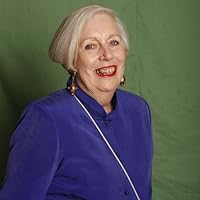
Helen Elliott’s Eleven Letters to You is a profoundly original memoir, an intimate account of growing up in the suburbs of Melbourne in the fifties and sixties, before feminism.
This sparkling, wonderfully absorbing book is written in the form of eleven letters to those neighbours, relatives, friends, teachers and mentors who shaped the young Helen. (It begins in 1950 when she is three and finishes in 1969 when she is twenty-two.) Each of the letters is a homage to the power of memory to recreate life in all its sensuous and indelible detail. And each is a love letter that brings Elliott’s marvellous characters—the Misses Stapley, Lois, Mr Cohen and so on—back to life, along with the lost worlds they inhabit.
Helen Elliott sets out to look for answers to one primary question: how did she become whoever she thought she was. She conducts her search through the lives of others. ‘I am not the centre of this book,’ she says, ‘but the hinge holding it together.’
Her search will mesmerise her readers, because of the power and fluency of her voice, and because the vanished kitchens and gardens and fields and streets she conjures up are so unforgettably drawn.
Eleven Letters for You offers us an immersive and deeply moving reading experience. It will appeal equally to fans of Elena Ferrante and Helen Garner.
The following book reviews have been shared by Text Publishing – publisher of Eleven Letters to You
‘Remarkable...an account of the friendship, truthfulness, decency of others.’ ABC Radio National
‘A rare feat of imagination and memory, written with grace and humour, irony and controlled anger, summoning the encounters that gave Helen Elliott treasures of human knowledge and surprises of self-awareness.’ Brenda Niall
‘A deeply evocative memoir, with the humanity of A. B. Facey’s classic, A Fortunate Life, written on the little piece of ivory favoured by Jane Austen.’ Louise Adler
‘A quietly ecstatic work of memory—intense, witty and beautiful.’ Helen Garner
‘A wise, erudite and charming book, steeped in love.’ Travel Insider
‘I read it in one sitting—I could not put it down. [It’s] warm and generous…both moving and very thoughtful. It made me think about life stories and how we tell them…Very powerful.’ Kate Evans, RN Breakfast
‘A rather unusual and special memoir by one of Australia’s finest literary critics…A lovely reminder that we do not ever get anywhere, or learn anything entirely on our own…Bravo, Helen.’ Australian
‘An intelligent, critical, utterly engaging exploration of a life; a memoir that is willing to look at pain and regret as well as joy.’ Kate Evans, ABC Arts
‘Here we have a memoir that could be a marvellous epistolary novel. Elliott’s Eleven Letters to You teeters over the boundaries of novel and memoir again and again….It’s tempting to keep quoting from Eleven Letters because the writing is so unusually good. The vividness, the sheer liveliness is a feast that makes you want to keep going back and tasting it again. More than that, it is a vibrant and critical history of the past 70 years...I wouldn’t be surprised if it won awards.’ Age
‘Endearing, emotional and often epiphanous…With crackling prose and a vividness that illuminates even the remotest of memories, this memoir pays tribute to those forgotten figures who light the runway into adulthood.’ Saturday Paper
‘Intimate and generous.’ Sian Cain, Guardian
‘The exuberance of the writing process filters through to the finished pages…This memoir is a remarkable celebration of the permeability of individual lives in the face of historical change.’ Australian Book Review
‘Intimate, innovative.’ West Australian
‘Delightful.’ Mercury
‘This book is a work of crafted beauty and grace. It is a balm to return to it each day for a smack of goodness and heart. Thoroughly recommend for its writing and, if like me you are in need of, antidote to some of the current horrors going down.’ Bernadette Brennan
‘This lovely memoir by Elliott, a much-admired literary critic, examines periods of her life through letters to the people who shaped her when she was growing up in Australia’s burbs in the 1950s and 1960s. The neighbour who lent her the books that would change her life; the teacher who taught her about art; the attractive male boss who became “an instruction in both desire and decency”; and all the bold women who revealed to her how to live a life of one’s own. I keep thinking about this book—it is one to return to.’ Sian Cain, Guardian
I know ‘meeting’ the author shouldn’t influence you on her writing but it did. I heard her talk at Adelaide Writer’s Week and found her to be rather pretentious and trying to be witty for want of a better word, neither worked for me and she just came across as a snob. Maybe it was just me but a few did get up and leave while she was talking about her ‘memoir’. She apparently gave up a scholarship to Oxford for men! It is, however, well written and is exactly what the tithe suggests 11 letters written about neighbours, teachers, friends and employers throughout her life until her twenties. I found near the end I just didn’t care but many might enjoy an insight into this person’s early life.
Elliott writes about being a young woman growing up in 1950s and 60s Melbourne, and each chapter is a letter to someone who had some influence on her life. It a great premise. She grew up in a very traditional household where she wasn’t expected to go to university. A lot of her journey in these letters is about unlearning the sexist constraints imposed upon her as young woman at that time. So in that way it’s a very feminist memoir. It’s also deeply human and pleasantly quirky.
It’s a peculiar book because the author is peculiar. That’s what made it oddly compelling. She’s painfully honest about some uncomfortable situations and personal foibles, and that makes for good writing.
I liked this book. At times I sort of liked it. Other times I very much liked it. Every once in a while it was a bit off – with an incredibly sentimental and saccharine sentence here and there that should’ve been edited out. It felt uneven but good.
Elliot is a well known literary critic in Australia, and it’s interesting to see how she became a significant player in the literary landscape of the country after having such humble and modest beginnings.
Unusual style for a memoir, each chapter on a person who had a significant effect on the author’s early life. Superbly written. Very engaging and moving as the characters are woven into the family life of the author. The parents are not addressed directly but it is their story and we come to know them well. A detailed history of growing up in suburban Melbourne in the 50s and 60s.
What an interesting approach to memoir taking the form of letters to formative people in Elliott’s early life. Through those letters we see a child come to be a young woman. These people shape her. I loved the way Elliott questions her memories of each of them. Within the letters we see a view of sheltered outer suburban life in the 1950s and 60s. A curious and enjoyable reading experience.
Helen Elliott is a leading Australian literary critic and essayist whose work is extensively published in newspapers and journals. ‘Eleven Letters to You’ is a memoir of her search of lost time, striking in its originality and deeply moving in its remembrance of her liberation from the stultification of suburban life in Melbourne in the middle years of the last century. Place is important in the bleak sociology of those decades. Boronia, where her memoir begins, is situated in the shadows of the Dandenong Ranges, a dormitory suburb now, thirty kilometres from Melbourne. In the fifties it was semi-rural with orchards and flower plantations. The name is derived from the fragrant shrub Boronia metastigma, native to Western Australia, but widely cultivated commercially. Helen and her parents lived in a rudimentary house of weatherboard and fibrolite in this beautiful place. The family was treading water financially. Her father Jack was a gambler and profligate in his generosity. He suited up and buffed his shoes to a high polish before the daily commute to his job in Melbourne, but the soles were worn out and lined with cardboard. His wife Eileen was not permitted to take a job. Feminism would come late to Boronia: no-one there was reading The Feminine Mystique in the sixties. There was ‘no alternative to the specialised unhappiness of an unhappy marriage in those days’. Love, more unsparing than anger, shapes Helen’s narrative of her parents’ embittered marriage that gradually unfolds through the course of her memoir. Eleven Letters spans the years between 1950 when Helen was three and 1969 when she finally surmounts the restraining influences of class, gender and family injunctions against excessive ambition and scrapes together the resources to enrol at Monash University: ‘The World that I had imagined for so many years started to define itself’. In those decades university was reserved for the children of the upper-middle classes, usually boys and usually educated in private schools. Once at Monash Helen rejoices in an intoxicating milieu of talkative, argumentative people with whom she could share her wit and intelligence. The eleven letters are written in gratitude to the neighbours, teachers, friends and colleagues who shaped her childhood and adolescence and inspired her aspirations. She characterises her memoir as the hinge holding their lives together. These are mostly posthumous expressions of love: few of the nine women and two men whom she remembers in these letters are still alive. The letters trace her developing independence from earliest childhood. The first is to Elfreda and Viola, spinster sisters who lived nearby in Boronia. They were old and sprightly, had served as nurses in Egypt in WW1 and loved her as if she had been their own child. They were exotic. Their voices were as light as filigree. They told her about the apricot-coloured sunrises in the Egyptian desert and shared their joy in gardening with her. In Autumn their fowls got tipsy from eating fermenting windfall plums. Their kitchen glittered with cleanliness. Then in the swift succession of Helen’s childhood years, Elfreda and Viola grew old and incapable and had to be taken away. Other mentors followed. Spiky Mrs Hannacker, who cropped her hair and wore mannish clothing and men's shoes. Another gardener, demanding in her perceptions - Snail vine is ‘mauve, not lilac, learn the difference, Helen Elliott’. Mrs Hannacker told Helen that she must plant a quince tree in her garden wherever she lived, an injunction remembered in each of her gardens over the decades. Much later when she was 17, skipping intervening mentors, there was Mr Cohen, fiftyish and fragrant, who became her supervisor when she was employed as junior clerk in the Commonwealth Post-Master General’s department. She developed an intensely sexual ‘crush’ on him. She felt out of place among the other office girls. She was bored by the newsy tedium and sniping raillery of their conversations. She spent her lunchbreak reading, engrossed in the imaginary life of Europe, Russia or England that books enabled, a life of ‘not being a clerk, not being Helen from Boronia’. The other girls said she came from another planet and called her Greta Garbo because she looked like that old film star. She read too much they said. She was disconnected and disaffected with the job when Arthur Cohen, in a moment of intense, mutual and unexpressed erotic attraction, told her that ‘a beautiful girl like you doesn’t belong here’. She was aware that he spoke from his own unhappiness and forgone aspirations. But he took no advantage of her vulnerability. Later, when she resigned, he said that ‘leaving this place’ was the best possible thing for her to do: ‘You need a library and a university, Helen’. He was another, lovingly remembered, who helped her to find an identity. Eleven Letters to You is an intimate history of Helen’s liberation from the oppressive misogyny of those post-war years. It is penetrating in its intelligence, gorgeously written and often very funny.
Brilliant, moving and insightful. A uniquely innovative approach to memoir, which while addressed in the form of letters to eleven people who were significant in the author's formative years, tells us as much about the author and her parents as it does about those characters . As a story of a girl growing up in 1950s and 1960s Australia, finding her way through the suffocating impediments of suburbia and all the ultra-conservatism that implied in those decades, her account resonated strongly with my own history. Taking a deadening job with the PMG as a filler while she figured out how to educate herself and make a life worthy of her talents was like listening to a repeat of my own history, except my job was with the Taxation Department!
I had a new experience with this book, being that the reason I liked it most was also the reason it made it a bit of a slog of a read for me. Elliott’s writing style makes it feel as if you are inhabiting her brain and whilst at times this is raw, honest and beautiful, it is also hard to follow and connect with. I love the idea of this novel and hope to write similar letters someday. Perhaps I will read it again with fresh eyes.
Some really beautiful writing here---but as boring as a bore drain in Brewarrina. There were small pockets of wonderful descriptions of connections she made and people she loved. If only these sections were expanded. 6/10
A very interesting concept - writing to/about persons who greatly affected one’s growing up sometimes just by their presence. A very useful thought for us all. I did however grapple with finishing the book.
An interesting way to present a memoir, a series of letters to people in the author’s life. I enjoyed the first few but then it became an effort to finish. Perhaps eleven letters was too many?
Oh Helen, what a beautifully written memoir, thank you. I related to each of the cycles of your life as we are both obviously ‘of a certain age’. Thank you for the memories of welcoming neighbours with open houses, schools, and classes of 60 or more pupils in each class. The many unmarried women you encountered as teachers, neighbours and friends, no doubt due to many of their male contemporaries not returning from war. I appreciated your honesty, particularly with regard to your parents. I did not have your parents, or lifestyle, so no direct relating there, but understood your confliction and total love. wonderful book, wonderful read. Why did you choose to not capitalise any noun beginning with ‘P’?