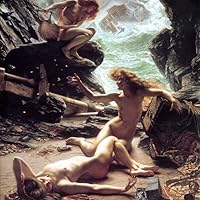
Blaugast is a tale of ruin. A bored clerk, Klaudius Blaugast, pursues his desires down a path spiraling into complete degradation. Homeless and destitute, having lost everything to the evil prostitute Wanda, he seeks redemption in a Prague that has become sybaritic and uncaring — a city in which he has become an outcast among the outcasts. Flashbacks to incidents in his past, hallucinatory revelations of the meaning of events long forgotten, point to the seeds of his eventual downfall.
Leppin's final novel, which he never saw published (the typescript languished for decades after his death in the archives in Prague), Blaugast is an indictment of the despotic and vulgar, an exploration of the sadistic tendencies found amongst the "moral" and "respectable." Max Brod's depiction of Leppin as "a poet of eternal disillusionment, at once a servant of the Devil and an adorer of the Madonna" nowhere rings more true than here.
Paul Leppin (27 November 1878, Prague (Prag, Praha), Royal Bohemia, Austria – 10 April 1945, Prague, Bohemia, Bohemia & Moravia/3rd Czechoslovakia) was a 20th-century Bohemian writer of German language, who was born and lived in Prague.
Although he wrote in German, he was in close contact with Czech literature. He translated Czech books and wrote articles on Czech literature. He was also an editor of two literary periodicals, Frühling and Wir.
"A torrent swept away the pangs of conscience, lust, and loathing.
Fate had come to Blaugast out of the tunnels of night. An apocalyptic woman had seized him. As if a storm had brought with it a raging din, funeral music, blood from the depths. Like a lifeless stone, he sank to the bottom, into the throes of sex, into the insanity of his fate, into the sleep of the damned." ----
" “Little Baron!” some called gracefully whenever his stooped figure, humble and genteel, hesitated at the tables of the regulars. Now the moment had come to release the high voltage of all their horribly frustrated sadism to the harmlessness of an auxiliary lightning rod, to show off their superiority to the drunken women around them. One reached into his pocket and let the metal crowns sparkle in the light of the table lamp for all to see. Orgasm, which suddenly and without resistance overtakes even the rich and powerful among us every time when the image of an inferior presents itself, electrified their humor."
I enjoyed this more than "Severin's Journey into the Dark" which seems to be Leppin's better-known novel. It takes a lot to shock me anymore, but this book did at times. I was taken aback at how downright gross some passages are, there's queasily sexual details and an entirely merciless nightmare world full of prostitutes and lecherous men:
This planet was a storehouse of evil tugging treacherously at its chain. Spies were everywhere. In drafty corners where girls with the precocious faces of children offered flowers and matches for sale, on the operating tables of the clinics, in the miserable suburbs, at train stations, under viaducts: pity was exposed as lust, charity as jealousy.
...
Do you really know what that is, a whore’s alley? The evening’s black, glazed with ulcers, the room cold with a lamp mired in soot. One creeps along the houses slowly, amid the snow skipping dully between defiant lanterns, rain falling in the muck, haze lurking, a storm erupting between one’s legs. --But that’s not it, neither the hunger, neither the nights spent in the frost under the docks: It was awful that I was up for sale, to miserable hypocrites in a shitpile of misfortune.
I'm going to give a lot of examples from the text, which is poetic and often rather dense. The description is so beautifully ugly. Note the way Leppin uses the word "crawl" in this passage:
Whenever Blaugast was beset with scenes of slovenly, wasted youth, he remembered this hour in the whorehouse with shame and sorrow. It crawled to him out of the canals of the past, an unhappy creature that made him shudder.
It "crawled," of course. How appropriate. Note this graphic description: "The room, the furniture inside, began to tremble in a whirl. A rat’s tooth, voracious, bespattered with carrion, gnawed at his intestines." There's a lot like that here.
I was reminded of the grittiness of Emile Zola reading this, it's poetic, yet has a naturalism bent in its description of filth and squalor.
Sexual urges and obsessions are a torment as, "ill-disposed urges, through which turbid sewage seeped as if escaping a metal hull," and:
The mystery of the world that troubled him, that studded the miserable heaven of his boyhood with stars like a monstrous, anxious nightmare, had yet to reveal itself. It had become more contradictory, hazier, more wretched. Filth gurgled in the ghostly, vaulted cellars where lepers shuffled lost in the labyrinths, greedily begging for pleasure.
While reading this at first I thought the translation was lacking in places, but after getting a feel for the language and reading in the translator's note about how Leppin was already slowly dying from syphilis while it was being written, I had more sympathy for the task. Also I'm sure that capturing the spirit of the language isn't easy.
We get more tender passages occasionally, portraying innocence albeit overwhelmed in filth:
The simple glimmer of irretrievable happiness that had brightened the first half of her youth darted through the room. Disheveled dolls with rosy cheeks, the sound of the music box she had received one Christmas. That was a melody she had never forgotten, even as the tavern music gnawed at her past.
Despite the depravity and degradation, there is a redeeming quality to the story and neither Blaugast nor the prostitutes are portrayed as bad people, but victims of the bourgeois who exploit them both.
The only drawback for some readers might be that Leppin's writing is almost exclusively focused on atmosphere and Prague than characters or plot. Also, when Blaugast starts his decline it's a bit too shocking and sudden to be believed. I thought this part could have used a bit more development. Still, this is an incredible read.
This is another wonderful novel of drunkards, perverts, and prostitutes. Leppin offers a poetry to the filth that is "romantically" pastoral. Borrowing heavily from the Decadent Movement, Blaugast (literally gas light, in german) reshapes Freudian themes and retells Kraftt-Ebbling / Sacher-Masoch antics with a gleeful eye toward the darkened sky oozing over the underground slums and filthy pubs of Prague. Lost souls colliding into one, soaking into each other with volatile combustibility. Blaugast goes from the miserable middle class, to an orgy of unfulfilled sexual adventuring, to a debased broken spine pile of insanity.
This book felt like going home again.
"Lamplight renders the thoughts of others transparent. Intangibles melt away; banality phosphorescences in the dark. I know no time better for work than between closing time and morning, especially when a storm like tonight's turns everything upside down. Fanaticism of all sorts grows restless." - p 15
"Whenever he was enjoying the favors of loose women, indulging in the licentious adventures of youth with an ecstasy that had characterized his relationship the opposite sex from the very beginning, it was nothing more than a pact with the Underworld, infused with a hopelessness that went round in circles, torturing his conscience with anguish. Again and again, whenever whores pounced upon him for a kiss, he felt a desire to meet God." - p. 30
"The uninhibited calm with which she had looks after her parent's livestock as an adolescent also served her well in dealing with men."
"She sensed that it wasn't anything particular, but Woman in her entirety, the Platonic archetype of Creation, toward which he strove."
"Love is customer service, a picture book or panorama." - p. 61
"Empty promises, negotiated and agreed upon in corners, a labyrinthine playground for the vermin and mice, revealed the deals made under gas lamp as nothing more than a facade."
[SPOILERS] A strange tale of a middle-class manager who winds his way from debauched libertine to sadist slave and then to syphilitic street flasher on down to vegetable. Not an upbeat read, though it is full of references and meanderings around pre-war Prague. . The langauge is so awkward in parts and the similes so overblown and strained, you get the sense that something is deeply wrong with the translation. But if you skip to the translator's note, you find the explanation that the author (proto-surrealist Paul Leppin) was himself reeling from syphilis when he penned the book, and some of the writing was likely affected by his own decline... Which somehow makes it all interesting again.
Awful awful translation. If Max Brod gave this guy a thumbs up I wouldn't blame it on the author so I have to blame it on the translator. The writing is super confusing, super flowery and expressionistic and all over the top. That is not necessarily a bad thing in the original but it takes a genius translator to make it happen in another language. Same thing happened with the only extant English translation of Berlin Alexanderplatz - it sucks. On the contrary, Louis Iribarne's translation of Witkiewicz's Insatiability is monumental! I liked the premise of this novel but I was unable to finish it out of frustration with awful language. I don't recall if this was written in German or Czech, the latter being eminently easier to translate. Guess I'll have to brush up on my Deutsch and give it another chance some time in the very far future. At this point, as per this version, for Anglophones this is not much of a discovery of a forgotten author but a reminder that some authors are forgotten for a reason.
Also, many authors have dubious morals but this one is pretty rich - infecting his wife with syphillis and then desperately trying to join the Nazi party - as a Jew - to get health care is pretty hilarious. I fancy many 'fellow travelers' e.g. Celine. This guy is no Celine.
really good. Like a beat generation writer in fin de siecle Prague. blaugast looks unflinchingly at total depravity. this volume also includes a good appreciation of Leppin's work by Dierk O. Hoffmann, Translator's Notes from CYnthia Klima, and a brief but informed biography of Paul Leppin.
Fand es ziemlich gut und hat für mich als vibebasiertes sehr Freud-lastiges Panorama vom Verfall des Protagoniste und seiner Umwelt, der im Fall des Protagonisten in de Objektifizierung von Frauen (der Satz "Es sind Frauenbilder in mir" fasst das echt ganz passend zusammen) und im Fall der Umwelt an den Objektifizierungen und Entmenschlichungen der modernen Welt liegt. Sehr dicht expressionistisch geschrieben und stellenweise auch bisschen zu metaphernlastig. Die 'Rede der Kindermörderin vor dem Weltgericht' in der Mitte fasst aber nochmal alles ganz schön zusammen, auch wenn ich persönlich auf das doch sehr kitschige und klischeehafte Ende gut und gerne hätte verzichten können.
To describe this as a ‘novel of decline’ is a bit of an understatement, but then that was implied by the question on the back cover of this 1930s piece of Decadence – ‘Are you interested in catastrophes?’. Klaudius Blaugast is a catastrophe; he is an unmitigated disaster….. or at least that is what he becomes. As with so many other central European novels from the first few decades of the 20th century (Kafka, Hermann Unger and so forth), Blaugast is a clerk and therefore clearly ready for a crisis – clerks, it seems, are the quintessential frustrated, bored underachiever of aspirant middle class life, often those who could have done better but family or other circumstances prevent their achievement.
Blaugast, about whom we know almost nothing biographical except that he was a clerk in Prague, meets his old school friend Schobotzki who introduces him to Wanda, a prostitute – and from there is all downhill. Blaugast’s decline is spectacular and irredeemable (although without the externalised violence of Frank Polzer in Hermann Unger’s The Maimed) but it does lead to redemption, just not his. The decline from timid clerk to destitute, paranoid, broken figure is total and absolute in its descent into internal and external syphilitic filth. Despite the grim tale, Leppin’s poetic, evocative, circuitous prose elevates this to, in places, a form that verges on the surreal, although the dream is nightmarish. In this he straddles eras and modes – the novel is from the early 1930s with the contempt for bourgeois mores and the alienation of modernity as well as an awareness of the emerging sexology influenced by Freud, Krafft-Ebing and that ilk, but with a writerly form that resembles the decadents and expressionists. At times I felt like I had wandered into a written version of a Georg Baselitz painting, at least in the ambience and scenery of the city – the people all looked like they had stepped out of an Egon Schiele painting. It is all very unsettling and with it thoroughly engrossing.
This is a book to read for the writerly style; the narrative is almost perfunctory: Blaugast falls from grace, becomes one of Prague’s derelicts and object of contempt, flashes people in parks, gets beaten up… that’s about it, but it doesn’t matter all that much. Leppin’s style straddles the styles we can associate with Prague German and Czech modernism, although this is a thoroughly modernist novel – abstract, intellectually demanding, provocative.
Leppin’s women challenge simple interpretation; the major women characters here – Wanda & Johanna – are both prostitutes but there is none of the romantic vision of heroic woman; theirs is not a choice but a necessity, and although Wanda leads Baugast into his decline she is not condemned for doing so (Schobotzki doesn’t get off with any real sense of forgiveness however). Although Wanda acts to survive, Johanna becomes perhaps the only likeable (because humanely tragic) character in the novel.
Blaugast, by Paul Leppin (November 27, 1878 - April 10, 1945), was written[return]in the late 30's but not published (in German) until the 70's. English trans. 2007. Leppin was a German writer who was born and lived in Prague.[return]Leppin pushes the boundaries of morality and prose style in Blaugast. [return]Leppin alternates between descriptions of mundane life in the[return]"underworld" of whores, drunks, addicts with wild torrents of stream-of-[return]consciousness poetry. Leppin's style and extreme subject matter are[return]unique and effective. The matter of fact descriptions and the wild poetic[return]prose creates a dramatic effect; both subject and style are matched in[return]vivid brutality and effect.
I picked this up randomly from a bookshelf in Prague hoping to read a local account by a local author. It did serve the purpose but the portrayal is from long ago(war time) and its quite dark. I didn't expect anything different either. The 2 stars are for the writing and translation.
Recommended for the good writing and expression. Not recommended if you dont want to feel depressed and in the doldrums.
what an interesting, strange, perverted little book. warning: if you are not into metaphors, this is not the book for you. more metaphors per page than a watermelon wedge has seeds! oh, the back of the book has only one little blurb, it is a sentence from the book itself: "Are you interested in catastrophes?"