When twelve-year-old Knot Crews, an African American boy growing up in the segregated south Georgia town of Statenville, discovers a bag of bank-robbed cash in an alley, he is nearly overcome with happiness and terror. All that money-a hundred thousand dollars-could be the ticket to everything he's ever wanted, but he knows he can't spend it, not only because his conscience won't let him, but for fear of being caught. He decides to do what he can for his needy neighbors, both black and white, and begins mailing them hundred dollar bills anonymously, but it irks Knot daily to discover that most of them squander it and don't use the money as he had intended, and that the money doesn't change their lives for the better. It turns out that the weight of Knot's world can't be lifted by cold hard cash alone. Set during the turbulent 1960's, The Little Known is a coming-of-age story full of hope and forgiveness.
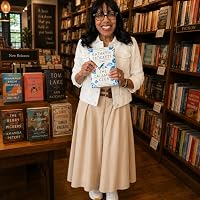
Back on Goodreads and back to writing, and hopefully publishing. I need my fans, old and new, to boost my confidence, as I start over again. The reason for my long absence can be chalked up to...well, life! I have a large family and most live on our property, in South Georgia, Cow Creek Farm. No, we don't farm, and no, we no longer have cows. The name is derived from a creek called "Cow" that flows through our property. OK, enough about me. I want to hear about you--what you're reading, maybe writing. Or just what you are doing nowadays. Love, Janice
This coming of age story deals with race relations in the 60’s, poverty, tragedy, and a sack of stolen money which should have transformed lives. A little boy named Knot finds the sack of stolen money dropped by the bank robber. He secretly gives the money away to those who have great needs, but quickly realizes that the money doesn’t change the lives of the recipients in the way that he had hoped.
This little boy starts out as an unwanted, neglected, child without a mother, family, or real name, but the conclusion of this tale finds not only has his name changed, but his true identity is revealed, and his character developed. Knot sets out to improve the lives of others. He never spends any of the money on himself, but secretly hopes that as the lives of those around him improves, that their good fortune will trickle down to him like a hand-me-down sweater or an old bike. Sadly, he never sees any material rewards for his efforts, but he gains something much more valuable, a true sense of identity.
The concept of the story is touching, but I found the pace of the story slow. The reader has to get to the last 3 chapters of the book before there is any real revelation of the impact that these experiences had on “the Little Known” who is Knot. For me, much of the storyline was predictable and there were very few if any real surprises to the plot. Although, the author does tackle many subjects, the readers never comes away with a complete understanding concerning those involved.
I understood the concept that the author was attempting to convey with Knot-turned-David [little poor black boy] overcoming Goliath [racist white man who symbolizes the oppression of Blacks during the early 60’s]. “Knot” renamed “David” stands up to Goliath even in the face of danger. However, my problem is that the story also implies that the money doesn't truly change the lives of poor blacks [there is a new basketball court in the middle of the shacks and the Church has a new piano]. However, the money changes the lives of the little white girl and her mother drastically, forever. Here is my problem with that, Knot’s compassion for the little white girl resulted in him giving them at least two stacks of money [around $2000.00], but he gave the family of the little black cripple girl only $100.00 and expected it to make a life changing difference.
I’m not one to hunt for racial undertones, but the author created the storyline based upon race & equality. So it’s rather obvious to an African-American reader looking through that lens that as understanding as the author attempted to be, she neglected to avoid inequality within her own story. Unless Blacks and Whites have equal opportunity there can be no expectation that the results will be the same.
A beautiful written moral tale set in the south during the turbulent 60's. A young black boy, Knot, discovers a bag full of stolen cash from a botched bank robbery. Since he cannot use the money himself due to moral and practical reasons, he decides to share small amounts with his needy neighbors, both black and white. Most of the neighbors don't use it wisely and Knot learns that the money doesn't help them change their lives for the better.
Janice is a wonderful storyteller who writes of characters and landscapes that leap from the page and make you feel that you are right there with them in the story. The story deals with Social Issues, forgiveness, racism and poverty. A very Human story with authentic people that showcases the good and evil in all of us.It is touching, gripping, tragic, and yet somehow hopeful.
Now that being said I want you to know it wasn't my sort of thing. I found it slow at times and too overly descriptive for my taste. However, it is an outstandingly beautiful story and most will enjoy it. I think it would be a fantastic addition to a public schools English curriculum. It would bring up thousands of moral discussions and many teachable moments.
Also the copy that I was given was an ebook, and I find them extremely challenging to really get into. The ebooks I find have a less personal feeling to them and I often lose my place and feel disjointed from the story. I think this particular story would be better suited to an actual physical book which would help you to become more emotionally invested in the story.
Indeed, good deeds often go unnoticed, unknown. I believe that is the premise of the title of this book. It talks about a 12-year old boy who acted so unselfishly even with so much money on his hands. The circumstances of his life - no known father, longing for acceptance in the only family he's known, and wanting of some of life's simple joys - would most likely make him turn to the money to buy happiness. But at a very young age, he knew what real happiness means; he knew that it cannot be bought. What a great lesson, woven into a story of a black boy set during the 60's in the American south.
A young poor boy sees a thief take his mask off and drops a bag before running off. Sirens are loud down the road. Knot rides his bike to th spot and grabs the bag. He doesn't look in it til he is away from the drop off. There are banded one hundred dollar bills. Thousands of dollars. Now what to do with it....
As an African American woman the themes in this book have unsettled me. The description of the characters as filthy and greasy. The places they lived as dirty and raggedy. Knot finds all of the stolen money an although he helps his community in small ways it's the little white girl he helps the most? The little burn victim $100 for burial yet $2000 to Becky so she and her mother can escape the abusive father. He returns the rest. Admirable he helps Becky but why not himself because he's in a terrible situation himself. Yet, him now being called David for trying to save the little girl from the fire was his greet reward.? The book was also repetitive mainly in the description of the poor black people. I finished this book over a week ago and it's still disturbing my spirit. Very disappointing and I wouldn't recommend especially for a younger audience.
The Little Known is the story of a nine-year-old African American boy named Knot in 1960's segregated Georgia. While out riding his cousin's bicycle, he comes across a bag of money, dropped by a bank robber who was fleeing from the police. Knot could have easily spent some of the money on that bicycle he's been wanting, but he knows he'd have to explain himself. Instead, he decides to give the money away, hoping to make life better for those around him. Only, it does not quite work out that way.
Knot is a sweetheart of a boy who is coming into his own. He seems so innocent at times and yet like an older soul at others. He has been poor all his life and believes that money can make things better. He quickly learns, however, that having money does not correlate with people doing the right thing. Knot is also struggling with his identity, trying to figure out his place in the world--and in his family.
The author captures the essence of a poverty stricken, close-knit community, full of internal strife and yet coming together in times of need. Knot lives with Marge, a woman whose weakness is alcohol. I didn't much like her at first, but the more I got to know her, the sorrier I felt for her and the more I hoped she would pull herself together for Knot's sake. She really wasn't a bad person, just a damaged one. Many of the characters in the novel are damaged in some way, white and black alike. Among them are the family next door with the drunk abusive husband; the daughter whose mother is mentally ill and often runs naked in the neighborhood; and a girl who is handicapped but whose family can't afford a wheelchair. I wouldn't have minded if some of these other characters had been more fleshed out, however. Then again, this is Knot's story more than anyone else's.
And although the author did not go into it as much as I would have liked, I was especially drawn to Knot's relationship with Becky Bruce, the white girl and the daughter of Sammy Bruce, a man who terrorizes not only those in the black community but his own family as well. Becky is a sad child, withdrawn and easy to tears. While Knot tries to dismiss her at first, he can't help but feel the need to help her, somehow rescue her from her father. He is fearful though; the colors of their skin make friendship dangerous.
While Knot is my favorite character in the novel, coming in at a close second is the pastor. Knot admits that he likes to go to church every Sunday for the food. Sometimes it's the only good meal he'll get that week. The pastor plays the role of the father figure and is perhaps the one stable person in Knot's life.
Race does play a part in the novel. There is always an undercurrent of tension in that regard. Knot is one of a handful of black students in a school that has recently been integrated. And in the society at large, there is a clear demarcation of who holds the power: the white man. As the story unfolds, however, there is definite hope that change is coming.
Overall, this was a touching novel of forgiveness and hope. On the surface, it is a simple story, but it has several layers, some of which I'm still discovering after having finished it. This is a novel I think both adults and children would enjoy.
Just a note of warning: the author does use the "n" word in the text, albeit minimally. Given the time period the novel is set in, it was not out of place.
A Kind-Hearted Boy. A Segregated Town. A Stolen Fortune. Set during the turbulent era of the 1960’s, in the small segregated town of Statenville Georgia, "The Little Known' is a unique coming-of-age story full of hope and forgiveness. The story revolves around the central character Knot Crews, a young African American boy besought with the hardships of living in a small segregated town. Despite his hardship young Knot shows kindness and generosity well beyond his years after finding a bag of stolen cash that was dropped by a thief. He decides to use his new found wealth to help those in need anonymously. Yet to his horror those whom he sought to help squander his gift. Young Knot seeks to find a way to right the wrongs, and in the process learns that money is not the solution to life’s problems. (In fact money can cause more problems than one would think.)
The Author: Born and raised in Statenville, Ga Janice Daugharty is a writer with a southern flare. Her published works included seven acclaimed novels and two short story collections. In 1997 Ms. Daugharty’s novel “Earl in the Yellow Shirt" was nominated for a Pulitzer Prize. More recently Ms. Daugharty has served as writer-in-residence at Valdosta State University, in Valdosta, Georgia, near her home.
Endorsements: "Daugharty does a fine job of demonstrating how ordinary men and women are affected, in unpredictable ways, by race, poverty and geography and by the enduring legacy of important historical moments." Francine Prose, People Magazine
"Daugharty creates a forceful character and a compelling, often even humorous narrative." Washington Post Book World
"Daugharty's ear is excellent, her language concise and precise...shrewd and colorful prose." The Atlanta-Journal Constitution
"...fans will rejoice to see Daugharty do what she does best: showcase one character, setting her off against a thousand daily details, like a diamond nestled in the shards of lesser gems." USA Today
"Swirling with details that become more disturbing the closer you look, Ms. Daugharty's portrait of Cornerville is both intimate and unsettling." The New York Times Book Review
Janice Daugharty is a natural-born writer, one of those Georgia women like O'Connor, McCullers, or Siddons who are best grown in small towns, a long way from city lights. There is a lot of red clay and long nights in every line she puts on paper." Pat Conroy
My Personal Opinion: Both unique and compelling Janice Daugharty presents her plot with passion and finesse. Her characters, and events are portrayed in realistic form. At times you may ask yourself “Could this have really happened“. The answer is that this work is fictional although the story seems like a true tell. Which showcases the author's skill and creativity. Great Job Aunt Janice, Love you
Knot Crews is a thirteen year old African American boy growing up in Statensville Georgia. who was told most of his young life that he was fished out of a dumpster and taken to raise by Marge, she struggles with alcoholism, and alot of days there isn't enough food to eat. They live in what I would call a shanty town, and everybody seems to be poor. The one bright spot is the summers spent with his "Aunt Willie"Marge's sister whom he hopes that some day they will move in with. During the last days of summer, he sees a commotion at the bank, and sees a tall black man drop a bag in the alley. When he goes to retrieve the bag, he finds that it has stacks and stacks of one hundred dollar bills, one hundred thousand dollars to be exact. Knot knows that there is no way that he can spend the money, he will be caught for sure, but he comes up with a plan to help his neighbors, but instead of the neighbors using it to purchase food or other needed items they waste the money. He also donates 100 dollar bills regularly to his church, a place where he is certain to always get a meal. Even though Knot doesn't spend one dime of the money on himself, it does allow him to see the effects it has on other people around him.
This book isn't my usual style of read, but I am so glad that I gave it a chance. The protagonist in the story doesn't let life's adversities get him down. While he describes himself as ugly early on in the book, I would totally disagree. His kind caring nature really shines thru and his actions showcase his inner beauty which far outweighs anything that he could consider ugly. I felt like Knot was wise beyond his years, and while he knows that keeping and spending the money isn't right, he wants to make peoples lives a bit easier. When Knot finally learns the truth about who his birth mother is, and that he really is part of the family that he wanted to belong to I hoped that things might take a turn for the better for him.
I found the look at race relations set during this time period quite interesting as well, and while it was quite easy to figure out who the "special" speaker would be at Willie's church, it seemed very fitting for the story.This book for me was one that I couldn't put down, reading it in one sitting. I have never read anything by Janice Daugharty before reading this story, but fully intend to check out some of her other work. While this book is geared toward teens, I think readers of all ages will find Knot's story a compelling tale that will definitely tug at your heartstrings.
A young black boy in a segregated southern town in the 1960s finds a fortune in stolen money. But what can he do with it? A hundred dollar note isn’t exactly legal tender for a boy of the wrong color, and a few pence would be much more useful. Still, Knot Crews is resourceful and kind; he comes up with lots of interesting schemes, none of which work out how he’s planned, but all of which sound achingly plausible and real. During the course of a year, Knot learns about himself and his family and neighbors and grows up.
Are heroes the people who are seen saving lives, or those who run away after saving lives? Are good people those who are seen going to church, or those who know their sins and keep away? Are family those who you see very day, or those who choose to live with and stand by you? And who cares for whom?
Knot has to learn who he is, who his mother is, and who his family and friends might yet become. There’s a preacher visiting the church in town who promises dreams. There’s a white girl falling apart. There are black kids who find it easier to stay invisible if they’re alone. And there’s hope—bought, not with stolen cash, but with brave deeds born of grave need.
I really enjoyed this book, for its human touch, for a very real-seeming boy, for a dark place where the sun keeps shining, and for the atmosphere and scenes that grow with the child till scary forest is just a bunch of trees.
Disclosure: I heard about this book from BelleBooks and got it free in a deal.
What would you do if you found a bag of money from a bank robbery? Knot, a young black boy growing up in the segregated South, decides to keep it. His ultimate goal is to reform Marge so they can go live with her sister. The only problem with stolen money is it's hard to spend. Knot begins sending hundred dollar bills anonymously to people in his community. He is upset when they don't spend the money as he thinks they should. This is a coming of age story. Through his use of the stolen money, Knot finds himself.
This is not a book that I would normally read, but I found that I couldn't put it down once I started. I wanted to see what happened with Knot and his efforts with the money. The Little Known is a perfect title for the book. Knot is unknown. His own mother won't claim him. He never had a father. Daugharty used just enough dialect to make the book culturally appealing. There was a definite lack of male role models in the book. Interestingly, Knot chooses the only respectable male, Reverend Troutman, to emulate. This was a book of misconceptions. Knot is sure the people will spend the money as he thinks they should. He mistakenly assumes Marge's sister is rich. Other characters also misjudge and underestimate Knot throughout the book. I liked seeing Knot's evolution from "the little known" to David with a family and a future. Overall, I liked the book and recommend it.
Set in the early 1960's, a twelve year old black boy named Knot, finds a bag of money in an alley. Knowing the money was dropped by a bank robber, Knot makes the choice to keep the money instead of turning it into the bank. Knowing he can't spend any of the money himself without raising suspicion, he mails $100 bills to his neighbors that he feels are in need. Unfortunatley, his neighbors, on recieving the money, fail to spend it in the way Knot had intended. Money sent to one family to buy a wheelchair for the crippled daughter ends up being spent on a new bicycle for the brother. Money to help out other poor neighbors is spent on frivilous items such as a new tv, toys and porch furniture. Even the money mailed to his own mother, in hopes she will buy him the bicycle he dearly wants, is spent on alcohol.
Knot hoped the money would change the lives of the people in the impoverished neighborhood he lived in, but in the end, although he couldn't spend the money on himself, it was his life that ended up being changed.
I thoroughly enjoyed this book. Knot was a compelling person and I enjoyed how his character grew and changed throughout the book. I thought the other characters were well-written and believable. I would definatley reccommend this book to others.
The main character, Knot, is certainly intriguing and likable. A seventh-grader, he finds a bag of money dropped by a bank robber and proceeds to give it out anonymously to neighbors, his pastor and for church needs, and anyone he sees who he thinks has a need. He wants a bike himself, but another kid in his neighborhood gets one instead and doesn't want to let Knot ride. So, he hopes for a hand-me-down. He hopes to be claimed and loved by his family. He hopes to be a part of making a difference to people.
This book could have been great. But I think the author tried to tackle a few too many issues. I didn't feel satisfied with the conclusion of any of the issues - Knot and the money, Knot and his relationship with the new pastor/church, Knot and his alcoholic mom, Knot and his abused girl friend from school, Knot and "the cause" (being equality), and several other tragedies or problems. It felt like nothing was really resolved - too many interesting ideas that didn't go anywhere or suddenly stopped being part of the story. I didn't like that.
Another Kindle freebie that turned out to be a treasure! This was a great story.
This is a coming of age story, about a 12 year old African American boy named Knot, who is growing up in the segregated south, in a small Georgia town in the 60's. He discovers a bag of cash stolen in a bank robbery in an alley, and is overcome with happiness and terror. All that money, thousands of dollars, could buy him anything he wanted, but he is too scared to spend the money on himself, and even if he wasn't, his conscious wouldn't let him anyway.
He decides to use the money to help his neighbors instead, mailing it to them anonymously, but it bothers him that most squander the money instead of using it as he intended; for example; one neighbor spends it on a new bike for their son instead of a wheelchair for their handicapped daughter. He finds that the money doesn't change most lives for the better as he had hoped, and the money becomes more and more of a burden to him. He learns that money cannot by happiness, or morality.
While I like the premise of the book, it has slight echoes of Elijah of Buxton by Christopher Paul Curtis—which I just recently read. Here are the positives: The author uses some great metaphors and some vibrant details (“cerise flowers” especially sticks out since I had to look up “cerise”). The idea of a young boy as a protagonist is interesting, especially one who is as selfless as Knot is.[return][return]My issues with this book are its predictability—we all could see that people would squander the money—and its style. I understand the author was trying to mimic the boy’s own personal style, but the intrusive dialect got in the way of comprehension. For a seamless blending of high and low style, consult Zora Neale Hurston. She integrated the dialect without losing any literary quality. While the idea of Knot being so selfless is intriguing, it saddens me to say I don’t think it’s very believable. In my experience, such selflessness doesn’t come until much older (we’re talking thirties, forties), if ever.[return][return](Note: received the e-book through Early Reviewers)
Free + fiction = I will read it. Hmm. I liked the plot. It kept me engaged. With every turn of the page, I wanted to know how it would all turn out. I didn't like the lack of detail. To describe someone as just black - doesn't exactly set the scene, ya know? Many of the characters I was just unable to picture - I didn't know their ages, sizes, nothing concrete to visually picture them. And the year that this was set in was hidden only in the fact that the events were happening the year just after JFK's assassination. Details! So important to a reader! I found myself rooting for Marge, Knot's mother to get herself together - because I know many people just like her. And many of the people who live in the Quarter...
The Hollywood ending was a bit much. I kind of wanted him to get caught by somebody or have to confess to it - something other than how it went down... Decent read, all in all.
The Little Known, by Janice Daugharty, takes place in South Georgia not too many miles from my hometown. I was excited to begin this book because it is a book about a small South Georgia town that was written by a Georgia author. Knot, a twelve-year-old boy discovers a bag of cash from a robbery. Knot wants to make a difference with the money and sets out with a plan. Through his experiences, Knot learns a great deal about the good and bad of human nature. Even though I liked the premise of the book, I found it difficult to read. This is partly due to the fact that I did not care for the author s style and the plot moved along at a slow place. That being said, I do not think it is a bad book; it was just difficult for me to get interested in. I am not giving up on Daugharty; I would like to read something else by her and see how it compares to The Little Known.
It was a solid read. This was a book club selection, and the setting is during the Civil Rights era, and the protagonist is a young African-American boy - so, sort of a winning recipe, right?
It fell flat for me. I don't know how else to say it. I described it earlier as almost...formulaic.
The characters were stereotypical, people who made bad choices but with a heart of gold underneath. I cared about Knot, the main character - and I rooted for him, but I could almost predict every thing that happened. It's kind of like that movie "Pay it Forward" with a different setting.
I dunno. It's a nice read, it kept me busy for a week or so, but I didn't devour it. It wasn't the kind of book that I couldn't put down, or couldn't wait to get home and read. It was - to use a now completely overused term - 'meh'.
This is the second book I have read in a month that has to do with the perspective of the African American experience during the 1960's Civil Rights movement. This book was well done and an enjoyable read. At first the premise of a young black child finding the stash of a bank robbery and being able to take it home, hide it successfully and use it for over a year to try to help the lives of those around him seems a little shaky to carry the weight of the book's message. At some point during the reading of the book, it works and during the last third of the book I found myself believing the possibility of the money situation as well as caring about Knot and those he was trying to help. There are also some really nice observations in terms of quotes that are beautiful....worth taking the time to get into the story line. It is a nice read.
I recieved this book from LibraryThing Early Reviewers in Ebook format. I read it on my blackberry, and truth be told, it made a wonderful diversion in some of my more boring classes! The beginning was a little bit confusing because it felt as if the reader was being introduced right in the middle of something, and it took me a few chapters to really get into the story and find out what was going on. After that though, it became very hard to put down. One easily comes to care for little knot, seeing as most people in the book don't, or at least, don't show it very well. You find youself rooting for him, and his for community as he tries to set it right. This is a good book, and one I can see being very good as a novel to be taught in class to kids knot's age.
Really liked this book. Young black boy, called Knot, in the 1960 finds a bag of money a bank robber dropped. It is full of 100 dollar bills. He can't spend it because he is poor and where would he get a $100 bill? So he starts giving it away one $100 bill at a time by sending it to people in the mail. He picks people who really need the money but they don't use it for what he thinks they should. They use it to get drunk, or to buy TVs instead of getting out of the getto or leaving their abusive husbands.
Ms. Daugharty really makes her characters come alive. You can feel the cold wind coming through the cracks in the shacks Knot lives in. You feel his pain in not belonging, his need, his hunger and fear and shame.
This book had its pluses and minuses. On one hand, it was interesting to get a glimpse of a poor, southern, African American community in the midst of the civil rights movement. On the other hand, so many characters remain static that there is little learned from the book. Moreover, the author's writing style is extremely uneven. At times, it's written in the vernacular of the setting, probably for effect, but at other times, is written in high language. The constant back-and-forth writing style made it difficult to maintain pace while reading, and I often got lost in lengthy descriptions. It was an OK book, but I'd likely not read it again.
This was one of the first free books I loaded onto my "new" kindle (a year ago) and chose it randomly for an extended weekend, finishing it late Sunday evening.
...I was easily pulled into this young boys tumultuous life.. adult-parents leading separate and sketchy lives due to alcohol, drugs and poverty, destructive relationships and racial trauma.... deeply affecting the children "just surviving" around them.
I want to know the rest of this young man's story... his future, his successes (which I have no doubt he could rise above his circumstances)...
This is a coming of age story where a twelve year old African American boy finds a sackful of cash from a bank robbery in the South of the sixties. He decides that he is going to use the money to make the people's lives better in his area both black and white. He learns a hard lesson when the people that he gives the money to squanders it instead of using it to improve their lives. He wants to live with his Aunt Willie whom he thinks is rich at the end of the book because she lives in a big house, however he discovers differently by the end of the book.
A young poor black boy looking for a family finds a bag of cash that a bank robber has dropped. Because it is stolen money he is still a poor boy, but he carefully gives away money 100 dollars at a time to people or families where he sees a need. Although he thinks he can help with the money people don't always use it how he thinks they should. Along the way his mother stops drinking (most of the time) and starts taking care of him and loving him.
Although I wouldn't say it's great this is a good story and does give you something to think about.
I agree with quite a few of the other reviewers: It seems like this author tried to introduce and then resolve various plot conflicts at the same time... poverty, alcoholism, theft, racism, good struggling against evil... and it seemed that she tried to solve them all, but they really only resolved superficially. I do believe that all readers will root for the main character, Knot, and for that reason I would like to read another book by Daugharty. Overall, I must admit that it was not a "can't-put-it-down-stay-up-til-dawn" page-turner. Thankfully it was free on Amazon! :)
Fascinating plot. Young black boy in the early 60's comes into possession of a bag of hundreds of 100-dollar bills. He keeps the bag, but can't tell anyone he has it, so can't spend it on himself. He's dismayed that the people he secretly surprises with gifts of money don't spend it on needs, so it doesn't appear to be helping anyone. Very well-written and engaging. My mind is still on it, despite finishing it hours ago.
Does using found, stolen money to do good negate the wrongness of the money being stolen? Morally, no. But in twelve year old Knot Crew's mind, it does. He hopes that each of the recipients of his anonymous gifts will use the money to improve their impoverished situations. Some do, some don't.
Janice Daugharty writes a touching story that will stay with you and make you want to right all the wrongs in the world. And cook a really big dinner.
The only reason I gave this story two stars was that the main idea of the story was interesting. The idea of a boy finding money and secretly giving it to needy people in an effort to change the recipients' lives is indeed intriquing. However, the book soon lost its appeal for me. There was just too much misery, child abuse, irresponsible and illiterate adult behavior. At the end, I just wanted it to be over.
I got this for free on the Kindle store a while back. It was . . . okay. Even though it wasn't very long, only ten chapters, it felt exceedingly plodding. It took effort to finish it, really finish it, without skimming.
What really got me, however, was the shift in writing style. The story is told in 3rd person, but the narrative shifts between vernacular writing and then passages about "mullioned windows" and the like.