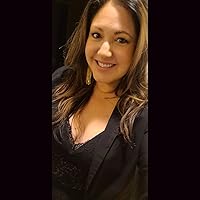
Margaret Julia "Marlo" Thomas is an American actress, producer, author, and social activist best known for starring on the sitcom That Girl (1966–1971) and her award-winning children's franchise Free to Be... You and Me.
Thomas serves as National Outreach Director for St. Jude Children's Research Hospital, which was founded by her father Danny Thomas in 1962.
I used this in a 9th grade ELA class. The stories were a bit too long to hold their interest, but it would be great for other classes.
My mom bought this for me summer of 1987 as I played the original record by Marlo Thomas over and over again. I was thirteen and always remembered it fondly. When I started teaching high school English I immediately thought of this book.
I particularly like the David Lee Roth poster short story!
This seemed so revolutionary when it came out and seems so passé now. But it’s a good window into history and I’m sure there’s still a need for it. And I do love Marlo Thomas and what she contributed.
There's a new release of this book due out in Oct 2008 which apparently retains all the old familiar text and adds some new commentary and all new artwork. Can't wait to see it!
Gave this a re-read – well, not the You and Me half, my volume was of just the Free to Be a Family – after having last looked it over in my adolescent years. A little hit and miss, but overall some quality stories, with songs and poems by names I can now appreciate (e.g. Carly Simon and Shel Silverstein).
I love the stories and poems in this collection, and I love the point it's trying to make, but it is difficult to gauge at what age children should read it. The Shel Silverstein poems (indeed, most of the poems) appeal to kids as young as four, but the rest is ideally for an audience much more mature than that of FREE TO BE YOU... AND ME.
I remember reading "Another Cinderella" when I was seven. It's a great story about the dangers of spoiling a child to the point where they have no sense of accomplishment or self-worth, but I didn't understand a word of it at the age of seven. "Cross Your Fingers" is a beautiful metaphor for losing one's childhood sense of make-believe in exchange for intellect and the ability to fathom the wonders of the world, but once again it's a bit much for Shel Silverstein fans.
Considering the mix of entertaining stories meant to convey a sense of social equality and tolerance, I suppose it should be presented to kids at about the same age they would read The American Girl books. For me that was nine years old, but of course it all depends on the child.
I loved this collection of short stories and songs as a kid, but as I read it now, it seems a little dated. Many of the stories still hold strong today, though, including a Superman comic about adoption, and "Stevie", a story about a boy's surrogate kid brother. The "songs" are pretty much pointless, as there's no CD available and sheet music (?!?) in the back. My favorite is "My Grandma", about a little girl who is ashamed of her eccentric grandmother from a foreign country.
I love the story “Cross Your Fingers,” by Mavis Jukes and the poem “We and They” by Lucille Clifton best. “Cross Your Fingers” is beautiful, sad, and really important-feeling. Same with “We and They,” and “The Turn of the Tide” by Carly Simon and Jacob Brackman. Serious. I’ve always loved seriousness. The illustrators of these pieces, John Steptoe, Jerry Pinkney, and Leo and Diane Dillon, can’t go unacknowledged.
This is similar to the first book in that there are many different kinds of stories, poems and songs about relationships including mostly families, but also friends and neighbors. It's not quite as fun as the first one, probably since I didn't grow up with it, but the stories are interesting and have good messages.
MetLife Insurance Company and Uncle Bill and Aunt Sally and Lizzie and Maggie and Grandma and Grandpa and Benjamin Scott Roberts and Robert William Roberts and Alexandria Caitlyn Roberts.