Jump to ratings and reviews
Rate this book

The Tenth Planet

Rate this book
Issued concurrently with the Putnam American edition. The "Dag Hammarskjold" takes off from Australia for the new human settlement on Mars. Planet Earth is being eaten away by uncontrollable pollution, starvation and disease. This is the last spaceship, its passengers the last people on earth with any hope. Cooper was an atheist and an individualist. His science fiction often depicts unconventional heroes facing unfamiliar and remote environments.

192 pages, Hardcover

First published November 1, 1973

4 people are currently reading
120 people want to read

About the author

Edmund Cooper

100 books45 followers
Excerpted from wikipedia:
Edmund Cooper was born in Marple, near Stockport in Cheshire on April 30, 1926. He served in the Merchant Navy towards the end of the Second World War. After World War II, he trained as a teacher and began to publish short stories. His first novel, Deadly Image Deadly Image by Edmund Cooper (later republished as The Uncertain Midnight) was completed in 1957 and published in 1958. A 1956 short story, Brain Child, was adapted as the movie The Invisible Boy (1957).
In 1969 The Uncertain Midnight was adapted for Swiss television, in French. At the height of his popularity, in the 1970s, he began to review science fiction for the Sunday Times and continued to do so until his death in 1982.
Apart from the website mentioned above there was another Edmund Cooper website full of information about the author and his publications.

Known Pseudonyms:
Richard Avery
George Kinley
Martin Lester
Broderick Quain

Ratings & Reviews

What do you think?
Rate this book

Friends & Following

Create a free account to discover what your friends think of this book!

Community Reviews

5 stars
28 (13%)
4 stars
67 (33%)
3 stars
70 (34%)
2 stars
29 (14%)
1 star
7 (3%)
Displaying 1 - 23 of 23 reviews
Profile Image for Owlseyes .
1,805 reviews306 followers
September 28, 2025
Back in February of this year (2014), in the USA, it was hot, I mean, the debate on the weather: how to explain changes, (and act upon them): like huge snow storms (on the east side) or the prolonged California droughts?


Republican Marsha Blackburn had a rendezvous (Meet the Press) with Bill Nye (the renown "Science guy") to debate those issues. The latter focused on “facts” (like Antarctica’s ice getting lesser and lesser over the years) and time coming for “innovation”. The former stressing the need for “technologies” to be affordable for the American people, a pressing cost/benefit analysis to be made and (surprise!!): the latest recordings of the carbon emissions show that they are at “its lowest”. She added even a positive side to the (polemic) global warming: it may turn to be positive for the agriculture.

Yes, it’s been a long debate (both on the political and scientific grounds) and sides sometimes are quite apart.


This 1973 book by Cooper touches on those questions (not only) also, in a very prescient way.

The story is about a grim world of the year 2077. Earth is about to die; hunger has struck the main continents; last one being India; only faring better Australia: since its deserts became fertile. It’s a time when most people on Earth never knew their planet was dying. Yet, bases on the Moon (with 2,000 people) and Mars (10,000) were viable. Mars atmosphere is now breathable.

“Naturally”, the powerful ones tried escaping. The Pope requested “300 priests” to go to the New World; the black-people lobby asked for a quota of 15%; China a 1/4…. . Several spaceships are meant to leave the planet; only some will be allowed in. Those left on planet earth are doomed. There’s hope elsewhere, though.

As the last ship lifts off from Womera, Australia, its commander takes a look at a bleak scenario: a place where there’s no more sun, no blue skies…only gray, foggy weather,"eternal" rain and clouds, a place where crops cannot mature.

43 year old Australian Idris Hamilton, born on planet Earth, plus a crew of 3 Martian-born, young people are onboard the Das Hammarskjold spaceship; plus a cargo of 20 kids and 2 female teachers in hibernation. They’re heading towards Mars. The kids are geniuses (IQ above 200). The problem is that the ship carries hidden bombs too, and though the commander finally spots them and tries to diffuse them…the ship gets blown away. Presumably, all got dead.

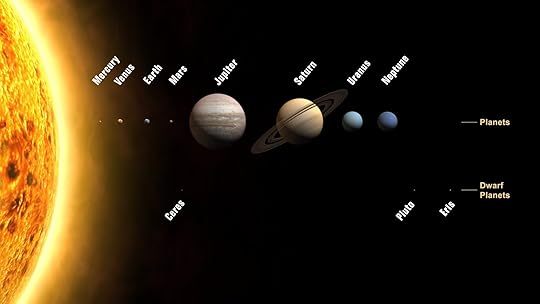
Five thousand years later, in a planet called Minerva (yes, the 10th one of the solar system, in the vicinity of Neptune), Idris “wakes up”. He knows he’s a piece of cells inside a tank. He’s only memories and dreams and… nightmares.

An old man, in fact, a psychosurgeon called De Skun (and his assistant Zylonia), is about to tell him: “you died 5,370 terrestrial years ago”…your ship was lost “beyond the Mars …and Pluto orbits”. Yet, Minervans resurrected Idris and one teacher and some of the kids. Their advanced technology allowed it.

Idris will get a new body (a clone from his own cells). He’s about to meet the kids, the ones he considers “his”, since they’re terrestrials. Ah, English is a dead language in Minerva; and there's no monetary system.

In Minerva, the population cannot exceed 10,000 souls. It’s a perpetual-night, icy planet; they keep the Martian time; there’s been harmony for years due to a new, strict Creed: Talbot’s. Garfield Talbot*, a kind of "Moses", who took refuge in the place some time ago.

Idris has got a project: return to Earth. Will he succeed?
Maybe with the help of Mary Evans...

Especially for its prescient character, this so-humane, science fiction book deserves 4 stars.

Immortality gets a touch too, evidently.


*a utopian communist; had 14 children from 8 women.
Profile Image for Erin *Proud Book Hoarder*.
2,967 reviews1,198 followers
August 19, 2015
Color me sci-fi impressed. This is not a usual genre to me - I'm a complete noob with sci-fi and all its appeal, but this is something I've been wanting to change for years. I'm on the hunt to find the areas of Sci-fi I'll like, the sections of this genre that will appeal to me. This is apparently one of them.

The Tenth Planet is an older book, relatively short and almost perfect. I was already intrigued by the last sad goodbye to Earth on the ship, the booby-traps on the space vessel that shows man is always at war - even when apart, but had no idea my interest would be piqued even further when the plot was full out false utopia.

This is humanity's third chance - the second chance that the main character was heading toward apparently failed, as we learn along with him when he is revived, given a new body, a new existence, five thousand years later. I swear this isn't a spoiler, as it's all there on the back blurb. He is resuscitated on Minerva, the third planet, a distant thing where the values were formed by a puritanical sort of dictator. They must keep their population to 10,000, there is no more marriage, all childbirth must be approved in advance, and their lifespans are rapidly decreasing.

In some ways this Utopia works, as the main character even acknowledges. Gone is war, gone is violence and strife and crime and the tragedies which befall because of it. No more marriage also means no more divorce, no more custody suits, no more broken families. But without marriage or intent to grow more serious, to find 'the one', all who are joined are for convenience, temporary, and for no magical lasting unions. Money doesn't exist as it is the 'root of all evil'. All are valued. Religious is absent. But the root of man that has always existed to explore, be adventurous, full of spirit and joy and creativity - that root has been deadened. Now the Minervians never leave their hole, they never desire to travel beyond their means, and even their music is limited and mere glimpses of humanities past.

It helped the book that the author writes well. I dug Cooper's style of the pen and how he twisted sentences together. There's a little humor through the main character's realistic personality, and the pacing is kept solid, smoothly flowing with the story where something is always seeming to happen. I never grew bored.

The main character, Idris, was likeable before and after his transformation. I rooted for him and his rebellious, human side the whole way. Mary was an intriguing remnant of a woman who's lost her home planet and her youth. All characters worked well for their roles.

If you ever find this laying around somewhere in the corner of a used bookstore, or are lucky enough to already own it, definitely give it a read. It's a simple but complicated false Utopia that's fascinating and perhaps plausible in the distant future.
Profile Image for Simon Hedge.
88 reviews23 followers
November 20, 2013
71st Century Schizoid Man!

Idris Hamilton is a weird, contradictory man. At the start of our story he understands that the only female member of his crew, the vivacious Suzy Wu, is free to sleep with all the crew of his spaceship by whim or by turns, and does so and everyone seems totally comfortable and happy with this arrangement. Late twenty first century man is, it seems, highly enlightened and beyond the reach of petty jealousies. However, when the restored-to-life Hamilton and his new squeeze Zylonia de Herrens meet someone who lets slip that he and Zylonia used to have a thing together back when Idris was still dead, our hero proceeds to beat the guy so severely that he ends up in prison. Apparently while his body may have travelled five thousand years into the future, his personal beliefs and mores seem to have travelled back to the nineteen fifties. Odd.

Then on page 99, this happens:
The first time he made love to her it was a kind of rape. He knew it, and so did she. The love play was brutal, insistent, direct, fierce. Idris was surprised at his own ruthlessness, at his apparent disregard when she protested, pleaded, struggled. He held her roughly, taking pleasure in hearing the moans and outraged grunts as he thrust into her repeatedly, as if she alone should be punished, as if she alone were responsible for all that he had endured.
"I haven't made love for five thousand years!" he shouted at her wildly. "You clever ones have brought a primitive savage back from the dead. So you can't complain if his manners are a little different from those of the antiseptic lads on Minerva."
Then he held her breast tightly with one hand until she groaned in pain and anger, until he felt her whole body become tense upon the brink of orgasm. Then he stared at her eyes, as if looking for some kind of message, and let the semen pulse out his body and into hers in slow excruciating surges that seemed as if they would never end.
"Earth lives!" he shouted, gloating upon the now glazed look in her eyes, the slack open mouth, the tongue that protruded almost as if Zylonia were being strangled.
"Earth lives!" he shouted.
Her body stiffened. She cried aloud in pain, wonderment, acceptance, ecstasy. Then all her flesh became soft, relaxed, and she uttered a deep sigh."


Wow. Just… wow! Read it again. Go on, I dare you. I'm certainly no prude, and I'm used to seeing the incongruously lurid sex scene inserted into the middle of my genre fiction (I read plenty of James Herbert as a youth), but the whole 'rape them until they like it' overtone is just a bit much. That combined with the frankly ugly, ungainly prose used to describe the act left me feeling like I needed a shower after reading it.
The near-magical powers of Hamilton's masculinity don't end there however. Later on his sexual attentions turn to Mary Evans, fellow revivee. As she is no longer a sprightly twenty-something, Mary suffers from that most debilitating of conditions - saggy breasts. Seriously, this is mentioned several times so we know it is Very Important. Not only does Idris heroically push past this hideous sight to still satisfy her sexually, but when he proposes marriage to her, those breasts are restored to their once firm, pert condition. Yes, not only can his advances rape you into submission, but they can reduce the signs of ageing.
In other words, our hero (for that is, unfortunately, what he is purported to be) is an unlikeable misogynist. I'm not saying he reflects the feelings of Edmund Cooper himself (a man who once said "Let them compete against men. They'll see that they can't make it."), but it does seem like the greatest joke that at the very climax of the story when all is saved BY THE WOMAN (while Hamilton is moping about waiting to die, his wife breaks into the spaceport, knocks out everyone there, takes control of the entire facility and signals Hamilton to make his way there), it all happens "off-camera" and we are just told about it in brief afterwards.
I'm NOT any kind of raving feminist. I don't expect every book I read to pass the Bechdel test. I read old science fiction. You know, the stuff written in the main part BY boys FOR boys. Many of the books I read seem blissfully unaware there ARE such things as females, and the one's that do try to introduce a bit of romance usually do it in a fairly ham-fisted out-pouring of purple prose charming in its naivety. The basic premise of the story - man revived in the far future to fight a civilisation reduced to dystopia - is a perfectly fine basis for a decent pot-boiler novel. In fact I'm sure it HAS been the basis of some perfectly acceptable stories. But the current of mean-spirited misogyny running through this novel means I really can't believe it will win over any new admirers in this day and age.
This entire review has been hidden because of spoilers.
Profile Image for Craig.
6,373 reviews179 followers
August 13, 2025
This is a pretty good science fiction adventure set in the far-future on Minerva, the titular tenth planet, on which live the last vestiges of humanity in a stagnant Utopian society; Earth has been ravaged by a nuclear war. Idris Hamilton awakens there after fifty centuries and commences to set things to rights, but he's such a scurrilous character... It's a little dated, but an interesting story. I wonder if the character's name was a nod to Edmond Hamilton, who wrote most of the Captain Future space opera novels, one of which shares this title.
Profile Image for K H.
405 reviews3 followers
November 15, 2019
First I will start with the positives:
-The plot was alright, with a bit of a twist at the beginning
-The writing was fine albeit rather drawn out in some conversations
-The protagonist's backstory was well thought out and his character's actions line up with this

Now, what made this a one star:
-At his best, the protagonist is proud and conceited, at his worst he is sexist, selfish, and a pig
-The women portrayed in the novel are flat and are portrayed as useless bimbos whose only purpose is to please the protagonist (Because, oh god, what would happen if you didn't have sex for a month)

Mostly the sexism did me in. As well, I found in kind of pathetic that whenever he did something wrong it was only because he was the last earthman; a passionate, wild animal and what else could be expected of him. Buying this book, I knew it would be a little outdated, but wanted to look at the musings of scifi writers in the past. BUT IT IS NOT WORTH IT!! DO NOT BE LURED IN!!!

It may look like scifi, but a good quarter is nothing but propaganda against women.
Profile Image for Lianne.
51 reviews
January 14, 2023
Really interesting story. Not the run of the mill sci fi! But the main character is so horrible it is difficult to give it more stars!
Profile Image for Brian Smith.
74 reviews2 followers
October 25, 2024
So basically an asshole from the 21st century - think 1970s Sean Connery in his attitudes to woman and everything else - ends up meeting a far future pacifist society and immediately begins karate chopping and generally f***ing shit up.

The funny thing is this future society does have major issues that do need fixing. But the main character is just such a dick about it at every turn. He also has the impulsivity of an 8 year old. So much so that only plot armour can save him.

Still it had some interesting scenes and philosophical rumination, but is marred by so much misogyny.

*Skip pages 90-91 to avoid reprehensible content regarding women.

Profile Image for Deb Omnivorous Reader.
1,993 reviews179 followers
May 25, 2017
This is an old school science fiction novel, one in which the author is exploring concepts rather than itemising technology. I suppose these days it would class as fantasy or space opera, except that it was published in the 1970's making it science fiction.

This author (I have said it before) is one I find strangely compelling and this held true for this novel also, though in many ways it has dated worse than many of his others.

Idris Hamilton is the captain of the last ship to lift off Earth. The planet is dying from decades of poison, global climactic change and general abuse (see, even in the 70's they knew it was coming). The last of the population to flee to the moon and mars colonies are on the ship, which leaves from Woomera Australia (I liked that touch) and the ship never makes it there.

Then, thousands of years latter, he is revived from death to what has become of the human race in space...

The concepts are interesting, the main character is terrifyingly anachronistic, chauvinistic and unrelatable by modern standards. The ultra-refined culture of the future is horrified by he course manners and antisocial behavious... But, in honesty, it did not take thousands of years and changes in human evolution for that; people from 2017 would probably be as appalled by Idris, so reading him might not suit everyone. I still quite liked it for the concepts, the writing and that indefinable 'something' that Cooper always brings to a tale.
1 review
December 11, 2019
I couldn’t even finish it. Not only was this book grossly misogynistic as stated by other reviewers, it was also extremely racist.
“Most of the people of Earth—the teeming millions of Asia, Africa, South America—remained as they had always been: hungry, illiterate, disease-ridden, short lived.”
This is where the book went downhill; about 5 pages in. I finished this paragraph because the magnitude of ignorance in this statement, delivered with such certainty, just disgusted me and made me wonder about the integrity of the author.
This entire review has been hidden because of spoilers.
537 reviews3 followers
May 16, 2024
I love science fiction, I love obscure science fiction, and I've been trying to read more British science fiction as of late. So when I saw *The Tenth Planet* on a Whatnot stream run by one of my favorite SF YouTubers before he left the country, I knew I wanted to add some Edmund Cooper to my literary palette. Early-70s SF that isn't of the New Wave strain should be interesting, and a quote on the back of my cute little Coronet paperback called Cooper "one of the most entertaining and philosophy constant writers", so I thought I was in for a treat. Sadly, it turns out that Cooper - or in all fairness, this novel - is none of those things.

*The Tenth Planet* starts with a rocket fleeing the rapidly destabilizing Earth in pursuit of a better future for its four crewmembers, the several teachers aboard, and the bank of embryos on Mars meant to carry the human race forward, and all that. The roster of four includes a captain, an engineer, a lieutenant, and a woman whose purpose seems to be sexually help nurse the men out of stress... the captain quickly gets paranoid about possible sabotage, so he and the crew searches for bombs. They find one and get rid of it, but .

Not everyone thinks this is a good thing;

This book certainly takes a turn from the survival/post-apocalyptical novel I was expecting, and without spoiling anything (read the spoilers if you really want to know), they were kinda... weird. It felt kind of like an episode of *Star Trek* or some other late-60s/early-70s science fiction TV show with a throwaway culture torn between religion and science, only without the charm that The Original Series might have. I ultimately think the plot was kinda flim-flam and rickety without many words given to describing the full political conflict, which could've been really interesting to read about. Alas, it wasn't meant to be; instead, we get to read about hamfisted religious symbolism and a weird sense of conquest/morality with a point of narrative failure that I just can't quite pinpoint...

Speaking of not being able to pinpoint things, I can't decide if our main character is like this everyman hero whose sense of Terran manifest destiny should inspire all of us Earthlings or if he's just an angry and entitled douchebag. Seriously, I could see this guy going either way. The fact that he's so formlessly written and that I can't be bothered to pour more thought into if he's worth a crap or not doesn't bode well for my thoughts on Cooper's characterization skills. Speaking of characterization - or lack thereof - the women in this book are pretty poorly written. I'm usually pretty forgiving about respecting that older books are written in a certain time, but I can't overlook how all the women seem to serve to sexually serve the Captain or some other male character. Maybe not the female Children of the Way, but if the book had more time, I'm sure Cooper could find someone for them to offer themselves up to...

Okay, if you overlook the bloated sexual elements, the writing really isn't that bad. There are even some head-turning turns of phrase and a universal smoothness that does make this book's prose easy and pleasant enough to read. It can be a bit... simple at times, mostly when it's in the Captain's head. But that circles back to my complaints about the character's writing and untraceable nature. Do I have anything really positive to say about the book? Well... I'm having a hard time, really. There's no cool SF concept, the only present civilization seems like a generic culture-of-the-week society, and everything else just falls into the cavern of ambivalence. Still, I was never, like, upset with the book or wishing for it to be over; it kind of was what it was.

I really hoped I'd be able to write a bit more about this book, but I guess... I don't need to. I just need to slap a rating on it and be on my merry way. I guess the charm of a British mass market paperback and the British prose which I don't read that often will allow this book to eek out a 5/10, but don't let that rating deceive you - this book is not good, not even 50% good, and if I'd had stronger feelings about it (like, if I had to read 350 pages of it), I wouldn't be being this gracious. Anyways, even though Edmund Cooper gets an inaugural 5/10, I'd probably buy another of his books if two of the following are true: A) It's one of his more-read novels, B) The book's in good shape, and C) It's a British printing. We've all got to have our priorities, people, and those are mine. I also hope you'll prioritize reading my reviews in the future - you can find more of my criticism at my profile @ Darnoc Leadburger. Thanks for reading, and have a wonderful day.
Profile Image for Ian Adams.
171 reviews
December 8, 2021
“The Tenth Planet” by Edmund Cooper (1973) This Edition 1978


Overall Rating 8/10 – Stella, not quite Interstellar


Plot
After a space disaster, Captain Idris Hamilton is left dead and floating in space for 5000 years until occupants of the 10th planet rescue his wrecked ship and reanimate his brain. A society split politically between progress and stagnation, Captain Hamilton finds himself out of kilt and destined to be an outcast of this apparent utopian community. With a new body, he tries to bring about change and find a way back to Earth. But the odds are against him …


Writing Style
Easy to read and flowing style that is somewhere between High school essay writer and accomplished fiction writer. Nothing complex (like Dickens) and no excess use of names or words that bend the brain unnecessarily (Marion Zimmer Bradley). You would not realise you were reading from a hand of the year 1966 and it pretty much passes for “today”.

Point of View
Written in the 3rd Person / Present Tense (standard convention)


Critique
A strange and weird possible future fictionalised in a realistic way. The story was ridiculously compelling and yet, I felt it shouldn’t be. The whole time I was reading I wasn’t just “trying” to see the film play out in my head – it played out whether I wanted it to or not. I saw what the characters saw and I felt what the characters felt. At times, this was awesome but later I wanted to separate myself from the characters feelings (through doom, despair and looming death) but I could not.

A critic would now doubt laud such writing but, as I compile this critique, I am still racked with “feelings” and I cannot be objective.

I did feel the story floundered a little and the plot could have been tighter. Towards the end I felt helpless despair and was pretty certain I was going to be let down. I wasn’t.
1,695 reviews8 followers
October 10, 2025
The last spaceship leaves Earth headed for the Mars colony. Earth is dying, if not dead, but extremists had planted bombs on the Dag Hammarskjold and its captain Idris Hamilton and crew are seemingly killed. Fast forward 5000 years and Hamilton comes to consciousness confused as to how he is still alive, only to find that his brain was preserved (along with some passengers and a few others) while awaiting a new clone body. The perpetrators of this technological miracle are the settlers of the tenth planet, Minerva, which was settled by Martian colonists led by the zealot Garfield Talbot, fleeing another global disaster that wiped out humanity on that planet. Hamilton's violent nature however sees him exiled to the surface - a veritable death sentence. Seldom have I wished that the protagonist was killed or died or somehow vanished from the narrative but Hamilton is so unlikeable and Edmund Cooper's female characters exist only as adoring sex objects for the sexist lead. Your life will not be measurably diminished if you don't read this.
Profile Image for Richard Mullahy.
125 reviews
October 12, 2020
I read this as a teenager and came across it again recently, so thought "why not?". Despite being written in the 1970s it holds up pretty well from a technology standpoint, with little or nothing to betray the time in which it was written, which is not always the case with classic sci-fi. Managing to touch upon war, climate change, the inability of mankind to learn from it's mistakes, religion and totalitarianism Cooper manages to pack a lot in, but in a coherent narrative. He also resists the temptation to make the main protagonist overly-sympathetic. He's a flawed individual in extraordinary circumstances.
Profile Image for Roger.
436 reviews
July 9, 2022
The captain of a spaceship fleeing a dying Earth, bound for Mars, is killed when sabotage strikes the vessel, but wakes up 5000 years later on Minerva, a small planet far from Earth that has become the last remnant of humanity. Idris, the captain, doesn't like the new society, neither does he fit, but when he meets a fellow survivor, Mary, hope grows in him that humanity does have a future, back on Earth. He hatches a plan to return there, like a new Adam and Eve. Another Edmund Cooper classic, not his best, but still good. I just wish he'd written more.
Profile Image for Nathan.
444 reviews4 followers
September 6, 2021
I really enjoyed this one! Engaging and complex characters drive the story forwards in a surprising way, with some unique twists that, for me, define the essence of a good scifi.

The author explores what it truly means to be human. It is an interesting exploration of a very different form of dystopia- not one that is brutal, or even evil- but one that is complacent.
Profile Image for João Simões.
5 reviews
October 14, 2022
This is one of the best Sci-Fi series I have read.
It has drama, action, unknowns... all in a fast paced.
Not real the typical alien invasion story, instead, it's a story about Earth's natural resorces, which their planet is now devoid of, a conflict within two different sides of the human experience, both in time and space. Making a provoking statement about manking inner workings, dreams and possible futures.
Profile Image for Ben Douglas.
31 reviews
August 21, 2023
Good fun, I love sci-fi so this ticked a lot of boxes and had some genuine interesting ideas. Only 3 stars because it was also cheesy as hell haha
Profile Image for Stella.
160 reviews
August 10, 2024
Wasn’t super interesting. Wasn’t super boring. Nice something to listen to while doing house chores
Profile Image for Ian Anderson.
99 reviews19 followers
April 14, 2018
This is a post-apocalyptic story about a man out of time. A man who finds himself catapulted 5000 years into the future and having trouble coming to terms with the social norms of the future.

Actually, Captain Idris Hamilton would find himself quite out of place in Western society at the beginning of the 21st Century. Even though this book was written in the 1970s and starts in the future when Mars has already been colonized, in terms of social attitudes the protagonist (an Australian) seems to be a man from before the 1960s.

The concept that society would be radically different in the future due the constraints (or new technology) is commonplace as a starting point for many science-fiction stories (such as Edmund Cooper's The Slaves of Heaven). This time both physical constraints and an overwhelming desire to avoid the inevitable consequences of conflict and lack of harmony lead to a highly regulated society that Idris can't fit into. The rationale and backstory behind this new society are interesting but some of the consequences could have been explored more. Music and literature are still being produced but apparently, it has stagnated with no music to match the golden age of the 19th Century European composers and no literature to match the golden age of 19th and early 20th Century English language writers. This seems odd given that these golden-ages happened at a time when writers and composers were from a more highly regulated society than 1970s and current day society.

This is a pretty easy read. The ideas are simple, the story is centred around one man, the exposition sections are interesting and readable and alternate with the action scenes.

The idea that Idris Hamilton might be wrong and that the entire human race for the last few thousand years might be right is never given a moment's thought. This is in line with Idris's personality. He is an impulsive character, with very little self-doubt and little regard for other people's feelings and a strong sense of entitlement when it comes to sexual gratification. (This is not a pro-feminist book.)
Profile Image for Robert Hepple.
2,281 reviews8 followers
September 25, 2014
First published in 1973, Edmund Cooper’s SF novel is an imaginatively plotted tale of the last Earthman, 5,000 years in the future, after he is resuscitated by the humans of the 10th planet. The science is more than a little shaky, definitely now and probably a little when the novel was written. The personality of the main character is puzzling and poorly thought out. Nevertheless, a fun read for SF enthusiasts.
Displaying 1 - 23 of 23 reviews

Can't find what you're looking for?

Get help and learn more about the design.