It is Constantinople in 1035, and Thorgils has become a member of the Varangian lifeguard, where he witnesses the glories of the richest city on earth. He embarks on a campaign launched to recover Sicily from the Saracens. After years of traveling, Thorgils retreats to Sweden, but is eventually summoned again to assist in coordinating William the Conqueror’s invasion of England. In September 1066, a Norse fleet of three hundred ships sails towards England and the battle begins. It is a prophetic dream that makes Thorgils warn the troops of the impending disaster at Stamford Bridge, but even he cannot turn aside what fate has decreed—the end of the Viking world.
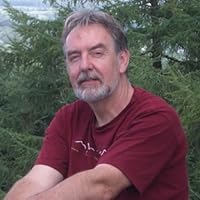
Tim Severin was a British explorer, historian and writer. Severin is noted for his work in retracing the legendary journeys of historical figures. Severin was awarded both the Gold Medal of the Royal Geographical Society and the Livingstone Medal of the Royal Scottish Geographical Society. He received the Thomas Cook Travel Book Award for his 1982 book The Sindbad Voyage.
He was born Timothy Severin in Assam, India in 1940. Severin attended Tonbridge School and studied geography and history at Keble College, Oxford.
Severin has also written historical fiction along with non fiction. The Viking Series, first published in 2005, concerns a young Viking adventurer who travels the world. In 2007 he published The Adventures of Hector Lynch series set in the late 17th century about a 17-year-old Corsair.
Чудесен завършек на сагата за живота на северния Форест Гъмп. :)
Приключения в Константинопол и битката при Стамфорд бридж са в основата на тази част.
Много харесвам, как северняците са представени като безстрашни фаталисти, на които често не им пука дали ще загинат в битка. Все пак Валхала ги очаква!
Истинско удоволствие бе да се запозная с творчеството на Тим Северин и при възможност ще прочета още от него.
Цитати:
"Спомних си Пелагея и питах дали мога да видя къде е живяла, преоблечена като евнух, нейната съименница. Без колебание бях отведен до малка, влажна пещера. Надникнах вътре, но веднага се отдръпнах. Някой я бе използвал за кошара, смърдеше на кози.
Колкото повече неща виждах, толкова повече ме озадачаваше успеха на християнството. Питах се как хората могат да вярват на такива очевидни измислици."
"Един въпрос, който не ми даваше мира през цялото време, докато пишех хрониката си, намери отговор сега, на последните страници. Преди се чудех как толкова благото християнство победи по-жилавата стара вяра. Само вчера един монах се дивеше как в Лондон присъствал на дворцова церемония, на която някакъв местен земевладелец се заклел във вярност към набожния и накичен с амулети Уилям. Монахът ни изигра церемонията: как тържествено влязъл благородникът, седналият на трона крал, как мъжът минал през шпалира от царедворци, коленичил и целунал кралската ръка. Монахът падна на колене за по-нагледно и аз неволно забелязах лекотата, с която го направи. Всеки ден повтаряше същото пред олтара. Спомних си как моят господар Харалд се просна на мраморния под пред трона на василевса, който твърдеше да е наместник на същия този Бог. И разбрах: вярата към Белия Христос работи в полза на хората, които искат да доминират над останалите. Ако твърдиш, че си избран от Белия Христос, всички последователи на тази религия следва да се отнасят с теб така, сякаш си самият Бог, ще коленичат пред теб и ще скръстват ръце като за молитва.
Това противоречи на всичко, което символизира Господ, но аз съм бил свидетел как истински безскрупулните и амбициозни сред владетелите приемат християнската вяра, след което я използват, за да потъпчат достойнството на последователите си. Този ми възглед естествено ще ужаси кротките монаси край мен, някои от които са искрени и лишени от корист мъже. Но те са слепи за факта, че дори тук, в манастира, самите те прекланят глава пред висшестоящите, без значение какви качества имат. Колко различна е старата вяра. Никога не съм коленичил пред Харалд. Знаех само, че той е по-подходящ за владетел от мен и че следва да му служа, доколкото мога. А докато бях жрец във Вастер Готландия, тези, които идваха да ме молят за съвет или да се застъпя за тях пред боговете, ме ценяха заради знанията ми; щях да бъда наистина потресен, ако решаха, че съм божи наместник.
Или в това се крие силата на вярата към Белия Христос: тя служи на деспоти, които искат да ограничат чуждата независимост."
Read this book in 2006, and its the 3rd and final volume of the amazing "Viking" trilogy, by the author, the late, Tim Severin.
This tale sets off in the year AD 1035, in Constantinople, and Thorgils now a member of the Varangian lifeguard and enjoying the glories in the richest city on earth.
Thorgils witnesses a bloody battle against Arab pirates and which is decisively won by warrior chief Harald Hardrada, before heading for Sicily and liberate this island also from the Saracen occupier.
After years of travelling and fighting, Thorgils wants to find peace in Sweden, when he is summoned in AD 1066, to help with the coordination and building of a Norse fleet of 300 ships.
The invasion of England with this Norse fleet will have a certain climax at Stamford Bridge, and although Thorgils has prophetic skills he cannot safe his fellow Vikings from impending disaster, and what fate has decreed is that the end of the Viking world has come.
What is to follow is an amazing Viking tale with great battles and hardships, in which Thorgils will witness the end of the Viking world with much regret and great certainty, and all this is brought to us by the author in his own remarkable fashion.
Highly recommended, for this is a brilliant final addition to this marvellous Viking trilogy, and that's why I like to call this last episode: "A Magnificent Viking Conclusion"!
This is in essence, a different look at the Viking 'swords and shields' books that I like reading so much (Robert Low, Giles Kristian, etc). If you're simply after swords and shields and bucket-loads of bloody raping and pillaging, this isn't for you. This is much more. More a thorough tour round the 11th Century Viking world, wrapped in an really engaging and in the latter stages especially, thought-provoking story.
It is clear from this, the third and final book in the 'Viking' series, that the whole story hinges on the 'threat' of the coming of Christianity (the 'White Christ') to the previously Pagan Scandinavian lands. A coming which pretty much was the reason for the end of the Viking era. We have followed someone called Thorgills, throughout the series, but it is really first here, in number three, that it becomes clear that he too can see the writing on the wall, that Christianity is probably unstoppable. At the same time, a lot of his motivation in making the decisions he makes, is in the hope of finding a way of halting that flow of Christianity and turning the good, honest, hard-working ordinary Viking people, back to 'the old ways'. In Harald Hardrada, he thinks he had found 'the symbol of my yearning that it might be possible to restore the glories of the past.' Problem is, Harald does want to restore the glories of the past, just different glories to those of Thorgills'. Both want to be a new Knud/Knut (if you're a Scandinavian reader), Canute (if you're English). Harald wants to be the Scandinavian Knud, who ruled Norway, Denmark and large parts of England, while Thorgills is really in essence like what we English remember Canute for - trying to hold back the waves, in this case, of Christanity.
The honesty and quiet nobility of the Pagan ways as practiced by ordinary people, is many times contrasted with the corrupt, power-hungry, un-forgiving and elitist new Christianity. Especially in the contrast between Thorgills' life in the Varangian guard in Constantinople and his later living on a poor farm, with his wife, on the Swedish border with Norway. Yet the underlying similarities in all religions, to the ordinary man or woman in the street or field are also stressed. The only thing that is different in a lot of cases, is the names - and in 'Viking', the people following those religions.
Whilst it had been a while since I had read number two, and had read several others in the same field in between, I had no difficulty re-picturing the main character, previous events and where we were now. He clearly has done his research exceptionally well (I have, down the years, built up a reasonable knowledge of Viking history, and I do now, after all, live in a Viking country!) and if you know anything about the Varangian Guard in Constantinople, Scandinavia in the 10th Century (you'd be surprised, you do!), King Harold, the Bayeux Tapestry, William 'the Conqueror' and the preparation for and the events of, 1066...you'll find it all woven in here. There was only once where I thought I was going to have to suspend belief about Thorgills' being in the right Viking place at the right time in Viking history - and you probably need to know your Shakespeare - where I raised an eyebrow slightly, but without looking into the facts and the dates, I'm not going to be too hard on him for it.
For anyone with even a passing interest in the 'real' Viking world and history, this will be a wonderfully rewarding read. A textbook with a story wrapped around it isn't such a bad thing, when it's done so well as this Viking saga. I thoroughly enjoyed 'The Kings Man' and found it the best of the 'Viking' volumes (I did wonder if a compendium (?) single volume edition might be a nice idea). The whole story is interesting, involving and well-written, the main characters are fully-realised and believable - I was genuinely upset with one development towards the end of the story - and the final passages are a poignant and thought-provoking look at the ending of the Viking world, seen by a believer in 'the old ways'; a true 'Viking'.
First of all a little about the whole series - The trilogy is about a Vikingers tale of the old ways vs the advent of the ways of the White Christ in his lands in the timespan from the turn of the millennia to C1066 & the battle of Stamford Bridge, where we Anglos recognise (1066) for a different thing. The relevance of the date & battle is neatly done with reference to Ragnarok, the final battle of the Norse Gods. The chronicler come narrator of the story goes full circle with his tale starting & finishing in a monastery. An engaging story throughout for me ram-packed with historical content which for some may be a little too much as it's not an action packed series a la Cornwell or Scarrow, but I really loved it & give the trilogy a worthy 4.5 stars. For more on the other 2 books Ive done more detailed reviews should you be tempted to start Odinn's Child.
The final part, King's Man, gives half of the story to events in the Byzantine capital Constantinople (early C11th) & involves politics & corruption above most. For the battles we travel to Sicily & fight the Moorish invaders along with Pirates throughout the Great Green. With his part in the holy lands complete, he visits the tomb of the white Christ, the trek begins back to his native lands where he's involved with the battle for the Norwegian crown & ultimately is part of King Harold’s spy entourage in the court of William the Bastard (also pretender to the crown of England) & ends up at the Battle of Stamford Bridge via Normandy in 1066.
A most read for ANYBODY interested in History, Vikings, Norse mythology & the period in question. For me, one of the best stories for the period Ive come across.
Every book in the Viking trilogy is well written, and you really learn a lot. There was enough dialog and enough action for me. In the 3rd volume, I learned about Constantinople, the Varangian Guard, the Laplanders, European history at that time--Macbeth of the Scots was a character and his story was more historically accurate than Shakespeare [I reread the chapter on Macbeth in A Short History of Scotland by Hume Brown, which I own]. I liked Severin's explanations of much of the Norse mythology.
The third and final instalment in the Viking series, following the life of Thorgils Leiffson. it picks in Constantinople in 1035, and continues in the same vein as the previous books in excellently detailed and historically accurate information. This book brings the series together and as such has rated higher individually that the others, and really is isn't a case of three books, but a single story. Woven through Thorgils' story are pretty much all the curretn events of the time, from the Varangian Guards of the Basileus (Emperor) in Constantinople, a trip to the Holy Land to visit the Anastasis (the Church of the Holy Sepulchre) in Jerusalem, Harold Sigurdsson, William 'the Conqueror' and even a brush with a famous Shakespearean character (maybe a little early in this context?), and a whole lot of swirling old Norse Gods, Greek Gods and or course the new White Christ. As another, more in depth reviewer pointed out, the whole story deals with the coming of Christianity, and the end to the Pagan Gods, and I will quote him here: "It is clear from this, the third and final book in the 'Viking' series, that the whole story hinges on the 'threat' of the coming of Christianity (the 'White Christ') to the previously Pagan Scandinavian lands. A coming which pretty much was the reason for the end of the Viking era. We have followed Thorgils throughout the series, but it is really first here, in number three, that it becomes clear that he too can see the writing on the wall, that Christianity is probably unstoppable. At the same time, a lot of his motivation in making the decisions he makes, is in the hope of finding a way of halting that flow of Christianity and turning the good, honest, hard-working ordinary Viking people, back to 'the old ways'.Source: Speesh's review
Pues la entrega final es una conclusión acorde con los otros dos libros, y que da justo lo que sus lectores esperamos a estas alturas. Thorgils es ya un adulto y sus experiencias son más proactivas. Ya no es el muchacho que participa como mero espectador y sus decisiones y actos tienen peso e importancia en sus aventuras y vivencias.
Lo que no cambia es el espíritu viajero y curioso que le insufla su protector Odin, vamos de Constantinopla a Jerusalén, o de Noruega a Inglaterra mientras las aventuras del protagonista le llevan a mezclarse en los actos de personajes históricos, en sus intrigas y en sus batallas (que aquí hay unas cuantas, aunque Thorgils no sea precisamente un guerrero mítico).
En resumen, este libro, como el resto, es una forma muy entretenida de conocer el mundo del siglo XI, con sus emperadores y sus guerras, pero también con su forma de vivir, sus ideas y sus creencias. Me ha gustado la saga, y si tiene claro lo que se va a encontrar, se lo recomendaría a cualquier lector aficionado a la novela histórica o, simplemente, que le gusten los libros entretenidos y con bastante trasfondo. Creo que la idea de ponerle unos títulos y unas portadas tan épicas es contraproducente y puede ser lo que hace que algunos lectores queden decepcionados.
Pero si pillas la idea que tenía Severin y te gusta, te lo vas a pasar bien. Al menos yo lo he hecho.
I enjoyed this book VERY much, with all the politics and adventures. I also learned a lot in the process. Even though I knew what was going to happen in the end, I was still saddened when the big catastrophe hit. In other words, the predictability of the ending didn't change a thing. It was difficult to decide which of this trilogy's books was the best. With each book, I was transported into another world in ancient times. I don't know what else to say other than I look forward to reading similar books.
This novel continues the adventures of Thorgils through Dark Age Europe. A fascinating mix of fact, fiction and myth, this is a must for history buffs and lovers of historical fiction alike.
This novel has been in my reading pile for what seems like forever with something else always seeming to dislodge it as it nears the top. Come the holiday period, I was determined to finally read it. And I am glad that I did.
The first two volumes of the Viking trilogy (Odinn's Child, Sworn Brother), related the story of Thorgils Liefsson, who is what we generally label as a Viking, his adventures and travels from childhood onwards. Thorgils is a follower of the Old Ways, dedicated to the service of the father-god, Odinn, in an increasingly Christian world.
At the end of Sworn Brother, Thorgils has landed in Constaninople, joining the Vangarian lifeguard who serve the Emperor of the Eastern Roman empire, the Byzantines.
One of the things I really enjoyed in Severin's writing is the way he is able ot bring his progtagonist into involvement with major historical characters and events of the age in a quite natural manner, without forcing the issue. In this final instalment, Thorgials witnesses the death of an Emperor and is pulled into the political activities that charactised Byzantine, before encountering Harald Sigurdsson, eventual ruler of Norway.
There would be few, if any readers, whho were not broadly aware of William of Normandy's invasion of Englad in 1066. Yet not as well known is Harald Sirgudsson's invasion of northern England just days before the Battle of Hastings. The newly crowned English King, Harald Godwinnsson had to first see battle with the Norse before racing south to face the Normans. In true historic irony, the successful Norman invaders were themselves the descendants of Vikings who conquered the territory of Normandy, thus the Vikings did eventually conquer all of England.
Thorgils's role is frequently that of an observer. He is no hero in battle although he has fought in war bands, from ship and been part of the shield wall. It is in this observers role that we seen him witness to both the Norman and Norse sides of the two invasions.
Severin's writing has real authority flowing throughout in a grand piece of historical adventure. This is perhaps not surprising given Severin's own background as an adventurer and author of many historical non-fiction pieces.
If you like good story and realistic historical adventure, then King's Man is a book you should read. It sufficiently stands alone to be read in isolation of its predecessors although reading the earlier instalments does enable a greater enjoyment.
eccoci giunti alla terza e ultima parte di questa triologia che mi ha fatto compagnia per qulche giorno e mi ha fatto conoscere uno straordinario scrittore. ho già recensito gli altri due volumi, per chi si fosse perso le puntate precedenti stiamo accompagnando thorgils lungo tutta la sua vita, leggendo i suoi scritti in cui narra le sue avventure. in questo libro avremo il piacere di avventurarci da bisanzio fino alla conquista dell'inghilterra da parte di un signore norvegese.
come sempre il libro è basato su fonti storiche e quindi è abbastanza corretto, ovviamente il personaggio principale è inventato, ma i personaggi che incontra lungo tutta la sua vita sono per la maggior parte veramente esistiti. ed ecco che, come spesso accade nei romanzi storici, il nostro eroe si ritrova a cospetto di grandi re, prende parte a battaglie epiche, ha una certa importanza per scelte tattiche che portano poi a ciò che realmente accade. trovo che tutto questo sia interessante ma a volte gli scrittori peccano nel voler rappresentare troppe cose. un semplice uomo difficilmente si sarebbe potuto trovare in così tante situazioni e avere tutta questa importanza a cospetto di re e principi quando era di estrazione sociale così modesta. fatto sta che thorgils ha avuto sicuramente una vita entusismante!
anche in questo volume le battaglie sono mal scritte, ma questo è un punto di vista personale dovuto senza dubbio ad aver letto libri di altri autori che meglio narrano queste battaglie nordiche, se non si ha un pregresso come il mio probabilmente piacerà lo stile di narrazione e le si troveranno interessanti.
vi ringrazio per avermi accompagnata in queste mie tre letture, concludendo tim severin è senza dubbio uno scrittore storico interessante, che mi ripropongo di leggere in seguito magari in altri ambiti, come i suoi racconti di viaggio e le sue ricostruzioni di viaggi passati. ovviamente vi sconsiglio di iniziare la triologia dal fondo sebbene i libri non siano poi così collegati fra loro e i pochi riferimenti che ci sono sono più che chiaramente evidenziati in modo che al lettore non manchino momenti chiave della vita del protagonista.
Really great read and a very satisfying end to what has been a brilliant historical trilogy. Yes, it may be a wee bit unbelieveable that our narrator, Thorgils, managed to experience that much Viking history, but this is just a fictional tool, and he is our guide and narrator through a lot of Viking history. It's like a potted version of everything you need to know.
This book starts off with Thorgils in his thirties working in the King's Guard in Miklagard (aka Constantinopol, aka Istanbul), and goes all the way through to his mid sixities, when he witnesses what feels like the end of the Vikings. Not just in that they suffer a massive defeat, but also in that Thorgils gives up hope in seeing the Old Gods coming back into favour. The White Christ, as he refers to it, is very much in place. And there's an interesting, if perhaps wee bit rose-tinted view of the sucess of Christianity coming in and taking over (rose tinted in that the old pagan ways were of a better social system. And perhaps they were). "So this is the ultimate power of the White Christ faith: it is a belief suited to despots who would curb men's independence." (p 317)
It's a curious book for me personally in that Thorgils goes to all these exotic places, goes on adventures, travels all over and where does he end up? Literally down the road from me in York Minster =) The book essentially finishes with the dreadful defeat of Harald at Stamford Bridge (just outside of the city of York - or Jorvik as it was known at the time), by Harold (note the change of spelling!) who then went and got himself killed by William the Bastard. And what a bastard he comes across as in this book. Inbetween there's much battling and intrigue at the court of the Byzantiums in Turkey, before Thorgils eventually gets himself back to Norway, now the Kings Man to Harald, king of Norway, instead. He spends time in Sweden, travels to Denmark, to France, before, as I said, we eventually end up in Yorkshire. I'm just sorry he got here for such a sorry end.
I couldn't recommend this enough to anyone who enjoys a historical novel or wants to read more about the Vikings.
Unlike most trilogies and other series of historical novels, this series did not become any less compelling as you work your way through. This third and final installment was just as good as the first two volumes (Odinn's Childand Sworn Brother). This book sees Thorgils from middle-age in Constantinople through to his old age. As with the previous books I love the way that the character helps us to travel around the mysterious world of the 11th century rather than being confined to just one place in this century. I also enjoyed the exploration of the old Norse faith through the eyes of one of it's adherents at a time that the "white Christ faith" was becoming firmly established throughout the northern lands. Over the course of the trilogy Thorgils has become a very familiar character that I liked immensely. I do wonder however if reading either the 2nd or 3rd book in isolation may be more difficult to get this connection with the central character or perhaps even to follow the story as there are numerous references to events in the previous books which are not really elaborated on. I recommend this trilogy to anyone who likes a good Viking story, but do start at the first book Odinn's Child.
What we've got here is a novel for history buffs by a history buff. The scope of the novel (and indeed the series) is simply breathtaking as the author attempts to fit everything he knows about dark age Europe into the life of one man, a life all of us would envy him for. To any and all who occasionally delve into history, each name of a person or city brings a surge of familiarity induced excitement. That said, this saga is regrettably not as exciting as it could be and mainly due to the author's lack of prowess in writing works of fiction but also due to the fact that history, and therefore the plot, is already known to us. The characters are not only often one-sided, but also reactive as opposed to proactive, which is really what one shouldn't expect from the likes of Harald Hardrada. The narration is somewhat dull, combining the flashbacky nature of an old man's tale of his youth and a young man's curiosity and rather naive didactic monologue. Since this is a novel of adventure and exploration, the lack of breathtaking moments and effected narration is somewhat disappointing. Or maybe the fabled opulence of the Queen of the Cities or a madman's ride over the chain in a ship aren't worth the words.
Excellent historical fiction, a great conclusion to a series I have enjoyed immensely. It feels as though he really knows his history well, which makes sense as I understand he wrote nonfiction historical books before this. While experiencing the likes of the Varangians in Byzantine and the battle of Stanford Bridge, it is nice to have the perspective of a character like Thorgils. My only complaint would be my complete and udder lack of knowledge of old timey byzantine words. What is a Spatharokandidatos? Heck if I know, but fancy words like that get bandied about a bit. It's still repetitively easy to follow and probably encourages me to get a little smarter.
I liked it, but the 2nd installment was the superior one. I had a feeling some loose ends got cut short. That said, following Thorgils into his doting age, his falling short... was marred by a certain distance that was not present in the previous books. Thorgils is much more the observer, the narrator than before, which is a pity. All the same, I am very glad to have discovered this decently written, captivating saga.
Ok, after a little disappointment of the first and the second books. This final book paid back my expectations. Thorgils might be only bit part of the history, but the whole Thorgils journeys, frame bigger picture of the important historical background. Truly wonderlust, fascinating experience to followed Thorgils entire journeys from the beginning to the end. I thought the title should called “The Last Viking”?
The third and final episode in the life of Thorgils who in his life has travelled from Greenland to Iceland, to North America, back to Iceland and Greenland, to Ireland and Norway, to Scotland and England, and now by way of Lapland and Russia and the Ukraine to Constantinople.
Once again an interesting book which even though it is fiction gives an historical perspective and insight into the european events at the beginning of the C11th.
Anche il terzo e conclusivo capitolo della vita e delle avventure del vichingo Thorgils non perde la tensione dei precedenti libri e continua a intrigare raccontando i viaggi del protagonista dal gelo della Russia settentrionale fino alla corte dei re bizantini a Bisanzio e poi di nuovo in Norvegia al servizio del re Harald fino al preludio dell'invasione inglese di Guglielmo di Normandia, mescolando storia e fantasia con intelligenza e acume creativo.
Things are getting even more adventurous for Thorgils. He's currently attached to Harald Hardrada, in Constantinople and I'm waiting to see what happens next.
The last pages of the book say more than I could comment but I'm planning a longer review, one written with empathy, not with a sting in the tail. Suffice it to say Thorgils is now one of my dearest friends.
11/20/11 - this was definitely the best book in the series. it does, however, vexes me to see how practitioners of the christian conducted themselves. But all of that is for another discussion. The book was an exciting read. There were many words that escaped my understanding or ability to reference but I still greatly enjoyed this novel.
The third and final instalment in Severin's Viking trilogy, this book was packed with action. Thorgils is a very likeable character, even if he gets caught up in things. I really did enjoy this trilogy and recommend it to all my friends.
I like historical fiction, and the author seems well researched. This is the conclusion to a very enjoyable trilogy, with emphasis on Viking religion that I found really fascinating. A very good series, and I look forward to reading more by this interesting author.
Myslím, že to byl nejlepší díl ze série. Také vyvrátil moje přesvědčení, historický román je snadné napsat. Autor musel znát množství podrobností. Proč ne 5 hvězdiček? Pro samé cestování nebyl čas pořádně poznat další postavy knihy. Škoda. Trochu víc vnitřního života by neškodilo.
Terminado el tercer y último libro de la saga Vikingo de Tim Severin, tengo que decir que me ha gustado mucho y que me ha resultado muy triste cerrar el libro y despedirme de Thorgils. Larga vida a los viejos dioses!