

What do you think?

The Cailiffs of Baghdad, Georgia
A hidden history of the South emerges when a worldly teacher leads Threestep, GA, to reinvent itself, setting in motion events that lead to triumph and tragedy for the black teenager who happens to be the smartest person in Piedmont County, Georgia, in 1938–39.
As an epigraph from The Souls of Black Folk by W. E. B. Du Bois reminds us at the start of this novel, "Throughout history, the powers of single black men flash here and there like falling stars, and die sometimes before the world has rightly gauged their brightness."
Protagonist Theo Boykin is a genius, an artist, an inventor, a Leonardo DaVinci–type, whose talents are sought after by local blacks and whites alike, but even this is not enough to save him. He falls victim to "the tragedy of ignorance and the damage caused by fear," in the words of poet Rita Dove—the first African American to serve as U.S. Poet Laureate and a member of the jury that conferred on The Cailiffs of Baghdad, Georgia the 2011 Anisfield-Wolf Award for books that "make a significant contribution to our understanding of racism and our appreciation for the diversity of human cultures."
You won't forget Theo Boykin, nor will you forget his friends the Cailiffs, especially Gladys, who tells this story with love and bewilderment, and the teacher, Miss Spivey, who changes all their lives.
As an epigraph from The Souls of Black Folk by W. E. B. Du Bois reminds us at the start of this novel, "Throughout history, the powers of single black men flash here and there like falling stars, and die sometimes before the world has rightly gauged their brightness."
Protagonist Theo Boykin is a genius, an artist, an inventor, a Leonardo DaVinci–type, whose talents are sought after by local blacks and whites alike, but even this is not enough to save him. He falls victim to "the tragedy of ignorance and the damage caused by fear," in the words of poet Rita Dove—the first African American to serve as U.S. Poet Laureate and a member of the jury that conferred on The Cailiffs of Baghdad, Georgia the 2011 Anisfield-Wolf Award for books that "make a significant contribution to our understanding of racism and our appreciation for the diversity of human cultures."
You won't forget Theo Boykin, nor will you forget his friends the Cailiffs, especially Gladys, who tells this story with love and bewilderment, and the teacher, Miss Spivey, who changes all their lives.
353 pages, Kindle Edition
First published January 1, 2010
About the author
Mary Helen Stefaniak
8 books50 followersMary Helen Stefaniak is the prize-winning author of The Turk and My Mother, Self Storage and Other Stories, and The Cailiffs of Baghdad, Georgia. She lives in Omaha and Iowa City.
Ratings & Reviews
Friends & Following
Create a free account to discover what your friends think of this book!
Community Reviews
Displaying 1 - 30 of 156 reviews

December 17, 2010
Wait, wait. Don’t go. Let me tell you a story. I assure you it will be worth your while. Come, sit, sit. May I offer you some tea, some dates perhaps? No? Very well.
A very engaging writer named Mary Helen Stefaniak has written a wonderful story. Her tale begins back in 1938, a very grim time in most of the world. A young woman of 29 years arrived in Threestep, Georgia to take over the job of teacher. (There was no mention of a puff of smoke.) Grace Spivey was her name and she had a great impact on the small town. She was particularly fond of The Thousand Nights and a Night and read stories from her ten-volume edition of that famed work to her students. The children were smitten, as if by magic. In fact the entire town was so taken with her energy and vision that they agreed to host a town fair celebrating ancient Baghdad. Of course, this being Georgia, there were some problems when the story-telling teacher tried to teach black students as well as white ones, and had both races taking part in the celebration.
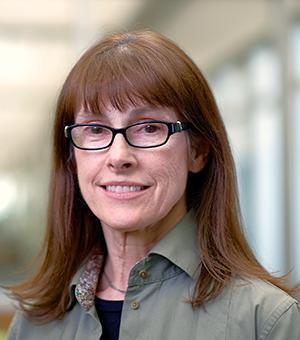
Mary Helen Stefaniak - image from her site
There were many notable people in this town. The Cailiff family includes 11 year-old Gladys. She is the narrator, or story-teller here. But she is not the only one. Gladys’ adult sister, May, has a considerable go as Scheherazade, not only in being cast as the character in the town production, but as the prime story-teller of a sequence of nested tales, offering deep historical back-story. That made my remaining programmer cells howl in protest, particularly as she truncates the five or six-deep nest without returning step-wise through the nest levels. I am sure I will have Dumbo-like dreams in which I am chased by rogue GOTO commands while incomplete structures collapse all around me. While I do not know if Scheherazade truncated her tales, the nesting of stories is pure Arabian Nights. It seems almost fractal-like, having nested narrators in the prime story and nested narrators within the told tales. So Stefaniak had quite a bit of fun with her Baghdadian connections. The matinee-idol-handsome, one might say prince-like, Force Cailiff, plays a significant role in the story as does Theo Boykin, the cleverest person in town. That he is black and a teen makes the potential for conflict quite rich. There is, of course, a crooked lawyer who heads the local KKK. There are many lesser personages who add to the overall texture.
The town is also host to an odd natural condition. It is blessed with large quantities of a substance called kaolin, a sort of clay that permeates much of the landscape, residing in some places just beneath the surface in large quantities. That it is called “white dirt” by the locals could be hilarious, ironic or obvious. I guess it depends on your point of view. But the stuff was not a pure literary device. Kaolin in quantity really exists in Georgia.
In fact much of the inspiration for the details in the book are based in reality. Stefaniak’s mother’s maiden name is Califf. The doctor with whom Grace Spivey traveled abroad was based on a person of the same name, who was also doctor. An Arabic book found on a coastal island in the novel replicates an actual artifact. I would strongly recommend checking out a lecture Stefaniak gave on the background to the facts in the book and how she constructed her story at the Iowa Digital Library Another excellent source is an interview Stefaniak did with Powell’s
The Cailiffs of Baghdad, Georgia is a very engaging read, with relatable, sympathetic characters, strong imagery and an interesting story. It is a plus to see how much fun the author appears to be having playing with Arabian Nights storytelling. And yes, she knows that Scheherazade is Persian, not Arabic.
I have some gripes, of course. I already noted the nesting discomfort I experienced. No, I was not joking about it making me uncomfortable. But hopefully that is merely a personal quirk. I did find, though, that the story seemed to peter out rather than resolve. I felt that the story-telling became a bit too diffuse toward the end. And I was disappointed with how she handled Grace Spivey’s end-story. But still and all. There is enough magic when you open the book that you do not have to rub it to get your wish, if your wish is for a good read…says me.
PS
The name “Scheherazade” means “City Dweller.” We learn that Grace has studied French in Paris, drama in London and attended Teacher’s College in New York. That she enthralls her students with stories completes the image. It could be a coincidence, of course.
I enjoyed a tale in which a bookseller is also a trader in slaves. I am sure the author did not mean anything by that.
And if you would like to read the Arabian Nights for yourself, it is available free at Gutenberg
Links to the author's personal, GR, and FB pages
A very engaging writer named Mary Helen Stefaniak has written a wonderful story. Her tale begins back in 1938, a very grim time in most of the world. A young woman of 29 years arrived in Threestep, Georgia to take over the job of teacher. (There was no mention of a puff of smoke.) Grace Spivey was her name and she had a great impact on the small town. She was particularly fond of The Thousand Nights and a Night and read stories from her ten-volume edition of that famed work to her students. The children were smitten, as if by magic. In fact the entire town was so taken with her energy and vision that they agreed to host a town fair celebrating ancient Baghdad. Of course, this being Georgia, there were some problems when the story-telling teacher tried to teach black students as well as white ones, and had both races taking part in the celebration.
Mary Helen Stefaniak - image from her site
There were many notable people in this town. The Cailiff family includes 11 year-old Gladys. She is the narrator, or story-teller here. But she is not the only one. Gladys’ adult sister, May, has a considerable go as Scheherazade, not only in being cast as the character in the town production, but as the prime story-teller of a sequence of nested tales, offering deep historical back-story. That made my remaining programmer cells howl in protest, particularly as she truncates the five or six-deep nest without returning step-wise through the nest levels. I am sure I will have Dumbo-like dreams in which I am chased by rogue GOTO commands while incomplete structures collapse all around me. While I do not know if Scheherazade truncated her tales, the nesting of stories is pure Arabian Nights. It seems almost fractal-like, having nested narrators in the prime story and nested narrators within the told tales. So Stefaniak had quite a bit of fun with her Baghdadian connections. The matinee-idol-handsome, one might say prince-like, Force Cailiff, plays a significant role in the story as does Theo Boykin, the cleverest person in town. That he is black and a teen makes the potential for conflict quite rich. There is, of course, a crooked lawyer who heads the local KKK. There are many lesser personages who add to the overall texture.
The town is also host to an odd natural condition. It is blessed with large quantities of a substance called kaolin, a sort of clay that permeates much of the landscape, residing in some places just beneath the surface in large quantities. That it is called “white dirt” by the locals could be hilarious, ironic or obvious. I guess it depends on your point of view. But the stuff was not a pure literary device. Kaolin in quantity really exists in Georgia.
In fact much of the inspiration for the details in the book are based in reality. Stefaniak’s mother’s maiden name is Califf. The doctor with whom Grace Spivey traveled abroad was based on a person of the same name, who was also doctor. An Arabic book found on a coastal island in the novel replicates an actual artifact. I would strongly recommend checking out a lecture Stefaniak gave on the background to the facts in the book and how she constructed her story at the Iowa Digital Library Another excellent source is an interview Stefaniak did with Powell’s
The Cailiffs of Baghdad, Georgia is a very engaging read, with relatable, sympathetic characters, strong imagery and an interesting story. It is a plus to see how much fun the author appears to be having playing with Arabian Nights storytelling. And yes, she knows that Scheherazade is Persian, not Arabic.
I have some gripes, of course. I already noted the nesting discomfort I experienced. No, I was not joking about it making me uncomfortable. But hopefully that is merely a personal quirk. I did find, though, that the story seemed to peter out rather than resolve. I felt that the story-telling became a bit too diffuse toward the end. And I was disappointed with how she handled Grace Spivey’s end-story. But still and all. There is enough magic when you open the book that you do not have to rub it to get your wish, if your wish is for a good read…says me.
PS
The name “Scheherazade” means “City Dweller.” We learn that Grace has studied French in Paris, drama in London and attended Teacher’s College in New York. That she enthralls her students with stories completes the image. It could be a coincidence, of course.
I enjoyed a tale in which a bookseller is also a trader in slaves. I am sure the author did not mean anything by that.
And if you would like to read the Arabian Nights for yourself, it is available free at Gutenberg
Links to the author's personal, GR, and FB pages

February 7, 2012
I really enjoyed the first half of The Cailiffs of Baghdad, Georgia. Gladys, the eleven-year-old narrator, has an authentic voice. The town of Threestep, Georgia in 1938 feels very real. The author does a great job of capturing the times and the location. Despite the large number of characters, they are described in sufficient detail that they are easy to keep straight. The author has clearly done a tremendous amount of research.
A new teacher, a world traveler, arrives and shakes up the town in many ways. She introduces her students to the Arabian Nights and dares to teach black students alongside white students. Issues of race and prejudice weave through the text in a thoughtful way.
The teacher rallies her students and the town to put on a Baghdad Bazaar, Just past the halfway point, the big night arrives. The plot begins to unravel a bit, with developments that don’t seem plausible or in character with the rest of the book.
The narrative grinds to a complete halt when a story within a story within a story only tangentially related to the plot goes on for 70 pages. The author's editor did not do her a favor by allowing this aside to stay in the novel. The relevant information could have been relayed in a few pages and the rest left out entirely or added in an appendix. I can feel the author's passion for the information in the way it is conveyed, but as a reader it was hard to get through while impatiently waiting to hear what's going to happen next with the main thread of the book. I actually skipped to where the original narrative started up again, finished the book, and then went back to skim through the story within a story within a story.
There was a lot of wrapping up of plot points and characters’ lives in the last chapter of the book, along with the introduction of new plot points that didn't add to the resolution of the book. Events happened that did not seem in keeping with the book's overall tone.
I recommend The Cailiffs of Baghdad, Georgia with mixed feelings. I would have given the first half of the book five stars. Other readers may be less disappointed in some of the plot turns, or may find the long aside more interesting. If thoughtful and well researched historical fiction of this sort appeals to you, I would certainly recommend giving the book a try.
A new teacher, a world traveler, arrives and shakes up the town in many ways. She introduces her students to the Arabian Nights and dares to teach black students alongside white students. Issues of race and prejudice weave through the text in a thoughtful way.
The teacher rallies her students and the town to put on a Baghdad Bazaar, Just past the halfway point, the big night arrives. The plot begins to unravel a bit, with developments that don’t seem plausible or in character with the rest of the book.
The narrative grinds to a complete halt when a story within a story within a story only tangentially related to the plot goes on for 70 pages. The author's editor did not do her a favor by allowing this aside to stay in the novel. The relevant information could have been relayed in a few pages and the rest left out entirely or added in an appendix. I can feel the author's passion for the information in the way it is conveyed, but as a reader it was hard to get through while impatiently waiting to hear what's going to happen next with the main thread of the book. I actually skipped to where the original narrative started up again, finished the book, and then went back to skim through the story within a story within a story.
There was a lot of wrapping up of plot points and characters’ lives in the last chapter of the book, along with the introduction of new plot points that didn't add to the resolution of the book. Events happened that did not seem in keeping with the book's overall tone.
I recommend The Cailiffs of Baghdad, Georgia with mixed feelings. I would have given the first half of the book five stars. Other readers may be less disappointed in some of the plot turns, or may find the long aside more interesting. If thoughtful and well researched historical fiction of this sort appeals to you, I would certainly recommend giving the book a try.

August 6, 2010
This was a decent read, but I don't see myself reading it again or recommending it to my friends. It's told from the viewpoint of an eleven year girl and I found her narrative and thoughts rather charming. Gladys (cause her mother was so happy to see her when she was born!) is growing up in a very small town in Georgia full of pecan trees and white dirt. The year is 1938 so she goes to school in a one room schoolhouse. Tho in an old time setting full of old fashioned people, the new schoolteacher has a lot of new ideas.
Grace, the new teacher, brings with her to Georgia, 1001 Arabian Nights (the book), a chest full of harem girl and camel driver outfits, and ideas that this little podunk town is not ready for. Grace thinks the local African American children should be allowed to attend the "white" school. Thus, on top of throwing costume parties, camel rides, and inspiring a town play and Baghdad Bazaar, Grace turns the town upside down by getting the African American community involved and even going so far as to (much to the superintendent's dismay) have both whites and blacks sit together in the classroom one day.
The KKK, of course, is bound to retaliate. Remember, this is 1938. So while a school play becomes a town play, (I was a bit put off by this. None of the main characters of the play even attend the school.) emotions start running high and feelings of resentment from numerous town folks and students just may lead to a Baghdad Bazaar Disaster.
Three stars because... 1. The Grace/Force issue. (I don't wish to spoil the story by explaining this.) What was the point? I thought it was just gross and fail to see how this particular content of the story contained any meaning or bearing whatsoever. 2. The story got a bit bogged down with the play details. I mean, what materials they used, how they painted, who sewed what, what materials the costumes were.... 3. There was a long part in which someone sits and narrates a story all night long. I just didn't like the story. I felt it went off track and was irrelevant.
All in all, it was an okay read.
Grace, the new teacher, brings with her to Georgia, 1001 Arabian Nights (the book), a chest full of harem girl and camel driver outfits, and ideas that this little podunk town is not ready for. Grace thinks the local African American children should be allowed to attend the "white" school. Thus, on top of throwing costume parties, camel rides, and inspiring a town play and Baghdad Bazaar, Grace turns the town upside down by getting the African American community involved and even going so far as to (much to the superintendent's dismay) have both whites and blacks sit together in the classroom one day.
The KKK, of course, is bound to retaliate. Remember, this is 1938. So while a school play becomes a town play, (I was a bit put off by this. None of the main characters of the play even attend the school.) emotions start running high and feelings of resentment from numerous town folks and students just may lead to a Baghdad Bazaar Disaster.
Three stars because... 1. The Grace/Force issue. (I don't wish to spoil the story by explaining this.) What was the point? I thought it was just gross and fail to see how this particular content of the story contained any meaning or bearing whatsoever. 2. The story got a bit bogged down with the play details. I mean, what materials they used, how they painted, who sewed what, what materials the costumes were.... 3. There was a long part in which someone sits and narrates a story all night long. I just didn't like the story. I felt it went off track and was irrelevant.
All in all, it was an okay read.

October 9, 2021
I am glad to have finished the book. No regrets. Maybe 3.5 stars? Five for some parts, a grudging two stars for others. Loved the beginning which is sweet. And the middle. And then . . .
—almost-spoiler because I do not reveal plot, only opinion.
I struggled to finish.
Some people loved this book all the way through. But May's story within a story (and then a story within that) did not fly for me. Gladys' voice was charming and I enjoyed her early narration a great deal. It was clearly written from well into the future and I enjoyed her asides that revealed what would happen outside the immediate timeline. I felt she was speaking to me and forgave her blindnesses because she was speaking from her 11-year-old-southern-white perspective. Learning more about Sir Richard Burton's translation of One Thousand Nights and One Night and how these traditional stories always end in death made me want to read the unexpurgated multi-volume series (good luck finding it, I still have not).
But May, whom I never loved as I suspect I was supposed to, fails to come across (at least for me) as a fully realized character. All those pregnancies are an interesting if pathetic object lesson, but the real problem is her voice. Or lack of same. She begins her night's tale with
But then that southern voice almost entirely disappears for 73 pages of voiceless narration of "exotic" adventure. It lacks the formal structure of the classic translation but also the humanity of most of this novel. It should have been thrilling, a "real life" drama in the spirit of the Arabian Nights. Instead it was tragic perhaps, but mostly muddy and dull. Then Gladys comes back—boom—with the "Garnerer of graveyards" and the story is alive again to the end.
This digression bothered a number of other readers, which I discovered when I finally read reviews yesterday, but not did not cause a ripple for others. I could not help but appreciate how Stefaniak wove in her own experience and family history. That was a big plus. But the tale within a tale did not ring true and the horrors of that story and the story as a whole failed to impress me. The result, overall, was that the horrors of southern racism seemed undermined by both the story "told" by Gladys and by her sister.
It is only fair to note most readers disagree.
I will not keep this book.
—almost-spoiler because I do not reveal plot, only opinion.
I struggled to finish.
Some people loved this book all the way through. But May's story within a story (and then a story within that) did not fly for me. Gladys' voice was charming and I enjoyed her early narration a great deal. It was clearly written from well into the future and I enjoyed her asides that revealed what would happen outside the immediate timeline. I felt she was speaking to me and forgave her blindnesses because she was speaking from her 11-year-old-southern-white perspective. Learning more about Sir Richard Burton's translation of One Thousand Nights and One Night and how these traditional stories always end in death made me want to read the unexpurgated multi-volume series (good luck finding it, I still have not).
But May, whom I never loved as I suspect I was supposed to, fails to come across (at least for me) as a fully realized character. All those pregnancies are an interesting if pathetic object lesson, but the real problem is her voice. Or lack of same. She begins her night's tale with
"It hath reached my ears," is how she began, but then she let that go, and with a faint, sly smile, and a glance at Dr. Miller, she said: "I heard tell one time of
A Redheaded Woman Who Hid in a Harem
But then that southern voice almost entirely disappears for 73 pages of voiceless narration of "exotic" adventure. It lacks the formal structure of the classic translation but also the humanity of most of this novel. It should have been thrilling, a "real life" drama in the spirit of the Arabian Nights. Instead it was tragic perhaps, but mostly muddy and dull. Then Gladys comes back—boom—with the "Garnerer of graveyards" and the story is alive again to the end.
This digression bothered a number of other readers, which I discovered when I finally read reviews yesterday, but not did not cause a ripple for others. I could not help but appreciate how Stefaniak wove in her own experience and family history. That was a big plus. But the tale within a tale did not ring true and the horrors of that story and the story as a whole failed to impress me. The result, overall, was that the horrors of southern racism seemed undermined by both the story "told" by Gladys and by her sister.
It is only fair to note most readers disagree.
I will not keep this book.

August 5, 2010
When the unconventional Miss Spivey, world traveler, is sent by the WPA to teach in the 1 ½ room schoolhouse in Threestep, Georgia in 1938, the townspeople have no idea how their world is going to change. Especially when it seems that she doesn't know that the “coloreds” should not have the same opportunities as the whites. Especially when she decides that she will start a Baghdad Bazaar, based on her ten-volume set of One Thousand and One Nights.
As in all good Southern lit, this story is filled with wonderful, eccentric characters. The Cailiff family has especially colorful names to match their personalities.
Ildred came next. She was going to be Mildred but the sight of her shook Momma some, so the M she wrote on the paper was nothing but a big old blob of ink.
And as in any good Southern lit, there are racial tensions, stories about the Klu Kluckers of the town, good people and bad people and most somewhere in between. Most books of the genre don't include camels. In this one, camels are integral to the story.
Stories are told within story, stories about how some of the people of Threestep ended up there, stories about camels and kidnapping and slaves, stories from Arabian Nights. For the most part, I enjoyed these tales. Towards the end of the book one of them seemed a little too drawn out to me, and I wanted to get back to the people of Threestep. Despite that, I loved this book. It is big and warmhearted and a delight to read.
The quote is taken from an Advance Reader Copy of the book and may have changed in the published edition. I was given this book by the publisher for review.
As in all good Southern lit, this story is filled with wonderful, eccentric characters. The Cailiff family has especially colorful names to match their personalities.
Ildred came next. She was going to be Mildred but the sight of her shook Momma some, so the M she wrote on the paper was nothing but a big old blob of ink.
And as in any good Southern lit, there are racial tensions, stories about the Klu Kluckers of the town, good people and bad people and most somewhere in between. Most books of the genre don't include camels. In this one, camels are integral to the story.
Stories are told within story, stories about how some of the people of Threestep ended up there, stories about camels and kidnapping and slaves, stories from Arabian Nights. For the most part, I enjoyed these tales. Towards the end of the book one of them seemed a little too drawn out to me, and I wanted to get back to the people of Threestep. Despite that, I loved this book. It is big and warmhearted and a delight to read.
The quote is taken from an Advance Reader Copy of the book and may have changed in the published edition. I was given this book by the publisher for review.

February 11, 2019
Really liked the first two-thirds, but then stalled at the end

July 2, 2022
I can't quite put my finger on why I enjoyed this book as much as I did, but within the time it takes to read one sentence, I was back in the story and smiling to myself most of the time. I can absolutely see critiques this book might get, but I don't care about its flaws, I loved it. It is certainly not for everybody. But it was for me.

October 28, 2013
This book was really stop-and-go for me. The highlights were some really beautiful writing, a richly imagined small-town world, and some creative story structuring ideas. Unfortunately, all these positives couldn't make up for what ultimately ended up being sort of a plodding story, especially when the plot suddenly digresses for sixty-odd pages just before the novel's end.
I see what the author was trying to do with the story-within-a-story-within-a-story format near the end of the book. It did inform the backstories of a few characters, both main and peripheral, but there were so many levels to these stories (there were at least five separate, unfinished tales that all led into each other) that I couldn't remember which characters belonged to which plots, how each story was related to the one before it, and so on. (At one point, when a character within one of the stories said something like, "It's an interesting story. Would you like to hear it?" I actually yelled "NO!" out loud in my empty house.)
In the last couple of pages the book pulls itself together and makes some really moving points about racism, discrimination, and segregation, but a lot of the lead-up--including oddly skimmed-over romantic intrigues, the backstory of one character's paternity, and the aforementioned stories-within-stories--seemed sort of unmoored from the main point. They could have been relevant, but the author didn't really do much to draw those story threads together in service of her main message.
All in all, I spent more time being frustrated with this book than enjoying it, which is a shame because it had great potential. I only finished it because I had already invested 250 pages' worth of time into it and didn't want to crap out so close to the end.
I see what the author was trying to do with the story-within-a-story-within-a-story format near the end of the book. It did inform the backstories of a few characters, both main and peripheral, but there were so many levels to these stories (there were at least five separate, unfinished tales that all led into each other) that I couldn't remember which characters belonged to which plots, how each story was related to the one before it, and so on. (At one point, when a character within one of the stories said something like, "It's an interesting story. Would you like to hear it?" I actually yelled "NO!" out loud in my empty house.)
In the last couple of pages the book pulls itself together and makes some really moving points about racism, discrimination, and segregation, but a lot of the lead-up--including oddly skimmed-over romantic intrigues, the backstory of one character's paternity, and the aforementioned stories-within-stories--seemed sort of unmoored from the main point. They could have been relevant, but the author didn't really do much to draw those story threads together in service of her main message.
All in all, I spent more time being frustrated with this book than enjoying it, which is a shame because it had great potential. I only finished it because I had already invested 250 pages' worth of time into it and didn't want to crap out so close to the end.
May 27, 2014
Full disclosure: I met Mary Helen Stefaniak a few months ago, as she is an advisor in my MFA program (though currently only for fiction, which means I likely won't work with her). She is friendly and warm and we talked about coffee filters on a van ride from the grocery store to the hotel. But I had wanted to read this book since long before I knew I would be in the program and have an opportunity to talk to her about anything at all.
I fell in love with all of the main characters, within just a few pages. Speaking of pages, these are a long 339 pages, and I mean that in a good way. There's a LOT packed into this very moving story. Plop yourself down and plan to stay for a while. This book goes well with a glass (or several) of wine and a cozy couch.
I fell in love with all of the main characters, within just a few pages. Speaking of pages, these are a long 339 pages, and I mean that in a good way. There's a LOT packed into this very moving story. Plop yourself down and plan to stay for a while. This book goes well with a glass (or several) of wine and a cozy couch.

March 12, 2011
Full disclosure-- the brilliant Mary Helen Stefaniak is a friend of mine. That said, BELIEVE me when I say this is a stunning book -- intelligent, humane, funny, clear-eyed and compassionate. You won't forget these characters, and the book has much to tell us about how we live and think now.

November 16, 2022
A number of years ago I started concentrating most of my reading on literary award winning books and among those awards was the Anisfield-Wolf Award. This was the 2011 winner and like the previous book I read before this, The Boat by Nam Le, it was a disappointment. Taking place in the year 1938, The Cailiffs of Baghdad is about a young schoolteacher named Grace Spivey who has come to the small community of Threestep, Georgia to teach. Grace is a bit of a free spirit who has done some traveling, mostly in Northern Africa and Arabia but, also, spent a day in Baghdad. So, in her teaching she came up with the bright idea of having an event, she called the Baghdad Bazaar, in which the kids would dress up in costumes from that area. She had some very unconventional ideas about the event, especially considering this was Georgia in the 1930s, and her ideas included black children from the segregated school mixing with the white children in her school. This, eventually, led to the involvement of the Klu Klux Klan when the Bazaar began. This all took place in the first three quarters of the book and was narrated by an eleven year old named Gladys Cailiff. Up to this point the book was sensational but then it all seemed to come apart and went off into needless side stories that got further and further from the core story of the book. Stefaniak did eventually tie up some of the loose ends on the last couple of pages but by then I had lost interest.

January 13, 2012
Mary Helen Stefaniak's novel "The Cailiffs of Baghdad, Georgia" is a funny, endearing novel about racial tolerance. I suppose it's appropriate that I finished this book on the observed holiday of Martin Luther King, Jr., a day which (sadly) not many people, including myself, often think about other than as a day off from schools and some businesses. Do you think MLK would appreciate the fact that his day has become a 2-day appliance sales event at Sears? I'm thinking no. If there has ever been a time when MLK's message of love and understanding has ever been needed, that time is arguably now. Despite the fact that we have an African-American in the White House (and one that I'm still not ashamed to admit that I voted for), tensions are still high, and not just racially. I've only been alive for 39 years, but I can't seem to recall a time where there was so much vitriol and bitterness between Republicans and Democrats, rich and poor, Christian and non. The white/black racial tension is still there (especially among Republicans and conservatives who claim to not be racist and yet still insist that Obama is an "illegitimate" president and a "terrorist"), but it seems to be drowned out by stories of anti-gay bullies driving 12-year-olds to suicide; Wall Street protesters with legitimately accurate protests being villified by the news-media; a minority of nut-job protesters villifying Wall Streeters; pundits from all parties villifying teachers, firefighters, and police officers; and Newt Gingrich villifying the Muppets as "brainwashers" of today's youth by making kids hate rich people. No wonder the collective mood of the nation seems pretty low. Morale sucks on a global scale. MLK had a dream, but we're all living in a nightmare. Thank God for people like Stefaniak, who still has a glimmer of hope and optimism left in her soul. "The Cailiffs of Baghdad, Georgia" tells the story of a small town called Threestep, Georgia that is turned topsy-turvy when a young, idealistic teacher named Miss Spivey comes to teach at the small schoolhouse in 1938. She introduces the town's children to wild ideas and stories about other worlds: places like Baghdad, where camels and calyphs and djinni and princesses all live together. Her ideas are dangerous and scary to some, including the KKK and other ignorant members of the community, but to little Gladys Cailiff, the novel's narrator, Miss Spivey is opening other people's eyes and minds to previously unimaginable truths. Stefaniak has created a wonderful novel full of joy and tragedy and the absurd, one that resonates with the spirit of the South and is reminiscent of great Southern writers like Harper Lee and Flannery O'Connor. This book received the Anisfield-Wolf Book Award, a literary prize that recognizes contemporary novels for "opening minds, challenging minds", and Stefaniak succeeds in doing just that in an entertaining way.

August 29, 2010
From the first page to the last, this novel had me hooked. I was delighted by the writing and completely drawn in by the story. The characters were every bit as endearing (if not more so!) than the quirky cast of Shaffer & Barrows’s “The Guernsey Literary and Potato Peel Pie Society”.
Our narrator, a young girl by the name of Gladys, is one of many children in the Cailiff family of Threestep, Georgia. Through her eyes, and alongside her delightfully entertaining commentary, the tale of Miss Spivey and the Baghdad Bazaar unfolds.
It is August of 1938 when Miss Grace Spivey steps off the train in tiny Threestep to begin her new job as the teacher for the town’s one-room schoolhouse. She is, as the town’s children quickly discover, nothing like any teacher they’ve had in the past. For one, she has traveled to places all over the world, including Baghdad. For another, she has spent enough time in the North to challenge some Southern ways of life. To most of the children in Threestep, she and her tales of camels and jinns and harems are nothing short of magical. When she begins to plan a Baghdad Bazaar for the school’s yearly fundraiser, featuring a stage adaptation of Alaeddin from “One Thousand Nights and a Night”, almost everyone is on board.
But the longer Miss Spivey is in town, the more her actions begin to rub certain people the wrong way. As she charges ahead with her plans, everything begin to unravel, leaving no one in Threestep untouched.
“The Cailiffs of Baghdad, Georgia” is an enchanting novel peopled with a splendid cast of characters and written in a style that’s easy and wonderful to read. I loved it from start to finish and will most definitely be looking into more of Mary Helen Stefaniak’s work!
Our narrator, a young girl by the name of Gladys, is one of many children in the Cailiff family of Threestep, Georgia. Through her eyes, and alongside her delightfully entertaining commentary, the tale of Miss Spivey and the Baghdad Bazaar unfolds.
It is August of 1938 when Miss Grace Spivey steps off the train in tiny Threestep to begin her new job as the teacher for the town’s one-room schoolhouse. She is, as the town’s children quickly discover, nothing like any teacher they’ve had in the past. For one, she has traveled to places all over the world, including Baghdad. For another, she has spent enough time in the North to challenge some Southern ways of life. To most of the children in Threestep, she and her tales of camels and jinns and harems are nothing short of magical. When she begins to plan a Baghdad Bazaar for the school’s yearly fundraiser, featuring a stage adaptation of Alaeddin from “One Thousand Nights and a Night”, almost everyone is on board.
But the longer Miss Spivey is in town, the more her actions begin to rub certain people the wrong way. As she charges ahead with her plans, everything begin to unravel, leaving no one in Threestep untouched.
“The Cailiffs of Baghdad, Georgia” is an enchanting novel peopled with a splendid cast of characters and written in a style that’s easy and wonderful to read. I loved it from start to finish and will most definitely be looking into more of Mary Helen Stefaniak’s work!

April 3, 2015
I rated this four stars because it was hard to put down. I do understand the concerns some readers had with the tales within a tale within a tale towards the end of the book. They were hard to keep up with--I found myself thinking I should diagram them to keep track of who was who--but in the end, I liked it. Told from the point of view of a young girl, it is the story of a town in Georgia in 1938/39 called Baghdad and the adventurous school teacher who had actually been to the middle eastern Baghdad and wanted to bring some of the outside world to the small town. In the process she crossed some societal lines, including inviting the kids from the "colored" school to attend with her students, and eventually abandoned the town and the kids, but she did leave an impact on the lives of many of the townspeople.

September 15, 2010
So the fact that the author was at book group tonight may have made me a bit biased. The story of how the story came to be is almost as entertaining as the book itself. Someone at book group said that reading a book after hearing an author reading makes her hear the author's voice reading the book. Can't wait to re-read with Mary Helen Steganiak's voice in my head!

October 9, 2011
Hmm, my review disappeared. I expected light and fun reading but what I got was poor writing. There were many problems including a long digression, too heavy foreshadowing and stereotypical characters.
October 30, 2011
Mostly I liked this book, although at times it bogged down and I would put it down and then I would end up picking it up again. It took me awhile to get it read.

June 14, 2022
Really didnt feel like this story was going anywhere, but i pushed on... until the sex scene... at which point i closed the book never to return.
This entire review has been hidden because of spoilers.

November 14, 2011
Mary Helen Stefaniak is the author of The Cailiffs of Baghdad, Georgia.
First, I would like to think Mary Helen for agreeing to this interview. I really appreciate it!
Jaime Boler: When did you begin writing this novel? And what inspired you to write it?
Mary Helen Stefaniak: I began writing this novel in March 2003 after reading a newspaper story about the shock-and-awe bombing of Baghdad. I knew almost at once that I wanted to write a novel in which a group of Americans had a relationship to Baghdad—and everything Baghdad represents—that was different from the one being developed at the time. I wanted to remind anyone who happened to read the book that Mesopotamia is the cradle of our civilization.
JB: Do you have a favorite character in the story? If so, who and why? Which character is most like you?
MHS: My favorite character? I don’t know. To tell you the truth, I love them all. Well, maybe I don’t love Mr. Gordon and Mavis Davis, Sr., quite as much as I love the rest of them, but I do agree with whoever said that you have no business creating a character for whom you feel no sympathy.
The answer to which one is most like me has to be the same as Flaubert’s famous comment: “Madame Bovary, c’est moi!” They are all me in some way or another or I couldn’t have imagined them onto the page.
JB: Is the character May modeled on your grandmother Mattie? Was she also a storyteller?
MHS: I never met my grandmother Mattie. She died in childbirth with her sixth child.
JB: In a different time, do you think Ildred and Theo would have been more than just good friends? Or am I reading something that was not intended?
MHS: I think Ildred had strong feelings for Theo, and he obviously cared about her. They respected one another’s intelligence and understood each other’s value. Those are the kinds of feelings that could support a deep and lasting relationship.
JB: What does the white dirt, or kaolin, symbolize in your novel?
MHS: I don’t know that it symbolizes anything, but it is analogous to natural resources that have led to conflicts and exploitation in other parts of the world. As a defeated country occupied and exploited by victorious forces and plagued by terrorism in the aftermath of a bitter civil war, the American South has a history that is not unlike that of other countries that have been occupied and exploited by victorious forces and plagued by terrorism in the aftermath of a bitter civil war.
When Theo is pulled from the old kaolin pit, the deadly power of white dirt certainly suggests the deadly power of intolerance and hatred.
JB: What was the most difficult part of writing this story?
MHS: Keeping everything straight is tough whenever the story is long and complicated enough to be a novel, and simply perservering to the end was sometimes difficult, but the hardest part, as Hemingway once put it, was “getting the words right.”
JB: Your book is narrated by eleven-year-old Gladys Cailiff. Why did you choose to use the first-person narrative? Why did you choose Gladys as narrator?
MHS: I needed someone who would be perceptive and observant but also innocent, at the time—and someone who could be completely enamored with Miss Spivey.
JB: I had very mixed feelings about Miss Grace Spivey. On one hand, I applauded her for bringing life to Threestep and for opening the minds of her students to new cultures and a love of learning. Yet, she has an affair with a minor and seems naïve as to the consequences of the actions she sets in motion. What is your opinion of Miss Spivey? How did you come up with her? What do you think would have happened to her?
MHS: A reviewer named JoAnn Heydron described Miss Spivey as “cigarette-smoking, libidinous, and wildly generous.” I think that’s about right. I see her as a well-educated, highly privileged person who was really trying to do some good in the world but who wasn’t willing or able to suppress her own desires and interests while she did it. She probably has a lot in common with certain Teach for America volunteers of our own day. As for what would have happened to her, I think she would have gone back to her privileged life, back “home to her Daddy,” as Theo predicts when he’s arguing with Force about her, and from there, she would set out again on future adventures.
I asked one book club with a high proportion of teachers among the members to let me know what they thought of Miss Spivey, and they were kind enough to take notes on their discussion. They acknowledged that she wasn’t perfect—they were glad, at least, that Force was not one of her students—but they gave me a pretty long list of what they liked and admired about her, which included things like reading to the students, recognizing the importance of storytelling in teaching, the field trips, involving the whole community in school activities, valuing diversity (to put it mildly), and getting rid of the paddles. What kept coming up again and again, though, was Miss Spivey’s attitude toward state mandated requirements, which, for the most part, she ignored. Many of the teachers liked her for that. There was some feeling that state mandates reduced opportunities for creativity in teaching.
Miss Spivey did for Gladys and Threestep what good teachers always do for us: they transform us, they empower us, they endow us with a love of learning that lasts our whole lives—and then, in the vast majority of cases, they disappear from our lives before we’ve gotten wise enough to know what they’ve done.
JB: You make such a convincing case for the existence of Baghdad, Georgia, that I did some research and expected to find such a place. I was so surprised to learn you made it all up! What was your inspiration for creating this special town?
MHS: The name and the location and the one-and-a-half-room school house are inspired by the real town of Deepstep, Georgia, which claims to be the Kaolin Capital of the World.
JB: I was especially interested in the story of Bilali Mahomet. I’m a historian who specializes in slave culture and resistance. In some research, I came across African-American slaves who practiced Islam. One notable person was Ibrahima, who was an African prince brought to Natchez, Mississippi. His master renamed him Prince, yet Ibrahima still practiced some Islam. Did you know Bilali Mahomet would be in your novel when you set out to write your story or did you learn about him later?
MHS: I “discovered” Bilali Mahomet on a visit to Sapelo Island. I’d already been working on the book for close to three years at that point, and I needed a coastal island for purposes of the plot, so on our next trip to Georgia, my husband and I left my mother with her sister in Milledgeville and set out for the coast. We were in the visitor’s center, where you buy your tickets for the ferry and tour (on a schoolbus driven by a Park Ranger) of Sapelo Island, when my husband spotted something amazing in a display case: a picture of a little handmade notebook, lying open, its pages crammed with Arabic script! Just like that, I knew that I had found a real cultural ancestor for Theo Boykin, the smartest person in Piedmont County. I had even equipped Theo with a notebook before I learned about Bilali’s. I started reading in that direction and found out about other literate Muslims from West Africa who wound up enslaved in the Caribbean and in the Southern United States. And here I’d been thinking that it was kind of a stretch, to put Georgia and “Baghdad” together in one novel!
JB: I like how you have Bilali Mahomet’s descendants naming their children Bilali. They may not know its original meaning, yet the name still means something to them. That was one of many historical accuracies I found in your book. How important is real history in writing historical fiction?
MHS: It’s funny, but I don’t think of THE CAILIFFS as historical fiction, which I define as fiction whose purpose is to allow readers to experience a time other than their own. While I had to try and “recreate” rural GA in 1938-39 (not to mention the Arabian peninsula in 1916, the Georgia coastal islands in 1920 or so, a bit of General Sherman’s march to the sea, a journey from West Africa to Baghdad in 1775 or so, and scenes from 9th-century Baghdad), my purpose was not, primarily, to allow readers to experience those other times and places. My primary purpose was to help readers (and myself) to see our own time more clearly. That said, whatever the novelist’s purpose in recreating another time in fiction, I think writers are obliged to be as accurate as possible in using historical events and details. My personal rule for the use of history in my fiction, borrowed from Donald Barthelme, is simply: “It does not contradict what is known.” You can find long, windy essays on the subject of using history in fiction, but I think Barthelme pretty much says it all in those seven words, which I try to live by.
JB: I read where your mother went to the same high school as Flannery O’Connor. Peabody High School in Milledgeville, Georgia. Your mother graduated in 1943 and O’Connor in 1942. Did they know each other? Were they friends? What is your literary relationship with O’Connor?
MHS: I was in high school when I found out about that. Somehow, knowing that my mother had gone to school with the author of one of the stories in the anthology we were reading in English class, that she and O’Connor walked down the same school hallways, and so forth, made it seem more possible to be a writer. And the stories she wrote! They made you believe in the power of fiction, that’s for sure. My mother and her sisters knew who she was, but they belonged to the socioeconomic class from which she drew many of her characters, rather than the one to which she herself belonged. Maybe that’s one reason why I felt so pleased to have my mother and her sister and some cousins in the audience when I did a reading in the dining room at Andalusia, the O’Connors’ farm outside Milledgeville (where Flannery lived and wrote during the most productive years of her short life). As I have said on other occasions, pretty much everything I’ve ever written has been a tribute to Flannery O’Connor and at the same time an argument with her.
JB: You and your husband John live in a 150-year-old stagecoach inn you restored. What is it like living there? Could there be a future story there?
MHS: There are a hundred future stories there, but I haven’t written any of them yet.
JB: I read a review that compared The Cailiffs of Baghdad, Georgia, to Harper Lee’s To Kill a Mockingbird. But you really turn Harper Lee’s work on its head. Can you talk about that?
MHS: I read To Kill a Mockingbird for the first time in a Great Books program. I was twelve or thirteen. I loved it immediately. I’ve read it several times since. I owe a debt of gratitude, as a reader and as a writer, to Harper Lee, but as you say, there are some ways in which The Cailiffs turns To Kill a Mockingbird upside down. If Atticus Finch is the best read person in Maycomb, Alabama, then his counterpart in The Cailiffs of Baghdad, Georgia is a 17-year-old African American named Theo Boykin. (Not only that, but the only lawyer in Threestep happens to be the Grand Goblin of the local KKK.) In my novel, I wanted to give some credit to the less fortunate classes, both black and white.
JB: What was your reaction upon learning your novel received the 2011 Anisfield-Wolf Book Award for fiction, an award that recognizes books that contribute to our understanding of racism and appreciation of diversity?
MHS: As I told the audience at the award ceremony in Cleveland, I was so thrilled to learn that people like the members of the Anisfield-Wolf award jury—Henry Louis Gates, Jr., and Joyce Carol Oates and Rita Dove and Stephen Pinker and Simon Schama–had read my book that they wouldn’t even have had to select it for the award. Just knowing that writers and thinkers of their stature had read my work was so exciting. Of course, I’m glad they chose it for the award, too. If you go to the Anisfield-Wolf website and see the books and authors who have won the award in its first 75 years, you’ll have some idea of how honored I feel to have my book be among them.
JB: Who has influenced you the most in your writing?
MHS: I don’t know who has influence me the most, but I’ve learned a lot from Flannery O’Connor.
JB: You grew up in Milwaukee, Wisconsin, and vacationed in Georgia. How was segregation different in the two very different places?
MHS: A librarian in Macon, Georgia, once told me, “In the North, segregation was spatial. In the South, it was psychological.” Growing up in the 1960s in a working class neighborhood on the south side of Milwaukee, I had no occasion to meet or speak to an African American until I went to high school. By contrast, in the little town where my aunt Sissie lived in Jones County, Georgia, her neighbors across the street were black, as were the families who lived down the road behind her little house. Not that I didn’t know there were official rules separating blacks and whites in Georgia. But I can also remember thinking, as a kid, that the reason there were no “whites only” signs on drinking fountains in Milwaukee—we call them bubblers there—probably was that the nearest African American was likely to be miles away from that bubbler, there being no black people in sight.
JB: Did you find any people, events, or issues in your research for The Cailiffs of Baghdad, Georgia, that you would like to return to someday?
MHS: Issues, yes. I think it’s so instructive to realize that racism is the same and different—in its manifestations and its targets—from generation to generation. I’ve made some notes for a novel starring the interracial couple we meet in THE CAILIFFS: Ralph Ford, who saved Gladys Cailiff’s daddy, you may recall, in the Great War, and Lily. Ford, I’ve decided, is from Milwaukee, where he grew up in an Italian neighborhood in the Bay View area (not far from the house where we lived with my Croatian/Hungarian grandparents when I was very small). Ralph Ford’s father went through hell and high water in the 1890s, let’s say, to win permission to marry Ralph’s mother, who was the child of Italian immigrants. He had to convert to Catholicism and move in with his in-laws before they would give their blessing. His own English/Irish/German-American family disowned him in the meantime. His son Ralph Ford, who “grew up Italian,” may have hoped that his family would accept his marriage to Lily because of the obstacles that his own parents faced back when Italians and other Southern Europeans were “blacks” as far as white Anglo-Saxon Protestants were concerned.
JB: What do you hope readers take with them after reading The Cailiffs of Baghdad, Georgia?
MHS: A different, more intimate and affectionate, feeling about the word “Baghdad” and the whole broad swath of history and culture that word represents—and more awareness of the long history of Islam in the U.S. (I also hope that Gladys and Mavis and Force and Theo will live in their hearts forever!)
JB: What’s next for you? I read where you were working on something that involved baseball?
MHS: The truth is that I’m working on three projects—two fiction projects and one nonfiction—waiting to see which one demands to be next. Baseball plays a part in two of the three.
**************************************************************
I, for one, can’t wait to see what Stefaniak comes up with next!
First, I would like to think Mary Helen for agreeing to this interview. I really appreciate it!
Jaime Boler: When did you begin writing this novel? And what inspired you to write it?
Mary Helen Stefaniak: I began writing this novel in March 2003 after reading a newspaper story about the shock-and-awe bombing of Baghdad. I knew almost at once that I wanted to write a novel in which a group of Americans had a relationship to Baghdad—and everything Baghdad represents—that was different from the one being developed at the time. I wanted to remind anyone who happened to read the book that Mesopotamia is the cradle of our civilization.
JB: Do you have a favorite character in the story? If so, who and why? Which character is most like you?
MHS: My favorite character? I don’t know. To tell you the truth, I love them all. Well, maybe I don’t love Mr. Gordon and Mavis Davis, Sr., quite as much as I love the rest of them, but I do agree with whoever said that you have no business creating a character for whom you feel no sympathy.
The answer to which one is most like me has to be the same as Flaubert’s famous comment: “Madame Bovary, c’est moi!” They are all me in some way or another or I couldn’t have imagined them onto the page.
JB: Is the character May modeled on your grandmother Mattie? Was she also a storyteller?
MHS: I never met my grandmother Mattie. She died in childbirth with her sixth child.
JB: In a different time, do you think Ildred and Theo would have been more than just good friends? Or am I reading something that was not intended?
MHS: I think Ildred had strong feelings for Theo, and he obviously cared about her. They respected one another’s intelligence and understood each other’s value. Those are the kinds of feelings that could support a deep and lasting relationship.
JB: What does the white dirt, or kaolin, symbolize in your novel?
MHS: I don’t know that it symbolizes anything, but it is analogous to natural resources that have led to conflicts and exploitation in other parts of the world. As a defeated country occupied and exploited by victorious forces and plagued by terrorism in the aftermath of a bitter civil war, the American South has a history that is not unlike that of other countries that have been occupied and exploited by victorious forces and plagued by terrorism in the aftermath of a bitter civil war.
When Theo is pulled from the old kaolin pit, the deadly power of white dirt certainly suggests the deadly power of intolerance and hatred.
JB: What was the most difficult part of writing this story?
MHS: Keeping everything straight is tough whenever the story is long and complicated enough to be a novel, and simply perservering to the end was sometimes difficult, but the hardest part, as Hemingway once put it, was “getting the words right.”
JB: Your book is narrated by eleven-year-old Gladys Cailiff. Why did you choose to use the first-person narrative? Why did you choose Gladys as narrator?
MHS: I needed someone who would be perceptive and observant but also innocent, at the time—and someone who could be completely enamored with Miss Spivey.
JB: I had very mixed feelings about Miss Grace Spivey. On one hand, I applauded her for bringing life to Threestep and for opening the minds of her students to new cultures and a love of learning. Yet, she has an affair with a minor and seems naïve as to the consequences of the actions she sets in motion. What is your opinion of Miss Spivey? How did you come up with her? What do you think would have happened to her?
MHS: A reviewer named JoAnn Heydron described Miss Spivey as “cigarette-smoking, libidinous, and wildly generous.” I think that’s about right. I see her as a well-educated, highly privileged person who was really trying to do some good in the world but who wasn’t willing or able to suppress her own desires and interests while she did it. She probably has a lot in common with certain Teach for America volunteers of our own day. As for what would have happened to her, I think she would have gone back to her privileged life, back “home to her Daddy,” as Theo predicts when he’s arguing with Force about her, and from there, she would set out again on future adventures.
I asked one book club with a high proportion of teachers among the members to let me know what they thought of Miss Spivey, and they were kind enough to take notes on their discussion. They acknowledged that she wasn’t perfect—they were glad, at least, that Force was not one of her students—but they gave me a pretty long list of what they liked and admired about her, which included things like reading to the students, recognizing the importance of storytelling in teaching, the field trips, involving the whole community in school activities, valuing diversity (to put it mildly), and getting rid of the paddles. What kept coming up again and again, though, was Miss Spivey’s attitude toward state mandated requirements, which, for the most part, she ignored. Many of the teachers liked her for that. There was some feeling that state mandates reduced opportunities for creativity in teaching.
Miss Spivey did for Gladys and Threestep what good teachers always do for us: they transform us, they empower us, they endow us with a love of learning that lasts our whole lives—and then, in the vast majority of cases, they disappear from our lives before we’ve gotten wise enough to know what they’ve done.
JB: You make such a convincing case for the existence of Baghdad, Georgia, that I did some research and expected to find such a place. I was so surprised to learn you made it all up! What was your inspiration for creating this special town?
MHS: The name and the location and the one-and-a-half-room school house are inspired by the real town of Deepstep, Georgia, which claims to be the Kaolin Capital of the World.
JB: I was especially interested in the story of Bilali Mahomet. I’m a historian who specializes in slave culture and resistance. In some research, I came across African-American slaves who practiced Islam. One notable person was Ibrahima, who was an African prince brought to Natchez, Mississippi. His master renamed him Prince, yet Ibrahima still practiced some Islam. Did you know Bilali Mahomet would be in your novel when you set out to write your story or did you learn about him later?
MHS: I “discovered” Bilali Mahomet on a visit to Sapelo Island. I’d already been working on the book for close to three years at that point, and I needed a coastal island for purposes of the plot, so on our next trip to Georgia, my husband and I left my mother with her sister in Milledgeville and set out for the coast. We were in the visitor’s center, where you buy your tickets for the ferry and tour (on a schoolbus driven by a Park Ranger) of Sapelo Island, when my husband spotted something amazing in a display case: a picture of a little handmade notebook, lying open, its pages crammed with Arabic script! Just like that, I knew that I had found a real cultural ancestor for Theo Boykin, the smartest person in Piedmont County. I had even equipped Theo with a notebook before I learned about Bilali’s. I started reading in that direction and found out about other literate Muslims from West Africa who wound up enslaved in the Caribbean and in the Southern United States. And here I’d been thinking that it was kind of a stretch, to put Georgia and “Baghdad” together in one novel!
JB: I like how you have Bilali Mahomet’s descendants naming their children Bilali. They may not know its original meaning, yet the name still means something to them. That was one of many historical accuracies I found in your book. How important is real history in writing historical fiction?
MHS: It’s funny, but I don’t think of THE CAILIFFS as historical fiction, which I define as fiction whose purpose is to allow readers to experience a time other than their own. While I had to try and “recreate” rural GA in 1938-39 (not to mention the Arabian peninsula in 1916, the Georgia coastal islands in 1920 or so, a bit of General Sherman’s march to the sea, a journey from West Africa to Baghdad in 1775 or so, and scenes from 9th-century Baghdad), my purpose was not, primarily, to allow readers to experience those other times and places. My primary purpose was to help readers (and myself) to see our own time more clearly. That said, whatever the novelist’s purpose in recreating another time in fiction, I think writers are obliged to be as accurate as possible in using historical events and details. My personal rule for the use of history in my fiction, borrowed from Donald Barthelme, is simply: “It does not contradict what is known.” You can find long, windy essays on the subject of using history in fiction, but I think Barthelme pretty much says it all in those seven words, which I try to live by.
JB: I read where your mother went to the same high school as Flannery O’Connor. Peabody High School in Milledgeville, Georgia. Your mother graduated in 1943 and O’Connor in 1942. Did they know each other? Were they friends? What is your literary relationship with O’Connor?
MHS: I was in high school when I found out about that. Somehow, knowing that my mother had gone to school with the author of one of the stories in the anthology we were reading in English class, that she and O’Connor walked down the same school hallways, and so forth, made it seem more possible to be a writer. And the stories she wrote! They made you believe in the power of fiction, that’s for sure. My mother and her sisters knew who she was, but they belonged to the socioeconomic class from which she drew many of her characters, rather than the one to which she herself belonged. Maybe that’s one reason why I felt so pleased to have my mother and her sister and some cousins in the audience when I did a reading in the dining room at Andalusia, the O’Connors’ farm outside Milledgeville (where Flannery lived and wrote during the most productive years of her short life). As I have said on other occasions, pretty much everything I’ve ever written has been a tribute to Flannery O’Connor and at the same time an argument with her.
JB: You and your husband John live in a 150-year-old stagecoach inn you restored. What is it like living there? Could there be a future story there?
MHS: There are a hundred future stories there, but I haven’t written any of them yet.
JB: I read a review that compared The Cailiffs of Baghdad, Georgia, to Harper Lee’s To Kill a Mockingbird. But you really turn Harper Lee’s work on its head. Can you talk about that?
MHS: I read To Kill a Mockingbird for the first time in a Great Books program. I was twelve or thirteen. I loved it immediately. I’ve read it several times since. I owe a debt of gratitude, as a reader and as a writer, to Harper Lee, but as you say, there are some ways in which The Cailiffs turns To Kill a Mockingbird upside down. If Atticus Finch is the best read person in Maycomb, Alabama, then his counterpart in The Cailiffs of Baghdad, Georgia is a 17-year-old African American named Theo Boykin. (Not only that, but the only lawyer in Threestep happens to be the Grand Goblin of the local KKK.) In my novel, I wanted to give some credit to the less fortunate classes, both black and white.
JB: What was your reaction upon learning your novel received the 2011 Anisfield-Wolf Book Award for fiction, an award that recognizes books that contribute to our understanding of racism and appreciation of diversity?
MHS: As I told the audience at the award ceremony in Cleveland, I was so thrilled to learn that people like the members of the Anisfield-Wolf award jury—Henry Louis Gates, Jr., and Joyce Carol Oates and Rita Dove and Stephen Pinker and Simon Schama–had read my book that they wouldn’t even have had to select it for the award. Just knowing that writers and thinkers of their stature had read my work was so exciting. Of course, I’m glad they chose it for the award, too. If you go to the Anisfield-Wolf website and see the books and authors who have won the award in its first 75 years, you’ll have some idea of how honored I feel to have my book be among them.
JB: Who has influenced you the most in your writing?
MHS: I don’t know who has influence me the most, but I’ve learned a lot from Flannery O’Connor.
JB: You grew up in Milwaukee, Wisconsin, and vacationed in Georgia. How was segregation different in the two very different places?
MHS: A librarian in Macon, Georgia, once told me, “In the North, segregation was spatial. In the South, it was psychological.” Growing up in the 1960s in a working class neighborhood on the south side of Milwaukee, I had no occasion to meet or speak to an African American until I went to high school. By contrast, in the little town where my aunt Sissie lived in Jones County, Georgia, her neighbors across the street were black, as were the families who lived down the road behind her little house. Not that I didn’t know there were official rules separating blacks and whites in Georgia. But I can also remember thinking, as a kid, that the reason there were no “whites only” signs on drinking fountains in Milwaukee—we call them bubblers there—probably was that the nearest African American was likely to be miles away from that bubbler, there being no black people in sight.
JB: Did you find any people, events, or issues in your research for The Cailiffs of Baghdad, Georgia, that you would like to return to someday?
MHS: Issues, yes. I think it’s so instructive to realize that racism is the same and different—in its manifestations and its targets—from generation to generation. I’ve made some notes for a novel starring the interracial couple we meet in THE CAILIFFS: Ralph Ford, who saved Gladys Cailiff’s daddy, you may recall, in the Great War, and Lily. Ford, I’ve decided, is from Milwaukee, where he grew up in an Italian neighborhood in the Bay View area (not far from the house where we lived with my Croatian/Hungarian grandparents when I was very small). Ralph Ford’s father went through hell and high water in the 1890s, let’s say, to win permission to marry Ralph’s mother, who was the child of Italian immigrants. He had to convert to Catholicism and move in with his in-laws before they would give their blessing. His own English/Irish/German-American family disowned him in the meantime. His son Ralph Ford, who “grew up Italian,” may have hoped that his family would accept his marriage to Lily because of the obstacles that his own parents faced back when Italians and other Southern Europeans were “blacks” as far as white Anglo-Saxon Protestants were concerned.
JB: What do you hope readers take with them after reading The Cailiffs of Baghdad, Georgia?
MHS: A different, more intimate and affectionate, feeling about the word “Baghdad” and the whole broad swath of history and culture that word represents—and more awareness of the long history of Islam in the U.S. (I also hope that Gladys and Mavis and Force and Theo will live in their hearts forever!)
JB: What’s next for you? I read where you were working on something that involved baseball?
MHS: The truth is that I’m working on three projects—two fiction projects and one nonfiction—waiting to see which one demands to be next. Baseball plays a part in two of the three.
**************************************************************
I, for one, can’t wait to see what Stefaniak comes up with next!
January 2, 2013
In The Cailiffs of Baghdad, Georgia, Mary Helen Stefaniak interweaves the ancient tales of The Arabian Nights with an intimate historical narrative of life in the 1930s Deep South. The concept is unique, the execution marvelous – in every sense of the word. The Depression-era “frame tale” is compelling enough in itself, funny and wise and snarky, imbued with a Jane Austen-like irony that pokes gentle fun at all sorts of everyday hypocrisy, large and small. Yet, by finding so many layers of resonance between medieval Islam and early-twentieth-century America, Stefaniak is able to raise themes of timeless significance – and does so with poignancy, humor, and compassion.
Her entire narrative – if one chooses to view it this way – becomes a form of Arabian Nights tale, an intricate and many-layered story whose aim seems to be to delay the arrival of the fates that await so many of the principals. Humor and delight in the sheer act of storytelling serve as distractions (perhaps “balms” would be the better word) to lead the mind and heart away from the underlying pain of the tragedy that awaits.
Stefaniak’s protagonist, a delightful young white woman named Gladys Cailiff, surely sees her tale this way. And so, ultimately, we can conclude Stefaniak herself does. One of the underlying themes of the book, after all, is that storytelling has its own transformative power. Narrative can be an act of rebellion, a defense for the defenseless, a redemptive and empowering act. Shaharazad’s tales – and Shaharazad’s own personal story – demonstrate this better than any. Gladys Cailiff’s retelling of the events of the early 1930s in Threestep, Georgia provide a contemporary parallel, nesting The Arabian Nights within. And Stefaniak’s own narrative, seen on a meta level, performs the same service, attempting to redeem modern America’s persistent struggles with racism and division, religious and cultural intolerance, bigotry large and small, through a deft re-weaving of stories both familiar and new.
Deep enough for you?
The stakes in Cailiffs could hardly be higher, even as Stefaniak’s light, compassionate, gently humorous style lulls us into an ultimately false sense of comfort and normalcy. Over and over again, we are confronted with complex questions of race and class, cruelty and compassion, “self” and “Other” – and not simply from an American perspective. Repeatedly, the lens through which the reader is asked to view events shifts, widens, extends farther. When it comes to race issues, Gladys Cailiff might be portrayed as a relatively sensitive, sympathetic poor white Southerner – itself an unusual perspective, and one that is delightful to inhabit as a reader. But then we are challenged to view events from the point of view of early twentieth-century African Americans. Then we are stretched farther, and brought into a contemplation of questions of race and slavery from a global and historical viewpoint, with American “white” society left behind altogether. These issues have been faced before, we find. The issues were no less complex, and no less imbued with tragedy and betrayal, irony and hypocrisy, in centuries past than they are today.
How did Arabs view sub-Saharan Africans, when it came to issues of slavery and the value of human life and labor? How did Arabs view other Muslims, versus Christians, versus other “pagans”? How did those who would be considered by all others as sudani (“black”) view each other in this context? And – toward the end of the book – how did these questions change or remain the same over time, and what effect did the corrosive impact of slavery have on the human condition and its full potential across history?
Stefaniak gives us no easy answers, because there are none. She damns no one, but lets no one sit smugly on their laurels of assumed innocence or moral superiority, either. Whether we are forced to view ourselves as an unredeemed Mr. Gordon, as an Arnie Lumpkin full of banal hate and resentment but able to do the right thing at a critical moment, as a Mavis Davis who learns (too late) to mend her ways, or as a Cailiff – or, for that matter, as a Boykin, an Uncle Mack, or a Miss Spivey – there is no one who is without blame or without faults. We have no comfortable place to rest, in a moral or ethical sense.
This is one of the great victories of the book, and one of the reasons that it is so successful at raising issues of race and sexism and prejudice, and their impacts, in a way that makes the reader truly think. In the process, Cailiffs inevitably invites comparisons with To Kill a Mockingbird or I Know Why the Caged Bird Sings.
There is such humor in Cailiffs, such compassion for even the most bumptious character – and even the Ku Klux Klan, so easy to villainize – that it would be all too easy to miss the ultimately ferocious call to tolerance and appreciation of human talent that underlies the entire narrative. Over and over again, Stefaniak overturns conventional bias, exposing the underlying fear and envy, resentment and foolishness that underlie generalized hatreds of all sorts.
Mary Helen Stefaniak manages to convey all this – the tragedies of prejudice, the transformative power of narrative, the urgency of compassion – in the form of a story that is, itself, empathetic, at times hilarious, deeply rooted in time and place and character, and true to its unique, beautiful voice in the form of the protagonist, Gladys Cailiff. In the process, Stefaniak both entertains and, at the same time, diverts the eye from the inherently subversive nature of her tale. In this, she too fulfills the Sharhazad metaphor. And what better way could an author come up with, to embed herself in a circular (and vital) metaphor, than that?
Her entire narrative – if one chooses to view it this way – becomes a form of Arabian Nights tale, an intricate and many-layered story whose aim seems to be to delay the arrival of the fates that await so many of the principals. Humor and delight in the sheer act of storytelling serve as distractions (perhaps “balms” would be the better word) to lead the mind and heart away from the underlying pain of the tragedy that awaits.
Stefaniak’s protagonist, a delightful young white woman named Gladys Cailiff, surely sees her tale this way. And so, ultimately, we can conclude Stefaniak herself does. One of the underlying themes of the book, after all, is that storytelling has its own transformative power. Narrative can be an act of rebellion, a defense for the defenseless, a redemptive and empowering act. Shaharazad’s tales – and Shaharazad’s own personal story – demonstrate this better than any. Gladys Cailiff’s retelling of the events of the early 1930s in Threestep, Georgia provide a contemporary parallel, nesting The Arabian Nights within. And Stefaniak’s own narrative, seen on a meta level, performs the same service, attempting to redeem modern America’s persistent struggles with racism and division, religious and cultural intolerance, bigotry large and small, through a deft re-weaving of stories both familiar and new.
Deep enough for you?
The stakes in Cailiffs could hardly be higher, even as Stefaniak’s light, compassionate, gently humorous style lulls us into an ultimately false sense of comfort and normalcy. Over and over again, we are confronted with complex questions of race and class, cruelty and compassion, “self” and “Other” – and not simply from an American perspective. Repeatedly, the lens through which the reader is asked to view events shifts, widens, extends farther. When it comes to race issues, Gladys Cailiff might be portrayed as a relatively sensitive, sympathetic poor white Southerner – itself an unusual perspective, and one that is delightful to inhabit as a reader. But then we are challenged to view events from the point of view of early twentieth-century African Americans. Then we are stretched farther, and brought into a contemplation of questions of race and slavery from a global and historical viewpoint, with American “white” society left behind altogether. These issues have been faced before, we find. The issues were no less complex, and no less imbued with tragedy and betrayal, irony and hypocrisy, in centuries past than they are today.
How did Arabs view sub-Saharan Africans, when it came to issues of slavery and the value of human life and labor? How did Arabs view other Muslims, versus Christians, versus other “pagans”? How did those who would be considered by all others as sudani (“black”) view each other in this context? And – toward the end of the book – how did these questions change or remain the same over time, and what effect did the corrosive impact of slavery have on the human condition and its full potential across history?
Stefaniak gives us no easy answers, because there are none. She damns no one, but lets no one sit smugly on their laurels of assumed innocence or moral superiority, either. Whether we are forced to view ourselves as an unredeemed Mr. Gordon, as an Arnie Lumpkin full of banal hate and resentment but able to do the right thing at a critical moment, as a Mavis Davis who learns (too late) to mend her ways, or as a Cailiff – or, for that matter, as a Boykin, an Uncle Mack, or a Miss Spivey – there is no one who is without blame or without faults. We have no comfortable place to rest, in a moral or ethical sense.
This is one of the great victories of the book, and one of the reasons that it is so successful at raising issues of race and sexism and prejudice, and their impacts, in a way that makes the reader truly think. In the process, Cailiffs inevitably invites comparisons with To Kill a Mockingbird or I Know Why the Caged Bird Sings.
There is such humor in Cailiffs, such compassion for even the most bumptious character – and even the Ku Klux Klan, so easy to villainize – that it would be all too easy to miss the ultimately ferocious call to tolerance and appreciation of human talent that underlies the entire narrative. Over and over again, Stefaniak overturns conventional bias, exposing the underlying fear and envy, resentment and foolishness that underlie generalized hatreds of all sorts.
Mary Helen Stefaniak manages to convey all this – the tragedies of prejudice, the transformative power of narrative, the urgency of compassion – in the form of a story that is, itself, empathetic, at times hilarious, deeply rooted in time and place and character, and true to its unique, beautiful voice in the form of the protagonist, Gladys Cailiff. In the process, Stefaniak both entertains and, at the same time, diverts the eye from the inherently subversive nature of her tale. In this, she too fulfills the Sharhazad metaphor. And what better way could an author come up with, to embed herself in a circular (and vital) metaphor, than that?

April 25, 2019
This book had a promising beginning, and I was finding it interesting enough to hold my attention. A new teacher with avant guarde ideas comes to a small Georgia town and begins to shake things up. However, after about 200+ pages, the author veers off on a wild tangent of story within a story within a story. Suddenly, we aren't in Georgia anymore. There's a journey to Mecca, pirates, a kidnapping, mistaken identities...By the time the author got back to Georgia, I had lost track of what had gone on when she left it behind. A strange book, The Cailiffs of Baghdad--not what I had expected. I personally would have liked it much better if she had stuck to the original story (and perhaps put the second story separately afterwards for background info).
December 12, 2018
Sophisticated and emotionally nuanced treatment of race in a small town in Georgia in the ‘30s. Demonstrates how pervasive and insidious white supremacy was amongst even “nice” whites, through the eyes of a little girl. Also reveals how white supremacy had an independent life from
the KKK. Also, the conflicted impulses within racist whites who developed personal relationships with black people, but could not surrender their racist values. Interesting take on white feminism in this context, as well. Ultimately did not find the long storytelling episode at the end very satisfying, which is the main reason why I didn’t give this 5 stars.
the KKK. Also, the conflicted impulses within racist whites who developed personal relationships with black people, but could not surrender their racist values. Interesting take on white feminism in this context, as well. Ultimately did not find the long storytelling episode at the end very satisfying, which is the main reason why I didn’t give this 5 stars.

November 21, 2022
This is a pleasant enough book and I don't regret reading it, but much like a recipe I made recently, there was too much going on. There are too many little, I'll call them subplots, that add nothing to the story and detract from main plot. About 2/3 of the way into the story, the major event of the story occurs and, at that point, the author decides to layer stories, like Scheherazade does in 1001 Nights, but it's awkward and detracts from narrative.
Things that I did like. Her descriptions of the various locales are rich. Her characters are interesting and varied.
Things that I did like. Her descriptions of the various locales are rich. Her characters are interesting and varied.
March 29, 2024
Likable, interesting, developed characters are very important for me when reading a book. If you don’t care about any character, why read the story. The characters in this book are wonderfully developed. The plot pulls you in and thru the book. One of the themes is story telling and Stefaniak does this well, but I was disappointed that some of the story lines are left hanging. But in general I enjoyed the read.

March 23, 2025
I didn’t like this book, although the last 100 pages or so somewhat redeemed it. What seems to have been intended as an Arabian nights-like storytelling instead is a confused jumble of stories that are forced into the narrative. It also has a weird feel pacing issue, this book just dragged on and on.

May 16, 2018
Good book, but not great. Story of a teacher who comes to a small town in Georgia and brings the Arabian Nights with her. Dragged on, at times, but some of it was funny.
This entire review has been hidden because of spoilers.

August 18, 2018
I enjoyed part of the book. The telling of the tales of Baghdad was very tiring and I couldn't follow it.
I don't think it added anything to the story.
I don't think it added anything to the story.

July 6, 2019
So so
October 22, 2022
I had trouble with this book. For me it moved REALLY SLOWLY. I had to force myself to finish it and was happy when that happened. Not my type of story.

November 9, 2022
Only read because it was a pop sugar prompt but really enjoyed it. The imagination was so great I had a hard time remembering which part was reality vs real.
Displaying 1 - 30 of 156 reviews