

What do you think?

A Reporter's Life
"IMMEDIATELY ENGROSSING . . . [A] SPLENDID MEMOIR."
--The Wall Street Journal
"Run, don't walk to the nearest bookstore and treat yourself to the most heartwarming, nostalgia-producing book you will have read in many a year."
--Ann Landers
"Entertaining . . . The story of a modest man who succeeded extravagantly by remaining mostly himself. . . . His memoir is a short course on the flow of events in the second half of this century--events the world knows more about because of Walter Cronkite's work."
--The New York Times Book Review
A MAIN SELECTION OF THE BOOK-OF THE MONTH CLUB
--The Wall Street Journal
"Run, don't walk to the nearest bookstore and treat yourself to the most heartwarming, nostalgia-producing book you will have read in many a year."
--Ann Landers
"Entertaining . . . The story of a modest man who succeeded extravagantly by remaining mostly himself. . . . His memoir is a short course on the flow of events in the second half of this century--events the world knows more about because of Walter Cronkite's work."
--The New York Times Book Review
A MAIN SELECTION OF THE BOOK-OF THE MONTH CLUB
384 pages, Paperback
First published December 12, 1991
About the author
Walter Cronkite
129 books39 followersWalter Leland Cronkite, Jr. was an iconic American broadcast journalist, best known as anchorman for The CBS Evening News for 19 years (1962–81). During the heyday of CBS News in the 1970s and 1980s he was often cited in viewer opinion polls as "the most trusted man in America," because of his professional experience and avuncular demeanor. Cronkite died on July 17, 2009, at the age of 92 from cerebrovascular disease, described by his son as complications from dementia.
Ratings & Reviews
Friends & Following
Create a free account to discover what your friends think of this book!
Community Reviews
Displaying 1 - 30 of 262 reviews

October 29, 2008
[according to Russian propaganda] we [the USA] allegedly delayed the second front in Normandy so that the Germans could kill more Soviet soldiers. And there were scores of little stones to go with these boulders of shameless falsehood. They claimed that Russians had invented every modern device, from telegraph to the airplane. They reached the pinnacle of mendacity with the claim that they had invented baseball.Long ago, in a galaxy far away, families used to gather around the TV every weekday night and watch the nightly news. This was before the mass of streaming sources we have today, before the internet, before, even, cable, before news was considered a corporate profit center. There were three national network news programs, on ABC, NBC and CBS. Each featured serious, strong newsmen reporting the biggest stories of the day, in an era before anchors were referred to as news readers. Walter Cronkite was prime among these. He was, arguably, the most trusted person in America, referred to, fondly, as “Uncle Walter.” One of the turning points in the widespread opposition to the Viet Nam War was when Cronkite made it clear on his national platform that the war was unwinnable and the USA should get out. One of the most moving moments in television history was when Cronkite struggled to maintain his composure when he learned, and reported, that JFK had been killed.
I thought surely that the people must find the official claims as ridiculous as I did. But I came to realize how effective lies can be when the truth is suppressed as I heard [his driver] Alexander’s tune change, day by day. Within months he was asking me, plaintively and with genuine disappointment, when we Americans claimed to have invented the “zheep” when we knew the Russians had. His plaint grew aggressive as the weeks wore on, until he was accusing us of deliberately changing the Russian nameplates with which the vehicles had originally been equipped.
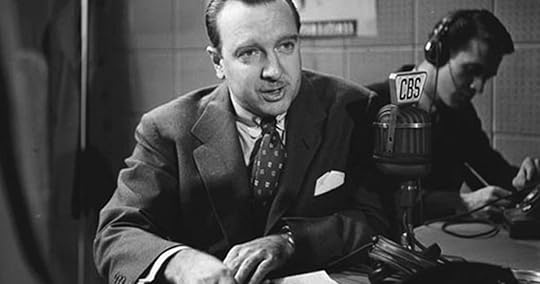
In A Reporter’s Life, Cronkite tells his life story, from roots in Kansas City and later Houston, through days as a sports announcer, from newspapers to radio to television. It is an interesting read from an American institution. He holds some rather progressive notions concerning war and peace, yet talks about how appalled he was at the clothing his daughter wore in the 1960’s. He is most entertaining when writing about his experiences as a reporter in Moscow, when telling about Mayor Daley and the 1968 convention, telling about Nixon, and the invasion of the newsroom by entertainment values. It is a pretty good and worthwhile read. But, surprisingly and sadly, given Cronkite’s importance in American culture, and his talent with words, I did not find it to be compelling read, which is what it should have been. But that’s the way it is.
September 29, 2010
A good autobiography on what is now an extinct breed: The great professional journalist. No longer will anyone in journalism have the reputation or credibility that Cronkite had during his prime. What replaces him these days cannot even compare. It is amazing to read how Cronkite saw the world, being a direct observer to some of the greatest events of the 20th century. Now, was Cronkite perfect...no. His commentary on Vietnam has been decried by several in the military and he made no secret of his political leaning (Democrat)...but in his reporting, most would agree, left and right, that he was a man who could be counted on to give you the straight story. It is unfortunate, given the pervasiveness of 24/7 media, that men like him don't appear to exist. Then again, reading Cronkite's work, he foresaw this...the dangers of 24/7 news outlets and how it would degrade the quality of journalism. It is a shame that it came to fruition.

March 11, 2012
Fantastic. Cronkite was an icon & actually lived up to his reputation. A fantastic reporter with real integrity. I was sorry this was abridged, but it was still really good.

August 12, 2022
3/5 stars.
This took me just about two months to finish, however, I still found it an interesting read. Books like these, written by large cultural figures, can be either super intriguing or very boring, but I felt that Cronkite's book was in between. It dragged on during certain chapters but was very lively during others. I didn't know much about Cronkite before I read this, so I certainly learned much about him during reading, but if I hadn't had this book in my house I don't think I would have necessarily reached out to read it. I do wish that I was able to get through this quicker but alas, some books are just much slower. Glad to finally be finished.
This took me just about two months to finish, however, I still found it an interesting read. Books like these, written by large cultural figures, can be either super intriguing or very boring, but I felt that Cronkite's book was in between. It dragged on during certain chapters but was very lively during others. I didn't know much about Cronkite before I read this, so I certainly learned much about him during reading, but if I hadn't had this book in my house I don't think I would have necessarily reached out to read it. I do wish that I was able to get through this quicker but alas, some books are just much slower. Glad to finally be finished.

February 14, 2023
An excellent read by an excellent journalist and human being. His modest review of his career is an insight into broadcasting and journalism that illuminates the current pathos of the media. It is also a great insiders look at history. I always admired Mr. Cronkite for his integrity, and his delivery of the news in my formative years.
I highly recommend this book.
I highly recommend this book.

February 14, 2013
For the most part I felt the author to be mildly to moderately cocky, and arrogant in his narrative. This is understandable to some degree considering the fact it's an autobiography and the natural inclination is to portrays yourself the hero, but at times it was almost too much to bear.
While there were some moments of humility and humor, more frequently I felt it took on a "snobbish" tone and too much of it was a recounting of major events in which he participated in, or people he rubbed shoulders with or enjoys an intimate relationship with, elitist things he's been able to do etc etc. blah blah blah;
BUT, hidden throughout the text at random points are really astute insights regarding politics, society, media news, television culture and other various issues I personally think of often, and I feel are of major relevance and importance today. Because of this, I am glad that I "soldiered on" and finished the book, resisting my urge to put it down at times.
Prior to reading this book I was familiar with the name, but knew very little about him overall. It turns out that he was a pretty cool dude, as far as this history buff is concerned; having participated in or lived through many events that interest me.
It's just a shame that he thought so too; lol.
Had his celebration of self been minimized a little I would probably have rated the book a 5/5, but I would still recommend the book to anyone interested in journalism, or the history of his time.
While there were some moments of humility and humor, more frequently I felt it took on a "snobbish" tone and too much of it was a recounting of major events in which he participated in, or people he rubbed shoulders with or enjoys an intimate relationship with, elitist things he's been able to do etc etc. blah blah blah;
BUT, hidden throughout the text at random points are really astute insights regarding politics, society, media news, television culture and other various issues I personally think of often, and I feel are of major relevance and importance today. Because of this, I am glad that I "soldiered on" and finished the book, resisting my urge to put it down at times.
Prior to reading this book I was familiar with the name, but knew very little about him overall. It turns out that he was a pretty cool dude, as far as this history buff is concerned; having participated in or lived through many events that interest me.
It's just a shame that he thought so too; lol.
Had his celebration of self been minimized a little I would probably have rated the book a 5/5, but I would still recommend the book to anyone interested in journalism, or the history of his time.

April 22, 2020
Far more interesting than I imagined. Walter moved up thru the ranks to the big desk on tv. When asked to travel to capture stories as they unfolded, he did. He traveled into many danger zones which caught me off guard because most of my viewing that I recall he was in the tv studio. Read this and learn from a master.

August 5, 2023
Fascinating person. Fascinating account. Was in WW2 as a reporter and practically saw action. Was a tv pioneer and was America’s anchorman.


March 24, 2013
From 1962 until 1981, Walter Cronkite, endeared to many as "Uncle Walter" came into the American living room every evening via CBS evening news. For many Americans, Mr. Cronkite was the standard in both news accuracy and honesty. However, actual standards are not established by consumers of products, but by their producers. And it is by that criterion set by his peers, was the overarching standard by which Cronkite existed, produced and has left as his professional legacy: objectivity.
"A Reporters Life" Cronkite opens the door to the inner sanctum of broadcast news. He chronicles its early years in TV infancy, by referencing the major historical events of the later twentieth century, often first-hand accounts of personal experience; Omaha Beach, D-Day 1944, and the Battle of the Bulge for United Press It was Cronkite who solemnly first told the country of the assassination of President Kennedy. We all felt breathed easily along with Walter when Neil Armstrong's Apollo 11 safely landed in the Sea of Tranquility in 1969. Cronkite lived it, wrote it and reported it.
In his autobiography, the author offers his readers behind the scenes access, not only to the movers and shakers, the pols, our enemies, foreign leaders, who he often rubbed elbows. He leaves us all a dire warning of the future. A warning that we as a citizenry and contemporary caretakers of this most precious and delicate American democracy had better heed. For mixed among the author's descriptions and impressions of his reporting of over thirty years, is a dire testimony of an ongoing incremental deconstruction of how news is both delivered and consumed from the advent of TV in 1952 to the present day.
In his memoir, Cronkite laments the slow but relentless transition of broadcast news, from both an operational and philosophical standpoint. Competition between media sources was as ever vigorous in the time of Cronkite as ever, but with the expansion of 24-hour news networks CNN, FOX, etc., the focus has shifted from being the custodian of information to the American people to profitability. Cronkite warns us that the most integral ingredient to a healthy democracy is twofold: a free press and an informed citizenry. His analysis of the current status quo is abysmal at best.
The new focusing by networks on entertainment value, along with industry-wide cuts in news staff personnel (almost total discontinuance of in-country foreign correspondents) has left an endless void between the delivery of vital news information and its audience. Cronkite reminds us that even in the formative years of our country Thomas Jefferson pronounced that a free and roaming press is the strong barrier and early warning system to tyranny and demagoguery in government.
As awakening as a cold slap in the face, Cronkite reminds us all that before 1956 and the advent of T.V. 95% of America received their news from newspapers. Sadly that dynamic has irreversibly changed to reflect the opposite. Today's sound byte driven newscasts cannot provide the in-depth analysis or narrative need to provide the complete understanding of events, people or places. The decline of newspaper readership and the consolidation of the media has left an aggregate of a massively misinformed/uninformed citizenry. A citizenry whose stewardship is now responsible for electing our leaders.
"A Reporters Life" by Walter Cronkite, is essentially an American story about the American story. It is a note set adrift in a bottle, a message of vast import; that unless citizens demand fundamental change in the dissemination of the news of our time, we will all face dire consequences.
"A Reporters Life" Cronkite opens the door to the inner sanctum of broadcast news. He chronicles its early years in TV infancy, by referencing the major historical events of the later twentieth century, often first-hand accounts of personal experience; Omaha Beach, D-Day 1944, and the Battle of the Bulge for United Press It was Cronkite who solemnly first told the country of the assassination of President Kennedy. We all felt breathed easily along with Walter when Neil Armstrong's Apollo 11 safely landed in the Sea of Tranquility in 1969. Cronkite lived it, wrote it and reported it.
In his autobiography, the author offers his readers behind the scenes access, not only to the movers and shakers, the pols, our enemies, foreign leaders, who he often rubbed elbows. He leaves us all a dire warning of the future. A warning that we as a citizenry and contemporary caretakers of this most precious and delicate American democracy had better heed. For mixed among the author's descriptions and impressions of his reporting of over thirty years, is a dire testimony of an ongoing incremental deconstruction of how news is both delivered and consumed from the advent of TV in 1952 to the present day.
In his memoir, Cronkite laments the slow but relentless transition of broadcast news, from both an operational and philosophical standpoint. Competition between media sources was as ever vigorous in the time of Cronkite as ever, but with the expansion of 24-hour news networks CNN, FOX, etc., the focus has shifted from being the custodian of information to the American people to profitability. Cronkite warns us that the most integral ingredient to a healthy democracy is twofold: a free press and an informed citizenry. His analysis of the current status quo is abysmal at best.
The new focusing by networks on entertainment value, along with industry-wide cuts in news staff personnel (almost total discontinuance of in-country foreign correspondents) has left an endless void between the delivery of vital news information and its audience. Cronkite reminds us that even in the formative years of our country Thomas Jefferson pronounced that a free and roaming press is the strong barrier and early warning system to tyranny and demagoguery in government.
As awakening as a cold slap in the face, Cronkite reminds us all that before 1956 and the advent of T.V. 95% of America received their news from newspapers. Sadly that dynamic has irreversibly changed to reflect the opposite. Today's sound byte driven newscasts cannot provide the in-depth analysis or narrative need to provide the complete understanding of events, people or places. The decline of newspaper readership and the consolidation of the media has left an aggregate of a massively misinformed/uninformed citizenry. A citizenry whose stewardship is now responsible for electing our leaders.
"A Reporters Life" by Walter Cronkite, is essentially an American story about the American story. It is a note set adrift in a bottle, a message of vast import; that unless citizens demand fundamental change in the dissemination of the news of our time, we will all face dire consequences.
September 2, 2020
Although this book was written nearly 25 years ago, it is worthwhile reading. It was interesting to see how television evolved especially in the early years. Cronkite spent his early journalistic career in newspapers so that is interesting as well. It is amazing to read about the events, people and opportunities Cronkite encountered in his long and esteemed career: the space race, Vietnam War, presidents, environmental experiences. The list goes on and on. His take on political conventions was insightful. Cronkite comments on the Internet which was just becoming prominent but it makes me wonder what his reaction would be to today's social media influences. Even so, much of his commentary which was written at a different time is still very relevant today. One thing I was looking for was something about the You Are There series. In 7th grade American history class, we occasionally watched these. Cronkite would be at his broadcast desk and then would take the viewer to a historical event such as the American Revolution; hence, "you are there." In the early 60's, these already seemed a bit cheesy and dated. I learned from the book they were produced in the mid 50's so weren't all that old. Still, a movie in 7th grade was always good. Plus, if Walter Cronkite was involved, that was even better.

August 2, 2011
An icon of the news industry wrote this book in 1996, over a decade after retiring from his anchor desk on CBS. This autobiography takes you on a trip through Cronkites life, how he got there and the interesting things he seen along the way.
But this story is told through his eyes, and at times his vision is boring. This book was one of the hardest I have ever read. While there were parts that made me want to finish, these nuggets were few and far between, in my opinion. Being a fan of Cronkite, and remembering his time at the anchor desk, I was disappointed by how hard it came to get through his story.
And while he is always reminding us as readers that he worked hard at being indepentant and middle of the road, I would say more than a few times he seemed to take jabs at the conservative side of the political system. I would have been happier if he would have just come out and said it. The chapter on the space race (a subject I really enjoy) was probably the best one.
He did have some great observations on the effects of TV on news and its effects on the American people and the political process. And that was said over a decade ago, and it is even more true now.
But this story is told through his eyes, and at times his vision is boring. This book was one of the hardest I have ever read. While there were parts that made me want to finish, these nuggets were few and far between, in my opinion. Being a fan of Cronkite, and remembering his time at the anchor desk, I was disappointed by how hard it came to get through his story.
And while he is always reminding us as readers that he worked hard at being indepentant and middle of the road, I would say more than a few times he seemed to take jabs at the conservative side of the political system. I would have been happier if he would have just come out and said it. The chapter on the space race (a subject I really enjoy) was probably the best one.
He did have some great observations on the effects of TV on news and its effects on the American people and the political process. And that was said over a decade ago, and it is even more true now.

August 20, 2015
Reading this book felt like sitting down to cocktails with a much smarter Forrest Gump. Cronkite was literally inserted into almost every major news story of the 1900s- and talks about major historical figures as his friends. A very enjoyable and very accessible historical read. Also notable were his thoughts on television and the future of democracy and the media.

February 22, 2022
During a trip to visit family in Florida during the summer of 2021, I found myself suddenly finished with the books I had brought. I perused my mother's shelf and found this to be the most intriguing of the stacks. Knowing very little about Cronkite the man — and only a bit about the journalist — I dove in. I burned through most of it before school started up, but for whatever reason the remaining few chapters sat gathering dust for months. Today, at the start of an unexpected (but much wished-for) snow day, I tucked in to finish it off. (What better way to begin a day than by finishing a book?)
The mark of any good book, I think, is a tendency to influence the reader's writing style. As the above paragraph demonstrates, I reckon, A Reporter's Life succeeds remarkably in this regard. Cronkite's style is direct but not drab; efficient but not unornamented. He chooses his words carefully, and avoids needless words with as much care. Obviously his life was packed with portentous moments, but the book would be a chore if he simply recounted them without style. Fortunately for the reader, his decades of work in mass communication pay off well here. (Would it be hideous to suspect that he considered this the most important writing task of them all? Covering an entire life on the page?) He mixes general background with intriguing personal reflections and plenty of amusing anecdotes as well.
I was especially captivated by the evolving journalistic technologies of the 20th century, from radio to TV to early rumblings of the internet. Cronkite's impact on Vietnam is well-known, but I was surprised to learn in the final pages that he believes his influence on journalism itself was negligible. "A career can be called a success," he writes, "if one can look back and say: 'I made a difference.' I don't feel I can do that." This may be modesty mixed with the wrong kind of ego, but suffice to say I think he's wrong.
The penultimate chapter is tedious to say the least, jammed full of backstage corporate doings and personnel tidbits. These are probably interesting to some readers who followed such things at the time, but they don't age very well 25 years later.
The final chapter, however, delivers a powerful wallop, especially in our current predicament. Especially chilling is this bit: "The nation whose population depends on the explosively compressed headline service of television news can expect to be exploited by the demagogues and dictators who prey upon the semi-informed. In the future the situation could get worse." Cronkite was no crystal-ball seer. He understood history and tried to teach us why it matters. He was frustrated, surely, by his inability to convince more Americans to keep up with the world, but then what can any of us do aside from give it our best shot?
So yeah. Thanks, mom, for the book loan. Huge thumbs up.
The mark of any good book, I think, is a tendency to influence the reader's writing style. As the above paragraph demonstrates, I reckon, A Reporter's Life succeeds remarkably in this regard. Cronkite's style is direct but not drab; efficient but not unornamented. He chooses his words carefully, and avoids needless words with as much care. Obviously his life was packed with portentous moments, but the book would be a chore if he simply recounted them without style. Fortunately for the reader, his decades of work in mass communication pay off well here. (Would it be hideous to suspect that he considered this the most important writing task of them all? Covering an entire life on the page?) He mixes general background with intriguing personal reflections and plenty of amusing anecdotes as well.
I was especially captivated by the evolving journalistic technologies of the 20th century, from radio to TV to early rumblings of the internet. Cronkite's impact on Vietnam is well-known, but I was surprised to learn in the final pages that he believes his influence on journalism itself was negligible. "A career can be called a success," he writes, "if one can look back and say: 'I made a difference.' I don't feel I can do that." This may be modesty mixed with the wrong kind of ego, but suffice to say I think he's wrong.
The penultimate chapter is tedious to say the least, jammed full of backstage corporate doings and personnel tidbits. These are probably interesting to some readers who followed such things at the time, but they don't age very well 25 years later.
The final chapter, however, delivers a powerful wallop, especially in our current predicament. Especially chilling is this bit: "The nation whose population depends on the explosively compressed headline service of television news can expect to be exploited by the demagogues and dictators who prey upon the semi-informed. In the future the situation could get worse." Cronkite was no crystal-ball seer. He understood history and tried to teach us why it matters. He was frustrated, surely, by his inability to convince more Americans to keep up with the world, but then what can any of us do aside from give it our best shot?
So yeah. Thanks, mom, for the book loan. Huge thumbs up.

December 14, 2025
I do think choosing to read this during the 2 worst academic weeks of my life was a bad choice. Walter Cronkite had a very interesting life but a lot of the writing didn’t hook me. The chapter on the presidents was fire and the ending was ominous and lowkey predicted the present situation. Rip journalism.

August 3, 2026
Walter Cronkite is an excellent writer. This book is chock full of fascinating, oftentimes funny stories. I grew up watching Cronkite on the news and can still hear his voice in my head. This book was written in 1996, so obviously so much more has happened over the past 30 years. It would be interesting to get his take on things now.

April 28, 2025
I read the book while listening to him read the same. Great way to read a book. Now I have his voice in my head. Might do this more often, maybe.
October 25, 2016
In this memoir published by in 1997, former award-winning anchor at CBS news Walter Cronkite describes his life and his career. He begins with his childhood and ends with the time he left the anchor desk as “infotainment” became more important than the news itself. He was different from his contemporaries, newscasters like Tom Brokaw, Peter Jennings and Dan Rather, who appeared to be evolving more and more into celebrities. Instead, he relied on his deep baritone and his calm demeanor to attract an audience who trusted him and he enjoyed a loyal following over his many years on the anchor desk. His listeners felt confidence in him, that what Cronkite said was not dressed up to grab attention or presented in a way to attract ratings, but were the simple unadorned and impartial facts about what had happened around the world. He had a very streamlined approach with his clear strong voice describing the events of the day, in a calm, measured and professional manner.
Unlike other autobiographies by important people, Cronkite wrote this book himself, unaided by a ghost writer in the background. He also avoids spilling secrets of the guests he interviewed, revealing hidden scandals or the inevitable behind the scenes nonsense unless it was funny and garners a few laughs. Instead he takes an approach that describes his career from his early days reporting the news, detailing his accomplishments without bragging and laughing at some of his mistakes. He takes readers from his early days in newspapers, then in radio and later on network television, just as it was becoming the most important medium for communicating the news.
Cronkite became the CBS anchorman in 1963, the role for which he became famous and retired from that same job in 1981, ending one of the longest most successful careers in television news. There are many moments with Cronkite on the reporting desk that readers may remember including his emotional announcement of President John F. Kennedy’s death and his editorial on the 1968 Tet offensive in Vietnam. The latter was an important time in history and when he voiced the belief that America could not win the war, those words had a powerful impact on the American public. So much so that Lyndon Johnson believed they led to the loss of faith in his presidency.
Cronkite witnessed or participated in many of history’s important events during his long career, including the allied World War II air war, the D-Day invasion, the civil rights movement and the NASA moon landing. He has carried out countless interviews with presidents, writers and many important people of his day.
Cronkite’s philosophy included the belief that television networks held a responsibility to invest and support quality journalism and the news should not have to compete with other shows for space, attention or financial support. He was worried about the decline in the importance of news in the overall network schedule and as his career came to a close, he held out little hope that news would maintain the high-profile status it enjoyed during most of his tenure. As his newscast was forced more and more to compete with other shows and other networks spent money “glamming up” its presentation, he was alarmed to see where the money was going; it was not being invested in obtaining and delivering quality unbiased newscasts.
There are several interesting anecdotes of interviews he had with notable figures, but he is respectful and never reveals any embarrassing scandals. He speaks of his life and accomplishments in a casual, relaxed and modest way, without boasting of his many impressive accomplishments. At the end however, there is a sting of bitterness as he speaks of being forced into retirement after his long tenure as the face of CBS news.
This is an interesting memoir for those who knew the man or listened to his reporting, but may prove less interesting to those who did not live through those times.
The book, which reaches almost 400 pages, also includes several pages of black and white photographs, which add further interest to his personal story. The book's cover looks exactly what one would expect, with Cronkite in a conservative black suit and a crisp white shirt. His soft white hair almost startles and he leans confidently towards his readers, presenting himself as a thoughtful, honest man, casually relaxed with his readers. It is a true representation of the man he proved to be.
Unlike other autobiographies by important people, Cronkite wrote this book himself, unaided by a ghost writer in the background. He also avoids spilling secrets of the guests he interviewed, revealing hidden scandals or the inevitable behind the scenes nonsense unless it was funny and garners a few laughs. Instead he takes an approach that describes his career from his early days reporting the news, detailing his accomplishments without bragging and laughing at some of his mistakes. He takes readers from his early days in newspapers, then in radio and later on network television, just as it was becoming the most important medium for communicating the news.
Cronkite became the CBS anchorman in 1963, the role for which he became famous and retired from that same job in 1981, ending one of the longest most successful careers in television news. There are many moments with Cronkite on the reporting desk that readers may remember including his emotional announcement of President John F. Kennedy’s death and his editorial on the 1968 Tet offensive in Vietnam. The latter was an important time in history and when he voiced the belief that America could not win the war, those words had a powerful impact on the American public. So much so that Lyndon Johnson believed they led to the loss of faith in his presidency.
Cronkite witnessed or participated in many of history’s important events during his long career, including the allied World War II air war, the D-Day invasion, the civil rights movement and the NASA moon landing. He has carried out countless interviews with presidents, writers and many important people of his day.
Cronkite’s philosophy included the belief that television networks held a responsibility to invest and support quality journalism and the news should not have to compete with other shows for space, attention or financial support. He was worried about the decline in the importance of news in the overall network schedule and as his career came to a close, he held out little hope that news would maintain the high-profile status it enjoyed during most of his tenure. As his newscast was forced more and more to compete with other shows and other networks spent money “glamming up” its presentation, he was alarmed to see where the money was going; it was not being invested in obtaining and delivering quality unbiased newscasts.
There are several interesting anecdotes of interviews he had with notable figures, but he is respectful and never reveals any embarrassing scandals. He speaks of his life and accomplishments in a casual, relaxed and modest way, without boasting of his many impressive accomplishments. At the end however, there is a sting of bitterness as he speaks of being forced into retirement after his long tenure as the face of CBS news.
This is an interesting memoir for those who knew the man or listened to his reporting, but may prove less interesting to those who did not live through those times.
The book, which reaches almost 400 pages, also includes several pages of black and white photographs, which add further interest to his personal story. The book's cover looks exactly what one would expect, with Cronkite in a conservative black suit and a crisp white shirt. His soft white hair almost startles and he leans confidently towards his readers, presenting himself as a thoughtful, honest man, casually relaxed with his readers. It is a true representation of the man he proved to be.

June 25, 2025
I learned so much about his life that I did not know. Such a history he shared with very important points in history.
I loved one statement exactly: Pg 380: "We must better educate our young people to become discriminating newspaper readers, television viewers, and computer users. We must teach them that, to be fully informed, one must go to good newspapers, weekly news magazines, opinion journals, books and, increasingly, the Internet, as well as television."
Pg 384: There is going to be social and political and economic evolution, which will explode with such suddenness as to have the character of revolution. The revolutionary forces are already at work today, and they have humankind's dreams on their side. We don't want to be on the other side. It is up to us to assume leadership of that revolution, to channel it in a direction that will ensure freedom's future."
and these words were written in 1996.
I loved one statement exactly: Pg 380: "We must better educate our young people to become discriminating newspaper readers, television viewers, and computer users. We must teach them that, to be fully informed, one must go to good newspapers, weekly news magazines, opinion journals, books and, increasingly, the Internet, as well as television."
Pg 384: There is going to be social and political and economic evolution, which will explode with such suddenness as to have the character of revolution. The revolutionary forces are already at work today, and they have humankind's dreams on their side. We don't want to be on the other side. It is up to us to assume leadership of that revolution, to channel it in a direction that will ensure freedom's future."
and these words were written in 1996.

July 23, 2023
Cronkite gives a first-person account of the development of 20th century news media; of having a front row seat at many of the century's major events, both as a reporter and anchor; and of the changing (for the worse) of the industry from true journalism to infotainment for profit. He writes with candor and humor. Published in 1996, the book ends with Cronkite's concern about the future of news reporting and consumption. I can't imagine how discouraged he'd be to see that what has happened is even worse than he predicted.

July 12, 2012
I grew up watching Cronkite on the television and, though I understood when he retired, I always looked forward to his occassional reappeances on the news. Cronkite's biography/autobiography provides the reader the rare glimpse into his private life and the history he lived through. We also experience though his words Cronkite's wittism, a true delight for this reader.

November 3, 2014
Walter Cronkite’s autobiography is an odd beast. He seems to have little introspection; his stories read like urban legends. On the other hand, he’s lived through some amazing times, and has seen dominance in journalism move from newspaper to radio to television.

February 18, 2010
I love Walter Kronkite and really wanted to love this book. It just didn't grab me. Interesting, but not what I expected. Moments in history were glossed over as though he didn't want to write about those events, yet again.

May 24, 2012
The first half of this book is well organized, chronological and edited--until you hit the early 1960s. In the second half, Cronkite just rambles on about whatever topic he wants including: Vietnam, Space Race, interviewing presidents and the weakness of 24hr entertainment news.
September 17, 2009
An interesting life, but not a compelling writer. I put this book down about half-way through, and I haven't felt the urge to pick it up again.

December 31, 2009
Felt that this book was worth reading because WC is the grandfather figure from the news. I didn't make it all the way through - it seemed to drag on.
January 1, 2016
A boring account of exciting times. Great for historical info, but I couldn't handle the droll writing style.
July 5, 2019
Sorry, Walter, you were great, but I didn't like your writing style.

August 8, 2017
It’s hard to believe that it’s been more than eight years since our media world lost its “most trusted newsman” with the 2009 passing of Walter Cronkite. It’s even harder to believe that it’s been more than 36 years since the iconic anchorman signed off his CBS Evening News broadcast for the last time. Having recently re-read Douglas Brinkley’s biography of “Uncle Walt’s” life a second time, (reviewed here by me the first time more than three years ago), I still don’t know why it took me more than 21 years to read Cronkite’s own version of “A Reporter’s Life!” Dare I say it? It’s doubtful that any American television viewer under the current age of 55, (including all those 20 or younger at the time who might have seen his final broadcast in 1981), would even remember who Walter Leland Cronkite, Jr. was!
Although I didn’t attempt to keep score, there are, I’m sure, a number of similarities between Brinkley’s take on Cronkite and Cronkite’s own take on Cronkite. Again, I didn’t keep a record, but, there has to be a lot of duplicated material in both bios. Especially when it came to documenting Cronkite’s early years in Missouri and Texas. Both follow a more-or-less chronological path through the legendary reporter’s youth.
While Brinkley does a spectacular job of gathering all the facts on Cronkite in his 2012 bio, I found reading those same set of facts in Cronkite’s own words much more compelling. If indeed Cronkite published his 1996 memoir alone without any help, (sixteen years ahead of Brinkley’s version and thirteen years before his own death), he was a brilliant writer. When the CBS anchor is dealing with personal memories in these pages, I found his prose reads like a classic novel. In my view, Cronkite’s dry and subtle sense of humor is engaging, quite entertaining.
I guess it makes sense that an only child, born on November 4, 1916, would become a magazine salesman at the ripe old age of seven, a paper boy at nine, a clothing salesman briefly at twelve, would later find himself a newspaper reporter, and still later a copy boy for the equally legendary broadcast anchor John Cameron Swayze. For most of his 93 years, Cronkite was an eye witness or reported on most of the major historical events of the twentieth century.
After watching Cronkite anchor all those CBS Evening News broadcasts over nineteen years, it comes as somewhat of a shock to learn how he really felt about current issues. Let’s take globalism. On page 128, Cronkite writes, “. . . The world is unlikely to survive a third world war, which would almost certainly bring universal nuclear devastation.” (Which North Korea and the USA are discussing even as we write this.) Cronkite’s solution? “If we are to avoid that catastrophe, a system of world order---preferably a system of world government---is mandatory. Proud nations someday will see the light and, for the common good and their own survival, yield up their precious sovereignty.” Then just 21 pages later, Cronkite makes an interesting statement regarding Communism, an ideology that most certainly will never yield its “precious sovereignty” to any world government other than its own. “I think I would rather be dead than Red,” Cronkite writes, but he said he wasn’t sure if his personal preference “should be the basis for sound foreign policy.” With regard to Cronkite’s wholesale endorsement of the One World Order, even he admits on page 79, “As long as nations cannot learn to live cooperatively, there must be conflict. As long as there are aggressors, there will be resisters.” I know you can’t see or hear this, Walter, but, as long as there is evil in the world, how do you propose getting those aggressors to sit down with the resisters and get them both to lay down their arms, surrendering their “precious sovereignty” for the common good and their own survival? As soon as one dictator leaves his or her throne, another one takes their place. Case in point: Venezuela. In Cronkite’s defense, when this was written in 1996, he couldn’t have possibly foreseen September 11, 2001 and the subsequent rise of a religious ideology bent on conquering the world.
Towards the end of this 384-page reporter’s journal, Cronkite refers to “the press cynicism (by the public) in the mid-1990s, (when his bio was published). He suggests the public’s disdain with the press at that time was “very likely a result of intellectual snobbishness as well as of better-educated journalists.” Cronkite notes those new generation of reporters’ urge “to break out of the reportorial straitjacket by slipping a point of view into a supposedly impartial item.” Twenty-one years ago, Cronkite predicted the press cynicism was just a fad and said he “could see self-correction coming across the horizon.” Again, in Cronkite’s defense he couldn’t have possibly foreseen the rise of blatant bias among all the major news media players in twenty-first century America. Where’s that self-correction now, Walter? It’s almost laughable. And that’s the way it is!
Although I didn’t attempt to keep score, there are, I’m sure, a number of similarities between Brinkley’s take on Cronkite and Cronkite’s own take on Cronkite. Again, I didn’t keep a record, but, there has to be a lot of duplicated material in both bios. Especially when it came to documenting Cronkite’s early years in Missouri and Texas. Both follow a more-or-less chronological path through the legendary reporter’s youth.
While Brinkley does a spectacular job of gathering all the facts on Cronkite in his 2012 bio, I found reading those same set of facts in Cronkite’s own words much more compelling. If indeed Cronkite published his 1996 memoir alone without any help, (sixteen years ahead of Brinkley’s version and thirteen years before his own death), he was a brilliant writer. When the CBS anchor is dealing with personal memories in these pages, I found his prose reads like a classic novel. In my view, Cronkite’s dry and subtle sense of humor is engaging, quite entertaining.
I guess it makes sense that an only child, born on November 4, 1916, would become a magazine salesman at the ripe old age of seven, a paper boy at nine, a clothing salesman briefly at twelve, would later find himself a newspaper reporter, and still later a copy boy for the equally legendary broadcast anchor John Cameron Swayze. For most of his 93 years, Cronkite was an eye witness or reported on most of the major historical events of the twentieth century.
After watching Cronkite anchor all those CBS Evening News broadcasts over nineteen years, it comes as somewhat of a shock to learn how he really felt about current issues. Let’s take globalism. On page 128, Cronkite writes, “. . . The world is unlikely to survive a third world war, which would almost certainly bring universal nuclear devastation.” (Which North Korea and the USA are discussing even as we write this.) Cronkite’s solution? “If we are to avoid that catastrophe, a system of world order---preferably a system of world government---is mandatory. Proud nations someday will see the light and, for the common good and their own survival, yield up their precious sovereignty.” Then just 21 pages later, Cronkite makes an interesting statement regarding Communism, an ideology that most certainly will never yield its “precious sovereignty” to any world government other than its own. “I think I would rather be dead than Red,” Cronkite writes, but he said he wasn’t sure if his personal preference “should be the basis for sound foreign policy.” With regard to Cronkite’s wholesale endorsement of the One World Order, even he admits on page 79, “As long as nations cannot learn to live cooperatively, there must be conflict. As long as there are aggressors, there will be resisters.” I know you can’t see or hear this, Walter, but, as long as there is evil in the world, how do you propose getting those aggressors to sit down with the resisters and get them both to lay down their arms, surrendering their “precious sovereignty” for the common good and their own survival? As soon as one dictator leaves his or her throne, another one takes their place. Case in point: Venezuela. In Cronkite’s defense, when this was written in 1996, he couldn’t have possibly foreseen September 11, 2001 and the subsequent rise of a religious ideology bent on conquering the world.
Towards the end of this 384-page reporter’s journal, Cronkite refers to “the press cynicism (by the public) in the mid-1990s, (when his bio was published). He suggests the public’s disdain with the press at that time was “very likely a result of intellectual snobbishness as well as of better-educated journalists.” Cronkite notes those new generation of reporters’ urge “to break out of the reportorial straitjacket by slipping a point of view into a supposedly impartial item.” Twenty-one years ago, Cronkite predicted the press cynicism was just a fad and said he “could see self-correction coming across the horizon.” Again, in Cronkite’s defense he couldn’t have possibly foreseen the rise of blatant bias among all the major news media players in twenty-first century America. Where’s that self-correction now, Walter? It’s almost laughable. And that’s the way it is!

March 27, 2020
Walter Cronkite has a pioneering story to tell in American journalism. He broke new ground transferring his considerable skills in print journalism honed at United Press wire service to become the first TV news broadcaster. In the early 1950s in a humble studio (a room with chalk boards for visuals and no teleprompters), Cronkite began his 30-year career in an industry he practically created. He was the first anchorman, remaining loyal to CBS until office politics and concern for bottom lines cost him his position. Cronkite tells his story in the conversational, easy-going style we were used to hearing in his broadcasts. In fact, I can hear his memorable voice in the book.
He covers his growing up years in Kansas City, showing an early interest in newspapering as a Kansas Star carrier at age 9. After getting a journalism degree and working for the Houston Press, he was hired by United Press. He covered WWII for them. One of his most fascinating assignments was his two years as a correspondent in Moscow in the late 1940s, during Stalin's reign.
Over his career, Cronkite met and became friends with hundreds of political figures, celebrities and movers and shakers worldwide. Some might accuse him of name dropping in this book, but the incidents large and small that he relates about Presidents Eisenhower, Nixon, Johnson, and members of the Kennedy clan, dozens of big names in the broadcast world, like Bill Paley and Fred Friendly were simply the people he associated with on a daily basis. Cronkite's dry sense of humor often comes through in remembering little stories about the people in his circle. These anecdotes add charm to often serious public issues he is covering. Cronkite shares some of his own embarrassing moments, including the time his inexpert use of chopsticks at a State Dinner in China caused an olive to bounce high into the air and land among guests three tables away.
Cronkite took his role seriously to deliver the new fairly, accurately and with integrity. His competitive spirit to beat the other networks tended to drive his own producers and staff crazy as his deadline was "before the show ends." Cronkite sometimes was seen as a difficult "star" who was not to be messed with. Writing this memoir at age 80, Cronkite had much experience on which to base his final chapter which speculates on the future of television news. He bemoans the "infotainment" programs, the celebrity news shows, and the preponderance of Americans who only get their news from television or now he would say internet sources. He feels newspapers remain critical to telling stories in depth -- essential to the health of a democracy.
So why four stars not five? It has to do with the good-old boys attitude that pervades the memoir. Cronkite is a product of his times, but his disparaging comments about women reporters, telling little embarrassing stories about them that would not be told about men, bothered me. Also, the way he refers to his wife Betsy, kind of as the little woman, just did not sit well. Cronkite prides himself on being a man's man with a penchant for racing cars and boats, and not afraid to tell an off-color joke. Some unintended arrogance comes through. But Cronkite was still a heck of a newsman and would do anything to get the story told accurately and as soon as possible. The book was published in 1996 and Cronkite told it like it was. He died in 2009.
He covers his growing up years in Kansas City, showing an early interest in newspapering as a Kansas Star carrier at age 9. After getting a journalism degree and working for the Houston Press, he was hired by United Press. He covered WWII for them. One of his most fascinating assignments was his two years as a correspondent in Moscow in the late 1940s, during Stalin's reign.
Over his career, Cronkite met and became friends with hundreds of political figures, celebrities and movers and shakers worldwide. Some might accuse him of name dropping in this book, but the incidents large and small that he relates about Presidents Eisenhower, Nixon, Johnson, and members of the Kennedy clan, dozens of big names in the broadcast world, like Bill Paley and Fred Friendly were simply the people he associated with on a daily basis. Cronkite's dry sense of humor often comes through in remembering little stories about the people in his circle. These anecdotes add charm to often serious public issues he is covering. Cronkite shares some of his own embarrassing moments, including the time his inexpert use of chopsticks at a State Dinner in China caused an olive to bounce high into the air and land among guests three tables away.
Cronkite took his role seriously to deliver the new fairly, accurately and with integrity. His competitive spirit to beat the other networks tended to drive his own producers and staff crazy as his deadline was "before the show ends." Cronkite sometimes was seen as a difficult "star" who was not to be messed with. Writing this memoir at age 80, Cronkite had much experience on which to base his final chapter which speculates on the future of television news. He bemoans the "infotainment" programs, the celebrity news shows, and the preponderance of Americans who only get their news from television or now he would say internet sources. He feels newspapers remain critical to telling stories in depth -- essential to the health of a democracy.
So why four stars not five? It has to do with the good-old boys attitude that pervades the memoir. Cronkite is a product of his times, but his disparaging comments about women reporters, telling little embarrassing stories about them that would not be told about men, bothered me. Also, the way he refers to his wife Betsy, kind of as the little woman, just did not sit well. Cronkite prides himself on being a man's man with a penchant for racing cars and boats, and not afraid to tell an off-color joke. Some unintended arrogance comes through. But Cronkite was still a heck of a newsman and would do anything to get the story told accurately and as soon as possible. The book was published in 1996 and Cronkite told it like it was. He died in 2009.
Displaying 1 - 30 of 262 reviews