

What do you think?
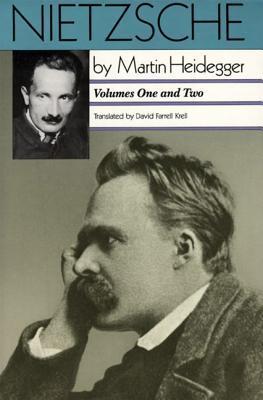
Nietzsche #1-2
Nietzsche, Volumes One and Two
A landmark discussion between two great thinkers, vital to an understanding of twentieth-century philosophy and intellectual history.
608 pages, Paperback
First published January 1, 1961
About the author
Martin Heidegger
547 books3,467 followersMartin Heidegger (1889-1976) was a German philosopher whose work is perhaps most readily associated with phenomenology and existentialism, although his thinking should be identified as part of such philosophical movements only with extreme care and qualification. His ideas have exerted a seminal influence on the development of contemporary European philosophy. They have also had an impact far beyond philosophy, for example in architectural theory (see e.g., Sharr 2007), literary criticism (see e.g., Ziarek 1989), theology (see e.g., Caputo 1993), psychotherapy (see e.g., Binswanger 1943/1964, Guignon 1993) and cognitive science (see e.g., Dreyfus 1992, 2008; Wheeler 2005; Kiverstein and Wheeler forthcoming).
Ratings & Reviews
Friends & Following
Create a free account to discover what your friends think of this book!
Community Reviews
Displaying 1 - 25 of 25 reviews

January 4, 2022
Even if Plato is Heidegger’s counterpart; Nietzsche was the thinker that influenced Heidegger the most. Nietzsche was the one who tried to take down Platonism - and with it Christianity and the entire modernity - like no one else before him. Nietzsche was the first one to sense the nihilistic nature of Platonism and of all our modern metaphysics that necessarily emerged from Platonism (like Christianity, sciences, technologies, ideologies, worldviews, and similar). After the misunderstandings, success, limitations, and the impasses following “Being and Time”; Heidegger realized that he needed to go even deeper into the basics of Western metaphysics and that Nietzsche was his only and necessary master/companion for this. “Contributions to Philosophy” and the “turn” in Heidegger's thinking followed these intense and close encounters with Nietzsche. Central here is the thought of the “eternal return of the same” - thought that according to Heidegger inspired our modern technology and still escapes any of our attempts to fully comprehend it at the end of Western metaphysics.
This English version of the book is a very good example of why Heidegger demanded that his books should be published without any critical introductions or final analyses; as both the introduction and analysis here - under the pretext of guidance and insights - just diverge the reader away from Heidegger’s thoughts.
Original 2022 review:
It is a treat when my two favorite thinkers are engaged in a conversion – as Heidegger and Nietzsche are here. This is possible because as Nietzsche himself claimed he was born posthumously; while Heidegger made a practice in conversing with only a handful of past thinkers and only in the proximity of Being.
Nietzsche developed the concept of “will to power” - and almost everyone since then has run wild with it. He also developed the concept of “eternal return of the same” as his most profound and terrifying thought - and almost everyone dismissed it as pure eccentricity or mysticism. According to Heidegger, both concepts stand for Being (as its constitution/essentia and as its way to be/existentia) and both represent Nietzsche’s main response to the historical and modern Western nihilism; nihilism that Nietzsche so acutely diagnosed.
According to Nietzsche and Heidegger, nihilism has its roots in Plato and in the consequent Platonism; Platonism that sustains the entire metaphysics since then (i.e., Christianity, theology, their atheistic or materialistic opponents, sciences, technology, philosophy, worldviews, and so on). Platonism misunderstood Parmenides as saying that everything is being/stable/fix/permanent and Heraclitus as saying that everything is becoming/flux/unstable; and thus combined the two by dismissing the sensuous as becoming/illusory/false and elevating the super-sensuous as being/real/true. Moreover, Platonism hated and took revenge on time understood as “it was” and further developed its metaphysics of eternity. While retaining the entire Platonic structure - and thus still in the Platonic tradition according to Heidegger - Nietzsche only inverted the two by dismissing the super-sensuous/being as illusory and elevating the sensuous/becoming as alone relevant to life. Because Being and nothing ended up standing for the same, nihilism ensued. Nietzsche nicely stated this historical emergence and present dominance of nihilism with the saying that Heidegger picked as the motto for this book: “Well-nigh two thousand years and not a single new god!”
Nietzsche responded to nihilism by reintroducing the concept of being into becoming: “to stamp becoming with the character of being – that is the supreme will to power”. The artist is by excellence the one who is doing this “stamping” and Zarathustra is the prophet and teacher of this “stamping” or “eternal return of the same”. To Heidegger however, this whole project did not solve the problem of nihilism (since fundamentally Nietzsche stayed within the Platonic framework), but only revealed Nietzsche’s fundamental metaphysical position at the very end of this metaphysical history.
It seems to me that during his entire life Heidegger engaged all major thinkers and their main ideas without much trepidation and gazed into the abyss that is Being without flinching; however, Nietzsche and some of his ideas quite disturbed him. As I remember it, the relatively light tone present in these two volumes turns quite dark in the next two where Heidegger even accuses Nietzsche of promoting nihilism and not just diagnosing, understanding, and trying to fix it. And not just that, but Heidegger turns against Nietzsche's “will to power” understood as a transformation of absolute subjectivity into technology. Then, there is this disturbing and abysmal thought of the “eternal return of the same” that seems to resist any final interpretation; thought that continues to generate new meanings and insights when approached.
This English version of the book is a very good example of why Heidegger demanded that his books should be published without any critical introductions or final analyses; as both the introduction and analysis here - under the pretext of guidance and insights - just diverge the reader away from Heidegger’s thoughts.
Original 2022 review:
It is a treat when my two favorite thinkers are engaged in a conversion – as Heidegger and Nietzsche are here. This is possible because as Nietzsche himself claimed he was born posthumously; while Heidegger made a practice in conversing with only a handful of past thinkers and only in the proximity of Being.
Nietzsche developed the concept of “will to power” - and almost everyone since then has run wild with it. He also developed the concept of “eternal return of the same” as his most profound and terrifying thought - and almost everyone dismissed it as pure eccentricity or mysticism. According to Heidegger, both concepts stand for Being (as its constitution/essentia and as its way to be/existentia) and both represent Nietzsche’s main response to the historical and modern Western nihilism; nihilism that Nietzsche so acutely diagnosed.
According to Nietzsche and Heidegger, nihilism has its roots in Plato and in the consequent Platonism; Platonism that sustains the entire metaphysics since then (i.e., Christianity, theology, their atheistic or materialistic opponents, sciences, technology, philosophy, worldviews, and so on). Platonism misunderstood Parmenides as saying that everything is being/stable/fix/permanent and Heraclitus as saying that everything is becoming/flux/unstable; and thus combined the two by dismissing the sensuous as becoming/illusory/false and elevating the super-sensuous as being/real/true. Moreover, Platonism hated and took revenge on time understood as “it was” and further developed its metaphysics of eternity. While retaining the entire Platonic structure - and thus still in the Platonic tradition according to Heidegger - Nietzsche only inverted the two by dismissing the super-sensuous/being as illusory and elevating the sensuous/becoming as alone relevant to life. Because Being and nothing ended up standing for the same, nihilism ensued. Nietzsche nicely stated this historical emergence and present dominance of nihilism with the saying that Heidegger picked as the motto for this book: “Well-nigh two thousand years and not a single new god!”
Nietzsche responded to nihilism by reintroducing the concept of being into becoming: “to stamp becoming with the character of being – that is the supreme will to power”. The artist is by excellence the one who is doing this “stamping” and Zarathustra is the prophet and teacher of this “stamping” or “eternal return of the same”. To Heidegger however, this whole project did not solve the problem of nihilism (since fundamentally Nietzsche stayed within the Platonic framework), but only revealed Nietzsche’s fundamental metaphysical position at the very end of this metaphysical history.
It seems to me that during his entire life Heidegger engaged all major thinkers and their main ideas without much trepidation and gazed into the abyss that is Being without flinching; however, Nietzsche and some of his ideas quite disturbed him. As I remember it, the relatively light tone present in these two volumes turns quite dark in the next two where Heidegger even accuses Nietzsche of promoting nihilism and not just diagnosing, understanding, and trying to fix it. And not just that, but Heidegger turns against Nietzsche's “will to power” understood as a transformation of absolute subjectivity into technology. Then, there is this disturbing and abysmal thought of the “eternal return of the same” that seems to resist any final interpretation; thought that continues to generate new meanings and insights when approached.

July 12, 2014
I completely disagree with Heidegger's interpretation of Nietzsche, particularly his lack of attention to Nietzsche's social and cultural philosophy (which is essentially how I read him...Heidegger's later analysis of Nietzsche's confrontation with nihilism, which I haven't read yet, sounds much more like Nietzsche to me), but it is nonetheless a beautiful and provocative book on its own merits, especially where Heidegger discusses Nietzsche's unthinkable thought, his crucial unpublished texts, and the importance of Zarathustra's animals to the text. Usually when Heidegger analyzes fiction it's Sophocles or Homer, so its also quite interesting to read his interpretation of a fairly "contemporary" (for his time) piece of literature.

Read
October 24, 2010I have wanted to read this book for years. Then I did. It was pretty good.

July 18, 2018
To see science under the optics of the artist, but art under the optics of life.
To transfigure the blinking moment as eternity.
To transfigure the blinking moment as eternity.

January 11, 2020
Heidegger activates Nietzsche’s examination of Western history as the upfolding of nihilism as a framing for expositions of Nietzsche’s elaborations of art as a configuration of the will to power and the eternal recurrence of the same. According to Heidegger, Nietzsche presents the theses that the will to power as art amounts to the countermovement to nihilism and that nihilism constitutes the historical site for the eternal recurrence, as the possibility of an authentic decision by the individual and humanity to realise self-mastery. The published versions of Heidegger’s analyses of the Nietzschean notions of art as will to power and eternal recurrence are derived from lectures that Heidegger delivered at the University of Freiburg in Nazi Germany from 1936 to 1940. While Heidegger himself is notorious in the history of philosophy for his embrace of National-Socialism in the regime’s first years, his interpretation of Nietzsche sharply differed from the official interpretation of Nietzsche that was developed by Nazi Party philosopher Alfred Baeumler. In contrast to Heidegger, Baeumler labours to marginalise the status of the eternal return in Nietzsche’s philosophy and to extract a politics that affirmed ruthless domination from a reading of Nietzschean will to power as the revelation of perpetual struggle as the world’s intrinsic character. This distinction between Heidegger and Baeumler’s Nietzsche interpretations thus further illuminates the vexed issue of Heidegger's relationship to Nazism. However, the disproportionate privilege that Heidegger confers upon Nietzsche’s unpublished notebooks in constructing his readings of Nietzschean will to power as art and eternal recurrence is highly questionable, despite the power and influence of Heidegger’s readings in Nietzsche studies. Two additional volumes of Heidegger’s Nietzsche lectures are also available as The Will to Power as Knowledge and as Metaphysics and Nihilism.

March 2, 2013
Almost half way thru. I've read some of Heidegger a smaller books before, and know much of his concepts from being and time. He's usually not easy to read or understand and his translations make it every harder. But this book is surprisingly better. I think its partly because its adopted from his lectures, which would make total sense. Heidegger hated writing stuff down. There was fluency in the immediacy of speech that lost itself when the mind was forced to cough up with words to explain what it really wanted to say (this should absurdly sound familiar if you know ur Wittgenstein) but yeh it's a good read so far, specially considering that Heidegger wrote it.
December 27, 2016
An excellent seminar work on Nietzsche. The focus here is upon the doctrines of 'Will to Power' and 'Eternal Recurrence'. Heidegger's analysis provides a real worth as to the relation of such to Entelecheia, Hereclitean flux and the process of Becoming. Heidegger's language is as dense as ever, yet is here presented in an illuminating form. For the student of Nietzsche, here is an invaluable insight into his core concepts.

May 13, 2016
I am so lucky that I got to read this book, what a rewarding experience. Along side the first two volumes I read the Will to Power and Thus Spoke Zarathustra, the two pieces that Heidegger focuses on in the work. The will to power as art, the will to power as the eternal recurrence. Being. Some good stuff. As a counselor, I am so glad I am reading this work and getting familiar with 'the thought of thoughts'. Now on to the next two volumes!
February 29, 2008
It has been said that this is the book that gave Marin Heidegger the divine madness that characterizes his work. It's based on lecture courses that Heidegger created early in his career. This isn't my favorite Heidegger book, but it is indeed fascinating. I don't recommend this as an introductin to Heidegger's work.

November 14, 2007
Really breathes great new life into Nietzsche while containing a great deal of the maturation of Heidegger's though en route from a very prolonged engagement with Kant and Aristotle.

June 3, 2023
“Nietzsche Volume 1 and 2" by Martin Heidegger represents a seminal contribution to the understanding of Friedrich Nietzsche's philosophy. Based on Heidegger's lecture courses delivered between 1936 and 1940, these two volumes delve into the essence of Nietzsche's thought, elucidating key concepts and shedding light on his unique philosophical trajectory. In this academic review, we analyze the major themes, strengths, limitations, and scholarly significance of Heidegger's interpretation of Nietzsche.
Heidegger's exploration of Nietzsche's philosophy is marked by his distinctive hermeneutic approach, which focuses on uncovering the underlying ontological and metaphysical implications within Nietzsche's works. Heidegger argues that Nietzsche's philosophy revolves around the question of truth and the revaluation of values. He delves into Nietzsche's critique of metaphysics, the notion of the will to power, the eternal recurrence, and the concept of the overman (Übermensch), providing fresh insights into these key aspects of Nietzsche's thought.
One of the strengths of Heidegger's analysis is his meticulous attention to Nietzsche's texts, enabling him to extract hidden layers of meaning and shed light on the broader philosophical implications of Nietzsche's ideas. Heidegger's exegesis offers a profound understanding of Nietzsche's thought by placing it within a broader philosophical context and engaging with the philosophical traditions that influenced Nietzsche.
Moreover, Heidegger's exploration of Nietzsche's concept of the will to power and its relationship to truth unveils the profound implications of this concept for understanding human existence and the nature of reality. Heidegger's analysis prompts readers to critically examine the metaphysical underpinnings of Nietzsche's philosophy and its implications for our understanding of truth, power, and human agency.
However, it is essential to note that Heidegger's interpretation of Nietzsche is not without its limitations. Some readers may find his hermeneutic approach challenging, as it requires a familiarity with Heidegger's own philosophical framework and terminology. Furthermore, while Heidegger's analysis provides valuable insights into Nietzsche's thought, it is just one among many interpretative lenses through which Nietzsche's philosophy can be understood.
"Nietzsche Volume 1 and 2" by Martin Heidegger constitutes a significant contribution to the scholarly discourse on Nietzsche's philosophy. Heidegger's deep engagement with Nietzsche's texts and his ability to uncover the ontological and metaphysical dimensions of Nietzsche's thought showcase his erudition and philosophical acumen.
The volumes' scholarly significance lies in their capacity to illuminate the intricacies of Nietzsche's philosophy and to stimulate critical discussions and debates among scholars and Nietzsche enthusiasts. Heidegger's interpretation invites readers to engage with Nietzsche's concepts and to reflect on their broader philosophical implications.
"Nietzsche Volume 1 and 2" by Martin Heidegger stands as an illuminating and thought-provoking exploration of Friedrich Nietzsche's philosophy. While acknowledging the limitations of Heidegger's hermeneutic approach, this academic review recognizes the scholarly significance and intellectual depth of his interpretation. By unveiling the ontological and metaphysical dimensions of Nietzsche's thought.
GPT
Heidegger's exploration of Nietzsche's philosophy is marked by his distinctive hermeneutic approach, which focuses on uncovering the underlying ontological and metaphysical implications within Nietzsche's works. Heidegger argues that Nietzsche's philosophy revolves around the question of truth and the revaluation of values. He delves into Nietzsche's critique of metaphysics, the notion of the will to power, the eternal recurrence, and the concept of the overman (Übermensch), providing fresh insights into these key aspects of Nietzsche's thought.
One of the strengths of Heidegger's analysis is his meticulous attention to Nietzsche's texts, enabling him to extract hidden layers of meaning and shed light on the broader philosophical implications of Nietzsche's ideas. Heidegger's exegesis offers a profound understanding of Nietzsche's thought by placing it within a broader philosophical context and engaging with the philosophical traditions that influenced Nietzsche.
Moreover, Heidegger's exploration of Nietzsche's concept of the will to power and its relationship to truth unveils the profound implications of this concept for understanding human existence and the nature of reality. Heidegger's analysis prompts readers to critically examine the metaphysical underpinnings of Nietzsche's philosophy and its implications for our understanding of truth, power, and human agency.
However, it is essential to note that Heidegger's interpretation of Nietzsche is not without its limitations. Some readers may find his hermeneutic approach challenging, as it requires a familiarity with Heidegger's own philosophical framework and terminology. Furthermore, while Heidegger's analysis provides valuable insights into Nietzsche's thought, it is just one among many interpretative lenses through which Nietzsche's philosophy can be understood.
"Nietzsche Volume 1 and 2" by Martin Heidegger constitutes a significant contribution to the scholarly discourse on Nietzsche's philosophy. Heidegger's deep engagement with Nietzsche's texts and his ability to uncover the ontological and metaphysical dimensions of Nietzsche's thought showcase his erudition and philosophical acumen.
The volumes' scholarly significance lies in their capacity to illuminate the intricacies of Nietzsche's philosophy and to stimulate critical discussions and debates among scholars and Nietzsche enthusiasts. Heidegger's interpretation invites readers to engage with Nietzsche's concepts and to reflect on their broader philosophical implications.
"Nietzsche Volume 1 and 2" by Martin Heidegger stands as an illuminating and thought-provoking exploration of Friedrich Nietzsche's philosophy. While acknowledging the limitations of Heidegger's hermeneutic approach, this academic review recognizes the scholarly significance and intellectual depth of his interpretation. By unveiling the ontological and metaphysical dimensions of Nietzsche's thought.
GPT

August 17, 2024

'Such "precious little" in the communication amounts in effect to silence. And yet it is fitting silence. Whoever grows entirely taciturn betrays his silence, but the one who speaks sparely in veiled communication grows silent in such a way that genuine silence prevails.' (II 15)
'If our knowledge were limited to what Nietzsche himself published, we could never learn what Nietzsche knew perfectly well, what he carefully prepared and continually thought through, yet withheld. Only an investigation of the posthumously published notes in Nietzsche's own hand will provide a clearer picture...
In order for us to penetrate successfully the fundamental thought of Nietzsche's philosophy proper, it is very important that at the outset we distinguish between what Nietzsche himself communicated and what he withheld.' (15)
'When we say "philosophy" here, we mean only the creative work of the great thinkers. In the very way it is communicated such work arrives in its own time, knows its own laws. The haste to "get it out" and the anxiety about "being too late" do not apply here, if only because it belongs to the essence of every genuine philosophy that its contemporaries inevitably misunderstand it. It is also the case that the philosopher must cease to be a contemporary for himself...
As for Nietzsche, he does not want to instill perfect comprehension by means of the few, cryptic things he says about his doctrine of eternal return. Rather, he wants to pave the way for a transformation of [into?] that fundamental attunement by which alone his doctrines can be comprehensible and effective. What he hopes for his contemporaries is that they become fathers and forefathers of what must come.' (II 17)

May 15, 2020
An in-depth powerful, exciting, thought-provoking analysis of nietzche . And surprising if you like me read a lot of nietzche and havent realized that one of his principles of metaphysics was recurrence of the same ad infinitum. What a mind mending experience

July 14, 2009
I don't really agree with Heidegger on his interpretation of Nietzsche, but it's sure a lot more pleasurable to read him writing about this than it is to try and slog through his original work.

August 30, 2023
(I am told that present-day Nietzsche scholars often ignore Heidegger's discussion of Nietzsche because his scholarship is flawed. I'm not a Nietzsche scholar so I can read whatever I want lol.) Volume Two is about eternal return, and it offers a very concentrated interpretation of the chapter "Of the Vision and Riddle" in Zarathustra. When Heidegger engages with actual interpretation of a text it is extremely engrossing; when he spends a lot of time warning against wrong ways of approaching a text (this happens quite a lot in the middle lectures)- well, I understand where he's coming from, but it seems like time wasted and he sounds grumpy.
Krell's analysis at the end of Volume Two should be consulted to get the big picture, which Heidegger's approach tends to miss. His appraisal of Heidegger's lectures seems to me balanced and fair. In the translator's introduction Krell says something like "Heidegger's Nietzsche lectures are the most accessible of difficult books," and I kind of agree. This strikes me as a lot more readable than, say, What is Called Thinking? or Kant and the Problem of Metaphysics.
Krell's analysis at the end of Volume Two should be consulted to get the big picture, which Heidegger's approach tends to miss. His appraisal of Heidegger's lectures seems to me balanced and fair. In the translator's introduction Krell says something like "Heidegger's Nietzsche lectures are the most accessible of difficult books," and I kind of agree. This strikes me as a lot more readable than, say, What is Called Thinking? or Kant and the Problem of Metaphysics.
November 27, 2024
This is like getting whacked in the head with a metal bar over and over and over again.

April 16, 2025
It must have been bloody tough being a student of Martin Heidegger and not just because he was intellectually demanding. He seems to have had a strong tendency towards rambling, thinking as a process circling in on itself rather than crystallising what was being thought into an event or system.
These two volumes (of four) represent the barely edited (in the sense of being fully synthesised into total coherence) of lectures given by Heidegger on Nietzche between 1936 and 1940. The dates are important - this was Germany with a university system under national socialist discipline.
We should not let this over-excite us. Heidegger's active national socialist engagement preceded this and was brief. It is not incorrect to say that he had his doubts about the very anti-intellectual ideology of the Party. He was thinking his own thoughts.
Nevertheless, we have a quasi-national socialist philosopher of genius lecturing here on the philosopher most appropriated for its own uses by national socialism to an audience of students who were designated the youth of a future national socialist regeneration.
Personally I have less problem with this than many liberals think that I should have because the core thought of Heidegger was revolutionary, devastatingly so in some respects, in ways that spin Heidegger well out of any simplistic ideology into something entirely new and 'true'.
I will not try and regurgitate here what it is that Heidegger thought but rather concentrate on the fact that his philosophising returned to the myth of Socrates before Plato got his grubby hands on the man - that is, the thinking, the process of thinking, is what counts no matter where it leads.
In Heidegger's case, the thinking, the process, was always wholly centred on the question of Being which is central to our relation to everything that is the case. This question of Being enters into territory that was God to the past, perhaps the Abyss to Nietzsche and the Void to dark magicians.
Part of the text is about a contestation of Nihilism (the primary problem for humanity after Darwin and articulated by Nietzsche). Nietzsche's philosophy is a working against Nihilism without clear success. Heidegger attempts to make his philosophy more of a success than it was in this respect.
This made me suspicious because of the text's location in place and time. National Socialist ideology was also constantly struggling with nihilism - a fight that was to collapse in a bunker in 1945 - and the book reads sometimes like an attempt to speed up a recovery from Nietzsche's challenge.
We must remember just how important Nietzsche became as an appropriated icon for national socialists. Here is Heidegger lecturing to a future cadre under internal and external pressure not to let nihilism be the guiding light for a future Germany. There is some 'mauvaise foi' lurking here.
The relationship between Nietzsche and Heidegger is, quite separately, central to understanding how it was even possible to move from God towards Being and, in other hands perhaps, Nothingness. These lectures show a man struggling, almost in real time, with his own connection to his precursor.
The God-thing was of great consequence to both philosophers but in subtly different ways. Nietzsche asserted the death of God with some courage and found a gaping hole. Heidegger was filling that hole with Being yet knowing the danger (as someone trained in Thomism) of Being becoming God.
If Heidegger's Being was to become no more than God by another name, then Heidegger may as well pack up and go home or rather become a priest in the Catholic Church. But Being that is not God could equally become Nihil and so meaningless as to deny anything of worth to being human (Dasein).
This was the struggle - God was dead. The process of thinking about Being was one where Being might become Nihil or bring God back from the dead if a grip was not maintained on the process itself, that is on philosophising as a relation to Being.
We can see straight away why 'dealing with' Nietzsche (who had only died less than forty or so years before) was ideological, political, cultural and philosophical and why Heidegger was on very dangerous ground to himself (philosophically rather than politically) in providing any narrative.
Unfortunately, Heidegger declines to be very clear because clarity would be a false friend in the process of thinking what may be close to or in fact unthinkable, let alone the notorious 'unthought thought' which might be regarded as Heidegger's response to Kant.
To have systematised the 'unthought thought' that lies behind the thought thought as Kant did would have merely ended up with ... a system. The point is that what is behind us as Dasein (thrown into the world) cannot be systematised. There is a place for Kant but not here.
Does this book take us very far along the road to understanding all this? Personally I think it is a rocky and demanding by-way. To a Heideggerian trying to think along Heideggerian lines, the book will be suggestive and useful. The rest of us might not be so sure.
As you read the well over 500 pages of text, it becomes increasingly clear that Heidegger is appropriating Nietzsche (as the Nazis did) for his own ends. His references are scholarly but his interpretations are designed to elucidate Heidegger's thought more than Nietzsche's.
This makes the book problematic because one does not know whether to take it seriously as an insight into what Nietzsche may have actual meant (Heidegger's intuitions are not to be dismissed too easily) or into what Heidegger thought using Nietzsche as an almost mediumistic vehicle.
The task is made more difficult by the fact that amidst long passages of obscurity and the turgid, Heidegger suddenly delivers a flash of deep insight into either Nietzsche or what can be thought or both. Separating these components out requires time only scholars will have.
One thing is very clear. Heidegger's takes Nietzsche's 'eternal return' very seriously as something the latter truly believed in. I find this hard to accept. Krell, the very scholarly editor and translator of the book (no easy task), does sometimes give us cause to doubt the precision of Heidegger's scholarship.
There are three factors that create doubt. The ideological environment of the time. The incompleteness of access to Nietzsche's total work, Heidegger's propensity to a form of thought-egoism in which the world of thought is always grist to his thinking mill.
Nevertheless, this is a book (alongside a read of Volumes 3 & 4) that I may come back to in a better informed and constructively critical frame of mind, not in order to understand Nietzsche better (one should go to source for that) but to understand better what was taken from him by Heidegger.
A strange contribution to thought that in its uncertainties and ambiguities is a form of demonstration of how Heideggerian thinking works - after all, the aphoristic Nietzsche was not averse to a playful misuse of sources and of assertion to drive our thinking forward away from false systematising.
***
A friend adds in a private note: "I know you are not keen but I think volumes 3 and 4 would be very interesting because his reading of Nietzsche is even more insane, but is also very critical, so there is a big contrast with 1 and 2. If you wanted to be kind to students of Heidegger who are likely to find your review online (there is quite a lack of good material on Heidegger's Nietzsche) then it would be helpful to say that volumes 1 and 2 are English translation of the German volume 1. Volumes 3 and 4 are the English translation of the German volume 2. This difference causes loads of confusion and I wasted a lot of time trying to work out what was going on, because some people refer to volumes 1-4 and some to volumes 1 and 2 without clarifying which text they are actually referring to." I hope that this is useful advice.

May 13, 2020
I mostly read this because the book itself looked great, with great paper (weird I know). I enjoyed the selection of Nietzsche's ideas (will to power, eternal return) but the two thinkers are so vastly different in style, it's humorous to read the systematic Heidegger try to explain why an erratic Nietzsche uses four different words to refer to the same thing. I probably won't continue with vol. III & IV but only due to lack of time.

Read
November 21, 2013Didn't rate the book as the failing might be on my part. I was halfway through the book when I realized that I couldn't remember a single thing I had read. Just too dense for me?

February 10, 2020
Heidegger's analysis of Nietzsche's thought added nuance to my understanding

November 19, 2024
I-like-metaphysics-so-sue-me

September 11, 2023
Uno de los libros más desafiantes que he leído. A través de Heidegger se puede leer a Nietzsche, aunque termina siendo al revés. Uno aprende sobre Heidegger a través de Nietzsche.

March 13, 2024
Exploring Heidegger's insightful reflections on Nietzsche's philosophy, this duo offers a profound journey into existential questions and human consciousness.

December 23, 2024
Sometimes bothered by H’s authoritarianism and unitarity, but deeply fascinating, clarifying, and enlightening entanglement w N through H!

April 19, 2017
Is Heidegger's "interpretation" of Nietzsche still Nietzsche in any meaningful sense of the word? At times this seems doubtful. Heidegger attributes to Nietzsche the role of the "great destroyer", the finis metaphysicae at the fag-end of Western philosophy that clears the table so Heidegger can start afresh with his fundamental ontology.
I believe (it has been a long time since I read this) that it is Nietzsche who, according to Heidegger, reveals the fundamental misapprehension that the nature of being is itself a being (i.e. can be classified with things that exist) - a mistake that can be traced back to Plato and that means that Western philosophy has for a very long time been based on what was essentially nothingness. This reading is incredibly tendentious, so much so that the Nietzsche that emerges is Heidegger's creature more than anything else.
It is also brilliant, arguably the most surprising and remarkable interpretation of Nietzsche I have ever read. I have never been able to make up my mind about Heidegger and whether he was a genius or a charlatan, but for the games he plays with Nietzsche, for their sheer brilliance, he deserves full marks.
I believe (it has been a long time since I read this) that it is Nietzsche who, according to Heidegger, reveals the fundamental misapprehension that the nature of being is itself a being (i.e. can be classified with things that exist) - a mistake that can be traced back to Plato and that means that Western philosophy has for a very long time been based on what was essentially nothingness. This reading is incredibly tendentious, so much so that the Nietzsche that emerges is Heidegger's creature more than anything else.
It is also brilliant, arguably the most surprising and remarkable interpretation of Nietzsche I have ever read. I have never been able to make up my mind about Heidegger and whether he was a genius or a charlatan, but for the games he plays with Nietzsche, for their sheer brilliance, he deserves full marks.
Displaying 1 - 25 of 25 reviews