Jump to ratings and reviews
Rate this book

L'Âge des étoiles

Rate this book
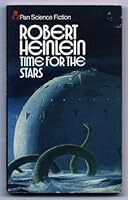
Avec la surpopulation qui épuise les ressources de la Terre, la nécessité de trouver de nouveaux mondes habitables est devenue plus urgente encore en ce début de quatrième millénaire. Cependant, si le voyage interplanétaire est devenu techniquement possible, les vaisseaux spatiaux voyageront moins vite que la lumière et communiquer avec la Terre prendra chaque fois des années. Mais l'Institut de Recherches Prospectives a découvert une solution inattendue à ce dilemme : la télépathie.
C'est ainsi que Pat, un adolescent extraverti, et son jumeau Tom vont pouvoir mettre leurs dons exceptionnels au service du grand projet de colonisation interstellaire. Tandis que Pat vieillira sur la Terre, Tom et tout l'équipage de l'Elsie échapperont à l'emprise du temps. Mais ces explorateurs d'un genre nouveau auront-ils jamais la chance de revoir le monde qu'ils ont quitté au terme des aventures extraordinaires qui les attendent dans les profondeurs de l'espace ?

Mass Market Paperback

First published August 1, 1956

221 people are currently reading
3180 people want to read

About the author

Robert A. Heinlein

1,053 books10.4k followers
Robert Anson Heinlein was an American science fiction author, aeronautical engineer, and naval officer. Sometimes called the "dean of science fiction writers", he was among the first to emphasize scientific accuracy in his fiction, and was thus a pioneer of the subgenre of hard science fiction. His published works, both fiction and non-fiction, express admiration for competence and emphasize the value of critical thinking. His plots often posed provocative situations which challenged conventional social mores. His work continues to have an influence on the science-fiction genre, and on modern culture more generally.
Heinlein became one of the first American science-fiction writers to break into mainstream magazines such as The Saturday Evening Post in the late 1940s. He was one of the best-selling science-fiction novelists for many decades, and he, Isaac Asimov, and Arthur C. Clarke are often considered the "Big Three" of English-language science fiction authors. Notable Heinlein works include Stranger in a Strange Land, Starship Troopers (which helped mold the space marine and mecha archetypes) and The Moon Is a Harsh Mistress. His work sometimes had controversial aspects, such as plural marriage in The Moon Is a Harsh Mistress, militarism in Starship Troopers and technologically competent women characters who were formidable, yet often stereotypically feminine—such as Friday.
Heinlein used his science fiction as a way to explore provocative social and political ideas and to speculate how progress in science and engineering might shape the future of politics, race, religion, and sex. Within the framework of his science-fiction stories, Heinlein repeatedly addressed certain social themes: the importance of individual liberty and self-reliance, the nature of sexual relationships, the obligation individuals owe to their societies, the influence of organized religion on culture and government, and the tendency of society to repress nonconformist thought. He also speculated on the influence of space travel on human cultural practices.
Heinlein was named the first Science Fiction Writers Grand Master in 1974. Four of his novels won Hugo Awards. In addition, fifty years after publication, seven of his works were awarded "Retro Hugos"—awards given retrospectively for works that were published before the Hugo Awards came into existence. In his fiction, Heinlein coined terms that have become part of the English language, including grok, waldo and speculative fiction, as well as popularizing existing terms like "TANSTAAFL", "pay it forward", and "space marine". He also anticipated mechanical computer-aided design with "Drafting Dan" and described a modern version of a waterbed in his novel Beyond This Horizon.
Also wrote under Pen names: Anson McDonald, Lyle Monroe, Caleb Saunders, John Riverside and Simon York.

Ratings & Reviews

What do you think?
Rate this book

Friends & Following

Create a free account to discover what your friends think of this book!

Community Reviews

5 stars
3,078 (31%)
4 stars
3,873 (39%)
3 stars
2,426 (24%)
2 stars
320 (3%)
1 star
59 (<1%)
Displaying 1 - 30 of 464 reviews
Profile Image for Lyn.
2,009 reviews17.6k followers
September 26, 2023
*** 2023 reread -

This really is one of his best, probably certainly the best juvenile.

What’s so great about it?

Good question, this was not on my radar at all until I read it a few years ago. You always hear about the “big three” from Heinlein: Stranger in a Strange Land, Starship Troopers, and Moon is a Harsh Mistress. These three were first published in 1961, 1959 and 1966 respectively. Technically Starship Troopers is generally included as a part of Heinlein’s “early” novels but thematically this is more a part of the middle period, what I consider to be the height of his powers. Time For the Stars was first published in 1956, and was the tenth of twelve of Scribner’s juveniles.

First of all, there’s just a lot going on. There is telepathy between an Earth bound partner and a starboard astronaut, allowing extreme distant travel to be able to communicate with Earth instantaneously.

There is also lots of technical scientific and engineering talk about getting out to the stars and then there is alien contact and Bob really played this up for the kids with adventure and danger and shipboard drama. As in Joe Haldeman’s magnificent Forever War, and Poul Anderson’s Kith stories, we also play around with time relativity and the odd phenomena of star travelers aging slower than the folks on Earth.

And here is where we come to what I’m talking about this being so good. The title is a play on words: “time” for the stars about the relativity issues, but also the simultaneity of the communications (which provides some more fun) but most importantly, that time for the stars means time from humanity, the opportunity cost of exploration.

In the book there is a class of spaceships and they are all named for famous explores like Lewis and Clark and Robert Byrd and Columbus. This is a none too subtle examination of a type of person who leaves hearth and home behind to find something new. Heinlein usually has better than average characterization but here he takes extra time to explore the relationships between those who go to space and those who remain behind. Heinlein examines the human cost of leaving humanity behind, for the sake of humanity.

It’s a fun book for the YA crowd, as intended, but with much more for a discerning reader.

**

(Original review)

The Corsican Brothers go to space.

Or at least one of them.

First published in 1956, Heinlein’s Time for the Stars is one of his Scribner’s juvenile books, and one of the better ones, somewhat similar to Starman Jones. The Grandmaster tells the story of the first survey ships going out into deep space to look for suitable planets for humanity to colonize due to overpopulation on Earth. Needing a simultaneous communications system, the powers that be hire on groups of telepathic twins (or triplets) to provide real time coms between the ship and Earth. (Ten years before Ursula K. LeGuin’s ansible, which was first described in her 1966 novel Rocannon's World.

Central to the narrative is the accepted theory of special relativity, whereby a voyager on a spaceship traveling at close to light speed will experience a different time than a person on Earth. The protagonist aboard the Lewis and Clark remains relatively young while his telepathic twin on Earth grows old. This concept is also explored in Joe Haldeman’s The Forever War and most notably in Poul Anderson’s Tau Zero.

Heinlein also explores the concept of faster than light travel and these ideas may have been included in his notes for the novel that would be completed and published after his death by Spider Robinson in Variable Star.

A good friend of mine suggested that a reader who favors Heinlein’s early / juvenile works over his middle works from the sixties and his later experiments with the tacky and wacky feels this way because that was the reader’s first exposure to Heinlein’s work. This could be true, as I have always liked his juveniles and these were my first books of his I read. In whichever camp one finds himself, Time for the Stats is one of his better novels.

My final point to make on this book is an unusual observation about Heinlein’s work in general. According to Goodreads, Time for the Stars is my thirty-second Heinlein book. Bob mentions cannibalism in a lot of his works. Weird, creepy, unusual. By my recollection, I think he has mentioned cannibalism in each of the following works:

Orphans of the Sky
Stranger in a Strange Land
Time for the Stars
Farnham's Freehold
For Us, the Living: A Comedy of Customs
Methuselah's Children
The Cat Who Walks Through Walls
The Moon Is a Harsh Mistress
Starship Troopers

description
Profile Image for Manny.
Author 48 books16.1k followers
December 7, 2021
- Good afternoon, may I talk with Professor Einstein?

- Speaking.

- Ah, I just wonder if I could have a few minutes of your time sir, this won't take long...

- And who are you, young man?

- Oh, I'm sorry, I should have said. My name's Bob Heinlein. You wouldn't have heard of me...

- On the contrary, I know exactly who you are. I bought a copy of your novel Space Cadet for my godson's eleventh birthday, and he was most complimentary. In fact, he said it was the best thing he'd ever read.

- Oh gee, wow, I mean, I don't know what to say, gee...

- Now, now, Mr. Heinlein, let's not get too carried away by an eleven year old's literary preferences. I believe you wanted to ask me something?

- Ah, yes sir, I'm working on another novel and I just wanted to check a couple of things. In my book, there's a pair of twins. One of them takes off on a spaceship which can travel at nearly the speed of light, and the other one stays on Earth.

- The Twins Paradox, then...

- Yes sir. I got the idea from one of your books. The twins have telepathic powers...

- They can read each other's minds?

- Yes sir. Now, as the spaceship accelerates, the twin on Earth starts to experience the other one as gabbling, and the twin in space experiences his brother as drawling.

- That would indeed be a consequence of time dilation due to Special Relativity. So far, you seem to have done your homework.

- Thank you sir. Wait, I don't think I mentioned this. Communication between the two twins is instantaneous...

- Hold it there, young man. Instantaneous communication is not a meaningful concept in Special Relativity.

- It isn't?

- No, because events which are simultaneous in one frame of reference will not be so in another.

- Oh. Darn. You're sure?

- I'm afraid I am.

- That's... hm... that's real unfortunate. Holy Toledo! I thought I'd read that darn book so carefully... anyway, let me tell you some more of the story. Time passes much more slowly for the space twin. So only a year or two has gone by for him, but his brother's already dead.

- That must be very upsetting for him.

- It is! But then he discovers he can communicate with his brother's daughter, his niece.

- Telepathy is a genetic trait?

- Ah, yes sir. But they carry on moving through space, and she gets old too. But now he can communicate with her daughter, his grand-niece.

- I am not quite sure I understand where this story is heading.

- Well sir, they have more adventures on other planets, and his grand-niece gets old, but now he's communicating with her daughter, she's this cute little girl with pigtails and braces on her teeth...

- It sounds very charming, young man. I'm afraid I'll have to ask you to excuse me, I...

- Wait sir, I'm almost finished. He comes back home to Earth, and everything has changed, and all the people he knew when he left are dead. But his great-grand-niece has grown up to be this gorgeous curvy redhead, I have this thing for curvy redheads if I may say so, and she's been reading his mind since she was a little girl and she's fallen in love with him. And due to time dilation they're actually the same age, and really it's not incestuous or anything because, well, great-grand-niece isn't as close as cousin and you can marry your cousin in most states. I checked that. So he marries her and they live happily ever after.

- So what do you think? Hello? Are you still there sir?

- Hello? Sir?

- Sir?
Profile Image for Paul Weiss.
1,464 reviews541 followers
September 21, 2023
“This is why you [] were brought along: for research into the nature of time”

TIME FOR THE STARS
is #10 in the deservedly popular series of Juvenile sci-fi novels by Heinlein and, with a few notable exceptions, it has withstood the ravages of time quite well.

Heinlein posits an indefinite future time in which the earth’s population is bursting at the seams and its resources are stretched beyond their capacity to deal with that population. Mankind has developed the technology to travel at near light speed but relativistic time dilation means that a space-faring crew’s discovery of any exoplanets suitable for colonization would be decades if not hundreds of years of earth time in the future – too late of course to have any practical value. But the discovery that certain pairs of twins can communicate telepathically – instantaneously and without regard to distance – means that the news of discoveries of habitable planets can be relayed to earth in mere days and weeks of spaceship time, at worse a handful of years on earth.

In TIME FOR THE STARS, Heinlein deals well with both the soft and hard sides of the sci-fi story-telling spectrum – the uncomfortable psychological realities of long-term interstellar travel; the effects of relativistic time and length dilations; the physical realities of dealing with both acceleration and weightlessness; command issues; death; sex and sexuality; and the obvious understanding that the nature of time, space, space-time and simultaneity is one of, if not the most pressing issue in mankind’s understand of physics and a unified theory of the nature of the universe. And while much of this is clearly beyond the grasp of all but the most precocious of young readers, an in-depth understanding of the magnitude of these questions is simply not necessary to enjoy the story on its surface.

I found it rather comical to observe that Heinlein was willing to hypothesize the existence of interstellar rocket drive technology that could reach near light speed (something that for us is still decades or centuries in the future, if it is achievable at all). On the other hand, somehow he failed to imagine technology for data storage beyond tapes (a technology that was well on its way out by the 1980s):

“He was threading a roll of tape into an autotransmitter.”

I wonder how Heinlein would react when told of our current (and rapidly accelerating) ability to store a terabyte of data on a data card that was less than four square centimeters and a couple of millimetres thick!

While almost all of the science and the plot itself has aged extremely well, one thing that did not was the outrageous levels of male chauvinism and misogyny that must have dominated 1950s society and allowed Heinlein to treat his female characters as he did. A few examples that will definitely grate the sensibilities of modern readers will illustrate:

On female crew members volunteering for hazardous duty: “Even Mei-Ling did and then got mad and cried when [the Captain] pointed out gently that she had better have her husband’s consent – which she wasn’t going to get.” Later: “My turn did not come until the fourth rotation and by then they were even letting women go ashore.” And yet further into the story: “Now will the women please go over there by the pantry so that I can pick the men who will go.” (I wonder if it’s any coincidence that the women were relegated to a location near the kitchen?!)

And on male ideas about appropriate female clothing: “Girls running around without a thing on their heads, not even on top … heads bare-naked, like an animal.”

Well, you can’t have it all, I guess. I still enjoyed it thoroughly despite having to control my gag reflex as I read nonsense like that. Definitely recommended for sci-fi fans of all ages and all eras.

Paul Weiss
Profile Image for Flannery.
307 reviews
July 24, 2012
Slowly but surely, my obsession with young adult space stories will knock every Heinlein juvenile book off my to-read list. A month or two ago, I read Podkayne of Mars and while I did enjoy the audio format and the underlying world-building, the characters grated on me. I'd read and heard from several sources that Heinlein's treatment of his female characters can be a huge turnoff and he's two for two on that note for me thus far. I'm not going to go over why I felt the way I did about Podkayne but in Time for the Stars, though it was far less frustrating, I was still not satisfied with the female presence in the book. But I'm getting ahead of myself, what's the book actually about? It's a futuristic Earth setting where families are allowed only a certain number of children before they get taxed. Identical twins Tom and Pat are asked to come in for some testing by a huge research organization, one whose mission is to fund the projects that have projected results so far into the future that no one else will fund them. Through the testing, Tom and Pat find out they are telepathically connected. The foundation intends to explore the galaxies to find potential colony planets and uses telepathic pairs to communicate between ships and between ships and Earth when radio transmissions no longer work. I don't want to spoil which twin goes to space and which stays behind because I enjoyed that aspect of the story. I cannot think of another instance of a book where identical twins do not really get along. Heinlein adds in a realistic amount of sibling manipulation that rang true to life. ("Do your chores, Dad will be home soon." "Why? If I don't, I know you'll just do them for me." - Me and my sister)

The science and philosophy are very much present in this novel and some of it went over my head. Faster than light, simultaneity, time, relativism, the science of aging, and various equations and theories are all present and accounted for but never in a severe infodump kind of way. The book is set up as a diary written by the twin in space. I am not sure if it is broken up as such in the traditional book as I listened to the audiobook but the scientific conversations were usually just that--conversations between the twin and someone else on the ship. However, there is very little action to keep the book going. The interest lies in the world Heinlein has created and the scientific offshoots. I was fascinated by the idea that as one twin was aging "regularly" on Earth, the other was aging at a far slower rate, so much so that the twin in space had to do the telepathic work with several generations down the line. What action there is is backloaded. His books, to me, feel like someone is writing about a fantastic futuristic world and then realizing halfway through that there's supposed to also be character building and plot movement.

On to the creep factor. There was just an episode of 30 Rock on television wherein Liz Lemon realizes that she is dating her third cousin. They say, "On the count of three, say how many cousins removed we'd have to be to try to make this work." He says fifth and she says never. I really think my answer is also never. There are several pubescent boy relationships in this book as well as adult relationships but there is one that relates to the 30 Rock episode I just spoke of. I won't ruin it for any potential readers but Heinlein basically glossed right over the relation aspect and it felt cut and dried in the most awkward way possible. I actually said, "Whaaaaaaat? Dude." to my car stereo. You're going to marry your relation, no matter how distant? Ew.

Back to Heinlein's treatment of women. Here's the gist: If you want to read any of his books, just think to yourself, "Am I okay reading a book where no female character will ever be completely rational? One where she will never be seen as anything other than a gender stereotype or achieve life goals beyond society's expectations during the forties and fifties when these books were written?" If the answer is yes, then read away. As I've said, Heinlein creates some interesting scientific worlds and stories. However, if you're answer is no then these books will be a nightmare for you. There are entire conversations about the best way to tell a mother that her son/s are joining a space program but also how to manipulate her irrational emotions. A grown woman wants to join a specific mission and another character tells her to check with her husband. (who also tells her later that they will be moving back to Earth to raise their family and she will not be working anymore) The mission finds a planet and fights in a battle but both times women are excluded from the teams--until one planet is deemed "safe enough that even the women could go!" Being a woman in Heinlein's world just seems like it would be so depressing. Who wants to achieve their dreams of being independent and going into space? Not so fast, vaginas!

I believe this is the first audiobook I've listened to that is narrated by Barrett Whitener, and I enjoyed his narration for the most part. Though they are not coming to me at the moment, there were a few words he pronounced in a weird way (maybe alternate pronunciations?) and several of the characters sounded the same. At one point, I wasn' t sure if the captain had an American, British, or Australian accent. He is a conversational narrator so his voice was/is well-suited to the diary-entry format of Time for the Stars.

As is the story with Podkayne of Mars, there is enough fun world-building present that I wish Heinlein would set more books in this world, perhaps even incorporate some of the same characters. I have a feeling my wish will come true with the rest of his young adult books. I anticipate each one will be a fun sciencey adventures/feminist's nightmare.

Also seen at The Readventurer.
Profile Image for Kat  Hooper.
1,590 reviews431 followers
August 19, 2013
Originally posted at FanLit:
http://www.fantasyliterature.com/revi...

Time for the Stars is one of my favorite Heinlein Juveniles, and I like his juveniles better than his books for adults, so I guess that makes Time of the Stars one of my favorite Heinlein works. It’s got everything that makes his stories so much fun to read, especially for kids. Likeable heroes, sweet relationships, real emotions, a touch of romance, a bit of physics, spaceship travel and exploration of distant planets. (And also, as usual, there’s a hint of incest — romance with a cousin — and a few complaints about taxes. It is a Heinlein novel, after all.)

In Time for the Stars, twins Tom and Pat join an experimental scientific study to see if telepathy might be a viable way for Earth to communicate with her exploring spaceships. It’s thought that if telepathy could work for anyone, it would be identical twins. Tom and Pat are excited to be involved, but they know this means that one of them will get to explore space while the other one has to stay home to be the other end of the telepathic line. This fact has a lot of ramification for the brothers. First of all, the boys have to decide who gets to go. Second, the one who leaves will probably never see his family again. Third, the boys will now age at different rates because of relativity, so even if the one who leaves ever comes back, he will be much younger than his twin.

All of this gives Time for the Stars an emotional texture that makes this story feel weightier than your average YA SF adventure. Also, Time for the Stars is not just a story about exploring space — it’s about family, friendship, loneliness, love, guilt, and the power of the human mind. In fact, I think Heinlein spends more time exploring the brain than exploring distant galaxies.

Time for the Stars is an entertaining and moving YA space adventure that will probably please most adults as well as kids. I listened to Barrett Whitener narrate Blackstone Audio’s version. I thought his voice, tone, and cadence were perfect for this emotional story.
Profile Image for Bradley.
Author 9 books4,862 followers
July 11, 2025
Re-Read 6/11/25

I suppose this is considered one of the Juveniles of Heinlein, but it really feels more like a regular boy-gets-berth on a long-term ship kind of story, with focus on interpersonal relationships more than anything particularly SF.

BUT, there is a solid core of light speed travel and relativity snafus, telepathy to keep in contact during the long years, and simple adventure.

It's not a bad novel at all. Its simplicity is its strength. The plot is about as straightforward as you can get while leaning heavy on a bit of psychoanalysis. :)


Personal note:
If anyone reading my reviews is be interested in reading my SF (Very hard SF, mind you), I'm open to requests.

Just direct message me in goodreads or email me on my site. I'd love to get some eyes on my novels.

Arctunn.com
Profile Image for Jeff Yoak.
834 reviews54 followers
November 12, 2025
I had forgotten about this Heinlein juvenile completely thinking I was reading it for the first time, but part way in I realized that I had read it before. The human race has finally created a source of propulsion for ships that can offer constant boost and carry its fuel. That means it's "time for the stars." Population pressure and the sort of intrepid adventurousness Heinlein always so brilliantly portrays drives our heroes out in ships pushing the speed of light knowing that relativistic effects will have them return eventually to earth after many decades have passed leaving their world immeasurably changed.

As light years stack up, both transmission time and the energy required for transmitting become intractable. This provides a way to have our heroes cut off and return to strangeness. Instead, in Time For The Stars, Heinlein allows communication by positing telepathic abilities that are instantaneous between some identical twins. The Long Range Foundation pays high fees to incent twin pairs to split up, one going on ship and one staying home. This sets the scene for taking two teenage boys who are as close as any are likely to be and first putting a spike in the relationship by offering just one the dream of a lifetime, being among the first to get to explore the stars, provided the other stays home, and then have them linked and maintain their relationship over a few years for one and a long lifetime for the other. You get to see the relationship evolve as one member of the relationship lives out his teen years and the other has great-grandchildren.

It's a gripping story, full of action like all the Heinlein juveniles, but also has touching relationship components, sometimes missing from those stories. I enjoyed it thoroughly.

2015: The kids particularly enjoyed this one.
Profile Image for Monica.
821 reviews
June 4, 2020
Pat y Tom son dos gemelos inquietos y con cierta audacia, que cierran y conforman un cuadro familiar numeroso. En su casa las cosas marchan regular, pues sus padres hacen lo que pueden para sobrellevar el gasto. Y es que en la actualidad que les atañe, se impone unas tasas extras a las familias con más hijos de lo esencial; todo supervisado por el departamento de control de la población. Un día, un cargo de la Fundación a largo plazo (presidida por Howard, el pionero de la conquista de otros planetas ‘historia del futuro’ I; relato 4), los visita para que se embarquen en una expedición (con el nombre del Proyecto Lebensraum, que mediante 12 naves, explorará tantas estrellas tipo Sol como sea posible), dónde deberán comunicarse con la tierra los pares telepáticos, por separado, para que los ecos de descubrimientos lleguen instantáneamente, sin demora alguna (ya que lo transmitirán más rápido que la luz actual).

El presente libro del decano de la Sci fi, nos enmarca un futuro con sobre población, dónde ya no es posible vivir más en el planeta Tierra, por lo cual, hay que ir a conquistar las estrellas, pero de un modo diferente hasta ahora (turismo, estaciones espaciales...con Marte, Venus y Júpiter totalmente poblados por colonos inmigrantes), ya que se precisa ir mucho más allá de los límites establecidos. Heinlein nos presenta un mundo con soldados de la paz (uno de ellos el tío de los gemelos protagonistas), que han erradicado las guerras y conflictos. Pero ahora deben buscarse medidas para sobrevivir, ya no por el simple gusto de la colonización y su conquista, por necesidades vitales (al igual que lo tocara en la lúcida ‘Granjero de las Estrellas’, con los pioneros de la emigración, o la soberbia ‘Hº del futuro’, con la conquista de las estrellas, y las más próximas).


La obra consta de tres partes intangibles; costumbre Heinleiniana. En su primera, algo breve, nos expone la situación social y nos presenta a la familia protagonista; dónde la permanente voz narradora es Tom. Es un tramo en donde el escritor introduce su vena más crítica y su particular análisis filosófico de vida, aludiendo a los impuestos que deben pagar las familias numerosas y su preferencia para emigrar a las estrellas más cercanas, o las reflexiones de su padre (un mini alter Ego de Heinlein, al igual que su tío David; pues ambos esbozan brevemente su perorata recurrente), que habla acerca de los beneficios de ser pobre: formación de carácter, acostumbrarse a buscárselas por sí solo; además de la libertad que hay en ello (nuevamente, muy en la línea de Capra), así como los orígenes de la fundación que los selecciona. Aquí también se hace incidencia sobre la Telepatía, sus principios y enigmas, ‘su tangibilidad’ y el porqué de sus potenciales. Heinlein debate y plantea ciertos aspectos (como la investigación de la naturaleza tiempo, mediante los pares o la mal diagnosticada locura en el pasado, cuando pudieran haber sido casos telepáticos), pero deja al lector su opinión personal. Esta división incorpora los típicos ‘escarceos’ e intercambios de gemelos; cosa que puede considerarse muy tópica, pero recordemos que es una obra muy temprana; y claro, siempre con la chispa de Heinlein en sus diálogos. Si bien, aquí algo menos chulescos de lo normal.
Lo que puede considerarse el segundo tercio, el más extenso, narra de primera mano todo, el diario de a bordo (y nunca mejor dicho, pues Tom está escribiendo un registro de sus memorias desde el principio; por orden del psicólogo de la nave) de la tripulación, la adaptación, convivencia de Tom y cia (unos 2000 tripulantes); que estarán viajando durante más de 60 años; alcanzando varios planetas, e inspeccionándolos. No esperemos ver grandes aventuras, ni cantidad de escenarios. El protagonista absoluto es la ‘Elsie’ (la nave Arca), con sus dimes y diretes: noviazgos, matrimonios, camaradería y disputas, bajas físicas, distribución de trabajo y estudios, llegando hasta una huelga a bordo. Tom reflexiona acerca de ello, y recae en el paso del tiempo, ya que conforme los años van pasando (para él meses), se va alejando de su compañero telepático, y requerirá de otros similares, dentro de su jerarquía. Nuestro primer par gemelo se ‘encuentra’ suspendido, mientras que el segundo desarrolla su vida, conformando una familia y vida, alejadas cada vez más de su antigua vida y rutina.
Pero está claro que para Tom los años no han pasado (ni física ni casi mentalmente).
En la última, hay una incursión en Centauri, dentro de Tau Ceti, en la que son agredidos por los nativos anfibios del planeta (curioso observar lo ‘precursor’ que era, pues describe prácticamente a un famoso Pokémon clásico de nivel inferior). Todo ello, representa un gran caos en la, ya frágil, vertebra humana que conforma la nave, pues la plantilla ha ido pereciendo, o perdiendo su poder. Y entonces, es cuando habrá un intento de motín, seguido de un desenlace efectivo, reflexivo y de oficio; muy irónico y que condensa el significado de la futilidad, o no, de nuestras heroicidades. Heinlein echa el resto en el presente tramo, con un cierre que suma mucho a la novela, de halo adulto y sobrio, con dos escenas breves, pero de intensa atmósfera y mensaje. Lo que sería una epístola previa a las Epopeyas de Long y los eternos.

Aun poseyéndolo, esta obra del maestro (a diferencia de las otras), se aleja del constante mensaje crítico - social y su lado más profético, aventurero y vibrante, pero conservando su esencia sobre los principios de libertad y valor por uno mismo), para plantearnos, centrándose especialmente, en el paso de los años, los cambios, el desgaste y distanciamiento de las relaciones y situaciones; con el replanteamiento de una vuelta a la nueva vida, su enfrentamiento y toma de riendas. Similar en estructura y planteamiento a la obra maestra ‘Puerta al verano’ (recordemos que se guardan pocos años), con un tono más sereno, pero de igual tinte personal; es otro de los libros del maestro que pudieran clasificarse como ‘intimista’, al narrar una historia personal de primera voz, con los devenires de los cambios drásticos en la vida de alguien y su entorno. Con ello, no hay más de un personaje de peso en la novela, sino que recae en su voz narrativa. Aquí Tom ‘está viviendo en un presente congelado’ en el tiempo al ser el par por el que no ha pasado el tiempo, y en ‘Puerta al verano’ es Dan, por su decisión de hibernarse literalmente. Sin ser tan efectiva como la citada ni con tanta intensidad, por frescura o ímpetu de los protagonistas, es una buena novela del Heinlein más sobrio, personal y costumbrista.

“No me gustan los secretos, antes prefiero deber dinero. No es posible devolver un secreto; pero lo prometimos”
“El hombre tiene derecho a morirse de la manera que más le guste, es lo único sobre lo que no hay impuestos”
“el aprender no es un medio para un fin, es un fin en si mismo”
“Todo el mundo encuentra grietas en su valor de vez en cuando”
“La gente generalmente cree todo aquello que se le dice muy pronto en su vida y con suficiente frecuencia”
“Tienes afecto por él; todos sentimos afecto a las cosas a que estamos acostumbrados, a los zapatos viejos, viejas pipas, incluso”


Profile Image for Bahia.
168 reviews11 followers
February 22, 2015
This was my first Heinlein novel. It probably deserves only 3 stars, but I'm giving it 4 because this novel showed me why Heinlein is one of the fathers of science fiction. The world-building of the future is done so well, especially in the case of the science and the explanation of it in ways that allowed me to suspend disbelief. The motivations behind why the characters in the book were sent to space made logical sense, and the exploration of what happens to time when you are traveling at the speed of light were fascinating. Additionally, as a coming of age novel I could imagine this resonating with young people (boys, in particular) as we get inside the narrator's head as he experiences his growth from adolescence to adulthood while in space.

Where this book loses stars is the dated feel to it. Though the science seems advanced, the social aspects of the world are clearly colored by the time that Heinlein wrote it. This is a future where women still defer to their husbands and hold domestic roles almost exclusively (with a few exceptions). The social relationships are what makes this book feel less futuristic than it might. Combine that with the fact that there only substantial character is the main character, the character building falls a bit short. Lastly, the end of this novel... wtf? I won't spoil it, but it seemed very strange.

Still, I will definitely read more Heinlein after this!
Profile Image for Karen Mardahl.
712 reviews35 followers
July 25, 2015
There was a good story here involving communication via telepathy, but I confess that its age is showing. I couldn't ignore the male chauvinism in the tone. True, this is a "boys" book from the 50s, but it was just a bit much.

I felt the story was a bit choppy, but it was an interesting enough tale, so I hung on. By choppy, I mean the usual, let's skip some years so I don't have to explain much in this scene. I felt it especially toward the end in some crucial scenes where there was suddenly great detail. It was like he worked hard on some scenes and then slapped others together merely as glue.

I originally rated this as a 3, but as I write these words, I realise a 2 - "it was OK" - is what I really think. I won't drop Heinlein, but I will definitely aim for his more mature writing another time to give him one more chance.

Profile Image for Jason Meuschke.
Author 10 books40 followers
February 5, 2021
I really enjoyed this book. Although some of the science may have been over my head, Heinlein does an excellent job of keeping it interesting and gives me a sense of learning something. It’s relevant information that is not wasted in useless prose. Likewise, the plot keeps moving with wonderful twists.
No spoiler here but I do have two caveats. One would be the out-of-the-blue ending which had me scratching my head and needing to verify who a certain character was again. The second was the occasional way Heinlein characterizes women. In some instances they are strong and equal to heir male counterparts which is good. But in emergencies a common theme is the old adage, “get the women below to safety,” rather than having them help.
Still, neither will ruin the story for me and, as mentioned, I enjoyed it very much.
Profile Image for Michael Campbell.
391 reviews64 followers
March 13, 2021
This is by far my favorite Robert Heinlein book I've read so far. With all his other books, I always felt something was off. Is this as thought provoking as some things I've read by him? No but it's a neat concept, with strong memorable characters, and a well paced plot.

I think the lack of ambition is what makes this story work better than the others I've read. It doesn't try to be anything more than a fun weird SciFi novel, so that's what it is and all it needs to be.

I will give you that the end made me raise my eyebrows, but after I got over my initial disgust, I realized that it was something my morals really couldn't wrap their head around and let it slide. It's one of those situations that could only happen in a Science Fiction novel, so it's a bit beyond my moral compass to judge.
Profile Image for Kirsten .
1,747 reviews292 followers
April 21, 2015
Read for the Science Fiction Book Club.

For the most part, I really liked this book. I think the premise was really interesting. The characters were fun. Only two major aspects detracted from it for me.

One, I got a little tired of the womenfolk had to stay on board ship during hazardous operations. Now, I realized it was written in 1956. But, when all the other aspects of society progressed, why would women stay the same?

Two, I felt that the last 1/3 of the novel was rushed. It seemed like it could've been a much larger novel.

Still, like I said, very enjoyable.
Profile Image for Ayla.
1,079 reviews36 followers
August 30, 2021
Really interesting story. Only I was a little confused at the end did Tom marry his great niece? Not to mention how the woman never get to have any fun, they are treated like 2nd class citizens always like they are fragile and can’t defend themselves. Or what’s up with having to wear hats or hair coverings ? That was Puritan times do they revert to that in the future?
This entire review has been hidden because of spoilers.
Profile Image for Xabi1990.
2,125 reviews1,385 followers
November 14, 2020
6/10 en 2011. Media de los 45 libros leídos del autor : 8/10

Temática de telepatía entre gemelos, que estaba tan buscada en los años de la Guerra Fría y que aquí estaría al servicio de la comunicación en un viaje estelar.

Bueno, bien, se deja leer pero el Gran Maestro los tiene mucho mejores.
Profile Image for Michael Burnam-Fink.
1,702 reviews302 followers
July 24, 2022
Time for the Stars is one of the lesser Heinlein juveniles, with much of the good and bad that comes with that micro-genre. It's a fine read that would be much better if it ended two pages sooner. Pat is a twin, growing up in an overcrowded and poor family on an overcrowded and poor Earth. In the initiating drama, it turns out that Pat and his twin Tom have a telepathic link, and this rare link is absolutely instantaneous. Telepathic twins are the key to space exploration via near-lightspeed torchships, while also serving as a neat illustration of the twin paradox caused by time dilation. The twin who undergoes acceleration will appear not to age against the one who stays behind.

So the good news is that it's a Heinlein juvenile. It's quick, it's fun, it does a solid job explaining the scientific conceit at the heart of the story and having an optimistic attitude. Space exploration is cool and full of father figures, but it's also incredibly dangerous, and every planet the crew lands on takes a toll. Pat is also slightly deeper than the psychological puddle that narrates most of these stories, even if it's literally lampshaded in a psychoanalysis session. And while there are creaky 1950s gender roles, lots of women show up as competent experts. It's a far cry from the active misogyny of some period fiction.

The bad news is that the story is too quick. Things that should sting a little more, like a plague that wipes out half the crew, or an attack by aquatic aliens which halves the crew again, don't land with much impact. The story undercuts its theme of heroic sacrifice, and a near mutiny lead by Pat, by having the torchship rescued by a next-generation FTL cruiser. They're returned to a world which has passed them by, less than a footnote rather than the grand explorers they expected to become, even if FTL telepathy inspired the breakthrough to FTL drives.

And then there is the final turd in the punchbowl. To quote Erika Chappell, "Robert A. Heinlein [is] the father of hard science fiction, weirdo libertarian nonsense in science fiction, and putting your kinks directly into science fiction. 2 outta 3 ain't bad." So when the redhead twins showed up on page 15, I chuckled. When the story ended with our narrator's busty great-grand niece, who he'd been telepathically communicating with since she was a kid, proposing marriage to him, I about tossed the book out a window. I can think of at least three Heinlein stories off the top of my head, which conclude by using technology to transform the perfect little girl into the perfect wife in a way that is not technically incest, but definitely morally feels like incest. And I really didn't need that in my light science-adventure story.

Profile Image for Frank.
887 reviews26 followers
September 29, 2016
No spoilers here.
Another Heinlein juvenile. Have been trying to finish this run. Published in 1956, and certainly dated, although I find that not all of Heinlein's writings are.
The premise here is that spaceships are launched to search for habitable planets to colonize. Twins and triplets are found to possess telepathy between each other and a single one is a perfect passenger for these trips, so the book is centered on one set of twins. as one goes off and travels through space.
This book I would say is for Heinlein fans only, of which I am one.
Profile Image for John Bohnert.
550 reviews
July 29, 2017
This science-fiction novel was exactly what I was looking for at this time. It dealt with mankind's first exploration of planets outside our solar system. What I especially loved was the author did not burden the reader with tons of technical language. It was kept to a bare minimum. I'm so glad that I read TIME FOR THE STARS (1956) by Robert Heinlein.
Profile Image for Brihanna Holder.
74 reviews3 followers
February 13, 2021
The book will suck you with a Rollercpaster of living the life on a ship to new planet exploration as well as heart ache and celebration. The ending left me feeling the mission was complete and wishing I had more. Heinlein never disappoints
Profile Image for Clay Kallam.
1,104 reviews29 followers
July 2, 2009
Pop culture is often dismissed as simply low culture – in contrast to the high art of opera or classical music or abstract expressionism. And there’s good reason: As long-ago scifi author Theodore Sturgeon once pointed out, “Ninety percent of everything is trash.”

A simple tour through the cable channels, or spin of the radio dial, will prove Sturgeon right, and in the mass of modern pop culture it’s much harder to filter out the signal from the noise. In classical music, for example, the bad symphonies simply never get played because time has winnowed the field to only the best.

But even if pop culture doesn’t always deliver quality, it does have something else to offer: a window on the modern world. Though movies, books and music take time to work their way from inspiration to dissemination, they still have a relatively brief gestation, and taken as a whole, they reflect and amplify some oftentimes hidden aspects of our culture.

Since this is a science fiction and fantasy column, it’s pretty obvious what the focus will be, but the same arguments apply across a much broader spectrum – and the same insights emerge.

Recently, publishers sent me a couple of books by writers from the so-called Golden Age (which shines much more brightly because, like classical music, the trash has been forgotten). The first, “The Voyage of the Space Beagle” (Orb, $14.95, 215 pages), by A.E. Van Vogt, holds up remarkably well, while Robert Heinlein’s “Time for the Stars” (Orb, $14.95, 244 pages) shows it age. Nonetheless, both share a quality that is almost always missing from modern scifi: optimism.

In both books, there’s a sense that problems will be solved, both individually and collectively. The future is bright, human beings are capable (if not exceptional) and the triumph of progress (and thus the good) is inevitable. You can read far and wide in 21st century scifi (especially that with a serious intent) and not find much to bolster any of those beliefs.

Two other veterans who worked in the 1950s (“The Voyage of the Space Beagle” came out in 1950, “Time for the Stars” in 1956) combined for a new book, “The Last Theorem” (Ballantine Books, $27, 299 pages). It’s not up to their best work, which is not surprising, but even so, that sense of optimism shines through. Human beings will still struggle and make mistakes but Arthur C. Clarke (who died recently) and Frederick Pohl not only acknowledge, but celebrate, humanity’s abilities.

Most writers whose careers are firmly rooted in the 21st century have little truck with such sunny outlooks. At a surface level, the books are full of blood and pain. Authors make sure that their heroes fight realistically – the crunch of bone, the burst of blood, the tide of pain, are always meticulously recounted. But beyond that, there is an underlying despair that humanity will ever get it right. If it’s not environmental disaster, it’s the inability to control technology; if it’s not escaped microbes gone wild, it’s war with civilization-destroying weapons.

And that, to this American who remembers when the United States did not invade foreign countries for no apparent reason (from Vietnam to Iraq), when the promise of technology was greater than the dangers of terrorism, when Mother Nature seemed to be kind rather than vengeful, is more than a little depressing. For if the light shone on modern culture by science fiction in particular and pop culture in general is so obscured by the grey fog of despair, does it mean that the 21st century world is on the way to giving up? If the heroes can’t solve the problems, or are turned into antiheroes who cannot find a way to glory without compromising their ideals and values, then who will stand up and lead? If these dark visions are correct, what will the world our children and grandchildren inherit really look like?

Of course, every older generation always thinks the world is going to hell in a hand basket – and the phrase itself gives the lie to its prediction. I don’t even know what a hand basket is, which reminds me that the pessimism of the elders does not necessarily doom the young ones. And in fact, there are some science fiction authors who still cling to the old tropes, the vision of humans as problem-solvers and not carriers of a culture-killing disease.

At the top of that list for me is John Scalzi, who has a new book out (“Zoe’s Tale” (Tor, $24.95, 336 pages)) that brings a different narrator to some of the events from the satisfying “The Last Colony.” “Zoe’s Tale” isn’t completely successful, as its depiction of its female teen-age heroine seems to me – someone who has coached teen-age girls for more than 20 years – impossible to credit, but it is still a book in which problems are solved, and positive resolutions are reached.

The same is true Scalzi’s “Agent for the Stars” (Tor, $14.95, 352 pages), which he wrote more than a decade ago but is just now getting widespread distribution. “Agent for the Stars” is also funny, and not in a dark, vein-slicing way, which is another rarity as the young century wears on.

A pair of writers – Gary K. Wolf and Archbishop John J. Myers – went all-out for the past with “Space Vulture” (Tor, $24.95, 333 pages), an unabashedly old-fashioned space opera with heroes, villains, coincidences, and all the trappings of old-time science fiction – and old-time westerns, as far as that goes. But simply re-working the old themes doesn’t make this book more than just a diversion, while the Isaac Asimovs and Clifford D. Simaks of the ’50s and ‘60s were reflecting the underlying positive attitudes of an entire culture.

Scalzi echoes that optimism, but the vision of most of the writers working in this pop culture field is generally darker, more depressing and seldom ends well. Even when the heroes win, the scars take long to heal, and there’s no sense that the most serious problems will be solved, or that progress has been made. Usually, in fact, the protagonist is pretty much back where he started, after much pain and suffering, and more blows to any belief that the world can be made a better place.

Of course, it’s not possible for scifi and fantasy writers, or anyone involved in pop culture, to truly shift the direction of the great mass of people, and if they are too far from the edge of the pack, they will simply be ignored. Nonetheless, the message that’s being sent – that the future is dark and getting darker -- is not one that should be ignored, as it’s just one more warning sign that the road the worldwide culture has been traveling does not appear to lead to many happy endings.
Profile Image for Chan Fry.
280 reviews9 followers
October 10, 2021

When I first read this in the mid-1980s, I really enjoyed it. I think it was one of the first five Heinlein books I ever read. Later, what I mainly remembered was space travel, the torchships, the special relativity effects on Tom and Pat, and the telepathy. But when I came back to it recently, I found it filled with sexism ("a woman must be submissive to her husband"), fat-shaming (one woman is "shaped like a sofa pillow"), a slow-paced story, and dark overtones of colonialism (after the humans meet an intelligent alien species, they decide to come back later and wipe them out and the author seems okay with it).

(I published a longer review on my website.)

Profile Image for Thom.
1,817 reviews76 followers
March 28, 2021
Relativistic exploration story, with the added wrinkle that mental communications between twins is instantaneous, regardless of distance. Later adjustments to this are less scientific, and the ending is a disappointment.

The majority of the novel is a shipboard life story. The main character's twin is manipulative, to the point of manipulating which twin would go on a likely doomed voyage of exploration. The coming-of-age aspects of the book involve him growing to understand this, as additionally demonstrated by an irritating shipmate. In this respect, a good fit with other Heinlein juveniles.

I was willing to accept the ESP FTL connection, but allowing a non-related connection, along with later connections to descendants, was a bit much. The characters were pretty basic, and some of the conflict seemed artificial. I can't complain much about the ending without spoilers, but the marriage? Just no.
Profile Image for Sammy.
1,913 reviews18 followers
September 18, 2025
This one was so much fun, but why, oh why did he have to go spoil it at the end by

I guess it wouldn't be Heinlein without some kind of ick somewhere... 😆
1,211 reviews20 followers
Read
August 3, 2011
The basic reason for writing this book seems to have been to introduce the idea of a 'long range foundation', which ignores the short term, and pumps resources into things that (probably) won't show results for decades or centuries. An interesting idea, but there don't seem to have been any takers.

The premise of the telepathic twins is interesting, but it's basically a McGuffin to allow Heinlein to send a juvenile (several, really) on a starfaring mission, Really, however, the mission is not really described. The relations of people on board ship and their homebound partners becomes more important--the planets examined are mostly unmemorable.

One interesting point is the question of whether you must necessarily love those you're related to. You must, of course, at least as long as you're coresident. If you didn't love them, there'd be a lot higher incidence of fratricide--and intrafamilial violence is already at too high a level. But that needn't mean you have to like them. Or keep a relationship with them once you're separated at adulthood. In this case, the telepairs MUST keep a relationship after separation, for the purpose of maintaining communication between their comrades (though exceptions develop later, as the communication network is broadened). This creates a conflict that's not easily resolved. The solution is unpracticed and clumsy--but it would have to be in an unprecendented situation, wouldn't it?

The atemporal aspect of telephathy (as proposed here) is somewhat similar to LeGuin's 'ansible' except that it inheres in people rather than devices. The argument is that since telepathy is virtually instantaneous, this implies that faster-light-travel is possible. It doesn't necessarily follow, but it's not clear whether Heinlein knew enough physics to recognize this. Early in the book, a physicist is quoted as if he did not know that a light-year is a unit of distance, not time.

Heinlein had a tendency to give himself airs, and to mock such pretensions in others. It's an interesting psychological observation that people tend to accuse others of what they believe to be true about themselves. Of course, they may be mistaken about themselves, but it's a form of self-revelation that could cause some people to be reluctant to make accusations, lest they inadvertently reveal rather more about their own fears than they're willing to.
Profile Image for Brian Layman.
450 reviews4 followers
January 28, 2017
Heinlein at his very best! Though Spider Robinson may be "the new Robert A. Heinlein", there is no one like the original. This book is not quite completely in the juvenile Heinlein group and yet not in the adult Heinlein group. As one reviewer (Manny) put it: "an important novel, marking the transition from juvenile-Heinlein to proto-dirty-old-man-Heinlein." (Edit: There's nothing explicit in this book much beyond the noticing of bits and pieces and the desire they inspire.) It is a quick thoroughly enjoyable read.

This 1950's prediction of the impact of faster than light travel on society and individuals is thorough and personable. It's a fast moving character study with technological and psychological undertones. It's exactly the kind of book I like to read.
Profile Image for Constance Burris.
Author 16 books168 followers
November 16, 2016
I really enjoyed Stranger in a Strangeland when I read it a couple of years ago. Time for Stars was on sale at Audible, so being a compulsive book buyer, I bought it. It was really good, and I am officially a big Heinlein fan now. I want more of his books!!! but I'm on a book-buying hiatus.

At the beginning, the book is about twins and telepathy, and then it branches into the realm of space travel (only lightly), finally it discusses what makes a planet habitable. Really great book. It wasn't action-y like most of the fantasy I read, but I was never bored.
419 reviews42 followers
March 30, 2009
The review above pretty much says it all. This books has been reprinted time and time again for over fifty years. It is one of Heinlein's better juveniles.

I recommend Heinlein's "juveniles" for every sf reader--I personally feel they represent some of his best work. They can be read and enjoyed by adults; except for the age of the main characters, this books is as good as many adult novels published today.
Profile Image for Howard Brazee.
784 reviews11 followers
January 29, 2018
I haven't read this since it was new (written in 1956). It is still well written and holds up well. I was curious to see if I missed any discussion of the Special Theory of Relativity. Nope, just the General theory. It would have been easy to show both.

I expect most readers here are familiar with it - torch ships go to the nearest stars at relativistic speeds with the protagonist and his twin brother (left on Earth) as one of the telepathic instantaneous communicators.
Profile Image for Heather.
57 reviews
April 15, 2018
Very dated, but still entertaining if you take the male point of view with a grain of salt, and see it for what it is...one of the first space travel books from the 1950s. This was the first Heinlein I read when I was a kid.
Displaying 1 - 30 of 464 reviews

Join the discussion

Can't find what you're looking for?

Get help and learn more about the design.