What do you think?
Rate this book


This updated edition of Noam Chomsky's classic dis-section of terrorism explores the role of the U.S. in the Middle East, and reveals how the media manipulates -public opinion about what constitutes "terrorism."
This edition includes new chapters covering the second Palestinian intifada that began in October 2000; an analysis of the impact of September 11 on U.S. foreign policy in the Middle East; a deconstruction of depictions and perceptions of terrorism since that date; as well as the original sections on Iran and the U.S. bombing of Libya.
Chomsky starts by tracing the changing meaning of "terrorism," examining how it originally referred to violent acts by "governments designed to ensure popular submission." He calls its current application "retail terrorism," practiced by "thieves who molest the powerful." Chomsky argues that appreciating the differences between state terror and nongovernmental terror is crucial to stopping terrorism, and understanding why atrocities like the bombing of the World Trade Center happen.
In comparing the "war on terror" launched by George W. Bush to that of his father and Ronald Reagan's administrations, Chomsky recalls Winston Churchill's summation of the terror by the powerful: "The rich and powerful have every right to demand that they be left in peace to enjoy what they have gained, often by violence and terror; the rest can be ignored as long as they suffer in silence, but if they interfere with the lives of those who rule the world by right, the â~terrors of the earth' will be visited upon them with righteous wrath, unless power is constrained from within."
Pirates and Emperors is a brilliant account of the workings of state terrorism by the world's foremost critic of U.S. imperialism.
An internationally acclaimed philosopher, linguist, and political activist, Noam Chomsky teaches at MIT.
?233 pages, Paperback
First published November 1, 1986

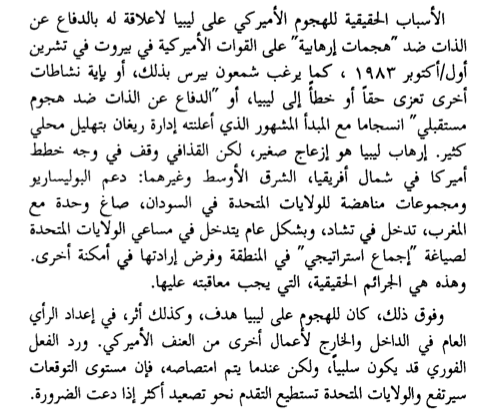
"Indeed, that was an apt and true reply which was given to Alexander the Great by a pirate who had been seized. For when that king had asked the man what he meant by keeping hostile possession of the sea, he answered with bold pride, "What do you mean by seizing the whole earth; because I do it with a petty ship, I am called a robber, while you who does it with a great fleet are styled emperor"."
The Reagan Administration does not represent an extreme position within this spectrum, an extreme of reactionary jingoism-which has misappropriated the honorable term "conservative"-marked by dedicated lying, lawlessness, enhancement of state power and violence, attacks on personal freedom and civil liberties, all developments that are ominous in character and important for the future of American politics and society, hence for the Middle East, and for the world, given the awesome scale of American power.
As the U.S. entered World War II 60 years ago, he [A.J. Muste] predicted with considerable accuracy the contours of the world that would emerge after the U.S. victory, and a little later, observed that "the problem after a war is with its victor. He thinks he has just proved that war and violence pay. Who wil now teach him a lesson?"
Prominent international affairs specialists have warned since the 1980s that the U.S. is percieved by many as a "rogue superpower" and a serious threat to their existence. But that is all to the good, if it induces fear and subordination.