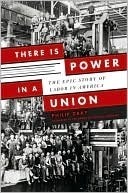
From the nineteenth-century textile mills of Lowell, Massachusetts, to the triumph of unions in the twentieth century and their waning influence today, the contest between labor and capital for the American bounty has shaped our national experience.
In this stirring new history, Philip Dray shows us the vital accomplishments of organized labor and illuminates its central role in our social, political, economic, and cultural evolution. His epic, character-driven narrative not only restores to our collective memory the indelible story of American labor, it also demonstrates the importance of the fight for fairness and economic democracy, and why that effort remains so urgent today.
We spend all the time complaining "boo hoo the labor movement is dead, Reagan killed the labor movement", but from the vantage point of our lives, and the lives of our parents, we only can remember the golden age of the post-war boom. The actual history of the labor movement in the United States has been as bleak and as hard-fought in almost every other time in our history as it is now. We have more in common with Wobblies than we do with Jimmy Hoffa. Historical perspective is a wonderful tool in the hands of the working class. At the very least you should read these 700 pages. It chooses to focus more on personalities in labor leadership than being a social history, but is good enough of a general introduction, and gives great flavor to how the cultural zeitgeist of each era has shaped its corresponding labor movement. Also, and maybe THE most important piece of advice it gives, is that there is nothing radically incompatible about the larger service economy working class that we have now, and union politics. Labor has undergone much more radical transformations before, and has adapted just as slow as we have now. But everyday I see in the news, with my big red sh*t-eating grin, that we're starting to figure it out.
Dray's book is a fantastic and extensive survey of the history of the American labor movement, in its traditional sense of paid workers organizing to better their conditions against the owners of capital. The narrative mostly traces the heroes and flawed figures in labor unions and the repression from the forces of capital and allies within the state. Dray argues that US labor history has always been an extended conversation between ideology of workers transforming the world and one of pure pragmatism and bread/butter issues, often swinging one way or another with competing organizations and unions. Dray is not shy in giving credit to radicals and revolutionaries for bringing real change, nor is he bashful in praising pure trade unionism for making drastic differences in people's lives. He also notes that, though corporate america has often decried government intervention in industries, it has no problem calling for it when it comes to crushing labor strife, which has commonly done. Employers have mostly consistently opposed gains for its employees unless forced to, from the very beginning, when they opposed cutting long hours because the supposed reason that workers would engage in sinful and immoral leisure activities.
It begins in the 1820s with the movement of factory girls in New England, which brought the earliest strikes to the growing factory and mill system. In these early years of labor unions up until 1877 and some beyond, it was not accepted that there was a permanent low-paid working class that was to be dependent on wages from labor, and instead labor sought to build workers cooperatives and banks as a way to mutually aid themselves out of poverty. By 1877, when a massive railroad strike paralyzed the nation, it was accepted that finally, there was a permanent working class, surging with immigrants and unskilled Americans, and capitalist magnate industrialists who had a huge amount of influence on the government much beyond the old landed aristocracy of Europe. From here, Dray notes the rise of the 3/8th movement and the Knights of Labor that led to radicals being attracted to labor and finally the labor martyrs from Haymarket, which he also notes saw the beginning of the AFL that was composed of traditional craft unions seeking simply higher wages and benefits devoid of social activism. He notes the labor clashes of the 1890s that brought the nation to feeling like it was on the verge of another civil war after Pullman strike at his company towns and the Haymarket battle between Carnegie and his pinkertons and striking workers. He moves to radical currents and calls for industrial democracy, which saw both the rise of the International Ladies Garment Workers Union after the Triangle Shirtwaist fire and employers engaging in ideological warfare with open shop movement. Fabianism became a real current, and progressives in the federal government began working against corporate power in favor of working with "reasonable" unions.
He shows the explosive growth of the IWW which transformed ideas of workers culture and militancy, calling for a union for all workers no matter their job or background, and organized impressive campaigns before they began to be crushed in war hysteria. He moves to how employers temporarily gave better conditions in the 1920s only to snatch them away because of the Great Depression, which saw the rise of Communists as a legitimate force in labor, and militant labor upsurges before the CIO embraced industrial unionism and welcomed radicals, black workers, and women, coupled with pragmatism in winning real gains. This broke hardcore anti-union employers like Ford or US Steel and created more than three decades of labor strength, which he argues wedded itself largely to the Democratic Party in support of the WWII and the strike wave after the war. After the AFL-CIO merger and the expulsion of the Teamsters over corruption, Dray notes that the 1960s saw labor argue for the Democrats Great Society programs and funded civil rights struggles (especially Reuther) but could not reach a consensus on the Vietnam War (many supported the war until the late 60s, when notably the UAW leadership came out against the war) and did not follow the radical turn of youth militants. This also saw the United Farmer Workers civil rights movement before the 1970s-80s saw a large offensive against labor unions, highlighted by Reagan's destruction of the air traffic controllers. Dray notes Catepillar fights, the UPS strike of the mid 90s, and the growth of SEIU as an example of an extreme pragmatic yet using social change messaging. He ends with discussions of global anti-sweatshop and resistance to corporate globalization.
Probably a major weakness, and one that I hesitate to make since its already a 600+ page book, is that he confines his labor history to paid workers, and does not look at slavery and slave revolts even though they were a major laboring competent. He does not look at "women's work" or unpaid domestic work that had been previously only on family farms (though he does spend plenty of time talking about women labor union leaders and women dominant unions.) Lastly, there isn't much social history in the lives of workers here. It is mostly about big strikes and events before moving to the next clash of titans, victories and defeats, heroes and villains (Samuel Gompers, Big Bill Haywood, Elizabeth Gurley Flynn, Mother Jones, Eugene Debbs, John L. Lewis, Walter Reuther, George Meany, Caesar Chavez etc vs whomever they stood off against.)
That all said, I would assign this as a textbook for a US labor history class, or if someone wanted to know about most of US labor history. The writing is sharp.
holy lord it only took 10 months to finish this. interesting, but soooooo dense. eye-opening account of the frankly bloody and confusing history of labor action in america. will not ever pick up this book again
I felt compelled to read up on my labor history following the recent (and ongoing) anti-union initiatives in Wisconsin, Ohio, and other states across the nation. Philip Dray has written a compelling history of the labor union movement that helps us to understand how vital it has been to the country and citizens everywhere. I only hope more of those working for union representation will take the time to read this book. As Dray observes in his concluding chapter, we need "to treat seriously the need for unionized workers to be aware of the larger political and economic forces affecting today's global markets, and to know the history of labor itself." Reading this book will motivate them to continue fighting for the justice working people deserve.
Dray also pays much needed tribute to the hundreds of thousands of nameless, faceless workers who made the ultimate sacrifices for their fellow workers and humanity. His vivid, compelling retelling of the stories of, for example, the Lowell factories, the Haymarket Massacre, the Pullman Strikes, the Triangle Shirtwaist Company fire and important figures like Big Bill Haywood, John L. Lewis, Walther Reuther, and especially Eugene V. Debs, make the story complete. He also doesn't shy away from the corruption and malfeasance of leaders within the movement who have done so much to damage the popular perception of unions today.
Dray makes a strong argument of how labor must work together to educate all citizens about the value of their (or, more accurately, our) cause to all Americans. He rightly laments the loss of a vital connection between labor and average Americans, "Gone missing is the communal purpose that animated America in the mid-twentieth century, leading workers into unions and creating fundamental trust in government sufficient to bring about not only the benefits of the New Deal but the advances of the 1960s, such as the Civil Rights Act, the Voting Rights Act, Medicare, Medicaid, and the National Endowment for the Arts, among many other programs."
As we observe the elevation of ignorance into public policy by supporters of the "tea parties," anti-tax at-all-cost Republicans, and spineless "Democrats," let us hope that more will read this book to begin to regain the communal purpose that has served this nation well through times hard and good.
Great book. Traces the history of labor in America from the Lowell mills of the 1820s through the end of the twentieth century. While it doesn't cover the current battles over collective bargaining rights for public employees it hints at the themes that will dominate this century - globalization of industry and labor, the energy crisis, how unions can retain their relevance when they represent only 12 percent of the U.S. workforce, and the movement by corporations to shift the burden of worker pensions to individuals or the government. This book is long (almost 700 pages) but is very entertaining and much more a history than a discussion of current issues. If you are not familiar with the turbulent, often violent, story of labor in America (steelworkers v. Carnegie in Homestead PA, the Pullman strike, Haymarket riots, the Molly Maguires, coalminers v. Rockefeller in Ludlow CO, UAW workers v. Ford/GM) this book is a must-read.
There is Power in a Union is a comprehensive account of the history of labor in the United States. The book was well researched and the narrative successfully moved the story along.
The major topics/eras in the book included early New England textile mills, mining unions, Guilded Age unions, labor in the Progressive Era, major 19th century strikes, Eugene Debs, Supreme Court/laws decisions that affected labor both positively and negatively, various unions the rose and declined in power over time, the leaders of the major unions, labor during the Great Depression, race and the labor movement, labor after WWII, and labor during Reagan into the modern day.
My favorite aspect of the book was the discussion of labor-specific terms and concepts that are still applicable to unions today. Some of the concepts discussed included: 10 hour movement, Social Gospel, welfare capitalism, Taylorism, closed and open shops, yellow dog contracts, sit down strikes, featherbedding, automation, stoop labor, secondary boycotts, and pattern bargaining.
The greatest negative of the book is that the author sometimes veered off course in terms of labor history. There were sections of the book that were more of a general history, rather than a labor history. I understand that background and context is necessary, but with a book this length on such an expansive topic, it is important that the author not go too far off topic. There were areas of the book where I wondered when the author would tie the narrative back to the labor movement.
This is a wonderfully rich history of the American labour movement with only some blind spots (the 1920s, the after NAFTA history).
In many ways it’s a tragedy to think of the brief and short period labour had time in the sun basking the warmth of FDR and the New Deal. But the challenges that weakened labour as early as Taft-Hartley was present for the beginning in the dark days of Haymarket and the Pullman strike. The challenges of the Knights of Labor and the IWW seem more an accurate reflection of the challenges that labour faces today with a hostile and strong corporate structure knowing they have a tremendous amount of power.
The author persuasively argues that the failure of the New Deal moment was getting too close to the Democrats and abandoning a more independent and radical political capital. This allowed the movement to become complacent and then because of specific structures to be susceptible to corruption. I think it can be argued that the failure was not realizing that the corporate powers would ultimately be hostile to them, regardless of the movement’s embrace of patriotism and rejection of radical politics (Re communism/socialism).
The author did a great job talking about subjects that I didn’t know a great about for example the AFL-CIO working with the CIA undermining international unions because of their communist connections and Walter Wilkins convincing Black scabs to support the Ford plant strike.
This is a great book. I meant to read it when it came out but I was concerned that it would be dry and felt I already had a good understanding of the topic. But I saw that it was an assigned book for my nephew Harry for his labor history class at Penn, so I thought I would give it a go. I am very glad I did. This is a superbly written book covering the early days of labor, the turn of the. Century at Haymarket. Cripple Creek, Lawrence Mass and the likes of mother Jones, Joe Hill and Big Bill Haywood. It moves on to the red scare and the dismantling of the IWW. It continues on to the glory days of the CIO and the great victories at steel mills and the auto industry. The author pulls no punches and describes the steady decline of labor in the past 40 years. I don't give many 5 stars but this book deserves 6.
This is a very interesting history on a neglected subject. It's full of characters that should be more well known like Joe Hill, Emma Goldman and Big Bill Hayward going up against the most powerful people in the world. There are women marching through the streets in the 1800s with the press criticizing their morality just like today. There are FBI informants who become president of the USA and union bosses who help the CIA overthrow governments. It's also a sad book. There are so many more losses than gains, but the gains do seem to come in the long term, long after those who fought for them are dead, often at the hands of their own government. Very well written.
Fantastic and comprehensive history of organized labor in America. Covers the labor movement from it's inception in 18th century pre-Revolutionary America up through the most recent struggles for undocumented immigrants to receive some measure of protection from exploitation.
Along the way you meet an interesting cast of characters who make the history of the American Labor Movement so fascinating.
An exhaustive and well-written history of labor in America. Dray does an excellent job illustrating the ups and downs (mostly downs) of labor in America. Sympathetic to the plight of labor Dray illustrates how business owners used xenophobia, patriotism, the press, politicians and the court to impede working folks from organizing. Dray only lightly touches on the racial divide in labor organizing but all in all an excellent read.
If someone wanted one book on American labor in light of the increased labor movement of the past few years, this is probably the one. This is a topic of outsized importance - indeed if you are in the US and have a job then the legacy of this is in your day to day, often staring at you in the form of a poster in the break room - yet most of these events are often of secondary historical treatment, either from broad mention of the new deal or from incidental mention of the Haymarket affair or such. In Philosophy & Social Hope I was struck by Richard Rorty's veneration of Eugene Debs and Walter Reuther alongside his philosophical mainstays like Dewey; struck in contrast to how little I knew of them. This book would be a start if you, like many, were in the position I was.
A brief overview of Dray's general themes in no particular order: the necessity of solidarity of labor with minority and women's interests, and the subsequent failures when gone unheeded; the debates and factionalism within the movement (classically, liberals v communists v anarchists, but there is more to it); the consistent and often violent state repression of labor; violent v nonviolent forms of action and self-defense; electoralism v direct action, and given electoralism the challenges of navigating mediated negotiation and bureaucracy; the origin of "free speech" as a standing value; the theme of anticommunism from the early red scare up through McCarthy; and, in sketch at the end, globalization and the new labor challenges of the gig economy. In other words, Dray is as engaged a teller as you would hope one to be.
Engaging as well; Dray is a good writer and manages strong characterization of key labor figures despite the general brevity he is consigned to. A project like this calls for both a long and dense work, which indeed is what you get here - a lot of events over a given short span, with many proper names and abbreviations - and yet Dray renders it all fairly accessible while doing justice to the thematic stakes. I got no complaints, and really got a lot out of it.
Philip Dray has written an incredible book here, deftly avoiding two pitfalls common in this genre: moving too quickly from one biographical subject to the next without giving the reader any depth to sink their teeth into, and over-romanticizing a broad movement as always being on the right side.
He is covering all of American history here, through the lens of the Labor movement. Where I expected to be rushed rather quickly from decade to decade and character to character, Dray does a great job of setting historical contexts, writing about the people he’s covering as multi dimensional humans, and touching on the ways one industry’s strike influenced another.
He also doesn’t take the side of “look how infallible Labor is and how rapacious capital has been throughout history”. Labor is a very broad movement, filled with conflicting views and people. There are Democrats and Republicans. There are Anarchists and Communists. Non violent protestors, and construction workers who went around beating up students. Leaders who never made a dime off their efforts and leaders who were more greedy and driven by theft than the corporations they supposedly fought against.
It’s very difficult to thread the needle on something this broad, but I feel like Dray does a great job.
There's Power in a Union (the title taken from a popular union folk song) is the extensively researched, exhaustively descriptive history of unions and the labor movement in the United States. While this monolithic book is no easy read, long, complicated, and full of enough organization acronyms to make your head ache (just try keeping IWW, AFL, ICO, and UAW straight, along with their founders and key players), it is worth the effort to understand just how hard the struggle was to obtain even the most basic work concessions from employers. The things we take as given today, like the 8 hour work day, the 40 hour week, minimum wage, and basic safety measures to name a few, never just evolved on their own, they each required a fight, often lengthy, sometimes fatal, to be made into law, and that history, while vitally important, is often forgotten or glossed over.
I highly recommend this book be read by every working person in the USA. The labor rights we have today were earned at the cost of the blood, sweat, and tears of the workers that came before us and we cannot forget that. If we want to build a better future for the workers that will come after us, we we need to remember those that came before.
The good? Minimum wage laws, maximum work hours laws, occupational safety, pensions, and more. The bad? Various degrees of racism among many unions, resting on their laurels after the 1950s, failure of industrial unions to cooperate with environmentalists (and believing corporate lies while resisting such cooperation). The AFL, post WWII, then the reunited AFL-CIO being so anti-Communist that it willingly let its outreach efforts in the developing world be co-opted by the CIA. Most unions' knee-jerk support of the Vietnam War. The ugly? The degree of government oppression, from militia to regular Army to bad laws to even worse court rulings. For example: The "supervisors can't unionize" provision of Taft-Hartley has been, along with complacency, one of the biggest factors in the decline of organized labor.) The government and general public's willingness to stereotype all unions as anarchic, Communist or both.
That's all detailed in this book. Even if you know a fair amount of the story, you may not know all of it, let alone all the details. (I know nothing about the AFL-CIO entanglements with the CIA, for example -- entanglements so bad that union groups were connected with both the Arbenz overthrow in Guatemala and the Allende overthrow in Chile.)
On the rise and fall, Dray is equally good. Beyond unions' complacency at getting various benefits, and shifting social definitions in America, he notes that unions' alienation of environmentalists, slow engagement with the civil rights movement, and alienation of much American youth in the late 1960s and early 70s over Vietnam were classic self-inflicted wounds.
The one thing missing? I wish Dray had done a bit of crystal-ball gazing. Nonetheless, this is a great overview.
This book covers the labor movement in the United States going back to the beginning of the country all the way to the "present" (of when the book was written). Written almost like a novel, Dray has a talent for describing vivid personalities, clearly setting the stakes of each labor conflict he covers, and avoiding any sort of academic jargon that would make this book inaccessible. Though it was 675 pages, it flew by.
The book doesn't cover any unified strand of the labor movement. There is no one union, type of labor action, or even specific labor ideology that is traced through the entirety of the book. The main criteria Dray seemed to have for which stories to include were how generally important/well-remembered they are, as a lot of the big strikes usually talked about by historians and/or people who are invested in the labor movement in some way make their way into this work as well.
That's not to say the book feels unfocused in what it includes, however. Dray also talks about the general position and mood of organized labor during each era of US history, using the specific stories of noteworthy strikes to show what's going on. The book is kept cohesive by his description and analysis of the labor movement as a whole.
Overall this book does a great job of making the history of the labor movement a fun read. I would recommend this to anyone else in a heartbeat. It was fun enough that it even inspired me to look into the biographies of some of the big personalities he mentioned in the book as stuff to read for fun, in addition to the more academic labor readings I already have on my list. Definitely check this out.
A decent, although slightly Whiggish, overview of the history of the labor movement in the United States. Organized labor made America what it is today, that sort of thing. Dray doesn't consider the material forces that made the American boom possible -- the dispossession of the native americans (Greg Grandin's free real estate thesis), the fact that the U.S had more than 50 percent of global GDP at the end of the second world war. Without these circumstances the incredible sacrifices of the American labor movement (class conflict in the U.S, according to one scholar, was the bloodiest of any country in the industrialized West) wouldn't have culminated in the wealth sharing arrangement of the post war years. By failing to take this into account, Dray flails in his overview of labor after World War II. In his defense, it's a difficult topic. A grassroots movement, always at the margins of American power, is seemingly overnight brought into the fold, transformed into a cornerstone of that system; then, after thirty years of institutionalization and bureaucratization, the economy changes. There's not enough wealth to go around, and capital forces labor to the side. Organized labor, trapped in an "unhappy marriage" with the Democratic Party, is unable to effectively resist. This depressing sequence of events demolishes the traditional liberal historiography in which Dray's work is rooted. An analysis that places labor in a broader social/material context would perhaps be able to reckon with these changes.
Philip Dray is a phenomenal writer and this masterpiece is one of the best books I've ever read. I clung to every word of Dray's prolific account of the labor movement in the United States. With a commanding narrative voice, he takes you from the era in which the movement was burgeoning and barely coherent to the points when it became the solidified but embattled political institution that it is today. He covered the place of unions in history and today fairly, from their strengths as vanguards for worker solidarity between communities that otherwise would probably not have interacted much, to their faults, like exclusion on the basis of gender, race, and ethnicity, as well as their tactical blunders in different points of history and upheaval to garner support from external forces. It appropriately leads up to an accurate reflection of how labor fares today and what resolutions it could take to become reinvigorated. The impressive prose and intricacy in this historical work makes this a certain candidate in my 'to re-read' list, and also entices me to check out Dray's other books. Simply fantastic.
An absolutely fascinating, meticulous and engaging account of the history of labor and union rights in the US. This is the kind of book that is so entirely chock-full of information and incredible stories that you find yourself wanting to push other stuff out of your brain to make room for it all. I knew some of this history from college courses, other books, news articles, etc, but there was so much more to learn. I *highly* recommend this book to anyone interested in the rights of working people, especially these days as those rights are so consistently and cruelly under attack from corporate and conservative interests, and from the GOP as a whole. I'd suggest it even more so to those who think of themselves on the GOP's side because you really need to understand what people are fighting for - basic rights for decent working environments for everyone should never be seen as a bad thing, or an evil, or whatever they term it today. Worker solidarity is a virtue - when someone tells you otherwise, you should think about what echelon of society they are speaking from...
Very good synthetic overview of labor history in the U.S. I came to it with a focus on the Sixties and was slightly disappointed by the lack of attention to the collective bargaining elements that played a huge role in the problems unions encountered later, specifically related to pensions and early retirement. Dray pays more attention to the complications created by the racial upheavals of the decade and Vietnam; both of those are significant, as is the United Farmworkers rise and the Memphis strike. Given that he's covering a massive amount of material, those sorts of choices are inevitable. If you want what I was looking for (and subsequently found), go to John Barnard's American Vanguard.
A comprehensive, focused, well-researched history that charts the themes, trends, events, and key figures of the labor movement in America, from the "factory girls" in the textile mills of Lowell, Massachusetts in the 1800's to the air traffic controllers of PATCO during the Reagan era. While the author clearly has enthusiasm and admiration for his subject, he is careful to present a balanced, journalistic account.
The most comprehensive labor history I have yet read. It is amazing that much of the political climate we are dealing with today mirrors that of World War I, namely the attacks against unions for their self-determination by flag-waving faux patriots. It was also enlightening to discover where much of today's anti-labor fervor originated during the Fifties and Sixties.
I started this before the brouha in Wisconsin and it was very interesting to read it amid the noise. It is very true - those who forget the past are condemed to repeat it. Well written, thoughtful, and not a complete cheerleader for unions. It showed its flaws but in the end, people need to realize just how important unions are for this country. Highly recommend it.
Great narrative driven history on labor relations in the US. Dray highlights some of labor's defining achievement and examines bitter defeats. All of this culminates in an attempt to define the current status of labor in America, and what can be done to build upon the work of generations of Americans who have struggled before.
The best general history of the labor movement I've read to date. Of course he's left out a lot, but what he left in was well chosen. He wasn't afraid to take on labors's worst embarrassments: the fling with organized crime and its participation in red baiting and Cold War imperialism.
Very informative. It seems these days that the labor movement is an easy target. I just wish the people who attack the working man understood where we would be without the protections that so many fought for. Should be required reading for anyone adhering to the "makers and takers" philosophy.