

What do you think?

An American Brat
Feroza Ginwalla, a pampered, protected 16-year-old Pakistani girl, is sent to America by her parents, who are alarmed by the fundamentalism overtaking Pakistan — and their daughter. Hoping that a few months with her uncle, an MIT grad student, will soften the girl’s rigid thinking, they get more than they bargained for: Feroza, enthralled by American culture and her new freedom, insists on staying. A bargain is struck, allowing Feroza to attend college with the understanding that she will return home and marry well. As a student in a small western town, Feroza’s perceptions of America, her homeland, and herself begin to alter. When she falls in love with and wants to marry a Jewish American, her family is aghast. Feroza realizes just how far she has come — and wonders how much further she can go. This delightful coming-of-age novel is both remarkably funny and a remarkably acute portrayal of America as seen through the eyes of a perceptive young immigrant.
336 pages, Paperback
First published January 1, 1993
About the author
Bapsi Sidhwa
16 books387 followersBapsi Sidhwa was a Pakistani novelist who wrote in English and was resident in the United States.
She was best known for her collaborative work with Indo-Canadian filmmaker Deepa Mehta: Sidhwa wrote both the 1991 novel Ice Candy Man which served as the basis for Mehta's 1998 film Earth as well as the 2006 novel Water: A Novel, on which Mehta's 2005 film Water is based. A documentary about Sidhwa's life called "Bapsi: Silences of My Life" was released on the official YouTube channel of " The Citizens Archive of Pakistan" on 28 October 2022 with the title " First Generation -Stories of partition: Bapsi Sidhwa".
She was best known for her collaborative work with Indo-Canadian filmmaker Deepa Mehta: Sidhwa wrote both the 1991 novel Ice Candy Man which served as the basis for Mehta's 1998 film Earth as well as the 2006 novel Water: A Novel, on which Mehta's 2005 film Water is based. A documentary about Sidhwa's life called "Bapsi: Silences of My Life" was released on the official YouTube channel of " The Citizens Archive of Pakistan" on 28 October 2022 with the title " First Generation -Stories of partition: Bapsi Sidhwa".
Ratings & Reviews
Friends & Following
Create a free account to discover what your friends think of this book!
Community Reviews
Displaying 1 - 30 of 71 reviews
January 13, 2013
The book was just a series of events that led to nothing. The only character development was very cliche. She has only wowed her foreign readers through the culture she writes about, not the story, and she didn't create the culture. It was like watching the life of an ordinary person through a window... and watching nothing extraordinary happen at all. From the writing style to the nonexistent plot- everything was cliche and irrelevant. A waste of time.

October 29, 2012
I am not sure whether American Brat does justice to how a Pakistani feels when he or she goes to America. A lot of gaps and glitches are there. You wonder what is the theme of the novel, except for the obvious ones.
August 18, 2012
Simply put, the book does give an accurate description of the mindset of a newly arrived Pakistani youngster in a foreign land, and their sudden sense of freedom (especially considering that it's the 80s and there are no means of communicating back home, etc.)
Having said that, however, I'd have liked to read more about how Feroza's perspective of the world changes over time, as opposed to just "saw skyscrapers, met a boy, suddenly became a First World person." What prompted the change, the desire to immerse herself in a new culture at the risk of being banished from her own? Because she was doing all these things she wouldn't ever have imagined doing as a Convent girl, long before David came into the picture.
And also, while we're at it, I found David a very stereotypical character, although he was reasonably presented. Not to mention, why was there not more of the Pakistani relatives and Manek, and the situation back home? There was so much going on back then, and considering how staunchly political Feroza was in the beginning, one would have expected at least a small mention. But it all seems to have been edited out, perhaps in order to make the book more accomodating for an international audience.
All in all, it starts out as a promising book, but leaves one hanging; and not in a positive way. My verdict: if you want to read Sidhwa, The Crow Eaters is a much better place to start.
Having said that, however, I'd have liked to read more about how Feroza's perspective of the world changes over time, as opposed to just "saw skyscrapers, met a boy, suddenly became a First World person." What prompted the change, the desire to immerse herself in a new culture at the risk of being banished from her own? Because she was doing all these things she wouldn't ever have imagined doing as a Convent girl, long before David came into the picture.
And also, while we're at it, I found David a very stereotypical character, although he was reasonably presented. Not to mention, why was there not more of the Pakistani relatives and Manek, and the situation back home? There was so much going on back then, and considering how staunchly political Feroza was in the beginning, one would have expected at least a small mention. But it all seems to have been edited out, perhaps in order to make the book more accomodating for an international audience.
All in all, it starts out as a promising book, but leaves one hanging; and not in a positive way. My verdict: if you want to read Sidhwa, The Crow Eaters is a much better place to start.

November 25, 2015
An American Brat is lighthearted entertainment with flashes of the Sidhwa humour.A young Parsi girl leaves increasingly conservative Pakistan for studies in the United States.(Sidhwa herself also moved to the US).She struggles to adjust in a foreign culture and falls in love with an American Jew.

May 11, 2009
The title does not do this book justice. Judging the book by it's cover, I thought this was going to be a trite exploration of a bratty immigrant girl . . . but I was pleasantly surprised!

May 15, 2013
An American Brat offered an insightful first-hand (fictional) account of the young immigrant experience, from Pakistan to the United States, in the late 1970s. The account is at once very particular to a Parsi Pakistani female perspective, but also contains hints of different viewpoints offered by the new-found friends of Feroza, the protagonist.
It was hard to develop any sort of sustained (and positive) attachment to Feroza because Bapsi painted her inconsistently as a detestable brat and inconsistently as a passionate and relatable everywoman. As a result, the character portrait and its relation to the reader (or at least to me) was lukewarm, at best. I found I was actually kind of relieved when the book ended, since it seemed like it was dragging on because I didn't particularly like the protagonist.
It was hard to develop any sort of sustained (and positive) attachment to Feroza because Bapsi painted her inconsistently as a detestable brat and inconsistently as a passionate and relatable everywoman. As a result, the character portrait and its relation to the reader (or at least to me) was lukewarm, at best. I found I was actually kind of relieved when the book ended, since it seemed like it was dragging on because I didn't particularly like the protagonist.
January 26, 2021
Link to my book review video:
https://youtu.be/byfuxmPArbM
https://youtu.be/byfuxmPArbM

September 7, 2014
The title of this book was as misleading as the fact that a renowned writer must appeal to everyone.
For starters perhaps I read this book a few decades later because as a young Pakistani I do not think that given the background of the protagonist, the freedom should have been that "eye-opening". For a closed up, held back middle class person yes but I did not see her as being moved to much by it.
The next issue was of the brat. Maybe there are other definitions of the word but the heroine was remarkably independent and thoughtful for a "brat".
These could have been ignored had this novel yet again not held the same construction as her previous novels. As in the bride the author spends a good chunk of the book explaining the opening setting and once that is done she moves on to write a train of nothings and towards the end rushes to wrap it up. Simply put Bapsi Sidhwa's novels are written like a sputtering to start car that repeated bursts moves a few feet only to come to an abrupt halt.
For starters perhaps I read this book a few decades later because as a young Pakistani I do not think that given the background of the protagonist, the freedom should have been that "eye-opening". For a closed up, held back middle class person yes but I did not see her as being moved to much by it.
The next issue was of the brat. Maybe there are other definitions of the word but the heroine was remarkably independent and thoughtful for a "brat".
These could have been ignored had this novel yet again not held the same construction as her previous novels. As in the bride the author spends a good chunk of the book explaining the opening setting and once that is done she moves on to write a train of nothings and towards the end rushes to wrap it up. Simply put Bapsi Sidhwa's novels are written like a sputtering to start car that repeated bursts moves a few feet only to come to an abrupt halt.

June 26, 2016
I liked it, but didn't love it. And I probably won't remember it. It is certainly outdated, having been first published in 1993. Feroza comes to the US on a travel visa, and ends up staying for college and grad school? Really? She didn't need to change her visa? So once I decided to overlook these kinds of oversights, the book was ok. The ending was not, however. I turned the page, and, lo and behold, there was no more story. Did the author run out of words? It was one of the most abrupt, meaningless endings to a book that I've read in a long time.

December 21, 2014
Unlike Bapsi Sidhwa's well-etched characters with whom you usually find something fascinating, An American Brat didn't hold anything too exciting either in terms of premise or its characters except the initial positions between Cyrus and Zareen, which again is in her forte of depicting Parsi families. A very plain protagonist and a very carefully treaded predictable premise leaves a lot to be desired.

June 22, 2020
This one is different from Sidhwa’s other books, but not bad by any means. It’s equally engaging but felt like it had a calmer vibe than Cracking India or The Crow Eaters. Sidhwa’s observations on religion and politics are as astute as ever, her writing and story telling are just wonderful. These books have a staying power, and they resonate with me more than any desi writer has managed to do so far
Read
August 9, 2011Write a review...Sidhwa has established herself as a renowned writer with a perceptiveness for Pakistani and American culture. However, I was a little disappointed by An American Brat . She nicely elaborated the Parsee mores and the challenges faced by the young Pakistani students coming to the New World, but the account gets tedious after the first few chapters.

June 3, 2008
Brilliantly described experiences of a young immigrant who is terrified of the US but ...eventually decides to stay. Set in NYC, Cambridge and Houston. A must read for anyone who has lived in any of those places as a student or young professional.
January 30, 2014
The novel is a detailed description of clash of Cultures in the light of what a young girl is likely to think or to feel about it.yet i had to skip many pages as there was something that could not catch my attention and I had rush to read the ending without reading the details.

August 24, 2011
It is an easy book to read. It was particularly interesting to me since I came to US at approximately the same time butI was just a little bit younger.
January 23, 2016
This book didn't have anything exciting for me to recommend it to anyone. The story felt too dragged in places, and there wasn't anything new in the storyline.
June 22, 2016
‘An American Brat’ by ‘Bapsi Sidhwa’ is an insightful account of the experience of a young immigrant from Pakistan to the United States in the 70s. The novel also touches upon the reservations and anxiety experienced by different sects in Pakistan due the change from Bhutto’s liberal era to Zia’s conservative one.
The title of the novel, ‘An American Brat’ is very clever. It makes us think that it’s going to be the tale of a bratty immigrant girl . . . but we’re in for a pleasant surprise. The title also in an uncanny way makes one realize that what ‘brat’ is for a First world citizen is not what ‘brat’ encompasses for a third world person.
The plot of the story is easy to follow. Set in 1970s, it revolves around the protagonist, Feroza. Feroza is a 16-year-old Parsi girl whose changing personality is alarming for her liberal, confident Parsi parents. Due to country’s increasing intolerance for minorities with misuse of Hadood Ordinance against them, there is a feeling of suffocation in the drawing rooms of the upper-middle class liberals.
Desperate due to the increasing sense of insecurity and Feroza’s disabling shyness and self-doubt, Feroza is packed away to her uncle in US hoping that
“Travel will broaden her outlook, get this puritanical rubbish out of her mind.”
Thus, begins the story of Feroza’s experiences in another world quite different from the one she had come from, and for a long time into the novel, one keeps on wondering if the theme of the novel was anything other than the obvious one.
It feels more like narration of the life of a young girl with nothing extraordinary happening. The whole theme of the novel revolves around the exhilarating freedom and profound sense of loss as to which an immigrant can surely relate to. The cross cultural clash is well captured, in detail. Political reference, though outdated, succeeds to elicit the drastic change in the lives and minds of people during Zia’s conservative rule. Given Feroza’s involvement in the politics, so much so, that she keeps Bhutto’s poster at her bedside, one expects to read about her interest in US politics of the time as well.
The pace of the story is on average fast, so it does not bore the reader to the extent to give up. Some portions are entertaining, witty and clever. The cross cultural problems faced by immigrants and family pressure, are portrayed vividly. The tone of the novel is mostly apathetic and one fails to relate to the feelings of various characters save a few instances. The reader is however kept engaged by various events, big and small, though as a reader you are unable to enjoy their full intensity.
The novel, however, has its moments; when Feroza is interrogated by the immigration, her horrendous experience down the fire stairs, and her funny bantering with Manek all render the novel enjoyable in spurts.
It would have been more interesting to read Feroza’s mind other than the clichéd chain of events; dazed by the splendor of the New World, learns to live independently, meets a boy, cultural tiff, gets heartbreak, goes on with life. We read the word freedom many times across the book, but what that actual experience of freedom was for Feroza? It seems the extent of her freedom was embodied into one person David, which was unexpected of the standards of Sidhwa.
The main theme of the novel appears to be the identity and loyalty problems faced by young immigrants, torn between their family, traditions and self identity.
Feroza’s mother, Zareen also momentarily gets sucked into the feeling of unselfconsciousness to which Feroza had fully carved into. She had shed “the thousand constraints that governed her life” back in Pakistan and with her own money and career, she was discovering her identity, i.e. transforming into an American Brat by Pakistani standards of the 70s.
This identity struggle, cultural tiff, and sexism in Parsi culture (though not unique to it) is shown from three different angles; from an elder who seems to question the old age customs in her hearts of heart but can’t bring herself to revolt, Manek who being a male has certain liberties that simplify life for him, but Feroza being a girl cannot ignore the contradictions nor is her revolt allowed to be successful.
From the traditional Parsi houses, the lavish way of upper-middle class, the close knit Parsi community to the skyscrapers and shopping giants of America, the splendor at the Madison or the Bloomingdale’s to the reeking poverty at the terminal of the 8th Avenue, it was all painted brilliantly for the reader; by far the strongest feature of this book. It gives an enlightening and detailed account of the Parsi and Zoroastrian religion. The cultural fears and situations occurring in the book must have struck a chord with the second generation Parsi living abroad.
The characters in the story are very much relatable on many levels. Feroza and Manek represent the young Parsi generation but may easily represent any young girl and boy; their experiences, their struggle for existence in the First world and their amazement at everything foreign.
Bapsi Sidhwa is an eminent Pakistani writer and has a first-hand experience of both Pakistani and American culture that shows itself strongly in An American Brat. However, one expects more from her. For those who are just starting to read Sidhwa should better start with The Crow Eaters.
For more book reviews, visit http://penslips.base.pk/category/book...
The title of the novel, ‘An American Brat’ is very clever. It makes us think that it’s going to be the tale of a bratty immigrant girl . . . but we’re in for a pleasant surprise. The title also in an uncanny way makes one realize that what ‘brat’ is for a First world citizen is not what ‘brat’ encompasses for a third world person.
The plot of the story is easy to follow. Set in 1970s, it revolves around the protagonist, Feroza. Feroza is a 16-year-old Parsi girl whose changing personality is alarming for her liberal, confident Parsi parents. Due to country’s increasing intolerance for minorities with misuse of Hadood Ordinance against them, there is a feeling of suffocation in the drawing rooms of the upper-middle class liberals.
Desperate due to the increasing sense of insecurity and Feroza’s disabling shyness and self-doubt, Feroza is packed away to her uncle in US hoping that
“Travel will broaden her outlook, get this puritanical rubbish out of her mind.”
Thus, begins the story of Feroza’s experiences in another world quite different from the one she had come from, and for a long time into the novel, one keeps on wondering if the theme of the novel was anything other than the obvious one.
It feels more like narration of the life of a young girl with nothing extraordinary happening. The whole theme of the novel revolves around the exhilarating freedom and profound sense of loss as to which an immigrant can surely relate to. The cross cultural clash is well captured, in detail. Political reference, though outdated, succeeds to elicit the drastic change in the lives and minds of people during Zia’s conservative rule. Given Feroza’s involvement in the politics, so much so, that she keeps Bhutto’s poster at her bedside, one expects to read about her interest in US politics of the time as well.
The pace of the story is on average fast, so it does not bore the reader to the extent to give up. Some portions are entertaining, witty and clever. The cross cultural problems faced by immigrants and family pressure, are portrayed vividly. The tone of the novel is mostly apathetic and one fails to relate to the feelings of various characters save a few instances. The reader is however kept engaged by various events, big and small, though as a reader you are unable to enjoy their full intensity.
The novel, however, has its moments; when Feroza is interrogated by the immigration, her horrendous experience down the fire stairs, and her funny bantering with Manek all render the novel enjoyable in spurts.
It would have been more interesting to read Feroza’s mind other than the clichéd chain of events; dazed by the splendor of the New World, learns to live independently, meets a boy, cultural tiff, gets heartbreak, goes on with life. We read the word freedom many times across the book, but what that actual experience of freedom was for Feroza? It seems the extent of her freedom was embodied into one person David, which was unexpected of the standards of Sidhwa.
The main theme of the novel appears to be the identity and loyalty problems faced by young immigrants, torn between their family, traditions and self identity.
Feroza’s mother, Zareen also momentarily gets sucked into the feeling of unselfconsciousness to which Feroza had fully carved into. She had shed “the thousand constraints that governed her life” back in Pakistan and with her own money and career, she was discovering her identity, i.e. transforming into an American Brat by Pakistani standards of the 70s.
This identity struggle, cultural tiff, and sexism in Parsi culture (though not unique to it) is shown from three different angles; from an elder who seems to question the old age customs in her hearts of heart but can’t bring herself to revolt, Manek who being a male has certain liberties that simplify life for him, but Feroza being a girl cannot ignore the contradictions nor is her revolt allowed to be successful.
From the traditional Parsi houses, the lavish way of upper-middle class, the close knit Parsi community to the skyscrapers and shopping giants of America, the splendor at the Madison or the Bloomingdale’s to the reeking poverty at the terminal of the 8th Avenue, it was all painted brilliantly for the reader; by far the strongest feature of this book. It gives an enlightening and detailed account of the Parsi and Zoroastrian religion. The cultural fears and situations occurring in the book must have struck a chord with the second generation Parsi living abroad.
The characters in the story are very much relatable on many levels. Feroza and Manek represent the young Parsi generation but may easily represent any young girl and boy; their experiences, their struggle for existence in the First world and their amazement at everything foreign.
Bapsi Sidhwa is an eminent Pakistani writer and has a first-hand experience of both Pakistani and American culture that shows itself strongly in An American Brat. However, one expects more from her. For those who are just starting to read Sidhwa should better start with The Crow Eaters.
For more book reviews, visit http://penslips.base.pk/category/book...

September 6, 2023
This book took me forever to read because it was so infuriatingly silly - I almost wish I hadn't spent the time to finish. I read it in doses, with weeks or even months in between picking it up.
For starters, none of the characters really make much sense. Feroza is just a floundering character whose only purpose is to be the person that takes the reader from Pakistan to America. Her uncle seems like he'll be the stern authority figure, but he nearly disappears from the book midway through.
The only somewhat well-developed characters are Feroza's mother and grandmother, accurately painted out to be like the typical Pakistani aunties of that time/class, but they're barely in the book.
So much of the story is spent describing Feroza's fascination with her American friends and all she "learns" from them, but not only is the story boring and full of useless descriptions about a friend's family dynamics or their part-time jobs, it's also hard to believe. None of her American friends are fully-formed characters - many of them seem to contradict themselves with Bapsi Sidhwa's strange descriptons of them.
Above all, Feroza's transformation doesn't make much sense. I can tell that the author was trying to show a girl who learned about independence and hard work, having left her comfortable life in Pakistan to "make it on her own" in America, but her attempt was so poor that I had to try really hard to understand what the purpose was. I'm left with zero empathy for Feroza, her friends, or really any character in the novel. I also saw no cause and effect of a "change" in Feroza, save for her declaring it so herself.
For starters, none of the characters really make much sense. Feroza is just a floundering character whose only purpose is to be the person that takes the reader from Pakistan to America. Her uncle seems like he'll be the stern authority figure, but he nearly disappears from the book midway through.
The only somewhat well-developed characters are Feroza's mother and grandmother, accurately painted out to be like the typical Pakistani aunties of that time/class, but they're barely in the book.
So much of the story is spent describing Feroza's fascination with her American friends and all she "learns" from them, but not only is the story boring and full of useless descriptions about a friend's family dynamics or their part-time jobs, it's also hard to believe. None of her American friends are fully-formed characters - many of them seem to contradict themselves with Bapsi Sidhwa's strange descriptons of them.
Above all, Feroza's transformation doesn't make much sense. I can tell that the author was trying to show a girl who learned about independence and hard work, having left her comfortable life in Pakistan to "make it on her own" in America, but her attempt was so poor that I had to try really hard to understand what the purpose was. I'm left with zero empathy for Feroza, her friends, or really any character in the novel. I also saw no cause and effect of a "change" in Feroza, save for her declaring it so herself.

Read
November 29, 2016I liked this book. Nothing dramatic, not any unusual happenings, just good smooth simple story that started with boring situations and then turned a little interesting when Feroza (the main girl) took over.
It covered the Zia ul Haq times of Pakistan and gave an idea about the political situation from the eyes of Parsi community. It highlighted the fantasized thoughts of locals about foreign land and what actually happens once you set your foot up there. Writer presented a very smooth transition of a young and naive Parsi girl, (who had started getting influenced by local Muslims that's why sent abroad by her parents), to an Independent and mature American citizen who would not allow anybody to take decisions for her.
recommended
It covered the Zia ul Haq times of Pakistan and gave an idea about the political situation from the eyes of Parsi community. It highlighted the fantasized thoughts of locals about foreign land and what actually happens once you set your foot up there. Writer presented a very smooth transition of a young and naive Parsi girl, (who had started getting influenced by local Muslims that's why sent abroad by her parents), to an Independent and mature American citizen who would not allow anybody to take decisions for her.
recommended
Read
December 14, 2007This is a heart warming book about a young Pakistani girl living with her uncle in NYC. She moves to Utah to attend community college and she learns about American culture through her 'interesting' new roomate. She goes back to Pakistan to visit and notices how different her life is in America and although she misses her family, she has grown to embrace American culture. She struggles a bit with that feeling.

January 12, 2009
I found this an overly-assimilationist, "America/ the first world is awesome" "Pakistan/ the Third World" is backward text with little literary merit to help save it. The total lack of a clear story arc, in addition to the endless relation of anecdote after anecdote makes it drag on and on and on. I doubt I could have finished it if I hadn't been trapped on a train for six hours, with only this book to pass the time. Unsurpisingly, I wouldn't recommend it.

December 21, 2016
I liked this book well enough, but the setting was sometimes disjointed; I find it difficult to believe that a poor college student in 1979/1980 owned a desktop computer and printer, or that a museum guard during the same time had a cell phone handy in his back pocket. Although...even in 1993, when the book was published, I think those items would have been incongruous in those settings. Those things bothered me quite a bit while I read.

May 12, 2012
This book might work for some advanced high school ELL students though they might find some of the details (particularly the political ones) to be out of date. In general, it's entertaining with some good talking points - is one place better than the other, how would intercultural relationships work, pressures of family, etc.

November 24, 2018
What I admire most about this book is the showcase of bitter and triggering realities of our country, and the despicable fundamental politics that had groped the state during the dark reign of General Zia.
During the 1970s, Zulfiqar Ali Bhutto, a liberal and nation-wide loved leader was executed by an Army general who immediately after became a tyrannical leader of Pakistan. He passed laws and ordinances that could least be called conservative. He believed in Islamization of the law, and by doing so he prevented majority of people - especially and mostly women - from basic rights.
An American Brat takes place in the late 1970s, following the lives of the Ginwalla family belonging to a minority religion of Zoroastrianism living in Lahore, Pakistan; also simply called Parsees in the Sub-Continent.
Contributing to only 120,000 to the world population, this religion is not only a minority in Pakistan, but overall, so needless to say this tightly packed community takes its unions very seriously and doesn't permit interfaith or intercultural marriages out of fear of extinction.
The essence of this novel is the restrictions imposed on the people by our society and by mullahs who fool themselves and their followers into believing they're preaching the correct Islam when they're laughably far from it. And how that plays on the mind of a common man who subconsciously abides by those insufferable rules and regulations despite of criticizing them and their makers.
It pains me to observe that the effects of those dark years are still very much distinguished in our country and in the nature of our people. The intolerance towards minorities or anyone who doesn't believe in their type of Islam is excruciatingly brutal and vivid. The immediate fatwas of blasphemy and the unspoken acceptance of murder of the person who is merely accused of committing heresy are a few examples of what blind zealots and bigots we have unfortunately become.
Bapsi Sidhwa has masterfully captured the plights and dilemmas of Pakistanis living in the country and abroad, from the perspective of a non-Muslim mostly unbiased community. The writing might be humorous but the message hidden in plain sight is thought-provoking and delicate, affecting each one of us, even the modern day citizens of 2018.
During the 1970s, Zulfiqar Ali Bhutto, a liberal and nation-wide loved leader was executed by an Army general who immediately after became a tyrannical leader of Pakistan. He passed laws and ordinances that could least be called conservative. He believed in Islamization of the law, and by doing so he prevented majority of people - especially and mostly women - from basic rights.
An American Brat takes place in the late 1970s, following the lives of the Ginwalla family belonging to a minority religion of Zoroastrianism living in Lahore, Pakistan; also simply called Parsees in the Sub-Continent.
Contributing to only 120,000 to the world population, this religion is not only a minority in Pakistan, but overall, so needless to say this tightly packed community takes its unions very seriously and doesn't permit interfaith or intercultural marriages out of fear of extinction.
The essence of this novel is the restrictions imposed on the people by our society and by mullahs who fool themselves and their followers into believing they're preaching the correct Islam when they're laughably far from it. And how that plays on the mind of a common man who subconsciously abides by those insufferable rules and regulations despite of criticizing them and their makers.
It pains me to observe that the effects of those dark years are still very much distinguished in our country and in the nature of our people. The intolerance towards minorities or anyone who doesn't believe in their type of Islam is excruciatingly brutal and vivid. The immediate fatwas of blasphemy and the unspoken acceptance of murder of the person who is merely accused of committing heresy are a few examples of what blind zealots and bigots we have unfortunately become.
Bapsi Sidhwa has masterfully captured the plights and dilemmas of Pakistanis living in the country and abroad, from the perspective of a non-Muslim mostly unbiased community. The writing might be humorous but the message hidden in plain sight is thought-provoking and delicate, affecting each one of us, even the modern day citizens of 2018.

April 1, 2025
I really love the development of our main character Feroza throughout the book. Although I’m not Parsee, I grew up Muslim and this experience of coming to North America seemed to universalize itself. In a way we are all Feroza taking on this new world as immigrants. All with different levels of knowledge and understanding. Although I am first generation as an immigrant, most of the experience that is described is more related to my parents. I was only 1 when I moved to the West.
Regardless, the book tracks an interconnected web of stories, relationships, and knowledge of the Parsee culture. I personally loved learning about the Parsee religion and culture.
Manek was a perfectly written character in that it represented the classic voice of western established immigrants to newly arrived immigrants. It plays on this conversation that I have experienced countless times regarding individuality and hyper-independence. This love of American exceptionalism and the idea that the third world is entirely backwards and upside down. He perfectly captures the attitudes and experiences of many relatives and family friends that I know.
The only part of this story that pulled me out was the drawn out conclusion. Often times it’s difficult to know when to stop as you are writing complex stories. Personally, I think the author picked a point that neatly wrapped up too much. For a book that describes how life isn’t linear and predictable, it certainly becomes a little cliche at the end.
Besides that I think it was an engaging read, that gave me my fix of cultural knowledge, a compelling main character, and a well established premise. I recommend it because it touches on our universality as immigrants in the west and the bonds that hold us together. It also contrasts well the west and east in terms of societal, cultural, and religious differences.
Regardless, the book tracks an interconnected web of stories, relationships, and knowledge of the Parsee culture. I personally loved learning about the Parsee religion and culture.
Manek was a perfectly written character in that it represented the classic voice of western established immigrants to newly arrived immigrants. It plays on this conversation that I have experienced countless times regarding individuality and hyper-independence. This love of American exceptionalism and the idea that the third world is entirely backwards and upside down. He perfectly captures the attitudes and experiences of many relatives and family friends that I know.
The only part of this story that pulled me out was the drawn out conclusion. Often times it’s difficult to know when to stop as you are writing complex stories. Personally, I think the author picked a point that neatly wrapped up too much. For a book that describes how life isn’t linear and predictable, it certainly becomes a little cliche at the end.
Besides that I think it was an engaging read, that gave me my fix of cultural knowledge, a compelling main character, and a well established premise. I recommend it because it touches on our universality as immigrants in the west and the bonds that hold us together. It also contrasts well the west and east in terms of societal, cultural, and religious differences.

May 15, 2020
This book is basically without a coherent or a clearly defined theme. In context of Pakistani political atmosphere, it does cover the people's or more importantly the minority community's reservations about the Zia ul Haq regime. How the nation was being swept with religious intolerance and fanaticism. And how women's rights were being made into alien rights day by day in the form of Hudood Ordinance.
However, the book mainly revolves around the female protagonist, Feroza, a young girl sent to America. The way she copes with an new culture and how she manages to make new connections.
I especially liked the character of Jo, Feroza's roommate and a close friend. Even Jo's family was quite interesting. She was very loving, caring and was a wonderful character in the book.
Later, Feroza's romance or how she falls in love with David and their entire story, I think it was really unnecessary or maybe with no closure. Very less time was devoted to this relationship , considering that this relationship would empower her or force her to finally consider her life choices in a more permanent way.
Overall I enjoyed this book even though the general prose was little too pretentious. The characters were vivid and the late 70's atmosphere in Pakistan was amicably described.
However, the book mainly revolves around the female protagonist, Feroza, a young girl sent to America. The way she copes with an new culture and how she manages to make new connections.
I especially liked the character of Jo, Feroza's roommate and a close friend. Even Jo's family was quite interesting. She was very loving, caring and was a wonderful character in the book.
Later, Feroza's romance or how she falls in love with David and their entire story, I think it was really unnecessary or maybe with no closure. Very less time was devoted to this relationship , considering that this relationship would empower her or force her to finally consider her life choices in a more permanent way.
Overall I enjoyed this book even though the general prose was little too pretentious. The characters were vivid and the late 70's atmosphere in Pakistan was amicably described.
This entire review has been hidden because of spoilers.

Read
November 4, 2024The coming-of-age book "An American Brat" by Bapsi Sidhwa depicts the life of Zoro, a young Pakistani girl who relocates to the US to pursue her education. Her experiences negotiating identification, cultural differences, and the difficulties of growing up in a new setting are explored in depth in the narrative. Rich character development and a realistic depiction of Pakistani and American society are two of the novel's many accolades. Sidhwa's language effectively conveys the subtleties of Zoro's hardships and victories, making it accessible to anybody who has encountered the difficulties of cultural shifts. Throughout the story, the themes of self-discovery, family, and belonging reverberate, providing readers with a perceptive view of the immigrant experience.

December 20, 2021
I loved this book. It’s been lying on my shelf for ages, but I finally decided to read it and it did not disappoint. As a child of a “mixed marriage” and an immigrant to a western county this was easy to relate to and at the same time alien.
I give this book 5 stars for the simple prose, easy to follow storyline, and the notion that Home can be anywhere you choose to make it, not necessarily the country of your birth.
I give this book 5 stars for the simple prose, easy to follow storyline, and the notion that Home can be anywhere you choose to make it, not necessarily the country of your birth.
This entire review has been hidden because of spoilers.
June 21, 2019
I admire the writings of Babsi Sidhwa very much but this was a little too cookie cutter for my taste. The mother interferes with her daughter’s love life and wins - no surprise there. The Uncle is such an obnoxious fellow, who would want to spend a minute with him. Off to the next Sidhwa.
September 14, 2022
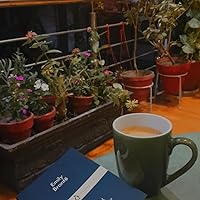
Really liked reading a Pakistani author. An American Brat takes you into the world of the Parsi community living in Pakistan and how after moving to America, the vast difference in the cultures of the two countries and communities has an impact on the lives of the people involved.
Displaying 1 - 30 of 71 reviews