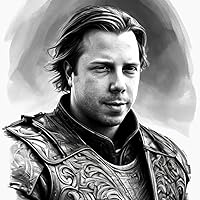
"This young man is your slave. Whatever your daily business may be here, some part of your time, I imagine, will be spent in his company. Let me know what manner of man he is. Is this innate corruptness which brings him so easily to the bait, or is it the stinging smart of injustice from which he may well be suffering? Or, failing these, has he dared to set his wits against mine, to play the double traitor? If even a suspicion of this should come to you, there must be an end of Mr. Francis Norgate."
Edward Phillips Oppenheim was an English novelist, primarily known for his suspense fiction.
He was born in Leicester, the son of a leather merchant, and after attending Wyggeston Grammar School he worked in his father's business for almost 20 years, beginning there at a young age. He continued working in the business, even though he was a successful novelist, until he was 40 at which point he sold the business.
He wrote his first book 'Expiation' in 1887 and in 1898 he published 'The Mysterious Mr Sabin', which he described as "The first of my long series of stories dealing with that shadowy and mysterious world of diplomacy." Thereafter he became a prolific writer and by 1900 he had had 14 novels published.
While on a business trip to the United States in 1890 he met and married Elise Clara Hopkins of Boston and, on return to England, they lived in Evington, Leicestershire until the First World War,and had one daughter. His wife remained faithful to him throughout his life despite his frequent and highly publicised affairs, which often took place abroad and aboard his luxury yacht.
During World War I Oppenheim worked for the Ministry of Information while continuing to write his suspenseful novels.
He featured on the cover of 'Time' magazine on 12 September 1927 and he was the self-styled 'Prince of Storytellers', a title used by Robert standish for his biography of the author.
His literary success enabled him to buy a villa in France and a yacht, spending his winters in France where he regularly entertained more than 250 people at his lavish parties and where he was a well-known figure in high society.
He later purchased a house, Le Vanquiédor in St. Peter Port, in Guernsey. He lost access to the house during the Second World War when Germany occupied the Channel Islands but later regained it.
He wrote 116 novels, mainly of the suspense and international intrigue type, but including romances, comedies, and parables of everyday life, and 39 volumes of short stories, all of which earned him vast sums of money. He also wrote five novels under the pseudonymn Anthony Partridge and a volume of autobiography, 'The Pool of Memory' in 1939.
He is generally regarded as the earliest writer of spy fiction as we know it today, and invented the 'Rogue Male' school of adventure thrillers that was later exploited by John Buchan and Geoffrey Household.
Undoubtedly his most renowned work was 'The Great Impersonation' (1920), which was filmed three times, the last time as a strong piece of wartime propaganda in 1942. In that novel the plot hinges around two very similar looking gentlemen, one from Britain and the other from Germany, in the early part of the 20th century. Overall more than 30 of his works were made into films.
Perhaps his most enduring creation is the character of General Besserley, the protagonist of 'General Besserley's Puzzle Box' and 'General Besserley's New Puzzle Box'.
Much of his work possesses a unique escapist charm, featuring protagonists who delight in Epicurean meals, surroundings of intense luxury, and the relaxed pursuit of criminal practice, on either side of the law.
If there’s one thing I love even more than spy novels it’s pre-First World War spy novels. E. Phillips Oppenheim’s The Double Traitor was actually published in 1915 but it’s set in the weeks leading up to the outbreak of war in August 1914.
E. Phillips Oppenheim (1866-1946) wrote around 150 novels during his long and successful career. This immense output included many spy thrillers. He was certainly one of the people who put this genre on the map. Like most of the great espionage writers he’s now forgotten.
The Double Traitor deals with a man who becomes a spy by accident, a theme that would become enormously popular in British spy fiction. Francis Norgate is perhaps not quite an amateur spy though. He is a junior British diplomat, stationed in Berlin in 1914. His espionage career comes about as a result of two accidents.
The first occurs in a Berlin restaurant. He is dining with the beautiful Baroness von Haase when he is insulted by a Prussian aristocrat, a prince no less. Norgate, quite reasonably, suggests that the prince needs to improve his manners. Of course at this point the reader naturally expects that there will be a duel, but Oppenheim is not as predictable as that. The actual result of the incident is that Norgate finds himself recalled to London in disgrace.
On the train to Ostend he meets a jovial and garrulous German crockery merchant. Herr Selingman in fact seems to think he’s the Henry Ford of crockery. Norgate is not in the mood for conversation so he claims not to speak German, which of course he speaks fluently. He dozes off and, half-asleep, he overhears Herr Selingman talking to one of his agents. But they’re not discussing tea cups. They’re discussing the Belgian fortifications at Liège, and in terms that strongly suggest that their interest in this subject is far from innocent.
In a moment of confusion Norgate grabs a piece of paper that has fallen out of his traveling companion’s brief-case. It is a list of German spies in Britain!
Back in London Norgate tries to interest Scotland Yard in the list and also shows it to a Cabinet Minister friend of his. Nobody wants to know. The British government is convinced that war with Germany is impossible. They have allowed the country’s defences to be run down and therefore they are determined to go on living in a fantasy world in which the peace-loving German Empire would never start a war.
Norgate decides to go it alone. He joins Selingman’s espionage network, but he is determined to feed them false intelligence. He is now an unofficial double agent. If the British government refuses to face reality he will do what he can as an individual to undermine Germany’s spy ring in Britain and will try to gather enough information to convince the British government of the nation’s mortal danger.
His position is complicated slightly by the act that he has met the Baroness von Haase again and is hopelessly in love with her. She loves him as well but she is a spy as well, an Austrian spy who also works for the Germans.
This is very different from most later spy novels. There’s virtually no action. There is danger though. While these spies are very genteel and civilised even in this world spies can still wind up dead. That’s perhaps one of the more effective things about the book - when one spy does end up dead it comes as a considerable shock. What seemed like a mere Edwardian parlour game is suddenly revealed to be very serious indeed.
There are concepts here that you won’t encounter in modern espionage fiction. There’s honour, and it’s a reality rather than a mere word. There’s patriotism, and it’s patriotism without fashionable irony.
Considering the time it was written, at the very start of the First World War, it’s surprisingly free of any personal animosity towards Britain’s enemies in that war. The Prussian prince who inadvertently triggers off the while adventure is an arrogant bully but the other German and Austrian characters are mostly just doing their jobs. The book is certainly very critical of German militarism but Oppenheim makes it clear that that is a result of policy rather than any kind of inherent quality. And the book is equally critical of the head-in-the-sand pacifism it attributes to the British - the kind of approach to foreign policy that would a generation later become infamous (and rightly so) as appeasement.
There are quite a few characters trapped by conflicting loyalties, including the heroine, Baroness von Haase (who is half-English and half-Austrian).
It’s fashionable today to regard the Victorian and Edwardian periods condescendingly or even sneeringly as ages of hypocrisy and jingoism. This is an attitude that says more about the arrogance of our own age that it says about the Edwardians. The Double Traitor is evidence that even the popular fiction of the early 20th century was capable of dealing with complex conflicts of loyalty and similar difficult issues.
It’s slow-moving and lacking in action by modern standards but still quite entertaining. Anyone with an interest in the early development of the spy genre will certainly find this novel intriguing. Recommended.
As many of you know who've been following my reading, I have been on a tear for a few months reading the roots-material of the modern spy novel. It is interesting to see the incremental, yet inevitable, steps taken down the path of Victorian mellodrama.... and see it change and shift in almost every year. The Double Traitor is a perfect example. It has all the intrigue and comedy (in the classical sense) that we find in Charles Dickens or George MacDonald. But the intrigue of an evil empire (something I believe is essential to get us to believe all that is in the plot line) adds an element here-to-for not seen in fiction. Statism and the fear it creates, with all those nasty unknowns over there, is clearly evident and played upon to perfection. That is not at all unusual, if you take into account the fact that countries had only recently (even as compared to today's date) drawn borders around themselves and said, "This is Spain", or "This is France"...or Germany in this case. A great book as a read, but also as a study into the mind of the early 20th century person.
Mainly focused on the European political intrigues in the run up to WWI, this espionage book has held up well given that it was written in 1915. It is fairly leisurely in pace and a working knowledge of the alliances between the various European powers will be a benefit.
Implicit in every spy novel is the theme of duplicity, but in Oppenheim's novels it becomes an obsession with either impersonation or split personality, or both. In this story, protagonist Francis Norgate is a double agent, shuttling between Germany and his native England in pre-WWI Europe. Norgate adores England but not its current government. He particularly dislikes the diplomatic corps in which he serves until he's roundly tossed out for reasons that are mostly beyond his control. But there's never any doubt that Norgate is anything but a thorough British gentleman, and perhaps the plot would have been more interesting if we weren't so sure of his loyalties.
The fascinating aspect of this book is the real history of the run-up to the war, in which the fictional Norgate plays a pivotal role, almost as though he held all the strings. You may have been taught in school the conventional wisdom about the reciprocal defense treaties that ended up ensnaring the parties and then dragging them into full-scale war after the inciting incident of the Archduke of Austria's assassination at the hands of a disaffected Serb. But this story maps a deliberate, well-orchestrated plot by the Germans to trigger the conflict and conquer Europe. The Brits are convinced their opponents' ambitions are purely commercial and are content to play that game out. But the Germans are too powerful and too impatient to wait years for the wisdom of the market to decide the victor. The English are shown as a nation of overfed, peace-at-any-price progressives, who have been drawing down their armed forces with pacifist zeal as they build up their social programs, all at a cost of bleeding the aristocracy and weakening their national prestige. Norgate is one who, along with the German plotters, think that the too-liberal government needs a wake-up call. The Germans secretly confide to him that, where England is concerned, the lesson will be little more than a slap in the face, nothing like the death blows they plan to deal France and Russia, and anyone else who gets in their way.
As with the two other Oppenheim novels I've read (see reviews here), there is a strong romantic subplot. And as in those books, the lovers' dialogue is downright silly. You've heard it all before in the early talkies - too sincere, too breathless, too on-the-nose. The love story itself has its charms, though. Oppenheim paints women as equals, in itself remarkable for this society and time - making them as interesting as the political intrigues in which they're embroiled.
This entire review has been hidden because of spoilers.
In "The Double Traitor," Herr Selingman, a German spy, exploits Francis Norgate's discontent with the British government. Norgate, an ambitious British diplomat stationed in Berlin, finds himself in a precarious position after a scandal involving the defense of a woman's honor. This incident results in his recall to Britain, causing him to feel unjustly treated and undervalued by his superiors.
Upon meeting Selingman on a train, Norgate's sense of frustration and injustice is palpable. The British government’s pacifist stance and refusal to acknowledge the looming threat from Germany only exacerbate his disillusionment. Selingman recognizes these vulnerabilities and cleverly manipulates Norgate by appealing to his need for recognition and purpose.
Selingman’s approach is subtle yet effective. He presents himself as a sympathetic figure, understanding Norgate's plight and offering him an alternative path where his talents and insights are appreciated. By portraying the German cause as not only just but also aligned with Norgate's own sense of duty and honor, Selingman convinces him that joining the German espionage network will provide him with the respect and agency he lacks in his current situation.
This manipulation is a classic example of exploiting personal grievances and a sense of injustice to recruit someone into espionage. Selingman leverages Norgate’s professional frustrations and personal sense of honor, convincing him that his skills and knowledge will be valued and put to significant use by the Germans, thus luring him into the dangerous world of double agency
Major characters: Francis Norgate, the "double traitor" Baroness Anna Von Haase, his Austrian girlfriend Herr Selingman, a German spy John Hebblethwaite, British M.P. Captain Fred Baring, British Admiralty, friend of Anna
Locale: Germany (briefly), then England
Synopsis: It is the volatile period in the runup to World War I. British diplomat Francis Norgate is dining in Berlin with Austrian baroness Anna Von Haase. She is known to be the liaison between the German Kaiser and Vienna. German Prince Karl enters and demands Norgate give up his seat that he may entertain the Baroness instead. Norgate refuses, and leaves with the Baroness.
Word of this incident gets back to embassy, and Norgate is sent home to England as he did not defer to the prince, a diplomatic error. On his trip home, he encounters Herr Selingman, a German crockery manufacturer with many agents around Europe and England. Norgate finds Seligman is actually a spy gathering information on military facilities; and manages to steal Seligman's list of agents.
Back in England, Norgate tries to provide the list to authorities, but is rebuffed as no one seems to think war is imminent. Norgate resents this further embarassment, and takes up Seligman's offer to work for him (Germany) instead. Norgate meets Anna in England, and tells her he is now a double agent, but his sympathies lie with England. Anna, now suspected herself of duplicity by the Germans, is enlisted by Seligman to spy on Norgate; now her fiancé.
Review: It is fascinating to realize this spy novel must have been written in real time - published in 1915, it includes the real-life 1914 assassination of the Austrian archduke which started World War I. It is historical fiction (names of prominent people have been changed) but is closely based on fact. After comparing this book with the Wikipedia account of World War I (they agree right down the line) I came away with a greater understanding of the causes of the war. If I were teaching a history course, I would suggest this book!
The characters are lively and fully developed, especially the "spy triangle" formed of Norgate, Anna, and Selingman. Spies spying on spies abound.
The only critique I have is that a lot of text is spent as the characters discuss various what-if scenarios among the various countries involved.
The only other spy/mysteries of this period I have read are those by Valentine Williams (my reviews), which are all fascinating as well - although they are set in the period between World Wars are are completely fictional.
Mystery and espionage and politics and a dash of romance are the ingredients of this wartime novel that examines the causes and the preparation for the first world war.
E. Phillip Oppenheim’s ‘Double Traitor’ established the model for espionage novels almost until the end of the twentieth century: the historical facts (all correct), the lone patriot trying to convince his country of their neighbour’s real intention, the gorgeous slinky ladies who winkle out military secrets from their men friends, are all part of this exuberant novel. Oppenheim does not neglect the vast spy network, including royalty and the peerage, who are the unseen enemy's dupes, or the army of waiters and hairdressers and others of both nationalities in the pay of the enemy.
A good YA novel to introduce the reader not just to classic spy fiction, but to the world of romans-a-clef and the identification of Churchill, Chamberlain, Halifax and Gavrilo in this narrative. It is also a splendid entry into the world of the Oppenheim classics, similar in subject and suspense levels to the novels of John Buchan.
I got into it though it was reminding me of words like "morganatic", no offense to royalty, but it became evident why Mr. Oppenheim was a true bestseller.
This was a very good story. It was about the time leading up to the 1st World War so I did some research on that time in history and it made the story even more interesting.
I had a good time listening to this book as a librivox audio book. As others have said in review, the pacing of the book can be a bit slow at times since the book consists mostly of talk and little action. The work done here by our main protagonist, Francis Norrgate is through his words and discrete actions.
Francis is a bit stiff and through the main portion of the story we don't really learn much about him or come to identify with him deeply as a character. The result of some of his actions through the novel are at times surprising, but that could largely be due to the cultural and social norms around courting in England at the time this novel was written.
The supporting cast around our character is what makes the book interesting to read. Mr. Seligman is the main antagonist in the book and he is the complete opposite of Francis Norrgate. He is jovial, engaging and outgoing and is a character you come to like throughout the book. As a reader you can almost come to believe the understanding he has or expounds when talking about the need for the water in Europe.
Overall a good read, as long as you know what to expect going into the book. Expect a lot of narration and a bit of intrigue and you should enjoy this.
Norgate is a British diplomat who believes that Germany is building her forces in preparation for war (WWI), but the British politicians of the day believe in peace. They believe it is much more important to put money into social projects than to prepare for a war that they don't believe will come. There is a lesson here that we should learn from history, lest we are condemned to repeat it.
A very slow-paced read. All talk and little action. Too much about the boorishness of the Germans and the merits of the Brits. Understandable considering the year it was written (1915) but it should have had at least the excitement that a novel of this genre requires.