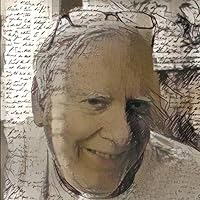
John Kenneth Galbraith was a Canadian-American economist. He was a Keynesian and an institutionalist, a leading proponent of 20th-century American liberalism and democratic socialism. His books on economic topics were bestsellers in the 1950s and 1960s. A prolific author, he produced four dozen books & over a 1000 articles on many subjects. Among his most famous works was his economics trilogy: American Capitalism (1952), The Affluent Society (1958) & The New Industrial State (1967). He taught at Harvard University for many years. He was active in politics, serving in the administrations of Franklin Roosevelt, Harry Truman, John Kennedy, and Lyndon Johnson. He served as US Ambassador to India under John F. Kennedy.
He received the Presidential Medal of Freedom twice: one in 1946 from President Truman, and another in 2000 from President Clinton. He was also awarded the Order of Canada in 1997, and in 2001, the Padma Vibhushan, India's second highest civilian award, for strengthening ties between India and the USA.
Galbraith's journal, written during the Kennedy presidency, largely from the US Embassy in India, is a blend of engrossing, humorous, and, of course, by the end (JFK's funeral), sad. John Kenneth Galbraith was a Harvard economist who worked for JFK's campaign and was given the ambassadorial appointment to India. As a result, he knew a lot of important people aside from the President and his family, world leaders who are also fascinating. Terrific book that I HIGHLY recommend.
A book of bespoke and epicurean tastes in reading.
I grabbed this book of a free shelf and happy to have read it. In looking at a few other lessor ranked reviews - I agree. Not a book or written style for divers audiences.
However, with 20 years of accumulated experience working within diplomacy and 3/4 of that time in foreign lands at embassy’s in the edges of US government this was a pleasant perspective of the views of appointee, the evolution of the tradecraft, and an aged style of journalistic writing that is written to be read. Don’t be think Twitter, vlog, vine, or blogs. Surprisingly intimate, animated, and cynical of those that ambassador was contact with. At time humorous. At rarer times humble. Overall a time capsule to an American in the upper class perspective in the early 1960s. As one in the guilds or tradecraft, a specialist, working with one’s hands an interesting contrasts to my thought processes and perspectives.
I can't really say who should read this book. I suppose some Americans who want to read off hand references to obscure American bureaucrats in such a boring manner that even the cuban missile crisis reads like a pamphlet on direct taxation.
I was quite excited when I found this book in the local library. it promised juicy stories about kennedy and america's foreign policy in the cold war age (soviets, saigon, cuba, hellloooo?). galbraith does come off an intelligent man. however, there is next to no information on anything interesting. it is clear that galbraith and Kennedy are big admirers of nehru but the reader never learns why. there are references to meetings and speeches of nehru but it stops there. there was an indoor meeting at some point and Kennedy comes out and confesses to galbraith that he "caught the nehru magic". but this is immediately followed by some mundane comment about dinner or something. see how frustrating this can be to a reader who just wants some elaboration there. besides, all I got from this book is that ambassadors basically letch at women, go to dinners, cocktail parties, universities for speeches, sightseeing trips and sometimes meetings, and galbraith observes that meetings are a waste of time.
This book made me a fan of John Kenneth Galbraith, the brilliant, iconoclastic, and liberal social thinker, economist and adviser to every US President from FDR to Kennedy. He writes wonderfully and humorously. In this book, his journal kept while ambassador to India, he gives an intimate portrait of JFK and his inner circle, of India and Nehru, of Cold War international politics, and of his own life and thoughts.
I found this account of the author's service as ambassador to India somewhat tedious, probably because the events he describes--such as the border conflicts with China--were rather vague memories of news reports read in Time/Life during childhood. Also, Galbraith's account here is guarded, the book being written just a few years after the events. In his later autobiography much more is said about CIA activities and his work to rein them in.