

What do you think?

The Sojourn
The Sojourn is the story of Jozef Vinich, who was uprooted from a 19th-century mining town in Colorado by a family tragedy and returns with his father to an impoverished shepherd’s life in rural Austria-Hungary. When World War One comes, Jozef joins his adopted brother as a sharpshooter in the Kaiser’s army, surviving a perilous trek across the frozen Italian Alps and capture by a victorious enemy.
A stirring tale of brotherhood, coming-of-age, and survival, that was inspired by the author’s own family history, this novel evokes a time when Czechs, Slovaks, Austrians, and Germans fought on the same side while divided by language, ethnicity, and social class in the most brutal war to date. It is also a poignant tale of fathers and sons, addressing the great immigration to America and the desire to live the American dream amidst the unfolding tragedy in Europe.
A stirring tale of brotherhood, coming-of-age, and survival, that was inspired by the author’s own family history, this novel evokes a time when Czechs, Slovaks, Austrians, and Germans fought on the same side while divided by language, ethnicity, and social class in the most brutal war to date. It is also a poignant tale of fathers and sons, addressing the great immigration to America and the desire to live the American dream amidst the unfolding tragedy in Europe.
192 pages, Paperback
First published April 19, 2011
About the author
Andrew Krivak
10 books379 followersThe grandson of Slovak immigrants, Andrew Krivak grew up in Pennsylvania, has lived in London, and has taught at Harvard, Boston College, and the College of the Holy Cross. He lives with his wife and three children in Somerville, Massachusetts and Jaffrey, New Hampshire.
Ratings & Reviews
Friends & Following
Create a free account to discover what your friends think of this book!
Community Reviews
Displaying 1 - 30 of 518 reviews

January 19, 2017
Sojourn: a period of time when you stay in a place as a traveller or visitor.
Imagine your life around the turn of the century 20th century: it begins with a tragedy in America in a town where your family is struggling for survival as immigrants. The decision is made and you return to Hungary to the mountains and become a shepherd. Then at 15, you enlist, and in making that decision your life becomes only about survival.
Josef is a survivor in the most rawest forms and never anywhere long enough to call home.
A somber and sobering read. Of war. Of love. Of survival.
The writing: deeply descriptive - the full visceral experience.
3.5 as it's dark but upping to 4 for the writing.
Imagine your life around the turn of the century 20th century: it begins with a tragedy in America in a town where your family is struggling for survival as immigrants. The decision is made and you return to Hungary to the mountains and become a shepherd. Then at 15, you enlist, and in making that decision your life becomes only about survival.
Josef is a survivor in the most rawest forms and never anywhere long enough to call home.
A somber and sobering read. Of war. Of love. Of survival.
The writing: deeply descriptive - the full visceral experience.
3.5 as it's dark but upping to 4 for the writing.

February 2, 2017
On Good Friday, the last night of March in the year 1899, Josef begins his life in Pueblo, Colorado. Born to parents who emigrated from Austria-Hungary in a search for a better life, this debut novel takes you first through a horrific tragedy, and returns to Pastvina, the village of Josef’s father, Ondrej Vinich.
When he drank and someone was there to listen, he’d say that the Slavs of Pueblo had only exchanged life in one poor village for another, even if the journey to America, and then out west, promised to reveal a paradise.
Unable to face a life without his wife in this strange place in his new country, he takes his son and heads east to Pennsylvania, to the mining town of Wilkes-Barre, where he had relatives and friends, people from his village. The only work there was working in the mines. He longed for some of the remnants of his old life, and asks about hunting, missing the days he hunted with his old friend. He said it used to make him feel ”as though I was the maker of my own fate.”
He needed to find a woman who could help him raise his son, and after a second tragedy, arranges a marriage to a woman with two sons by writing letters to a priest in Pastvina. And so Ondrej returns there with his son, Jozef, and marries Borka. The new wife is an unpleasant woman who feeds her own two children platefuls of food, and leaves Jozef with barely enough scraps to survive. After his father notices how plump her boys are growing while his son withers away, he takes him along on all of his hunting trips from then on. Teaching him everything he needs to know to survive in this world where nature is king. When they are in the mountains, the father speaking only English to his son.
Eventually, another boy, the son of a distant cousin of Ondrej named Zlee, comes to stay with them. Eventually he becomes much like an older brother to Jozef, picking up skills as they go, shepherding, picking up these things instinctually.
And while it seemed that he could do anything with a staff, a rope, or a knife in hand, of all the skills Zlee was asked to master that summer, he took to the rifle as though it were a language almost, for which he needed no grammar or tutoring or even alphabet, only ear and breath… The waiting and silence that came with shepherding and shooting both seemed to appeal to a natural discipline in Zlee that made him—and I say this from the distance of these many years—not part of man’s world, but God’s, so that as we worked and spoke and rested in silence, day after day and month after month, he became more like some contemplative seraph than a mere shepherd, a being at once willing and capable of defending what is good and beautiful and so moves easily and without disturbance from blithe to fearsome when the time comes to act.
In March of 1916, Zlee turns eighteen and has to register at the conscription office. Knowing this, Jozef has a fake identity card made so he can also join. Two days later they were headed for basic training for the Austro-Hungarian army in what would come to be known as the Great War.
For, by the time I had heard the story of my birth, and my father’s leaving the land of my birth, war was imminent, and I was hungry to call myself Infanterist, Frontkampfer, Soldat. Anything. Anything but the son of the shepherd, because shepherd was all that my father—once he returned to Pastvina—wanted to be, and I wanted to become what he was not.
While this is part coming-of-age story, part war story, it is mostly about survival in all its forms. Loss of dreams, loss of lives and loves, loss of a sense of home, of everything you once held dear.
What is a life? A series of memories, of moments lived, reflections, some peace gained, some lost. So many things, people, places, so many moments comprise a life, each new place or person or event changing us in so many ways. For some, days flow into one another as though charted out, uneventfully and evenly. For some, events or people or places alter how they view life ever after, but we go on, and try to make our way back toward that even keel, our comfort zone. Home.
This powerful novel, which was a National Book Award finalist, is based on the life story of Andrew Krivak’s grandfather.
Recommended.
When he drank and someone was there to listen, he’d say that the Slavs of Pueblo had only exchanged life in one poor village for another, even if the journey to America, and then out west, promised to reveal a paradise.
Unable to face a life without his wife in this strange place in his new country, he takes his son and heads east to Pennsylvania, to the mining town of Wilkes-Barre, where he had relatives and friends, people from his village. The only work there was working in the mines. He longed for some of the remnants of his old life, and asks about hunting, missing the days he hunted with his old friend. He said it used to make him feel ”as though I was the maker of my own fate.”
He needed to find a woman who could help him raise his son, and after a second tragedy, arranges a marriage to a woman with two sons by writing letters to a priest in Pastvina. And so Ondrej returns there with his son, Jozef, and marries Borka. The new wife is an unpleasant woman who feeds her own two children platefuls of food, and leaves Jozef with barely enough scraps to survive. After his father notices how plump her boys are growing while his son withers away, he takes him along on all of his hunting trips from then on. Teaching him everything he needs to know to survive in this world where nature is king. When they are in the mountains, the father speaking only English to his son.
Eventually, another boy, the son of a distant cousin of Ondrej named Zlee, comes to stay with them. Eventually he becomes much like an older brother to Jozef, picking up skills as they go, shepherding, picking up these things instinctually.
And while it seemed that he could do anything with a staff, a rope, or a knife in hand, of all the skills Zlee was asked to master that summer, he took to the rifle as though it were a language almost, for which he needed no grammar or tutoring or even alphabet, only ear and breath… The waiting and silence that came with shepherding and shooting both seemed to appeal to a natural discipline in Zlee that made him—and I say this from the distance of these many years—not part of man’s world, but God’s, so that as we worked and spoke and rested in silence, day after day and month after month, he became more like some contemplative seraph than a mere shepherd, a being at once willing and capable of defending what is good and beautiful and so moves easily and without disturbance from blithe to fearsome when the time comes to act.
In March of 1916, Zlee turns eighteen and has to register at the conscription office. Knowing this, Jozef has a fake identity card made so he can also join. Two days later they were headed for basic training for the Austro-Hungarian army in what would come to be known as the Great War.
For, by the time I had heard the story of my birth, and my father’s leaving the land of my birth, war was imminent, and I was hungry to call myself Infanterist, Frontkampfer, Soldat. Anything. Anything but the son of the shepherd, because shepherd was all that my father—once he returned to Pastvina—wanted to be, and I wanted to become what he was not.
While this is part coming-of-age story, part war story, it is mostly about survival in all its forms. Loss of dreams, loss of lives and loves, loss of a sense of home, of everything you once held dear.
What is a life? A series of memories, of moments lived, reflections, some peace gained, some lost. So many things, people, places, so many moments comprise a life, each new place or person or event changing us in so many ways. For some, days flow into one another as though charted out, uneventfully and evenly. For some, events or people or places alter how they view life ever after, but we go on, and try to make our way back toward that even keel, our comfort zone. Home.
This powerful novel, which was a National Book Award finalist, is based on the life story of Andrew Krivak’s grandfather.
Recommended.

December 16, 2013
Although this book is short in pages it is dense in content. Covers the lives of two boys before, during and after the
first World War. It starts with a death and a mother's desperate attempt to save the life of her child, in a mining town, 19th century Colorado.
Returning to his home in rural Austria-Hungary, Josef and his father lead the lives of impoverished sheperds. They are soon joined by another young boy named Zlee, who his father agrees to raise as his own. Though their lives are short of money, their lives are full of stories, their father reading to them from Moby Dick and others. He trains them to stalk, hide and shoot. Their lives are lonely, insular and soon the boys want more than the lives they are leading.
Enter the war and the boys enlist together. Although Josef was hoping for the community of many men in the regiment, because of their shooting ability the boys find themselves as sharpshooters in the Kaisers army. Eventually this will lead to an Italian prison where Josef meets a man who has been jailed for a long time.
I love this quote, "One or many, he said. "Still they are dead and we are alive." "If there was a difference it was that I had marched with an army and that he had acted alone, but each believed that God was on his side, for no one raises a hand without convincing himself first that he is right."
A very succinct explanation of war. The love between a father and son, of others who are placed in our paths along the way and of sacrifices that must be made. Of how a life changes course often without warning.
Based on the authors personal family history, a small book that makes a big impression.
first World War. It starts with a death and a mother's desperate attempt to save the life of her child, in a mining town, 19th century Colorado.
Returning to his home in rural Austria-Hungary, Josef and his father lead the lives of impoverished sheperds. They are soon joined by another young boy named Zlee, who his father agrees to raise as his own. Though their lives are short of money, their lives are full of stories, their father reading to them from Moby Dick and others. He trains them to stalk, hide and shoot. Their lives are lonely, insular and soon the boys want more than the lives they are leading.
Enter the war and the boys enlist together. Although Josef was hoping for the community of many men in the regiment, because of their shooting ability the boys find themselves as sharpshooters in the Kaisers army. Eventually this will lead to an Italian prison where Josef meets a man who has been jailed for a long time.
I love this quote, "One or many, he said. "Still they are dead and we are alive." "If there was a difference it was that I had marched with an army and that he had acted alone, but each believed that God was on his side, for no one raises a hand without convincing himself first that he is right."
A very succinct explanation of war. The love between a father and son, of others who are placed in our paths along the way and of sacrifices that must be made. Of how a life changes course often without warning.
Based on the authors personal family history, a small book that makes a big impression.

January 4, 2017
I knew even before I finished that I would be giving The Sojourn five stars. Explaining my feelings about it and what lead me to that rating was a more difficult task.
Jozef Vinich’s sheltered life as a shepherd with his father in the mountains of Austria-Hungary changes dramatically when he leaves his father to go fight for the empire during the first world war. Where the war takes him and his struggle for survival are all part of his physical journey, but the depth of this story lies in his spiritual sojourn.
What toll is taken on this young man’s soul when he learns to kill men and watches other men die horribly? How does he come to terms with the things he has done in the name of his country, and the loss of people he loves, without even a strong belief in the cause? Krivak explores these things within Jozef with an almost a total lack of sentimentality, a cold clarity that somehow tore at me even more than had it been mawkishly worded. Quite simply, I was moved. Repeatedly.
And the men, too, who haunted me began slowly in their time to fade away, so that when Banquo asked me one day if the faces of the war still marched under the banner of death toward me, I said that the last time I had seen those faces, I’d addressed them and told them that I had put down my weapon and wanted to march with my back to the fight in the direction of home, and they disappeared into the morning.
This is a short book, not to be confused with a quick read. The writing is stark and affecting, with long sentence structures, sometimes the length of a paragraph. It required all my focus but was so worth it in the end. I would not recommend it to everyone, but I do think many of my GR friends would enjoy this book.
Jozef Vinich’s sheltered life as a shepherd with his father in the mountains of Austria-Hungary changes dramatically when he leaves his father to go fight for the empire during the first world war. Where the war takes him and his struggle for survival are all part of his physical journey, but the depth of this story lies in his spiritual sojourn.
What toll is taken on this young man’s soul when he learns to kill men and watches other men die horribly? How does he come to terms with the things he has done in the name of his country, and the loss of people he loves, without even a strong belief in the cause? Krivak explores these things within Jozef with an almost a total lack of sentimentality, a cold clarity that somehow tore at me even more than had it been mawkishly worded. Quite simply, I was moved. Repeatedly.
And the men, too, who haunted me began slowly in their time to fade away, so that when Banquo asked me one day if the faces of the war still marched under the banner of death toward me, I said that the last time I had seen those faces, I’d addressed them and told them that I had put down my weapon and wanted to march with my back to the fight in the direction of home, and they disappeared into the morning.
This is a short book, not to be confused with a quick read. The writing is stark and affecting, with long sentence structures, sometimes the length of a paragraph. It required all my focus but was so worth it in the end. I would not recommend it to everyone, but I do think many of my GR friends would enjoy this book.

April 27, 2011
World War I was the deadliest conflict in Western history, but contemporary portrayals of war in literature and cinema primarily focus on examples of combat from the past fifty or sixty years. At a time when the Great War is receding into the annals of distant history, this elegiac and edifying novel has been released--a small, slim but powerful story of a young soldier, Josef Vinich, who hails from a disenfranchised and impoverished family in rural Austria-Hungary.
Josef was born in the rural mining town of Pueblo, Colorado, in 1899, to immigrant parents from Austria-Hungary who dreamed of a better life in the United States. The opening eleven-page prologue, a stunning and deeply felt family tragedy, is subsequently followed by a move back to the Empire, to his father's village of Pastvina (which is now part of the Czech Republic). Josef's father then marries a cruel woman with two young sons. They live the hardscrabble existence of shepherds, barely able to put food on the table, in the cold and brutal climate of the region. Josef and his father live for part of the year in a cabin in the Carpathian Mountains and ply their trade of husbandry in order to survive.
At the age of ten, Josef is introduced to his father's Krag rifle, and is instructed in the art of hiding and hunting their prey. A distant cousin, Marian Pes--nicknamed Zlee--who was one year older than Josef, is sent to live with them. Zlee has an instinct for shepherding, and together they form a brotherly bond of love and respect. Josef's sleep is haunted by dreams of loss and he gradually becomes distant from his father.
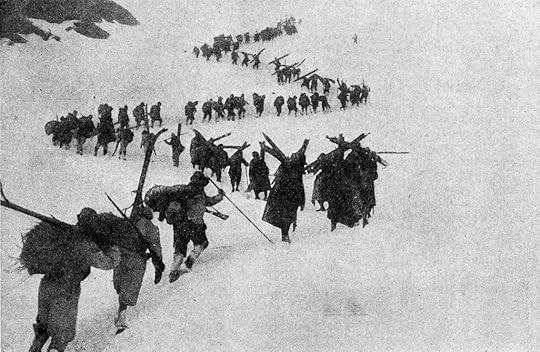
In 1916, when Zlee turns eighteen, both boys go to the conscription office to join up. Josef alters the age on his identity card so that he can go, too. During artillery training, they are recognized for their skill of aiming and shooting, and are sent to train as snipers, or "sharpshooters," which in German is called Scharfschützen. What follows is a coming of age story set in the harsh climate and geography in the trenches of war--to Austria to train as Scharfschützen, and eventually to the sub-zero temperature of the Italian Alps.
Krivak writes with the precision and beauty of a finely cut gem and with the meticulous pace and purpose of a classical conductor. Every word is necessary and neatly positioned. His prose is evocative, poetic, and distilled. There is a place between the breath of the living and the faces of the dead, and that is where Josef's soul resides. When the author takes the reader to the abyss of loss and the ghosts of Time, it is riveting. However, the emotional resonance was primarily potent in the prologue and only periodically in the body of the story, and was otherwise low-timbred and somewhat distancing. The narrative is so deliberately controlled that at times it felt antiseptic and dispassionate.
Krivak's first novel is highly recommended as an addition to a library of World War I literature. This is an admirable debut, and it is evident from the prologue that Krivak is capable of crafting an emotionally satisfying story.
Josef was born in the rural mining town of Pueblo, Colorado, in 1899, to immigrant parents from Austria-Hungary who dreamed of a better life in the United States. The opening eleven-page prologue, a stunning and deeply felt family tragedy, is subsequently followed by a move back to the Empire, to his father's village of Pastvina (which is now part of the Czech Republic). Josef's father then marries a cruel woman with two young sons. They live the hardscrabble existence of shepherds, barely able to put food on the table, in the cold and brutal climate of the region. Josef and his father live for part of the year in a cabin in the Carpathian Mountains and ply their trade of husbandry in order to survive.
At the age of ten, Josef is introduced to his father's Krag rifle, and is instructed in the art of hiding and hunting their prey. A distant cousin, Marian Pes--nicknamed Zlee--who was one year older than Josef, is sent to live with them. Zlee has an instinct for shepherding, and together they form a brotherly bond of love and respect. Josef's sleep is haunted by dreams of loss and he gradually becomes distant from his father.
In 1916, when Zlee turns eighteen, both boys go to the conscription office to join up. Josef alters the age on his identity card so that he can go, too. During artillery training, they are recognized for their skill of aiming and shooting, and are sent to train as snipers, or "sharpshooters," which in German is called Scharfschützen. What follows is a coming of age story set in the harsh climate and geography in the trenches of war--to Austria to train as Scharfschützen, and eventually to the sub-zero temperature of the Italian Alps.
Krivak writes with the precision and beauty of a finely cut gem and with the meticulous pace and purpose of a classical conductor. Every word is necessary and neatly positioned. His prose is evocative, poetic, and distilled. There is a place between the breath of the living and the faces of the dead, and that is where Josef's soul resides. When the author takes the reader to the abyss of loss and the ghosts of Time, it is riveting. However, the emotional resonance was primarily potent in the prologue and only periodically in the body of the story, and was otherwise low-timbred and somewhat distancing. The narrative is so deliberately controlled that at times it felt antiseptic and dispassionate.
Krivak's first novel is highly recommended as an addition to a library of World War I literature. This is an admirable debut, and it is evident from the prologue that Krivak is capable of crafting an emotionally satisfying story.

July 23, 2017
The Sharpshooter
It is not until the end that we get the meaning of the book's title. The novel opens in 1899 Colorado where Jozef is born and his mother dies. His father, a Slovak immigrant miner, moves briefly to Pennsylvania then takes his son back to his home country in 1901, where he takes up life as a shepherd. After the war, Jozef moves back to America, claiming his citizenship by birth. The twenty-some years and 160 pages in between have been his sojourn in the "old country," years whose lessons of mind, heart, and sinew will, we assume, last him an entire lifetime. It is not unusual for a writer to turn to the Bildungsroman genre for his first novel; what is unusual here is partly Krivák's precocious skill, and partly the fact that this is not thinly disguised autobiography but an immersion into the life of someone old enough to be his grandfather, half a world and a whole century removed.
These 160 pages fall into three parts. In the first, Jozef grows to manhood, absorbing all the lessons his father can teach him, and bonding with an adopted older brother, Zlee. In the second and longest part, Jozef fakes the birth date on his ID to be able to join up with Zlee in the Austro-Hungarian army. As soon as their hunting skills are discovered, the boys are paired as marksmen and sent to pick off high-value targets in the mountains overlooking the River Soča. This, under its Italian name, the Isonzo, is the setting of two great novels that have always intrigued me. But Krivák is less romantic than Hemingway's A Farewell to Arms and less cinematic in scope than Mark Helprin's A Soldier of the Great War. Eschewing the big picture for the small, he makes us see through the crosshairs of Jozef's sights as he makes his kills. Detailed, intimate, and often chilling, it is some of the best war writing I have ever read.


The Soča/Isonzo today
Brilliant as the wartime section was, it is what comes after it that makes the book. At first I didn't think so. Long treks in a weakened state and months of imprisonment might seem an anticlimax. Yet it is here that Jozef starts to think and, painfully, to feel; the conversation I quoted above comes from these pages. Finally released, he comes upon a pregnant gypsy girl and saves her from two murderous deserters. Together, they journey Eastward, towards his homeland and perhaps hers. It becomes a story of love, but karitas not eros, seemingly romantic but in fact almost religious. Almost without our knowing it, this final chapter has brought a hard-won redemption, which ends Jozef's European sojourn in moving beauty. Before becoming a writer, Krivák trained as a Jesuit priest, but his theology is deeply human rather than doctrinaire. I gather that an unusual priest will play a major part in the sequel to this novel, The Signal Flame. It makes me eager to read it.
…The possibility that a life itself may prove to be the most worthy struggle. Not the whole sweeping vale of tears that Rome and her priests want us to sacrifice ourselves to daily so that she lives in splendor, but one single moment in which we die so that someone else lives. That's it, and it is fearful because it cannot be seen, planned, or even known. It is simply lived. If there be a purpose, it happens of a moment within us, and lasts a lifetime without us, like water opening a closing in a wake.Very little of Andrew Krivák's debut novel is devoted to such abstract philosophy, words he gives to an old lifer in a Sardinian jail. Indeed the book is filled with action, including some of the best WW1 sequences I have ever read. But this is its point. Jozef Vinich, the first-person narrator, who has been taught to hunt by his father in the Carpathian Mountains, joins the Austro-Hungarian army as a sharpshooter, and goes through the rest of the war as an agent of death. When he is finally captured early in 1918, he needs to discover what is on the other side of the coin from death, what is the purpose of life, his life, any life. And remarkably, the final sixty pages of the book, in which he struggles to such an understanding, are more involving, more beautiful than even the magnificent seventy that had preceded them.
It is not until the end that we get the meaning of the book's title. The novel opens in 1899 Colorado where Jozef is born and his mother dies. His father, a Slovak immigrant miner, moves briefly to Pennsylvania then takes his son back to his home country in 1901, where he takes up life as a shepherd. After the war, Jozef moves back to America, claiming his citizenship by birth. The twenty-some years and 160 pages in between have been his sojourn in the "old country," years whose lessons of mind, heart, and sinew will, we assume, last him an entire lifetime. It is not unusual for a writer to turn to the Bildungsroman genre for his first novel; what is unusual here is partly Krivák's precocious skill, and partly the fact that this is not thinly disguised autobiography but an immersion into the life of someone old enough to be his grandfather, half a world and a whole century removed.
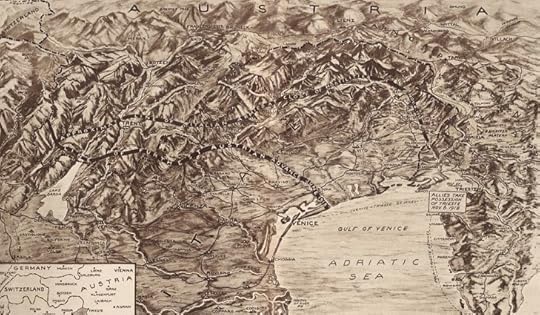
These 160 pages fall into three parts. In the first, Jozef grows to manhood, absorbing all the lessons his father can teach him, and bonding with an adopted older brother, Zlee. In the second and longest part, Jozef fakes the birth date on his ID to be able to join up with Zlee in the Austro-Hungarian army. As soon as their hunting skills are discovered, the boys are paired as marksmen and sent to pick off high-value targets in the mountains overlooking the River Soča. This, under its Italian name, the Isonzo, is the setting of two great novels that have always intrigued me. But Krivák is less romantic than Hemingway's A Farewell to Arms and less cinematic in scope than Mark Helprin's A Soldier of the Great War. Eschewing the big picture for the small, he makes us see through the crosshairs of Jozef's sights as he makes his kills. Detailed, intimate, and often chilling, it is some of the best war writing I have ever read.
The Soča/Isonzo today
Brilliant as the wartime section was, it is what comes after it that makes the book. At first I didn't think so. Long treks in a weakened state and months of imprisonment might seem an anticlimax. Yet it is here that Jozef starts to think and, painfully, to feel; the conversation I quoted above comes from these pages. Finally released, he comes upon a pregnant gypsy girl and saves her from two murderous deserters. Together, they journey Eastward, towards his homeland and perhaps hers. It becomes a story of love, but karitas not eros, seemingly romantic but in fact almost religious. Almost without our knowing it, this final chapter has brought a hard-won redemption, which ends Jozef's European sojourn in moving beauty. Before becoming a writer, Krivák trained as a Jesuit priest, but his theology is deeply human rather than doctrinaire. I gather that an unusual priest will play a major part in the sequel to this novel, The Signal Flame. It makes me eager to read it.
Then Hamburg, and Europe, and all her empires, all I had ever know—the only ground that up to then had fed me, the only well from which I had drunk—receded in slow swaths of wash and sky as we surrendered to the outgoing tide on the Elbe.
March 22, 2024
Andrew Krivak moves as assuredly and elegantly through the rocky terrain of this novel as a mountain goat dancing across impossible precipices. It's hard to grasp how he does it — creating an epic war story in a slim 200 pages — and then when you consider this was his debut ...
Jozef Vinich, born in Colorado at the end of the 19th century, is an infant when tragedy forces his immigrant father to abandon his dreams in America and return to his native Slovakia. The elder Vinich raises his son at a remove from a stepmother and two stepbrothers, whose depravity is carved from a Grimm's fairytale, spending months at a time in the Carpathian mountains herding sheep. Father and son welcome an orphaned cousin into their fold and the two boys bond, learning mountain survival skills and becoming skilled marksmen.
When World War I reaches even the most remote peaks of the Austro-Hungarian Empire, both boys enlist. With their unique skills, they are paired as an elite mountain sniper team and dispatched to the Italian Alps, where they pick off Italians on front line. All around them, Austrians, Germans, Hungarians, and their fellow Slavs are sent by droves to the slaughterhouse of the trenches, just like the young men from France, England, Italy on the front's other side. The war scenes are terrifying, their very gruesomeness a raw-throated appeal for peace.
From Alpine terror to near-starvation in a prisoner of war camp to a long trek to rediscover wherever home may be, Jozef Vinich's sojourn becomes an odyssey of redemption and purpose.
Having now read several of Krivak's novels, I am in awe of the quiet thunder of his work. His is storytelling you feel deep in the belly; it grips you from the opening pages and shakes you to your foundation by the end. The Sojourn, inspired by Krivak's own family history, is no exception. A tremendous novel of war that is a requiem for those lost.
Jozef Vinich, born in Colorado at the end of the 19th century, is an infant when tragedy forces his immigrant father to abandon his dreams in America and return to his native Slovakia. The elder Vinich raises his son at a remove from a stepmother and two stepbrothers, whose depravity is carved from a Grimm's fairytale, spending months at a time in the Carpathian mountains herding sheep. Father and son welcome an orphaned cousin into their fold and the two boys bond, learning mountain survival skills and becoming skilled marksmen.
When World War I reaches even the most remote peaks of the Austro-Hungarian Empire, both boys enlist. With their unique skills, they are paired as an elite mountain sniper team and dispatched to the Italian Alps, where they pick off Italians on front line. All around them, Austrians, Germans, Hungarians, and their fellow Slavs are sent by droves to the slaughterhouse of the trenches, just like the young men from France, England, Italy on the front's other side. The war scenes are terrifying, their very gruesomeness a raw-throated appeal for peace.
From Alpine terror to near-starvation in a prisoner of war camp to a long trek to rediscover wherever home may be, Jozef Vinich's sojourn becomes an odyssey of redemption and purpose.
Having now read several of Krivak's novels, I am in awe of the quiet thunder of his work. His is storytelling you feel deep in the belly; it grips you from the opening pages and shakes you to your foundation by the end. The Sojourn, inspired by Krivak's own family history, is no exception. A tremendous novel of war that is a requiem for those lost.

November 12, 2011
When I looked back over my 2011 reading year, I found there were just too many times when I finished a book I wasn't enjoying simply because I'd gone so far into it that I figured I may as well push on to the end. For 2012 I've decided to change that. So, sorry to say, The Sojourn is the first victim of my new policy.
I read a little over half of the book. Were I to finish, I'd probably give it three stars. Andrew Krivak writes well and the plot has potential. But the more I read, the flatter it felt to me. Character development is minimal. In good fiction we learn a lot about the characters through what they say to each other and how they say it. The Sojourn is short on dialogue and heavy on exposition. And it happens to be my least favorite kind of expository writing -- paragraph-long, comma-laden sentences that leave me wondering what I just read.
Much of what I read seemed like a recitation of what the author gleaned in his research rather than a progression of plot. That probably sounds unfair, but I don't care to put any more time into explaining myself. For a balanced perspective, be sure to check out some of the more favorable reviews of the book.
I read a little over half of the book. Were I to finish, I'd probably give it three stars. Andrew Krivak writes well and the plot has potential. But the more I read, the flatter it felt to me. Character development is minimal. In good fiction we learn a lot about the characters through what they say to each other and how they say it. The Sojourn is short on dialogue and heavy on exposition. And it happens to be my least favorite kind of expository writing -- paragraph-long, comma-laden sentences that leave me wondering what I just read.
Much of what I read seemed like a recitation of what the author gleaned in his research rather than a progression of plot. That probably sounds unfair, but I don't care to put any more time into explaining myself. For a balanced perspective, be sure to check out some of the more favorable reviews of the book.

June 1, 2014
Terrific prose. Very well written.

May 14, 2012
This novel reminds me of a story a father might tell a son in long sections, by the fire of a remote cabin in the woods, perhaps over a period of years. It has no heights nor moments of extreme tension, but has a sort of inevitability to it, like a melody that sounds familiar but that we listen to with eyes wide and head canted to catch phrases that are new and put together in surprising ways.
The literature of World War I makes one a pacifist. Some of the best writing about that time forces upon one the futility of war. This is another to add to that canon. The use of language makes this novel special, as does the rich imagining of a young man’s life, and the angle: our narrator is a sharpshooter, a sniper, a marksman. The war looks different from a mountain hide and through the crosshairs of a precision scope, given that this work required hunting one’s target like an animal of prey. The best equipment and a gold braid inspire a degree of freedom and uncontested passage through forward lines. But the soul-destroying fact of the war just takes a little longer with these well-trained and disciplined boy soldiers.
The graceful arc of the story brings the reader full circle, through a life lived in the space of years. We feel older, too, when we close the book, and sit back to say simply, “it is done.” No pyrotechnics, just gorgeous language and solid storytelling. This is a man’s novel—it notices and mentions those things that men know and think and experience. Women will like it because it casts some light on a man and thoughts he wouldn’t ever articulate. It is Krivak’s first novel.
The literature of World War I makes one a pacifist. Some of the best writing about that time forces upon one the futility of war. This is another to add to that canon. The use of language makes this novel special, as does the rich imagining of a young man’s life, and the angle: our narrator is a sharpshooter, a sniper, a marksman. The war looks different from a mountain hide and through the crosshairs of a precision scope, given that this work required hunting one’s target like an animal of prey. The best equipment and a gold braid inspire a degree of freedom and uncontested passage through forward lines. But the soul-destroying fact of the war just takes a little longer with these well-trained and disciplined boy soldiers.
The graceful arc of the story brings the reader full circle, through a life lived in the space of years. We feel older, too, when we close the book, and sit back to say simply, “it is done.” No pyrotechnics, just gorgeous language and solid storytelling. This is a man’s novel—it notices and mentions those things that men know and think and experience. Women will like it because it casts some light on a man and thoughts he wouldn’t ever articulate. It is Krivak’s first novel.

October 14, 2011
I'm not going to give much detail about this book, because I want readers to discover what it is for themselves. But briefly, it's the story of a young man's sojourn into the world before, during, and following World War I. That sounds innocuous, but it is so much more. There is love, loyalty, bravery, danger, spirits....and the book is less than 200 pages, so it packs a wallop! And, my family to this country from the Austria/Czechoslovakia region, so it was near and dear to my heart.
For a first book, I couldn't believe the grasp of the language and research that went into Krivak's work. For a few days I was living in those woods, during the horror of a war, not eating, and just walking, walking toward some sense of safety.
I feel like the book was divided into sections of Jozef's life. And I found there is a lot for the reader to figure out on his or her own. It's 1979, but who is telling this story to us from Pennsylvania? And per usual, as I closed the book, I wanted to know what happens next. I'm not one for sequels, but Krivak could definitely carry this character into another tale.
I had originally given this 4.5 stars, but after thinking about it further, definitely 5 stars. The 4 stars was based on a part of the book, where for many pages, there was no dialogue whatsoever. I started to find it tedious, but then realized, this was the way it was meant to be; to have dialogue during this part would have been untrue and ruined it.
I'll be anxious to see what else Krivak has in store for us. This is nominated for the National Book Award, and while I haven't read any other book, this is my vote, it's an A.
For a first book, I couldn't believe the grasp of the language and research that went into Krivak's work. For a few days I was living in those woods, during the horror of a war, not eating, and just walking, walking toward some sense of safety.
I feel like the book was divided into sections of Jozef's life. And I found there is a lot for the reader to figure out on his or her own. It's 1979, but who is telling this story to us from Pennsylvania? And per usual, as I closed the book, I wanted to know what happens next. I'm not one for sequels, but Krivak could definitely carry this character into another tale.
I had originally given this 4.5 stars, but after thinking about it further, definitely 5 stars. The 4 stars was based on a part of the book, where for many pages, there was no dialogue whatsoever. I started to find it tedious, but then realized, this was the way it was meant to be; to have dialogue during this part would have been untrue and ruined it.
I'll be anxious to see what else Krivak has in store for us. This is nominated for the National Book Award, and while I haven't read any other book, this is my vote, it's an A.

April 20, 2023
This is a beautifully written and highly impactful novel of WWI. The main character, Jozef, was born in the US, his mother died, and he returned to his parents’ native Hungary, where he worked with his father as a sheepherder and learned the mountains, nature and hunting. A distant relative is raised as his brother, and when WWI begins, the two young men become snipers in the Austro-Hungarian army. The author’s description of the Carpathian mountains and how the two young men and Jozef’s father live in them is beautiful and emotional. The Hungarian mountain scenes lead to the war scenes (also in the mountains), which are described in all their terror, blood, hunger, cold, illness and dirt. Jozef suffers great loss, is imprisoned in Italy and, after experiencing brief peace with a woman, returns home where nothing remains for him. I can summarize the plot of this novel, but it is hard to do justice to the magnificent, moving, beautiful writing. I will absolutely read the two sequels to this novel.

April 20, 2011
One of the best novels I have read in years. A coming of age story set in the early 1900's that culminates during WW I, and its aftermath. This is a book that I compare to the Red Badge of Courage in its depiction of war, and getting inside the head of main character who became a sniper during the war.
The book is filled with real details of the Austro-Hunarian battles with Italy. The back and forth ebb and flow of those battles, with one country winning a battle for a hill and the next day the other forces winning back that hill, are based on true events in the war and provide a great backdrop for the author to use.
I heartily recommend this book to all.
The book is filled with real details of the Austro-Hunarian battles with Italy. The back and forth ebb and flow of those battles, with one country winning a battle for a hill and the next day the other forces winning back that hill, are based on true events in the war and provide a great backdrop for the author to use.
I heartily recommend this book to all.

December 21, 2018
Questa terra
«Il problema degli slavi sono gli slavi»
Acquistato in fiera a Più Libri Più Liberi un paio di anni fa, prima del trasloco alla Nuvola.
Mi intuisco al banco della Keller chiedere consiglio, farmi raccontare qualche novità, ed uscirne con La casa delle parole e questo. Lo riprendo in mano un mesetto fa, dopo averlo dimenticato fino ad allora nella mia sempre più caotica libreria e dopo averne parlato casualmente - in realtà riferendomi all’ultimo romanzo di Krivak pubblicato da Einaudi Stile Libero e che solo alla fine associo a questo - ricordando all’improvviso la copertina: non il titolo, non il nome dell’autore, lo ricordo dalla copertina, che però non ho mai guardato con attenzione, anche già anticipa quella che sarà la storia contenuta al suo interno.
È così inizio che a leggere un romanzo di cui so pochissimo, quasi nulla, che si apre con un prologo agghiacciante e fulminante per bellezza della narrazione, che racconta di un evento da cui scaturisce tutto ciò che segue: siamo a Pueblo, in Colorado, da cui ci spostiamo subito dopo in Pennsylvania, ai piedi dei Monti Appalachi, e io, che a quel punto so già che Krivak è nato negli Stati Uniti da famiglia slovacca emigrata dopo la prima guerra, ignoro completamente il fatto che a essere teatro del romanzo non saranno gli Appalachi, non saranno le miniere del Colorado in cui il padre, emigrato dalla Slovacchia per fuggire alla povertà, inizia a lavorare conducendo una vita altrettanto povera insieme alla giovane moglie e al neonato Jozef, ma le montagne sulle quali l’esercito dell’impero austroungarico e quelli italiano e inglese si daranno battaglia fino all’ultimo sangue.
Feroce, è l’aggettivo usato dalla casa editrice per descriverlo, e non potrebbe essere usato termine più appropriato: Il Soggiorno è feroce nel prologo, è feroce nell’esilio, è feroce nel soggiorno, è feroce nel ritorno.
È feroce nello sguardo con cui Krivak ci racconta una storia di guerra vista dalla riva opposta del Piave e dell’Isonzo, di una Caporetto che per una volta ci mostra l’avanzare di quell’esercito, che fu imbattibile, ma che già in quel momento iniziava a disgregarsi, a vedere dissolversi i contorni di un Impero che sembrava intramontabile.
È la storia di Jozef Vinich, che nasce a Pueblo, torna a Pastvina, combatte sul Piave, viene fatto prigioniero in guerra dagli italiani e, dopo essere stato incarcerato, viene liberato alla sua fine in Sardegna e che quando fa ritorno a casa, in un lungo cammino che - anche se in direzione contraria - mi ha ricordato quello raccontato da Primo Levi ne La Tregua, si accorge che tutto è cambiato: i nomi, i confini, le persone.
È la storia di Jozef che parla più dei morti che dei vivi, di suo padre e di suo fratello e cugino Zlý (pes, cattivo, cagnaccio) - die Zwillinge, i gemelli, come vengono chiamati al fronte dopo aver subito un duro addestramento per diventare tiratori scelti - di una zingara incinta e di un prigioniero corso, Tajna (segreto, da non rivelare) e Banquo (bianco, come un fantasma), di marce nella neve, di pascoli sotto la neve e di gelo e sangue che scandiscono le giornate che separano la fame e la guerra e la lotta per la sopravvivenza dall’unico desiderio di Jozef: tornare a casa, ovunque sia la frontiera.
Perché questa, in fondo è una storia di radici e al tempo stesso di frontiera, che si delinea su due continenti, l’Europa e gli Stati Uniti, facendo lei stessa da lungo prologo (ma assolutamente compiuto) al successivo romanzo di Krivak, Questa Terra, che prosegue oltreoceano le vicende di Jozef, che nacque negli Stati Uniti, ma combatté in Europa per gli Asburgo, e della sua famiglia americana.
Che io mi affretto a leggere. Anzi, l’ho iniziato a leggere un momento dopo aver posato questo.

«I fantasmi sono deboli» disse Banquo, «e vogliono soltanto compiacerci. Tu non fargli domande. Tutte le sue domande hanno avuto risposta. […] I fantasmi non sono i morti: sono la nostra paura della morte. Devi dire a te stesso di non avere paura, Jozef»
«Il problema degli slavi sono gli slavi»
Acquistato in fiera a Più Libri Più Liberi un paio di anni fa, prima del trasloco alla Nuvola.
Mi intuisco al banco della Keller chiedere consiglio, farmi raccontare qualche novità, ed uscirne con La casa delle parole e questo. Lo riprendo in mano un mesetto fa, dopo averlo dimenticato fino ad allora nella mia sempre più caotica libreria e dopo averne parlato casualmente - in realtà riferendomi all’ultimo romanzo di Krivak pubblicato da Einaudi Stile Libero e che solo alla fine associo a questo - ricordando all’improvviso la copertina: non il titolo, non il nome dell’autore, lo ricordo dalla copertina, che però non ho mai guardato con attenzione, anche già anticipa quella che sarà la storia contenuta al suo interno.
È così inizio che a leggere un romanzo di cui so pochissimo, quasi nulla, che si apre con un prologo agghiacciante e fulminante per bellezza della narrazione, che racconta di un evento da cui scaturisce tutto ciò che segue: siamo a Pueblo, in Colorado, da cui ci spostiamo subito dopo in Pennsylvania, ai piedi dei Monti Appalachi, e io, che a quel punto so già che Krivak è nato negli Stati Uniti da famiglia slovacca emigrata dopo la prima guerra, ignoro completamente il fatto che a essere teatro del romanzo non saranno gli Appalachi, non saranno le miniere del Colorado in cui il padre, emigrato dalla Slovacchia per fuggire alla povertà, inizia a lavorare conducendo una vita altrettanto povera insieme alla giovane moglie e al neonato Jozef, ma le montagne sulle quali l’esercito dell’impero austroungarico e quelli italiano e inglese si daranno battaglia fino all’ultimo sangue.
Feroce, è l’aggettivo usato dalla casa editrice per descriverlo, e non potrebbe essere usato termine più appropriato: Il Soggiorno è feroce nel prologo, è feroce nell’esilio, è feroce nel soggiorno, è feroce nel ritorno.
È feroce nello sguardo con cui Krivak ci racconta una storia di guerra vista dalla riva opposta del Piave e dell’Isonzo, di una Caporetto che per una volta ci mostra l’avanzare di quell’esercito, che fu imbattibile, ma che già in quel momento iniziava a disgregarsi, a vedere dissolversi i contorni di un Impero che sembrava intramontabile.
È la storia di Jozef Vinich, che nasce a Pueblo, torna a Pastvina, combatte sul Piave, viene fatto prigioniero in guerra dagli italiani e, dopo essere stato incarcerato, viene liberato alla sua fine in Sardegna e che quando fa ritorno a casa, in un lungo cammino che - anche se in direzione contraria - mi ha ricordato quello raccontato da Primo Levi ne La Tregua, si accorge che tutto è cambiato: i nomi, i confini, le persone.
È la storia di Jozef che parla più dei morti che dei vivi, di suo padre e di suo fratello e cugino Zlý (pes, cattivo, cagnaccio) - die Zwillinge, i gemelli, come vengono chiamati al fronte dopo aver subito un duro addestramento per diventare tiratori scelti - di una zingara incinta e di un prigioniero corso, Tajna (segreto, da non rivelare) e Banquo (bianco, come un fantasma), di marce nella neve, di pascoli sotto la neve e di gelo e sangue che scandiscono le giornate che separano la fame e la guerra e la lotta per la sopravvivenza dall’unico desiderio di Jozef: tornare a casa, ovunque sia la frontiera.
Perché questa, in fondo è una storia di radici e al tempo stesso di frontiera, che si delinea su due continenti, l’Europa e gli Stati Uniti, facendo lei stessa da lungo prologo (ma assolutamente compiuto) al successivo romanzo di Krivak, Questa Terra, che prosegue oltreoceano le vicende di Jozef, che nacque negli Stati Uniti, ma combatté in Europa per gli Asburgo, e della sua famiglia americana.
Che io mi affretto a leggere. Anzi, l’ho iniziato a leggere un momento dopo aver posato questo.
«I fantasmi sono deboli» disse Banquo, «e vogliono soltanto compiacerci. Tu non fargli domande. Tutte le sue domande hanno avuto risposta. […] I fantasmi non sono i morti: sono la nostra paura della morte. Devi dire a te stesso di non avere paura, Jozef»

December 20, 2011
"The Sojourn" is an example of an excellent story marred by less than excellent writing. The story about a man who is born and raised in the U.S. to Slav parents, returns to the homeland after a personal tragedy, and then goes on to fight for Austria-Hungary during World War I sounds like a great story to read about--and it is. The only problem is the writing in this book makes for a grueling read, and you might find yourself, like me, taking several months to finish a novel of a mere 191 pages.
As Krivak is a first time author, I'd like to share a few pieces of advice for him:
Tip 1: An entire page of a book should probably consist of more than two sentences. Paragraph-long sentences that use clause after clause only make readers confused as to what they have just read, forcing them to re-read all those sentences. This makes the book tedious instead of enjoyable to read. Some of the grammar and syntax was poor too, especially in regards to interjections. If English is supposed to be your protagonist's first language in this story, you sure fooled me.
Tip 2: Frequent use of stream of consciousness and figurative language may make your book feel poetic and profound. However, it shouldn't come at the expense of exposition or solid description. I want the story to move me, but knowing what the hell is going on in it would be nice too. Character and setting descriptions were much too terse. I always knew what characters were feeling, but I could never form a picture in my mind concerning what the characters, or the locations they inhabited, looked like.
Tip 3: Please don't use high-sounding words like "phlegmatic" or "indefatigable." All these words really show is that you own a thesaurus and don't know when NOT to use it. When it comes to word choice, I believe simpler is better.
and lastly...
Tip 4: This is an English language book. If you are going to frequently drop Slavic, German, Italian, or Hungarian words and phrases, you better let the reader know what they mean. I don't speak Hungarian--sorry. Also, I am not an expert on European geography. If you are going to mention all these cities, mountain ranges, and rivers, it would be nice if you were a little more clear as to their locations with respect to each other. I don't know where the Sajo River is, and I really don't want to read a novel with an atlas in my lap.
My diagnosis on "The Sojourn" is this: Although I know I'm not the best reader in the world, I can't help but feel I really would have enjoyed this story a whole lot more if it had been told by someone else. I know that is a strange thing to say concerning an author and his work, but that is how I feel.
As Krivak is a first time author, I'd like to share a few pieces of advice for him:
Tip 1: An entire page of a book should probably consist of more than two sentences. Paragraph-long sentences that use clause after clause only make readers confused as to what they have just read, forcing them to re-read all those sentences. This makes the book tedious instead of enjoyable to read. Some of the grammar and syntax was poor too, especially in regards to interjections. If English is supposed to be your protagonist's first language in this story, you sure fooled me.
Tip 2: Frequent use of stream of consciousness and figurative language may make your book feel poetic and profound. However, it shouldn't come at the expense of exposition or solid description. I want the story to move me, but knowing what the hell is going on in it would be nice too. Character and setting descriptions were much too terse. I always knew what characters were feeling, but I could never form a picture in my mind concerning what the characters, or the locations they inhabited, looked like.
Tip 3: Please don't use high-sounding words like "phlegmatic" or "indefatigable." All these words really show is that you own a thesaurus and don't know when NOT to use it. When it comes to word choice, I believe simpler is better.
and lastly...
Tip 4: This is an English language book. If you are going to frequently drop Slavic, German, Italian, or Hungarian words and phrases, you better let the reader know what they mean. I don't speak Hungarian--sorry. Also, I am not an expert on European geography. If you are going to mention all these cities, mountain ranges, and rivers, it would be nice if you were a little more clear as to their locations with respect to each other. I don't know where the Sajo River is, and I really don't want to read a novel with an atlas in my lap.
My diagnosis on "The Sojourn" is this: Although I know I'm not the best reader in the world, I can't help but feel I really would have enjoyed this story a whole lot more if it had been told by someone else. I know that is a strange thing to say concerning an author and his work, but that is how I feel.

April 25, 2021
What am I doing on Goodreads at this time? I can barely say I have been able to focus on reading. But I need some semblance of normalcy. Something to convince myself that the world is still out there, in shades of green, where I can contemplate pages and words and atrocious plots rather than anxiously check the availability of oxygen cylinders.
I didn’t understand much of ‘The Sojourn.’ War books have never particularly enticed me, particularly if they detail too much the actual warfare - snipers, shooters, you get the picture. Perhaps, it was also my unsettled mind. But this didn’t appeal to me as much as ‘The Bear,’ which was Krivak’s last novel.
I didn’t understand much of ‘The Sojourn.’ War books have never particularly enticed me, particularly if they detail too much the actual warfare - snipers, shooters, you get the picture. Perhaps, it was also my unsettled mind. But this didn’t appeal to me as much as ‘The Bear,’ which was Krivak’s last novel.

August 30, 2026
This was on my TBR list for 10 years! Glad I finally got to it. It was worth the wait….
I was just thinking, i hope Jozef has a good life in the end, and realized there is another book with this same character!!!!!
I was just thinking, i hope Jozef has a good life in the end, and realized there is another book with this same character!!!!!

September 30, 2012
I don't know, I feel like I don't really have much to say about this except that for one reason or another it never quite got me engaged. It was one of those books that always felt like it was winding up for the story to really get going, right up until it was over, so it felt like lots of ideas or possibilities were introduced but not connected. And there's a narrative distance that lowered the tension so much - not to mention the poetic voice that felt so at odds with the material - that I guess I felt at arm's length all along. It's similar in a number of ways to David Malouf's Fly Away Peter, but that novel just gripped me a bit tighter (though perhaps it wouldn't if I went back to it now?).

October 2, 2017
Very well written, but I was not sure it added a lot to the great store of wonderful World War I literature. I was never sucked in as the 3 months it took me to read this slender volume attests.

January 15, 2020
A meditative book about war and its effects, and one man's (partially) solitary journey through a chaotic and changing landscape. Beautifully written, and despite the flash and bang background noise of the war, the book itself is very quiet.

January 28, 2026
This serpentine tale begins in the early 1900s, in a Colorado mining time. Jozef Vinich is a boy being raised by his father. When they are suddenly uprooted, they return to his father’s home country and begin a shepherd’s life in rural Austria-Hungary. When Jozef becomes a teenager, World War 1 begins and Jozef and his adopted brother join the Kaiser’s army and become sharpshooters.
This is a solid coming of age story touching on survival, brotherhood and a strong father and son relationship. It is also interesting to see the war from the Austrian, German and Czech point of view. The author effectively packs in quite a story in less than 200 pages.
This is a solid coming of age story touching on survival, brotherhood and a strong father and son relationship. It is also interesting to see the war from the Austrian, German and Czech point of view. The author effectively packs in quite a story in less than 200 pages.

June 21, 2025
Beautiful. Poetic. Sad. It felt like listening to someone talk by the fireplace on a cold night. I loved it

April 19, 2026
I loved Mule Boy,it's exquisite. This one,however...clunky writing,great until the war,and then it drags.A pity.

June 11, 2011
Coming from Bellevue Literary Press, the same small publisher that brought us last year's Pulitzer Prize winner for fiction, Tinkers, is a tiny gem of a novel--The Sojourn by Andrew Krivak. I hope that because of the publisher's track record that the book will get more review attention, because it certainly deserves it and, I suspect, would otherwise get overlooked. Like Tinkers, it is a deceptively quiet novel filled with beautiful language and painstakingly crafted prose. While I did not love it (I need to care more about my characters for that), I think it is a very fine novel.
Jozef Vinich's life is marked by early tragedy when his father packs him up from the Americas and moves them both back to a small village in the Austro-Hungarian empire. Life gets even more difficult with an unpleasant stepmother and a harsh life life as a shepherd. When he and his half brother enlist in World War I, little do they realize that their dream of escape from their impoverished rural life is about to become a nightmarish struggle for survival in the trenches. Round that off with the life of a sniper who is then taken prisoner and you'd think it would all make for some pretty exciting reading, right?
Well, actually not. It is a very deliberate book, holding the reader always at arm's length, and though the atrocities of war are not skimped on, it was hard for me to work up more than a vague horror at any given point, or for that matter, more than a vague relief when each unpleasant situation passed. The writing is beautiful, but more in a clinically precise way; the level of passion implied by the action never quite reaches the writing. This may sound like I'm damning The Sojourn with faint praise but that's not true. Just because I find it to be reserved doesn't mean I do not admire it. I do, in fact. And when customers talk with me about wanting a book that is finely crafted, whose writing is precise (Krivak always finds his mot juste), I will unhesitatingly recommend it.
Here's a sample of the writing. Krivak frequently writes paragrah-long sentences, (think Jose Saramago among the modern greats) and while they make take a bit more effort to read, the effort is certainly rewarded:
The northwestern Carpathians, in which I was raised, were a hard place, as unforgiving as the people who lived there, but the Alpine landscape into which Zlee and I were sent that early winter seemed a glimpse of what the surface of the earth looked and felt and acted like when there were no maps or borders, no rifles or artillery, no men or wars to claim possession of land, and snow and rock alone parried in a match of millennial slowness so that time meant nothing, and death meant nothing, for what life there was gave in to the forces of nature surrounding and accepted its fate to play what role was handed down in the sidereal march of seasons capable of crushing in an instant what armies might--millennia later--be foolish enough to assemble on its heights.
Lovely, no? And when read with a deliberate pace, really considering what he is putting forth here, one finds ultimately that it is worth reading. And worth the little extra effort. And if one comes away feeling less than fervent about the characters or the events and is moved more by the language itself, then so be it.
Jozef Vinich's life is marked by early tragedy when his father packs him up from the Americas and moves them both back to a small village in the Austro-Hungarian empire. Life gets even more difficult with an unpleasant stepmother and a harsh life life as a shepherd. When he and his half brother enlist in World War I, little do they realize that their dream of escape from their impoverished rural life is about to become a nightmarish struggle for survival in the trenches. Round that off with the life of a sniper who is then taken prisoner and you'd think it would all make for some pretty exciting reading, right?
Well, actually not. It is a very deliberate book, holding the reader always at arm's length, and though the atrocities of war are not skimped on, it was hard for me to work up more than a vague horror at any given point, or for that matter, more than a vague relief when each unpleasant situation passed. The writing is beautiful, but more in a clinically precise way; the level of passion implied by the action never quite reaches the writing. This may sound like I'm damning The Sojourn with faint praise but that's not true. Just because I find it to be reserved doesn't mean I do not admire it. I do, in fact. And when customers talk with me about wanting a book that is finely crafted, whose writing is precise (Krivak always finds his mot juste), I will unhesitatingly recommend it.
Here's a sample of the writing. Krivak frequently writes paragrah-long sentences, (think Jose Saramago among the modern greats) and while they make take a bit more effort to read, the effort is certainly rewarded:
The northwestern Carpathians, in which I was raised, were a hard place, as unforgiving as the people who lived there, but the Alpine landscape into which Zlee and I were sent that early winter seemed a glimpse of what the surface of the earth looked and felt and acted like when there were no maps or borders, no rifles or artillery, no men or wars to claim possession of land, and snow and rock alone parried in a match of millennial slowness so that time meant nothing, and death meant nothing, for what life there was gave in to the forces of nature surrounding and accepted its fate to play what role was handed down in the sidereal march of seasons capable of crushing in an instant what armies might--millennia later--be foolish enough to assemble on its heights.
Lovely, no? And when read with a deliberate pace, really considering what he is putting forth here, one finds ultimately that it is worth reading. And worth the little extra effort. And if one comes away feeling less than fervent about the characters or the events and is moved more by the language itself, then so be it.

July 24, 2012
The eastern European migrations to work in the mines in Pueblo, Colorado, took place in the late 1890s. This story begins in 1899 when Anna Vinich, a Slovak immigrant, takes her baby son, Jozef, and her nephew for a walk along the rail lines. Anna and the nephew are killed by an oncoming train as baby Jozef is saved, tossed to some boys, playing in water below the trestle. The sister-in-law, learning of her son's death, goes into labor prematurely, delivering a stillborn girl.
This tragedy begins Jozef and his father's trek back to Pastvina in the Hungarian Empire, making their living as shepherds. The Austro-Hungarian Empire with it's ethnic diversity, multiplicity of languages, and politics is examined through Jozef's life and his participation in World War I. It explains a great many of the issues in Eastern Europe today.
Beautifully written.
p.99:"...I felt a sense of peace in that war, within myself, and without, amid the unexpected beauty of those peaks that lured and threatened us like enemies themselves..."
p.144: "The possibility that a life itself may prove to be the most worthy struggle. Not the whole sweeping vale of tears that Rome and her priests want us to sacrifice ourselves to daily so that she lives in splendor, but one single moment in which we die so that someone else lives. That's it, and it is fearful because it cannot be seen, planned, or even known. It is simply lived. If there be purpose, it happens of a moment within us, and lasts a lifetime without us, like water opening and closing in a wake."
This tragedy begins Jozef and his father's trek back to Pastvina in the Hungarian Empire, making their living as shepherds. The Austro-Hungarian Empire with it's ethnic diversity, multiplicity of languages, and politics is examined through Jozef's life and his participation in World War I. It explains a great many of the issues in Eastern Europe today.
Beautifully written.
p.99:"...I felt a sense of peace in that war, within myself, and without, amid the unexpected beauty of those peaks that lured and threatened us like enemies themselves..."
p.144: "The possibility that a life itself may prove to be the most worthy struggle. Not the whole sweeping vale of tears that Rome and her priests want us to sacrifice ourselves to daily so that she lives in splendor, but one single moment in which we die so that someone else lives. That's it, and it is fearful because it cannot be seen, planned, or even known. It is simply lived. If there be purpose, it happens of a moment within us, and lasts a lifetime without us, like water opening and closing in a wake."

June 21, 2011
Andrew Krivak's impressive debut novel is a coming-of-age story about young Jozef Vinich, whose family is forced to flee a Colorado mining town in the 1890s for its homeland of Austria-Hungary due to a series of tragic events. When World War I breaks out across Europe, Jozef joins the fight as a sharpshooter. The majority of the novel focuses on his experiences in the killing fields and trenches of the Great War. Along the way Jozef faces a desperate journey through the Italian Alps, epic duels with enemy snipers, and his inevitable capture.
While Krivak's novel is undoubtedly a study of warfare and its numbing effect on humanity, the author seems to suggest that human relationships in themselves can be a kind of warfare, both physically and psychologically. Jozef spends most of his childhood devoting himself to the impossible task of pleasing his callous father. He experiences the bitterness of sibling rivalry and the heartbreak of losing those closest to him. Yet, he finds kindness and sympathy from the unlikeliest of people: the soldiers who eventually hold him captive.
Highly Recommended.
While Krivak's novel is undoubtedly a study of warfare and its numbing effect on humanity, the author seems to suggest that human relationships in themselves can be a kind of warfare, both physically and psychologically. Jozef spends most of his childhood devoting himself to the impossible task of pleasing his callous father. He experiences the bitterness of sibling rivalry and the heartbreak of losing those closest to him. Yet, he finds kindness and sympathy from the unlikeliest of people: the soldiers who eventually hold him captive.
Highly Recommended.
March 3, 2017
Author Andrew Krivaks first novel is an awesome read. It's a story of love, war, pain, and a coming of age. Josef is the main character whose story takes you on a journey that you cannot let go of. Born in an old mining town (45 miles from where I once lived) Pueblo, Colorado and still a mining town, to a shepherd's life in rural Austria/Hungary. Then world war 1 breaks out and his life is never the same again. He goes to war with an orphan who he loves like a brother, Zlee, where death and pain are forever etched into their souls. There are not enough words that I can say, except everyone should read this book. It's truly one of the great ones to be sure.

August 18, 2012
This novel, which tells the tale of a young Czech who becomes a sharpshooter for the Astro-Hungarian Empire during the First World War is a wonderfully told tale. The writing style is similar to what you would find in a Hemingway or a Cormac McCarthy. The writing is sparse, but the story it tells is powerful. I don't really want to give away any details, other then to say that this is a fantastic book.

November 20, 2011
A story about the soul of Europe and the sadness, the cries, the hate, the wars and the sufferings that lie in the heart of it.
July 3, 2023
Really excellent writing, and a very affecting story…there’s a lot packed into this short novel. I definitely recommend.
Displaying 1 - 30 of 518 reviews