Biographical studies of Roosevelt, Stalin, Churchill, Hitler, and Mussolini portray them as exercising supreme command during World War II and a sixth sketch shows absence of such a figure in Japan
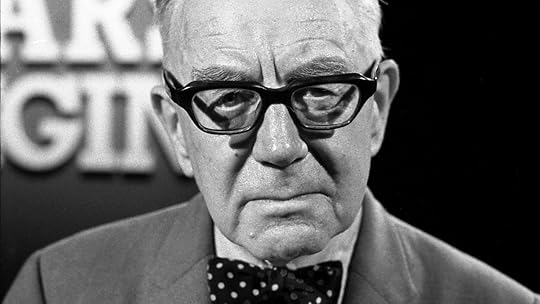
Alan John Percivale Taylor was an English historian of the 20th century and renowned academic who became well known to millions through his popular television lectures.
"A legjobb magyarázat manapság talán az én nézetem - ha szabad ezt így kijelenteni -, amit persze mások is osztanak."
Így kell ezt. Csak magabiztosan, A.J.P.
Ez a kötet a népszerű és néhai brit történész, A.J.P. Taylor BBC televízióban elhangzott előadásaiból állt össze. Ez technikailag azt jelenti, hogy a história eme doyenje egy alkalommal beült egy stúdióba, és hat lendületes monológban összefoglalta a második világháborút - ezek a monológok alighanem elegendőek ahhoz, hogy valaki leérettségizzen a segítségükkel, de sokkal többre aligha. Innentől kezdve a kiadói szerkesztő feladata lett, hogy telepakolja az így született könyvecskét egy rakás kapcsolódó képpel, amelyek nem ritkán az egész oldalt befoglalják - hátha így kinéz majd valahogy az amúgy ölég karcsú szövegtest. Igaz ugyan, hogy Taylor megborsozza mondanivalóját néhány meredeknek tűnő, provokatív állítással, de hát ettől se lesz sokkal tartalmasabb. Például már rögtön az előszóban kijelenti: a második világháború a "hadvezérek" háborúja, hisz a japánokat kivéve minden valamirevaló résztvevő hadműveleteit tulajdonképpen egyszemélyi vezetők irányították. No most én ezzel az állítással nem különösebben értek egyet - szerintem ugyanis Roosevelt és Hitler, Churchill vagy Sztálin vezetési stílusa annyira különbözött, hogy félrevezető ilyen módon egyetlen kategóriába belepakolni őket - inkább tűnik olcsó frázispufogtatásnak, mint valódi álláspontnak. De hajlok rá, hogy elfogadjak bármilyen jó érvet - csak hát az van, hogy Taylor egyáltalán nem szállítja azokat. Eszébe sincs kibontani állításait, csak hagyja, hadd sodorják magukkal saját szavai. Értem én, hogy ez a kötet jellegéből fakad, és abban is biztos vagyok, hogy Taylor más könyveiben ezeket az állításokat kellőképpen alátámasztja. Csak hát akkor is - ez így engem pöttyet irritált.
Amúgy bátran ajánlanám a kötetet nagyjából 12 és 18 év közötti leendő történészeknek, ők egészen biztosan haszonnal forgatják majd, és javukra válik az is, hogy Taylor vitathatatlanul lendületes, áradó szavú szerző. Csak hát nekem ez fél fogamra volt legfeljebb elég.
Herein are brief lectures given off the cuff via the BBC by noted historian A.J.P. Taylor, they being opinionated, but perspicacious, biographies of the leaderships of the USA, USSR, Britain, Italy, Germany and Japan during WWII, of Roosevelt, Stalin, Churchill, Mussolini and Hitler (Taylor notes that Japan had no clear, personal leadership). It's a quick read, learnedly opinionated, a challenge to anyone already conversant enough with the war to have formed his or her own beliefs. It's likely Taylor will contradict some of them.
A second read of Taylor's War Lords, results in loss of a star in the rating; two stars is now the score. The book is based on published transcripts of BBC televised lectures delivered, "simply talking to camera and making things up as I went along. I have tidied up the text for publication removing occasional muddles or false starts. Otherwise the lectures appear exactly as I delivered them." Some of the made up parts include salacious bits that make FDR sound Clintonesque (with Secret Service assistance). FDR is described quite negatively throughout, as in, "he was one of those men who, when left alone in a room, you felt he was not there at all." Couple such opinions with manufactured quotes from imagined conversations and Taylor's credibility quickly fades. Perhaps TV's quest for entertainment over elucidation explains Taylor's lack of rigor in his views: more gossip than history.
Overall he presents short biographies of wartime leaders Mussolini, Hitler, Churchill, Roosevelt and Stalin. Japan is presented without an individual "War Lord,' but with more of direction by committee(s).
The book is copiously illustrated with period photographs. This is, perhaps, the book's strongest feature. Otherwise, I would place it at the opposite end of the spectrum from another cluster of brief biographies around a common theme, Michael Barone's recent, Mental Maps of the Founders. The latter I recommend as informative and produced as a book, not as a TV show.
AJP Taylor was probably the most popular historian in Great Britain in the 60’ and 70’s. He had a vast back catalogue of published books and was on the tv on a fairly regular basis. This is a very short history of the 5 great leaders of WW2 and also of the Japanese who had no real overall commander, although nominally the Emperor was the supreme leader but he took no real position. It was originally a series of lectures that he delivered on the BBC and the book is pretty much a verbatim copy of those lectures. If you have any real interest in this period of history then you will learn nothing new. What you will get though, is Taylor’s opinion (something he prized very highly) and some dubious ideas about the decisions and thoughts of these war lords.
I really enjoyed AJP Taylor as an historian at school, so when I saw this book in a op-shop I got excited and looked forward to reacquainting myself with him. It was a disappointment. While interesting in a general way, it is pitched at a very low level - junior high school (it was originally broadcast as a series of lectures on BBC television) - and contains lots of assertions and premises that I either disagree with or are just plain wrong. So while there are amusing / interesting titbits here, the overall approach comes across as rudimentarily banal or facile. He is best on Churchill and Hitler, woeful on the Japanese and Roosevelt, and ok on Stalin and Mussolini.
History book by old, stodgy Oxford professor. Kind of a hatchet job on Roosevelt. According to this guy, Roosevelt was a chump and Churchill a saint. Also, he seems to be a fan of Stalin and Hitler. Even gives Hitler a free pass on the holocaust, saying it was Himler's idea. So that makes it OK, I guess.
I guess this guy is still bitter because after the war the British were no longer a major power and the US and Russia were. He does admit, grudgingly, that US won the war.
The only good thing about this book is the photos, which are excellent.
AJP Taylor was one of the great minds of the 20th century. He was also one of the great speakers. This short book publishes a drafted version of his transcripts of six lectures delivered on BBC television in August 1976.
The writing is like a crystal-blue lake. Extraordinary. As a young woman, I read all of AJP Taylor's books. He was funny. Pithy. Quirky. Direct. But reading his work all these years later, I can see how much we have lost from scholarly writing.
A fascinating, provocative and brilliantly written book.
An interesting 5.5-headed biography centered around the Second World War. The author had an interesting manner of vaguely touching upon key battles while devotedly describing minute conversations. Yet, he was able to string together the narratives productively; by the end you’ll think to yourself ‘oh that’s classic Churchill’ as he parlays with Stalin. And the minutiae makes for some cool fun facts. (the US mainland was warned about Pearl Harbor.. and a telegram blockage prevented the message from being relayed)
A J P Taylor is a brilliant and readable historian. This potted history of the 'War Lords' of the Second World War is as insightful and engrossing as you'd expect from the eminent Oxford academic. The only fault is the atrocious spelling and typos that litter the Kindle edition I read. Appallingly shoddy work. A great brief biography of historical statesmen.
This is a superficial summary of the leaders of the world during the war.it does not offer any understanding of these leaders or any hint of their personal lives. I did not find it useful and wish that I had not invested in this book.
This slim volume packs the punch of more detailed books into the best thumbnail biographies of these leaders I have ever read. Though compact and succinct, these notes contain one or two facts about each leader not mentioned in larger volumes. Recommended.
A collection of the authors lectures that he did for the BBC on the main leaders or war lords during WW2. Very interesting book and good insight into the leadership styles, attitudes and shortcomings of the great leaders during in WW2.
okay i quite enjoyed this! the photos are fascinating, and since it's essentially a transcript of some lectures Taylor did for the BBC, they're very easy to read, and are quite fun. heavily opinionated, but that's how old brits are! particularly enjoyed the sections on Hitler and Stalin.
I watched and read these lectures simultaneously and was struck by how Taylor could deliver these with such erudition and to time. Well worth the read for the political and personal insights/anecdotes.
The lectures are simple and straight from the heart of a master historian. As these are unedited versions, they have a natural flow and make for an interesting reading. As is his wont,he comes up with some startling statements like "the nuclear bomb was used against Japan, not so much as the result of any serious calculation, but simply because the Americans felt that that, as they had a bomb, they better use it". He also makes a strong statement with regard to the racial discrimination by the west, including the U.S.: "the Japanese learnt a lesson: the rules which applied to white men did not apply to what Churchill used to call 'those funny little yellow folk'". The characteristic American double standard was evident even in those times "The Americans stood by their open door policy- that Chins, just like every other part of the world except the United States, should be wide open to everybody's trade. From behind their own tariff wall, the Americans wanted to trade all over the world, to have no barriers erected against them" He holds Americans responsible for dragging the Japanese to war. The inimitably different Taylor at his best.
I picked this up because it was a rare find of a WWII book that can fit in my purse so I can read it whenever I can while working my shifts. The author's point of views on each of the men is really fascinating and he makes some really good points I never knew before. I truly enjoyed his take on each of these men and my only real complaint is that it could've been so much longer.
This book is more pictures than text. While Taylor always has an interesting point or two on each of the "warlords" of World War II, the book is still a set of very short essays drawn from a series of TV lectures.
Interesting pen portraits of the war leaders but short in length and lacking any depth. Not sure I agree with all his views such as no prior knowledge of Pearl Harbor.