Victor Hugo was the most important writer of the nineteenth century in leader of the Romantic movement, Revolutionary playwright, poet, epic novelist, author of the last universally accessible masterpieces in the European tradition, among them Les Misérables and The Hunchback of Notre Dame . He was also a radical political thinker and eventual exile from France, a gifted painter and architect, and a visionary who conversed with Virgil, Shakespeare, and Jesus Christ – in short, a tantalizing personality who dominated and maddened his contemporaries. Graham Robb has written an extraordinary biography that does full justice to the drama of his subject’s life – a life that Robb calls ‘the most lucid case of madness in literature’. By grasping the giant in his entirety and in his many disguises, Robb, bestselling author of The Discovery of France , rewards us with a panorama of French and European society from the Revolution to the dawn of the twentieth century. Victor Hugo won the Whitbread Award for Biography and the Royal Society of Literature award.
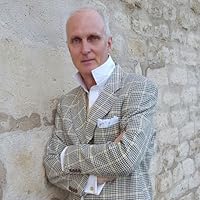
Graham Macdonald Robb FRSL (born June 2, 1958) is a British author.
Robb was born in Manchester and educated at the Royal Grammar School Worcester and Exeter College, Oxford, where he studied Modern Languages. He earned a PhD in French literature at Vanderbilt University.
He won the 1997 Whitbread Book Award for best biography (Victor Hugo) and was shortlisted for the Samuel Johnson Prize for Rimbaud in 2001. In 2007, he won the Duff Cooper Prize for The Discovery of France.
On April 28, 2008 he was awarded the £10,000 Ondaatje Prize by the Royal Society of Literature in London for The Discovery of France.
This book won the 1997 Whitbread biography award, so my hopes were high. I knew little about the towering French genius of the Victorian era, the author of Hunchback and Les Miz, and I was curious about the sources of his genius.
Well, it's an annoying book. I did learn a good deal about Victor Hugo's sexual proclivities (he was insatiable and omnivorous), the way he mistreated the several long-term women in his life, and his political vacillations (in a time when taking a stand was dangerous in France). Alas, the genius comes across as a thoroughly nasty, self-absorbed, selfish man -- who gave alms to the poor, but made sure everyone knew it. Who switched his political allegiances so many times that no one took him seriously after middle age, except the proletariat who went to their deaths several times because he egged them on to the barricades. And who abandoned his family several times at key moments, leading to (but not directly causing) the death of one of his daughters and the insanity of another. Not to mention his unspeakable, crazy brother. Another semi-victim of the Hugo juggernaut.
But that's not why the book is annoying. That's why Victor Hugo turns out to be annoying. No, the book is annoying because it's badly written. It has all the vices of French prose -- playfulness, allusive- and elusiveness -- without any of the virtues -- clarity of thought, structure, or phrase. How it won a prize is a puzzle. I know a good deal more about Victor Hugo than I did before, but I had to wade through 500+ pages of sloppy prose to learn it.
Reading Les Miserables many years ago was nothing less than a life-changing experience. Subsequently, I read The Hunchback of Notre Dame with much less effect, but the message of Les Miserables has remained etched in my mind. It was not until pre-reading for a trip to France that I ran across this biography by Graham Robb and realized how little I actually knew about Victor Hugo, the man.
I had previously read Graham Robb’s Historical Geography of France and wanted to know more about Hugo, so I plunged into this lengthy book. You really can’t read Graham Robb fast because he’s always tossing out incidental things to ponder.
This book greatly facilitates one’s understanding of French history and the reasons for the rise of socialism. The traditional techniques for oppressing the masses are exposed in French history: religion, imprisonment, pre-education, police power, and fake news. Unquestionably, the profiting of the few over the many and the unequal distribution of resources is contradictory to Christ’s message. Early European Catholicism seems to have been more a means of oppression than a means for the practice of Christianity. The hypocrisy of the church was clearly exposed by the character Bishop Myriel in Les Miserables, who exhibits Christ’s true message.
To study the life of Hugo and this period of French History is to delve into the difficult transition of society from monarchism to republicanism, which is, in so many words, an attempt to transition from propaganda to truth, or from greedy motives to honest motives. It is the difficult effort of awaking those who willingly acquiesce to the sacrifice of Reason to insure the continuance of their personal wealth and their station under monarchy.
Anyway, there is a lot about Hugo that I didn’t know. Here’s a list of some of the things about Victor Hugo that I never knew before:
He was born in 1802 in Basancon, France.
His parents, particularly his mother, had promiscuous affairs.
His brother and one of his daughters suffered from mental illness, likely hereditary schizophrenia.
He wrote romances, poetry, plays, allegories, and novels.
In 1820, at age 18, he wrote the story Bug-Jargal about the slave revote in Haiti, which exposed one of the great liberal causes: sympathizing with social, political, and racial outcasts. At age 23, he remodeled Bug-Jargal into a short novel. Hugo became a national hero in the Republic of Haiti.
Initially he was a Royalist & received an annual pension from Louis XVIII (1822) for his poetic virtues.
His anti-clerical parents had never had him baptized and he did not believe in a church-going God. Yet he contended that he had been baptized in Italy. He somehow persuaded someone to give him a baptism certificate so that he could have a church marriage in 1822.
His Gothic novel Hans of Iceland (1823) included secret messages to his first love and wife, Adele.
In 1823, his first child died prematurely at the age of 3 months. His second arrived in 1824 and she was named Leopoldine.
He initiated a quarrel between Classics and Romantics. For 200 years, a small elite had been bringing a handful of literary genres; but suddenly the children of the Revolution, like Hugo, were writing to wide audiences, including foreigners and plebs.
Hugo was chosen as the official poet for the coronation of Charles X.
In 1825, to the amazement of his royalist friends, a poem, "Hymne Oriental”, popped into his head. This poem was about an uncaring sovereign, as seen through the eyes of the masses. It was like another mind was whispering verse to Hugo. Graham Robb suggests that some of Hugo’s fantasies may have been transpositions of actual hallucinations. Hugo also seems to have observed images swimming about under the eyelid and actually cultivated these images by staring at the sun.
In 1826, Hugo had a son, named Charles.
In 1827 Hugo wrote an ode, ‘A la Colonne de la Place Vendome’ in response to the complaints of four French dukes. The dukes were complaining because they were announced at a reception at the Austrian Embassy in Paris without mention of their titles. This was because Napoleon had massacred many Austrians. This ode was a public triumph in which Hugo emphasized he was the son of a Napoleonic general. Napoleon was, at this time, a mythical, revolutionary messiah. The ode’s defense of his father’s role in Napoleon’s victories was an implicit criticism of the current monarchist regime.
In 1827 he wrote "Preface de Cromwell", which established him as a Romantic. This work was a call to turn from old theories and systems and seek newness. Hugo defined Romanticism as “liberalism in art”.
His father, General Hugo, died of a heart attack in 1828 and Victor sought to assume his title, referring to himself as Baron Victor Hugo. This generated some public sneering, as it was seen as hypocrisy, given the injustices of the monarchist regime. In a letter to the Minister of the Interior, in 1829, Hugo attempted to extend his noble ancestry back another 300 years, but no such connections could be established. The Hugo family tree rapidly disappears into obscurity, which is usually the sign of peasant origins. In fact, the biographer, Edmond Bore, produced a document proving that Hugo’s grandfather was a mere laborer. The slow development of liberalism, in Hugo, exemplifies how liberalism grows with education and understanding, while extreme fundamentalist conservatism is more akin to a cage of abhorrent indoctrination.
In 1829 he published The Last Day of a Condemned Man, which is written from inside the mind of a man condemned to death. This book was a direct influence on Albert Camus’s The Stranger, as Hugo’s prisoner character represents an Existentialist.
In 1829 he wrote a play, ‘Marion de Lorme’, which portrayed a dithering Louis XIII presiding over his country’s slide, reflecting unfavorably on the monarch. The King censored the play and offered Hugo a royal pension as consolation, which Hugo refused, stating: “I ask for my play to be performed and nothing else”. Hugo’s refusal of the pension hit all the newspapers and made him a hero. A consortium of classical playwrights unsuccessfully petitioned the King to ban all Romantic plays and one even recommended corporal punishment for Romantic playwrights! Hugo’s next play, Hernani, could not be so easily banned, as it was supported by a generation of young Romantics. The young Romantics adorned themselves in medieval attire, long pointed shoes, long hair, beards, sang subversive songs, and swamped the theatre’s. Many scrawled ‘Vive Victor Hugo’ on the walls of houses after the plays. The Romantics were always in the minority but sought to overdo the Classicists with cheering. It became known as the battle of Hernani, between the Romantics and the Classicists. The Romantics proved that even literature is subject to revolution and Hernani was seen as a direct cause of subsequent political unrest.
Sometime around 1829, Hugo’s friend, Sainte-Beuve, began having an affair with his wife, Adele. Sainte-Beuve contended that Hugo often saw ghosts and had terrifying dreams about talking corpses. Sainte-Beuve is generally believed to be the real father of Hugo’s daughter Adele II.
In 1820, a bloody 3-day revolution sent Charles X into exile. Barricades went up all over Paris. It was a victory for the generation which had cheered Hernani. Louis-Philippe was crowned King, as it was not immediately apparent that he represented the interests of the bourgeoisie.
In 1833, Hugo met the young actress Mlle Juliette and began a life-long affair with her. He spent large sums of money paying off Juliette’s debts and installed her in an apartment. Adele found out about Juliette almost immediately but settled into an acceptance. The great writer Alexander Dumas contended that Adele had asked him to find Hugo a lover.
In 1837, passenger trains were still a novelty and Hugo’s first reaction to them is perhaps indicative of the first concerns about Artificial Intelligence arising from machine life. Hugo wrote as follows regarding the train:
“You have to try very hard not to imagine that the iron horse is a real creature. You hear it breathing when it rests, groaning when it has to leave, and yapping when its under way… Along the track it jettisons its dung of burning coals and its urine of boiling water … its breath passes over your head in beautiful clouds of white smoke…” -Victor Hugo
One sees the concept growing of machine technology as anti-human, indeed as the anti-christ, as the product of the creative man-beast, unsatisfied with the natural creation. One wonders what Hugo would say about todays cell phones that are constantly hugging our hands, demanding more food in the form of a recharge, becoming extensions of our mind, like parasites, working to weasel permanently into our bodies. The symbiotic relationships with artificial intelligence are now becoming as essential as the microbes within our guts. The author puts it very succinctly, suggesting that Hugo was becoming:
“a secular priest to a nation suffering in a new world of science and industry, where progress gives a soul to the machine and takes it from man” -Graham Robb.
As previously plants, like wheat, have domesticated man, making man like a ladybug moving among the bushes: clipping, weeding, fertilizing, nibbling, and performing the daily tasks to promote the plant, so now we seem intent upon cultivating machines, which may or may not have a persisting need for our services.
In 1837 Baron Hugo became Viscount Hugo, when his older brother Eugene died in the insane asylum.
By 1840, Hugomania had spread around Europe. Touring theatre companies and mass-circulation newspapers touted Hugo. A student died in a dual defending Hernani. A man had his tombstone imprinted with the words: ‘Here lies One who Believes in Victor Hugo’. A new set of words entered the language: Hugoesque, Hugoish, Hugolian, Hugonic, etc. When Hugo visited Auguste Vacquerie, the later remarked, comparing himself to the centurion of the Gospels: “Lord, I am not worthy that thou shouldest come under my roof.” Others suggested that a mere word from Hugo would cure illness. Some fell to their knees when they came into Hugo’s presence. Others underwent a kind of conversion, thinking of Hugo as a new spiritual force in society. Men offered him odes, women offered their bodies. A lunatic hero-worshiping fringe came into existence. Hugo became the focus of adulation unknown since Napoleon.
1841 Hugo was elected to the Academy Francaise. Hugo referred to the Academy as: “holding that spiritual power which, since Luther, has been displaced and which, 300 years ago, ceased to belong exclusively to the Church”.
In 1842 Hugo began dabbling in the metaphysical and his diary refers to the phenomena of doors opening and closing by themselves, cupboards rattling, furniture crying out, and other paranormal observations.
In 1844, Hugo began another affair, this time with a married woman, Mme Leonie Biard. Along with Adele and Juliette, these three would effectively constitute his three wives, although he was only formally married to Adele.
In 1845 he was being regularly invited to soirees with King Louis-Philippe. The King made him a pair de France and so he went to sit among the lords who helped forge the destiny of the nation.
In 1845, Mme Leonie Biard was arrested for committing adultery with Hugo and taken to prison. As a pair de France, Hugo was immune from prosecution. Hugo confessed the whole affair to Adele. The affair hit all the newspapers. After two months in prison, Leonie’s husband allowed for her to be taken to a convent. Adele visited her in the convent. While Leonie was in prison, Hugo began work on Les Miserables, a book which a Protestant minister would later describe as: “the Magna Carta of the human race.” When she left the convent, Leonie joined the Hugo’s almost like a member of the family and Hugo continued to sleep with her. Hugo also began to hire prostitutes, through which he learned much about the class of miserables.
In 1847, Hugo had an affair with the girlfriend of his son Charles. Feeling the need to wash off some dirt, Hugo often made donations to beggars and charities on the heels of his sexual splurges. As a pair de France, Hugo compared his political oratory to sex stating: “I find that delivering one speech is as exhausting as ejaculating three times - even four.”
In 1848, Revolution occurred. Hugo arrived in the chamber to be confronted by jittery politicians. Barricades went up and skirmishes began between workers and soldiers. Louise-Philippe fled. Hugo would now be asked to follow in the footsteps of his own image by a working class which was likely to remember at any moment that he was also a pair de France who slept with other men’s wives and had metaphorically been to bed with every royal regime since the fall of Napoleon. The provisional government appointed Hugo mayor. Hugo was later elected a Paris representative and entered the ‘Assemblee Nationale'. Louis-Napoleon Bonaparte, the son of Napoleon’s brother Louis, was elected president.
In 1849 Hugo was re-elected to the assembly but Louis-Napoleon dismissed the entire cabinet, replacing it with one of his own. The government gave itself the right to ban all dangerous meetings. Newspapers were brought under the control of a censor. Hugo began to oppose Louis-Napoleon and dubbed him Napoleon le Petit, or “Napoleon the Little”. Hugo’s sons were imprisoned. Three hundred representatives were arrested. A price of 25,000 francs was put on Hugo’s head and a gunman hired to dispose of him. Hugo fled to Brussels, along with 7,000 other French Republicans. Hugo published Napoleon le Petit as an expose of the modern police state. Louis-Napoleon renamed himself Emperor Napoleon III.
In 1852, due to its treaty with France, King Leopold of Belgium began calling for Hugo’s expulsion. Hugo was driven into his second exile and moved to the island of Jersey, off the coast of England. Jersey was a foreign possession of the United Kingdom with its own laws and currency. Hugo said the main drawback of the English-speaking world was that it spoke English, which he referred to as “linguistic drizzle”.
In Jersey, Hugo began the practice of Spiritism, or the enlisting of the dead. Hugo’s method required the spirits to rap the floor with a three-legged table, once for an A, twice for a B, and so on. Hugo spent a year and a half table-tapping. The table began to spell out ideas, images, whole lines of verse, even the final title of Les Miserables. Hugo flirted with female spirits, chatted with fairies, and supposedly gained the pillars of a new religion. Hugo supposedly visited with Dante, Cain, Jacob, Moses, Isaiah, Socrates, Jesus, Judas, Mohammed, Joan of Arc, Luther, Galileo, Shakespeare, Hannibal, Mozart, angels, Balaam’s Ass, and an inhabitant of Jupiter. There were also entities with names such as The Iron Mask, The Finger of Death, The White Wing, and The Shadow of the Tomb. Hugo suspected the spirits were assuming these names in order to excite his interest and one spirit actually confessed itself to be evil.
Once under British jurisdiction, Hugo described himself from the British perspective as follows:
“To the English, I am shocking, eccentric and improper. I fail to wear my tie in the correct fashion. I go to the local barber … which makes me look like a workman … I oppose the death penalty, which is not respectable … I am neither Catholic, Anglican, Lutheran, Calvinist, Jewish, Methodist, Wesleyan nor Mormon and so I must be an atheist. In addition to which I am a Frenchman, which is odious, a republican, which is abominable, an exile, which is repellent, and on the losing side, which is infamous. To cap it all, I am a poet. Hence, not much popularity.” -Victor Hugo
Due to Hugo’s public liberalism, the British expelled him from Jersey in 1855 and he moved to the island of Guernsey. In exile, Hugo became the rebellious person he never truly was in his youth. In Guernsey, Hugo began having conversations in bed with spirits who sang to him or tapped on the walls in code.
The spirits told Hugo that true religion was: “an immense taming of wild beasts and that the entire universe is sentient. Anything possessing weight and substance was the product of original sin. The worst evil inhabits stones, then come plants and animals, with archangels at the top. Souls ascend or descend this ladder, according to the weight of sin they have acquired. The universe is slowly converging on its final transfiguration, impelled by love”.
Forty-one years after his death, Hugo became a saint to a small group of Vietnamese with revolutionary aspirations, meeting secretly and contacting spirits by means of table-tapping. A form of Buddhism was pieced together from the spirits revelations that came to be known as Cao Dai, a strange east-west blend of karma, Christian morality, metempsychosis and vegetarianism. Supposedly, Hugo and his sons have been reincarnated several times as Cao Dai priests. There are now 1,000 Cao Dai temples in Vietnam and around three million followers, many of them in Paris.
Hugo continued to visit poor prostitutes, many of which were later recorded as having died or gone mad.
Hugo protested the Anglo-French intrusions against the Chinese in Beijing. In 1985, the centenary of his death was widely celebrated in China.
The revelational message in Les Miserables became evident by establishing the civil servant character, Javert, as a villain, which allowed social reality to be seen from underneath, displaying the idea that criminals are a product of social ills. The cruel economy of credit and social injustice were exhibited through the character, Jean Valjean, pulling himself out of the slime of moral blindness into which society has plunged him. Copies of Les Miserables were burned publicly in Spain and Pope Pius IX added it to the list of proscribed books in 1864. The church couldn’t seem to bear the true message of Christ, as exhibited by the priestly character, Bishop Myriel. Amazingly, we have this Pope, the supposed head of the Christian church, censoring out the true word of God! The unaccepted reality is that, in many places in the world, the Catholic church was nothing more than an instrument for the oppression of the masses. Hugo was a literary extension of the revolution.
Victor Hugo was also an artist. Almost 3,000 of his drawings exist. Hugo would draw from the half imagined shapes that appear on the surface of polished wood. He encouraged his medium to produce its own discoveries. His poems often sound like descriptions of paintings. Hugo’s art was like a religious exercise: the transmutation of base matter into spirit.
Hugo experienced visits from ghosts and unexplained lights appeared under the doors of empty rooms. Mysterious references loom in his books to incubi, succubi, and a servant he had known sexually, who returned several times after her death. Hugo became reluctant to sleep alone.
I'm a huge fan of Les Miserables, literature, and theatre. All three combined when I fell in love with the musical version of the book. Since then, I read the entire book in high school, then recently re-read it again, and read Notre Dame de Paris this year (otherwise known as the Hunchback story). It was well past time I read the best available biography of Hugo, still a national treasure in French literature.
Fascinating. The guy was a completely talented author across multiple genres (poetry, theatre, essays, and it appears novels was the least on the list). Not even Shakespeare could claim such varied interests. He was also a very devoted political advocate in a France embroiled in political controversy throughout his life (1802-1885). Napoleon, the restoration of the monarchy, a republic, the Second Empire...all detailed here, especially when Hugo becomes an exile due to being on the losing side. He lived long enough to see Paris from a hot air balloon and to see his legend would live on after his death.
The guy did indeed have a massive ego and an even larger libido, so much so that Robb and any discerning reader can easily tell the guy had a sexual addiction. Countless assignations, nearly daily and well into his 80s and after a stroke, are documented here, though not too explicitly. The guy actually had THREE wives at one point! It's actually surprising he didn't have more children but apparently, he practiced pretty good birth control.
Despite all that, the devotion to his country and to literature is admirable. If you want to know about Hugo's lasting and permanent influence on the arts and culture, particularly in France, this is the best book out there written in English. A knowledge of Paris helps, but is not required. The word incorrigible was probably meant to refer to him.
Victor Hugo is one of those writers who you despair over. A literary genius, but his relationship with women is particularly troubling, and that is one of only many aspects of his life that is explored in this excellent biography. Knowing little of Hugo's life story, aside from what I had picked up from having living in Guernsey for a few years, the book offers a fascinating insight into how he became a literary legend. In Guernsey he was notorious for his mistress living down the street from him (the sign outside her house remains today, asking tourists to continue up the road to find Hauteville House), but his relationship with women in general does not reflect well on him. A prolific user of prostitutes, and not one to take his marriage vows seriously, it is hard to reconcile the issues he wrote about with the way he lived his life.
As a book, Robb offers us a well-researched, intricate analysis of Hugo's life, with only a limited analysis of his literature. As Robb rightly observes, to try and undertake such an exercise would lengthen the book considerably. Easy and enjoyable to read, with helpful family trees appended, this was an enjoyable introduction into one of the French masters of the written word.
Honestly, i think if you look hard enough, the same faults occur in every book Robb has done. I'm just waiting for enough time to pass, before it all unravels.
He tackles biographies and histories to 'push his strong opinions', and I just wonder if all the praise is really due to choosing subjects who have been neglected for a few decades, where there wasn't a new biography in a generation, and capitalizing on it.
And in the latter, with his 'histories', merely going on about his own fanciful speculations about the celts, the french, if sherlock holmes was a sissy, and in the end all we get out of the deal is 'a fun read'.
The book on the Celts, seem to be the crumbs of his Scotland and England book, like his book Parisians are the leftovers of The Discovery of Paris...
And if the New York Review of Books, shows, don't let him do a review of Sarah Bernhardt either...
All you eventually get is a shallow taste in your mouth. And perhaps, his myopic speculative outlook infesting into your brain.
The more he writes, and the more reviews of his work, the less you see.
If you don't take him seriously, he's sorta fun but if you take him seriously, woe unto you!
The quote I liked best was by Jean Cocteau, "Victor Hugo was a madman who thought he was Victor Hugo." Everything about him was a wierd contradiction, he was a poet, novelist, statesman and eventually saint. He was a family man who cried out against social injustice, the very same social injustice he contributed too. There is no denying his work, Notre Dame De Paris and Les Miserables are two of the greatest books, in my opinion, ever written. Reading about the man who wrote them was a great experience as well. If you are a fan of great writer biographies, this is the one to read. There is a lot to laugh at in Victor Hugo, he was a raging egomanic, but there was a lot to find sympathy for, all of his wives cheated on him, and a lot to hate, he was a regular with prostitutes. But Robb's biography gives him flesh and blood and makes him as he must have been in life mesmerizing.
So, look, I'm not a historian, I can't really tell you how much this book is correct or incorrect. I can tell you it was a joy to read. It's a long one, but if you like Victor Hugo, you won't mind that. It is an unflinching and critical view of a Great Man that accidentally makes him look even greater. Hugo's life was an incredible journey that wraps through the artistic, religious, and political dramas of the 19th Century. You will learn about the French Revolutions of 1789, 1830, 1848, and 1871 from how they touched Hugo's life. You will join the man on his political transformation from staunch conservative to liberal socialist and see how inevitable it all was. You will hear about the unfortunate affairs he indulged in, following the betrayal of his first wife, and get to meet the loyal mistress Juliette Drouet, who Hugo sadly did not deserve.
I can tell the book is good because most of my criticism are of the great man himself, who clearly stood on the cusp of political greatness, where he could have reshaped the history of Europe, but he self sabotaged nearly every opportunity. You wish he had been better, or at least more honest to Juliette Drouet.
Regardless, it's just a fantastic book that I recommend to anyone that thinks they *might* have an interest in it.
Started this because I heard Victor Hugo once gave his fiance a live bat in a love note. Yup, he really was that crazy his whole life. Hugo was a rock star in a time before the profession existed. Except, instead of drugs, he had spiritualism. And he wanted to be a politician. Which kind of made him like Donald Trump. With as big of an ego. But mostly better ethics. Same treatment of women, though. I think the author did a good job of presenting all of his good and bad parts because he had such a contradictory personality. I especially liked the tie ins to history because Hugo was such a big part of the upheaval of French society all through the 19th century. What I did NOT like was the author's tendency to quote in French without translating. And putting the notes in the back of the book. I hate having to flip back and forth, especially if I'm mostly flipping just to get bibliographic info. It isn't worth it.
A fascinating and well-researched figure of one of the most prominent and controversial figures of the 19th Century. Robb highlights Hugo's literary and political careers, as well as his very colorful personal light, with even-handed rigor — highlighting what might today be termed a sex addiction (extending even into his 80s!), his works both great and mediocre, and his uneasy involvement in politics (Hugo was at his political best as an outside moral prophet, but often found himself absurd or morally compromised when he took office). Heavily cited and fairly written, a deep insight into the very complex inner life of a possibly mad genius.
Was really excited to learn more about Victor Hugo (that's why one reads a biography, right?), but this book was presented to the reader as if they already knew a lot about him. It didn't make sense & I found myself looking up a lot of things in order to understand what I was reading.
Just when you think there is nothing else that can be revealed about Hugo graham robb surprises you with more. Brilliant and at times quite hysterically funny. Jus5 read this book in order to understand c19 France
This is the 30th (or so) literary biography I’ve read of various authors, from Updike, to Balzac, to T. Wolfe, to I. Murdoch, to Faulkner, to Goethe, to Wharton and more. At 541 pages of text (plus another 141 pgs. of appendices), Graham Robb’s ‘Victor Hugo: A Biography’ was not necessarily the most lengthy of them, but I have to say that reading it was much more a “study” than a “reading.” It took many more hours. It was much more than a telling of the events of someone’s life, intertwined with his or her major works. It was these but so much more. Robb was in so many ways teaching me the history of the 19th century, because Victor Hugo played a much larger part in the unfolding of that history than fiction authors generally do.
“Larger than life” comes to mind. Or at least, as large as the life of France, Europe and the world. And Victor Hugo, the man, the thinker, the writer, the seer, even the politician, has come to be so many things long after his death.
Robb did not “come to praise” Hugo, as apparently many biographers of him did in the past. He did seek, deeply, to understand him, his works, times, and influence.
Generally I like to first read an author’s books and only then find the best bio(s) that I can to see from what sort of person these stories came forth. To a certain extent I did this with Hugo, but only after reading five, admittedly 5 of his most famous works. Having access to several more (English translations), I felt unequipped to read on without a better understanding of the background, the context, the author. It was a good thing I did so. Each of these further works will, for me, only be intelligible now that I know a bit about the historical situation that gave rise to them, and to the author’s purpose.
Hugo’s own life, unlike most writers, was itself an historical phenomenon. He became the most famous author in France and Europe, before ‘Les Miserables!’ At various times in his 83 years, he was seemingly claimed by just about every political faction, every class, as well as many countries around the world. He spent some two decades in exile from his native country, one of the most prolific periods in his life. He was a poet, playwright and novelist who became wealthy from the publication and performance of his works. His personal life, in conventional terms, contained plenty to produce much guilt, from which he suffered and which is displayed throughout his writings.
Contradictions are seemingly everywhere. A major philanderer publicly reputed as a model family man. Women threw themselves at him well into his dotage - he was sex-obsessed to a major degree, and he wrote it all down for posterity. He feigned humility yet was one of history’s great self-promoters. He established publicly-reported philanthropies yet actually gave away to the needy only a tiny portion of his wealth. He went to great lengths to hide his sins from his family and loved ones, most of whom knew all, all along.
The relationship between his artistic and political lives seems to this reader as almost incomprehensible. He became the leading voice against the coup d'etat of Napoleon III, and for this reason was forced into exile. Before and during this time, he embraced, with eloquence, the principles of republican France, its revolution, and its constitution. Modern observers of politics would do well to observe that a country that had seemingly thrown off authoritarianism for good, could fall right back into it. Democracy requires constant vigilance; a republic is a difficult thing to maintain.
Hugo’s historical legacy was, and is, as strange as it comes. Stalin loved ‘Les Miserables.’ The book became a musical, movies and TV series. Yet most translators made massive cuts to the text in order to minimize much of the historical context (Julie Rose’s the splendid major exception). France in the 19th century, makes much more sense to me than it ever did, if that is possible – I keep saying that I must get a good history book on the topic…. Graham Robb’s book has given me some tools to decide which, and in what order, to tackle some of Hugo’s remaining plays and novels.
The best Hugo biography by an English-language author. Mauris’ Olympio is also an excellent biography, but that one was originally written in French.
Robb’s book is well researched, acknowledges the challenging historiography of Victor Hugo’s life and works, often addressing schools of thought and other biographers by name. Though he is a scholar of literature, he engages with the serious standards and methodologies of the historical profession.
We hear the people in Hugo’s life in their own voice through direct quotation rather than third hand paraphrasing. Robb’s background as a literary scholar is helpful in this regard. He is gracious enough to translate these quotes, including many poems, into English. Other scholars are content to leave such quotes untranslated, assuming that any reader is bilingual. Robb’s biography is good scholarship, but it’s also a good book for a general reader.
His errors are minor. At one point Robb claims that Hugo was not introduced to Shakespeare until the 1850s, but Hugo was actually introduced to the bard in the 20s by an older mentor. Notre Dame de Paris references Romeo and Juliet and is, overall, a Shakespearean novel. The earliest reviews of that book said as much. I believe the preface de Cromwell also praised Shakespeare.
Robb, writing to counter anti-Hugo biographers of the late nineteenth century, is, at times, “too soft” on his subject. He embraces Hugo’s egotism and dismisses criticism of Hugo’s arrogance as propaganda from the second French empire. He does not engage in hero worship, but is far too harsh in condemning those who were critical of Hugo’s inflated sense of self. The guy considered himself to be the reincarnation of several biblical figures, Poets, and Greek kings.
Victor Hugo by Graham Robb is the definitive English language biography of one of the most important writers of the last two hundred years. The author writes with a copious attention to detail and a wry sense of humor. An essential read for anyone interested in Hugo or his works.
Not a big fan of biography as a genre. Interesting view of Hugo's life and writing (although I'm not sure that I had any existing view prior to reading this book and can't say that I've actually read any of Hugo's works either). While this is well written and entertaining, I felt at various points that having more experience with the writings of Hugo and more depth of knowledge about French history would have allowed me to get more out of the book.
Fast-moving, engaging biography of a very worthy subject. I knew only pieces of Victor Hugo's life coming into this, but I found out that he did a lot more worth knowing. I think this could also be read as a substitute for a history of 19th century France, since Hugo seemed to be involved in just about everything.
So, I'm having a hard time determining if I didn't like this book all that much because of how it was written or because of how disappointed I was at what a womanizing, self-aggrandizing tool Victor Hugo turned out to be. It was, however, very interesting and good for anyone who wants the rundown of Hugo, though I would have loved a greater attention to his fiction. #20k16
A terrific and interesting read, but only for someone who is interested in literature or Victor Hugo. What an amazing person! But like many amazing/talented people, he was so full of himself, that you can at times both admire and dislike him simultaneously!